




















Over the past few years, several people have become health conscious. The reason behind the increase in the number of diet and nutrition app development is due to the rise in health-conscious people. People started to get concerned about their health due to a lack of fitness goals in their lives after the presence of a deadly virus that shows how weak people are from the inside.
All these unhealthy lifestyles come from a hectic day-to-day schedule. As we all know now, from kids to adults, everybody is following a routine with several activities that result in making the 24*7 less. Covid-19 has shown us the reality of weak immunity that needs to be considered.
Nowadays, people want to maintain a healthy lifestyle and become highly fitness oriented with hectic work schedules. Starting a new lifestyle is easy but maintaining it is pretty drastically painful. To help the people fight their devil inside who are willing to eat all junk every time. Numerous diet and nutrition app development make it possible for them to achieve their weight and healthy lifestyle goals.
If you are one of the people about to invest in creating the diet and nutrition app development in that case, you must know you’re moving towards success. You must be wondering how. Then give us 5 minutes and read this entire blog to understand the nutrition calculator app development process and why it’s the right choice.
Before further ado, let’s get started!
Why Has the Demand for Diet and Nutrition App Development Increased?
To offer you an understanding of why these diets and nutrition app development is growing immensely. We have stated some current market stats that will lead you to conclude why it is the best choice!
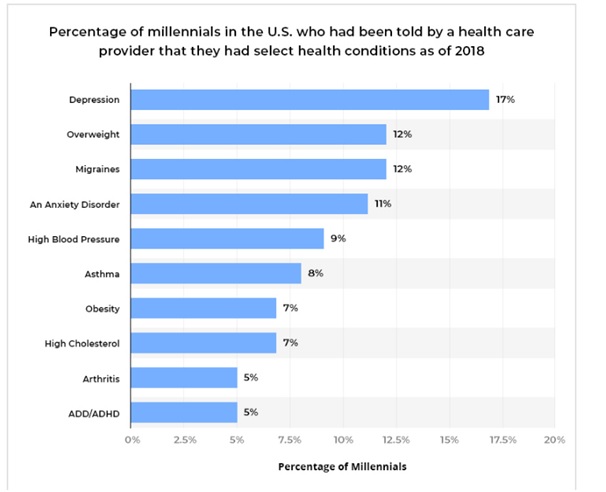
- According to Statista, health care providers in the US have shown that 12% of millennials are overweight.
- The report has shown that more than 17% of Millennials are in depression.
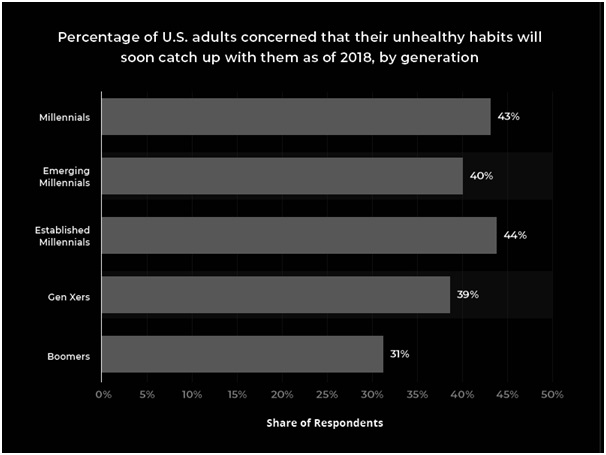
- The statistics have shown that more than 43% of millennials are habitual of unhealthy habits compared to boomers, who stayed at 31%.
- The studies have shown that diet and nutrition app development revenue is expected to reach US$0.63bn by the end of 2022.
- The annual growth in revenue is expected to reach US$0.89bn by the end of 2027, with a CAGR of 7.0%.
- The penetration of diet and nutrition app development will reach 9.32% in 2022 and is also expected to increase by 10.30% by the end of 2027.
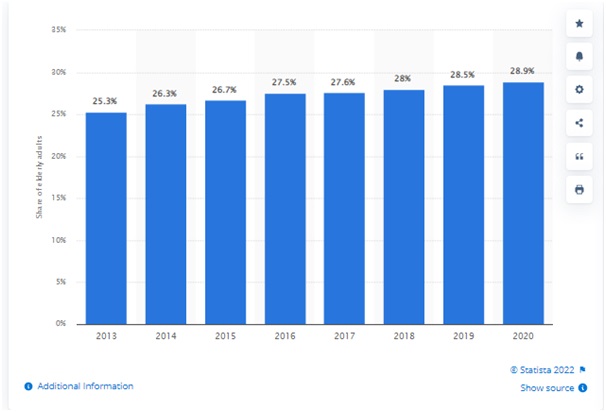
- According to Statista, 29 percent of the US population above 65 will be obese in 2020.
- The obese has increased by 4% from 2013 to 2020 in the US.
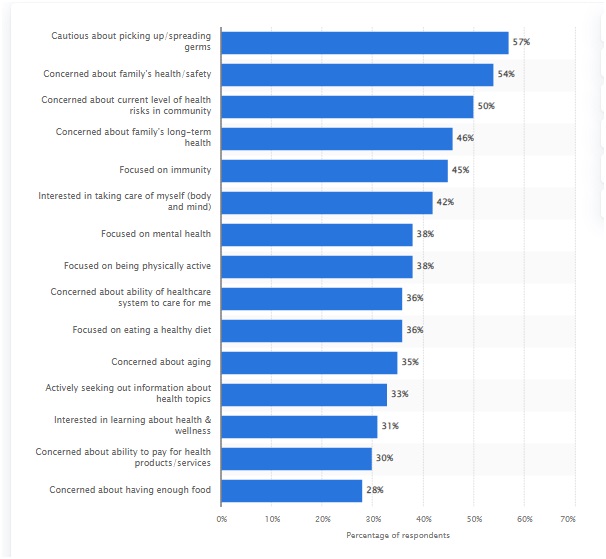
- According to Statista, 54 percent of United States adults are more concerned about their family’s health and fitness in the year 2021.
- The records also showed that 31 percent of the US population has become more interested in learning about healthy lifestyles and fitness programs.
What is Diet & Nutrition App Development?
The diet and nutrition app development refer to the software that maintains and tracks the nutrition portion of users to help them become fitness oriented or to lose weight. It is vital to know that these applications have various meal plans and different trackers and alarms that help users to focus on their diet effectively. They also have a professional nutritionist to which users can connect for new meals and plans.
Some Successful Examples of Diet and Nutrition Apps in 2022
| Best Diet & Nutrition Apps in 2022 | Rating & Downloads | Available Platform |
| Lifesum | 4.3/5 Rating
10M+ Downloads |
Android/ iOS |
| MyFitnessPal | 4.2/5 Rating
100M+ Downloads |
Android/ iOS |
| Fooducate | 4.6 /5 Rating
1M+ Downloads |
Android/ iOS
|
| FatSecret | 4.4/5 Rating
10M+ Downloads |
Android/ iOS
|
| Fitbit | 3.8/5 Rating
50M+ Downloads |
Android/ iOS |
| MyNetDiary | 4/5 Rating
1M+ Downloads |
Android/ iOS
|
| Lose It! | 4.2/5 Rating
10M+ Downloads |
Android/ iOS
|
| MyPlate Calorie Tracker | 4.3/5 Rating
1M+ Downloads |
Android/ iOS
|
| Noom | 3.8/5 Rating
10M+ Downloads |
Android/ iOS
|
| Ate Food Journal | 4.8 /5 Rating
100K+ Downloads |
Android/ iOS
|

How to Create a Diet and Nutrition App Development?
You’ll have it here. You have been looking for the most important thing for the past 2 minutes! You must read the diet and nutrition development steps and follow these accordingly.
Note- Hire android or iPhone development services that follow the development guide thoroughly.
1. Define Business
It is the initial stage of development in which you must go through the ideas in your mind related to diet and nutrition app development. In this step, you need to cover all the market stats, competitor research, and market research to identify the pros and cons of starting this business with its growth rate. Define business refers to the understanding of the business in depth. It would be best to review everything available online or from other nutrition calculator app development sources.

2. Discovery Phase
The time has come when you need to gather your investors and manager to get a meeting related to funds for your new project. The meeting with managers and investors will showcase your diet and nutrition tracking progressive web app development plan. To balance everything, it is essential to have a team of shareholders and investors with different perspectives. In this step, you’ll discover important information related to app development, including your business goals and project ideas, with the help of a business analyst.
3. UI/UX Design
In this step, you need to hire a dedicated developers team that has the best design team. During the diet and nutrition app development process, you must review the competitor application and review the functions and features they have added to their MVP. The result will lead you towards the functions and features they’re using to build the user base.
It is vital to know you must discuss with your developer team the market research you have performed with different features and functions you want in your app. After the discussion, you’ll find the best function and features of the app simply relevant to your business goal requirement and UI/UX methodologies you have selected for your business in earlier steps. Here are the top 10 UI UX software which can help you in developing a nutrition app.
4. Development Process
It is the most crucial step in which the nutrition app developer you have hired will work on building the diet and nutrition app according to your business requirements. It was significant in all the development steps, including paperwork with nutrition app developers and legalities.
You must hire dedicated developers as they work effectively and efficiently, which might be low cost. The step will be completed when the custom mobile app development company offers you the best diet and nutrition tracking app development.
5. Quality Assurance
It is an important thing that everyone should know. The development process isn’t the last step of creating a diet and nutrition app development. It is important to know after the development. You must know that your developers are offering you the application after testing.
The web app development services team is responsible for offering you the final product free of bugs and functions to avoid problems at launch. So, ask your developer to prepare a QA report on bugs and malfunctions that they have fixed or can fix quickly.
6. Launch & Maintenance
It is the last step but not the least. It is the time that you have waited eagerly to see your app live. With the help of your development team, you’ll be able to launch your app on the preferred platform. It is vital to know that not many people can understand how to publish apps on the apple store and google play store also, which is why it is preferred to get help from SaaS app development services and launch your app. it’s not the end. You must now contact the developer team to get post-maintenance work done to maintain the user base and update the app promptly. Several businesses avoid maintenance of their app in a timely manner, resulting in losing their user base and traffic on the app.

Key Features to Add in Diet and Nutrition App Development
Diet and nutrition app development will become a handy task if you know the key features to add to a diet and nutrition app. But still, if you lack information in knowing the key features.
Read the following section that has covered almost every essential feature you must add to your diet and nutrition app development.
1. Registration
To access the diet and nutrition app, a user must verify their Email, phone number, or other credentials. Creating a one-time password may be another sophisticated verification approach (OTP).
2. User Dashboard
The user’s primary information source is the dashboard. Through the dashboard, a user can review its summary of key performance indicators (KPIs), objectives, and more. You must include this feature to offer users a brief custom performance chart to boost their effort more.
3. Calendar
When developing a smart device app for nutrition, it is essential to include the calendar feature. It provides various features that can assist the user in keeping track of their diet plan, getting timely reminders to adjust their meal plan, and more.
4. Recipe Directory
In a perfect world, there would be more than 10,000 recipes, and it would be impractical for you to enter all of that data into the database manually. You can add this feature to your app by including an external database from a third-party service provider. This recipe directory will help you save time and complications. Customers get access to as many recipes as they want from one click.
5. Push Notification
The push notification will help users get notified on the upload of any new program, diet plan, competition, or any other update in the application timely. Hire iOS or android development services that can develop the best app for you with a great list of features.

6. Meal Database
It is essential to know users may not receive insights on the overall consumption of the overall diet they consume throughout the day. But with the help of this meal database, a user can manually input the overall nutrition they intake throughout the day, including carb, protein, and fat intake.
7. Search
It is a savior for many users who want to filter their search for a particular diet and nutrition plan. You must add this feature to your nutrition plan app development. It offers users to start a search using this feature, which might include various recipes. To get the most relevant search results, the user may also decide to customize using filters.
8. Social Networking
The social sharing function is helpful if you want to increase your user base or brand visibility. This feature allows users to share the app and diet plans, making others join the app for good. You must add this feature to various sections of the diet and nutrition app, such as diet, a diary, and other areas.
9. Rating and Reviews
With the help rating & reviews feature in nutrition plan app development, users can rate and review a diet after following it and tracking their performance. Doing this will make it possible for other users to read the evaluations and learn more about other people’s experiences with the particular diet and nutrition plan.
Read More: Top Apps for Healthy Habits
Advance Features to Add in Diet and Nutrition App Development
The above-discussed features were quite basic that every app “must-have.” Developing a smart device app for nutrition should be unique from other diet and nutrition apps in the market.
The below-mentioned features are the most important features you can choose for your diet and nutrition app development to make it look unique.
1. Calorie Tracker
Consumers only enter any data into your mobile product to get reports showing their progress. You must ask the software development company you have hired to design a user-friendly dashboard that is user-friendly and not too complicated for users to track their calories.
2. Recipe Book
It is another fantastic feature you must add to your diet and nutrition app development. You should provide nutritious recipes and organize them using ingredients, calories, and categories. You can also add pictures, videos, and even voice instructions to make it more exciting. These will help in increasing user engagement.
3. Shopping List
Yet another fantastic feature that will allow users to manually add items to a shopping list, input ingredients from a recipe, or import diet information.
4. Live Nutritionist
Users can contact diet coaches through your app for professional guidance. Several diet and nutrition app development companies have used this feature to maintain user engagement and increase traffic to the app. You can offer this feature to users freemium or premium only according to business goals.
5. Diet Plans
One of the significant reasons for user engagement on these applications is due to diet plans. Many users seek a diet and nutrition app to help them calculate calories and maintain a healthy diet. A diet plan typically contains recipes, dietary advice, suggested meals, and suggested daily or weekly calorie consumption.
6. Bar-Code Scanner
It is another essential feature that will boost your app traffic. Every time users consume something. They may have to enter the nutritional information manually. Most packaged foods have a barcode that users can scan to retrieve nutritional information. The diet and nutrition app improves ease for the user by including a barcode scanner. It is a unique feature that will make several people choose your app over many.
7. Health Goals
The purpose of downloading diet and nutrition apps for many people is to achieve a particular health goal. Without a clear objective, pursuing a challenge is difficult. The feature will help users to define a goal, and then, once the goal has been established, it also allows the user to track progress.

How Much Does It Cost to Create Diet and Nutrition App Development?
After knowing about the diet and nutrition app development steps, features, and functions, you must know about the diet nutrition app development cost. It is imperative to consider the cost to understand the development process more thoroughly.
The diet nutrition app development cost will offer you an estimation that will help our analysis of the finance according to that. You want to create an app for the least amount of money possible without sacrificing quality. Let’s examine the price of diet and nutrition app development.
The price of any software is tough to estimate because it depends on so many different things. The app’s complexity is the most crucial aspect that influences the cost out of many others. It is essential to know that the complexity of an app increases the developer cost and many other things.
| Complexity of App | Overall Cost |
| Simple Design Costs | $7000 |
| Complex Design Costs | $15,000 |
| Professional Design Costs | $20,000 |
Another promising factor influencing the cost of diet and nutrition app development is the charges of mobile app development companies or dedicated developers. To give you a rough idea about diet and nutrition mobile app development costs, we have mentioned the developer’s charges according to country and hourly rates.
| Countries | Per Hour Charges |
| UK | $75 – $265 |
| US | $80 – $278 |
| Europe | $55 – $155 |
| India | $15 – $25 |
What Tech Stack Used in Creating a Diet and Nutrition App?
We have something you find most useful in diet and nutrition app development. Here’s a list of tech stacks that AI development services will use to create diet and nutrition app development.
| Functions | Tech Stack |
| Front end development | Java, Swift, Angular, Java, CSS, HTML, React |
| Real-Time Analytics | Hadoop, Spark, Bigdata, Apache Flink, Cisco, IBM |
| Back-end development | Python, Laravel, Node.js |
| Push notifications | Twilio, Push.io |
| Payment processing | PayPal API, EWallets, Stripe API, and Braintree SDK |
| SMS, Voice, and Phone Verification | Nexmo, Twilio |
| Database | MongoDB, HBase, Cassandra, Postgres, Mail Chimp Integration |
| Location tracking | MapKit framework for iOS, and Google Maps SDK for Android |
| Cloud Environment | Google Cloud, AWS |
| Powerful Programming | GWT |
| Emails | Mandrill |
| Data Management | Datastax |
| Operating System | Debian |
Is That All?
Wait a minute! No, we are not finished yet. After reading this blog, we hope now you have everything you were looking for related to the development of a diet and nutrition app. Let’s get it straight. The development of such an application requires a skilled and experienced custom mobile app development company, which you should consider before the development process starts.
Development-related things can’t be accomplished without the help of the best web app development company. As we have mentioned earlier, the competition in diet and nutrition apps has grown immensely, leading to communicating or getting in touch with the best web app development company. So please don’t wait and get in touch with our team to know more about the development and guidance related to diet and nutrition.
Frequently Asked Questions
What is the Revenue Model of Diet and Nutrition Apps?
Development is not the only thing you must know when considering launching a diet and nutrition application. Here’s the list of revenue or monetization models of diet and nutrition apps.
- Freemium
- Paid apps
- Subscription
- Advertisement
How Long Does It Take to Develop a Nutrition Application?
It is essential to keep in mind that developing nutrition and diet apps takes 5 to 7 months. But the essential thing in duration is the application’s complexity and MVP, which may differ from the estimated development time.
How Does Diet and Nutrition App Work?
As the above description has the best diet and nutrition app, numerous diet and nutrition apps are available on the market. But all these have the same goal as they work in similar ways. Every diet and nutrition app includes a calorie counter and nutrient-dense meal planner with reminders that helps users to maintain a healthy diet throughout the day to get healthier.