













Key takeaways:
-
- Overall Cost Range: Pickup & delivery app costs between $10,000–$28,000+, depending on features and scalability
- Cost Breakdown: Basic ($10k–$15k), Mid-level ($15k–$28k), Advanced ($28k) apps.
- Key Cost Factors: Complexity, platform, UI/UX, backend, APIs, team location, and security features
- Development Timeline: MVP takes 2–3 months, advanced apps require 4–6+ months
- Regional Cost Rates: Asia ($20–$40/hr), Europe ($40–$80/hr), North America ($80–$150/hr)
- Additional Costs: Maintenance, hosting, APIs, marketing, and future upgrades increase total investment
The cost to build a pickup and delivery app can drastically change based on a number of things, such as designing different functionality, selecting a platform, choosing a business model, and how you plan to scale. These days, with more companies going the on-demand route, such apps no longer just represent a set of options but one of the key strategic instruments.
The implementation of food and grocery deliveries has become part of an extremely diverse ecosystem, ranging from logistics to courier services. It not only streamlines your business but also significantly improves the customer experience with features like real-time tracking and simple payments.
The global delivery apps market is expected to nearly double to $269 billion by 2026, driven by the rapid digital adoption and eCommerce expansion, which just makes this trend hotter.
If you are a startup considering an MVP or an enterprise looking for a full-feature solution, having an idea of the development cost will help you estimate your budget more accurately, plan your projects more efficiently, and achieve long-term scalability more smoothly in an intensely competitive market.
What is a Pickup and Delivery App?
A pickup and delivery app is essentially an on-demand digital platform that facilitates the connection between users and transport service providers to move goods from one place to another. Besides just ordering pick-up, these apps enable users to follow deliveries in real-time and make payments securely. Mostly utilized for food, groceries, parcels, and logistics, they optimize operations, increase work efficiency, and provide great customer convenience by automating processes and facilitating smooth communication.
Why Invest in Pickup and Delivery App Development?
Today, in the fast-moving digital economy, local courier delivery apps are transforming businesses. A business that invests in fleet management app development will gain access to new sources of revenue, improve customer convenience, and maintain its competitiveness in the rapidly expanding market for on-demand services.
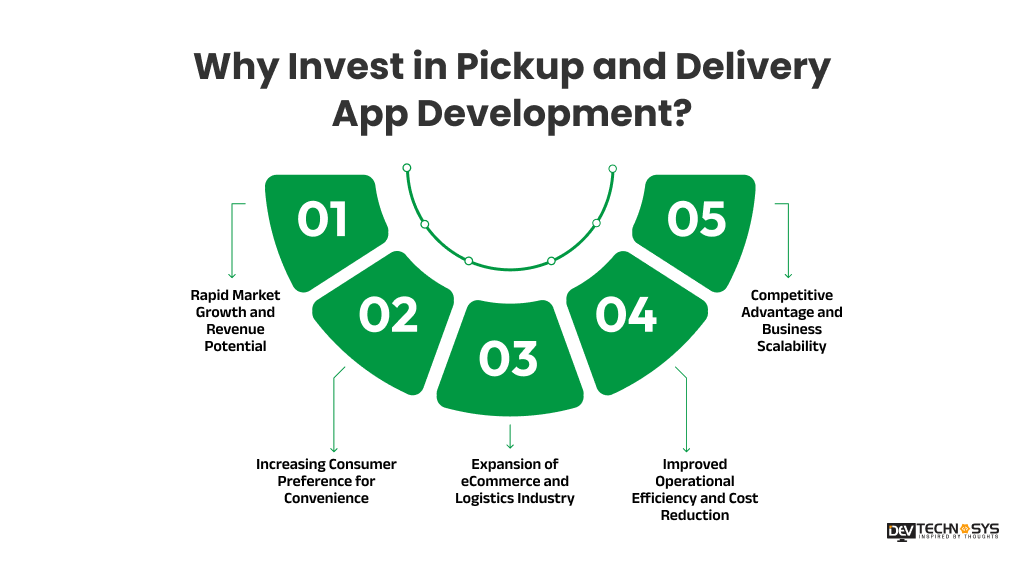
1. Rapid Market Growth and Revenue Potential
The worldwide market for same-day pickup and drop service is growing rapidly, and it is estimated that it will reach a figure close to $269 billion by 2026. The two main causes of the growth are more online shopping and digital adoption. Getting into the pickup delivery app market early can give a business a strong revenue opportunity.
2. Increasing Consumer Preference for Convenience
Consumers today are giving more importance to the speed and convenience of a service. The preferences of more than 70% of users who choose home delivery services over shopping at the stores are shown in the studies. Asset tracking app development solutions can match those expectations by providing the benefits of real-time tracking, faster service, and a digital experience that is almost effortless. This leads to greater customer loyalty.
3. Expansion of eCommerce and Logistics Industry
The valuation of the worldwide logistics and delivery management system company market by 2033 is expected to exceed $2.9 trillion. This is not only a huge potential market but also indicates a significant long-term demand. Businesses that want to be efficient in delivering products need to start using contactless delivery apps. They can be helpful in managing the increasing volumes and offer improvement in the operations.
4. Improved Operational Efficiency and Cost Reduction
Last-mile delivery app is the final step in the delivery process and usually accounts for more than 50% of total shipping costs. That is why companies try to work on making it a value for money. Sophisticated delivery on-demand app development solutions rely on automation, route optimization algorithms, and real-time analytics, which help reduce fuel expenses, increase delivery speed, and enhance fleet productivity, which ultimately leads to an increase in the effectiveness of the whole business.
5. Competitive Advantage and Business Scalability
Having door-to-door delivery solutions can help companies roll out their operations at a quicker pace and reach more customers. Especially the Asia-Pacific region is responsible for more than 40% of the market growth, so digital transformation is gaining momentum there. A scalable pickup and delivery app can be a significant investment as it not only keeps the business competitive but also helps in achieving long-term growth and expansion.
Key Market Statistics (Freight Management Industry)
- The global freight management systems market was worth $19.4 billion in 2025 and is expected to expand to $41.5 billion by 2034 at a compound annual growth rate (CAGR) of 8.56%.
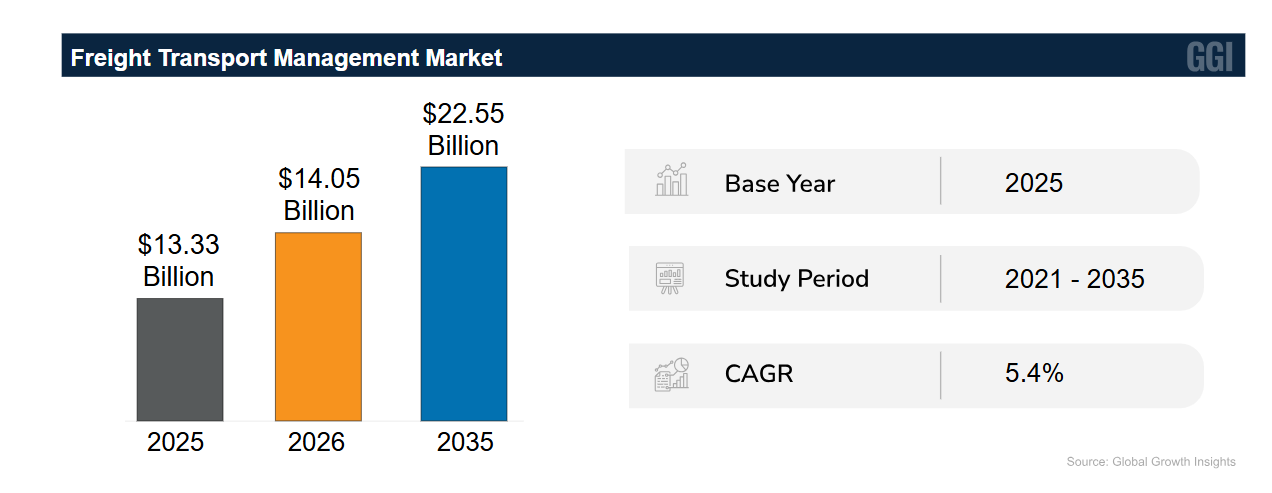
- The freight transport management market was worth $26.43 billion in 2026, and this annualized figure is projected to rise to $38.69 billion by 2031 with a CAGR of 7.92%.
- Another research also states the market to reach $43.37 billion by 2032, with digital logistics and supply chain automation being major growth drivers, registering a CAGR of 12.25%.
- The freight forwarding management software segment is projected to grow from $755 million in 2026 to $1.78 billion by 2035, indicating a strong demand for digital tools.
- The broader market of freight transport management could even hit $76.46 billion by 2035, registering a growth rate of more than 9.2% CAGR, thus paving the way for long-term business expansion potential.
How Much Does it Cost to Build a Pickup and Delivery App?
The cost to build a pickup and delivery app mostly depends on its features, how complicated it is, and the development method. It is approximately a $10,000-$15 000 range for an MVP functioning with only essential capabilities such as user registration, placing, and tracking orders.
Apps that feature real-time tracking, payment integration, and notifications could be priced from $15, 000 to $28, 000. On the other hand, apps that come with AI-powered route optimization, analytics dashboards, and multi-platform support will most probably go beyond $28, 000. Other contributing factors to the final product cost are UI/UX design, third-party integrations, and the geolocation services.
Factors Affecting How Much It Costs to Build a Pickup and Delivery App
In order to plan your budget cleverly, you should consider understanding the key aspects that most influence the cost to create a pickup and delivery app. For instance, anything from feature sets to technology options may have a big impact on the development cost, as well as the business growth potential.
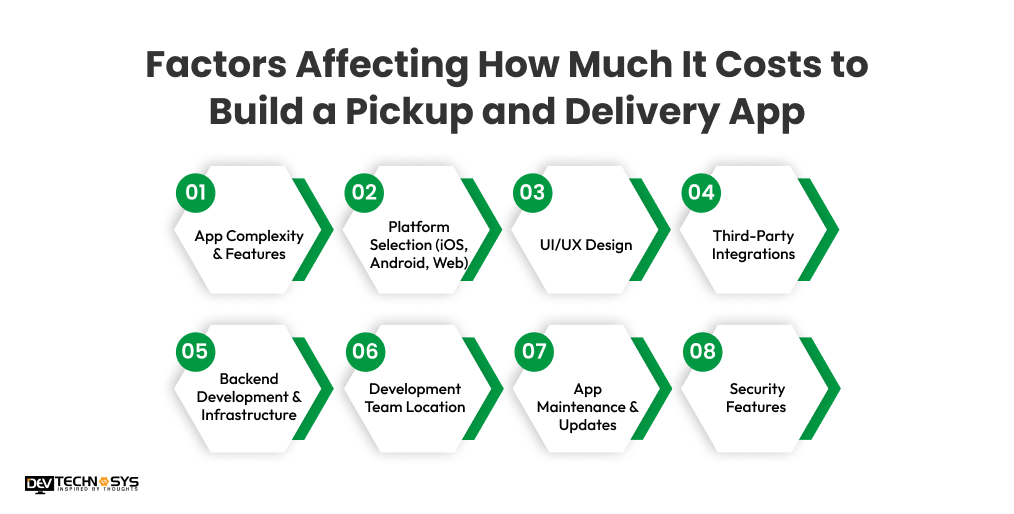
1. App Complexity & Features
The scope and complexity of your pickup and delivery app primarily determine the cost of logistics app development. If the app’s functional capabilities are limited, the price tends to be much lower. On the contrary, when extra features like AI-based tracking, route optimization, and analytics are included, the time and skill requirements for development are much higher, so the investment also goes up.
Complexity Level |
Features Included |
Estimated Cost |
| Basic (MVP) | Login, booking, tracking | $10,000 – $15,000 |
| Mid-Level | Payments, notifications | $15,000 – $28,000 |
| Advanced | AI, analytics, automation | $28,000+ |
2. Platform Selection (iOS, Android, Web)
Making a choice between Android, iOS, or hybrid development has a direct impact on your financial plans. Having two totally different native apps will obviously be more expensive, but using cross-platform frameworks will save money, albeit a trade-off of a certain extent of performance. Supporting more than one platform needs more people and will result in a higher overall pickup and delivery app development cost.
Platform Type |
Description |
Estimated Cost |
| Single Platform | Android or iOS | $10,000 – $15,000 |
| Cross-Platform | Flutter/React Native | $15,000 – $28,000 |
| Multi-Platform | Android + iOS + Web | $28,000+ |
3. UI/UX Design
Interface design that is user-friendly and visually appealing is the main key to user engagement. At a minimum, a simple UI design will result in lower delivery app UI/UX design cost, but if you want custom animations, user-friendly dashboards, and seamless user journeys, then you need highly qualified designers, and this is going to substantially increase your overall courier delivery app development cost.
Design Level |
Features |
Estimated Cost |
| Basic | Simple layout | $2,000 – $5,000 |
| Custom | Advanced UI elements | $5,000 – $10,000 |
| Premium | Animations, UX research | $10,000 – $20,000 |
4. Third-Party Integrations
Adding new features such as payment gateways, maps, SMS, and push notifications to your app by integrating their APIs is one more factor that adds to your development budget. Although they give the app the much-needed functionality, the usage of premium APIs or multiple integrations will result in a sharp rise in GPS tracking integration cost, particularly when scaling up the app.
Integration Type |
Examples |
Estimated Cost |
| Basic APIs | Maps, SMS | $2,000 – $5,000 |
| Standard | Payment, notifications | $5,000 – $10,000 |
| Advanced | AI APIs, analytics | $10,000 – $20,000 |
5. Backend Development & Infrastructure
Backend acts as an intermediary in the management of data, handling of user requests, and other real-time operations of the app. Having a high-quality backend with cloud infrastructure services, APIs, and database management will definitely make your app scalable, but will also raise the cost to build a pickup and delivery app like Safeway. Especially if the app is expected to have a large number of users and real-time monitoring.
Backend Level |
Description |
Estimated Cost |
| Basic | Simple database | $5,000 – $10,000 |
| Scalable | Cloud-based backend | $10,000 – $20,000 |
| Enterprise | High-load systems | $20,000 – $28,000+ |
6. Development Team Location
The location of your custom software developers largely determines the rates per hour. As a rule, North American programmers will cost significantly more than developers from Asia or Eastern Europe. San Francisco tech companies can be a great way to save money for a startup or small business to hire PHP developers.
Region |
Hourly Rate |
Estimated Cost |
| North America | $80 – $150/hr | High |
| Europe | $40 – $80/hr | Medium |
| Asia | $20 – $40/hr | Low |
7. App Maintenance & Updates
Maintenance after launch is not just about fixing bugs; it also comprises updating and performance improvement. Hire Python developers to keep the app updated regularly is necessary not only for its smooth functioning but also for the security aspects, and time and cost-wise, a rough yearly estimate is around 15- 20% of the original cost to develop a mobile app.
Maintenance Type |
Services |
Annual Cost |
| Basic | Bug fixes | $2,000 – $5,000 |
| Standard | Updates & support | $5,000 – $10,000 |
| Advanced | Continuous upgrades | $10,000 – $20,000 |
8. Security Features
Security plays an important role in the protection of user data and their transactions. Features like data encryption, secure payment processing, and different types of authentication, though they may lead to higher pickup and delivery app development costs, after all, they are the ones that bring trust, help you comply with the regulations, and ensure the long-term success of your app.
Security Level |
Features |
Estimated Cost |
| Basic | SSL, login security | $2,000 – $5,000 |
| Standard | Data encryption | $5,000 – $10,000 |
| Advanced | Multi-layer security | $10,000 – $20,000+ |
Top Pickup and Delivery Applications: Cost Breakdown
Explore top courier booking mobile apps with a clear cost breakdown. Understand development expenses, key features, and budget factors to build a scalable, high-performing app for your business success.
Application |
Description |
Estimated Development Cost |
| Uber Eats | Popular food delivery app with real-time tracking, multiple payment options, and a large driver network. | $12,000 – $26,000 |
| Instacart | Grocery delivery platform with personal shoppers and store integrations for quick doorstep delivery. | $12,000 – $30,000 |
| DoorDash | Connects users with restaurants and local stores, offering fast delivery and real-time order tracking. | $15,000 – $28,000 |
| Amazon Fresh | Online grocery service with subscription features, inventory management, and seamless ecosystem integration. | $12,000 – $28,000 |
| Postmates | Multi-category delivery app for food, groceries, and retail items with flexible logistics. | $10,000 – $27,000 |
| Grubhub | Food ordering platform with restaurant listings, offers, and real-time delivery tracking. | $10,000 – $25,000 |
Want a chatbot demo or pricing? Fill the form and talk to our experts today.
Pick what you need below — you can select more than one — then tap Get detail to continue.
-
Chatbot demo dashboard
-
Cost to develop an app
-
Industry report
-
Case study
1. Uber Eats
Uber Eats is a very famous food delivery platform that connects users to the restaurants near them. It provides them with features such as live order tracking, diverse payment options, and fast delivery at the doorstep through a vast driver network.
Uber Eats App Development Cost Estimation:
The development cost of a pickup and delivery app similar to Uber Eats ranges from $ 12,000 to $ 26,000, depending on feature complexity, scalability, and integrations.
2. Instacart
Instacart is a grocery pickup and delivery platform that lets users order essentials online. Personal shoppers find the items and deliver them from partnered local stores quickly.
Instacart App Development Cost Estimation:
The development cost of a pickup and delivery app like Instacart varies from $12,000 to $30,000, depending on store integration, logistics feasibility, and the feature set.
3. DoorDash
DoorDash is a delivery app that connects customers with restaurants and local businesses. It provides fast delivery, real-time order tracking, and a wide selection of food and convenience products.
DoorDash App Development Cost Estimation:
The development cost of a pickup and delivery app similar to DoorDash lies between $15,000 and $28,000, depending on real-time tracking, driver management, and scalability features.
4. Amazon Fresh
Amazon Fresh is a hyperlocal delivery platform available online. It offers fresh produce, household items, and daily essentials with delivery slot booking, subscription advantages, and a seamless connection to the Amazon ecosystem.
Amazon Fresh Cost Estimation:
The cost to build a pickup and delivery app like Amazon Fresh ranges from $12,000 to $28,000, owing to inventory systems, subscriptions, and logistics complexity.
5. Postmates
Postmates is a delivery app that caters to various categories. It allows users to order food, groceries, and retail items from nearby stores, providing flexible delivery options and real-time tracking services.
Postmates App Development Cost Estimation:
The cost to develop a hyperlocal delivery app like Postmates could be anywhere between $10,000 and $27,000 based on the number of services, API integrations, and the complexity of delivery logistics.
6. Grubhub
Grubhub is a platform for food ordering and delivery. Grubhub grocery delivery process allows users to find local restaurants, view menus, plan deliveries, access special offers, and track orders in real-time, thereby enhancing the customer experience.
Grubhub App Development Cost Estimation:
The cost to build a multi-vendor delivery app like Grubhub can vary from $10,000 to $25,000 depending on restaurant integrations, payment systems, and tracking functionalities.

How to Reduce the Delivery App Development Cost?
The cost to build a pickup and delivery app is high, but it can be greatly decreased by using suitable methods. These seven extended strategies will help you to keep your app development budget constant:
1. MVP Development
Begin by creating a Minimum Viable Product (MVP) with just the essential features required for launch. This method enables you to validate your idea in the market while saving time and money. The grocery delivery app development cost can be decreased in response to actual user demand and feedback.
2. Use Cross-Platform Services
You may create your app for both iOS and Android at the same time by using frameworks like Flutter or React Native. As a result, fewer distinct codebases are required, which saves money and time during development. Additionally, it reduces the cost to develop a pickup and delivery app for small businesses.
3. Leverage Pre-Built Solutions
Make use of already-existing tools and APIs for standard functions like chat, payments, mapping, and authentication. A medicine delivery app development company may help you to shorten launch times and simplify development. Compared to starting from scratch, this method is more economical.
4. Target Cost-Effective Regions
The cost to create a pickup and delivery app can be reduced by hiring developers from places like Latin America, South Asia, or Eastern Europe. When compared to the United States or Western Europe, these regions offer highly qualified talent at competitive prices.
5. Prioritize Essential Features
Businesses should concentrate on essential features that address user issues. By avoiding involvement of extra features, you can easily decrease the flower delivery app development cost. Advanced functionality can always be added in later releases that come at lower rates.
6. Use Agile Development
You can incorporate iterations and make adjustments in response to feedback by implementing Agile. This guarantees effective resource use and lowers the pickup and delivery app development cost with cheap rework. At every stage, agile aids in coordinating development with corporate objectives.
7. Early Testing Process
To find defects and usability problems, include testing in the mobile app development process. Early problem solving is always less expensive and disruptive than post-deployment. It also guarantees a better user experience and a more seamless startup.
Hidden Charges in Pickup and Delivery App Development Cost
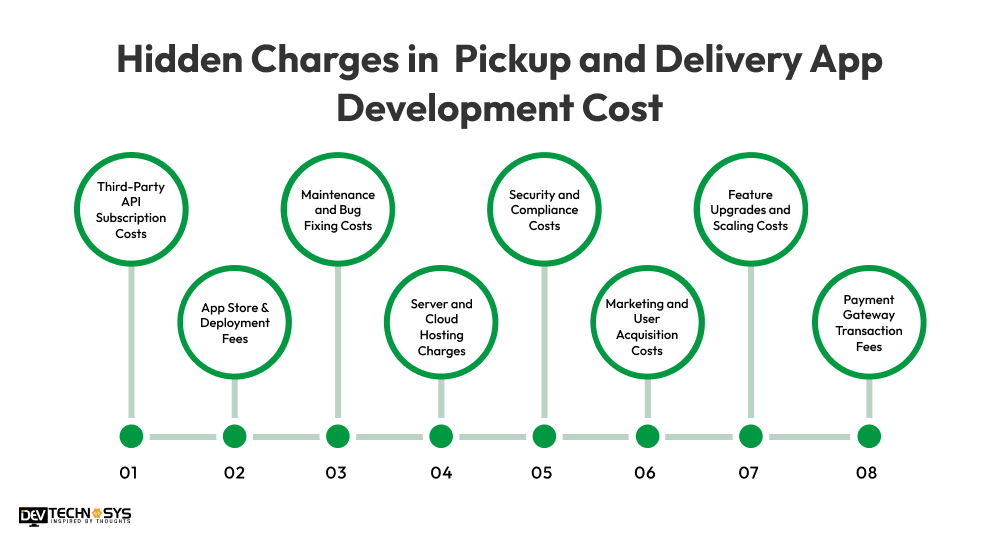
Besides the actual cost to build a pickup and delivery app, there are other factors that you need to consider when you build a pickup and delivery app. Things like maintenance APIs, hosting, and updates could using up your money without your realizing it if you don’t think about it properly from the very beginning.
1. Third-Party API Subscription Costs
Most of the apps require third-party services like payment gateways maps, SMS, and push notifications. The first time integration might look cheap to you, but extra subscription charges, pricing based on usage, and API access at a premium level can greatly escalate your cost of pickup and delivery app development services in the long term.
2. App Store & Deployment Fees
When you make your app available to users through Google Play and Apple App Store, aside from registration and annual developer fees, you may also have to pay for app updates, testing tools, and compliance requirements, among others, which are usually overlooked during the initial budgeting phase.
3. Maintenance and Bug Fixing Costs
After an application is delivered, it must be regularly checked, updated,, and upgraded. It is worth noting that maintenance costs, which in most cases account for 15-20% of the total cost to build a pickup and delivery app like Stuart. Keeping the app bug-free and running smoothly is an essential aspect of app development that is often overlooked.
4. Server and Cloud Hosting Charges
Servers, databases, and cloud hosting services are some of the components that the backend infrastructure consists of. If the number of users increases, businesses will require scalable solutions, it will lead to a rise in the cost of hosting on a monthly or annual basis, particularly in the case of apps that allow real-time tracking and use a lot of data.
5. Security and Compliance Costs
Unforeseen expenditures will be incurred in the area of data security through the use of encryption, secure payment gateway integration, and ensuring compliance with regulations such as GDPR. Besides the security audits, certification and upgrade of the system at regular intervals are equally important to uphold the trust of the customers and, at the same time, refrain from being exposed to legal problems.
6. Marketing and User Acquisition Costs
Just publishing an app is not enough; it is mandatory to carry out marketing in order to grab users. The cost of digital advertisements, social media promotions, influencer campaigns, and app store optimization can hit your budget very hard, but at the same time, they are indispensable for the growth of your business.
7. Feature Upgrades and Scaling Costs
If your venture expands, so will your requirements, such as additional functionalities, high efficiency, and/or robust infrastructure. These upgrades, the app development project would require more time and resources that would have to be paid for continually after the initial GPS tracking app development cost.
8. Payment Gateway Transaction Fees
Each purchase made using the app is accompanied by a payment gateway fee. These fees are generally a small fraction of every transaction, and when your user base increases and transaction volume is high, they morph into ominous care-abouts.
Role of AI in Developing Pickup and Delivery Apps
Modern pickup and delivery apps rely heavily on artificial intelligence (AI) to improve decision-making, efficiency, and user experience. An iPhone app development company can implement AI that helps businesses streamline operations, cut costs, and provide faster deliveries. This automates complicated activities and analyzes technical setup to enhance logistics services:
- Route Optimization: AI calculates the fastest and most fuel-efficient delivery routes in real-time.
- Demand Forecasting: Predicts order volumes to manage resources and staff effectively.
- Customer Support Automation: Powers chatbots for instant responses and issue resolution.
- Fraud Detection: Identifies suspicious transactions or user behavior to prevent losses.
- Personalized Recommendations: Suggests services or promotions based on user habits and preferences

How to Monetize Online Delivery Apps?
Effective online delivery app monetization guarantees scalability and long-term profitability. Here are six tried-and-true ways to make money using delivery platforms:
1. Delivery Charges
Businesses can charge consumers a flat delivery price for every order based on the distance, weight, or delivery time. Additionally, they can contact a mobile app development agency to add driver compensation as a direct revenue source for quicker service delivery with premium choices.
2. Surge Pricing
Use dynamic pricing when demand is strong, such as during holidays or during peak hours. During peak periods, this boosts revenue while managing demand. Additionally, surge pricing on the best pickup and delivery app encourages more drivers to be available during times of high traffic.
3. Subscription Plans
Provide premium memberships with benefits like priority assistance, free shipping, or exclusive savings. You can hire mobile app developers to generate a consistent flow of income depending on a monthly or annual basis. By providing additional convenience and savings, it also increases client retention.
4. Commission-Based Earnings
With each order placed via your app, charge merchants or service providers a commission fee. Marketplace-based delivery apps, such as food or courier platforms, frequently use this paradigm. It guarantees that you make money on each transaction while promoting collaborations.
5. Advertising Model
You can allow other inventors to advertise in your app or boost their listings. Banners, promoted listings, and user-targeted pop-ups are some examples of ads. A driver app development company helps you to get an additional source of income without compromising essential user features.
6. White-Labeling/Licensing
Entrepreneurs can allow other professionals to use your pickup and delivery service app under their own name through licensing. Businesses seeking a ready-made delivery option may use this model. According to the Node js development company, it establishes your platform as a scalable technology solution that goes beyond service provision.
In a Nutshell!!
After understanding the cost to build a pickup and delivery app in this blog, you can easily start the development process. There are a few things that businesses have to keep in their mind before investing money for building such delivery platforms. Let’s discuss them in this conclusion:
- Get in touch with a reliable pickup and delivery app development company at reasonable prices.
- Gather all the resources to reduce the cost to make a pickup and delivery app.
- Make a list of important features to be included in the application.
- Implement easily available money-making strategies for business growth.
These points will help you to easily sail in the delivery industry without facing any challenges. Additionally, by targeting specific audiences across the globe, you can make your brand globally popular.
You can reach out anytime; we are available 24/7. Our team provides a quick response.
How Dev Technosys Can Help You Build a Pickup and Delivery App?
At Dev Technosys, we have been a leading courier delivery app development company for the last 15+ years, and during that time, we have developed many scalable and feature-rich pickup and delivery apps. We are more than just programmers; we can do custom development, design UI/UX that is so easy and great to use, real-time tracking, and third-party integrations that work flawlessly together.
By using agile methodologies, we maintain speed, reduce costs, and ensure consistent high performance. Whether it is an MVP or an enterprise-level solution, we are a major tech company in San Francisco stand by your side from start to finish, and after that, too, if needed, helping you launch a secure, scalable, and market-ready pickup and delivery app!
Frequently Asked Questions
Find answers to the most common questions related to this article.
The cost to develop a pickup and delivery app may vary a lot, depending on the factors mentioned below and a few more, coming in as low as $10,000 and in some cases exceeding $28,000.
Some of these factors are - which features are included, platform(s), app complexity, third-party integrations, and development team location. Advanced apps in all aspects cost a lot more than basic ones. On average, the time it takes to develop a pickup and delivery app is 2 to 6 months.
A simple MVP can be done in 812 weeks, but a fully-featured app with advanced functionalities may require the longest time, mainly when multiple rounds of testing and deployment are considered. Briefly speaking, the main features are user registration, order fulfillment, real-time tracking, payment integration, push notifications, delivery management.
Several factors influence cost, including app complexity, platform choice, UI/UX design services, backend infrastructure, third-party integrations, and security requirements. Additionally, developer location and project timeline play a major role in determining the overall budget.
Businesses can monetize through delivery fees, commission on orders, subscription plans, surge pricing, and in-app advertisements. These revenue models help generate consistent income while ensuring long-term scalability and profitability in the competitive on-demand delivery service market.