



















“Smart Parenting Starts Here”
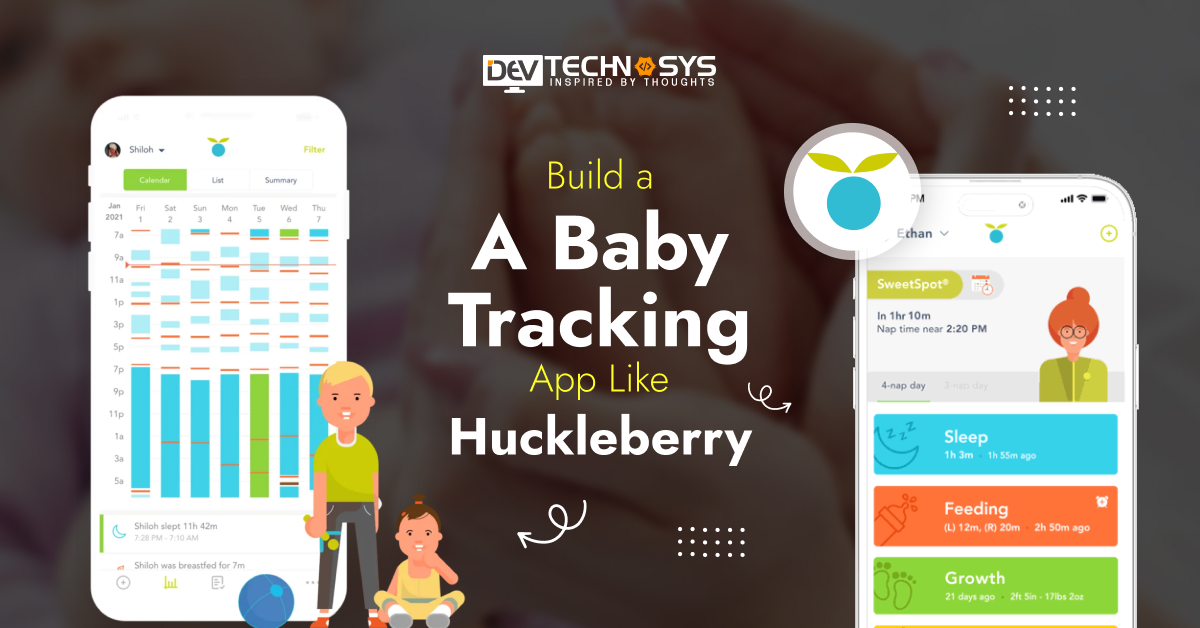
In today’s era, it is very difficult to raise a child, and neither do the parents get enough time to pay proper attention to them. That’s why the demand for baby tracking apps like Huckleberry is increasing and gaining huge popularity with their unique features, such as feeding, diaper changes, monitoring sleep patterns, and more.
As per the global report, the baby tracking application market is expected to record a significant growth of around $5.5 billion by the end of 2033.
This data shows that investing in the baby tracking app development is the highest profitable opportunity for businesses to unlock new levels.
In this blog, we will explore how to build a baby tracking app like Huckleberry and how it can be a beneficial opportunity.
Let’s start!
What is Huckleberry?
Huckleberry is a feature-rich baby tracking tool that helps parents keep tabs on their day-to-day activities, such as feeding, sleeping, changing diapers, and growing. A pregnancy monitoring app like Ovia or Huckleberry provides individualized sleep advice with features like SweetSpot®, which forecasts the best times for naps based on each child’s individual rhythms.
Over 4 million families trust Huckleberry, which helps parents create healthy habits and make wise decisions for their child’s well-being by combining professional guidance with user-friendly tracking tools.
- Comprehensive Activity Tracking
- Reminders and Notifications
- Weekly Summary and Insights
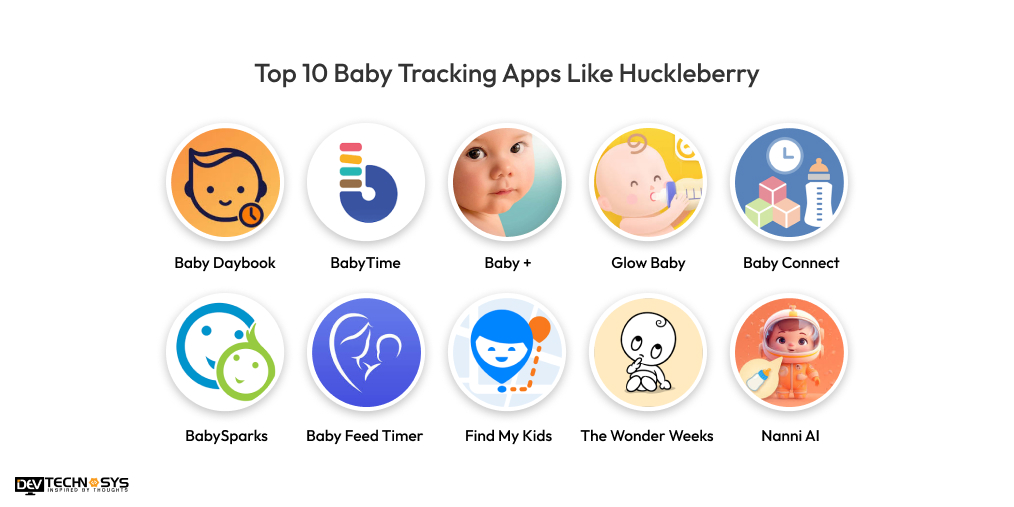
Top 10 Baby Tracking Apps Like Huckleberry
Certainly! Here’s a detailed chart of the best baby tracker apps comparable to Huckleberry, including download counts, ratings, debut dates, and platform availability:
| App Name | Downloads | Stores Ratings | Launch Year | Platform Availability |
| Baby Daybook | 1M+ | 4.8 | 2018 | Android, iOS, Web |
| BabyTime | 1M+ | 4.7 | 2017 | Android, iOS, Web |
| Baby + | 5M+ | 4.6 | 2016 | Android, iOS, Web |
| Glow Baby | 1M+ | 4.4 | 2016 | Android, iOS, Web |
| Baby Connect | 1M+ | 4.3 | 2011 | Android, iOS, Web |
| BabySparks | 1M+ | 3.9 | 2017 | Android, iOS, Web |
| Baby Feed Timer | 1M+ | 4.7 | 2015 | Android, iOS, Web |
| Find My Kids | 4M+ | 4.2 | 2015 | Android, iOS, Web |
| The Wonder Weeks | 1M+ | 4.5 | 2010 | Android, iOS, Web |
| Nanni AI | 100K+
|
3.8 | 2024 | Android, iOS, Web |
Why Businesses Invest in Baby Tracking App Development?
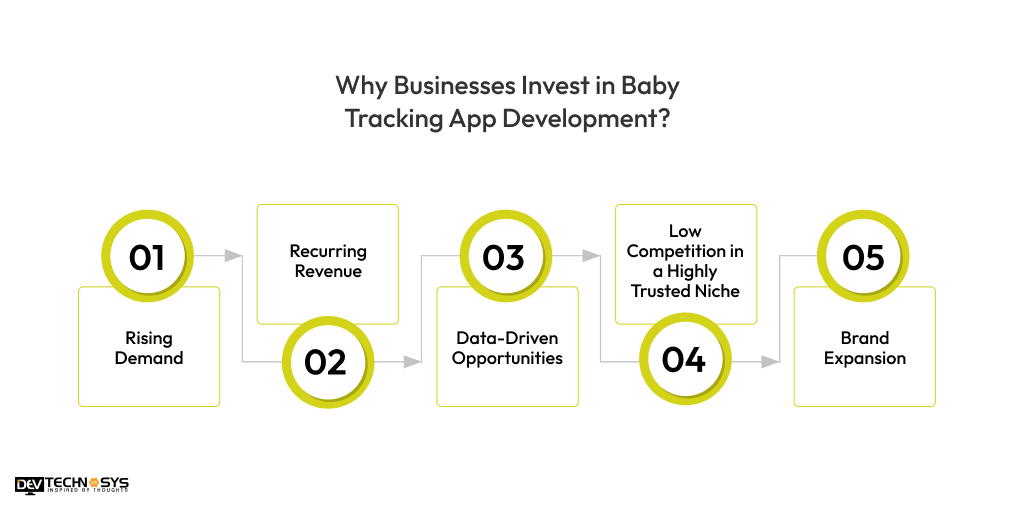
The emergence of tech-savvy parents, along with an increasing demand for health-focused digital solutions, has prompted corporations to invest in baby tracking app development. These applications provide real benefit to parents while also providing promising economic prospects. Here are five major reasons why businesses are joining this space:
1. Rising Demand
Modern parents are increasingly reliant on mobile applications to manage their baby’s daily activities. The best app for tracking baby schedule make it easy to note feedings, sleep, diaper changes, and milestones. With millions of new births globally each year, the need for technologies that make parenting easier is rapidly growing.
2. Recurring Revenue
Best baby tracking apps, such as Huckleberry, employ freemium models, which means they provide basic services for free but charge for premium options like sleep consultations, AI forecasts, or expert guidance. As we discussed earlier with a healthcare app development company, if the app provides actual value, this model generates steady, recurring revenue and has a high user retention.
3. Data-Driven Opportunities
These baby milestone tracker apps capture significant behavioral data, which may be used to power machine learning algorithms and deliver tailored insights. Businesses can utilize this data (ethically and with consent) to create more advanced features or to collaborate with pediatric health services, insurance providers, or product brands on targeted marketing.
4. Low Competition in a Highly Trusted Niche
While the newborn care business is large, few applications successfully combine medical precision with emotional support. A well-designed baby tracking app development solution with dependable content and safe data management may quickly garner confidence, allowing new companies to expand in a market with fewer dominating rivals.
5. Brand Expansion
The best app for baby tracking provides opportunities for brand collaborations. Companies may also grow by incorporating wearables, smart monitors, or healthcare services, repositioning the app as a whole parenting ecosystem rather than simply a tracker.
How Artificial Intelligence Can Help Baby Tracking Apps?
- Personalized Recommendations: AI can analyze data (feeding, sleep, growth) and provide personalized tips or reminders for parents based on the baby’s patterns.
- Predictive Analytics: AI can predict a baby’s next sleep or feeding time, helping parents plan their day effectively.
- Automated Milestone Tracking: AI can automatically detect and log baby milestones (e.g., first smile, first crawl) by analyzing entered data or images.
- Health Monitoring: AI can analyze health data, alerting parents about potential concerns (e.g., irregular sleep patterns or growth deviations).
- Voice Assistance: AI-powered voice assistants can help parents track activities hands-free, using voice commands to log data.
- Smart Recommendations for Care: AI can suggest the optimal feeding, sleep schedule, and more based on real-time trends in the baby’s data.
7 Steps to Build a Baby Tracking App Like Huckleberry
Create a baby tracking app like Huckleberry to make it easy for parents to keep an eye on their child’s development, sleep, and feeding — integrate personalized insights, user-friendly design, and seamless logging to provide a parenting assistant that helps families at every stage. So, here we provide the mental health app development process:
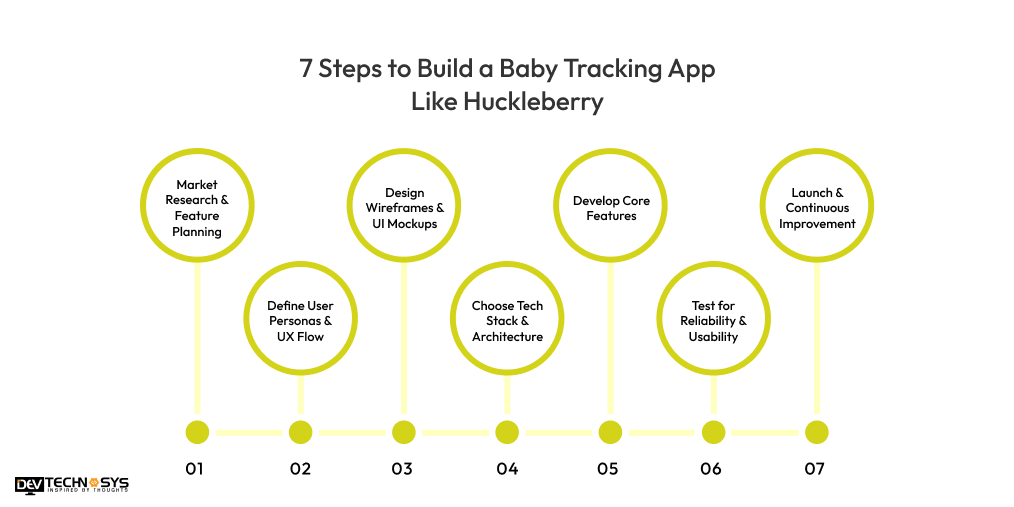
1. Market Research & Feature Planning
Study competitors like Huckleberry to understand user needs. Hire healthcare app developers to identify essential features: sleep tracking, feeding logs, diaper changes, growth charts, and personalized insights. Align functionality with parenting challenges and health recommendations from pediatric sources.
| What is the main objective of the project? |
| What are the competitors’ strengths and weaknesses? |
| What pricing strategies are common in this market? |
2. Define User Personas & UX Flow
Create detailed profiles for target users (e.g., new parents, caregivers). Design intuitive UX flows for logging baby activities quickly. Focus on accessibility, minimal navigation, and emotional reassurance to build trust and frequent app usage.
| Who are the primary users of the app (e.g., moms, dads, caregivers)? |
| What are their main pain points in daily baby care? |
| What emotional needs should the UX address (e.g., stress, reassurance)? |
3. Design Wireframes & UI Mockups
In the third stage of development, hire dedicated developers to sketch low-fidelity wireframes, then develop high-fidelity UI mockups. Prioritize clean layouts, soft color palettes, and calming visuals. Include dashboard widgets, data graphs, reminders, and onboarding tutorials to enhance first-time and daily user engagement.
| How should the home screen prioritize features? |
| What’s the simplest layout for logging baby activities? |
| Is the interface easy to use with one hand? |
4. Choose Tech Stack & Architecture
Select a mobile-friendly tech stack (e.g., Flutter/React Native for cross-platform, Firebase for backend). Ensure scalability, secure cloud storage, and real-time data sync. Use modular architecture to support future feature additions like AI sleep prediction or doctor integration.
| Which type of tech stacks are used in your Huckleberry clone app development? |
| Does the tech stack comply with industry standards or regulations? |
| Does the tech stack integrate easily with third-party services? |

5. Develop Core Features
Hire mobile app developers to build modules for logging (sleep, feeding, diapers), analytics, reminders, and user profiles. Integrate push notifications and data visualization tools. Ensure data is timestamped and editable. Add offline mode to support rural or low-connectivity environments.
| Which features are absolutely essential at launch? |
| How will users log sleep, feeding, and diapers quickly? |
| Will the app work offline and sync later? |
6. Test for Reliability & Usability
Hire mobile app development company to conduct extensive QA testing, including unit, integration, and usability tests with real parents. Focus on crash prevention, data accuracy, and ease of use. Collect feedback through beta releases to iterate UI/UX and prioritize bug fixes.
| What types of testing will be performed (e.g., unit, integration, end-to-end)? |
| How will performance and load testing be conducted? |
| How will security vulnerabilities be tested? |
7. Launch & Continuous Improvement
In the last mobile app development process, deploy to app stores with clear value messaging. Use analytics to monitor usage patterns and retention. Collect reviews, respond promptly to user issues, and release frequent updates with new features like AI sleep guides or pediatrician chat.
| Which platforms will the app be published on? |
| Is a post-launch support plan in place? |
| How will user feedback be collected and addressed? |
10 Essential and Premium Features of a Baby Tracking App Like Huckleberry
A well-designed baby tracking app like Huckleberry should combine ease of use with powerful tools to support parents in caring for their infants. Here are 10 essential features to include:
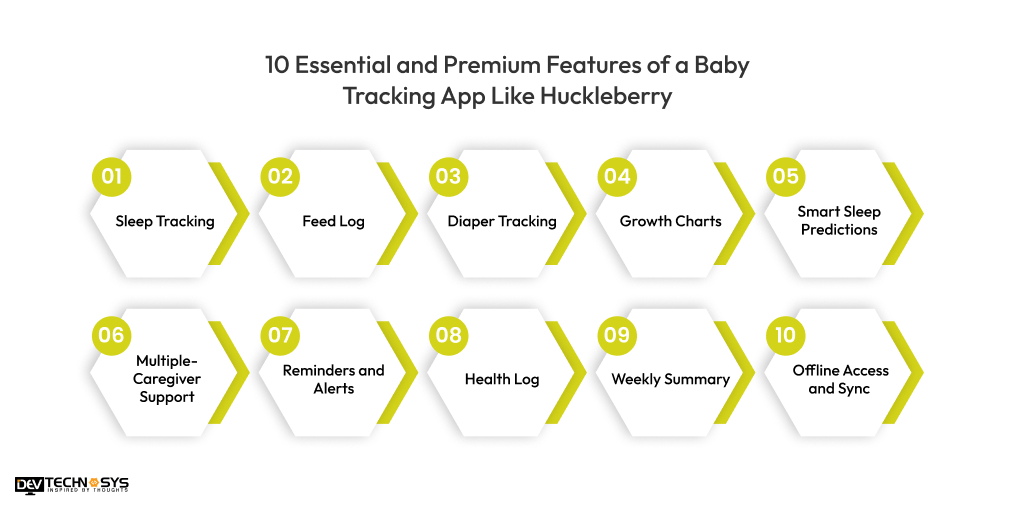
1. Sleep Tracking
Huckleberry alternatives track naps and nightly sleep lengths. Identify sleep patterns over time and learn about good sleep habits to help you rest and manage your routine.
2. Feed Log
Record nursing, bottle feeding, pumping, and solid meals. Keep track of quantity and time in order to successfully manage nutrition, feeding intervals, and food stage transitions.
3. Diaper Tracking
Keep a record of wet and soiled diapers to maintain proper hydration, digestion, and bowel movements. Helpful for identifying potential health issues early on and communicating with physicians.
4. Growth Charts
Monitor the baby’s weight, height, and head circumference. Visual growth charts compare development to WHO or CDC guidelines to ensure progress is on track.
5. Smart Sleep Predictions
Huckleberry clone app use AI or machine learning to propose nap and bedtime periods based on documented sleep data, assisting parents in developing regular and restful habits.
6. Multiple-Caregiver Support
If you create an app similar to Huckleberry, it allows many caregivers to log in and examine data from one account. Enables seamless surveillance and communication among parents, babysitters, and family members.
7. Reminders and Alerts
A similar app like Huckleberry sends updates about impending feeding times, diaper changes, naps, and appointments. Reduce mental tiredness and boost consistency in infant care practices.
8. Health Log
Keep track of prescriptions, temps, symptoms, and medical appointments. Consolidate caregivers’ medical history and daily health data into a single, easily accessible.
9. Weekly Summary
Huckleberry alternatives provide simple reports that highlight trends in sleep, eating, and diapering. Help parents spot patterns and make educated care decisions week after week.
10. Offline Access and Sync
The Huckleberry similar apps allow tracking without internet connectivity. When data is restored online, it immediately syncs, ensuring that logs are always up to date.
What is the Cost to Build a Baby Tracking App Like Huckleberry?
The cost to develop a baby tracking app like Huckleberry typically costs between $8,000 and $25,000, depending on features, complexity, and region of development. Basic versions with essential tracking (sleep, feeding, diapers) cost less, while advanced apps with AI-driven sleep predictions, premium subscriptions, and cross-platform support raise costs.
Development stages include UI/UX design, backend infrastructure, mobile app development, testing, and deployment. Hiring a U.S.-based team is costlier than outsourcing to Eastern Europe or Asia.
| Baby Tracking App Development | Estimated Cost | Time Frame |
| Basic App Development | $8000 – $12000 | 2 to 6 Months |
| Mid-Premium App Development | $14000 – $19000 | 6 to 8 Months |
| High-Premium App Development | $25000+ | 9+ Months |
5 Major Factors That Affect Baby Tracking App Development Cost
The cost to build a baby tracking app like Huckleberry is influenced by factors such as features (e.g., sleep, feeding logs), platform (iOS, Android, or both), design complexity, integration with wearable devices, backend infrastructure, security measures, development team expertise, and project timeline. Customizations and updates also impact baby tracker app development cost.
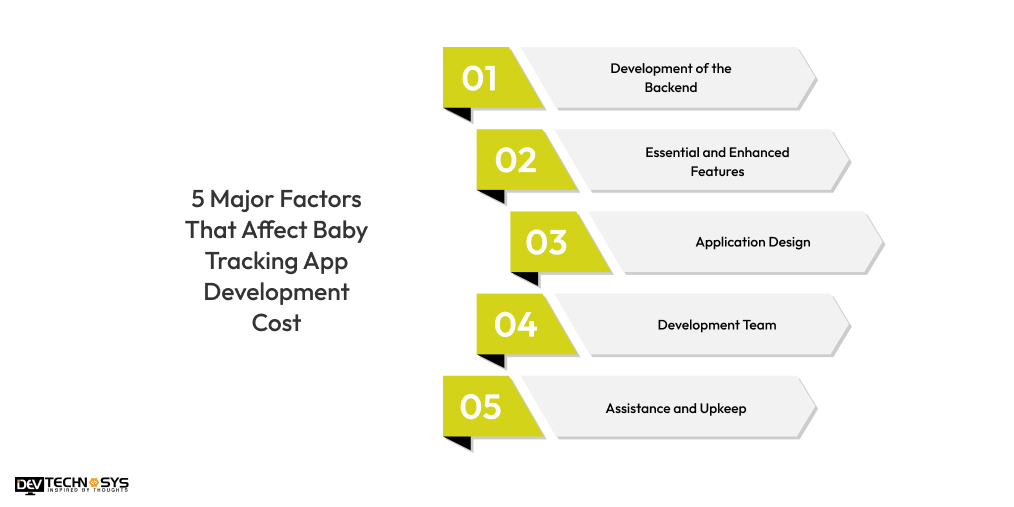
1. Development of the Backend
The back-end architecture enables the app’s main operations, such as infant data storage, device synchronization, and secure user account management. The Huckleberry app development cost varies depending on server configuration, cloud services, and scalability needs. A strong, secure, and scalable back end is required to handle real-time data and serve numerous users quickly.
| Backend Development | Cost Estimation |
| Simple Backend Process | $10,000 – $18,000 |
| Advanced Backend Process | $20,000 – $28,000 |
2. Essential and Enhanced Features
Sleep, eating, and diaper tracking are common features, with additional choices including AI-based sleep forecasts, growth charts, and tailored insights. The cost increases as the features get more complicated. Premium features such as reminders, multi-user access, and connectivity with wearables have a substantial impact on the total baby tracking mobile app development cost.
| Features | Cost Estimation |
| Core Features(Feeding Tracker and Sleep Tracker) | $8,000 – $10,000 |
| Advanced Features(Parental Insights/Reports and Health and Medication Tracker) | $13,000 – $19,000 |
3. Application Design
A clear, straightforward design geared to new parents is essential. To guarantee usability, UX/UI designers utilize wireframing, prototyping, and user testing. Custom graphics, animations, and accessibility features may raise the Huckleberry app development cost. The more refined and user-friendly the design, the longer the implementation process will take.
| Design Quality | Cost Estimation |
| Basic Design | $8,000 – $12,000 |
| Complex Design | $15,000 – $22,000 |
4. Development Team
Costs vary according to the size, experience, and location of your development team. A US-based agency costs more than recruiting freelancers or offshore developers. Typically, teams consist of developers, designers, project managers, and QA testers. Their knowledge and coordination have a direct impact on the cost to create a pregnancy tracking app.
| Developer’s Experience Level | Cost Estimation |
| Entry-Level Developer | $15 – $18/ Per Hour |
| Mid-Level Developer | $18 – $22/ Per Hour |
| Senior-Level Developer | $25+ / Per Hour |
5. Assistance and Upkeep
Post-launch support includes bug patches, frequent updates, performance monitoring, and user assistance. Maintenance guarantees compatibility with OS upgrades and gadgets, which keeps users happy. Costs are continual, averaging 15-20% of the initial cost to develop an app like Huckleberry. Regular maintenance is critical for app lifetime and sustaining a loyal user base.
| Maintenance Phase | Cost Estimation |
| Simple Maintenance Phase | $2,000 – $4,000/year |
| Complex Maintenance Phase | $7,000 – $9,000/year |

How to Make Money From a Baby Tracking App Like Huckleberry?
By combining these monetization strategies, you can generate income while still offering value to users, keeping them engaged and satisfied with the app. To monetize a baby tracking app like Huckleberry, consider the following strategies:
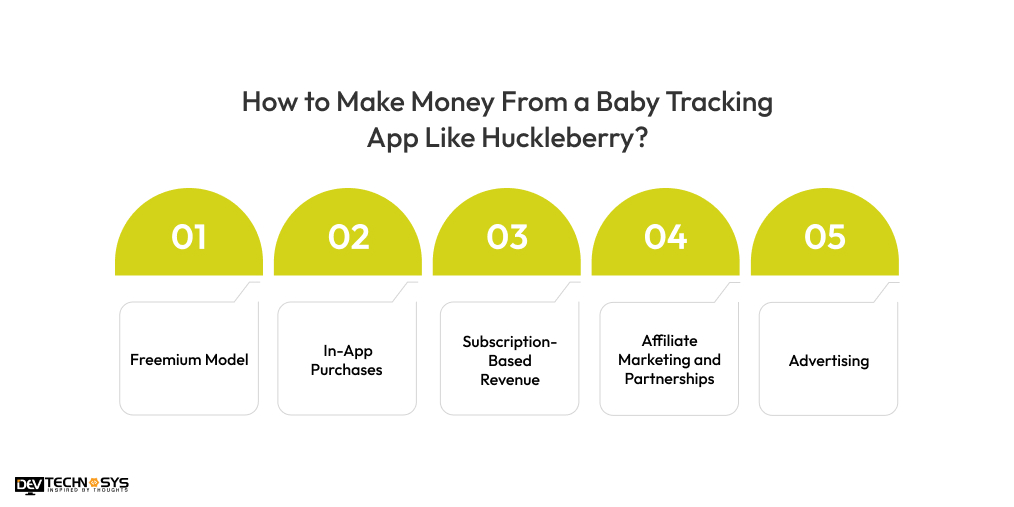
1. Freemium Model
Offer a free basic version of the app that includes critical functionality such as sleep and feeding tracking. Then, offer premium services as a subscription or one-time payment, such as enhanced insights, personalised sleep programs, or thorough progress monitoring. This enables you to attract a huge user base while making income from those who want more functionality.
2. In-App Purchases
Allow users to buy more content or tools from the app. For example, sell customized newborn care guidelines, professional consultations, or downloaded charts and milestone trackers. This allows users to pay for more resources without having to subscribe.
3. Subscription Based Revenue
Charge a regular subscription to have access to premium services like sleep coaching, health tracking, and expert guidance. According to the pregnancy app development company, this strategy assures steady revenue and allows for tiered service levels.
4. Affiliate Marketing and Partnerships
Partner with baby-related brands (diapers, toys, or health items) to incorporate affiliate marketing. Promote related goods to app users and earn a percentage on each transaction. You might also collaborate with pediatricians, healthcare experts, or sleep specialists to market their services or goods.
5. Advertising
Display non-intrusive adverts in the app. This can be very useful if you have a huge user base. Collaborate with companies that target new parents or family-oriented services to create contextually relevant advertisements. Ads for baby items or services, for example, might appear when parents are tracking milestones or updating their kid’s progress.
Conclusion
To create an app like Huckleberry involves a clear understanding of essential features, a user-friendly design, and robust performance. By focusing on personalized experiences, real-time insights, and intuitive interfaces, you can meet the needs of modern parents. Partnering with a baby tracking app development company can ensure that your app is technically sound, scalable, and secure. Such a company will provide expertise in app architecture, UI/UX design, and integrating advanced features like AI for predictive analytics, ultimately helping your app stand out in a competitive market.
Frequently Asked Questions
Q1. How Much Does It Cost To Build a Baby Tracking App Like Huckleberry?
The cost to develop a baby tracking app like Huckleberry typically ranges from $8,000 to $25,000, depending on features, platform (iOS/Android), design complexity, and the development team’s expertise.
Q2. How Much Time Does It Take to Create a Baby Tracking App Like Huckleberry?
To make a baby tracking app like Huckleberry, it typically takes 3 to 6 months, depending on the complexity of features, design, platform (iOS/Android), testing, and the development team’s efficiency. Customizations may extend the timeline.
Q3. What Technologies Should I Use to Make a Baby Tracking App Like Huckleberry?
To build an app like Huckleberry, use technologies like React Native or Swift for mobile development, Firebase or AWS for backend, AI/ML for personalized insights, and secure cloud storage for data management.
Q4. What Are The Core Features for a Baby Tracking App?
Core features for a baby tracking app include feeding logs, sleep tracking, diaper change monitoring, growth milestones, health tracking, reminders, multi-user access, data syncing, and personalized insights for parents.
Q5. What Platforms Should I Target for My App?
You should target both iOS and Android platforms for your baby tracking app to maximize reach. Developing for both ensures you cater to a larger audience of parents using different devices.