



















“Gather all inputs to determine the right cost of developing ERP software.”
Entrepreneurs can manage all enterprise level activities by creating an ERP software that automates user tasks and business processes. Additionally, it is crucial for them to know the right ERP software development cost by understanding different factors. The modern market elements include complexity, security, and design of the software along with location, experience, and team size.
The ERP software cost can be managed easily by implementing some basic reducing methods that we will discuss in this blog. Before that, it is necessary for you to know the need for developing ERP software and not any other.
In this ERP cost estimation guide, we will follow a set process to identify the accurate rate of developing ERP software.
What is the Need for Using ERP Software?
ERP software is crucial for optimizing operations in a rapidly changing company environment. It improves decision-making and efficiency by combining multiple corporate processes into a single system:
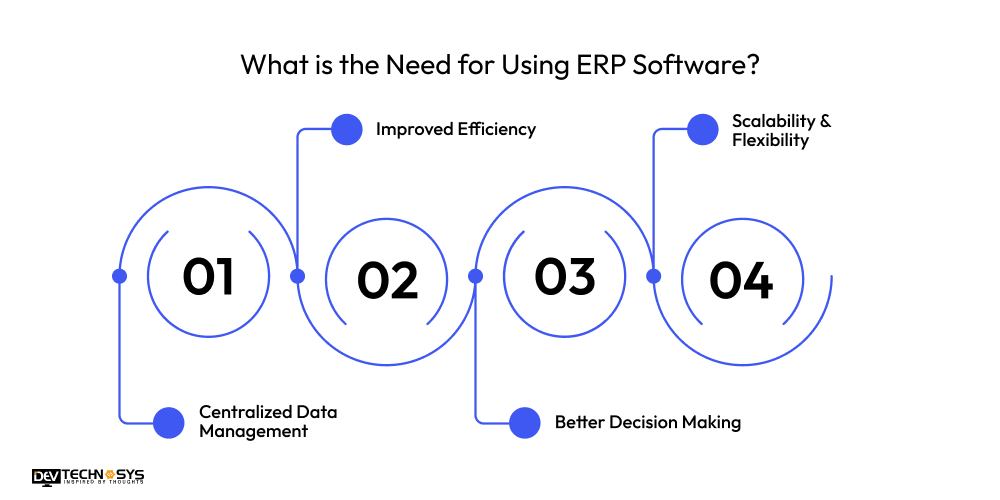
1. Centralized Data Management
ERP software eliminates duplication and ensures consistency by combining data from several departments. ERP development budget planning helps to make correct information accessible in real time. Collaboration and data-driven performance are enhanced by this centralization.
2. Improved Efficiency
ERP minimizes human error and manual labor by automating repetitive processes and procedures. It speeds up processes like order processing, payroll, and inventory management. Businesses can approach a software product development company to run corporate operations more smoothly and quickly.
3. Better Decision Making
For strategic planning, ERP systems provide real-time analytics and reporting capabilities. KPIs and performance measurements are easy for managers to keep an eye on. Decisions can be made more quickly and intelligently because of this timely insight access.
4. Scalability & Flexibility
ERP systems are made to expand with the business by meeting changing needs. They allow for the addition of new users and software development trends without interfering with essential functions. Long-term sustainability and a high return on investment are guaranteed by this flexibility.
Average Cost Breakdown for ERP Software Development
The Enterprise Resource Planning software development cost is dependent on a number of factors. Every stage, from design and planning to implementation and support, adds to the overall amount of money needed.
The system’s size, features, and ERP development frameworks and technologies all affect the ultimate cost. To assist businesses in efficiently planning their budgets, the main elements along with estimated costs are listed in this ERP software cost breakdown.
| Component | Average Cost (USD) |
| Requirement Analysis | $5,000 – $10,000 |
| UI/UX Design | $4,000 – $8,000 |
| Core Module Development | $15,000 – $40,000 |
| Custom Features | $10,000 – $25,000 |
| Integration with 3rd-Party Tools | $5,000 – $20,000 |
| Database Development | $4,000 – $10,000 |
| Testing & QA | $3,000 – $8,000 |
| Deployment (Cloud/On-premise) | $2,000 – $7,000 |
| Training & Documentation | $2,000 – $5,000 |
| Ongoing Maintenance & Support | $5,000 – $15,000 |
Factors Affecting the ERP Software Development Cost
Numerous technological, operational, and business factors affect the ERP software development cost. Being aware of these factors aids in improving budgeting and preventing unforeseen costs. The main elements that influence the overall development cost are listed below:
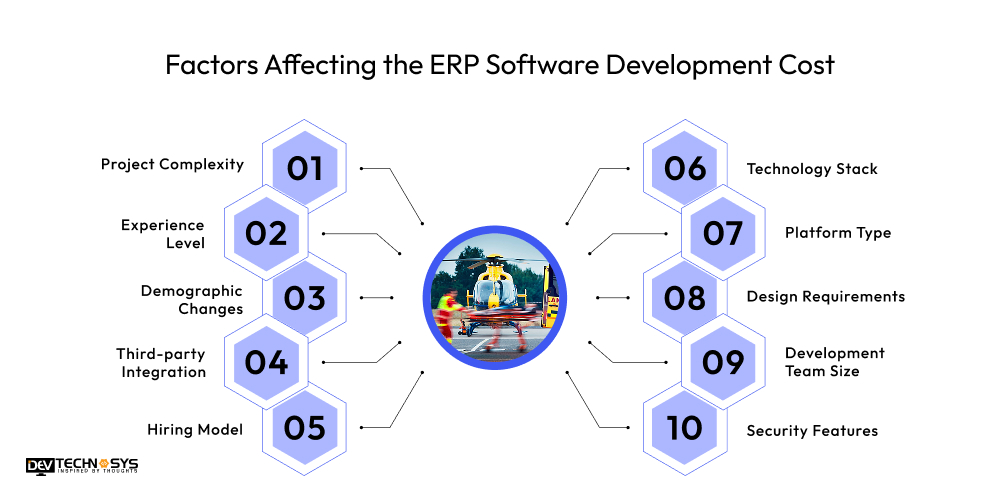
1. Project Complexity
An ERP system’s complexity increases with the number of features and implementation of CMS development services. More effort and experience are needed for sophisticated modules, automation, and complex workflows. This lengthens the time needed for development and raises related expenses.
| Component | Estimated Cost |
| Basic Modules (HR, Finance) | $10,000 – $20,000 |
| Moderate Complexity (Inventory, CRM) | $20,000 – $40,000 |
| Advanced Features (Automation, BI) | $40,000 – $70,000 |
| Enterprise-Level Customization | $70,000 – $100,000+ |
2. Experience Level
Employing seasoned agencies or developers guarantees better code with fewer mistakes. Professionals with more experience, usually charge more for their services. It is one of the major factors affecting ERP software cost. Cost-effective development requires striking a balance between budget and skill.
| Experience Level | Estimated Hourly Rate |
| Junior Developer | $20 – $40 |
| Mid-Level Developer | $40 – $80 |
| Senior Developer/Architect | $80 – $150+ |
3. Demographic Changes
Design and compliance may be impacted by the location of an enterprise product development company and local laws. Development work is increased when the ERP system is modified for localization or multilingual support. These changes in the population may result in higher expenses.
| Country | Avg Hourly Rate |
| USA | $100 – $150 |
| UK | $90 – $140 |
| UAE | $60 – $100 |
| India | $20 – $40 |
| Brazil | $30 – $60 |
| Japan | $80 – $120 |
| Canada | $80 – $130 |
| France | $70 – $120 |
4. Third-party Integration
The ERP software development cost is increased when the system is integrated with CRMs and payment gateways. Compatibility testing, data synchronization, and API management are necessary for every integration. Higher development costs and more time are associated with more integrations.
| Integration Type | Estimated Cost |
| Payment Gateway | $2,000 – $5,000 |
| CRM Integration | $3,000 – $7,000 |
| Accounting Software (e.g., QuickBooks) | $3,000 – $6,000 |
| API Custom Integration | $4,000 – $10,000 |
5. Hiring Model
Your budget is impacted by your decision to hire dedicated developers, freelancers, or outsourcing. Although outsourcing to foreign teams is frequently less expensive, it could also necessitate more stringent management. Cost and quality considerations vary depending on the model.
| Model | Estimated Cost |
| In-house Team | $20,000 – $50,000+ |
| Freelancers | $5,000 – $15,000 |
| Outsourcing Agency | $10,000 – $30,000 |

6. Technology Stack
The ERP system development cost is influenced by the tools, programming languages, and frameworks utilized. Specialized knowledge and license costs may be necessary for modern, scalable tech stacks. Budget and performance are balanced while selecting the appropriate stack.
| Technology Component | Estimated Cost |
| Backend (Node.js, Django) | $10,000 – $25,000 |
| Frontend (React, Angular) | $8,000 – $20,000 |
| Database (MySQL, PostgreSQL) | $5,000 – $10,000 |
| DevOps & Hosting Tools | $3,000 – $8,000 |
7. Platform Type
Depending on the demands of the organization, ERP systems might be cross-platform, mobile, or web-based. Every platform has different requirements for testing and development procedures. Supporting more than one platform will raise the web portal development cost in every region.
| Platform | Estimated Cost |
| Web-Based ERP | $20,000 – $50,000 |
| Mobile ERP (iOS/Android) | $25,000 – $60,000 |
| Cross-Platform ERP | $30,000 – $70,000 |
8. Design Requirements
It increases usability, responsive and user-friendly UI/UX design, but has a high ERP software development pricing model. More design work goes into custom layouts, animations, and branding. It can be necessary to hire expert designers to create an interface that is visually appealing.
| Design Type | Estimated Cost |
| Basic UI | $2,000 – $5,000 |
| Responsive/Adaptive Design | $5,000 – $10,000 |
| Custom Branded UI/UX | $10,000 – $20,000+ |
9. Development Team Size
While larger teams might expedite development, labor expenses also raise the cost to develop an ERP system. Every position, including project manager, developer, and tester, may increase the budget. To save needless costs, the team size should correspond with the project scope.
| Team Composition | Estimated Cost |
| Small Team | $8,000 – $15,000 |
| Medium Team | $15,000 – $30,000 |
| Large Team | $30,000 – $60,000+ |
Want a chatbot demo or pricing? Fill the form and talk to our experts today.
Pick what you need below — you can select more than one — then tap Get detail to continue.
-
Chatbot demo dashboard
-
Cost to develop an app
-
Industry report
-
Case study
10. Security Features
Strong security is necessary for user authentication, data protection, and regulatory compliance. The cost to build ERP software is increased by advanced security features including role-based access control, audit logs, and encryption. ERP systems require strong security, yet this raises total expenses.
| Security Feature | Estimated Cost |
| Basic Authentication & SSL | $1,000 – $3,000 |
| Role-Based Access Control | $2,000 – $5,000 |
| Data Encryption (At rest & transit) | $3,000 – $7,000 |
| Compliance (GDPR, HIPAA) | $5,000 – $15,000 |
Hidden Factors Affecting the Cost to Develop ERP Software
Businesses must consider these hidden aspects that can have a substantial impact on the ultimate ERP software development. Accurate financial planning requires better understanding of these factors:
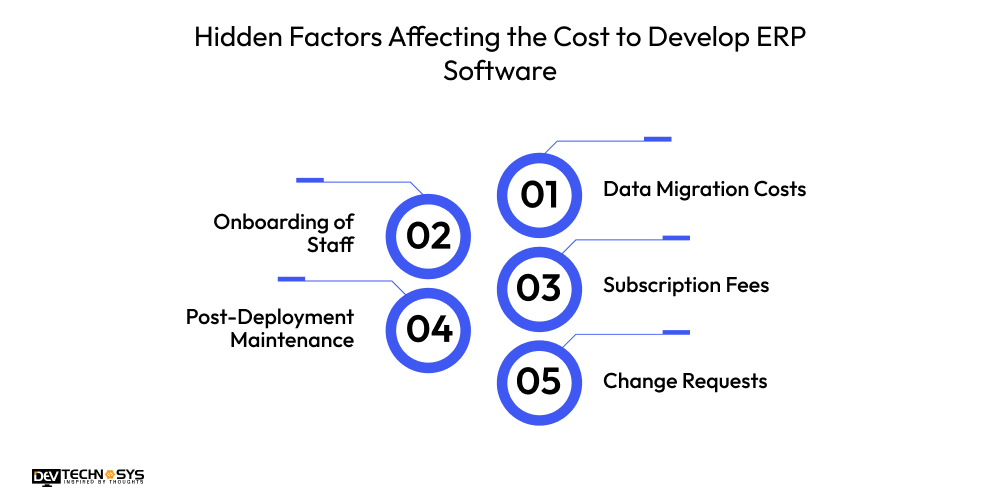
1. Data Migration Costs
It takes a lot of effort and time to move data from old ERP platforms to new ones. To guarantee accuracy, formatting, data cleansing, and use of top new technology trends could be necessary. The amount, structure, and compatibility of the data with the new system all affect the price.
2. Onboarding of Staff
Effective employee training for the ERP system is crucial but sometimes undervalued. An ERP development cost guide entails running workshops, writing guides, and offering assistance to users. Inadequate onboarding can result in inefficiencies and low adoption rates.
3. Subscription Fees
Monthly or yearly membership fees are frequently required to use ERP solutions for logistics and supply chain management. The amount of users, features, and storage needs can all affect these costs. Recurring membership fees can mount up over time and have an effect on long-term spending plans.
4. Post-Deployment Maintenance
Bug fixes, speed improvements, and feature updates are all part of ongoing maintenance. To resolve problems and guarantee system uptime, support teams can be required. These services typically have annual or usage-based billing, which affects the total custom ERP software cost.
5. Change Requests
Businesses may ask for changes or new features during or after MVP development. Every modification necessitates more testing, development time, and perhaps even redesign. Project timeframe delays and cost inflation might result from frequent or late-stage adjustments.
How to Reduce the ERP Software Development Cost?
A higher ERP software development cost can be managed by entrepreneurs by following suitable cost reducing methods. The below techniques reduce costs without sacrificing quality or functionality:
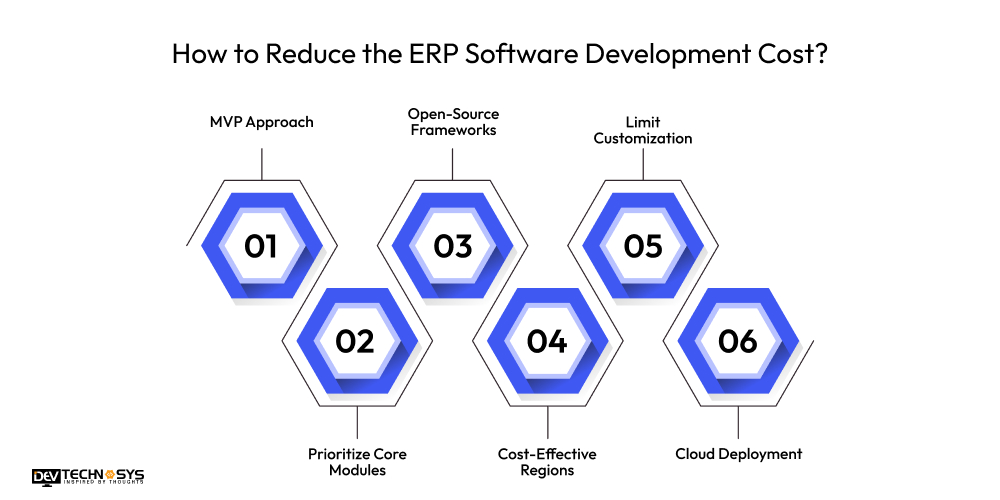
1. MVP Approach
By starting with an MVP, you can first develop only the most important features. This method collects customer feedback early on, speeds up development, and lowers upfront expenditures. You can hire software developers to guarantee allocation of important funds. The system can be progressively scaled in accordance with real business requirements.
2. Prioritize Core Modules
In the first phase, concentrate on the most important modules, such finance, inventories, or human resources. Refrain from developing every feature at once, as this would raise the ERP implementation cost and complexity. This facilitates effective budget allocation and expedites system implementation. Later, if your business grows, other modules can be added.
3. Open-Source Frameworks
License fees are decreased by using open-source ERP solutions like Odoo or ERPNext. These frameworks provide flexible customization options, community support, and strong functionality. You prevent vendor lock-in and save money on CRM development time. For startups and SMEs searching for affordable solutions, they are perfect.

4. Cost-Effective Regions
Prices can be considerably decreased by outsourcing development to nations with cheaper labor prices. Affordably priced talented developers can be found in places like Southeast Asia, India, and Eastern Europe.
To ensure quality and reduce the ERP deployment cost, make sure you collaborate with seasoned businesses. This approach strikes a balance between access to worldwide talent and cost savings.
5. Limit Customization
Over-customization makes ERP initiatives more complicated, time-consuming, and expensive. When feasible, stick to unconventional features and modify workflows to accommodate standard modules. Only genuinely unique business procedures should be customized. The use of ERP development trends reduces the chance of system bugs and speeds up development.
6. Cloud Deployment
By selecting a cloud-based ERP platform, significant cost of ERP software for small business can be avoided. It offers simplified maintenance, automatic upgrades, and scalability. You pay on a subscription basis, which increases predictability and cash flow. Cloud ERP is especially affordable for small and medium-sized enterprises.
In a Nutshell!!
Now, you have understood the factors that affect the ERP software development cost. So, it will be somewhat easy for you to start the development process. Here, before ending our blog, let’s discuss some points that will help you out for creating ERP software:
- Observe various business models using ERP systems for growth and revenue.
- Contact a reliable and experienced custom software development company in USA.
- Keep a flexible budget that can be modified anytime.
- Implement suitable monetization techniques to make money out of ERP systems.
By following these points you can easily become successful and target people in large numbers. You can launch your own ERP system offering advanced features at reasonable prices.
FAQs
1. What is the Average ERP Software Development Cost?
Depending on features and complexity, custom ERP software development might cost anywhere from $25,000 to $150,000 or more. Modules, user count, tech stack, and integration needs all affect costs. Advanced analytics and scalability features in enterprise-level ERP systems can cost more than $250,000.
2. What Factors Influence the Cost of ERP Development?
- Complexity of Features: Number of modules and advanced functionalities.
- Integration Needs: Tailoring the ERP to specific workflows and integrating.
- Technology Stack: Choosing cloud-based solutions and the technologies used.
3. How Does Cloud-Based ERP Compare to On-Premise in Terms of Cost?
It usually offers cheaper upfront expenses because cloud-based ERP doesn’t require any hardware and is subscription-based. On-premise ERP requires a large upfront investment in IT personnel, infrastructure, and licenses.
4. Can Small Businesses Afford Custom ERP Solutions?
If small enterprises concentrate on key modules and phase development, they can afford custom ERP. Choosing open-source frameworks or ERP in the MVP paradigm can drastically lower startup expenses. Numerous suppliers provide small business-oriented ERP solutions that are affordable and scalable.
5. What are the Ongoing Maintenance Costs for ERP Software?
The annual cost of ongoing maintenance for an ERP system usually falls between 15% and 25% of the system’s original development cost. These consist of infrastructure management, user assistance, security patches, and system updates.
6. Is it Cheaper to Outsource ERP Development?
It is typically less expensive to outsource ERP development than to construct internally. It provides access to worldwide expertise, lowers labor expenses, and does away with the need for permanent IT staff. However, to guarantee quality, security, and ongoing support, careful vendor selection is essential.