


















Key takeaways:
-
- It takes scalable technology, intuitive design, and strong backend infrastructure to create an app that is similar to Uber.
- Real-time GPS tracking, safe payments, ride scheduling, and a ratings system are among the essential features.
- Depending on platform, security, team location, and complexity, development costs range from $8,000 to $30,000
- Startups can compete by concentrating on providing a better user experience, identifying niches, and innovating.
A few taps on your mobile; rider connects and arrives, board the vehicle, reach destination; payment done. This process is easier for users, but what is behind it is actually worth discussing.
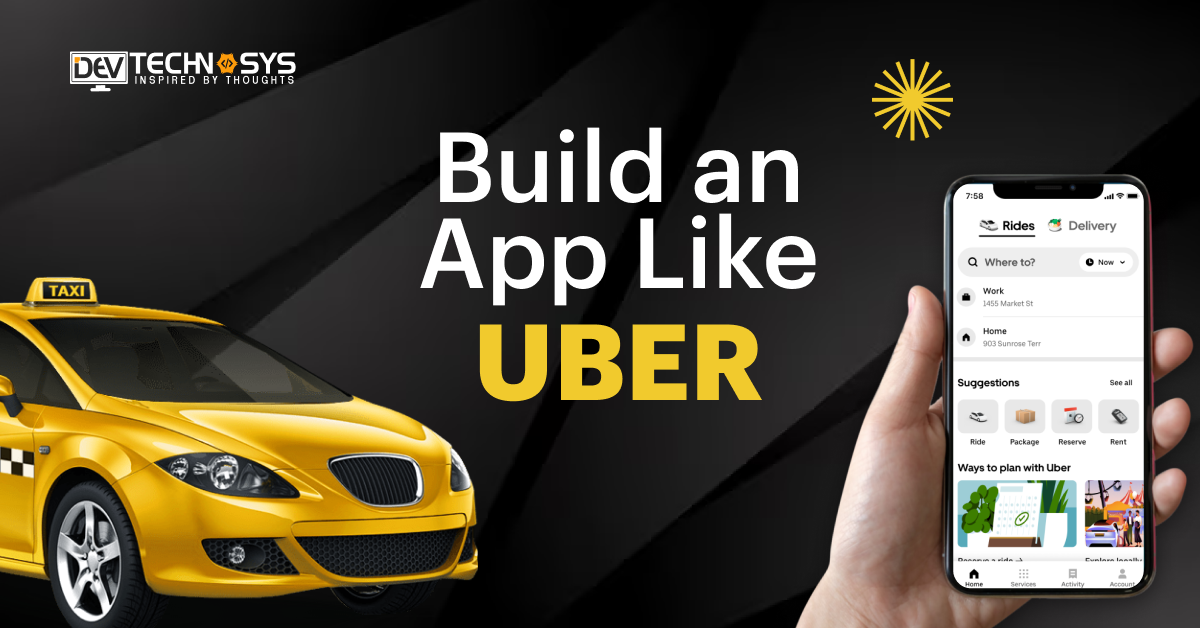
Ride-hailing apps have reshaped the way people commute, work, and earn money, and Uber is the perfect example. Simultaneously, entrepreneurs, startups, and enterprises are looking for opportunities to build an app like Uber.
Do you also want to tap into this rapidly growing on-demand mobility market? You must know that making Uber clones is not about copying the screen and features. It is about designing a user-friendly, scalable app that meets user demand and stands out from competitors.
Through this guide, let’s understand everything it takes to make an app like Uber. It covers every essential step from what exactly Uber is to how businesses make profits from it.
What is the Uber App?
The Uber app is a platform where users can simply request a ride from their phone. Then they get picked up by the nearby driver and dropped off at the destination. It allows users to not only book rides but also track drivers in real time and make cashless payments.
Uber was launched in 2009 and has now grown into a global ride-hailing service operator. It is popularly active in 10,000+ cities across 70+ countries. Other services that Uber offers are ride-sharing, food delivery (Uber Eats), package delivery, and freight logistics.
Key Features Offered by Uber:
- On-demand ride booking
- Real-time GPS tracking
- Multiple ride options (economy to premium)
- Cashless payments via cards, wallets, or UPI
- Driver and rider ratings for safety
- Fare estimation before booking
These features have made Uber the most preferred on-demand taxi app development.
Industry Insight:
According to UberX, Uber uses a powerful machine-learning platform. These platforms help analyze users’ time, location, and behavior patterns. With this, it can predict your destination with over 50% accuracy.
How Does the Uber App Work?
Matching with drivers, real-time tracking, payments, and completing a trip, the ride booking with Uber is a whole process. Learning how the app works is essential if you want to create an app like Uber. This is a step-by-step process explaining the complete user journey.
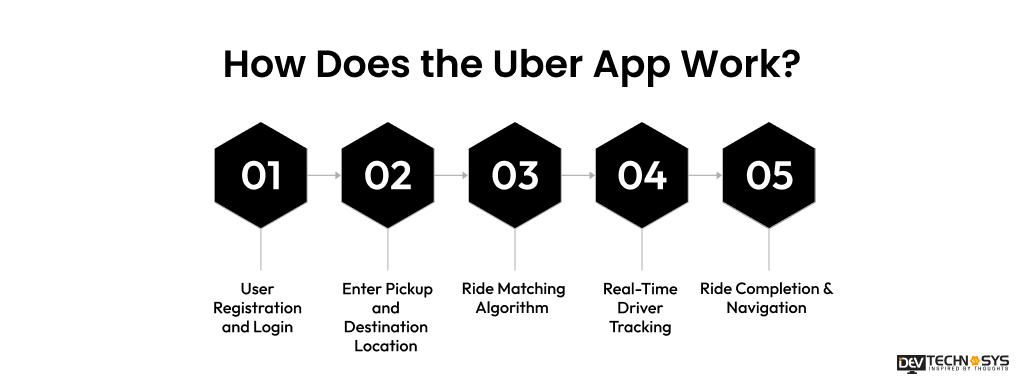
Step 1: User Registration and Login
Once you download the Uber app from the app store, you have to get registered. For registration, users have to create an account using their mobile number or email ID. After that, they have to add a payment method, either a credit card, debit card, wallet, or UPI.
Step 2: Enter Pickup and Destination Location
As you have logged in to the Uber app, you can immediately request rides. The pickup location of the user can automatically be detected by GPS technology. Then, you have to enter your drop location, and Uber calculates:
- Estimate fare
- Distance
- Estimated time of arrival
Due to this transparency, users can make informed decisions before booking.
Step 3: Ride Matching Algorithm
Then, Uber’s ride-matching algorithms or backend system works very actively. It identifies the drivers available nearby to the user. After that, it matched the rider with the driver closest to them. It sends a trip request on the driver’s app. If the driver accepts, the ride is confirmed instantly, and you will receive a notification.
Step 4: Real-Time Driver Tracking
Upon ride confirmation, users can effortlessly track the driver’s location in real-time. They even get the information about the driver, vehicle, OTP, and time. Users can even call or text the driver for an exact update or location to avoid confusion. This feature improves user safety, trust, and convenience altogether.
Step 5: Ride Completion & Navigation
Drivers use the built-in navigation system to reach the rider’s location and destination. To confirm the ride, you have to tell the OPT to the driver. When they put OTP, the navigation system gives the route updates on the driver’s device. These updates are according to:
- Traffic conditions
- Road closures
- Distance optimization
What Do Market Forecasts Reveal About the Ride‑Hailing Industry and Uber?
The ride-hailing industry is evolving rapidly, and Uber is the top example of this. This industry is highly driven by technology, changing consumer behavior, and urban mobility demands.
Here, we have examined the market insights on the ride booking industry and the top platform, Uber. It explains the growing trends, opportunities, and the future of transportation worldwide.
1. Market Stats For Taxi Booking/Ride Hailing Industry
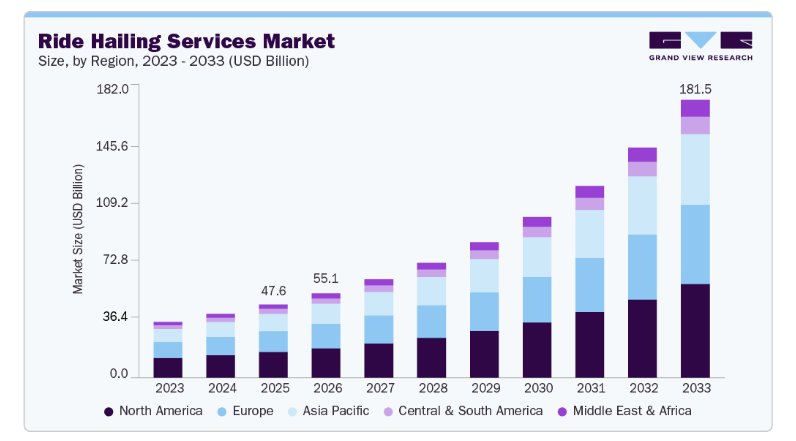
According to the analysis done by Grand View Research:
- The market size of ride-hailing services was priced at USD 47.61 billion in 2025.
- Whereas in 2026, this market size was valued at USD 55.07 billion.
- By 2033, these estimations are predicted to reach USD 181.54 billion.
- It is growing at a CAGR of 18.6% during the forecasted period from 2026 to 2033.
- In 2025, North America led the ride-hailing services market with a share of 35%.
2. Market Predictions on Uber
This research is based on the insights provided by Statista:
- Uber’s ride booking app operates in 70 countries, serving millions worldwide today.
- In 2025, Uber’s app reached $189 million monthly users globally across its ride-hailing markets.
- In 2024, Uber’s ride app enabled over $11.2 billion in trips worldwide through digital platform technology.
- Uber achieved profitability in 2023, strengthening its ride booking app’s long-term growth strategy globally.
- In 2025, Uber’s app generated $49.7 billion in gross bookings worldwide despite intense competition.
From Idea to First Ride: What is the Process of Uber-like Taxi App Development?
Building a taxi booking app like Uber requires a structured development journey. It begins with validating the idea and continues with after launch maintenance. An on-demand taxi app development needs a strategy that we will discuss now.
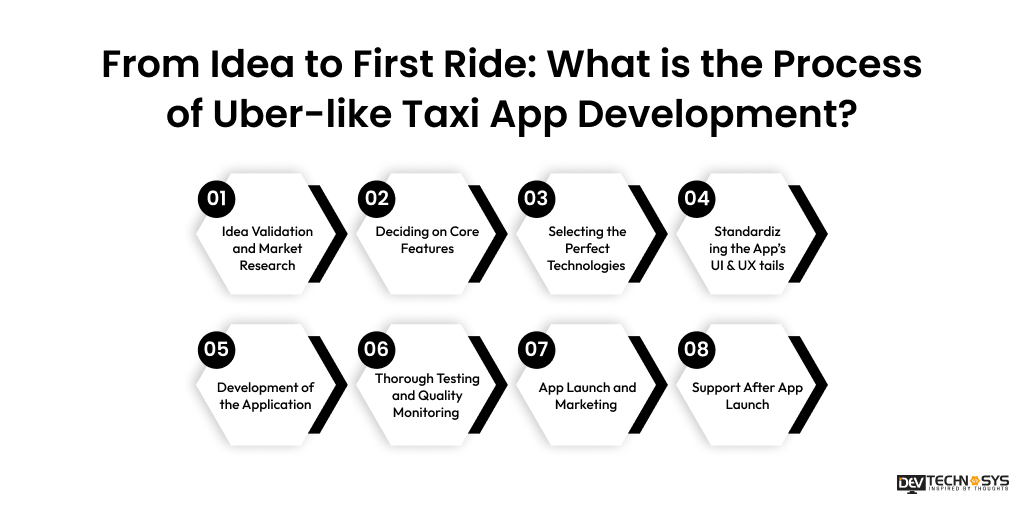
1. Idea Validation and Market Research
The idea to build a taxi booking app should be valid. It means, before developing, you should check whether it’s worth investing in or not. Then you have understood the market through the latest trends, user needs, competitiveness, targeted audiences, and competitors.
It is a really important and initial step for any app development. It helps you make sure your idea can work and earn money before building anything.
2. Deciding on Core Features
Now you have to decide what features you should add to your application. The common features include booking a ride, driver tracking, payments, and ratings.
These features should be according to the ease and convenience of users and drivers. One should strategically understand which features are really essential and which can wait for later. This leads to faster app launch while avoiding wasting time and money.
3. Selecting the Perfect Technologies
It is evident that the technology stack is the backbone of any application. So, you can hire dedicated developers to select ideal technologies. This involves selecting programming languages, frameworks, databases, cloud services, APIs, and security tools.
This selection helps create a scalable and reliable application that remains honest in the long term. Choosing good technology makes the app fast, safe, and easy to grow.
4. Standardizing the App’s UI & UX
Make sure you design your app in such a way that it can be used by anyone easily. The application should contain Clear screens, simple buttons, and smooth booking steps. This makes users book rides without any confusion.
A consistent and intuitive UI helps users quickly understand the app’s flow and complete actions effortlessly. It also improves user retention and satisfaction in ride-booking platforms.
Want a chatbot demo or pricing? Fill the form and talk to our experts today.
Pick what you need below — you can select more than one — then tap Get detail to continue.
-
Chatbot demo dashboard
-
Cost to develop an app
-
Industry report
-
Case study
5. Development of the Application
This step to build a ride sharing app involves proper, seamless, and careful coding to develop an app like Uber. This includes frontend development for the rider and river app interfaces.
The backend is also structured to manage ride requests, driver matching, pricing, and payments. This step also integrates APIs for maps, GPS, notifications, and real-time communication. In this step, your idea can be transformed into a real working app.
6. Thorough Testing and Quality Monitoring
After the development and before handling it for public use, detailed testing is mandatory. The testing helps find bugs, errors, and fixes them for an amazing user experience. When thorough testing is done, quality is monitored. The quality assurance ensures the app works well on different phones, locations, and internet speeds.
7. App Launch and Marketing
Now, you can release your app for public use on multiple app stores, ensuring proper app store optimization. But this is not enough to reach your targeted audiences.
You have to implement some marketing strategies for it. You can promote the app by offering ads, referrals, and local marketing to attract riders and drivers quickly.
8. Support After App Launch
After the app launch, a reliable and efficient mobile app development company provides post-release services. It includes services like bug fixing, performance monitoring, feature updates, new versions, and so on. This ongoing support, upgrades, and maintenance builds user trust in the app and helps users stay loyal to it.
What Core Features an app like Uber Should Incorporate?
To create an app like Uber, there should be a set of strong and core features. The essential features of an on-demand taxi app include seamless booking, real-time tracking, secure payments, and a smooth user experience. Now, we will learn about some of these driver and passenger features of taxi booking app.
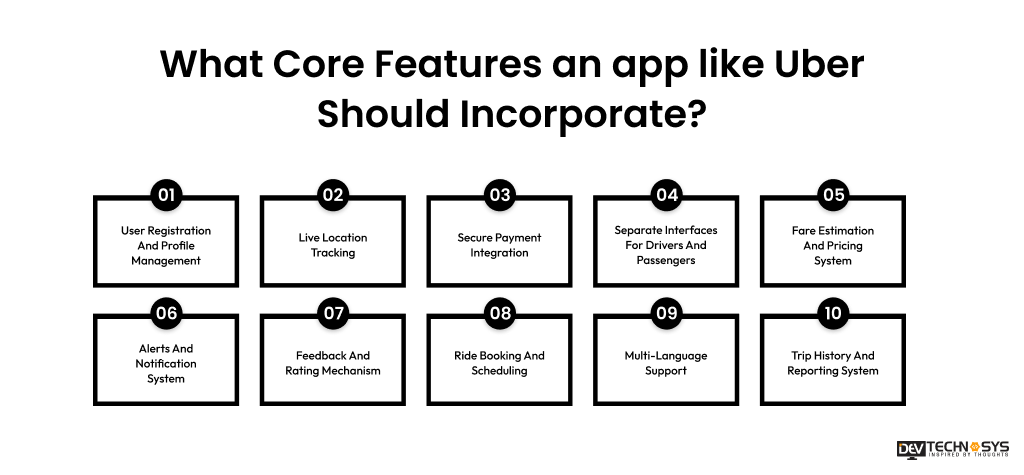
1. User Registration And Profile Management
The user registration and profile management feature lets users easily sign up and log in. It also helps users manage personal details like name, phone number, payment methods, and preferences. This feature makes sure the user gets a personalized, secure, and smooth experience.
2. Live Location Tracking
Live tracking is another important feature of an Uber-like application. It allows customers and drivers see each other’s real-time position on the map. A real-time GPS tracking app development is really helpful with accurate pickups, route navigation, and reduced waiting time.
3. Secure Payment Integration
Secure payment integration is the top priority for drivers as well as riders. In-app payments for taxi apps enable safe and easy payments using cards, wallets, or cashless options. This ensures the transactions made through the app are encrypted, reliable, and hassle-free.
4. Separate Interfaces For Drivers And Passengers
The Different interfaces should be available for passengers and drivers. Both the interfaces must integrate relevant tools, such as ride requests for drivers and booking options for passengers. It makes the app relevant, efficient, and intuitive.
5. Fare Estimation And Pricing System
With a motive to build a taxi booking app like Arro, a fare estimation system is a core feature. It calculates trip costs in advance according to distance, time, and demand. The ride fare calculator helps users know expected charges while ensuring fair and transparent pricing.
6. Alerts And Notification System
Alerts and push notifications send real-time updates to the drivers and passengers. It informs about ride confirmations, driver arrival, trip updates, cancellations, and payment receipts. Push notifications for a taxi app keep users informed while improving communication.
7. Feedback And Rating Mechanism
A taxi booking app development company adds ratings and reviews system in the app like Uber. Here, after every ride, users and drivers can rate and review each other. This is a useful feature to maintain service quality, build trust, and identify areas of improvement.
8. Ride Booking And Scheduling
Ride booking and scheduling let users book a ride immediately or even schedule it for later. This feature offers convenience and flexibility for pre-planned trips. It is also a helpful feature for daily commutes and urgent travel needs.
9. Multi-Language Support
A multi-language taxi app supports users to comfortably book their ride and communicate with the driver in their preferred language. It is helpful for users from different regions and diverse audiences. This feature improves accessibility, inclusivity, and user experience.
10. Trip History And Reporting System
The trip history and reporting feature stores past ride details, including routes, fares, and dates. It is necessary for users to review trips, download invoices, and manage expenses. This feature is also useful in resolving any kind of dispute related to any ride.
Industry Insight:
Uber’s systems generate over 30 million real-time match predictions per minute, considering traffic, direction, and distance, as per UberX.
Why are Entrepreneurs Interested in Developing an App Like Uber?
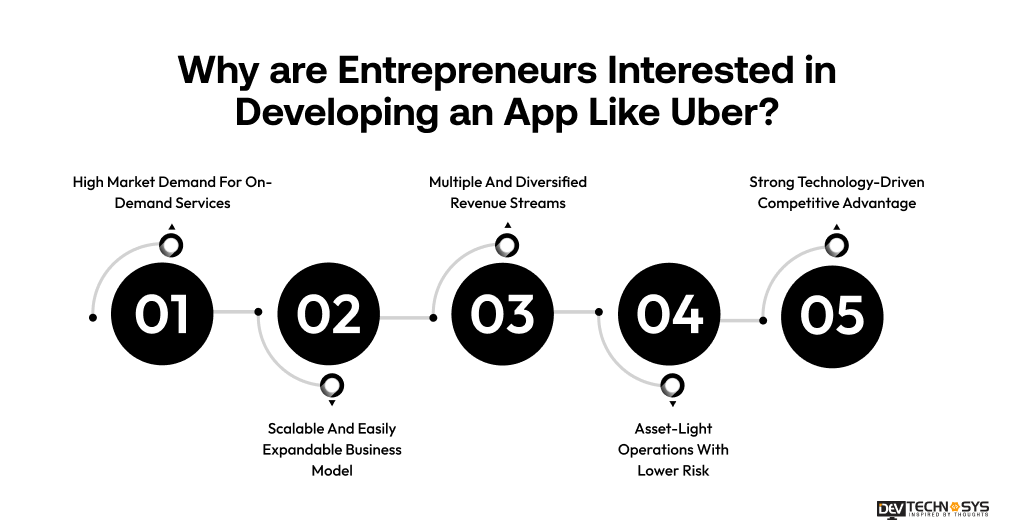
Due to strong user demand and recurring revenue potential, entrepreneurs like to invest in developing an Uber-like app. Such platforms combines advanced technologies and scalable business models. Among other on-demand services, an app like Uber can be a great option in many ways that we will discuss below:
1. High Market Demand For On-Demand Services
Uber clone apps offer on-demand services that are highly in demand for commuting anywhere easily. People nowadays are so busy that they generally values for speed, convenience, and reliability. This makes ride-hailing a consistently used service with a large and growing user base, especially in urban markets.
2. Scalable And Easily Expandable Business Model
Building an Uber alternative is considered one of the most scalable and expandable business models. When such a platform is built, entrepreneurs can easily expand this model into new cities and countries. All it requires is minimal additional infrastructure that allows rapid growth and strong ROI.
3. Multiple And Diversified Revenue Streams
Apps like Uber can seamlessly generate revenue by implementing multiple money-making models. It includes commissions, surge pricing, subscriptions, advertisements, and partnerships.
These models reduce the dependency on a single income source and increase long-term financial stability.
4. Asset-Light Operations With Lower Risk
Entrepreneurs don’s need to purchase vehicles or hire drivers as full-time employees. Drivers can use their own vehicle, and this app as a side income without needing to be fully employed. This significantly reduces capital investment, maintenance costs, and financial risks. It allow business to focus on the app’s growth and efficiency.
5. Strong Technology-Driven Competitive Advantage
Nowadays, every app, including apps like Uber, integrates advanced features. These features include GPS tracking, real-time analytics, AI-based pricing, and seamless digital payments. It gives entrepreneurs a competitive edge while improving efficiency, transparency, and user (both rider and driver) trust.
You can reach out anytime; we are available 24/7. Our team provides a quick response.

What is the Cost to Build an App Like Uber?
The average cost to make an app like Uber can be estimated between $8,000 and $30,000. The final budget for Uber clone app development is determined by its level of complexity. Let’s understand how the complexity matters:
- Opting for ride-hailing app development with an MVP structure includes basic but core features, design, integrations, functionalities, etc. These features don’t increase the complexity of the app. Therefore, the taxi booking app development cost for a simple app ranges from $8,000 to $16,000.
- A mid-range app comes with advanced UI/UX design, GPS tracking, multi-payment options, a scalable backend, and more. These minimal advancements keep the development complexity moderate. That’s why standard ride scheduling and booking app expenses are expected to be between $16,000 and $22,000.
- When it comes to a highly advanced and fully featured app, it has higher complexity. It offers features such as AI-powered route optimization, dynamic surge pricing, multi-language support, fraud detection, and more. The ride hailing app development cost can typically fall within $22,000 to $30,000.
We will now grasp this thoroughly with a cost to develop a taxi booking app breakdown table:
Complexity Level |
Development Effort |
Time Required |
Cost Range |
| Low | Core feature implementation | 2–3 months | $8,000–$16,000 |
| Moderate | Advanced feature integration | 4-6 months | $16,000–$22,000 |
| High | Enterprise-grade system development | 6+ months | $22,000–$30,000 |
Apart from the features and complexity, several other factors are present that increase the cost to develop an App Like Uber. It includes backend infrastructure, the development team, and location, design standards, and so forth. Know about these factors, as they help in perfect development and budget planning.
1. Development Team
Whether you select an in-house team, a freelancer, or a development company, it significantly impacts the cost. In-house teams work on the salaries, and freelancers offer a lower upfront cost. A development agency provides expert, end-to-end, and structured transportation app development. However, it raises the cost to build an app like Uber.
Option |
Description |
Estimated Cost Range (USD) |
| Freelancer | Independent developers who charge lower upfront fees, suitable for small or basic apps | $2,000 – $5,000 |
| In-house Team | Dedicated company employees working full-time, offering better control but higher salaries | $5,000 – $10,000 |
| Development Agency | Professional agencies providing end-to-end app development, design, testing, and deployment | $10,000 – $15,000 |
2. Security and Compliance
Those who want to develop a taxi booking app like Indrive must focus on security and compliance. This affects the Uber app development cost via data protection, encryption standards, regulatory adherence, and risk management. As the app works across regions, it has to meet legal frameworks like GDPR or PCI-DSS. The secured systems and continuous compliance monitoring impact the taxi booking app cost.
Security Aspect |
Description |
Estimated Cost Range (USD) |
| Basic Data Protection | Implementing encryption and simple security protocols to protect user data | $1,000 – $2,000 |
| Regulatory Adherence | Ensuring the app meets regional laws like GDPR or PCI-DSS for legal compliance | $2,000 – $4,000 |
| Continuous Monitoring | Ongoing audits, threat detection, and risk management for long-term app security | $4,000 – $6,000 |
3. Backend Infrastructure
The backend server, cloud services, data storage, APIs, and real-time processing make a strong Uber app architecture. This robustness of the backend is demanded for Uber alternative apps that handle a large user base. This can strengthen the scalability while influencing operational and maintenance ride hailing app development cost.
Component |
Description |
Estimated Cost Range (USD) |
| Basic Server & Cloud | Core server setup and cloud services to host app data and requests | $3,500 – $6,000 |
| APIs & Real-Time Processing | Integration of APIs and real-time features for seamless ride booking and tracking | $6,000 – $10,000 |
| Scalable Backend | Robust backend architecture to support high user traffic and app growth | $10,000 – $15,000 |
4. Development Team’s Location
The location of the developers also influences the price to create an app similar to Uber. The locations like North America and Western Europe typically involve higher budgets due to the elevated per-hour cost to develop an App Like Uber. But when you hire mobile app developers from Eastern Europe, South Asia, and Southeast Asia, it lowers the ride-hailing app development cost.
Location |
Description |
Estimated Cost Range (USD) |
| South Asia / Southeast Asia | Lower hourly rates are cost-effective for startups and small projects | $1,200 – $2,500 |
| Eastern Europe | Moderate development rates with good quality, balancing cost and expertise | $2,500 – $4,000 |
| North America / Western Europe | High per-hour charges due to experienced developers increases overall budget | $4,000 – $6,000 |
5. Selection of Platform
Choosing a platform, either Android, iOS, or both, can affect the cost to make an app similar to Uber. Separate platforms require different frameworks, testing processes, updates, and maintenance cycles. This increases the total taxi booking app development cost. But if you make a cross-platform app can optimize the Uber app development cost.
Platform |
Description |
Estimated Cost Range (USD) |
| Cross-Platform | Develop once for both Android and iOS, reducing cost and time | $8,000 – $15,000 |
| Single Platform (Android or iOS) | Native development for one platform with better performance, but separate codebases | $15,000 – $22,000 |
| Both Native Platforms | Full-featured native apps for Android and iOS, offering optimal performance but a higher cost | $22,000 – $30,000 |
What Are The Top Taxi Booking Apps Like Uber?
With instant rides, transparent pricing, and seamless digital payments, taxi booking apps are transforming urban mobility. Today, multiple cab booking apps are competing globally and delivering reliable transportation solutions. Here is a list of Uber alternatives that are dynamic in regional markets and evolving user expectations.
App Name |
Year Launched |
Ratings |
Downloads |
Platform Availability |
| Lyft | 2012 | 4/5 | 50M+ | Android, iOS |
| inDrive | 2013 | 4.6/5 | 360M+ | Android, iOS |
| Ola | 2010 | 4.1/5 | 100M+ | Android, iOS |
| Careem | 2012 | 4.6/5 | 50M+ | Android, iOS |
| Bolt | 2013 | 4.7/5 | 50M+ | Android, iOS |
| BlaBlaCar | 2006 | 4.3/5 | 50M+ | Android, iOS |
| DiDi Chuxing | 2012 | 4.2/5 | 50M+ | Android, iOS |
| Grab | 2012 | 4/5 | 100M+ | Android, iOS |
| Curb | 2015 | 4/5 | 1M+ | Android, iOS |
| Yandex Taxi | 2011 | 4/5 | 100M+ | Android, iOS |
Now, we will have detailed information about the top 5 Uber clones and how they are shaping the ride-hailing ecosystem.
1. inDrive
inDrive is a popular ride-hailing app in Latin America, Africa, the Middle East, and parts of Asia. This app lets users set a fare, and drivers choose whether to accept it.
It offers the option of fair negotiation by removing surge prices. This app also provides real-time tracking, driver ratings, and operates across multiple countries with strong user trust.
2. Ola
Another well-known and widely used Taxi booking app software is Ola. People can book cabs, auto-rickshaws, bike taxis, rentals, and outstation rides easily.
It is the largely preferred Uber-like app in India that focuses on affordability. With safety tools and convenient in-app payments, Ola offers reliability to millions of daily users.
3. BlaBlaCar
BlaBlaCar is basically a carpooling platform designed especially for long-distance travelling. With this app, drivers or even car owners can connect with passengers heading to the same destination. It reduces individual travelling costs and encourages sustainability. It is a trusted app with verified drivers and good user ratings.

4. Curb
Curb is a famous app in major cities like New York, Los Angeles, Chicago, Boston, and Washington. It connects riders with licensed and regulated taxis for supreme urban transportation. Through this app, users can book, schedule, or pay for professional drivers with transparent pricing.
5. Yandex Taxi
Yendex Taxi is among the top ride-sharing applications that operates primarily in Russia and nearby regions. It is known for integrating advanced technologies for route optimization, fast driver matching, and multiple payment options. It effectively connects traditional taxis with other urban mobility and transportation services.
Industry Insight:
Uber isn’t just rides, it’s Uber Eats, freight, scooters, and more, as per Emergen Research. All live in the same tech ecosystem, making it a multi-service platform.
What Makes Your Uber-Like App Stand Out in 2026?
Developing on-demand mobility solutions like Uber is something beyond just a ride-booking app. In 2026, such apps stand out due to their innovation, user experience, and scalable technology.
That’s why businesses look for something beyond basics to make the app stay competitive in this ever-changing landscape. We will now discuss some points that make an Uber-like app development stand out in 2026.
1. Personalization with AI Integration
Adding AI to a ride-sharing application helps in analyzing user behavior, location, and ride history. An AI-powered ride booking app recommends preferred routes, estimates fares, and improves booking speed.
2. Ecosystem for Driver Retention
A ride-sharing application must offer fair earnings, incentives, flexible schedules, and transparent policies to drivers. When the app’s system is driver-focused, it improves service quality and consistent ride availability.
3. Multiple Services on a Single Platform
Build a multi-service mobility platform that offers ride-hailing, food delivery, bike rentals, and logistics in one app. This will increase user engagement, retention, and even create several revenue streams.
4. Hyperlocal Market Optimization
A hyperlocal taxi app solution generally focuses on specific regions only. With this, they offer localized pricing, language support, and custom features. It helps businesses better meet user needs.
Uber vs Ola vs Lyft vs inDrive: Features, Pricing & Market Comparison
Uber is a leading brand known for its scalability and AI-powered features. So are its competitors like Ola, Lyft, and inDrive, globally known for their uniqueness. We will understand this through a comparison table:
Factor |
Uber |
Ola |
Lyft |
inDrive |
| Availability | 70+ countries worldwide | India + limited global presence | USA & Canada | 40+ countries (emerging markets) |
| Pricing Model | Dynamic surge pricing | Competitive, often lower fares | Transparent pricing with limited surge | User-driven bidding (set your fare) |
| Key Services | Rides, food delivery, freight, rentals | Cabs, autos, bikes, rentals | Rides, shared rides, bikes | Ride-hailing with fare negotiation |
| Technology Strength | Advanced AI, route prediction | Strong local optimization | User-friendly UX, reliability | Unique pricing algorithm |
| Target Market | Global urban users | Price-sensitive regional users | North American users | Cost-conscious global users |
| Unique USP | Scalable tech ecosystem | Affordable mobility solutions | Strong brand trust in the US |
Freedom to negotiate ride fares |
What are the Money-Making Models Implemented in App-Like Uber For Recurring Revenue?
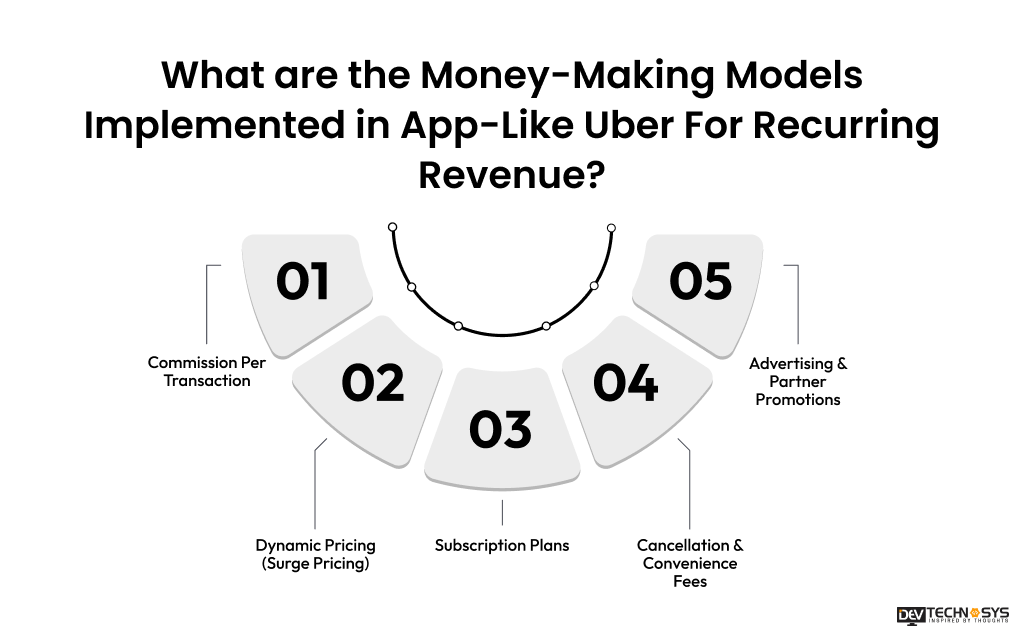
Money-making models in an Uber-like app are commission, subscription, surge pricing, cancellation charge, etc. These strategies can help app owners build continuous income streams and maintain the app’s profitability. We will now learn some of these models and how they help in generating regular revenue.
1. Commission Per Transaction
The platform, like Uber, can take a small commission on every ride or service completed. This helps the app scale naturally as long as users keep booking ride services. Commission per transaction is a great and highly preferred monetization model.
2. Dynamic Pricing (Surge Pricing)
During the low supply period and high demand, the app can include surge charges. This can easily raise revenue per transaction, balance demand, and even offer incentives to drivers. It also helps ensure ride availability during peak hours while maintaining fair and dynamic pricing.
3. Subscription Plans
Regular app users can opt for a monthly or yearly subscription plan to get premium services. It includes benefits such as discounted rides, priority bookings, or reduced commissions. This can predict a continuous income for the app owners.
4. Cancellation & Convenience Fees
A small fee can be charged for late cancellations, no-shows, or premium conveniences. This can be taken as an incremental revenue for app owners. This focuses on encouraging better user behavior and platform reliability.
5. Advertising & Partner Promotions
Businesses usually pay for the app to promote services, brands, and offers. This monetization model generates additional revenue streams. It also enhances user engagement by offering irrelevant promotions without interrupting user experience.
What Uber Got Right and What New Apps Can Do Better in 2026?
1. What Uber Got Right?
Uber is a highly successful app that has nailed an early growth mechanism. It solved real issues such as unreliable taxis, safety, payment, and more. It integrates cashless payments, GPS tracking, and other features for user convenience. It is expanding its services from city-to-city and is scaling fast and dominating mindshare early.
2. What Mistakes Did Uber Make?
Despite everything great, here are some mistakes made by Uber during its tenure. These are:
- Surge pricing helped increase revenue, but poor communication during emergencies upset users.
- High driver incentives at first, followed by lower rates, caused drivers to leave and lose trust.
- Lack of long-term driver support also led to loyalty issues and legal challenges in many regions.
3. What New Uber-like Apps Can Do in 2026?
New apps can do better by building a better and smarter human-first platform in 2026. It must include pricing driven by AI for more transparency, predictions, and fairness. This app should balance demand and supply during peak time while reducing shocking surge prices.
In 2026, the latest apps should focus on sustainability by involving EV-first fleets, carbon tracking, and green ride options. For drivers, the app can offer flexible earnings models, benefits, and income stability.
The upcoming apps, like Uber, can be different because of multimodal transportation and better customer support.
Conclusion
To develop an app like Uber, strategically blended technology, market understanding, and scalable infrastructure are needed. From selecting the features to monetization models, every decision directly affects the app’s performance and development cost.
For the success of the app, businesses should work as per regional regulations, competitive dynamics, and evolving user expectations. The continuous expansion of Uber explains how important continuous innovation and data-driven operations are.
Startups or large enterprises aiming to build an app like Uber must contact a taxi booking app development company. Partnering with an experienced development agency ensures timely delivery, robust performance, and a competitive edge in the competitive ride-hailing market.