
















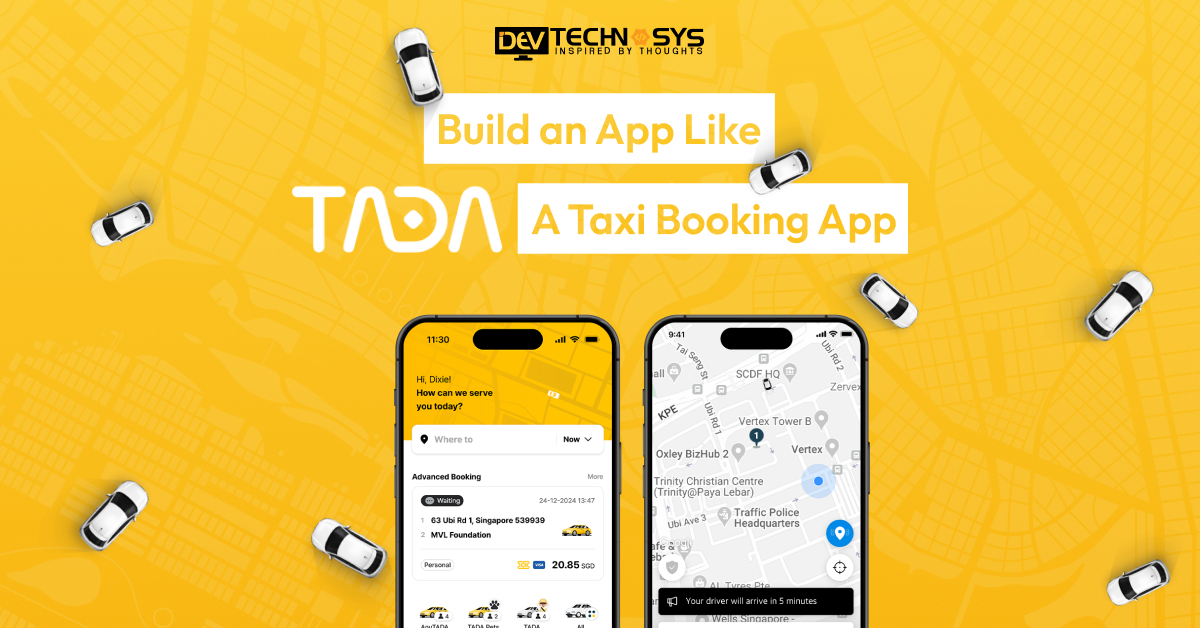
As we progress towards 2026, convenience has become a key to surviving in today’s hyper-connected digital world. And the convenience of on-demand mobility services is thriving at its core. The modern taxi booking applications like TADA have taken the place of traditional taxi app services.
According to Straits Research, the global taxi market size is expected to reach USD 292.60 billion in 2025 and USD 587.31 billion by 2033. This shows the rise in demand for online taxi booking applications across the urban and semi-urban landscape.
Especially for businesses entering this new venture, taxi booking app development brings lucrative opportunities to establish a strong foothold in this industry.
Therefore, we have created this helpful guide to build an app like TADA that explores everything you need to know about how to make a taxi booking app in the ever-growing transportation industry.
So, without further ado, let’s dive in!
Taxi Booking App Market Stats
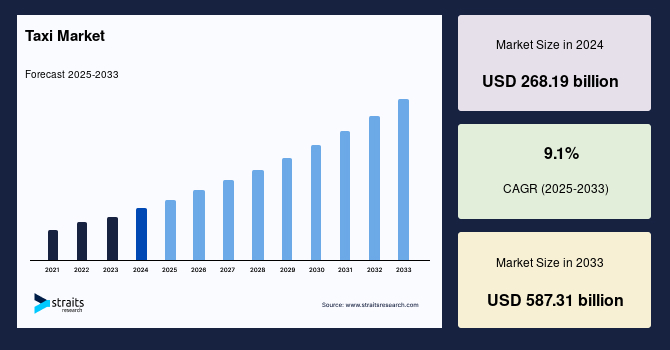
- The global taxi market size is estimated to reach USD 292.60 billion in 2025 and USD 31 billion by 2033, growing at a CAGR of 9.1% during the forecast period (2025-2033).
- The use of electric vehicles (EVs) in this industry is still low, with only 2% of taxi fleets having clean cars in 2023.
- The Asia-Pacific taxi market comprises diverse economies, including China, India, Japan, Australia, Thailand, Singapore, Vietnam, and the Philippines.
- Android platforms dominate the taxi app market with a 65% share in 2023.
- Overall, the taxi app industry has witnessed significant growth, with over 300 million users worldwide
What is the TADA App?
TADA is a mobile app designed to help users hail rides and provide a fairer service to both riders and drivers. TADA taxi booking app offers a stress-free riding experience through excellent matching technology that pairs riders with drivers in an instant. Whether you want a Cab, taxi, tuk-tuk, SUV, or eco-friendly EV, TATA has it all. In summary, TADA is an excellent app that offers a higher-quality service and a safer riding experience.
Why are Taxi Apps Like TADA Gaining Popularity?
Want to know why similar apps like TADA are gaining popularity? Well, besides the convenience of travelling, there are various other reasons why TADA app alternatives are gaining popularity. Let’s uncover some of the major ones:
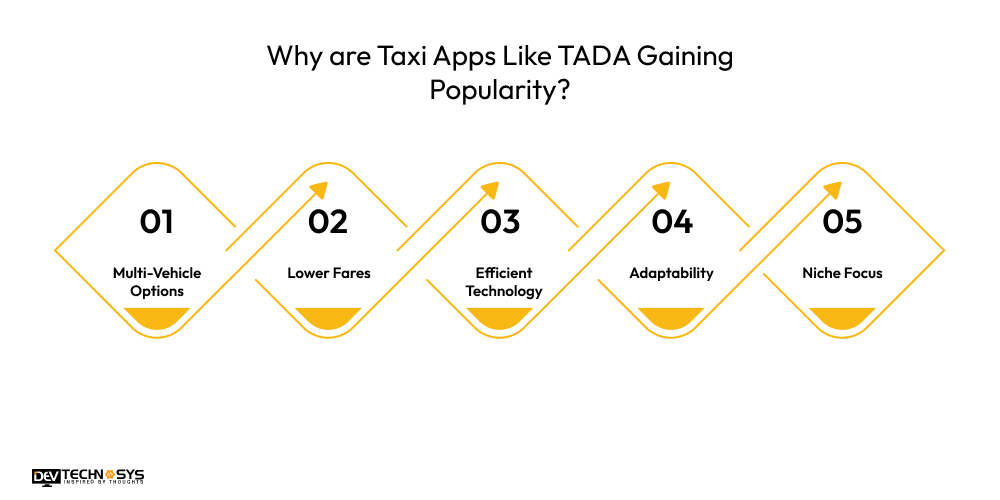
- Multi-Vehicle Options: TADA like taxi booking app offers different ride categories, standard, premium, and larger vehicles, allowing users to choose based on comfort, budget, or group size.
- Efficient Technology: With intelligent routing, real-time tracking, and optimized matching algorithms, TADA is among the best taxi booking apps that ensure faster pickups, smoother navigation, and reliable trip management.
- Niche Focus: By positioning itself as a trustworthy, driver-friendly, and community-centric platform, TADA appeals to users seeking transparency, fairness, and ethical ride-hailing alternatives.
- Lower Fares: TADA taxi booking mobile application operates on a zero-commission model, enabling drivers to earn more while passengers pay lower fares than on traditional taxi apps.
- Adaptability: TADA Taxi App Solution quickly adapts to user needs, local regulations, market changes, and regional demands. It offers a more tailored ride-hailing experience.
Can You Explain the State-Wise Regulations for Taxi Apps in the USA?
Whether you want to build a taxi booking app like Gett or TADA, if you are launching an app in the USA, you need to meet several regulatory requirements. Here are some crucial state-wise regulations for taxi apps in the USA:
1. California
California regulates online taxi booking applications under the California Public Utilities Commission (CPUC). California is known for having some of the strictest ride-hailing regulations in the U.S. Key regulatory requirements for car rental apps like Turo in California include:
- Mandatory driver background checks
- Commercial insurance coverage
- Regular vehicle inspections
- Compliance with safety standards.
- Strict data privacy rules
- ADA compliance
2. New York
New York’s regulations are governed by the New York City Taxi and Limousine Commission (TLC). NYC follows highly structured and regulated guidelines to maintain passenger safety and traffic control. Key requirements for top taxi booking apps in New York include:
- TLC driver’s license
- Vehicle licensing
- Inspections under TLC standards.
- Minimum fare rules
- Wheelchair accessibility requirements
- Congestion pricing fees
3. Texas
Texas regulates ride-hailing through statewide laws, primarily under House Bill 100. Texas offers a business-friendly regulatory environment, especially supportive of innovative taxi booking app models. Key requirements to build an app like TADA in Texas include:
- State-level oversight
- Annual background checks
- Flexible local regulations
- Business-friendly regulatory environment
Who are the Potential Stakeholders for Taxi Booking Apps?
A taxi booking app similar to TADA can prove to be a game-changer for business entrepreneurs aiming to provide cost-effective, efficient, and on-demand transportation. Here are some potential stakeholders for taxi booking apps:
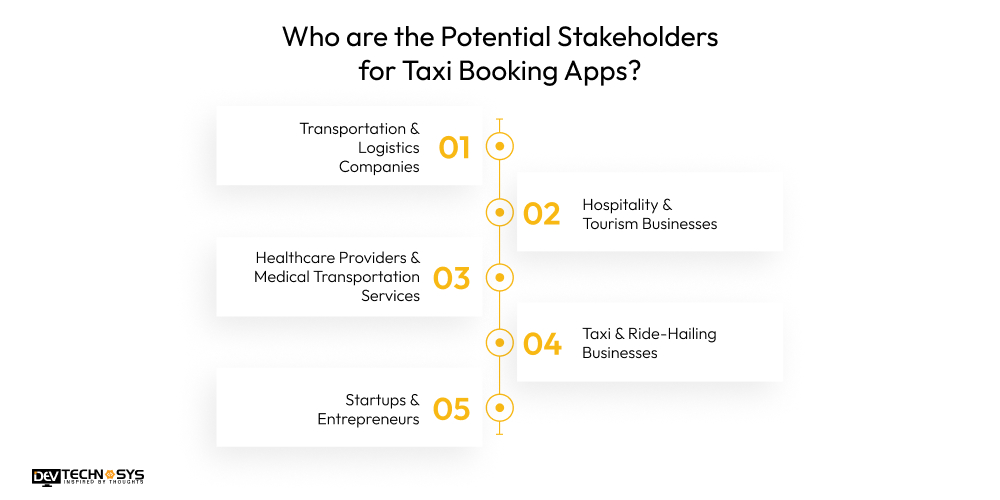
1. Transportation & Logistics Companies
Transportation and logistics companies can benefit from TADA app development, which supports fleet management and delivery operations. A taxi booking app can streamline routing, scheduling, and vehicle tracking through a unified mobile platform.
2. Hospitality & Tourism Businesses
Hospitality and tourism businesses are aiming to create a mobile app like TADA to enhance the guest experience. Hotels, resorts, and travel agencies use these apps to offer seamless airport transfers, city tours, and local transportation.
3. Healthcare Providers & Medical Transportation Services
Hospitals and clinics invest to make a taxi booking app due to its immense benefits. The medical industry uses apps like TADA to offer users taxi services for non-emergency medical transport, patient pickups, and timely travel to appointments.
4. Taxi & Ride-Hailing Businesses
Traditional taxi owners and operators use apps like TADA to make improvements in their services. These ride booking applications enable taxi-hailing businesses to reduce operational overhead and compete with global ride-hailing giants.
5. Startups & Entrepreneurs
Individuals who want to enter the mobility market can take advantage by creating an application with improved services. It is beneficial for startups to invest in niche-focused or region-specific on-demand taxi platforms with low operational risks.
What are the Business Benefits of Investing in a Taxi Booking App like Tada?
Eager to know what benefits an online taxi booking application can bring for businesses? Take a look at the taxi booking app benefits and see how this investment is advantageous for companies.
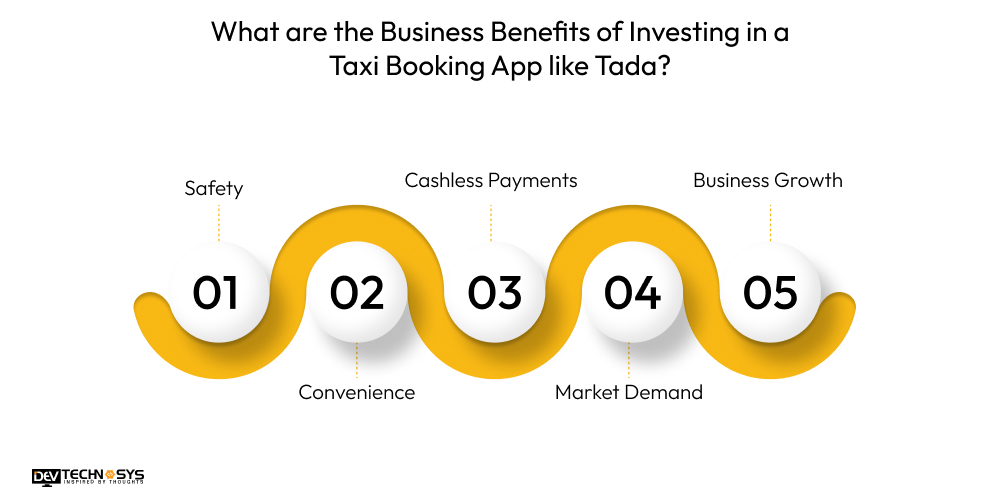
1. Higher Revenue Opportunities
Businesses should invest to build an app like TADA because it helps them generate income through commissions, subscriptions, surge pricing, ads, and partnerships. It helps diversify and maximize revenue streams.
2. Competitive Advantage
Businesses can get an competitive edge by investing in online taxi booking app development. By offering transparent pricing, multi-vehicle options, and advanced features, you can outperform traditional taxi services and other local competitors.
3. Strong Brand Reliability
A well-designed taxi booking app helps businesses in gaining user trust by providing enhanced safety features, verified drivers, accurate navigation, and reliable support. This plays a crucial role in strengthening your long-term brand identity.
You can reach out anytime; we are available 24/7. Our team provides a quick response.

4. Market Demand
Tier 2 and Tier 3 cities are the main hubs for taxi booking services and apps. Driven by growing use of smartphone apps and limited public transport, as well as increasing demand for cost-effective, on-demand mobility services.
5. Business Growth
Businesses can build an app like TADA to grow their businesses. It helps in scaling opportunities, expanding their fleet, reaching broader audiences, and boosting revenue through dynamic pricing, subscriptions, and value-added services.
What are the Top 5 TADA app alternatives to explore in 2026?
Before learning how to build an app like TADA, let’s pause for a second and take a look at the top 5 TADA app alternatives to explore in 2026. According to the top Android app development company, all these apps offer similar or better ride-hailing services.
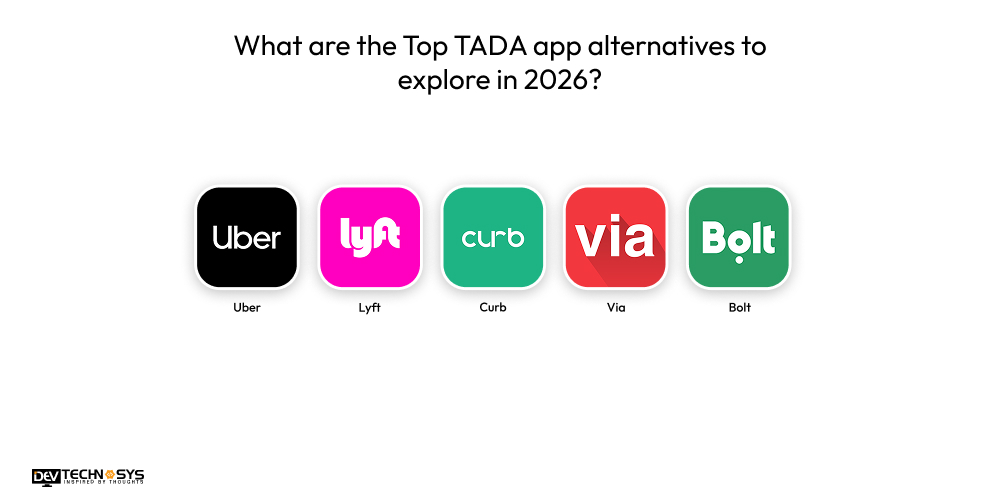
| App | Launch Year | Headquarters | Ratings | Downloads | Platform Availability |
| Uber | 2009 | USA | 4.7 | 500M+ | Android, iOS |
| Lyft | 2012 | USA | 4.0 | 50M+ | Android, iOS |
| Curb | 2007 | USA | 2.9 | 1M+ | Android, iOS |
| Via | 2012 | USA | 4.2 | 5M+ | Android, iOS |
| Bolt | 2013 | Estonia | 4.7 | 100M+ | Android, iOS |
How to Develop a Taxi Booking App?
This section discusses the procedure to build an app like TADA. If you want to build an app like TADA, then you need to follow the steps mentioned below. Take a look:
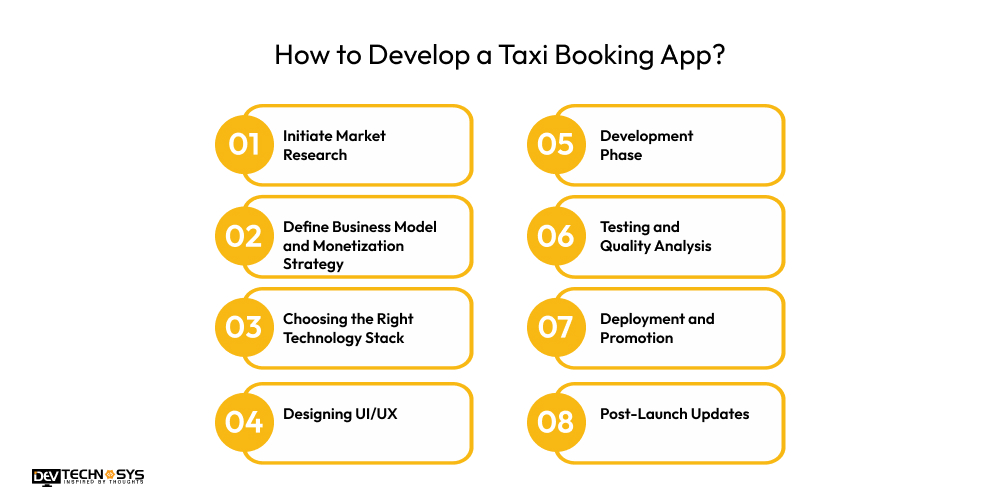
Step 1: Initiate Market Research
Market research marks the beginning of the TADA Like mobile app development process. In this first stage to develop a taxi booking app like TADA, experts conduct market research. Market research involves studying the new market trends, conducting competitor research to know their strengths and weaknesses.
The goal is to develop an app with an in-depth understanding of what your market needs to introduce innovation that differentiates your on-demand taxi booking app and addresses unmet needs. Incorporate this qualitative and quantitative data to create a taxi booking app like TADA that no one can beat.
Step 2: Define Business Model and Monetization Strategy
Done with the market research? Great, now move on to the next step. Hire a skilled team of developers from a top Android and iPhone app development company. Their experts will define the business model and monetization strategies that are essential to ensure long-term success and profitability of the app. To build a taxi booking app like TADA, the stakeholders must decide on their structural foundation, and after that, decide on their revenue generation strategies. It may include:
- Commission-based Model:
- Price Surge:
- Subscription plans:
- Partnerships with Local Businesses:
- In-app advertisements
Step 3: Choosing the Right Technology Stack
Now, in order to build a taxi booking app like TADA, you also need to select the right tech stack. The appropriate tech stack is essential to the success of your project. Hire mobile app developers to advise you on which option is best for your project. Here are the common tech stack experts use to build a taxi booking app like TADA. Take a look:
| Category | Technologies |
| Frontend | Flutter, React Native, Swift, Kotlin |
| Backend | Node.js, Django, Ruby on Rails |
| Database | MongoDB, PostgreSQL, MySQL |
| Real-Time | Socket.io, Firebase Realtime DB |
| Maps & Navigation | Google Maps API, Mapbox |
| Payment | Stripe, PayPal, Razorpay |
| Notifications | FCM, APNS |
| Admin Panel | React.js, Angular |
| Cloud Hosting | AWS, Google Cloud |
| Security | SSL/TLS, AES Encryption |
Step 4: Designing UI/UX
To develop a taxi booking app like TADA, you need to hire dedicated taxi app developers and designers from a reputable company to create an intuitive and user-friendly UI for your online taxi booking app. The design team will focus on creating a simple layout for quick ride booking and smooth onboarding flows with easy registration and login.
Step 5: Development Phase
Developers who provide iOS and Android app development services will put your ideas into practice and build a taxi booking app like TADA. They will choose a platform that allows you to create an app like TADA without learning any code, or one that is low-code. Another choice is to form a skilled development team. Customers will be promised complete privacy and confidentiality when using the taxi booking app.
Step 6: Testing and Quality Analysis
Car rental software development can’t be complete without testing. Your testing team must undergo rigorous testing to ensure high quality and performance, eliminating bugs and errors. If you want to develop a taxi booking app like TADA, your app must undergo thorough, methodical quality assurance to ensure it performs reliably across all conditions, devices, and user types. This includes functionality testing, security testing, performance testing, and user acceptance testing.
Step 7: Deployment and Promotion
The launch is a high-impact milestone, but real success begins post-deployment. A well-planned go-to-market strategy, combined with proactive monitoring and iterative refinement, ensures your taxi booking app enters the market strong and stays competitive. This phase includes offering coordinated efforts across digital platforms, social media, and PR to drive user onboarding.
Step 8: Post-Launch Updates
Taxi booking app maintenance services are crucial to ensure your taxi booking app continues to perform reliably and stays competitive. In this phase, your maintenance team will add new features, fix bugs, provide OS updates, enhance security, and increase speed based on user feedback and analytics. Constant updates keep the app secure and updated with current market trends.
What are the Advanced Features for a Taxi Booking App?
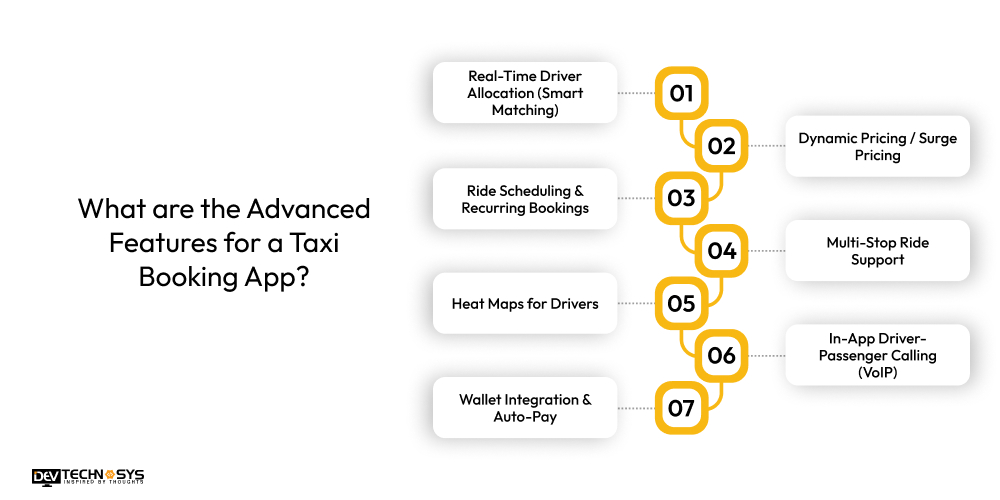
If you want to make a taxi booking app like TADA, then you need to incorporate all essential and advanced features in it. Here are some of the advanced features to include in your app like TADA:
| Passenger App | Driver App | Admin Panel |
| Ride Booking | Streamlined Onboarding | User Profile Management |
| Ride Sharing | Ride Requests Handling | Commissions Management |
| Package Delivery | Navigation & Route Optimization | Subscription Order Management |
| Rental Packages | Availability Toggle | Multiple Vehicle Categories |
| SOS Alerts | Earnings Dashboard | Reports & Analytics |
| Fare Estimation | Comprehensive Ride Stats | Dispute Management |
| Ratings & Reviews | SOS Alerts | Manual Ride Bookings |
1. Real-Time Driver Allocation (Smart Matching)
This feature is used to match passengers with the nearest available drivers automatically, with the help of advanced smart matching algorithms. It reduces waiting time and improves ride efficiency.
2. Dynamic Pricing
Dynamic pricing makes adjustments to fares based on demand, traffic, weather, and driver availability. It helps balance supply and demand, ensures driver earnings, and maintains service availability during high-demand situations.
3. Ride Scheduling & Recurring Bookings
Create a taxi booking app like TADA with a ride scheduling feature that allows users to schedule rides hours or days in advance. It also helps in setting recurring bookings for daily commutes, airport transfers, or office travel.
4. Multi-Stop Ride Support
Passengers can add multiple stops within a single journey, making it easier for errands, pick-ups, drop-offs, or shared travel. The app optimizes routes automatically to ensure timely, efficient multi-location trips.
5. Heat Maps for Drivers
Heat maps show driver areas with high ride demand, helping them position themselves strategically. This increases their chances of getting more bookings, improving productivity, earnings, and overall ride availability.
6. In-App Driver-Passenger Calling (VoIP)
VoIP-based calling enables secure, internet-based communication between drivers and passengers without revealing phone numbers. It improves privacy, reduces calling costs, and ensures seamless coordination.
7. Wallet Integration & Auto-Pay
Integrated wallet and auto-pay systems allow users to store money, save cards, and automatically deduct fares at trip completion, offering a frictionless, secure, and fast cashless payment experience.
How Much Does it Cost to Develop a Taxi Booking App?
The cost to build an app like TADA can lie anywhere between $8,000 and $25,000. There are various factors that may affect this cost range, like features, design level, development, and more. The cost to develop a taxi app with basic features will be around $15,000. If you are considering adding advanced features like multi-stop ride support and smart matching, expect the taxi booking app development cost to exceed $25,000. Here’s the table showcasing the cost to build a taxi booking app with a development timeline:
| App Type | Timeline | Cost (USD) |
| MVP Taxi App | 10–14 weeks | $5,000 – $10,000 |
| Mid-Level App | 16–22 weeks | $10,000 – $12,000 |
| Advanced App (Like TADA) | 24–32 weeks | $15,000 – $20,000 |
| Enterprise Solution | 30–40 weeks | $20,000 – $25,000 |
What Factors Can Affect the Taxi Booking App Development Cost?
Here are some of the major factors that can affect the cost to develop a taxi booking app like TADA. These cost-effective factors play a crucial role in deciding the final budget of the app.
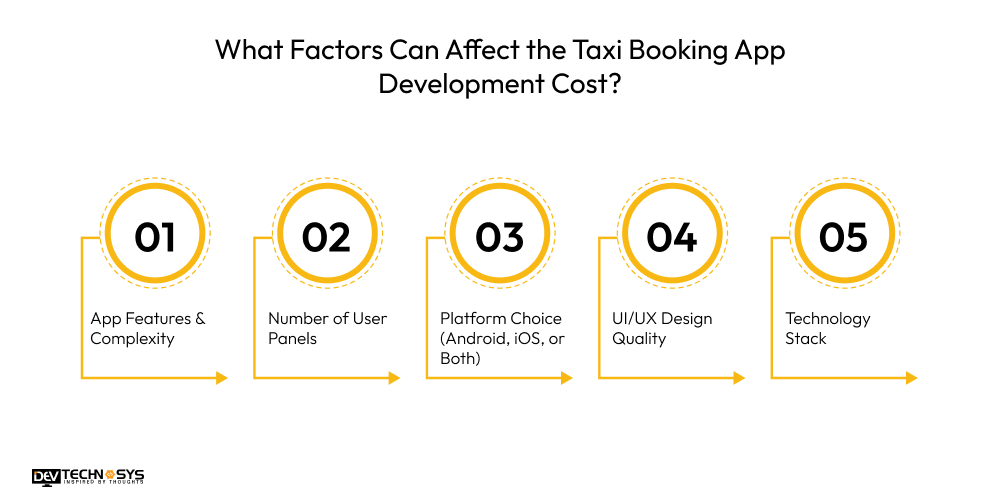
1. App Features & Complexity
Advanced features like real-time tracking, smart matching, surge pricing, VoIP calls, and in-app wallets significantly increase the cost to build a taxi booking app like TADA. The more complex the functionality, the higher the required resources, integrations, and testing efforts.
| Feature Level | Estimated Timeline | Estimated Cost |
| Basic Features | 4–6 weeks | $2,000 – $3,500 |
| Moderate Features | 6–8 weeks | $4,000 – $6,000 |
| Advanced Features | 8–10 weeks | $7,000 – $10,000 |
2. Number of User Panels
Taxi apps require separate panels for passengers, drivers, and admins. Each panel needs tailored features, designs, and backend logic. More panels mean additional development work, resulting in higher overall mobile app development cost and longer build timelines. The table below highlights the cost to create a taxi booking app like TADA on the basis of user panels.
| Panels Included | Estimated Timeline | Estimated Cost |
| Single Panel (Passenger) | 3–5 weeks | $4,000 – $8,000 |
| Two Panels (Passenger + Driver) | 5–7 weeks | $4,000 – $6,000 |
| Three Panels (Passenger + Driver + Admin) | 7–9 weeks | $7,000 – $8,000 |
3. Platform Choice (Android, iOS, or Both)
According to a top Android app development company, developing for both Android and iOS doubles the effort for coding, testing, and optimization. Choosing a single platform reduces the cost to build a taxi booking app like TADA, while cross-platform solutions offer savings but may limit access to some native features.
| Platform Type | Estimated Timeline | Estimated Cost |
| Android Only | 4–6 weeks | $5,000 – $10,000 |
| iOS Only | 4–6 weeks | $8,000 – $13,000 |
| Both Platforms | 7–10 weeks | $12,000 – $15,000 |
4. UI/UX Design Quality
The cost to build a taxi booking app like TADA can also differ depending on UI/UX designs. High-quality UI/UX with custom animations and user-centered workflows requires expert designers and more development hours. The cost to create a taxi booking app with simple designs will be much less, while premium, intuitive, and interactive interfaces increase overall design and development expenses.
| Design Level | Estimated Timeline | Estimated Cost |
| Basic UI/UX | 2–3 weeks | $3,000 – $7,000 |
| Standard UI/UX | 3–5 weeks | $6,000 – $8,000 |
| Premium UI/UX | 5–7 weeks | $10,000 – $12,000 |
5. Technology Stack
Using advanced technologies, like real-time databases, cloud hosting, microservices, mapping APIs, and AI-based matching algorithms, also impacts the cost to develop a taxi booking app like TADA. More powerful or modern tech stacks improve performance but require specialized developers, increasing the total project investment. Here’s the taxi booking app development cost table with the development timeline
| Stack Type | Estimated Timeline | Estimated Cost |
| Basic Tech Stack | 3–5 weeks | $3,000 – $5,000 |
| Modern Tech Stack | 5–7 weeks | $5,000 – $8,000 |
| Advanced Scalable Stack | 7–10 weeks | $10,000 – $12,000 |

How Does an App Like TADA Earn Money?
Monetization is crucial part of business, and there are various monetization strategies businesses use to generate income through apps like TADA. Here are some of the most used monetization strategies:
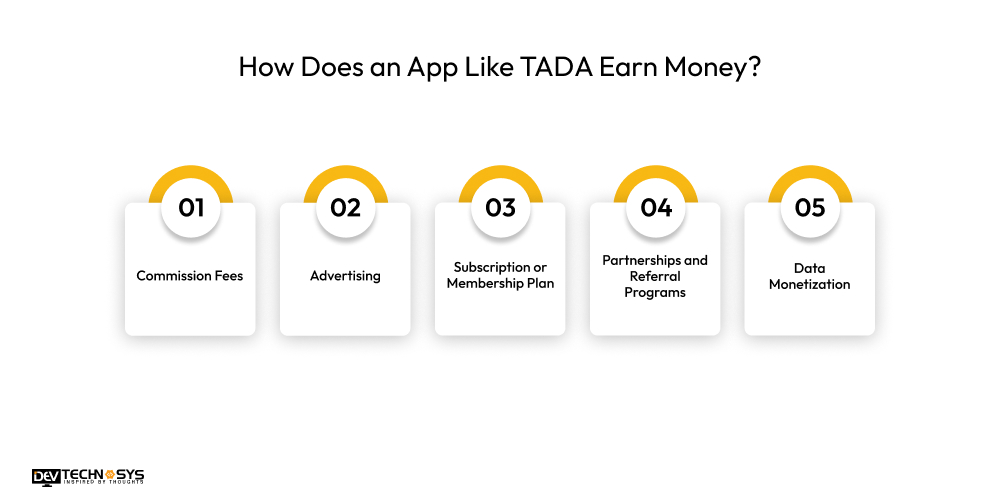
1. Commission Fees:
While TADA follows a zero-commission model in some regions, many ride-hailing apps charge a small commission on each trip, generating steady revenue from driver earnings.
2. Advertising:
These apps can display targeted ads, sponsored listings, or promotional banners from brands, local businesses, and service providers, creating an additional income stream.
3. Subscription or Membership Plans:
Apps offer premium plans for both riders and drivers. Benefits include discounted rides, priority booking, reduced wait times, and advanced driver tools, contributing to recurring revenue.
4. Partnerships and Referral Programs:
Apps collaborate with hotels, events, restaurants, airports, and retail brands for exclusive ride deals or promotional campaigns, earning revenue through commissions and referral agreements.
5. Data Monetization:
Aggregated, anonymized data related to traffic trends, rider behavior, and peak demand can be shared with urban planners, transport authorities, or research firms, offering non-intrusive monetization opportunities.
How Dev Technosys Can Help You With Taxi Booking App Development?
Building an app like TADA requires a strategic blend of market research, a strong business model, intuitive UI/UX design, and reliable technology to ensure seamless ride-booking experiences. If you are a business looking for a top taxi booking app development company, then contact Dev Technosys. Our professional development team uses advanced technologies and agile methodologies to give shape to your unique taxi app idea. Stay tuned for more informative updates.
Frequently Asked Questions
Find answers to the most common questions related to this article.
The cost to build a taxi app like TADA ranges from $8,000 to $25,000. However, factors like complexity, app panels, UI/UX quality, technology stack, and additional integrations such as payments, GPS services, and security features can affect the final cost.
A full taxi booking app typically takes 8 to 20 weeks to develop based on features, platform choice, backend needs, testing cycles, and customization required for driver, passenger, and admin modules.
Yes. Building individual apps for drivers and passengers ensures smoother functionality, optimized workflows, better navigation performance, and improved user experience, while the admin panel manages operations, analytics, commissions, and dispute handling.
Key features include ride booking, live GPS tracking, intelligent fare estimation, driver verification, secure payments, multi-vehicle choices, SOS alerts, ratings, ride history, and multilingual support to ensure seamless user experiences.
Yes. You can integrate multiple payment options like wallets, UPI, debit cards, credit cards, and net banking to make transactions seamless, secure, and convenient for both passengers and drivers.