
















Building a payment gateway like Razorpay presents a lucrative opportunity for development businesses in the fintech industry. As online transactions continue to surge, businesses demand secure, fast, and efficient payment processing solutions.
In 2023, the global digital payments market was valued at $96.19 billion and is set to expand further. This has raised the demand among entrepreneurs to build a payment gateway like Razorpay. So, if you want to invest in payment gateway development, now is the perfect time.
This blog outlines the key steps to build a robust payment gateway. Whether you’re a startup or an established IT firm, understanding this process will help you deliver a competitive and scalable fintech solution.
So, let’s begin!
What is Razorpay App?
Razorpay is a popular digital payment app that enables businesses to accept, process, and disburse payments securely. Founded in 2014, it supports 100+ payment methods like UPI, credit/debit cards, and net banking.
Razorpay serves over 8 million businesses like Zomato, Swiggy, and IRCTC. It offers instant settlements, subscription billing, and international payments. With a 99.99% uptime, payment gateway solutions ensure seamless transactions.
Also, it provides security with PCI DSS compliance and fraud detection tools. It powers the Indian digital economy by simplifying payments for startups, e-commerce, and enterprises, making online transactions smoother and safer.
Future Predictions & Projections of Payment Gateways
- The global payment gateway market was worth $26.7 billion in 2024. It’s expected to grow at a rate of 12.6% per year until it reaches $29 billion in 2029. It is thought that sales will reach $48.4 billion in 2029.
- By 2025, the Indian payment platform market should have grown to $1.71 billion.
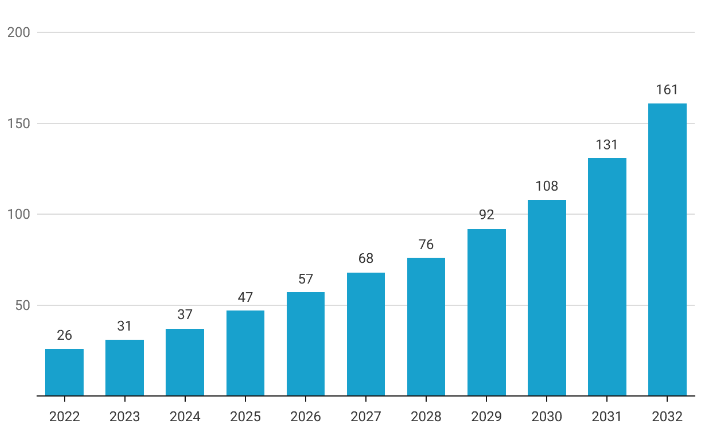
Source: Scoop
- Most people think that digital ewallet apps will grow the most, from 49% in 2022 to 54% in 2026.
- The Asia-Pacific region will see more deals made without cash. They will go from $494 billion in 2020 to $1,818 billion by 2030.
How Does a Razorpay App Work?
Razorpay app is designed to offer a smooth payment experience, integrating multiple payment methods while ensuring security and efficiency. As per the mobile banking app development company, here’s how it works:
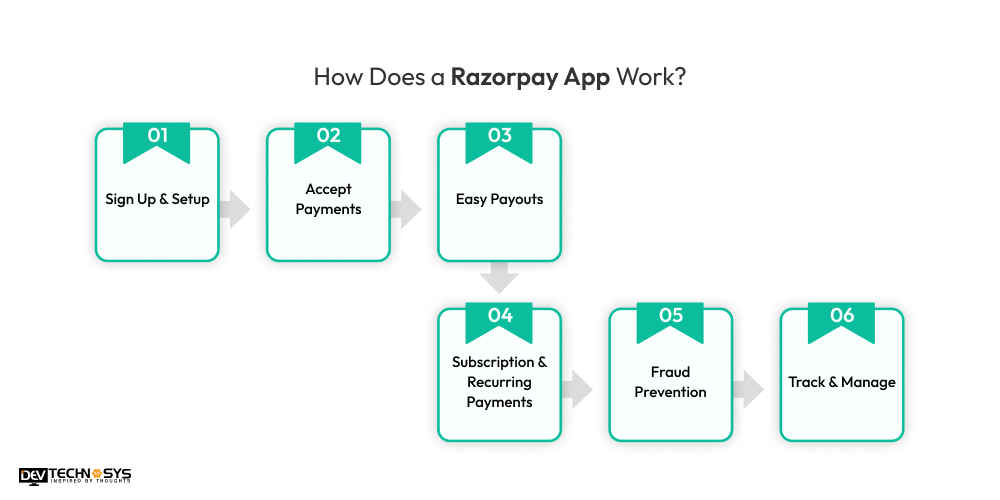
- Sign Up & Setup: Razorpay helps businesses set up an account and then add the payment system to their website or app to start taking payments.
- Accept Payments: Customers can pay with net banking, credit/debit cards, UPI, and wallets. After entering their information, Razorpay makes sure the exchange is safe.
- Easy Payouts: In a few hours or days, businesses can move the money they get paid to their bank accounts. The business and the customer both get proof of payment in real time.
- Subscription & Recurring Payments: Similar to an app like Wise, businesses can set up services like OTT packages or monthly bills to be paid automatically.
- Fraud Prevention: Razorpay protects against scams with security features like encryption and OTP verification.
- Track & Manage: The Razorpay dashboard or ewallet app makes it easy for users to see their transactions, make bills, and handle refunds.
Step to Build a Payment Gateway Like Razorpay
Building a payment gateway app like Razorpay is not easy, but if we follow the right steps, we can create a secure and fast payment system. If you want to develop such an app, follow these simple steps.
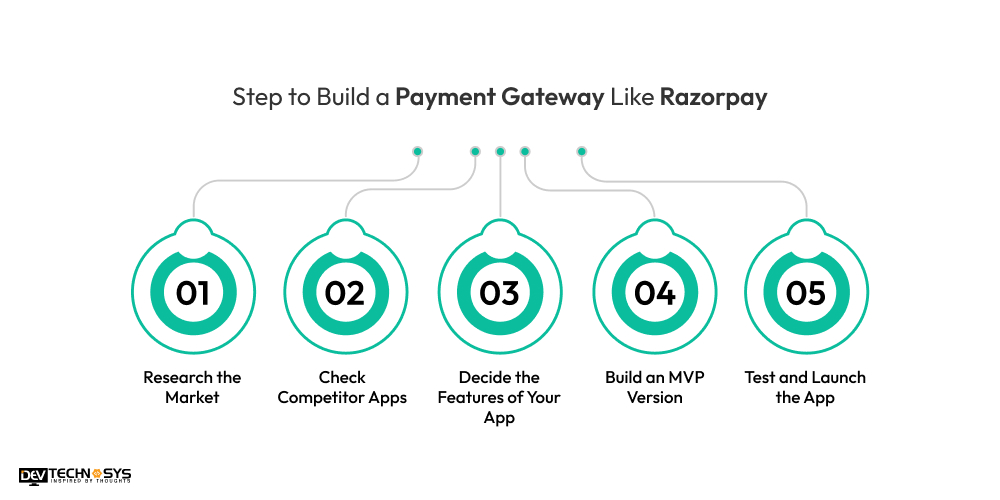
1. Research the Market
Understand how payment gateways work and what users want before you develop a payment gateway like Razorpay. Identifying how people pay online, what methods they use, and the issues that arise is crucial.
You also need to learn about the law and how to keep things safe. Digital payment platform have to follow strict security rules, such as PCI DSS certification, which keeps customer information safe.
There are also different payment rules in each country, so make sure your similar to Razorpay works in all of them. For a strong app, do a lot of study before you start building it.
|
2. Check Competitor Apps
There are already a lot of apps that let you accept payments like PayPal, Stripe, and Paytm. If you want to make your app similar to Razorpay better, you need to pay close attention to these rivals. Take a look at customer reviews, download their similar apps like Razorpay, and use their payment methods.
Find out what people like and don’t like about them. Some Razorpay clone apps might make it take a long time to make an exchange, while others might charge a lot of money.
Understanding these problems will help you make a payment app that is quicker, safer, and less expensive than others. This step will help you make an app that people will want to buy.
|
3. Decide the Features of Your App
Next, make a list of all the important features when you build a payment gateway like Razorpay. This should come after you’ve looked into the market and your rivals.
A good payment gateway app should let users sign up, offer multiple payment methods, keep your information safe, and look for signs of scam.
By defining these features early on, the Razorpay clone app can be built step by step, making sure that no important function is missed. You can add the features to your payment solution like razorpay with the help of a custom mobile app development company.
|
4. Build an MVP Version
Create an MVP before entering into the complete payment gateway development. One of the most important parts of an ewallet app is its security and ability to handle payments. An MVP is a simple version of the app that has these features.
This lets you test the app early and fix any bugs before putting out the final version. You need a server and a frontend to build something.
For frontend development, an Android app development services provider can use tools that are popular for backend development. To keep transactions safe, similar to Razorpay should be stored on a safe cloud platform.
|

5. Test and Launch the App
It is time to test the MVP once it is ready. To make sure that money transfers are safe and go easily, payment gateway clone apps need to be tested properly. Functionality testing, security testing, and load testing are some of the different ways that testers can do their project.
Launch a payment gateway like Razorpay in stages after trying it. Start with a small group of people and ask them for opinions. If people tell you about any issues, fix them before you make the full version available to everyone.
Once the Razorpay clone app is live, keep an eye on how it’s doing and make regular updates to make it faster, safer, and more enjoyable for users.
|
Key Features of Razorpay App Development Clone
If you’re planning to develop a payment gateway like Razorpay, you must include features that ensure smooth transactions, security, and a seamless user experience. Here are the essential features you must integrate in Razorpay app development clone.
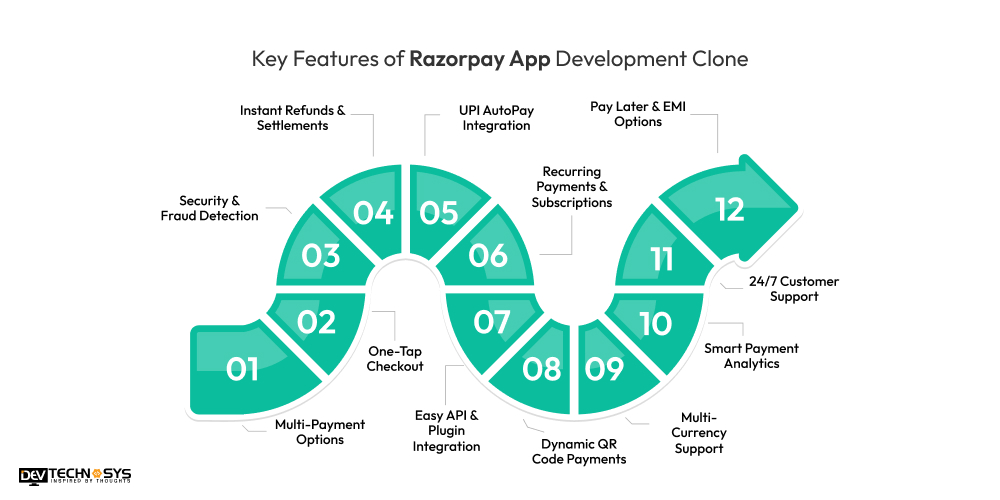
-
Multi-Payment Options
Users should be able to pay in a number of ways, including with debit and credit cards, UPI app, net banking apps similar to Razorpay, and BNPL. Users can easily make purchases because of this freedom.
-
One-Tap Checkout
Users have a better experience when the checkout process is easy and quick. Adding a “one-tap payment” tool lets users finish transactions quickly without having to enter their information over and over.
-
Security & Fraud Detection
As with any payment software solutions, security is absolutely essential. Users will be safe from hackers and other cyber dangers if they use PCI DSS compliance, tokenization, encryption, and AI-powered fraud detection.
-
Instant Refunds & Settlements
When a customer cancels a transaction or returns a goods, they expect to get their money back quickly. Adding a way to get a return right away builds trust and makes users happier. In the same way, fast payments help businesses keep track of their cash flow well.
-
UPI AutoPay Integration
Payments made through UPI are growing. A function called UPI AutoPay lets users set up recurring UPI payment integration services that don’t need to be done by hand. When you build a payment gateway like Razorpay, add this feature.
-
Recurring Payments & Subscriptions
It’s common for businesses to use subscription plans. As per the iPhone app development
company, users and businesses will both appreciate a feature that lets them set up automatic recurring payments.
-
Easy API & Plugin Integration
Businesses should be able to integrate the payment gateway into their websites, apps similar to Razorpay, or e-commerce platforms easily. Providing ready-to-use APIs, SDKs, and plugins for platforms like Shopify, WooCommerce, and Magento simplifies the process.
-
Dynamic QR Code Payments
A dynamic QR code feature allows users to scan and pay instantly. This is particularly useful for offline stores, restaurants, and digital invoices, making payments quick and hassle-free.
-
Multi-Currency Support
For businesses operating globally, multi-currency support is a must. This feature allows users to transact in different currencies while ensuring smooth currency conversions.
-
Smart Payment Analytics
Businesses need insights into their transactions. A dashboard with real-time analytics helps merchants track payments, refunds, settlements, and user behavior to make informed decisions.
-
24/7 Customer Support
Payment issues can arise anytime. Similar to an app like Fi Money, you can provide round-the-clock support via live chat, email, or AI-powered chatbots to help users resolve queries instantly, enhancing trust and reliability.
-
Pay Later & EMI Options
Many users prefer EMI and pay-later options for high-value transactions. Integrating flexible payment plans with third-party lenders makes transactions easier for customers.
5 Best Razorpay Alternatives
If you are looking to make a payment gateway like Razorpay, you need to know about its competitors. So, let’s have a look at the top payment gateways like Razorpay.

Top 5 Payment Gateways Like Razorpay |
Available Platform |
Downloads |
Ratings |
| Stripe | Android | iOS | 1M+ | 3.8 |
| PayPal | Android | iOS | 100M+ | 3.7 |
| Paytm | Android | iOS | 500M+ | 4.6 |
| Skrill | Android | iOS | 10M+ | 3.9 |
| Afterpay | Android | iOS | 10M+ | 4.2 |
How Much Does it Cost to Develop a Payment Gateway Like Razorpay?
The cost to build a payment gateway like Razorpay ranges between $10000 – $25000. Backend infrastructure, API integrations, PCI DSS compliance, and security procedures are some of the Razorpay app development costs that come with payment gateway development.
The budget goes up even more with real-time data and mobile app integration. Long-term costs to develop a payment gateway like Razorpay also include ongoing upkeep, following the rules, and customer service.
If you hire an experienced custom payments software development company, the application will go smoothly and Razorpay app development costs will be kept to a minimum. When making the budget, you should think about things like customization, scalability, and the prices of third-party services.
1. Features and Functionalities
The fintech app development cost goes up as the number of advanced features goes up. A basic Razorpay international payment gateway integration might only let you process simple payments.
An advanced one, on the other hand, will handle multiple currencies, look for fraud, allow recurring payments, and give you instant refunds. The cost to build a payment gateway like Razorpay will go up if you want to add extra features like managing subscriptions, sending invoices, and data.
Feature Level |
Estimated Cost Range |
| Basic Payment Processing | $1,000 – $2,000 |
| Intermediate Features | $1,000 – $1500 |
| Advanced Features | $2,000 – $3,000+ |
| Custom Features | $5000+ (Highly variable) |
2. Technology Stack
It costs more to create a mobile app if you use certain programming languages, frameworks, or third-party add-ons. For deals to go smoothly and safely, a strong online payment gateway needs fast databases, safe APIs, and infrastructure in the cloud.
Using scalable and safe technologies like Node.js, Python, Java, AWS, and bitcoin might cost more, but they are safer and more efficient.
Technology Choice |
Estimated Cost Range (USD) |
| Basic Stack (PHP, MySQL) | $500 – $8,000 |
| Modern Stack (Node.js, Python, PostgreSQL) | $1,000 – $2,000 |
| Advanced Stack (Java, AWS, Kubernetes, Blockchain) | $1500 – $3,000+ |
| Third-Party API Integrations (Stripe, PayPal, etc.) | $2,000 – $3,000+ per API |
| Security Infrastructure (SSL, PCI DSS Compliance) | $1,000 – $2,000+ |
3. Development Team and Expertise
The budget is affected by the cost of hiring a skilled fintech software development company. To make a strong payment gateway integration system, you need software developers, UI/UX designers, security experts, and compliance experts.
The Razorpay payment gateway pricing depends on where the team is located, how experienced they are, and whether you hire them in-house, through freelancers, or through a contract company.
Team Composition |
Estimated Cost Range (USD) |
| In-House Team | $10000 – $50000+ annually |
| Outsourcing Company | $15 – $25 per hour |
| Specialized Expertise | $50 – $100+ per hour |
4. Maintenance and Customer Support
After the online payment gateway goes live, it needs to be updated, provided with security patches, and have customer help services available on a regular basis.
An online payment system that is open 24 hours a day, seven days a week is essential to make sure that transactions go smoothly. Maintenance and running Razorpay app development cost should be included in the budget as a whole.
Support/Maintenance Level |
Estimated Annual Cost Range (USD) |
| Basic Maintenance | $1,000 – $1500 |
| Standard Support | $1500 – $2,000 |
| Premium Support | $2,000 – $5,000+ |
How to Monetize Your Payment Gateway Like Razorpay?
Payment gateways like Razorpay make money by offering various services and charging fees for transactions. If you want to monetize your payment gateway, you need to implement multiple revenue streams. Let’s look at the effective ways to generate income.
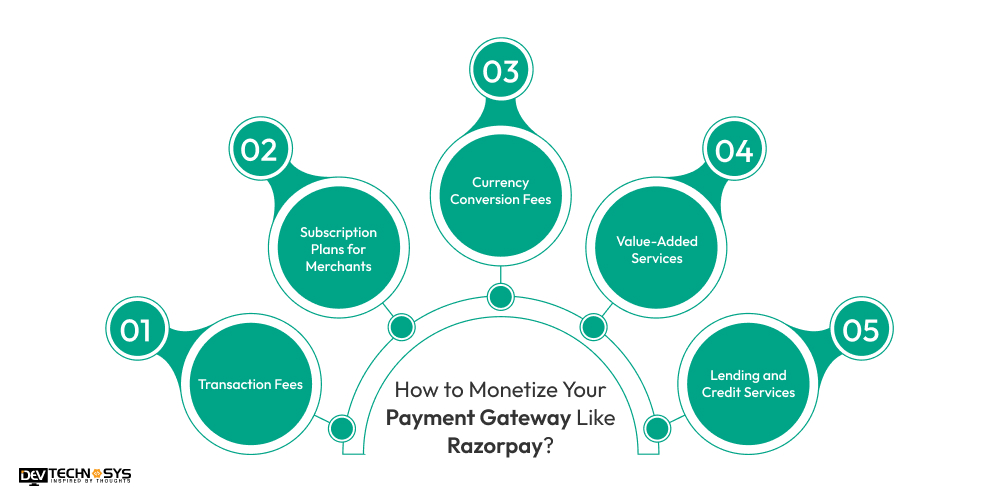
1. Transaction Fees
The most common way to earn money is by charging a small percentage of each transaction processed through your payment gateway integration system. Every time a customer makes a payment, you can deduct a fee before transferring the money to the merchant’s account.
For example, Revolut charges around 2-3% per transaction. You can set different rates based on payment methods like credit cards, debit cards, UPI, or net banking.
2. Subscription Plans for Merchants
You can offer premium plans in payment gateway razorpay with additional benefits for businesses. Many merchants look for extra features like faster settlements, lower transaction fees, fraud protection, and dedicated customer support.
By providing subscription-based plans, you can create a steady monthly or yearly income stream in ewallet app development. For example, a “Pro” plan could offer same-day settlements and charge a monthly fee.
3. Currency Conversion Fees
Expanding your payment gateway to support international transactions can be highly profitable. You can charge extra for currency conversions when customers make cross-border payments. A small markup on the exchange rate or a fixed fee per international transaction can boost your revenue significantly.
4. Value-Added Services
There are many ways to integrate a payment gateway in a mobile. You can provide additional services that can help you generate extra income.
You can offer features like fraud detection & security tools, automated invoicing & billing solutions, recurring payments & subscriptions. These services add value to businesses while creating new revenue opportunities for you.
5. Lending and Credit Services
Many payment gateways apps like Razorpay, offer business loans and working capital solutions. You can partner with financial institutions to provide short-term loans to merchants. In return, you can earn a commission on every loan approved.
Besides, you can integrate payment gateway with POS to earn more money. Also, you can also introduce a “Buy Now, Pay Later” option for consumers and charge interest or a service fee on deferred payments.

Ready to Create a Payment Gateway Like Razorpay!
We’ve explored the key aspects to build a payment gateway like Razorpay, covering its working mechanism, essential features, legal considerations, and Razorpay payment gateway development cost and timeline.
Are you ready to build a secure and efficient payment gateway or enhance your existing solution? Dev Technosys is your trusted technology partner.
Now that you have a clear understanding of the development process, connect with our expert fintech app development company today. Get customized solutions tailored to your business needs and start your journey. Let’s bring your vision to life!
FAQs
Q1. What is Razorpay Payment Gateway?
Razorpay is a payment gateway that lets you accept and send money online quickly, cheaply, and safely. In a short time, it became the payment gateway of choice for companies.
Q2. How Long Does it Take to Make a Payment Gateway like Razorpay?
Developing a secure payment gateway like Razorpay takes 2 to 7 months, depending on features, compliance, and security protocols. The timeline includes planning, development, testing, and regulatory approvals.
Q3. How Much Does it Cost to Build a Payment Gateway like Razorpay?
The razorpay payment gateway development cost ranges from $10,000 to $25,000, depending on development complexity, security measures, and integrations. Custom features and global payment support further impact the budget.
Q4. How to Develop an App like Razorpay?
To develop a Razorpay-like app, you need to follow these steps:
- Conduct market research
- Ensure legal compliance
- Design a secure payment infrastructure
- Integrate APIs for seamless transactions
- Implement fraud detection & encryption
- Test rigorously and launch
Q5. What Are the Benefits of Payment Gateway Development?
- Enhanced Transaction Security
- Faster Payments & Settlements
- Global Payment Support
- Automated Fraud Detection
- Increased Customer Trust
Q6. How to Earn Money From a Payment Gateway like Razorpay?
- Transaction Fees
- Subscription Plans
- Merchant Account Setup Fees
- Foreign Exchange Markup
- Value-Added Services