












Key takeaways:
-
- By 2030, the global online payment app market is projected to exceed USD 38.07 trillion, driven by increased digital banking adoption, mobile-first financial solutions, and international efforts to promote financial inclusion.
- Market leaders such as PayPal, Paytm, and Cash App succeed by offering frictionless onboarding, bank-grade security, and user-centric financial features.
- The cost to build an app like PayPal ranges between $8,000 and $25,000, depending on factors like architecture and integration with financial regulations.
In today’s fast-moving digital world, sending and receiving money online has become as easy as tapping a screen.
Apps like PayPal have completely changed the way we handle payments, whether it’s shopping online, paying friends, or running a business.
We have always been curious about how to build an app like PayPal
Creating an app like PayPal might sound complex, but with the right planning, tools, and knowledge, it’s totally possible.
From designing a secure login system to integrating bank accounts and ensuring data protection, every step is important in making trusted financial technology apps.
In this blog, we’ll explore how developers turn smart ideas into reliable apps that millions of people use every day.
If you’re interested in fintech, coding, or building the next big thing in digital payments, this is the perfect place to start!
Market Statistics of Global Online Payment Applications
- The global online payment apps market was valued at around $20.09 trillion in 2025, and it is projected to grow to $38.07 trillion by the end of 2030.
- As per the ground-level study, China holds the largest transaction value of around $9.28 trillion from the global comparison.
- According to recent research, the mobile POS payments record the highest transaction value of around $12.56 trillion in 2025.
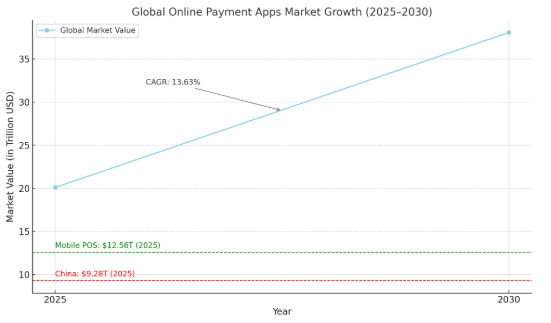
- With a deep knowledge, the online payment applications market is expected to increase with a compound annual growth rate of 63% from 2025 to 2030.
- The market of digital payment apps, North America, holds the highest revenue share of 5% in 2025.
What is PayPal?
PayPal is an online payment platform where users can send and receive money from their bank accounts, and users can hold their money digitally. Users can add their credit or debit cards and bank accounts to their PayPal accounts.
It includes advanced features such as secure transactions, multi-currency support, PayPal credit, one-touch payments, and multi-language support. PayPal was founded in 1998 and supports multiple currencies and operates in 200 markets.
How Does a PayPal Like App Work?
According to a top Fintech app development company, a PayPal-like app serves as a digital payment gateway and wallet system, enabling users to send, receive, and manage money securely with real-time AI fraud detection. Here’s a clear breakdown of how it functions:
- User Onboarding: Users sign up, verify their identity, and link bank accounts, debit cards, or credit cards to a digital wallet.
- Secure Transactions: The app acts as a payment gateway, encrypting data and using authentication (like biometrics) to move money between users or to merchants.
- Transfer Mechanism: When sending money, the app instantly deducts from the user’s balance or linked bank/card, acting as a middleman for the transaction.
- Funding Sources: Options include the app’s internal balance, linked bank accounts (ACH), or credit/debit cards.
- Key Features: These banking apps features peer-to-peer (P2P) transfers, QR code payments, payment requests, and transaction history.
- P2P Transfer: A allows users to send funds to User B’s email/phone number. Funds move from User A’s wallet to User B’s, which can then be transferred to a bank.
- Merchant Payment: A buyer pays a seller; the system securely processes this through a gateway, often charging the seller a transaction fee (around 2.9% to 3.49% + fees).
Success Story: PayPal
- Founded in 1998 as Confinity, PayPal originally focused on software for security devices before pivoting to digital payments.
- Merged with Elon Musk’s X.com in 2000, refocusing the company exclusively on online money transfers via email.
- Launched publicly in 1999, it gained early traction by incentivizing user sign-ups and referrals with small cash bonuses.
- Went public in 2002 and was acquired by eBay shortly after for $1.5 billion in stock.
- By 2006, processed $27.5 billion in payments and had over 100 million accounts worldwide.
- Separated from eBay in 2015, becoming an independent, publicly traded company focused solely on digital financial services.
Different Types of Online Payments
There are various types of online payments that work differently from one another, and users can utilize an digital payment platform according to their specific requirements and demands. So, let’s explore the wide range of online payments:
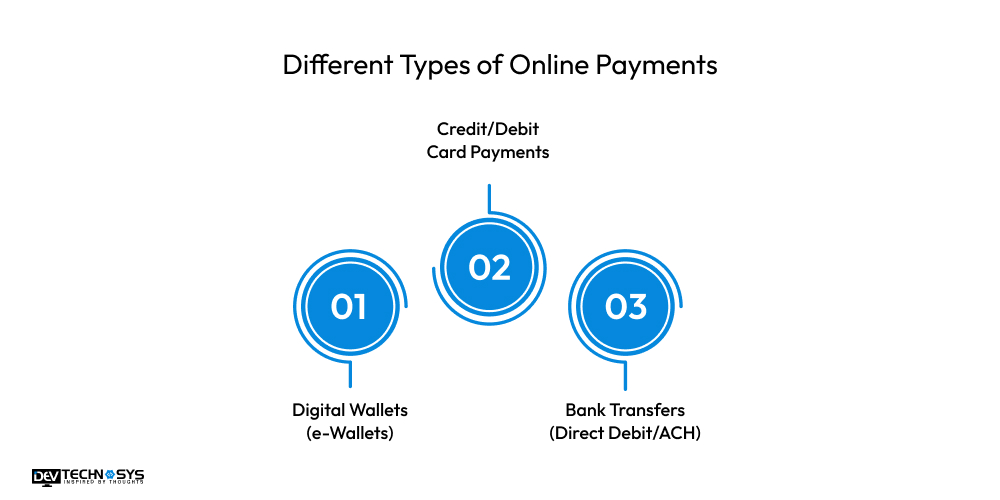
1. Credit/Debit Card Payments
Credit and debit cards are widely used for online transactions. Users enter card details on payment gateways, which securely process the payment. These systems often use encryption and fraud detection tools. Visa, Mastercard, and American Express are commonly accepted across e-commerce platforms worldwide.
2. Digital Wallets (e-Wallets)
Similar app like PayPal, Apple Pay, and Google Pay store payment information securely, allowing users to pay without entering card details repeatedly.
They offer convenience, fast checkouts, and added security features like biometrics or two-factor authentication, making them a popular choice for mobile and web payments.
3. Bank Transfers (Direct Debit/ACH)
Bank transfers involve sending money directly from a user’s bank account to the merchant’s account. In some regions, this includes real-time payment systems or Automated Clearing House (ACH) transactions. These are often used for subscriptions, bill payments, or large-value purchases due to their reliability and traceability.
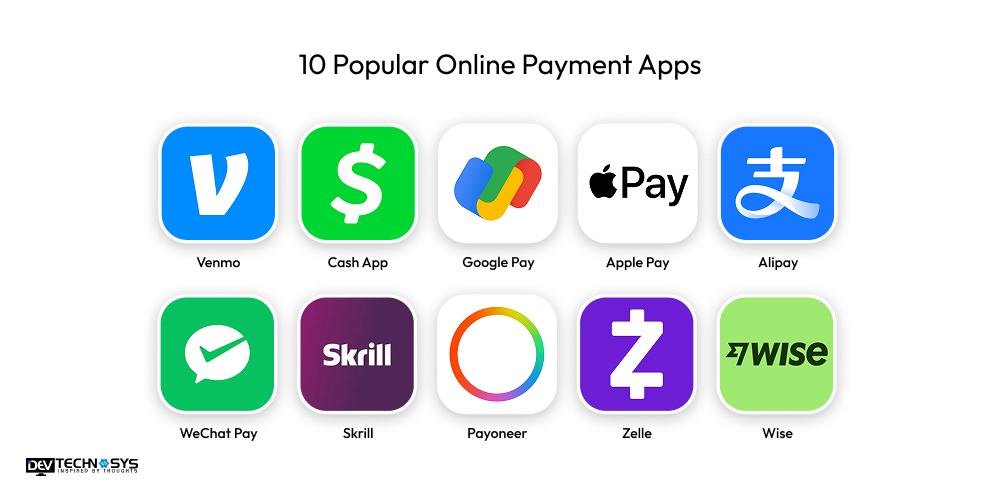
What are the Top 10 Popular PayPal Alternatives For Online Payments?
Before investing in the PayPal app development, you should consider the existing online payment apps that have already gained huge popularity across the world. So, let’s figure out the top ewallet apps:
App Name |
Launched |
Platforms |
Avg. Rating (Android) |
Downloads (Android) |
| Venmo | 2009 | Android, iOS | 4.1 | 50M+ |
| Cash App | 2013 | Android, iOS | 4.5 | 100M+ |
| Google Pay | 2015 | Android, iOS, Web | 4.1 | 1B+ |
| Apple Pay | 2014 | iOS, Web (Safari) | N/A (built-in) | N/A (not in Play Store) |
| Alipay | 2004 | Android, iOS, Web | 4.0 | 500M+ |
| WeChat Pay | 2013 | Android, iOS (WeChat) | 4.2 | 1B+ |
| Skrill | 2001 | Android, iOS, Web | 3.5 | 5M+ |
| Payoneer | 2005 | Android, iOS, Web | 3.7 | 1M+ |
| Zelle | 2017 | Android, iOS | 4.3 | 10M+ |
| Wise (TransferWise) | 2011 | Android, iOS, Web | 4.6 | 10M+ |
1. Venmo
Venmo is a popular peer-to-peer payment app with social feed integration, making transactions interactive and engaging. To develop an app like Venmo, focus on instant transfers, wallet balance, and social features.
When comparing PayPal vs Stripe vs Venmo, Venmo takes the lead with its seamless splitting, user-friendly UI, and strong security with biometric authentication. making it ideal PayPal clone app for younger audiences and everyday transactions.
2. Cash App
Cash App enables users to send money, invest in stocks, and buy Bitcoin within one platform. If you want to build an app like Cash, you would need to integrate banking APIs, trading modules, and data encryption layers. Its benefits include multi-functionality, quick transfers, and financial flexibility, making it a powerful all-in-one fintech solution.
3. Google Pay
Google Pay offers fast, secure UPI-based payments, bill payments, and rewards. Developing a similar app involves KYC verification, UPI integration, NFC support, and robust authentication systems. It benefits users with wide merchant acceptance, cashback offers, and ease of use, especially in markets like India.
4. Apple Pay
Apple Pay is a contactless payment solution integrated into Apple devices, using NFC and biometric authentication. To build a similar app, focus on secure tokenization, device compatibility, and fast checkout. It offers enhanced privacy, seamless UX, and strong ecosystem integration for iOS users.
5. Alipay
Alipay is a leading global digital wallet offering payments, financial services, and lifestyle features. Developing a similar app requires a scalable architecture, transaction monitoring, AI-based fraud detection, and QR payments. Its benefits include global reach, super-app functionality, and diverse services like insurance, lending, and investments.
Want a chatbot demo or pricing? Fill the form and talk to our experts today.
Pick what you need below — you can select more than one — then tap Get detail to continue.
-
Chatbot demo dashboard
-
Cost to develop an app
-
Industry report
-
Case study
What are The Components of a Payment App like PayPal?
A payment app like PayPal consists of a digital wallet, secure user authentication (biometrics/2FA), instant P2P/bank transfers, QR code payments, transaction history, and multi-currency support.
Core components include payment processing modules, Know Your Customer (KYC)/Anti-Money Laundering (AML) regulatory compliance, fraud detection systems, and merchant services (APIs/SDKs). According to mobile banking app development experts, here are the key components of a Payment App:
1. User Management & Security:
- Registration/KYC: Secure onboarding, profile management, and identity verification to comply with regulations.
- Authentication: Two-factor authentication (2FA), login approval, and biometric identification (fingerprint/Face ID).
- Data Security: Tokenization and encryption to secure sensitive financial data.
2. Digital Wallet (Core Engine):
- Funds Storage & Money transfer: Digital wallet allowing users to store money, transfer funds between users (P2P), and withdraw to bank accounts.
- Funding Sources: Integration with multiple sources, including bank accounts, credit/debit cards, and digital cards into the app.
- Instant Transfers: Add features like PayPal’s One Touch and fast fund transfers to banks.
3. Payment Processing & Functionality:
- Payment Processing Module: Backend to facilitate transactions.
- QR Codes/NFC: Contactless payments via QR code scanning or smartphone tapping.
- Cross-Border/Multi-Currency: Support for international payments with automated conversion.
- Invoicing & Payments: Tools to online payments through which users can send, receive, and manage invoices and bills.
4. Merchant Services:
- Payment Gateways/SDKs: Tools for merchants to integrate the payment system into their own websites and apps.
- Transaction Management: A dashboard to view, track, and download transaction history.
Why Today’s Businesses Want to Invest in Online Payment App Development?
As we all know, online payments are increasing day by day, and every small payment transaction is now facilitated by an online platform. By showing the rapid growth of online transactions, businesses are ready to invest in fintech app development to expand their business worldwide and increase their valuation.
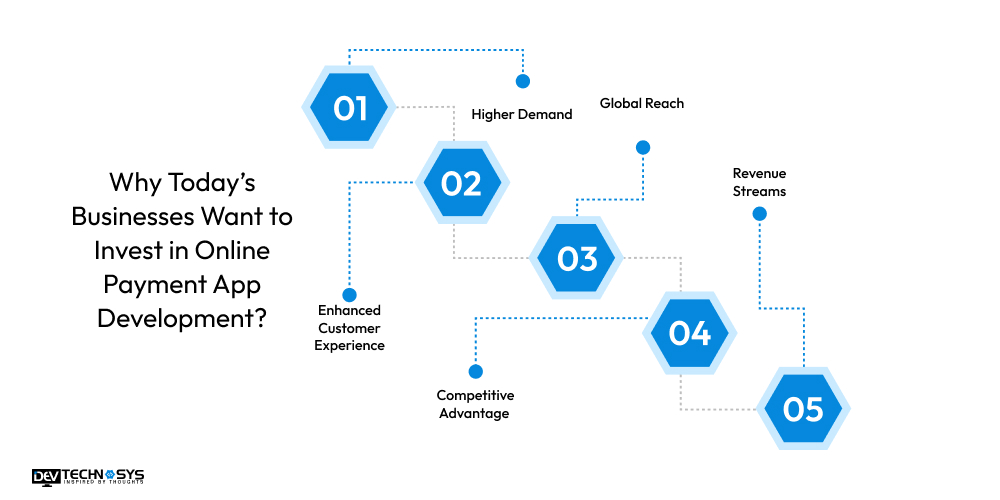
1. Higher Demand
Consumer behavior has shifted dramatically in favor of seamless, cashless transactions, especially following the COVID-19 pandemic. Similar app like PayPal enable safe, instant, and convenient transactions without the need for physical contact, making them indispensable in both retail and service industries.
2. Enhanced Customer Experience
Speed, simplicity, and security are crucial to customer satisfaction. Payment apps provide users with multiple payment options (cards, wallets, UPI, crypto), real-time confirmations, and user-friendly interfaces. A smooth payment process boosts trust and loyalty, encouraging repeat business.
3. Global Reach
A similar app like PayPal eliminates geographical boundaries, allowing businesses to accept payments from international customers. With built-in currency conversion, language support, and cross-border compliance, companies can scale globally without needing physical infrastructure.
4. Competitive Advantage
Developing a custom online payment app gives businesses a competitive edge by offering faster, more secure, and user-friendly transactions. It enhances brand credibility, builds customer trust, and reduces reliance on third-party gateways. This unique digital capability helps differentiate the business in a crowded market and attract tech-savvy consumers.
5. Revenue Streams
An e-wallet app like Skrill opens up new revenue streams through transaction fees, premium features, cross-selling, or partnerships. Businesses can monetize value-added services like instant transfers, currency conversion, or loyalty programs. These additional income sources improve financial sustainability and support growth beyond traditional sales or service models.
How AI Can Help Online Payment Apps Perform Their Operations?
- AI detects and prevents fraudulent transactions by analyzing patterns and flagging suspicious activities in real time for enhanced security.
- It enables personalized user experiences by recommending offers, payment methods, and services based on individual behavior and preferences.
- AI-powered chatbots provide 24/7 customer support, instantly resolving queries and improving user satisfaction without human intervention.
- It automates transaction categorization and reporting, making financial management easier for both users and businesses.
AI helps predict user behavior, enabling proactive engagement and reducing app abandonment through targeted notifications and reminders. - It optimizes payment routing by selecting the fastest, most cost-effective gateways for each transaction, improving efficiency and success rates.
7 Easy Steps to Build an Online Payment App Like PayPal?
Finally, the wait is over. Let’s start to build an app like PayPal There are various steps that help businesses or developers understand the development process. From the initial stage to post-launch maintenance services, everything is explained below in the ewallet app development process:
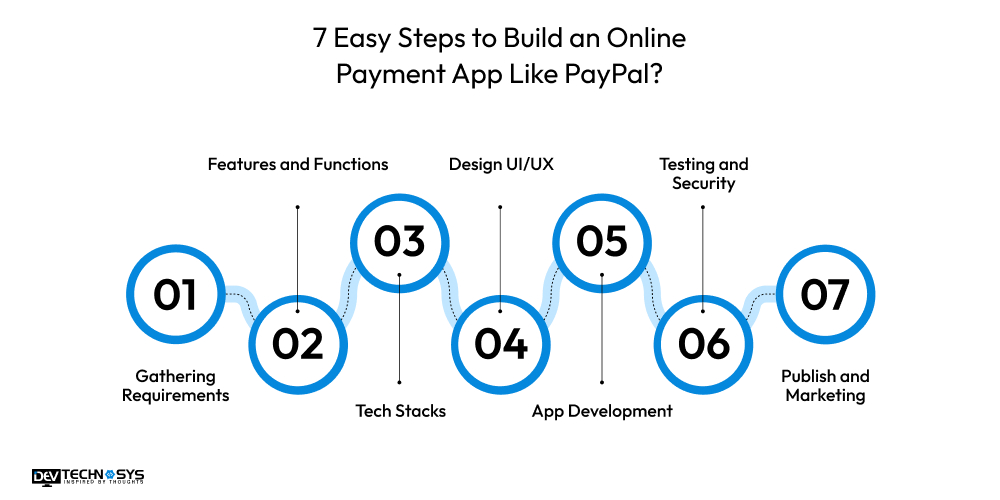
1. Gathering Requirements
Let’s begin the first stage to make an app like PayPal, hire fintech app developers to gather the basic and advanced project requirements, and make a structured list.
Observe the existing applications that are highly in demand and most popular to understand their functionality. Researching the competitive market to identify which applications are more successful and trending can yield significant profits.
2. Features and Functions
Decide on must-have features like user registration, digital wallet, fund transfers, transaction history, and notifications. Include optional features such as recurring payments, currency conversion, and in-app chat.
Prioritize security-focused functionalities such as KYC, fraud detection, and two-factor authentication to ensure user trust and regulatory compliance.
3. Tech Stacks
Hire a professional mobile app development company to select the right tech stack based on your app’s complexity and scalability needs. Typical stacks include React or Flutter for frontend, Node.js or Django for backend, and PostgreSQL or MongoDB for databases. Integrate APIs for payments, SMS, and geolocation, ensuring your choices support high performance and security.
4. Design UI/UX
Create intuitive and accessible designs with user-friendly navigation. Focus on minimalistic, responsive layouts that support smooth transactions and real-time updates.
Wireframes and prototypes should simulate user flow. A strong UI/UX boosts user engagement, retention, and conversion by making financial interactions simple and trustworthy.
5. App Development
Begin frontend and backend coding, ensuring synchronization between user interface and server-side logic. Implement payment gateway integration, authentication protocols, and secure data storage.
Use agile methodology to allow iterative testing and refinements. Collaborate across teams for seamless integration and consistent performance across mobile platforms and devices.

6. Testing and Security
Conduct thorough testing, unit, integration, and user acceptance, to catch bugs and usability issues. Emphasize security: use encryption, secure APIs, and perform penetration testing.
Ensure compliance with standards like PCI-DSS. A secure, bug-free app earns user trust and meets regulatory requirements, essential for any financial platform.
7. Publish and Marketing
Consult with a fintech app development company before launching your app on major platforms like iOS and Android. Optimize app store listings and gather user reviews.
Develop a marketing strategy using SEO, social media, paid ads, and influencer outreach. Track user engagement metrics post-launch to refine features and improve user acquisition and retention.
How Can Online Payment Apps Help the User?
Build an app like PayPal that empower users with fast, secure, and convenient transactions. They offer real-time expense tracking, multiple payment options, and enhanced financial control, all from a smartphone, making money management easier, smarter, and more accessible anytime, anywhere.
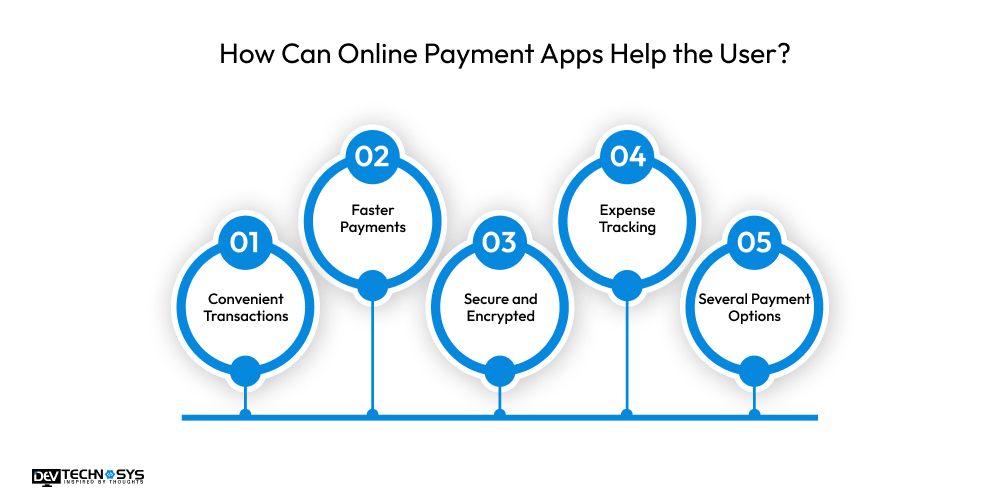
1. Convenient Transactions
Users may send and receive money at any time and from any location, without having to visit a bank or ATM. With just a few taps, online payment applications make it simple to pay for shopping, bills, and services, providing 24/7 access and removing the need for cash or physical cards.
2. Faster Payments
Transactions are executed immediately or within seconds, allowing users to make payments fast and effectively. This speed is especially advantageous in time-sensitive circumstances such as crises, online purchases, or bill splitting with friends, as it reduces delays and increases financial flexibility.
3. Secure and Encrypted
Payment applications utilize encryption, two-factor authentication, and biometric security to safeguard user data and transactions. This lowers the danger of fraud, identity theft, and illegal access, offering people peace of mind when handling their money digitally.
4. Expense Tracking
Most applications automatically classify and track expenditure, allowing users to better manage their finances. According to the mobile banking app development services provider, this tool simplifies budgeting by providing real-time information about where money is going, allowing for improved financial planning.
5. Several Payment Options
Users may integrate credit cards, debit cards, bank accounts, and digital wallets in a single app. This flexibility enables customers to select the most convenient or cost-effective payment option, making financial management more adaptive to their specific requirements.
10 Required Features That Must Be Integrated in Online Payment Applications
Before starting to build an app like PayPal, you need to observe the features that must be integrated and also add some unique features to gain a competitive advantage. So, here we provide the best features of online payment apps:
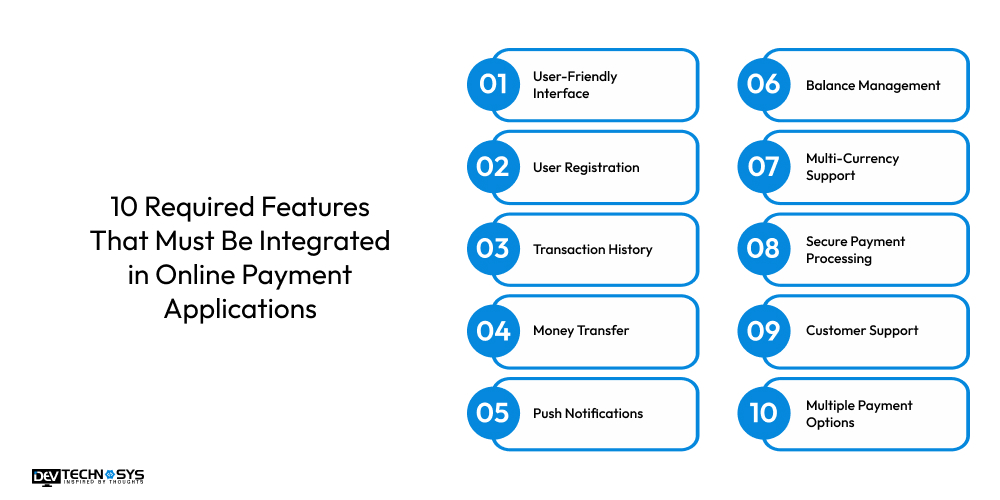
1. User-Friendly Interface
PayPal alternatives have a simple user interface that enables users to easily access all functionalities and quickly understand how the app works.
2. User Registration
The peer-to-peer payment app allows users to register their accounts via mobile number, social media platforms, email address, or to log in as a guest.
3. Transaction History
The PayPal clone apps offer transaction history to track each transaction detail and download the history.
4. Money Transfer
The ewallet app like PayPal, sends money instantly to others, makes bill payments, p2p transfers, and it offers a seamless transaction.
5. Push Notifications
PayPal alternatives send alert messages to users when a payment is received or sent, as a reminder of bill payments, and to notify them when a new version is available.
6. Balance Management
PayPal clone apps enable users to check their balance, manage their bank account funds, and load money into the app wallet.
7. Multi-Currency Support
The P2P payments app, like PayPal, supports multiple currencies, such as digital or cryptocurrency, and provides a seamless interface for cross-border payments.
8. Secure Payment Processing
An app like Wise offers secure payment processing tools such as multi-factor authentication, biometrics, encryption techniques, PCI-DSS, tokenization, and a fraud detection system.
9. Customer Support
The app similar to PayPal, provides a customer support team that handles users’ ongoing concerns and queries and solves them as soon as possible.
10. Multiple Payment Options
The PayPal alternatives support multiple payment options, including debit or credit cards, digital wallets, UPI, cryptocurrencies, and more.
The Cost to Build an Online Payment App Like PayPal
The cost to develop an app like PayPal is around $8,000 to $25,000 or greater, based on special requirements and demands. The online payment app development cost mainly depends on several factors, such as app complexity, premium features, functions, project size, infrastructure, and deployment platforms. Additional factors that also affect the cost include networking, testing, security, maintenance, and more. So, let’s take a look at the cost table below:
Component |
Estimated Cost (USD) |
| Design (UI/UX) | $5,000 – $10,000 |
| Frontend Development | $10,000 – $15,000 |
| Backend Development | $12,000 – $18,000 |
| Payment Integration | $5,000 – $7,000 |
| Security & Compliance | $4,000 – $6,000 |
| Testing & Deployment | $3,000 – $5,000 |
Estimated Development Cost: $8,000 – $25,000+
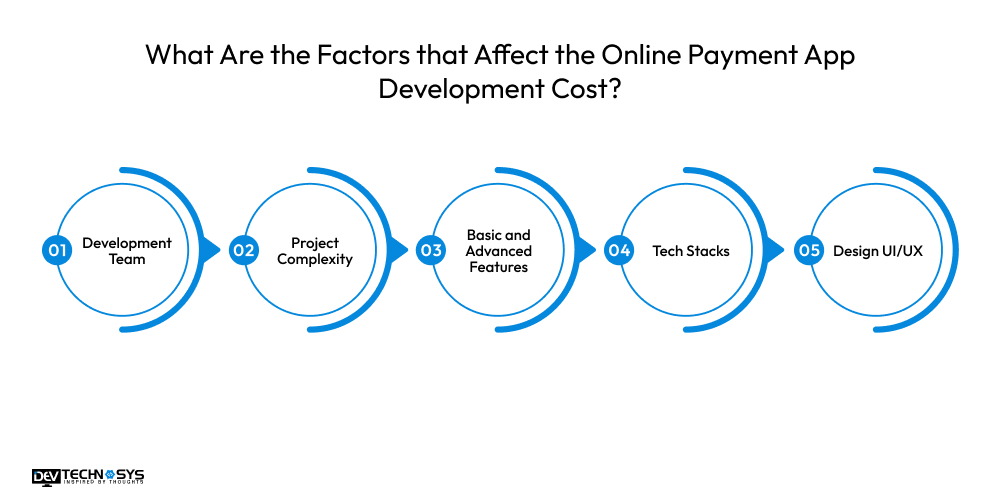
What Are the Factors that Affect the Payment App Development Cost?
There are many factors that have a high impact on the overall banking app development cost. Businesses need to know which factors affect the cost to develop an app within budget. So, let’s observe the following cost-effective factors:
1. Development Team
It is one of the most common or essential cost-affecting factors that affect the initial cost to develop an app like PayPal. If your project complexity is high, then you need to hire highly-skilled and experienced developers, but their salaries are too high compared to those of average experienced developers. So, employing experienced developers can increase the overall cost to build an app like PayPal.
Team Type |
Description |
Estimated Cost |
| Freelancers | Small budget, slow delivery | $5,000 – $10,000 |
| In-house Team | Full control, higher overhead | $8,000 – $30,000 |
| Outsourcing Agency (Asia) | Cost-effective, experienced teams | $7,000 – $25,000 |
| Outsourcing (US/EU) | High-quality, very expensive | $20,000 – $40,000 |
| Hybrid (Mix of in-house & remote) | Balanced quality and cost | $18,000 – $35,000 |
2. Project Complexity
When reviewing the project complexity, it can be another cost-affecting factor. There are various types of apps, such as basic, medium, and premium.
The basic app development can be less expensive than premium ones because they have only limited functionalities, and premium ones have advanced functionalities and services, which can raise the overall banking app development cost.
Complexity Level |
Features Included |
Estimated Cost |
| Basic App | P2P payments, wallet, history, login | $8,000 – $12,000 |
| Medium Complexity | Bank linking, QR pay, user KYC, limited merchant tools | $12,000 – $16,000 |
| High Complexity | International support, crypto, APIs, subscriptions | $16,000 – $20,000 |
| Enterprise Level | Scalable backend, analytics, integrations, real-time fraud | $20,000 – $25,000+ |
3. Basic and Advanced Features
The basic and advanced features are one of the most crucial factors that can highly affect the cost, and they can also change the overall budget of the project.
The basic features include user registration & login, user profile management, send & receive payments, and more. The advanced features include international payments, API Integrations, and more. These advanced features can easily influence the overall PayPal app development cost.
Feature Tier |
Features Examples |
Estimated Cost |
| Basic Features | Login, wallet, send/receive, history, profile mgmt | $5,000 – $7,000 |
| Advanced Features | APIs, subscriptions, crypto, international payments | $7,000 – $10,000 |
| Optional Add-ons | AI fraud detection, budgeting tools, chatbots | $10,000 – $13,000 |
4. Tech Stacks
There are various types of tools and technologies that have paid versions, and they can cost a lot more than free versions. Choose the tech stack as per your project’s overall budget; otherwise, it can increase fintech app development cost. It includes many tech stacks such as databases, programming languages, designing tools, testing, security, cloud storage, and more.
Stack Type |
Example Technologies |
Estimated Cost Impact |
| Native (iOS & Android) | Swift for iOS, Kotlin for Android – 2 separate codebases | +30% – 50% |
| Cross-Platform | React Native, Flutter – single codebase | -20% cost vs native |
| Backend Infrastructure | Node.js, Django, MongoDB, PostgreSQL, AWS/GCP/Azure | $10,000 – $15,000 |
| DevOps & Security | CI/CD, encryption, DDoS protection, compliance tools | $5,000 – $10,000 |
| API Integration | Stripe, Plaid, PayPal APIs, KYC services | $5,000 – $8,000 |
5. Design UI/UX
The design of a bill payment application can be costly due to premium themes, layouts, templates, plugins, elements UI, and many more. There are many paid design tools, such as Figma, Sketch, Adobe XD, and more.
Businesses need to choose the designs as per their fixed budget, because the expense of premium designs can affect the PayPal app development cost.
Design Level |
Deliverables |
Estimated Cost |
| Basic Design | Simple UI, few screens, no animation | $3,000 – $5,000 |
| Intermediate UI/UX | Consistent branding, user flows, wireframes | $5,000 – $7,000 |
| Advanced/Custom UI | High-fidelity UI, animation, motion design | $7,000 – $10,000 |
| UX Research & Testing | User testing, heatmaps, personas | $3,000 – $5,000 |
You can reach out anytime; we are available 24/7. Our team provides a quick response.

Robust Tech Stacks Required to Build An App Like PayPal
Category |
Technologies / Tools |
Purpose |
| Frontend | React Native, Flutter, Angular, Vue.js | Cross-platform mobile and web app development |
| Backend | Node.js, Java (Spring Boot), Python (Django/Flask), Ruby on Rails | Server-side logic, API development |
| Database | PostgreSQL, MySQL, MongoDB, Redis | Storing user data, transactions, session management |
| Payment Gateway APIs | Stripe, Braintree, PayPal APIs, Adyen | Processing payments securely |
| Cloud Infrastructure | AWS (EC2, S3, RDS), Google Cloud, Microsoft Azure | Hosting, storage, scalability |
| Security | OAuth 2.0, JWT, SSL/TLS, PCI-DSS compliance tools | Authentication, encryption, regulatory compliance |
| DevOps & Monitoring | Docker, Kubernetes, Jenkins, Prometheus, Grafana | Continuous integration/deployment, monitoring |
| Real-Time Messaging | WebSocket, Firebase Cloud Messaging (FCM), Socket.IO | Instant notifications and transaction updates |
| AI/ML Tools | TensorFlow, PyTorch, AWS SageMaker | Fraud detection, personalized recommendations |
| Analytics | Google Analytics, Mixpanel, Amplitude | User behavior tracking and insights |
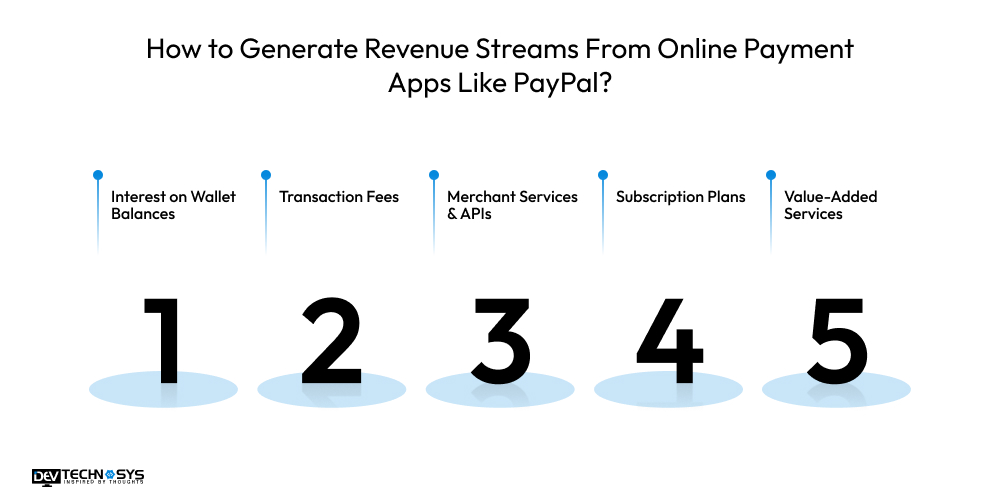
How to Generate Revenue Streams From Online Payment Apps Like PayPal?
It’s excellent to create an online payment app like PayPal, but the main concern is how to generate new revenue streams from the app. So, here we provide the best money-generating opportunities:
1. Interest on Wallet Balances
Apps can invest the idle money users leave in their digital wallets. This float money generates interest income when placed in secure financial instruments. Though users retain access to their funds, the platform earns passive revenue from short-term investments without charging users directly.
2. Transaction Fees
The online payment app like Revolut and PayPal charge transaction fees on every transaction done through the app. Users or businesses pay the fees to transfer instant money, international transfers, receive money, and many more. The transaction fees are a direct revenue stream, and they can charge around 2% to 3% of every transaction.
3. Merchant Services & APIs
Charge merchants or developers for using the platform’s APIs, payment gateways, and integration tools. These services enable eCommerce checkouts, recurring billing, and cross-platform transactions. Businesses value these tools, making it a strong B2B revenue stream based on scale and technical reliability.
4. Subscription Plans
The p2p payment apps like Fi Money and PayPal provide subscription plans such as free, premium, and enterprise. With the help of subscription plans, users or businesses can access advanced tools such as analytics, automated invoicing, and higher transaction limits. For that, businesses need to purchase the premium or enterprise subscription plans.
5. Value-Added Services
Offer optional services like Buy Now, Pay Later (BNPL), currency exchange, crypto trading, or fraud protection. These features can carry additional fees or generate commissions. Users pay for convenience, flexibility, or advanced tools, creating multiple revenue streams that scale with user engagement and usage.
How Dev Technosys Will Help You to Build An Online Payment App Like PayPal?
You have reached the section where our conversation will end. In this blog, we explored in detail how to create an online payment app like PayPal and how it can be a lucrative opportunity for businesses. We also provide a detailed explanation of the cost and what factors can highly affect the overall development cost.
Do you want to build an app like PayPal Then connect with our ewallet app development company to receive the innovative online payment applications with custom features.
Frequently Asked Questions
Find answers to the most common questions related to this article.
The cost to develop an app like PayPal is around $8,000 to $25,000, depending on the premium features, functions, app complexity, development team, and infrastructure. The basic MVP with simple features costs less, while an advanced online payment platform with AI recommendations, API Integration, cloud banking, and open API costs more.
The time required to develop a payment app like PayPal is around 3 to 6 months. The development timeline is based on the developers’ working hours, project complexity, and more. Advanced features such as AI fraud detection or global payments may extend development to 9+ months.
Yes, if built with strong security measures such as end-to-end encryption, two-factor authentication, and fraud detection systems. Following global security standards like GDPR and PCI DSS compliance ensures user data protection and secure financial transactions.
To get the huge profit from an online payment app, there are various payment app monetization strategies that help businesses earn money:
Subscription Plans
Transaction Fees
Advertisements
Freemium Model
Value-Added Services
A PayPal-like app should include user registration, KYC verification, secure wallet, fund transfer, payment gateway integration, transaction history, and notifications. Advanced features may include QR payments, multi-currency support, AI fraud detection, and merchant dashboards to enhance user experience and scalability.