



















Key Takeaways:
Fintech app development cost in UK ranges from £5,932 to £22,247+, depending on app complexity, compliance requirements, and security standards. Basic MVP apps start at £5,932 to £11,123; mid-level solutions cost £11,123 to £16,314+. However, enterprise-grade fintech platforms can cost more than £22,247. Fintech app development cost in UK are mainly influenced by strict regulatory compliance (KYC, AML, PSD2), high-end security protocols, and experienced UK-based developers.
Cost Breakdown by Development Complexity:
-
- Basic / MVP (£5,932 to £11,123+): Includes core features such as user onboarding, KYC verification, simple payments, transaction tracking, and a basic admin panel.
- Medium (£11,123 to £16,314+): Adds advanced functionalities like real-time payments, API integrations (banking/payment gateways), analytics dashboards, push notifications, and enhanced security layers.
- Complex (£16,314+ to £22,247+): Includes AI-powered insights, fraud detection systems, open banking APIs, multi-currency support, advanced encryption, and enterprise-level scalability.
Key Cost Drivers:
-
- App Complexity: Simple digital wallet app development costs less compared to full-scale neobanking or investment platforms with AI and automation.
- Compliance & Security: Meeting standards enforced by the Financial Conduct Authority, along with GDPR (General Data Protection Regulation) and PCI-DSS (Payment Card Industry Data Security Standard) significantly increases the cost to build fintech app in UK.
- Development Team Rates: UK mobile application developers typically charge £48 to £72 per hour, depending on expertise and project complexity.
- Platform Choice: Native app development (iOS & Android separately) is more expensive than cross-platform frameworks like Flutter or React Native.
Development Timeline:
-
- MVP: 2 to 4 months
- Medium App: 4 to 6 months
- Complex App: 6+ months or more
Cost Based on Countries:
UK: £14,000 to £22,500+ (high compliance & developer rates)
USA: £17,500 to £24,000+ (premium development and strict regulations)
Eastern Europe: £9,500 to £17,500+ (balanced cost and quality)
India / Southeast Asia: £6,500 to £16,000+ (cost-effective with skilled developers)
Whether it’s a payment or an investment, people nowadays prefer digital and mobile-first solutions. And the demand for fintech apps in UK has gone off the rails in the past couple of years. The global fintech market is projected to be worth USD 460.76 billion in 2026 and reach USD 1,760.18 billion by 2034, exhibiting a CAGR of 18.20% during the forecast period.
These apps have become an integral part of modern consumers’ lives. Now one question looms: How much does fintech app development cost in UK? Well, that’s what this blog is going to address.
With the increased growth in UK, this industry is attracting potential startups and businesses to create fintech mobile apps. Building a successful fintech app requires excellent planning, extensive development, and a clear understanding of the associated costs to make an informed decision about your investment.
What is a Fintech App?
Fintech apps (financial technology applications) are software that enable access to financial services such as accessing financial accounts, making payments, and sending and receiving funds. These services are generally delivered in the cloud, allowing other eWallet app development companies to leverage and utilize financial technology capabilities without having to develop these technologies in-house.
Additionally, financial technology providers provide a variety of financial services and technology solutions like payment processing, Peer To Peer (P2P) lending platforms, fraud detection, blockchain technology, and more.
Market Insights For Fintech App Development in UK
Aspects such as artificial intelligence, modern technology adoption, and the underpinning of cost-efficient scale-ups make way for the UK Fintech market to grow in double digits.
- In 2023, the UK fintech market was valued at USD 98 billion.
- By 2033, the market size is estimated to reach USD 5 billion.
- The United Kingdom FinTech market is growing at a CAGR of45%.
What is the Average Fintech App Development Cost in UK
Wondering how much does fintech app development cost in UK? Well, the average cost of fintech app development ranges from £5,932 to £22,247+. The cost of developing a fintech app with such basic features and functionalities (user registration, KYC verification, secure login, etc.) lies between £5,932 and £11,123+.
The fintech app development cost UK with mid-range difficulty and features such as real-time payments, API integrations, analytics dashboards, and push notifications, ranges from £11,123 to £16,314+.
The cost of developing an advanced fintech app with advanced features, including AI-based analytics, real-time fraud detection, blockchain integration, enterprise-grade security (biometrics, encryption, MFA), can go up to £22,247+.
But the real UK fintech app development cost may increase or decrease depending on various factors. The table below will help you understand the required cost to develop a fintech app in UK.
| App Complexity | Estimated Cost (GBP) | Development Timeline |
| Basic / MVP | £5,932 to £11,123+. | 2 to 4 months |
| Medium / Standard | £11,123 to £16,314 | 4 to 6 months |
| Advanced / Enterprise | £16,314 to £22,247+. | 6 to 12+ months |
Industry Insights: According to Statista, the United Kingdom is the largest fintech hub in Europe, with over 3,300 fintech companies.
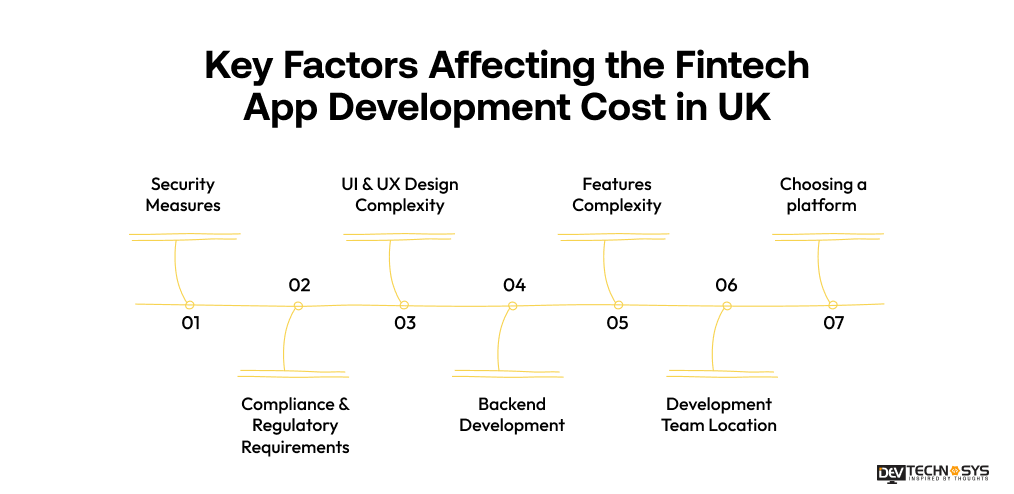
Key Factors Affecting the Fintech App Development Cost in UK
There are multiple variables that influence fintech app development cost. These factors influence the final budget and development timeline. In this section, we’ll explore how these factors impact the final cost to build fintech app UK.
1. Security Measures
Skipping security measures is not an option when it comes to Fintech software development in UK. Modern fintech apps must include advanced security and protection measures to protect sensitive financial data. It may include biometric authentication (face recognition, fingerprint login), end-to-end encryption, multi-factor authentication (MFA), and ML-based fraud detection. Moreover, a robust security architecture and regular audits are essential for compliance with standards enforced by the Financial Conduct Authority, as well as PCI-DSS and GDPR.
| Level | Security Elements | GBP |
| Level 1 | HTTPS, basic auth, secure storage | £900 – £1,500 |
| Level 2 | OAuth, encrypted DB, roles | £1,500 – £2,625 |
| Level 3 | MFA, audit logs, API protection | £2,625 – £3,750 |
| Level 4 | Pen test, monitoring setup | £3,750 – £5,250 |
2. Compliance & Regulatory Requirements
Regulatory and licensing fees are another key hidden cost issue. Regulatory regulations Financial Conduct Authority. All fintech apps should abide by the regulatory regulations imposed by the Financial Conduct Authority. In addition, the app must comply with GDPR, PSD2, and AML Laws. There are license fees, legal advice, and regular compliance audits.
The initial development costs don’t include continuing fees such as the licensing fee. Good compliance planning cuts down on the chance of increased fintech app development cost and legal problems.
| Level | Compliance Variables | GBP |
| Level 1 | GDPR policy, consent flows | £750 – £1,350 |
| Level 2 | Basic KYC integration | £1,500 – £2,625 |
| Level 3 | AML rules, transaction logs | £2,625 – £4,125 |
| Level 4 | FCA-ready audit trails | £4,125 – £6,000 |
3. UI & UX Design Complexity
The visual appeal is the heart of finance and banking app development. A well-designed fintech mobile application will drive user engagement, leading to the app’s success. However, a more interactive and advanced design will highly impact the fintech MVP development cost UK.
Features like intuitive dashboards, real-time data visualization, micro-interactions, and personalized interfaces require advanced design efforts. Here’s the table highlighting the fintech mobile app development cost UK based on mobile app design services and their complexity.
| Level | Design Elements | GBP |
| Level 1 | Wireframes, basic screens | £1,125 – £1,875 |
| Level 2 | High-fidelity UI | £1,875 – £3,000 |
| Level 3 | Interactive prototype | £3,000 – £4,500 |
| Level 4 | Animations, UX testing | £4,500 – £6,000 |

4. Backend Development
Backend development powers the core functionality of a fintech application, including data processing, transaction management, and system integrations. If your app supports high transaction volumes, real-time database synchronization, multi-currency accounts, and secure cloud infrastructure, it demands a robust backend architecture.
Implementing scalable servers, APIs, and data security layers can substantially raise the cost to develop a fintech app like Wise, especially for enterprise-level fintech platforms.
| Level | Backend Variables | GBP |
| Level 1 | Simple APIs, DB setup | £1,500 – £2,625 |
| Level 2 | Auth, user management | £2,625 – £4,500 |
| Level 3 | Payment integrations | £4,500 – £6,750 |
| Level 4 | Scaling, monitoring | £6,750 – £9,000 |
Industry Insights: According to Grand View Research, The UK AI fintech market is projected to reach $2.5 billion by 2030. Growing at a 14.3% CAGR, driven by fraud detection and automation
5. Features Complexity
The features added to the best fintech apps will directly affect UK fintech app development pricing. They are a vital part of the development process, as they have an impact on the cost to build a fintech app in UK.
For instance, complex features increase the fintech software development pricing UK. Advanced features like multi-currency wallets, AI-powered chatbots, real-time transaction tracking, budgeting tools, and personalized financial insights require sophisticated development and integrations.
| Level | Feature Variables | Estimated Cost (GBP) |
| Level 1 | Login, profile, basic dashboard | £1,125 – £1,875 |
| Level 2 | Payment integration (sandbox/live), notifications | £2,250 – £3,750 |
| Level 3 | Transactions, alerts, real-time updates | £3,750 – £5,625 |
| Level 4 | Analytics, admin panel, reporting tools | £5,625 – £7,500 |
6. Development Team Location
For the cost of fintech app development in the UK, the location of your development team is a big factor. UK developers are typically more expensive to hire as they have higher hourly rates, usually £50-£150/hour.
They tend to have strong expertise and regulatory knowledge. However, by outsourcing to other regions such as Eastern Europe or Asia, the costs can be dramatically reduced, and you can still get access to talented personnel.
| Region | Hourly Rate / Cost Range | Key Impact on Budget |
| UK | £50 – £150/hour | High expertise, compliance-ready development |
| Eastern Europe | £25 – £70/hour | Balanced cost and quality |
| India / Southeast Asia | £15 – £50/hour | Cost-effective, scalable teams |
| USA | £80 – £180/hour | Premium pricing, high-end expertise |
7. Choosing a platform
The total cost of developing a fintech app in the UK depends on the platform you choose. You need to pay more to Fintech software development companies to build Native applications (separate for iOS and Android) as they require separate codebases, separate teams, and longer development time.
On the flip side, cross-platform development frameworks such as Flutter or React Native help reduce costs by offering a single codebase for multiple platforms, making them a more affordable option.
| Platform Type | Development Effort | Estimated Cost Impact (GBP) |
| Native iOS + Android | Separate codebases, longer timeline | £6,000 – £12,000+ |
| Cross-Platform (Flutter / React Native) | Single codebase, faster development | £3,500 – £8,000+ |
| Hybrid Apps | Limited performance, quick deployment | £3,000 – £6,000+ |
| Web + Mobile Combined | Shared backend, moderate complexity | £5,000 – £10,000+ |
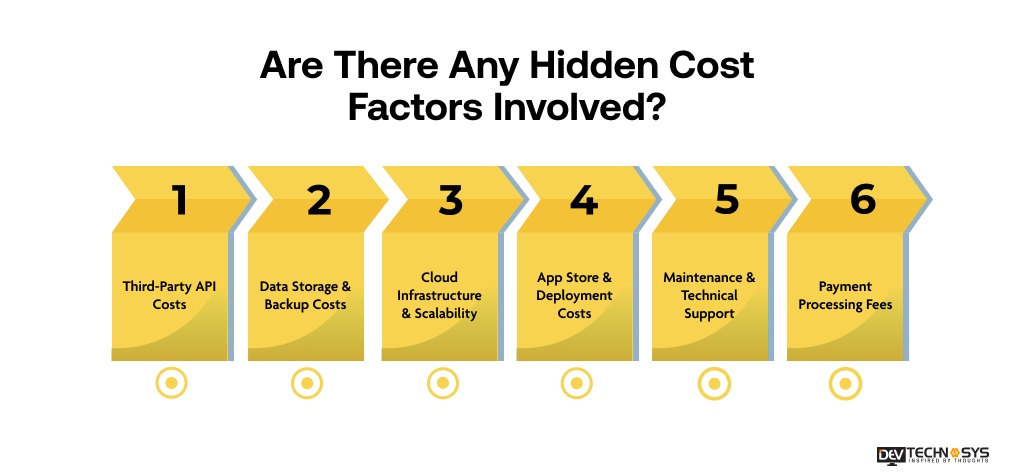
Are There Any Hidden Cost Factors Involved?
Prepared to develop a fintech app? Good, but have you considered the hidden cost factors while planning the budget? Yes, besides the upfront cost, there are many hidden factors to consider while planning the development budget because they can impact development costs. Let’s review these factors in detail:
1. Third-Party API Costs
The first hidden factor that can influence the Fintech app development cost in the UK is third-party integrations. Payment gateway integration, KYC verification, banking services, and analytics tools include recurring charges depending on usage. As the app scales and manages more transactions and users, the cost of adding third-party PAIs also increases significantly.
It impacts the overall fintech software development cost UK. Selecting scalable plans for fintech app development pricing UK from the beginning limits the long-term API costs.
| API Type | Usage Basis | Estimated Cost (GBP) |
| Payment Gateway APIs | Per transaction | £0.05 – £0.30 per transaction |
| KYC / Identity Verification | Per user | £0.50 – £3 per user |
| SMS / Email APIs | Per message | £0.005 – £0.03 per message |
| Banking APIs | Per API call | £0.001 – £0.008 per request |
| Analytics Tools | Monthly | £20 – £150/month |
2. Data Storage & Backup Costs
Fintech apps must ensure secure storage of sensitive financial data. They also maintain backups for regulatory compliance and data backup needs. As an app handles more data, the cost of storage and backup also increases, especially with the long-term retention requirements. Efficient data management strategies can help control storage expenses.
| Storage Type | Usage | Estimated Cost (GBP) |
| Cloud Storage | Per GB/month | £0.01 – £0.025 per GB |
| Database Hosting | Managed DB | £30 – £200/month |
| Backup Services | Automated backups | £10 – £100/month |
| Compliance Storage | Long-term retention | £50 – £300/year |
3. Cloud Infrastructure & Scalability
Fintech apps greatly depend on cloud infrastructure to process data in real time, store it, and scale. With the growth of user traffic and expansion of traction volume, costs related to bandwidth, servers, and database management also increase, making cloud services a high ongoing operational cost. Auto scaling and optimizing cloud storage can help manage infrastructure costs efficiently.
| Component | Usage | Estimated Cost (GBP) |
| Cloud Hosting | Monthly | £50 – £500/month |
| Bandwidth | Per GB | £0.04 – £0.10 per GB |
| Load Balancer | Monthly | £10 – £80/month |
| Auto Scaling | Usage-based | £30 – £300/month |
4. App Store & Deployment Costs
Publishing apps on Apple App Store, Google Play Store, etc., needs developer costs, deployment processes, and continuous upgrades. potentially, long-term expenses could potentially be increased due to ongoing app maintenance, regulatory compliance with store policies, and version changes. To run smoothly and stay on top of platform guidance, regular updates are required.
| Platform | Type | Estimated Cost (GBP) |
| Apple Developer Account | Annual | ~£69/year |
| Google Play Console | One-time | ~£18 |
| Deployment Tools | Monthly | £10 – £80/month |
| App Updates | Per cycle | £100 – £500/update |
5. Maintenance & Technical Support
After the initial launch, financial apps demand continuous upkeep, such as bug fixing, performance tuning, and feature refreshes. Recurring costs are also in the form of customer support systems and technical assistance that can be a large part of an annual Fintech app development cost in UK.
Smooth running and increased user satisfaction are the result of ongoing support. Fintech apps need to be maintained after launch. It features performance optimization, bug repairs, and feature upgrades.
| Service Type | Scope | Estimated Cost (GBP) |
| Bug Fixes | Ongoing | £300 – £1,500/month |
| Optimization | Periodic | £200 – £1,000/month |
| Support Team | Monthly | £300 – £2,000/month |
| Annual Maintenance | % of cost | 15% – 25% yearly |
6. Payment Processing Fees
According to experts who provide fintech software development services, every transaction made using the app incurs fees from payment gateways and banks. By themselves, these charges may seem small, but they can accumulate significantly with the increase in transaction volume.
Optimizing payment partners helps reduce transaction-related expenses. Choosing the right pricing model (flat fee vs percentage-based) can further optimize overall transaction costs.
| Fee Type | Basis | Estimated Cost (GBP) |
| Transaction Fee | Per transaction | 1.5% – 3% |
| Fixed Fee | Per transaction | £0.05 – £0.25 |
| Currency Conversion | Per transaction | 1% – 2% |
| Chargebacks | Per case | £8 – £20 |
Proven Methods to Reduce the Fintech App Development Cost
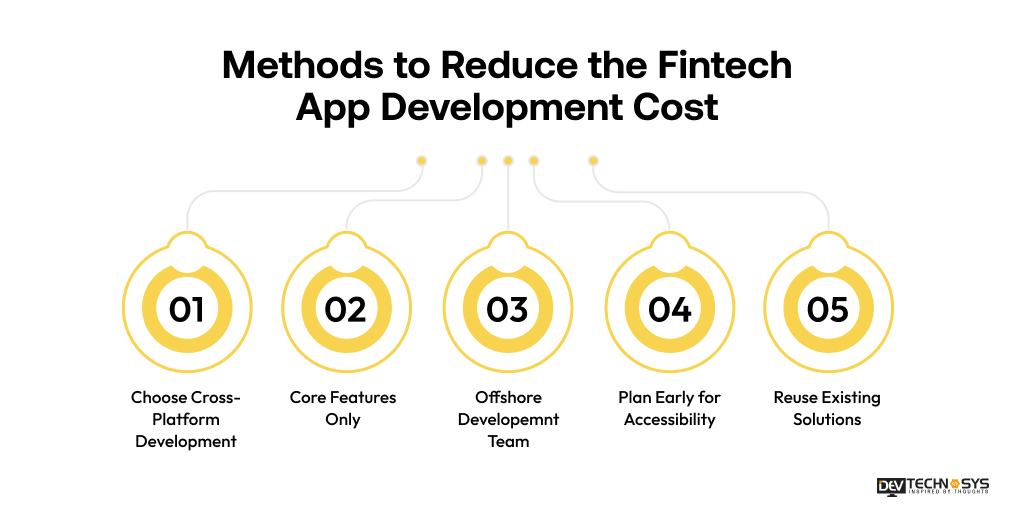
From planning to post-release support, the cost to develop a mobile app in the fintech industry requires significant investment. But with the following tips, you can easily reduce the cryptocurrency app development cost UK.
1. Choose Cross-Platform Development
With the use of Flutter and Native React, you can build a cross-platform app, reducing the cost of creation and management. It also reduces the development time and enhances the performance across all platforms. Using this approach reduces maintenance effort and simplifies future updates. Cross-platform app development is best for MVPs and fast market launches with limited budgets.
2. Core Features Only
Rather than building a feature-bloated application, divert your focus to solving one primary user problem. By this simple approach, you can easily cut down the Fintech app development cost in UK. It is beneficial to focus on essential features in the start, then scale gradually. It reduces complexity and cost. Additional features can always be added in future updates.
3. Offshore Developemnt Team
Another tip to reduce the development costs is to partner with a custom fintech software development company in cost-effective regions. It ensures a quality product without exceeding the budget constraints. It helps maintain quality while optimizing budget allocation. Time zone planning ensures smooth communication and workflow.
4. Plan Early for Accessibility
By keeping scalability in mind, invest in proper architecture, as it will save an enormous part of the budget. With this, you can ensure that your fintech app can easily handle the growth. This scalable systems reduce long-term redevelopment costs. The cloud-based infrastructure helps in managing the expansion with efficiency.
5. Reuse Existing Solutions
From user authentications to payment processing and data visualization, use pre-built modules for your fintech application. asit will help you reduce both time and cost to develop a digital banking app in UK. Opt for open source libraries. It minimizes both fintech startup app development cost UK. It also improves reliability by using tested components.
How Ignoring Fintech App Development Best Practices Affects Costs?
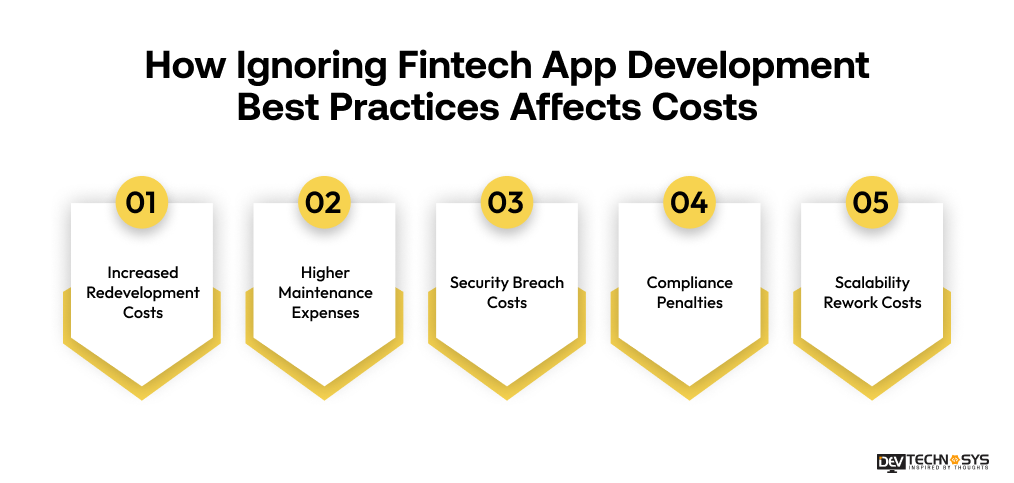
Not paying attention to fintech app development best practices may not seem like a big deal at first, but it is. You may save a little in custom fintech app development cost UK from the beginning, but it results in a higher cost in the long run. Ignore best practices, and you have rework, security issues, and scalability failures.
1. Increased Redevelopment Costs
Weak planning and carelessly making architecture often result in rebuilding every core model, including authentication, payments, and data systems. It can double or triple the original cost spent on development sometimes. Having these issues fixed by an expert is more costly than building it correctly from the start.
2. Higher Maintenance Expenses
The apps created without following proper coding standards or testing frameworks pose recurring bugs and performance issues. It increases the cost spent on regulatory maintenance and needs constant cost maintenance without the involvement of developers. remind you that maintenance services can impact the development budget significantly, rising from 15% to 25% of the total project cost in a year.
3. Security Breach Costs
Neglecting security features can quickly lead to big financial losses for businesses. Security protocols like MFA, encryption, and fraud detection increase the possibility of cyberattacks. Having the sensitive data recovered can involve legal penalties and financial losses. Ignoring security practices often costs more than the entire neobank app development cost UK.
4. Compliance Penalties
Non-compliance with regulations enforced by the Financial Conduct Authority, GDPR, or PCI-DSS can lead to heavy fines and legal action. Compliance fixes after launch are far more expensive than building them initially.
5. Scalability Rework Costs
If the system is not designed for scale, it may crash under increased traffic or transaction load. Upgrading infrastructure later requires major redesign and migration. Scalability fixes can increase costs by 2 to 3 times.
Conclusion
Ranging from app type to the choice of tech stack, fintech app development cost in the UK is influenced by various elements. So hire dedicated developers to scale your application to millions of users. Understanding the cost-affected factors and pitfalls to avoid upfront will help you align your development budget to the business goals. Building a fintech app paves the way for long-term growth and innovation.
If you are a business looking to develop the next popular fintech app, then contact Dev Technosys. With 5+ years of expertise and over 1000+ successful project deliveries, we can turn your raw fintech vision into an innovative, feature-rich app.
Frequently Asked Questions
Find answers to the most common questions related to this article.
The average cost of fintech app development in the UK ranges from £5,932 to £22,247+. It depends on features, scalability, security requirements, and regulatory compliance, such as GDPR, PSD2, and FCA guidelines.
Fintech development is costly due to strict regulations, high developer rates, advanced security requirements, and complex integrations like payment gateways, banking APIs, and real-time transaction systems, all of which increase development effort and overall budget.
A basic non custodial wallet MVP in the UK typically costs between £5,932 and £11,123+, including essential features like user onboarding, authentication, simple payments, dashboards, and basic transaction tracking for initial market validation.
Advanced fintech apps with AI, fraud detection, open banking, and multi-currency support can cost between £16,362 and £22,247+. It depends on scalability, security layers, infrastructure, and third-party integrations required for enterprise-level performance.
Costs can be reduced by using cross-platform frameworks, starting with an MVP, outsourcing development to cost-effective regions, and leveraging pre-built APIs and modules, which help minimize development time and reduce overall project expenses.
Yes, hidden costs include API usage fees, cloud infrastructure charges, compliance audits, security updates, and payment processing fees. These ongoing expenses can significantly increase the total cost of ownership over time if not planned properly.