

















Have you ever thought about how Amazon knows what to sell you based on what you already have in your cart? That is how robust online recommendation systems are! These systems look at real-time data users’ preferences, shopping trends, and product catalogs to make smart tips.
A McKinsey report says that recommendation engines bring in up to 35% of Amazon’s revenue. On the other hand, Netflix says personalized recommendations bring in over 80% of its streamed content. Due to its huge demand, many entrepreneurs who have retail businesses are looking to invest in retail recommendation system development.
Thus, if you too want to build a recommendation system for retail business or improve the one you already have. This blog will give an overview of online recommendation systems, the various types of systems, and the costs and steps to develop a recommendation engine for online retail.
So, let’s begin!
What is a Retail Product Recommendation System?
A Retail Product Recommendation System is a smart technology that suggests products to customers based on their interests and past purchases. It works like a friendly shop assistant, showing items you might like when shopping online.
For example, if you buy a phone, it may suggest a phone cover. Big stores like Amazon and Flipkart use this system to help customers find the best products easily. It makes shopping faster, more fun, and helps businesses sell more products.
Note: 72% of Customers want firms to identify their preferences and serve them uniquely. Customization is about creating relationships, not only commerce. |
Future Predictions & Projections of Recommendation System
- Product recommendations shown online were appreciated by 48 percent of consumers in Ireland, whereas Finnish consumers liked them the least.
- The AI-based recommendation system market size has grown rapidly in recent years. It will grow from $2.21 billion in 2024 to $2.44 billion in 2025 at a compound annual growth rate (CAGR) of 10.5%. (Thebusinessresearchcompany)
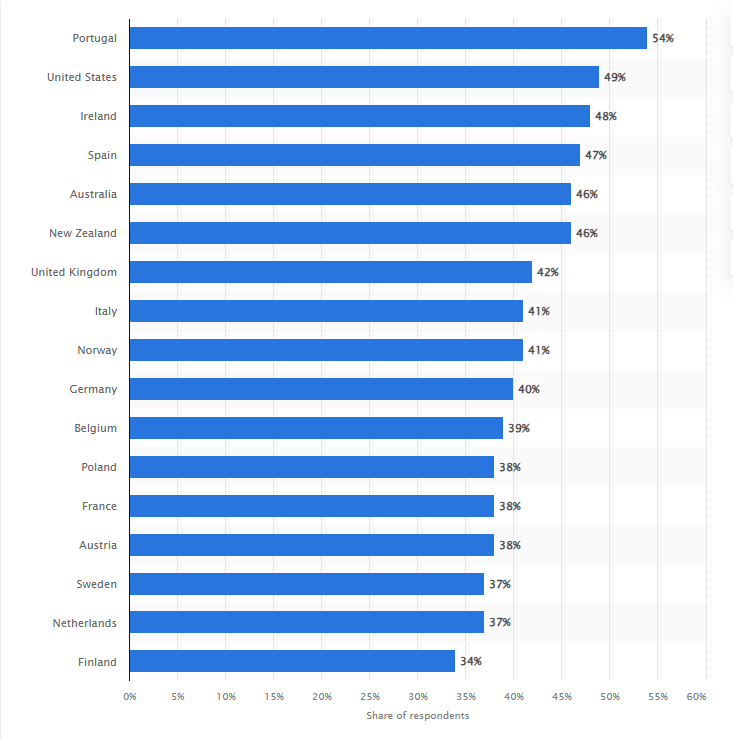
Source: Statista
- The Content Recommendation Engine market industry is projected to grow from USD 6.55 Billion in 2023 to USD 29.50 billion by 2030. (Marketresearchfuture)
Different Types of Recommendation System
Using a person’s likes, interests, and past actions, recommendation systems help them find content that is important to them. Online services like Netflix, Amazon, and Spotify use these kinds of systems all the time to offer movies, products, and music. There are different kinds of ranking systems, and they all work in their own way.
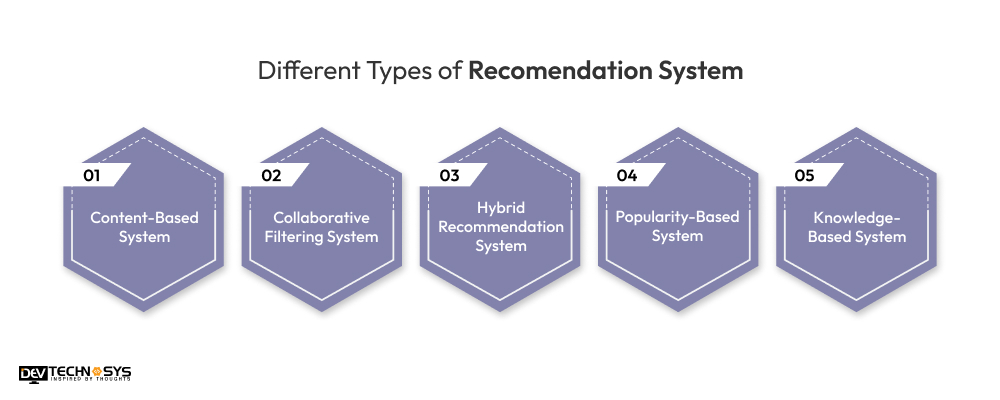
1. Content-Based System
This kind of system tells the person about things that are like the things they already like. It looks at things about goods or content, like genre, keywords, or descriptions, and pairs them with what users want. For example, if you watch a lot of action movies on Netflix, it will suggest more action movies.
2. Collaborative Filtering System
This method gives suggestions based on how people use it and what they like. It finds people who like the same kinds of things and suggests things that one person likes but the other person has not seen yet.
One person could view a new movie, and the system might offer it to the other person if they both liked the same movies from the cloud-based retail filtering system.
3. Hybrid Recommendation System
A hybrid system uses more than one suggestion method to get better results. To make better ideas, it might use both content-based filtering and collaborative filtering at the same time.
For example, a live streaming app development solution, Netflix, uses a mix of methods by looking at both what you have watched and what other people like you have liked.
4. Popularity-Based System
This retail recommender system suggests popular or trending things based on how much users interact with it overall. Instead of making ideas based on your preferences, it shows you content that a lot of people are interested in. This is how the most popular movies on YouTube or the best-selling books on Amazon work.
5. Knowledge-Based System
According to information about users’ wants, this prediction system suggests items. The best time for it to work is when there is not enough past data. For example, a travel booking website development might suggest holiday packages based on a person’s spending budget, like vacation spots and past trips.
How Does Recommendation System Work for Retail Industry?
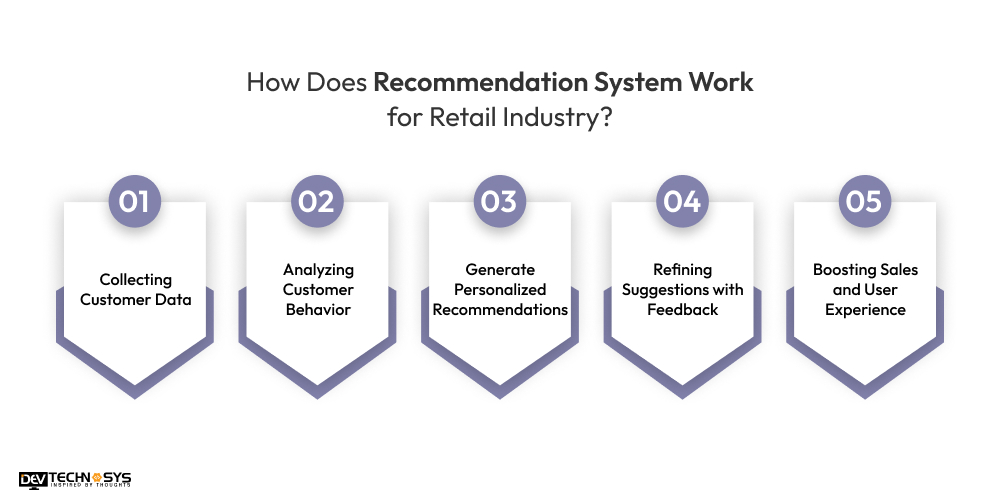
If you are planning to build a recommendation system for retail business, then you should first know its working mechanism. So, here is the process of smart suggestion mechanism
explained by an ecommerce app development company.
1. Collecting Customer Data
The retail-based filtering recommender systems collect information about customers’ browsing and buying habits. Their search terms and how they interact with products to figure out what they like.
2. Analyzing Customer Behavior
Using AI and machine learning, the system looks at what customers do to find patterns like things that are bought together a lot or items that are looked at together a lot.
3. Generate Personalized Recommendations
The e-commerce recommendation system tells the customer about goods they might like based on the analysis. You can see these suggestions on product pages, in emails, or when you check out.
4. Refining Suggestions with Feedback
The system is always getting better because it learns from how customers use it. When a user clicks on or gets one of the suggested items, the system learns from that and will make even better suggestions in the future.
5. Boosting Sales and User Experience
Users find what they need faster when they get relevant suggestions from ecommerce platforms. This boosts sales and makes the shopping experience better for them. More interaction and better sales are good for retailers.

Steps to Build a Recommendation System for Retail
Is your retail shop selling things? A retail recommendation system can help you make a lot more money. However, if you build a recommender system from scratch, it will be expensive and take a lot of time. Here is a step-by-step guide to help you understand how to launch a recommendation system for retail:

1. Collect and Process Customer Data
Getting data is the first thing that needs to be done to build a retail recommendation system. In retail, this data-driven retail strategy includes what customers have bought in the past, how they browse, what products they like, and how they use the fashion eCommerce website development solution or app. Your suggestions will be better if you gather more information. There are many places where you can get data, such as:
- Tracking: Website and mobile app tracking.
- History: Transaction history.
- Feedbacks: Customer reviews and ratings
After getting this information, you need to clean it up and use it to develop a personalized shopping suggestion system. There are often mistakes, duplicates, or missing values in raw data, which can make suggestions less accurate. High-quality data input can be guaranteed by using data preprocessing methods like getting rid of duplicates, dealing with missing values, and standardizing forms.
2. Choose the Right Recommendation Algorithm
The next step is to choose a recommender system algorithm after the data has been processed. It is possible to make suggestions for retail recommendation system development clone in three main ways:
- Content-Based Filtering: This method suggests goods to a customer based on how they have behaved in the past from eCommerce based filtering.
- Collaborative Filtering: This method looks at patterns of customer behavior and finds users who are alike. It suggests items based on what other customers have bought that are related.
- Hybrid Recommendation System: It uses both Content Filtering System and collaborative filtering to make suggestions that are more accurate.
Before you build a recommendation system for retail, you must decide which algorithm to use relies on the needs of your business. Also, what data do you have access to, and how complicated the retail recommendation system you want to make it.
3. Train the Model and Test Performance
Once you have chosen the recommendation method, the AI development team needs to use the data you have collected to train the model. As part of training, customer data is fed into the system so it can figure out how goods and users are related.
Once the model has been trained for building a recommender system from scratch, it needs to be tested to see how accurate it is. You can do things like:
- A/B Testing: It lets you see which suggestion model works better by comparing two or more of them.
- Precision and Recall Metrics: Check to see how well the prediction system suggests goods that are relevant.
- User Feedback: Ask users what they think about suggestions to make the method better.
Testing makes sure that the recommendation engine gives customers correct and useful ideas, which ultimately increases sales and customer engagement.
4. Implement the Recommendation System
The model has been tested and improved, and now it is time to add it to your eCommerce app development. There are different ways to implement an AI-powered retail recommendation model, such as:
- Product Pages: Showing “users who purchased this also bought…” suggestions.
- Shopping Cart: Recommending additional products based on items in the cart.
- Homepage Personalization: Giving product ideas based on past contacts.
- Email Campaigns: Sending personalized product ideas to customers.
A recommendation system that works well gives users the right ideas at the right time, making the experience smooth. For example, an online clothing shop can suggest trendy outfits based on what a customer has bought or looked at before.
5. Monitor and Improve the System
Building a recommendation system for retail is not a one-time thing. It needs to be watched over and improved all the time. If customers are not interested in the suggestions, you may need to change the formula, add new data, or make the experience more unique for each customer. The method for making suggestions can be made better by:
- Updating Data Regularly: Adding new information about how customers behave to the system on a regular basis.
- Using AI and Machine Learning: More advanced AI models can make suggestions in real-time and make things more accurate.
- Incorporating User Feedback: To improve personalization, let customers rate or change suggestions.
For instance, if a lot of people buy a certain kind of product around the holidays, the system should notice this and change its suggestions to reflect that.
Key Features of Retail Product Recommendation System
A retail product recommendation system makes shopping more fun by giving customers suggestions for goods that are right for them based on what they like and how they behave. These are the most important features that make a suggestion engine work:

-
Personalized Recommendations
A good retail recommendation system makes product ideas that are more relevant to the user by looking at what they have looked at, bought, and liked in the past. It helps customers see goods they are likely to buy, which raises the rate of conversion.
-
AI & ML Algorithms
So, how does machine learning improve retail recommendations? Well, smart AI and machine learning models look at a huge amount of customer data to guess what goods people will like and suggest them. These smart retail based filtering algorithm examples keep making ideas better by learning from how customers use them.
-
Real-Time Data Processing
Based on what users do, the system quickly changes the suggestions it makes. When a customer hits on a certain category or adds an item to their cart, the suggestions in the marketplace app development change right away to reflect that.
-
Multi-Channel Integration
Customers can shop on many devices, including websites, mobile apps, and even smart helpers. A good recommendation system makes all of these channels work together smoothly, giving customers a unified buying experience.
-
Behavioral Analysis
To make useful suggestions, the software development company needs to know how your customers act. The e-commerce recommendation system looks for patterns, like goods that are looked at a lot, search history, and carts that are not finished, so it can make better suggestions.
-
Collaborative Filtering
This feature suggests goods based on what other customers who are like you have liked. For instance, if a lot of people who bought a certain smartphone also bought a certain case, the system will offer that case to people who are also looking to buy a smartphone.
-
Context-Aware Recommendations
In the real world, the system takes into account things like place, time, season, and long-term trends. For instance, offering warm clothes in the winter or travel gear before the holidays makes the advice more relevant.
-
Upselling & Cross-Selling
Businesses can boost sales with the help of a good recommendation system that suggests related products or more expensive versions of things, like telling someone to buy a laptop bag when they buy a laptop when you make a recommendation system for Retail.

-
Feedback & Rating Integration
The automated recommendation tool makes its suggestions better based on reviews and scores from customers. People who want to buy something are more likely to be told about a product that has good reviews.
-
Performance Analytics & Reporting
Retailers can see the app performance by looking at things like click-through rates, conversion rates, and the amount of money made. This helps businesses improve their plans and make customers happier.
How Recommendation Systems Are Used Across Different Industries?
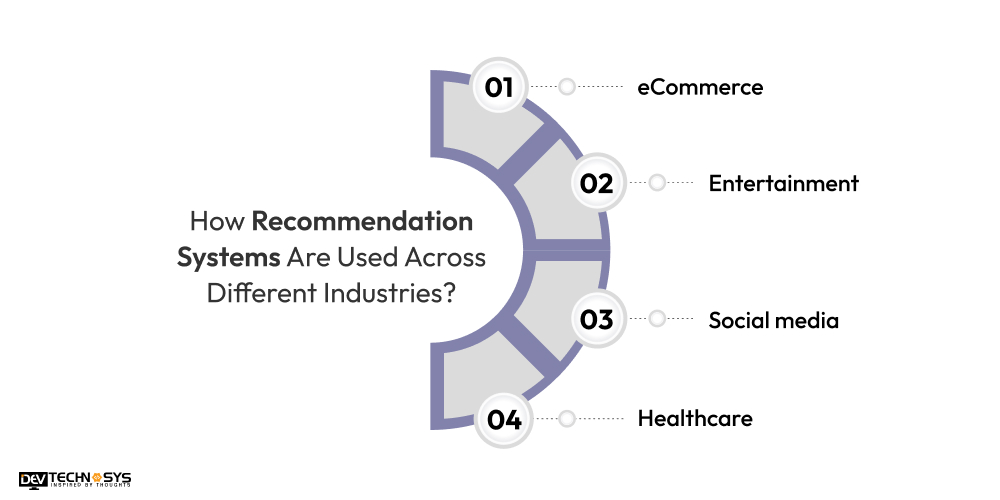
Not only does the retail industry leverage recommendation systems and see outcomes, but also many other industries. So, let’s have a look at them:
1. eCommerce
Recommendation systems for e-commerce to make shopping more enjoyable by showing users relevant goods. These programs look at what people have bought, browsed, and liked in the past to suggest things.
For example, “Customers who bought this also bought” or “Frequently bought together.” By saving users time and effort, this process increases sales and the average order value. It also makes customers happier by making them satisfied.
Real-life example: Amazon
Amazon uses item-to-item eCommerce-based filtering to provide recommendations on most of their home pages and email campaigns. According to McKinsey, 35% of Amazon sales are made because of recommendation systems.
2. Entertainment
The video streaming app development systems help people find movies, music, TV shows, or books that are a good fit for them in the entertainment business. The recommendation system for entertainment industry can provide them with personalized content to make them more interested and keep them on the platform longer by looking at their viewing or listening habits.
Real-life example: Netflix
Netflix suggests movies and TV shows by using both collaborative filtering and content-based filtering. As a result, suggestions drive 80% of the content that is watched.
In October 2006, Netflix held a contest called the Netflix Prize to help improve the way it sorts movie suggestions.
Teams or individuals could enter the challenge and win $1 million if they could make guesses at least 10% more accurate than Netflix’s current recommendation algorithm.
3. Social Media
As a user interacts, likes, and connects with other people on social media app development sites, recommendation systems for social media offer friends, groups, pages, posts, or ads. These ideas lead to more interaction between users, more content discovery, and more advertising income.
Real-life example: Meta
Meta uses AI to show users personalized content suggestions on Facebook and Instagram, even from pages they do not follow.
This method improves the user experience by adding different kinds of content and helps creators reach more people. Understanding content and preferences, retrieval, and ranking are all parts of the suggestion process.
4. Healthcare
A recommendation system for healthcare looks at a patient’s medical history and lifestyle to offer treatment choices, health resources, or preventative measures that are best for them. The standard of care gets better, and costs go down when AI is used in healthcare app development solutions.
Real-life example: Ada Healthcare
Ada Health is an AI-powered tool that helps people take care of their health by giving them personalized medical suggestions.
People can type in their symptoms to get tests that help figure out what is wrong and what they should do next. A group of medical professionals are always improving the platform’s AI system to make sure it is accurate and reliable.
Future Trends in Retail Recommendation Systems
Retail recommendations are changing very fast, which is great for businesses as it lets customers have more personalized shopping experiences. As technology improves, retail stores are using smarter methods to recommend goods based on what customers like. So, we will look at the future trends that will showcase the use of recommendation systems in retail.
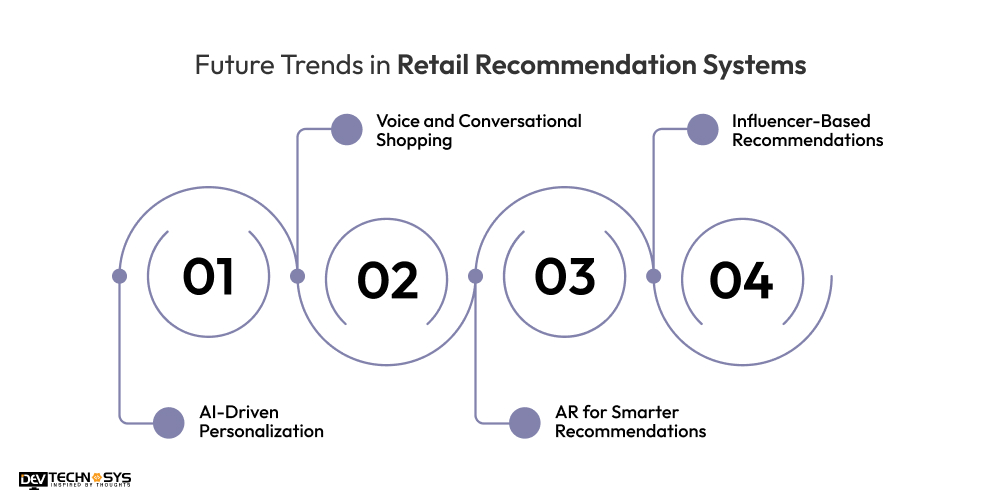
1. AI-Driven Personalization
AI is shifting suggestion systems by watching how individuals act right now. Retailers are using AI to learn about customers’ buying habits, browsing past, and personal tastes so they can make very specific product suggestions.
Rather than giving everyone the same suggestions, an AI-powered recommendation engine makes sure that each shopper sees items that are specifically suited to their tastes. For example, if a customer buys a lot of skin care products, the Suggestion Engine system will offer popular skincare brands or products that go well with them, like serums and moisturizers.
Did You Know: Amazon’s recommendation engine, powered by AI, contributes to 35% of its total sales by offering personalized product suggestions |
2. Voice and Conversational Shopping
As voice assistants like Alexa, Siri, and Google Assistant become more popular, people are more likely to get product suggestions when they talk to them. People can now ask their devices to suggest products, and AI-powered systems will give them relevant choices.
Let’s say someone asks, “What are the best running shoes that cost less than $100?” The clone recommendation system will look at ratings, reviews, and your own choices to figure out which options are the best. Customers can also use conversational AI chatbots to help them find goods by answering their questions and a real-time personalized recommendation system.
Fun Fact: 55% of households in the U.S. are expected to own a smart speaker by 2025, driving voice-based shopping. |
3. AR for Smarter Recommendations
Augmented reality makes online shopping better by letting people “try before they buy.” A lot of stores are putting in AR-powered automated recommendation tool that suggest goods based on virtual try-ons.
For instance, a beauty brand can suggest makeup colors by looking at a customer’s face with an AR app. Furniture stores also let customers see how a sofa will look in their living room before they buy it. This trend makes customers more confident and cuts down on product returns.
Fun Fact: IKEA’s AR app, IKEA Place, enables users to virtually place furniture in their homes, enhancing confidence in purchase decisions. |
4. Influencer-Based Recommendations
Social media apps like Instagram, TikTok, and Facebook are turning into shopping hubs where people look to influencers for suggestions. By looking at popular goods, endorsements from influential people, and user-generated content, brands are adding social commerce to their recommendation systems.
If a review from an influencer makes a product more famous, the Suggestion Engine will highlight it in its product suggestions. For example, if a fashion writer writes about a certain handbag, AI-powered tools will show that bag to people who like the same style, which increases the chance that they will buy it.
Did You Know: Shein uses AI to quickly change its products to meet customer needs. It has up to 600,000 items on its site and serves customers all over the world. |
How Much Does It Cost To Create A Recommendation System for Retail?
The cost to build a recommendation system for retail ranges between $8000 – $25000. However, it can fluctuate depending on factors like complexity, data volume, and technology used.
A simple recommendations system that uses open-source tools might cost less, but a high-tech system that uses AI, machine learning, and real-time personalization can cost more than $25,000.
So, it is necessary to hire experienced developers or an ML development company to develop a recommendation system for Retail, which adds to the overall cost. The main things that affect the cost to develop a suggestion system are now up for discussion.
1. Data Complexity and Volume
Costs depend a lot on how big and complicated the data is. To properly analyze larger datasets, you need more storage space, more advanced processing power, and more computing power.
Also, cleaning, organizing, and standardizing the data may take more steps if it is not organized or comes from different sources. This takes more time and resources, which makes the price go up.
Data Characteristic |
Volume (Relative) |
Complexity (Relative) |
Cost Impact (Relative) |
| Low | Small | Simple | Low |
| Medium | Moderate | Moderate | Moderate |
| High | Large | Complex | High |
| Very High | Very Large | Very Complex | Very High |
2. Algorithm Complexity
A recommendation clone system’s process and prices are affected mainly by its algorithms. The price is affected by the algorithms for retail recommendation systems choice in a big way.
Standard algorithms, like collaborative or content-based filters, are cheaper because they are easier to find and do not need to be changed as much.
But if your OTT app development system needs more complex methods, like deep learning models or hybrid approaches, it will take more work to develop a recommendation system for Retail, increasing costs.
Algorithm |
Complexity Notes |
Cost Implications |
| User-Based Collaborative Filtering | Potentially high, scales poorly with many users. | High computational cost for large datasets requires significant resources. |
| Item-based Collaborative Filtering | More efficient than user-based, scales better with many users. | Moderate computational cost, more manageable for large retail datasets. |
| Matrix Factorization | Depends on implementation, iterative optimization. | Moderate to high computational cost requires careful tuning. |
| Content-Based Filtering | Varies greatly based on feature complexity. | Varies can be low for simple features hand igh for complex NLP. |
3. System Integration
Adding your IT infrastructure, databases, and third-party platforms to the recommendation system clone can make things more complicated.
Unique API development, software, and data pipelines often takes time and specific skills, but it is necessary for seamless integration. For integration, the cost to develop a recommendation system for retail go up as the needs get more complicated.
Component |
Estimated Cost Range |
| API Development | $1,000 – $2,000+ |
| E-commerce Platform Integration | $1,000 – $3,000+ |
| CRM Integration | $900 – $2500+ |
| POS Integration | $1,000-$3,000+ |
| Testing and QA | $800 – $1200+ |
4. Maintenance and Updates
This is not a one-time purchase; a product suggestion system needs regular upkeep to remain useful. For maintenance, algorithms need to be updated, suggestion system models need to be tweaked, and new technologies need to be made sure to work with the system.
Since user wants and business goals change over time, adding new data sources or features raises ongoing retail recommendation system development costs.
Category |
Estimated Cost |
| Data Maintenance | $800 – $1000+ |
| Algorithm Updates | $500 – $1200+ |
| Software Maintenance | $1,000 – $5000+ |
| Infrastructure Costs | $2,000 – $3,000+ |
Case Study- Kawani
Kawni is a multi-vendor eCommerce marketplace developed by Dev Technosys. It is built for Qaiwan Group, a leading business organization in the Middle East. The goal is to create a seamless platform for buying and selling handmade products online. It is delivered by a dedicated team of 3 Laravel developers over 45 weeks. The solution integrates secure payment gateway integration, vendor onboarding, inventory management, order tracking, refund processing, and user-friendly marketplace functionality. The Kawani platform streamlines digital commerce operations, enhances customer engagement, and provides a scalable ecosystem. All these things supports business growth and efficient online transactions.
Pramod Jangid (CTO)
Let’s Build a Recommendation System for Retail Industry!
Customers who used a recommendation system had a 60% higher conversion rate in their shopping session. This idea is crucial for boosting sales in an E-commerce marketplace by recommending products that match the interests of shoppers.
It not only increases the number of items in the cart but also improves the overall user experience. However, if you are planning to develop a recommendation engine for online retail, it is best to consult with a mobile app development company that apply the right strategies that can lead to success.
Frequently Asked Questions
Q1. How Much Does It Cost To Make a Recommendation System for Retail?
The estimated cost of recommendation system development may vary depending on your project’s complexity. Generally, it can range between $8000 – $25000 or go beyond as per your requirements.
Q2. How Long Does It Take To Build A Personalization System?
The average time to create a recommendation system for retail can take around 2 – 5 months or more, based on the project requirements. It is vital to consult with a mobile app development company.
Q3. What is An Example of a Recommendation System?
Recommendation systems can be used for content, books, driving routes, and more. They can use techniques like collaborative filtering, content-based recommendations, and machine learning in retail.
Q4. What is Retail-Based Filtering?
Retail-based filtering is a recommendation technique that suggests products based on retail data, such as sales trends, customer behavior, and preferences.
Q5. Can You Differentiate Retail Based Filtering vs Collaborative Filtering?
While collaborative filtering focuses on user similarity to recommend items, content-based filtering recommends items exclusively according to item profile features.