












Key takeaways:
-
-
- The global growth of restaurant management apps is expected to reach $46.22 billion by 2034.
- The cost to build restaurant management app ranges from $8,000 to $25,000, depending on the platform selection and tech stack.
- Entrepreneurs and start-ups can generate revenue from restaurant management apps through monetization strategies, including subscription-based SaaS plans and transaction & payment processing fees.
-
Feeling stressed to manage orders, stock, and staff? A restaurant management app streamlines everything for you, from boosting profit to cutting the hustle.
Just imagine having a single platform where you can welcome guests with digital menus, take real-time orders, and smartly schedule staff, all while empowering them. Want to know the secret ingredient? It’s your all-in-one hustle buddy restaurant management app, which is the secret sauce.
In a world where users demand convenience, speed, and quick deliveries, a restaurant management app keeps your kitchen running smoothly, your staff well-informed, and your customers satisfied. This market is experiencing rapid growth, attracting the attention of investors worldwide.
Do you want to develop a restaurant management app that stands out from the others? Welcome to this blog, where you will find fresh perspectives on easy steps, costs, advanced features, and the tech stack needed to build restaurant app.
Restaurant Management App Market Size: Current and Future Stats
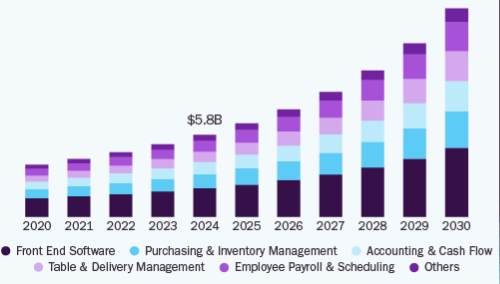
- The global restaurant management software market was valued at approximately $5.79 billion in 2024.
- Experts predict that the market will grow significantly, reaching approximately $46.22 billion by 2034.
- By analysing several types of software, front-end tools (such as POS systems and ordering apps) accounted for more than 34% of the market in
- In the context of restaurant categories, quick-service restaurants (QSRs) are experiencing the fastest growth, with an expected growth rate of8% between 2023 and 2030.
What is a Restaurant Management App?
Restaurant management apps are all-in-one digital solutions that help restaurants streamline order processing, reservations, payment transactions, track inventory, and analyze overall sales in real-time.
By analysing consumer experience and performance, a restaurant management app saves costs by reducing errors. In today’s time, this app is becoming an essential tool for modern dining businesses, and you can build a food ordering application by taking professional support and guidance from the right app development company.
Success Story of Toast POS-A Restaurant Management App
- Toast POS is an all-in-one, cloud-based restaurant platform that helps restaurants manage orders, employees, payments, and inventory.
- This app offers services to over 85,000 restaurants in the USA. Toast POS is experiencing remarkable growth, with a $19 million net profit, following a net loss of $246 million in 2023.
- The key to success is investment in advanced AI mechanisms, as evidenced by their launch of Sous Chef, an AI-powered assistant.
- Toast POS also expanded into 28,000 net new locations, which increases its market scale.
| Metric | 2024 Value / Achievement | Why It Matters |
| GAAP Net Income (Full Year) | $19 million (first profitable year) | Crucial milestone, transitioned from net losses to profitability |
| Adjusted EBITDA (Full Year) | $373 million | Reflects solid cash flow and operational health |
| Q4 Net Income | $33 million | Significant quarterly performance showing consistency in profits |
| Net New Locations Added (2024) | 28,000, ending the year at ~134,000 | Strong expansion of its customer base, boosting recurring revenue |
| Annual Recurring Revenue (ARR) | Up 34% to ~$1.6B | Demonstrates growth in recurring and stable income sources |
| Q1 2025 Revenue & Adjusted Earnings | Revenue $1.344B (+24%); Adj. EBITDA +53% | Continued strong top-line growth and rising profits into 2025 |
Reasons Investors Are Interested in Restaurant Management Apps
The rapid growth of restaurant management apps in the food and beverage industry is on the rise. Consider the points below to explore additional factors that impact investors’ attention.
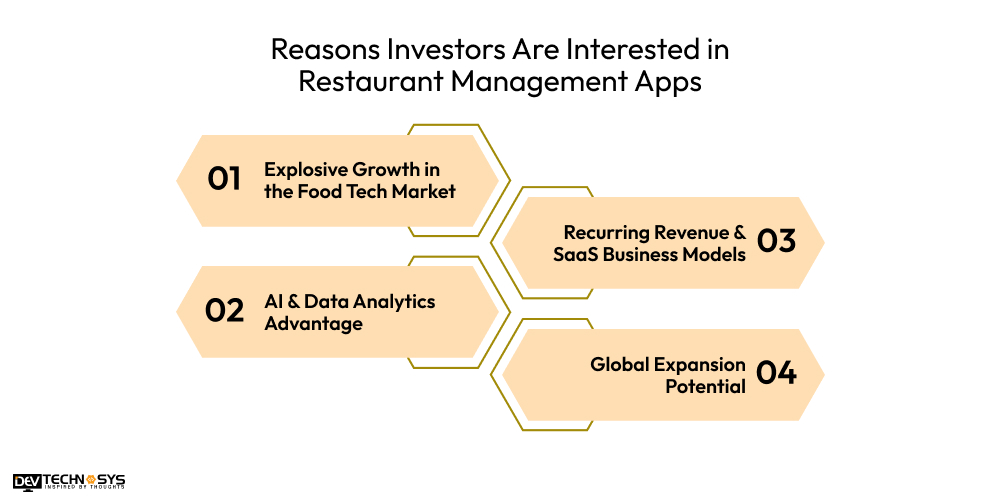
1. Explosive Growth in the Food Tech Market
The food tech market is growing rapidly, with restaurant management apps driving digital transformation. According to global market projections, this market is expected to show multi-billion-dollar growth by 2023. This attracts the attention of investors from various locations, as the market offers profitable opportunities.
2. Recurring Revenue & SaaS Business Models
Most restaurant management apps follow a subscription-based SaaS pricing model, which helps businesses establish a recurring and steady source of revenue.
It offers a long-term ability to generate profits and consistently boosts company revenue. Build an app like Foodhub by integrating a SaaS business model, which helps you develop a steady monthly or annual income.
3. AI & Data Analytics Advantage
AI mechanisms have transformed the landscape of restaurant management apps, enabling users to predict demand, manage staffing needs, and optimize menus. This provides businesses with a competitive advantage and the ability to reduce waste and avoid unnecessary expenses.
4. Global Expansion Potential
The restaurant app market is offering significant growth opportunities for businesses to expand into emerging markets, such as Latin America and Southeast Asia. The number of restaurant app users is increasing rapidly, providing scalable opportunities for investors to grow.
Want a chatbot demo or pricing? Fill the form and talk to our experts today.
Pick what you need below — you can select more than one — then tap Get detail to continue.
-
Chatbot demo dashboard
-
Cost to develop an app
-
Industry report
-
Case study
The Role of Artificial Intelligence in Restaurant Management Apps
- Artificial intelligence is transforming the restaurant industry with smart inventory management, personalized consumer experiences, and voice and chatbot integration, which improves response rates.
- AI restaurant management apps are reshaping users’ experience by detecting fraud and suspicious activity.
- Build a restaurant POS system with AI and IoT integrations, which helps restaurant management apps to easily monitor energy usage and offer suggestions to reduce water, electricity, and gas consumption.
- AI with smart analyses identifies best-sellers and dishes that are overpriced and underperforming. It enables businesses to modify their menus.
Top 5 Best Restaurant Management Apps in 2025
The demand for restaurant management apps in the upcoming years is higher than ever. Let’s explore the top 5 restaurant management apps that are transforming this industry and helping restaurants to grow.
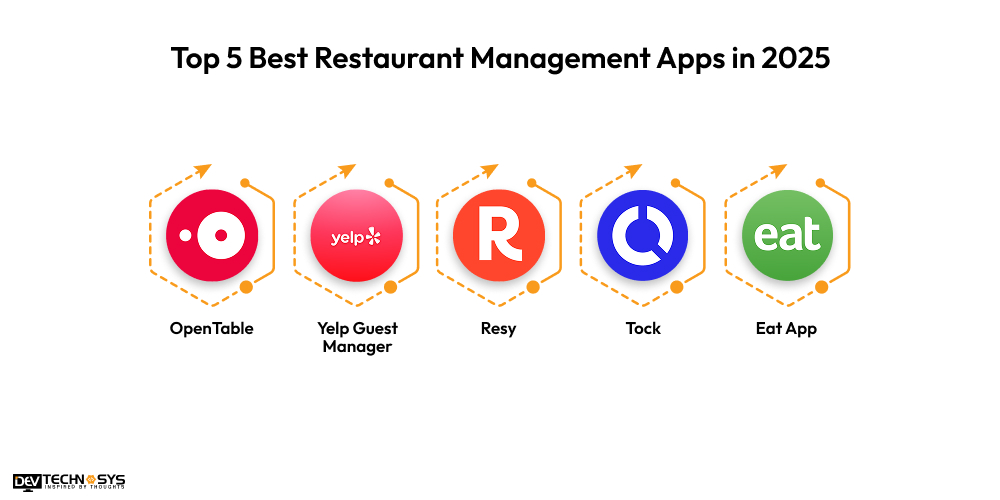
| App Name | Downloads | User Rating (App Store / Play Store) | Available Platforms |
| OpenTable | 100 million + | 4.9 / 4.6 | iOS, Android |
| Yelp Guest Manager | 50 million + | 4.5 / 4.4 | iOS, Android |
| Resy | 10 million + | 4.8 / 4.7 | iOS, Android |
| Tock | 5 million+ | 4.6 / 4.6 | iOS, Android |
| Eat App | 1 million + | 4.5 / 4.4 | iOS, Android |
How to Build Restaurant Management App?
Discover the essential steps for creating a restaurant management app. By the end of this discussion, you will be fully aware of the crucial steps required to make a successful app.
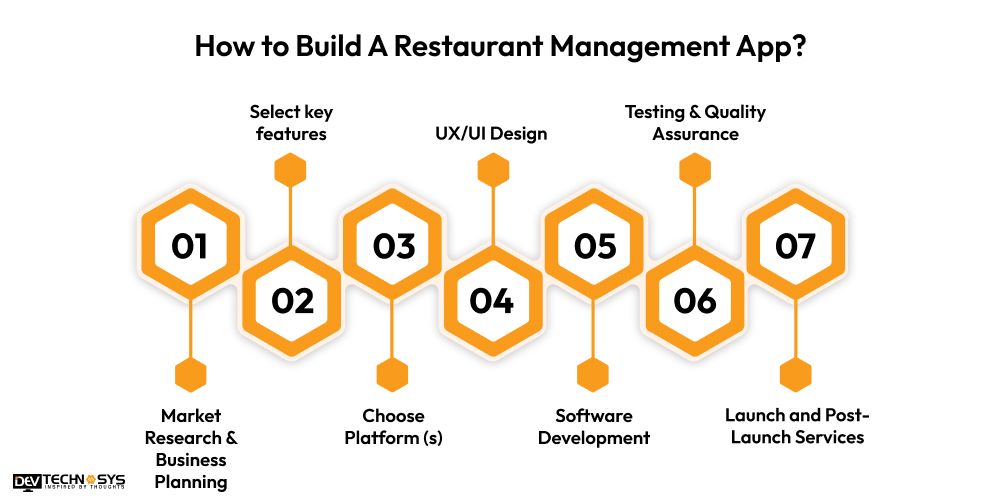
1. Market Research & Business Planning
Before starting to make a restaurant management app, you must conduct in-depth market research. Hire dedicated developers to identify gaps, competitor strategies, and understand the target users’ needs.
Market research helps you to make goals, select a revenue model, and create a USP for your app. This stage helps entrepreneurs make their app unique and different from other rivals in the market.
2. Select key features
Selecting the right feature is important for app success. You must focus on adding features like loyalty programs, staff scheduling, POS integrations, and inventory management.
To create restaurant management app, you can also add advanced features such as AI insights and intelligent kitchen automation. This helps in increasing the scalability and reach of the app in the market. A well-curated feature provides a competitive advantage, increasing user satisfaction.
3. Choose Platform (s)
Choosing the right platform is crucial for launching your app to users of Android, iOS, or cross-platform devices. You need to understand the significance of this stage, as it impacts user reach and development complexity.
When selecting a platform, consider the target market’s device usage, future updates, and scalability needs. By this, you can ensure a seamless experience and smooth performance of your app.
4. UX/UI Design
To make your restaurant visually appealing, you must consider selecting intuitive UX and UI. This helps ensure easy navigation, visually engaging interfaces, and responsive layouts, which in turn increase user satisfaction with reservations.
With interactive elements and subtle color schemes, you can increase app scalability. Must ensure to integrate efficient UX/UI design to reduce errors and make the app easy to use.
5. Application Development
The application development stage brings life to your restaurant management app, as this use of backend, frontend, and database is done. With the right tech stack the efficiency and functionality of the app bring responsiveness to the application.
For high performance, scalability, and security, you must consider taking professional advice to build a food delivery app like Just Eat. This enables the app to handle a large volume of operations without glitches.
6. Testing & Quality Assurance
For a smooth app experience, testing is crucial, ensuring your restaurant app is bug-free. Testing and quality assurance in app development help make the app bug-free.
Through various testing methods, such as compatibility, functionality, security, and usability, you can ensure your app is error-free. You must consider continuous quality assurance, which helps boost user trust and enhance app reliability.
7. Launch and Post-Launch Services
To launch your restaurant app, you must consider steps like app store deployment, onboarding restaurants, and conducting marketing. Post-launch services include 24/7 user support, updates based on feedback, and ongoing feature expansion.
Build catering management software by introducing new functionalities that offer unique and differentiated features in the market. With post-launch services, you can ensure the responsiveness of the app and maintain user trust, which is both efficient and effective.

Must-Have Features of A Restaurant Management App
Businesses need to incorporate essential features into their restaurant management app to ensure it is scalable and functional. These features are a must for seamless performance.
| Category | Features | Why It Matters |
| Admin Panel | ● Centralized dashboard
● Real-time sales reports ● Staff management & payroll ● Inventory & stock control ● Multi-branch management ● Role-based access control |
Helps owners/managers monitor performance,
reduce errors, and make data-driven decisions. |
| User (Customer) Side | ● Digital menu & ordering
● Table reservations ● Contactless payment options (UPI, wallets, cards) ● Order tracking & notifications ● Loyalty programs & rewards ● Feedback & review system |
Enhances customer experience with convenience, personalization, and transparency. |
| Restaurant/Staff Side | ● Kitchen display system (KDS)
● Order management (real-time sync between staff & kitchen) ● Micro-scheduling & shift swaps ● Push notifications for new orders ● Offline mode for low-network areas ● Performance tracking |
Enhances staff productivity, minimizes miscommunication, and ensures seamless restaurant operations. |
Advanced Features for A Restaurant Management App
To make restaurant management app more unique, innovative, and different from competitors, you need to include advanced features. So, let’s explore the advanced features that make your restaurant management app stand out and be unique.
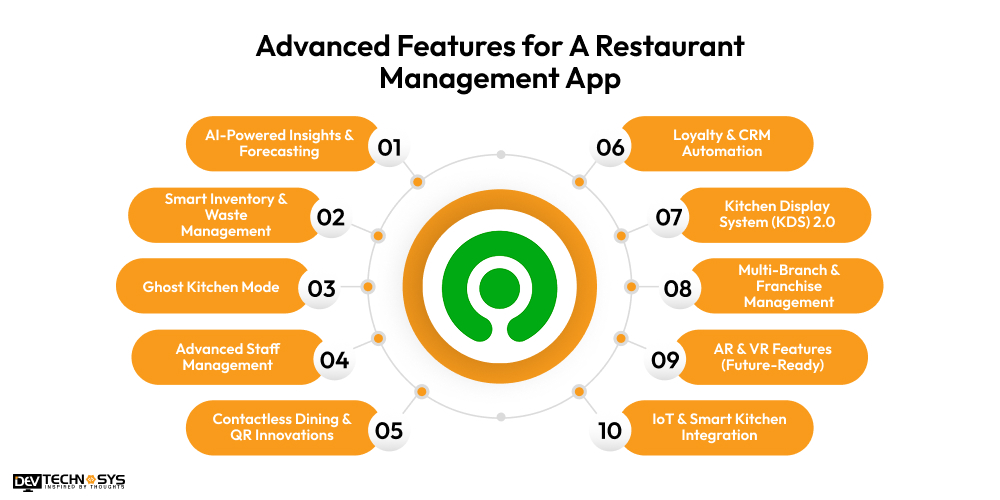
1. AI-Powered Insights & Forecasting
Optimize restaurant management app with AI-powered insights, which help analyze user behavior and sales according to demand, thereby boosting decision-making efficiency.
2. Smart Inventory & Waste Management
Automated tracking monitors help you build restaurant management app that helps in monitoring stock levels and expiration dates. It reduces wastage,which lowers the cost.
3. Ghost Kitchen Mode
With this feature, you can offer users optimised tools for delivery-only kitchens. This helps streamline orders and manage multiple brands from a single kitchen.
4. Advanced Staff Management
With AI-driven scheduling, several operations, such as labour cost optimisation and performance analytics, can be done efficiently. This helps in cutting unnecessary labor expenses.
5. Contactless Dining & QR Innovations
AI-driven scheduling enables businesses to achieve seamless operations, featuring features such as QR codes for managing digital menus and mobile payments. This features increase the speed and efficiency of the restaurant management app.
6. Loyalty & CRM Automation
Build a restaurant reservation app like OpenTable with automated loyalty programs, where you can offer personalised offers to users and reward repeat consumers. CRM tools help track consumer preferences, which increases the retention rate.
7. Kitchen Display System (KDS) 2.0
With next-gen KDS, you can replace paper tickets with digital orders. This helps increase the speed of kitchen workflows and reduce errors.
8. Multi-Branch & Franchise Management
To make a restaurant management app highly efficient centralized dashboard feature is essential. This helps users to monitor multiple outlets, track performance, and ensure consistent efficiency of franchises.
9. AR & VR Features (Future-Ready)
Artificial reality menus help users visualize dishes before placing an order, while VR enhances staff training simulations. Both AR & VR in a restaurant management app make it future-ready and innovative.
10. IoT & Smart Kitchen Integration
IoT sensors help track the storage conditions of food and monitor the health of equipment. Bright kitchens help reduce downtime, improve safety, and decrease operational costs.

The Cost to Develop a Restaurant Management App
The cost to build restaurant management app is $8,000 to $25,000. However, this cost varies based on multiple factors, including features and complexity, platform selection, and tech stacks.
Additionally, the cost to make restaurant management app also changes due to maintenance, testing, and updates. The more testing and updates your app takes, the more cost it requires. Let’s take a look at the cost table below to determine the actual cost of developing an app.
| App Type | Estimated Cost | Development Time |
| Basic MVP App | $7,100 – $11,200 | 2 – 3 Months |
| Standard App | $12,200 – $19,200 | 3 – 5 Months |
| Feature-Rich App | $18,500 – $23,200 | 5 – 6 Months |
| Custom Enterprise-Grade App | $25,200 – $28,000 | 6 – 8 Months |
Top Factors That Affect the Cost of a Restaurant Management App
Find out what those factors are that affect the overall cost to make a restaurant management app. By the end of this, you will be able to easily manage your budget to create the app without compromising quality.
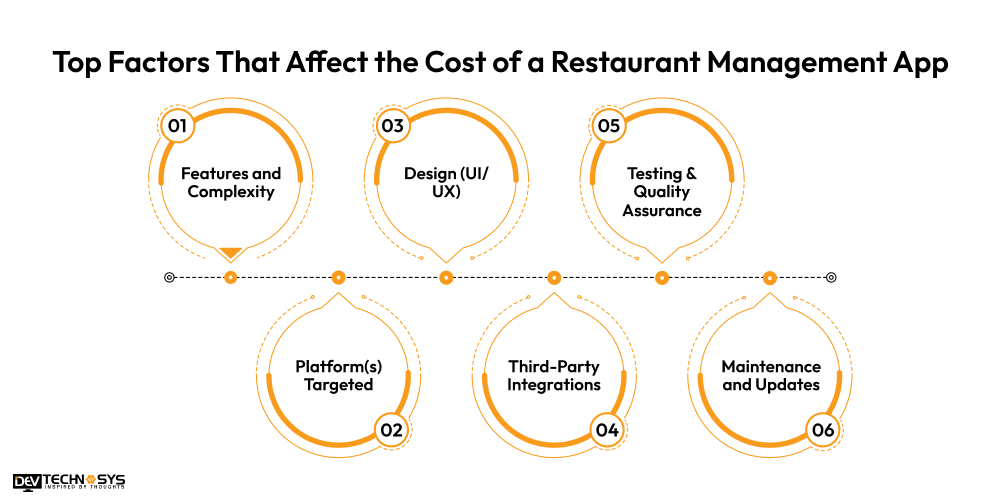
1. Features and Complexity
The types of features that you select for your restaurant management app directly affect the cost of app development. Basic apps with menu and order management features are generally more affordable.
If you choose advanced features like AI-based recommendation, inventory tracking analytics dashboard, and loyalty programs, then these increase the mobile app development cost.
| Feature Complexity | Cost | Time |
| Basic Listings & Search | $2,200 – $4,200 | 1 – 1 Months |
| Intermediate (Chat, Filters, Profile) | $5,300 – $8,300 | 2 – 3 Months |
| Advanced (AI, AR, Blockchain) | $5,500 – $7,600 | 3 – 4 Months |
2. Platform(s) Targeted
Selecting the right platform is important for efficient budget planning. Making an app for several platforms, such as web, iOS, or Android, affects the cost of restaurant management app development.
Native apps typically require separate coding for each platform, which increases expenses. At the same time, cross-platform solutions are cost-efficient but may lack advanced features.
| Platform Complexity | Cost | Time |
| iOS, Android only, and Web | $2,400 – $4,700 | 1 – 1 Months |
| All (Native) | $5,300 – $9,300 | 2 – 3 Months |
| Cross-Platform | $5,400 – $9,300 | 3 – 4 Months |
3. Design (UI/UX)
A visually appealing interface helps enhance user engagement, which in turn increases the cost. Custom UX/UI design encompasses in-depth research, prototyping, wireframing, and iterative development.
If you select complex navigation and animation, it requires expert designers, which increases the overall cost to develop restaurant management app.
| UI/UX Complexity | Cost | Time |
| Basic UI | $1,500 – $2,400 | 2 – 3 Weeks |
| Custom & Responsive UI/UX | $2,500 – $4,800 | 1 – 1 Months |
| High-End Interactive Design | $5,300 – $7,300 | 2 Months |
4. Third-Party Integrations
Integration with various payment gateways, CRM platforms, POS systems, and mapping services increases the cost of developing an app. Multiple integrations need security compliance, testing, and ongoing maintenance.
The more integrations your restaurant management app requires, the higher its long-term development cost will be.
| Third-party integration Complexity | Cost | Time |
| Basic Backend (CRUD APIs) | $2,300 – $3,300 | 2 – 3 Weeks |
| Scalable Backend + DB | $4,800 – $7,300 | 1 – 1 Months |
| Third-party Integrations | $3,600 – $6,300 | 1 – 2 Months |
5. Testing & Quality Assurance
To ensure that your app runs smoothly on multiple devices, you need to conduct thorough testing, which can be costly. Quality assurance requires both automated and manual testing, which helps improve efficiency.
Performance checks and bug fixes, however, improve app scalability; however, they increase the overall time and resources, which in turn increases restaurant management app development cost.
| Testing Complexity | Cost | Time |
| Manual Testing Only | $9,300 – $1,900 | 2 Weeks |
| Manual + Automated Testing | $1,600 – $3,800 | 3 – 4 Weeks |
| Advanced Testing + Security Audits | $3,900 – $5,800 | 1 Month |
6. Maintenance and Updates
Timely updates, post-launch support, and bug fixes are ongoing expenses, and regular maintenance helps ensure that your restaurant management app is compatible with all devices, OS updates, and works as per users’ needs. However, frequent feature add-ons increase the maintenance of the app, which increases the cost to build a food ordering application.
| Maintenance Complexity | Cost | Time |
| Basic (Bug Fixes, Minor Updates) | $1,800 – $2,700 | Ongoing Monthly |
| Standard (Feature Updates, Monitoring) | $3,300 – $5,700 | Ongoing Monthly |
| Premium (24/7 Support) | $6,800 – $8,300 | Ongoing Monthly |
Best Tech Stack for A Restaurant Management App
To build restaurant management app, you need to carefully choose the tech stack and technologies, such as React Native or Flutter. Let’s take a look at the tech stack table below to create restaurant management app that helps ensure a responsive and smooth user experience.
| Category | Technologies | Why It’s Important |
| Frontend (App/UI) | React Native, Flutter, Swift (iOS), Kotlin (Android) | Cross-platform support, smooth UI, faster development, and responsive design for staff & customers. |
| Backend (Server-Side) | Node.js, Django, Laravel, Ruby on Rails | Handles large data (orders, payments, staff logs) with speed, scalability, and strong APIs. |
| Database | PostgreSQL, MySQL, MongoDB, Firebase Realtime DB | Stores menu items, customer data, and payments, and ensures quick data retrieval. |
| Cloud & Hosting | AWS, Google Cloud, Microsoft Azure, Firebase | Enables real-time syncing, scalability, and secure hosting for multi-branch restaurants. |
| Payment Integration | Stripe, Razorpay, PayPal, UPI, Square | Secure transactions, multiple payment options, and compliance with PCI DSS standards. |
| Push Notifications & Messaging | Firebase Cloud Messaging (FCM), OneSignal, Twilio | Keeps customers and staff updated on orders, offers, and reminders. |
| Location & Maps | Google Maps API, Mapbox | Useful for delivery tracking, location-based offers, and branch navigation. |
| Analytics & Reporting | Google Analytics, Mixpanel, Power BI | Provides insights on sales, staff performance, customer behavior, and demand forecasting. |
| Security & Authentication | OAuth 2.0, JWT, SSL, Biometric Login | Protects sensitive restaurant and customer data, ensures secure logins and transactions. |
| Integration APIs | Zomato, Swiggy, Uber Eats, POS APIs | Connects with delivery partners and existing POS systems for smoother operations. |
Monetization Strategies for Restaurant Management Apps
Have a look at the practical ways that help you earn extra income from a restaurant management app.
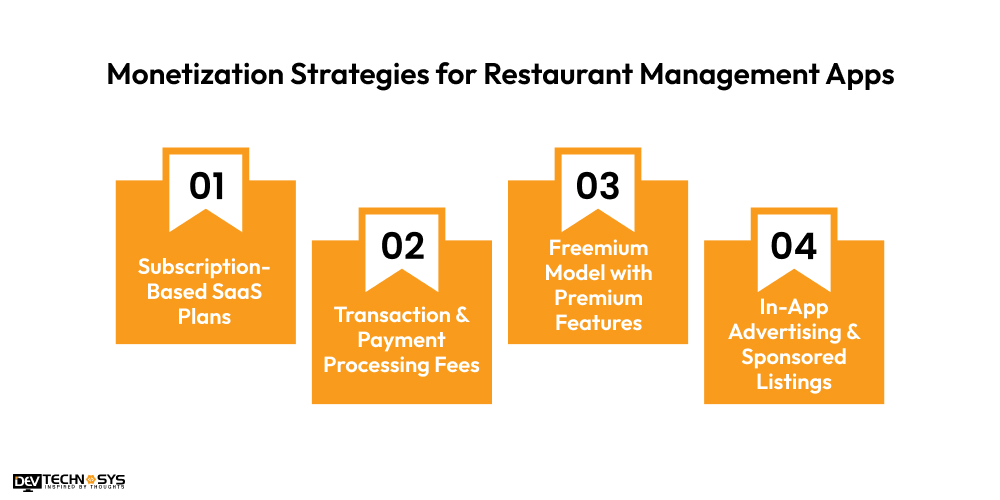
1. Subscription-Based SaaS Plans
With restaurant management apps, you can earn extra income in the form of annual and monthly fees from users by offering them advanced features and services. This is a predictable, recurring revenue model that provides a stable source of income.
2. Transaction & Payment Processing Fees
Businesses can earn extra income from restaurant management apps by charging a small commission on each transaction. This is a consistent and commonly used revenue generation strategy.
3. Freemium Model with Premium Features
Develop a restaurant booking app like TheFork with basic features that attract users with competitive fees. By offering them access to advanced tools, such as personalized recommendations and VR, for a certain fee, you can earn extra income.
4. In-App Advertising & Sponsored Listings
By allowing food brands, suppliers, and delivery platforms to advertise inside the app, you can experience a stable source of income. With a restaurant management app development company, you can integrate in-app ads, which helps you to charge a certain percentage from partners when they earn users through your app.
Conclusion
Based on the above analysis, it is concluded that the demand for restaurant management apps is increasing rapidly in the restaurant industry. To streamline orders and manage inventories, these apps are changing the landscape of this sector, maximizing consumer engagement.
Integrating user-friendly design, advanced features, and AI mechanisms helps transform the app’s efficiency. With a mobile app development company, you can have expert advice and support to make a restaurant app that helps you ensure long-term growth and future-ready success.
FAQ’s
1. How Much Does It Cost To Build A Restaurant Management App?
The cost to build restaurant management app is $8,000 to $25,000. Depending on the choice of feature and platform selection, this cost will increase.
2. How Long Does It Take To Develop A Restaurant Management App?
The time to develop restaurant management app is between 3 to 4 months. The time invested in testing, bug fixes, and updates might increase this time.
3. What Advanced Features Should A Restaurant Management App Include?
Advanced features that a restaurant management app needs to have are:
- AI-Powered Insights & Forecasting
- Advanced Staff Management
- Kitchen Display System (KDS) 2.0
- AR & VR Features (Future-Ready)
- IoT & Smart Kitchen Integration
4. What Are The Best Tech Stacks For A Restaurant Management App?
The best tech stack for a restaurant management app includes:
- React Native
- js
- DjangoStripe
- Razorpay
- Firebase
- Cloud Messaging (FCM)
- OneSignal
5. How Do Restaurant Management Apps Make Money?
To make money, restaurant management apps use monetization strategies like:
- Subscription-Based SaaS Plans
- Transaction & Payment Processing Fees
- Freemium Model with Premium Features
- In-App Advertising & Sponsored Listings
6. Do Small Restaurants Need A Management App?
Absolutely, small restaurants need management apps for digital payments, POS integrations, inventory automation, and loyalty.
7. Can A Restaurant Management App Integrate With Delivery Apps Like Uber Eats Or Zomato?
Yes, modern apps support API-based integrations with third-party delivery platforms, which is helpful in syncing orders and menus across different channels.