






Key takeaways:
-
- The global AI recruitment market size is expected to grow from USD 660.17 million in 2025 to reach USD 1,125.84 million by 2033.
- AI recruiting chatbots leverage AI, ML, NLU, NLP, and LLMs to deliver human-like responses to human input.
- The key steps to create an AI recruitment chatbot include designing conversational flows, training the bot on company data, deploying on career sites, and providing 24/7 maintenance support.
- Many major companies that provide mobile application development services in finance, consulting, and retail use AI recruiting bots to accelerate their hiring process.
- The cost of basic to advanced AI recruiting chatbot is $30,000 to $150,000+ depending on integrations, complexity, platform choice and AI governance.
- U.S. businesses must implement compliance standards to create an AI recruiter chatbot to avoid any legal issues.
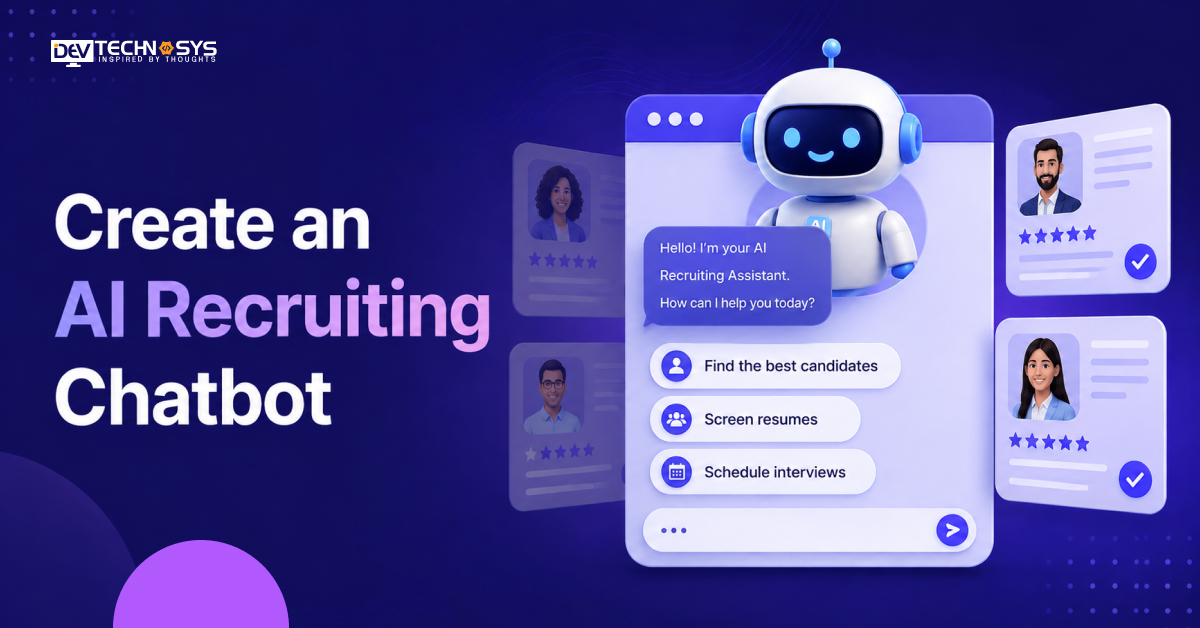
Hiring qualified talent is a difficult task. Traditional recruitment methods are so complex and time-consuming that companies often struggle to find the best talent. This is where an AI recruiting chatbot comes through. It automates candidate screening, schedules interviews, answers queries, and even engages candidates 24/7.
Businesses planning to create an AI recruiter chatbot must know they are not alone in the competition. Many organizations have started incorporating advanced capabilities to streamline the hiring process.
In this guide, we will discuss the steps to develop AI chatbots for recruitment and hr professionals. From planning features to choosing the right technology, integrating AI, and launching your bot, we’ve got everything covered. By the end, you’ll know exactly how to create an AI recruiting chatbot from scratch, which makes hiring faster, smarter, and more efficient.
What is an AI Recruiting Chatbot?
An AI recruiting chatbot is an automated, conversational software tool that uses AI, Natural Language Processing (NLP), and machine learning (ML) to interact with job seekers in real time. An AI Interview Bot can auto-review résumés against set criteria to identify top talent. It provides instant answers to common questions about the company and application status.
Businesses opt for AI chatbot development solutions to conduct interviews and keep applicants informed throughout the hiring process. AI-powered recruiting chatbots understand the intent behind a candidate’s message and can learn and adapt over time.
What Should Not Be Missed in Your Bot?
Thinking of launching your own AI recruiting chatbot? Great! But before launching your AI candidate hiring chatbot, make sure every detail is in place to achieve the best results.
- Ensure the chatbot’s avatar, tone, and personality reflect your company’s brand and values. This helps attract candidates who align with your culture and expectations.
- Follow the core principles of conversational design. Avoid rigid question flows. The chatbot should feel like a real conversation, not a static online form.
- Personalize the application journey in real time. Adjust questions based on candidate responses. This helps with effective pre-screening and saves recruiter time.
- Clearly explain the application steps, the cost to build an AI recruiting chatbot, and the expected timelines. Transparency reduces confusion and candidate frustration.
- Inform unqualified candidates about their status promptly. Use chatbot messages or automated emails to maintain professionalism.
- Always thank applicants, explain the next steps, and end the conversation politely, just as you would in a real human interaction.
AI Recruiting Chatbot Market Insights to Catch Up On!
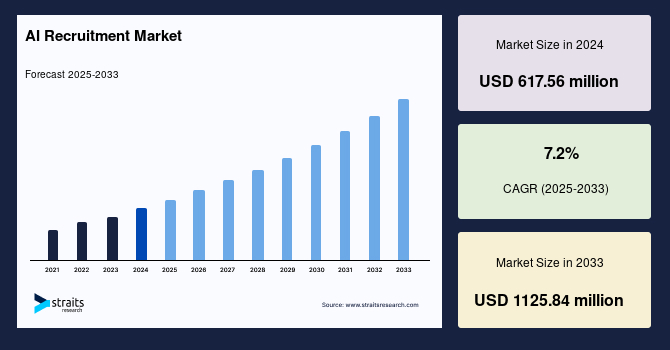
- The global AI recruitment market size was valued at USD 617.56 million in 2024 and is expected to grow from USD 660.17 million in 2025 to reach USD 1,125.84 million by 2033.
- The global market for AI chatbots for recruiting is expected to grow at a CAGR of 7.2% during the forecast period (2025–2033).
- North America leads the charge in chatbot development services with a whopping 40% cost reduction, followed closely by Europe at 36%.
- The U.K. has seen a significant rise in AI-powered diversity recruitment platforms, with 30% of employers using AI in their hiring processes.
How Does an AI Recruiting Chatbot Work?
AI recruitment chatbots can scan résumés, screen candidates, and even predict hiring success using data-driven algorithms. AI recruiting chatbots leverage AI, ML, NLU, NLP, and LLMs to deliver human-like responses to human input. With the help of ML, they intelligently generate a wide range of non-scripted, conversational responses to human text and voice input.
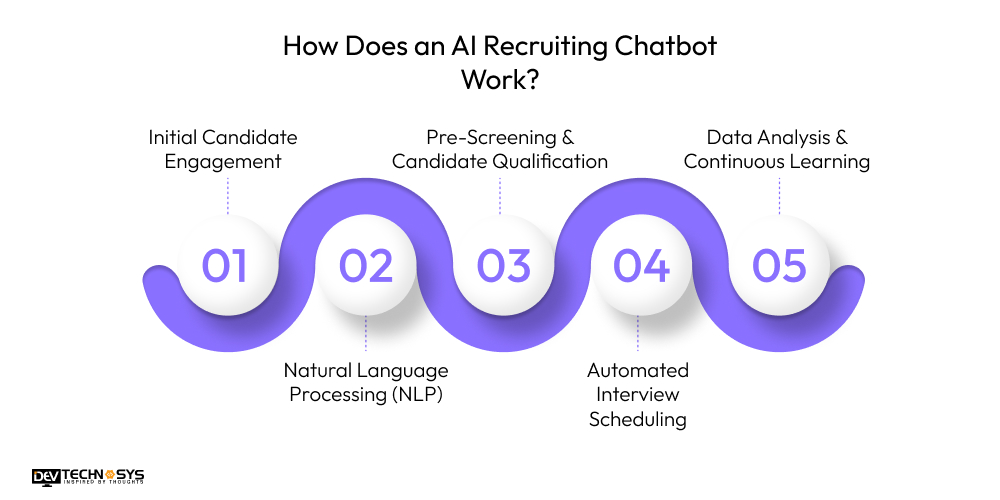
1. Initial Candidate Engagement:
An AI chatbot for recruitment interacts with job seekers on multiple platforms, including career pages, WhatsApp, SMS, and social platforms. They instantly answer queries, share job details, and create a personalized first impression, 24/7.
2. Natural Language Processing (NLP):
The AI recruiter chatbot uses NLP to understand candidate intent, questions, and résumé content. Using NLPs is better than using fixed scripts. It enables smooth, human-like conversations and accurate responses.
3. Pre-Screening & Candidate Qualification:
The chatbot app like Grok chatbot not only evaluates résumés, but also responds against predefined job criteria, automatically shortlisting qualified candidates and filtering out mismatches.
4. Automated Interview Scheduling:
AI chatbot for candidate screening and scheduling syncs with recruiters calanders and allows candidates to select interview slots directly. It eliminates manual follow-ups and scheduling delays.
5. Data Analysis & Continuous Learning:
Through machine learning, a Chatbot for intelligent talent matching can learn from past interactions. It helps them improve the accuracy of candidate matching, response quality, and hiring efficiency over time.
What Top AI Recruiting Assistants Are Transforming Hiring in 2026?
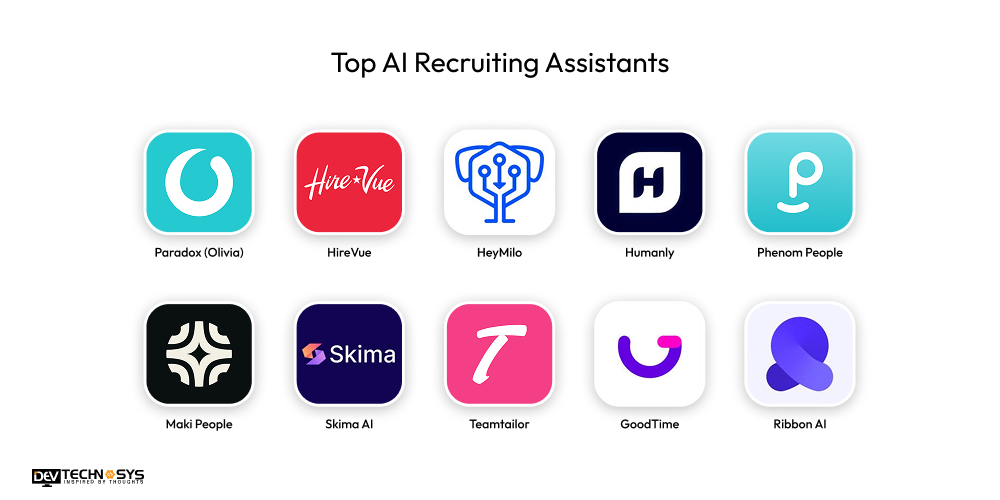
AI Recruiting Chatbot |
Launch Year |
Ratings |
Platform |
| Paradox (Olivia) | 2016 | 4.8 | Web, SMS, WhatsApp, ATS |
| HireVue | 2004 | 4.6 | Web, Mobile |
| HeyMilo | 2020s | 4.8 | Web, SMS, WhatsApp, ATS |
| Humanly | 2019 | 4.5 | Web, ATS |
| Phenom People | 2010 | 4.5 | Web, Mobile, ATS |
| Maki People | 2020s | 4.4 | Web, Integrations |
| Skima AI | 2020s | 4.3 | Web, ATS |
| Teamtailor | 2015 | 4.4 | Web, Mobile |
| GoodTime | 2016 | 4.5 | Web, Calendar |
| Ribbon AI | 2023 | 4.4 | Web, ATS |
The above lists of chatbots are great, but the ones listed below are the most popular and trusted. Takes a better look at these AI-Powered Hiring assistants for Small Businesses:
1. Paradox
Paradox is a conversational AI recruiting platform, often known for its AI assistant “Olivia,” designed to automate high-volume hiring tasks such as screening, scheduling, and candidate communication via text or messaging apps.
It aims to reduce administrative burdens for recruiters, allowing them to focus on human interaction. It is heavily used in retail, healthcare, and other high-volume industries, with clients including McDonald’s, FedEx, and 7-Eleven.
Note: According to PR Newswire, The Paradox AI, often named “Olivia,” saves recruiters 35-45 minutes per candidate and has saved some organizations tens of thousands of hours in administrative, manual work.
2. HireVue
HireVue is AI-driven, asynchronous (one-way) video interviews used by companies to screen job candidates early in the hiring process. The platform analyzes your facial expressions, tone of voice, and the content of your answers, which may be scored by an algorithm before a human reviews it.
Many major companies that provide mobile application development services in finance, consulting, and retail use HireVue to accelerate their hiring process.
Note: It is the 9x winner of “Top HR Product of the Year” (HR Executive Magazine) and 3x winner of the IHR Supplier Award (2025). Source: HireVue
3. Humanly
Humanly provides an AI-powered conversational platform designed to automate and improve the high-volume hiring process. The platform aims to solve inefficiencies in recruiting by managing candidate screening, scheduling, and interviewing, allowing recruiters to focus on deeper, human-centric interactions. Humanly’s ultimate goal is to move hiring from a “numbers game” to a more personalized, efficient process that engages every applicant.
4. Phenom People
Phenom (formerly Phenom People) is a global HR technology company that provides an AI-powered Talent Experience Management (TXM) platform. Internal mobility tools that connect employees with new roles, projects, and mentorship opportunities.
It is designed to connect candidates, employees, recruiters, and managers, aiming to speed up hiring, improve retention, and enhance the employee experience. If you want to build a recruitment app, then hiring skilled developers from top companies is essential.
Note: According to Unleash.ai, recognized on the Inc. 5000 list of fastest-growing companies for five consecutive years, and has received multiple Brandon Hall ‘Excellence in Technology’ awards.
5. Teamtailor
Teamtailor is a recruitment software that combines an Applicant Tracking System with employer branding tools. It is designed to help organizations manage their hiring processes and improve candidate experiences.
Teamtailor is often noted for its modern interface and is used by various industries, with a strong focus on employer branding. It also provides integrations with platforms like Slack, LinkedIn, and Greenhouse.
How to Create an AI Recruiting Chatbot for Modern Hiring?
The key steps to create an AI recruitment chatbot include designing conversational flows and training the bot on company data. Deploying it on career sites or social media for 24/7 candidate engagement is also crucial. Here are the crucial steps to develop an AI recruiting Chatbot for modern hiring.
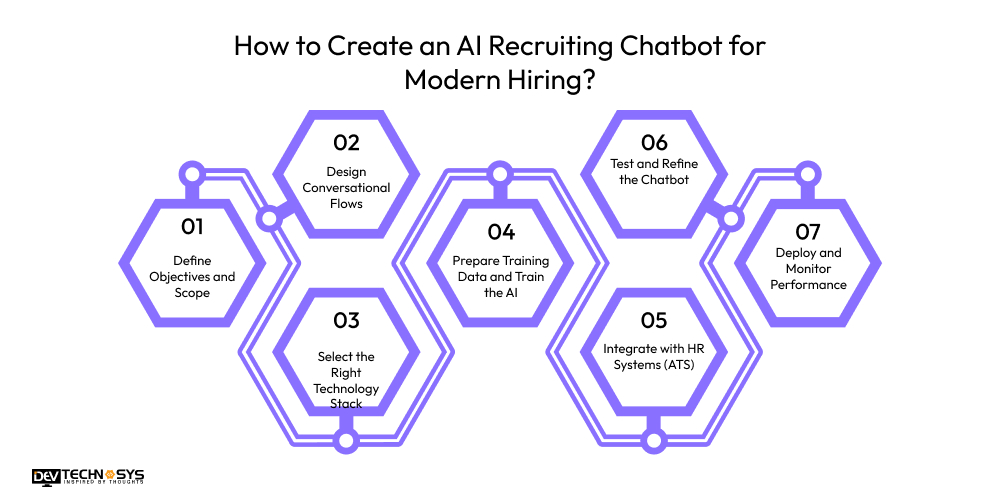
1. Define Objectives and Scope
Start the process to create an AI recruiting chatbot by clearly identifying the business problem the chatbot must solve. Understand current hiring gaps and delays and decide if the chatbot will handle screening, engagement, interview scheduling, or all three. Define supported job roles, departments, and regions.
Set realistic KPIs such as reduced hiring time, higher completion rates, improved response speed, and lower recruiter workload. Clear objectives help HRMS software development services providers avoid unnecessary features, control costs, and ensure focused development aligned with hiring goals.
2. Design Conversational Flows
Create an AI recruiting chatbot by adding detailed conversation maps for every hiring stage. Start with a welcoming greeting. Include qualification questions, skill checks, and next-step guidance. Add branching logic for different candidate responses. Handle incomplete or unclear inputs smoothly. Keep messages friendly and simple.
One pro tip is to avoid long questions. Use confirmations and summaries to reassure candidates. According to a professional on demand app development company in USA, well-designed flows improve engagement, reduce confusion, and prevent candidate drop-offs.
3. Select the Right Technology Stack
Evaluate development options carefully before building. Custom development offers full control and flexibility. Low-code platforms allow faster deployment. AI frameworks provide advanced NLP and intent recognition. To build an AI recruiting chatbot, consider hosting type, scalability, performance, and security needs.
Ensure compliance with data protection laws like GDPR. Choosing the right technology stack ensures reliability, smooth integrations, future scalability, and long-term business growth.
Note: According to WordPress, training on diverse, real-world data can boost accuracy by up to 30%, helping the AI better understand varied user intents
4. Prepare Training Data and Train the AI
Collect accurate, diverse, and updated training data. Include job descriptions, resumes, FAQs, historical chats, and interview questions. Clean and organize data properly. Remove outdated or biased content.
Train the AI model regularly. Monitor intent accuracy and response quality. Use real conversations to improve performance. Strong training results in smarter, more human-like, and reliable chatbot behavior.
5. Integrate with HR Systems (ATS)
Connect the chatbot with ATS and other HR tools. Create an AI recruiting chatbot that enables real-time data synchronization. Automatically update candidate status and profiles. Integrate calendars for interview scheduling. Reduce manual data entry for recruiters. Ensure consistent data across systems.
Strong integration improves workflow efficiency, speeds up hiring decisions, and enhances recruiter productivity. Developers at an AI chatbot development company in Texis integrate HR systems into AI chatbots to answer standard candidate questions in seconds. Up to 76% of candidates reported satisfaction with the quick AI responses.
6. Test and Refine the Chatbot
After you build an AI recruiting chatbot, it will enter the testing phase. The testing team will run multiple test scenarios before launch. Test different candidate journeys. Check for edge cases and unexpected inputs.
Review response accuracy, tone, and timing, and focus on quickly fixing broken flows. Collect feedback from recruiters and hiring managers and make continuous improvements. Regular testing ensures smooth performance and delivers a consistent candidate experience.
7. Deploy and Monitor Performance
Your website development company in California will then deploy the chatbot on career pages, job portals, and messaging platforms. Monitor KPIs continuously. Track engagement, completion rates, and drop-offs.
Analyze candidate behavior patterns. Update conversations based on insights and improve logic and responses over time. Continuous monitoring ensures accuracy, relevance, and adaptability to changing hiring needs.
How Do Features Enhance AI Recruiter Chatbot Development?
Features play a crucial role in enhancing the app’s performance. They can make or break your app, so choose them wisely. Here, we present the crucial AI recruiting chatbot features you need to incorporate.
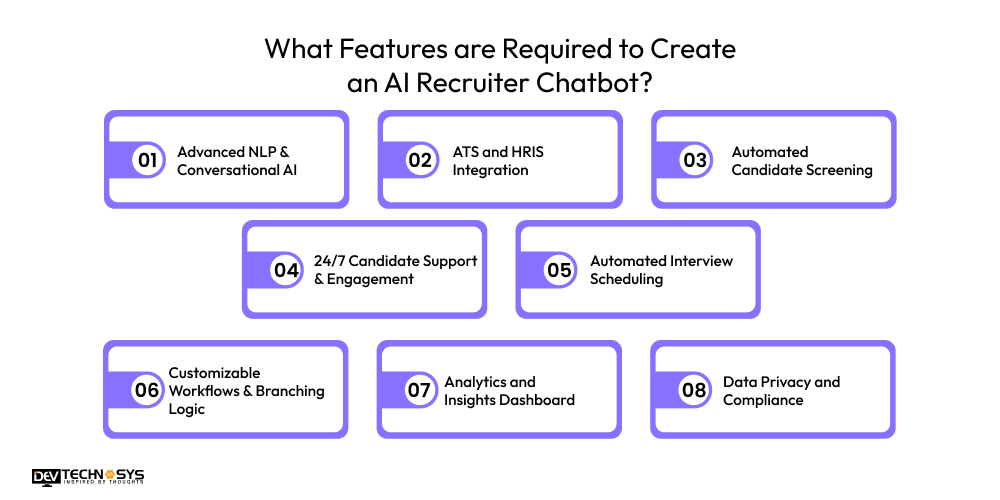
1. Advanced NLP & Conversational AI
Wondering how chatbots support AI recruiting strategies? The chatbot understands context, intent, and sentiment with high accuracy. It handles complex questions, slang, misspellings, and varied phrasing smoothly. This enables natural, human-like conversations and reduces misunderstandings during candidate interactions.
Note: Advanced Conversational Chatbots can boost e-commerce revenue by 7%–25%, with global retail spending on chatbots expected to reach $72 billion by 2028.
2. ATS and HRIS Integration
The AI chatbots for recruitment and HR professionals integrate seamlessly with ATS and HRIS platforms such as Workday, Greenhouse, and Bullhorn. Candidate data syncs in real time across systems.
Profiles are updated automatically, ensuring consistency, accuracy, and reduced manual effort for recruiters, which is one of the benefits of AI chatbots in recruitment.
3. Automated Candidate Screening
Build an AI agent that evaluates candidate qualifications, skills, and experience through structured conversations. It filters, ranks, and shortlists candidates instantly. Recruiters receive higher-quality applicants, improving hiring speed and overall decision accuracy.
4. 24/7 Candidate Support & Engagement
Candidates receive instant responses at any time, including nights and weekends. The chatbot answers questions about roles, benefits, culture, and application status. This constant availability increases engagement and reduces application drop-offs.
5. Automated Interview Scheduling
Create an AI recruiting chatbot with an automated interview scheduling feature to connect directly with recruiters. It suggests available time slots automatically. Candidates select preferred times easily. This removes delays and significantly speeds up the interview scheduling process.
6. Customizable Workflows & Branching Logic
Conversations adapt dynamically based on job roles, departments, locations, or candidate responses. Recruiters can customize workflows without complexity. This ensures relevant questions and a more personalized hiring experience.
7. Analytics and Insights Dashboard
Recruiters can track engagement levels, completion rates, drop-offs, and candidate sources. Visual dashboards highlight performance gaps. Data-driven insights continuously optimize workflows and improve recruitment outcomes.
8. Data Privacy and Compliance
The chatbot follows strict security and privacy standards. Candidate data is encrypted during storage and transfer. Compliance with regulations like GDPR builds trust and reduces legal and operational risks.

How AI Recruiting Chatbots Transform Talent Acquisition?
Investing in AI recruiting chatbot development brings measurable business value across the entire hiring process. An AI app development company develops these solutions to help organizations hire faster and improve candidate engagement.
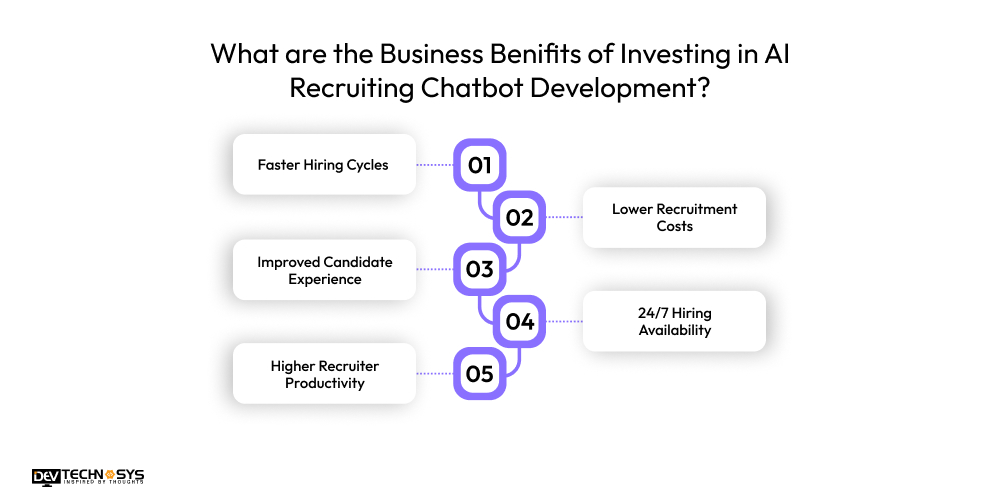
1.Faster Hiring Cycles:
AI recruiting chatbots automate candidate screening, FAQs, and interview scheduling. This can reduce onboarding time by 30% to 50%, enabling companies to fill open roles quickly without increasing recruiter workload.
2. Lower Recruitment Costs:
By managing repetitive hiring tasks, chatbots reduce manual effort and reliance on staffing agencies. Businesses often save 20% to 40% on recruitment costs while handling higher hiring volumes efficiently.
3. Improved Candidate Experience:
Chatbots deliver instant responses, real-time updates, and personalized interactions. This improves engagement, minimizes candidate drop-offs, and creates a smoother application experience, especially during high-volume hiring.
4. 24/7 Hiring Availability:
AI chatbots operate around the clock through HR management software, allowing candidates to apply, ask questions, and schedule interviews anytime. This is especially valuable for global, remote, and time-zone-diverse hiring teams.
5. Higher Recruiter Productivity:
Recruiters spend less time on repetitive tasks and more time on interviews, evaluations, and strategic hiring decisions. This boosts team efficiency and overall hiring quality.
How Much Does an AI Recruiting Chatbot Cost to Build?
The standard cost to build an AI recruiting chatbot ranges from $30,000 to $150,000+. The final cost depends on features, platform, UI/UX, and the developers’ location.
Chatbot Type / Scope |
Estimated Cost |
| Basic AI Recruiting Chatbot | $8,000 – $11,000 |
| Standard AI Recruiting Chatbot | $12,000 – $18,000 |
| Advanced AI Recruiting Chatbot | $18,000 – $22,000 |
| Enterprise AI Recruiting Chatbot | $22,000 – $25,000 |
Free App Idea Reality Check: Let's Stress-Test Your Concept
Share your app idea with us. Within 3 business days, we'll uncover UX gaps, feature opportunities, and potential development challenges, so you can build with confidence. No strings attached.
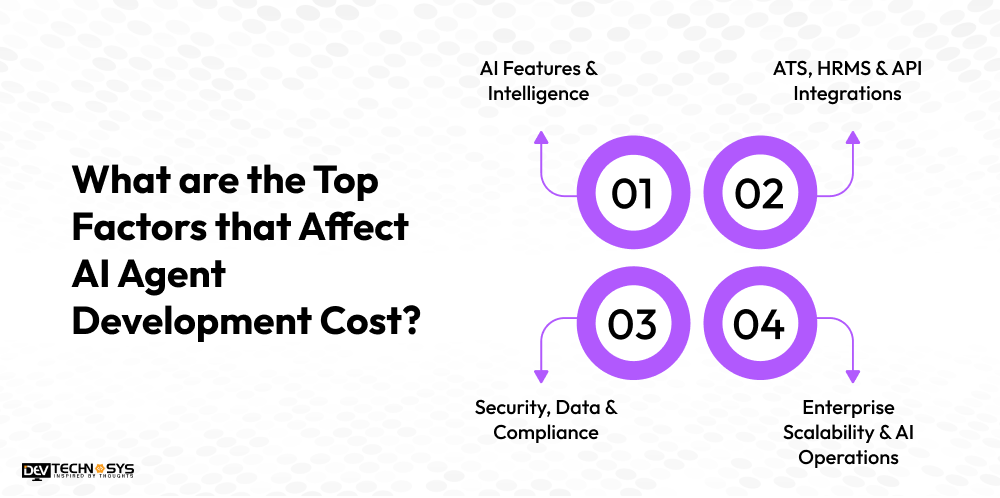
What are the Top Factors that Affect AI Agent Development Cost?
Various factors influence the cost of building an AI recruiting chatbot. Let’s study them and see how they impact the final budget.
Cost Factor |
What Drives the Cost |
Estimated Cost |
| AI Features & Intelligence | Basic candidate FAQs and screening are less expensive, while resume analysis, candidate matching, contextual conversations, interview assistance, sentiment analysis, RAG, and AI agents require more development effort. | $30,000 – $70,000 |
| ATS, HRMS & API Integrations | Connecting the chatbot with ATS, HRMS, career portals, calendars, CRM systems, job boards, email, WhatsApp, or other recruitment tools increases integration and testing requirements. | $40,000 – $90,000 |
| Security, Data & Compliance | Candidate PII protection, encryption, RBAC, audit logs, secure cloud infrastructure, AI guardrails, privacy controls, and compliance requirements increase development complexity. | $50,000 – $120,000 |
| Enterprise Scalability & AI Operations | Multi-channel deployment, high candidate volumes, advanced analytics, model monitoring, AI evaluation, custom workflows, cloud scaling, and ongoing optimization can push an enterprise solution beyond the standard development range. | $100,000 – $150,000+ |
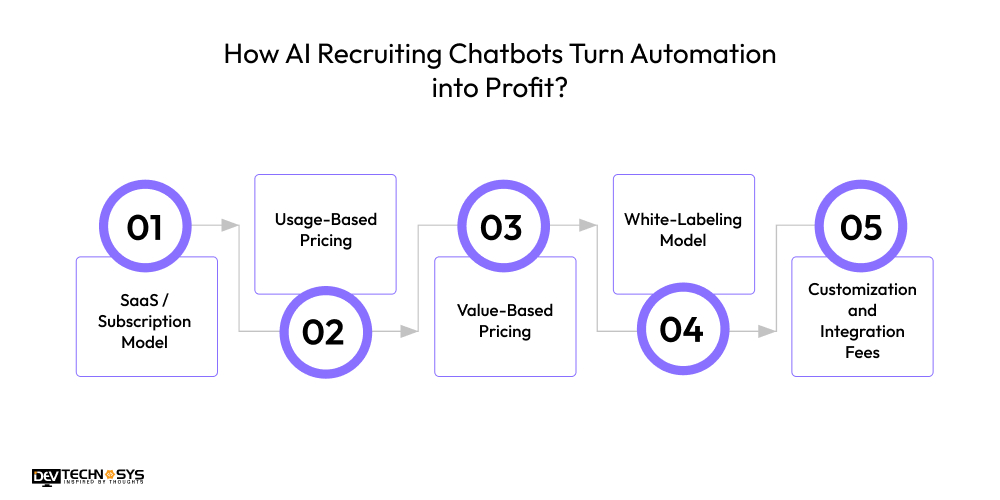
How AI Recruiting Chatbots Turn Automation into Profit?
Monetizing AI recruitment chatbot development involves leveraging the high demand for hiring efficiency. The monetization strategies range from SaaS subscriptions to performance-based models. Here’s the detailed version of the revenue-driven strategies for AI interview scheduling chatbots.
Model |
Description |
Best For |
| SaaS / Subscription | Recurring monthly or yearly access fees | SaaS HR platforms |
| Usage-Based | Pay per interaction or AI usage | Staffing agencies |
| Value-Based | Pay per qualified hire or interview | Premium recruiters |
| White-Labeling | License for rebranding and resale | HR vendors |
| Customization | One-time fees for custom features | Enterprise clients |
1. SaaS / Subscription Model
This model charges recruiters a monthly or yearly fee to use the AI recruiting chatbot platform. It offers predictable, recurring revenue for vendors and stable budgeting for businesses. Many HR tech companies prefer subscriptions because they support continuous feature upgrades, security improvements, compliance updates, and long-term customer retention.
2. Usage-Based Pricing
Usage-based pricing charges clients based on chatbot interactions, AI tokens, or conversation volume. It is ideal for organizations with seasonal or fluctuating hiring needs. Staffing agencies often prefer this model because costs rise only when recruitment activity increases, making spending more flexible and performance-aligned.
3. Value-Based Pricing
Value-based pricing focuses on measurable hiring outcomes, such as the number of qualified candidates screened, interviews scheduled, or successful hires. Companies pay for results rather than usage. This model works well for premium recruitment services where efficiency gains, time savings, and candidate quality directly impact business performance.
4. White-Labeling Model
White-labeling allows businesses to rebrand the chatbot and sell it as their own solution. Vendors earn licensing or partnership fees while expanding market reach. This approach is common among HR consultancies and software providers seeking faster go-to-market without investing in full product development.
5. Customization and Integration Fees
Customization involves one-time fees for tailoring chatbot workflows, branding, analytics, or ATS and CRM integrations. Enterprise clients often demand custom logic and reporting. These fees compensate for additional development effort, testing, deployment complexity, and ongoing technical support requirements.
Planning a Chatbot Project?
Get a tailored development cost estimate in a few simple steps.
- 3 quick steps
- 100% free
- Reply in 1 business day
2 Minutes Read
Security and Compliance for AI Recruiting Chatbots
AI recruiting chatbots handle sensitive data, such as a candidate’s name, personal information, and banking details, which could be misused by an unauthorized user. Strong authentication and encryption techniques keep this data protected. Compliance verifies that the system is confidential and secure.
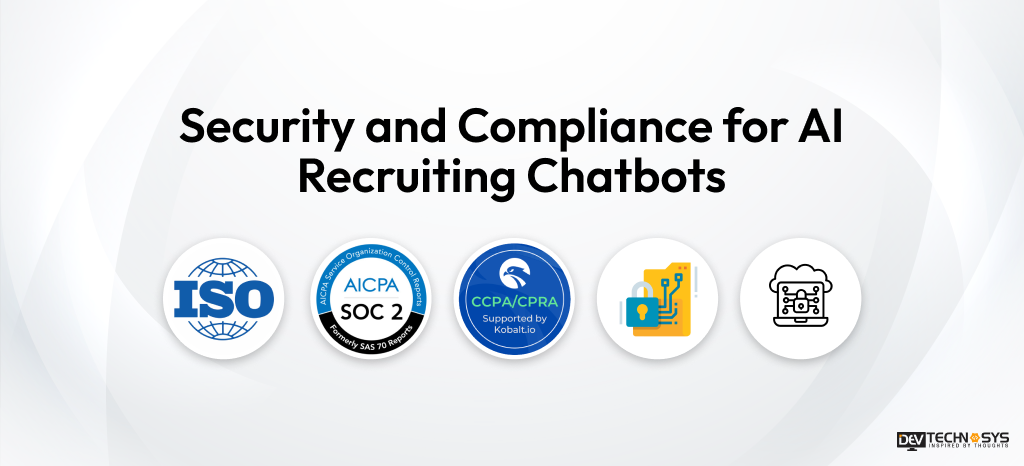
1. ISO
Our teams follow ISO standards as a routine part of development process. By implementing ISO standards, businesses can easily identify security vulnerabilities and manage privacy. This framework manages employee access to the data and third-party vendors. For AI recruiting chatbots, ISO systematically manages security to control breaches and send alerts.
2. SOC 2
For cloud-based chatbots, SOC 2 is implemented within the infrastructure to ensure the availability, confidentiality, and privacy of data. For enterprises, this compliance is the best way to handle a large amount of data securely.
3. CCPA/CPRA
If your business operates in California, CCPRA/CPRA compliance must be implemented. We treat CCPA as a top requirement for data privacy. This protects the solution from any legal issues. This ensures that data is collected only to provide the best possible service to customers.
4. Data Encryption
Software engineers use TLS and AES encryption techniques to protect the data processed in the AI recruiting chatbot. Data moves from API’s to servers that need to be protected from malicious activities. The primary benefit of data encryption is that only authenticated users can access the information.
5. RBAC
Role-based access control is important to implement for an enterprise-grade chatbot because multiple users require access. For example, only HR can access the payroll details, while employees can check the payment status.
Conclusion
Building an AI recruiting chatbot is a smart move for modern hiring. It improves candidate experience, reduces manual work, and speeds up recruitment. By defining clear goals, selecting the right technology, and integrating with HR systems, businesses can create a scalable, efficient hiring solution.
Continuous testing and monitoring ensure long-term success. Are you interested in building the next-gen AI recruiter chatbot? If yes, then partner with Dev Technosys, a top artificial intelligence development company in the USA. For more related information and updates, stay tuned.
Frequently Asked Questions
Find answers to the most common questions related to this article.
AI recruitment (also known as AI recruiting or automated hiring) is the application of artificial intelligence, specifically Generative AI (GenAI) and Machine Learning (ML), to give the hiring process a serious upgrade. As a critical component of modern AI for HR solutions, it goes way beyond just automating the basics.
The time it takes to build a chatbot for your business can range from a few hours to 6 to 12 weeks, depending on the complexity of the project or function you want to automate and the option you choose to build a bot. The company's size also matters.
The cost to build an AI recruiting chatbot typically ranges from $30,000 to $150,000, based on complexity, platform, and development approach. Advanced virtual recruiting assistant development costs more than a standard AI chatbot app with basic features.
Yes, most AI recruiting chatbots can integrate with ATS platforms like Workday, Greenhouse, or Lever for seamless data synchronization. Leading AI recruitment platforms often offer direct integrations with popular ATS systems to ensure a smooth, end-to-end hiring process.
Yes, when built correctly, AI recruiting chatbots are secure and compliant. They use data encryption, role-based access control, and secure cloud storage to protect candidate information. Features like consent capture, data anonymization, and audit logs help meet GDPR, SOC 2, and ISO standards, ensuring safe and lawful data handling throughout the hiring process.