





















In the age of speed and digital, legal services are no longer confined to courtrooms and office desks; they are going mobile. With more than 78% of clients preferring to connect with legal services online, and the legal tech market expected to reach $45 billion by 2030, there has never been a better time to develop a law firm app.
Imagine providing your clients with instant case updates, document sharing and storage, video consultations, and 24/7 access, right at the palm of their hand.
A creative law firm app does not just create efficient access; it creates trust and confidence for the client, allowing your firm to compete in a fresh approach to the law.
Whether you are a solo attorney or part of a massive practice, developing an innovative app can pave the way for a new way of practicing law.
So let’s get this blog started.
What is a Law Firm App?
A law firm app is a mobile and/or web app that provides a streamlined way to receive legal services and communication between client and lawyer. It allows the user to book consultations, check case updates, access legal documents, make payments, and communicate with the attorney securely.
For lawyers and law firms, the app eliminates the hassles of case management, document handling, scheduling, and communication with clients, providing useful efficiencies and client satisfaction.
Modern law firm apps are often equipped with AI tools, electronic signing, data security, and many other useful features.
Market Analysis of Law Firm App
- The market valuation is anticipated to reach US$29.60 billion in 2024, while projections indicate that it may surpass US$68.04 billion by 2034.
- As a result, the market for legal technology is expected to grow significantly, with a compound annual growth rate (CAGR) of 8.7% through 2034.
- Legal tech market revenue worldwide from 2021 to 2027 by business type (in billion U.S. dollars)
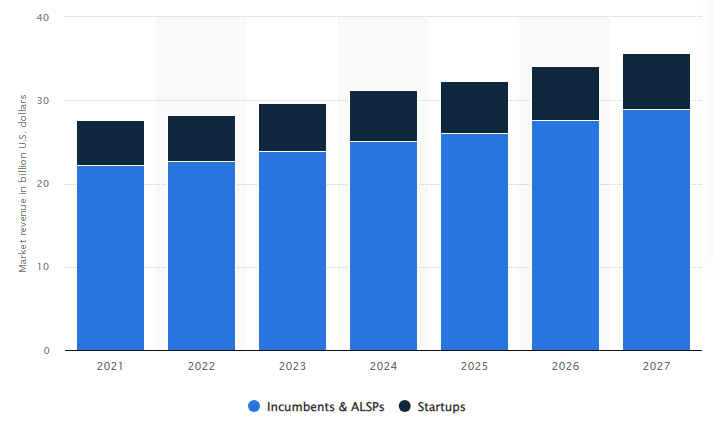
- The global legal technology market generated sales of 27.6 billion United States dollars in 2021. It incumbents contributing 22.2 billion United States dollars to the total revenue generated by the market.
- After generating 5.4 billion US dollars in revenue in 2021, the legal technology startup market .
- It is vital to know that the predicted market grows at a compound annual growth rate (CAGR) of 3.7 percent through 2027, when revenues are projected to reach 6.7 billion US dollars.
What Are the Key Benefits of a Law Firm App for The Law Firm?
Are you in a dilemma about whether or not to develop a lawyer website for your law firms? Well, for all the businesses in different industries, it has become critical to develop their own app for a strong online presence, and the legal industry is no exception. If you want to know how a law firm app can be beneficial for your law firm, look here:
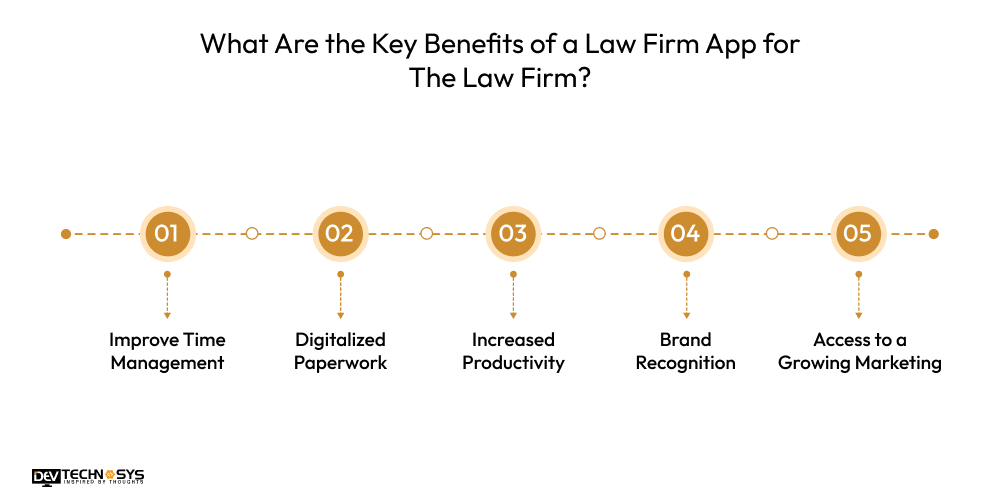
1. Improve Time Management
Law firm apps act as magical tools, allowing professionals to arrange their time, track hours with different clients, and schedule meetings. They also allow lawyers and staff to access and update information on the go.
Hence, they ensure that everyone stays on the same page and streamline workflows, reducing the time wasted searching for and following up on tasks.
2. Digitalized Paperwork
Now, say goodbye to paperwork. Legal professionals keep a load of paper documents that can become hectic, so law firm apps provide storage and management. If you develop a website like rocket lawyer, this save saves space and reduces the risk of losing important documents. You can also convert images into PDF documents to access digital records.
3. Increased Productivity
Go digital to increase your firm’s productivity. The app can improve team productivity with features like document sharing and automated task reminders. It also enables lawyers to shift their focus to client interaction and other more strategic work.
With the app, legal professionals no longer need to spend their time finding a specific case as all the cases, regulations, and resolution rules are at their fingertips.
4. Brand Recognition
You can make your law firm app the face of your brand, telling clients whatever they want to know about it. On demand app development solutions can show your services and expertise to a large audience, attracting new clients who find you using the app. However, you must ensure your app is user-friendly and intuitive so clients can easily navigate it.
5. Access to a Growing Marketing
Over 86% of the population worldwide have a smartphone, and nearly 72% will solely use their smartphones to access the web in 2025. Hence, it gives a major reason why law firms should go digital and develop a mobile app for their law firms. It signifies that not having your law firm app means missing out on several opportunities for your law firm in the current digital landscape.
7 Steps to Develop a Law Firm App
In current digital world, a well-designed application is a game changer for law firms. It streamlines communication, boosts efficiency, and enhances client experience.
However, building a successful application development for the legal industry requires careful planning and execution. Hence, here is a breakdown of the critical steps that you must consider to make a law firm mobile app:
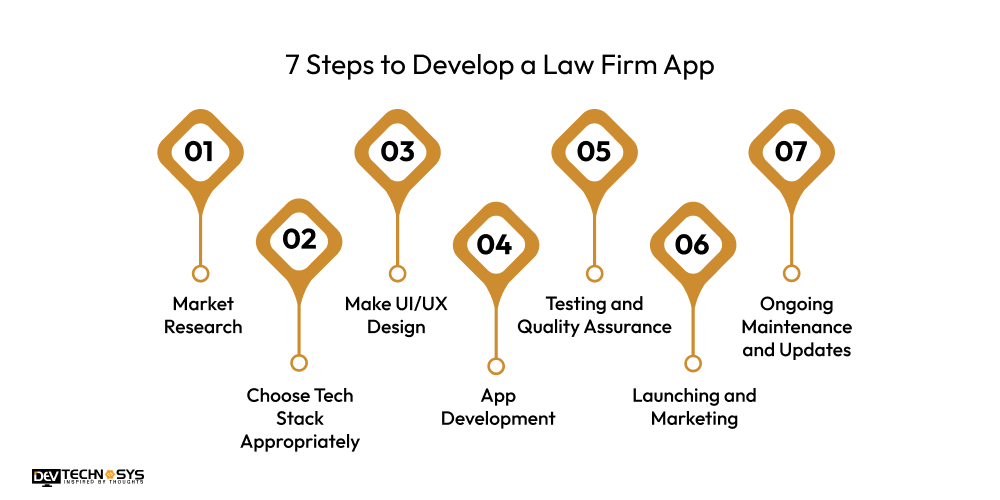
1. Market Research
Before you develop a law firm app, you must conduct market research to analyze existing law applications to understand what features are critical and is there any market gap. You can consult with lawyers to understand their pain points and what can help them the most. Hence, this research will help you make your app accordingly and fill its gaps.
2. Choose Tech Stack Appropriately
The tech stack is the programming language and framework to develop a law firm app. Be careful when choosing the tech stack, as it contributes to successful app development solutions for law firms.
If you are confused when selecting the technology stack for your app, hire an Android or iPhone app development company with a vast knowledge of different tech stacks. It will bring better outcomes from your app.
3. Make UI/UX Design
After choosing the right tech stack, shift your focus to user interface and experience. Remember to follow the mobile-first approach when developing a legal firm app and create its design as intuitive, simple, and visually appealing as possible.
With the help of a law firm app development company, create a clean layout and design that reflect your firm’s brand identity. Furthermore, ensure that your app loads fast, every function works properly, and the users get an excellent user experience.
4. App Development
Now, it’s time for law firm app development, for which you need a clear roadmap. Here, you are advised to collaborate with a mobile app development services provider with experience in legal tech.
An expert will successfully convert your vision of app development into an app. To develop a law firm app, consider significant features such as easy navigation, calendar, case notes, tracking, and many more to make your app successful.
5. Testing and Quality Assurance
It’s the most critical stage of app development that ensures your app is ready to launch. Here, you have to conduct different tests so that bugs, glitches, and other technical issues can be identified and resolved.
Even if you release the demo version to the app stores, hire dedicated developers and continuously test the application and improve its functionality. Hence, it ensures that your app is error-free and ready to launch.
6. Launching and Marketing
Finally, the time comes to release your law firm app. Deploy your law firm app on Google Play Store and Apple App Store. Hence, only an app launch is not enough. You have to promote it so that more and more people can come to know about it. You can use social media, campaigns, influencer marketing, etc.
7. Ongoing Maintenance and Updates
As you know, the legal landscape is changing rapidly; you must monitor your app continuously. Regularly update your law firm application with bug fixes, adding new features and security patches.
Consider user feedback and work on them to make necessary improvements. If required, you can get assistance from an iPhone or Android app development services provider to attain better outcomes. Experts will help your app remain competitive for a long time.
Types of the Best Apps for Lawyers
Lawyers need accuracy, efficiency, and, of course, access to information. Legal technologies are disrupting the industry and making lawyers reliant on mobile and web applications to improve workflows, manage clients, and be productive. Below are the five apps each lawyer should look at:
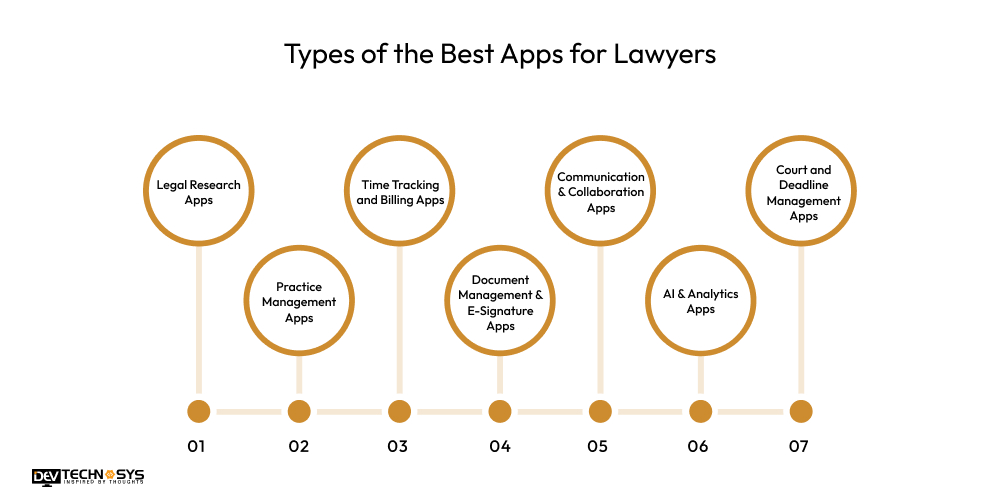
1. Legal Research Apps
Legal research is the single most time-consuming activity associated with law. Apps like Westlaw, LexisNexis, and Fastcase will allow a lawyer to have statutes, case laws, and precedents at their fingertips — taking hours of manual research and delivering the most up-to-date legal developments as they arise.
2. Practice Management Apps
Practice management apps offer law firms a centralized platform for case management, document storage, calendaring, and billing. Tools like Clio, MyCase, and PracticePanther can support lawyers in organizing client data, tracking tasks, and improving efficiencies.
3. Time Tracking and Billing Apps
Billable hours are like gold for all lawyers practicing law. Time tracking apps like Toggl, TimeSolv, and Bill4Time make it easy to track work behaviors in applicable work hours. Some apps offer integrated billing components, which make it easy to bill an invoice and collect payment without being heavy on administration.
4. Document Management & E-Signature Apps
Managing and signing legal documents is vital for lawyers. Applications such as DocuSign, Adobe Sign, and NetDocuments allow lawyers to store, edit, and share sensitive documents in a secure manner while allowing clients to sign agreements electronically without the delay of having to print and mail a hard copy of the agreement.
5. Communication & Collaboration Apps
Good communication is among the most important aspects of client satisfaction. And, apps such as Slack, Zoom, and Microsoft Teams allow lawyers to communicate and collaborate with teams and clients via secure chats, video conferencing, and file sharing.
6. AI & Analytics Apps
Lawyers today are utilizing AI-driven applications such as ROSS Intelligence and Harvey AI to analyze and group case patterns, estimate outcomes, and optimize strategies for successful outcomes.
The ability to source data and information from the application gives lawyers more insight into the case, and the information needed to build a winning case helps lawyers gain a competitive advantage.
7. Court and Deadline Management Apps
The consequences of forgetting a court date can be severe. Fortunately, applications that use AI to track hearing dates, deadlines, and compliance requirements in the legal field, such as LawToolBox and CourtAlert, take the guesswork out for lawyers so they don’t miss an important date.
You can reach out anytime; we are available 24/7. Our team provides a quick response.

Top 5 Law Firm Apps
1. Clio Manage
A cloud‑based law‑practice management platform founded in 2008, Clio features client intake, calendaring, billing, document management, and more. Thousands of law firms are using Clio, some of which consider Clio a mission-critical tool for their firm.
Though Clio does not publicly disclose their mobile‑app download numbers, they have hundreds, thousands, or millions of legal professionals using their product throughout the world.
2. MyCase
A cloud case‑management system that provides firms with time‑tracking, billing, messaging, and client portals, has been around since 2012. With the solid UX; download numbers not available to the public, but known to be among the highest rated platforms.
3. PracticePanther
Founded in 2012 with its app shortly thereafter, rated well (~4.7/5), and automates tasks, billing, and workflows. Used by tens of thousands globally, but downloads are not shared publicly.
4. Filevine
Originally released through Flightvine in 2014, then rebranded. Offer customizable workflows and case dashboards. Continues to rank #2 on 2025 legal-software lists; exact mobile-app download numbers not available publicly.
5. Actionstep
Launched in 2005 in New Zealand, and launched the mobile app after that. Cloud-based, workflow-driven legal practice manager with document automation and billing. Widely used globally; download numbers weren’t provided publicly.
10 Key Features of Law Firm Apps
If you want to create a law firm app you must need to have a list of key features. In this section we have compiled the essential features which make your law firm app successful.
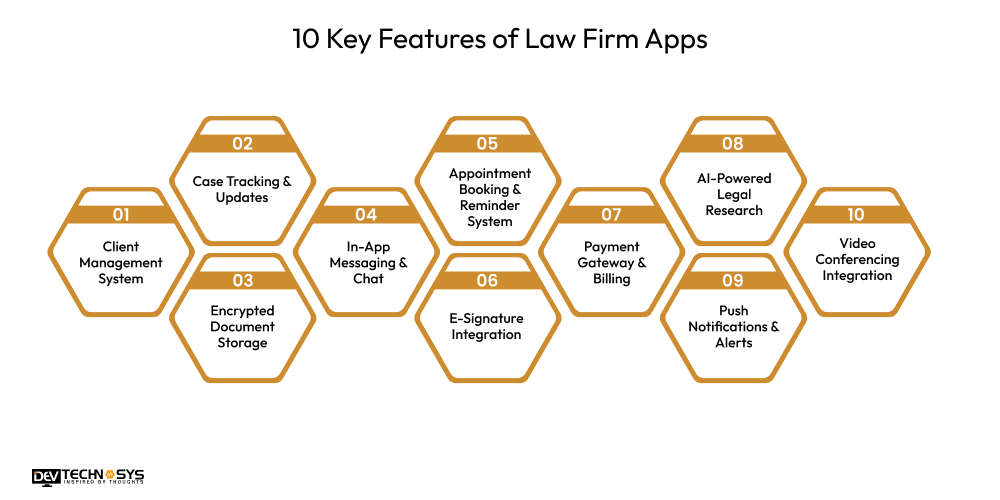
1. Client Management System
A centralized dashboard for managing client profiles, case history, clients’ contact details, and open legal matters for a more organized communications and management system.
2. Case Tracking & Updates
Visualize and track in real time all updates on cases, hearings, deadlines, and notices so that clients and lawyers do not have to keep up with loads of information and notices.
3. Encrypted Document Storage
Securely stored, shared, and retrievable legal documents and sensitive client details via encrypted app access password, ensuring clients’ confidentiality and access for both clients and lawyers.
4. In-App Messaging & Chat
Legal case management app allows for secure instant messaging, not replacing emails, not phone calls, but an easy and fast chat system between lawyers and clients.
5. Appointment Booking & Reminder System
Allows clients to easily book consultations with lawyers and receive automated reminders to attend the consultations. If they miss the reminders, then this helps lawyers better manage their time accordingly.
6. E-Signature Integration
Allows users to digitally sign contracts, agreements, or legal forms electronically, simplifying the ability to approve documents for faster legal processes while maintaining security.
7. Payment Gateway & Billing-
Offers secure online payment options, generates invoices, manages expense reports, etc., to create a more streamlined and effective billing solution.
8. AI-Powered Legal Research-
Utilizes AI for case law, statute, and precedent analysis quickly to help lawyers maximize their time and improve their decision-making ability.
9. Push Notifications & Alerts-
Provides clients with alerts on case progress, deadlines, announcements, etc., so they do not miss important developments.
10. Video Conferencing Integration-
Provides an easy way to remotely consult clients, attend hearings, or speak with clients through audio or video, all in a secure environment with great video quality.
Advanced features of Law Firm App
Building an application isn’t enough if you want to make it successful. To make this successful you should have a list of advanced functions in your pocket.
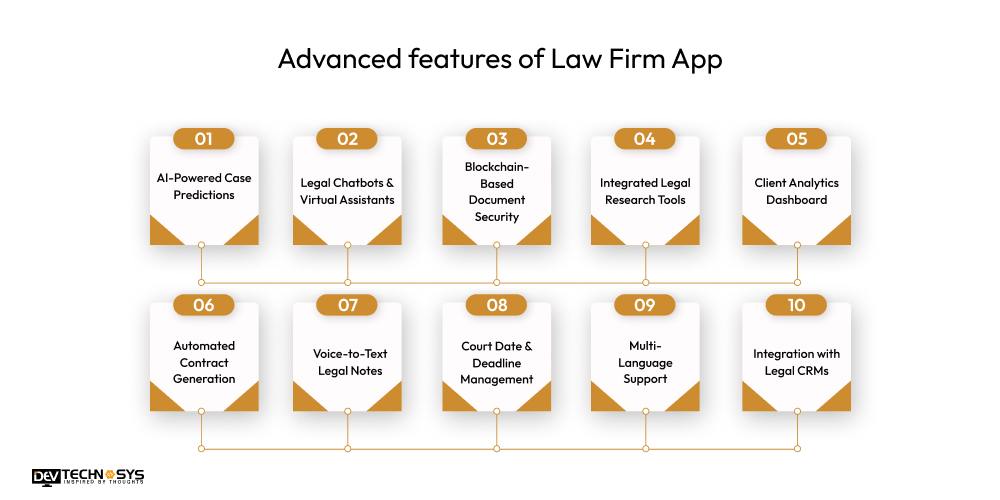
1. AI-Powered Case Predictions-
Leverages machine learning and historical case data to predict outcomes of cases, helping lawyers build winning strategies and provide clients with realistic possibilities.
2. Legal Chatbots & Virtual Assistants-
Can respond to client inquiries instantly, 24/7, can help schedule appointments, can deliver preliminary legal advice, etc., in order to lessen the manual burden on law firms.
3. Blockchain-Based Document Security-
Guaranteed that all legal documents are encrypted, tamper-proof, and all stored and posted to the blockchain, thereby retaining the security of sensitive case files while giving complete transparency and traceability.
4. Integrated Legal Research Tools-
Provides plug-ins to virtually all legal databases and utilizes AI to quickly supply relevant case law, statutes, and authorities to secure better decision-making.
5. Client Analytics Dashboard
Provides intelligence on clients, billing patterns, and case metrics via interactive
analytics, and elevates client service and firm profitability.
6. Automated Contract Generation
Utilizes AI templates to generate accurate, customizable Contracts and Agreements in minutes and eliminates manual errors, providing attorneys with time-saving resources.
7. Voice-to-Text Legal Notes
Translates spoken discussions or meeting notes into an organized legal document format, providing an attorney productivity enhancement to simplify case documentation.
8. Court Date & Deadline Management
Identifies hearings, deadlines, and court dates with automated reminders and suggests calendar synchronization for missed obligations and improved efficiency.
9. Multi-Language Support
Delivers legal services and communicates with clients in a variety of languages, helping law firms reach more diverse audiences and expand into global markets.
10. Integration with Legal CRMs
Integrates smoothly with existing CRM systems to capture leads, client history, communication, and billing functions, improving overall client management and centralization of practice operations.
How AI Impacts Law Firm Apps?
Artificial Intelligence (AI) is changing how law firm apps operate, creating faster, smarter, and more efficient legal services. There are five significant ways AI has changed law firm apps for the better:
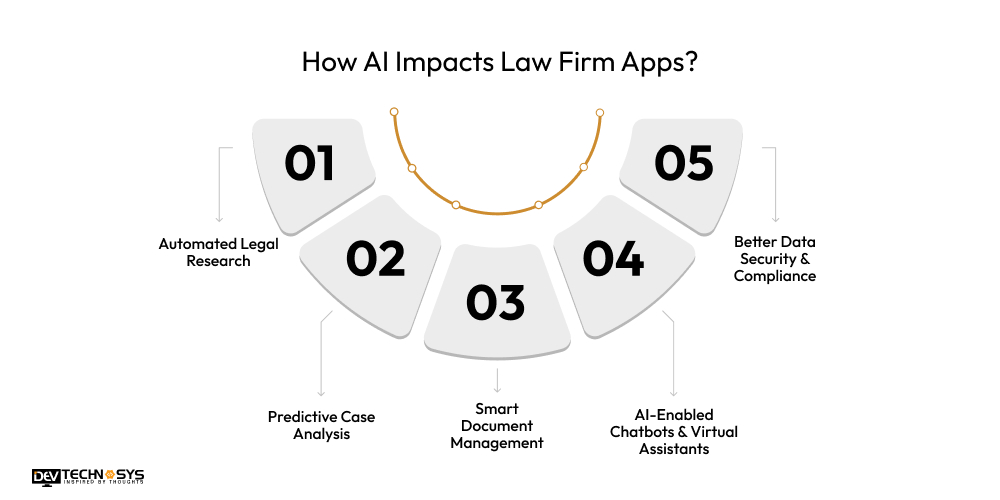
1. Automated Legal Research
AI-enabled apps are able to read complex legal databases, case histories, and statutes very quickly and return relevant research and precedents to attorneys in a matter of seconds, without any hours of manual work.
2. Predictive Case Analysis
AI algorithms are now able to analyze case data and make predictions on outcomes or potential legal risks, so attorneys can develop better strategies and improve the value of decision-making.
3. Smart Document Management
AI takes the hassle out of reviewing, drafting, and analyzing contracts by sifting through complex documents, identifying errors, highlighting critical clauses, recommending improvements, and doing this faster and better than attorneys can do it individually.
4. AI-Enabled Chatbots & Virtual Assistants
Hello, can you get someone else to handle my client calls? Chatbots are integrated with the app and will handle client inquiries, book appointments, and even give basic legal advice. That means you have less work for your legal staff, and your clients get 24/7 service.
5. Better Data Security & Compliance
AI can identify unusual activity or data breaches in real time. It can also ensure the apps comply with legal regulations (such as GDPR or HIPAA), keeping client information safe.

Clio’s Success Story
Launched in 2008 by Jack Newton & Rian Gauvreau, Clio’s transformational cloud-based platform has changed the practice of law forever. Clio started with a focus on small and mid-sized law firms for a digital solution to manage cases, documents, billing, and client communications all in one place, accessible, secure, mobile, and easy to integrate, brought to market quickly. It was not long before this great feature set and strategy turned Clio into an internationally recognized brand.
Clio is currently used by over 150,000 legal professionals and has impacted how tired law firm businesses increase productivity, client service, and ultimately build billable hours through digital transformation.
By integrating with more than 100 third-party apps and an ongoing commitment to data security, Clio has emerged as a leader in legal technology. Clio is now recognized as the world’s #1 law firm app and has continued to innovate and offer solutions that are directly helping to change how the modern practice of law operates.
How Much Does It Cost to Build a Law Firm App?
The cost to create a law firm app ranges from about $8,000 to $25,000+, depending on the complexity, features, and technology stack. If your app is simple, featuring basic functionality such as case tracking, lawyer profiles, and client communication.
The law firm app development cost that has advanced functionality like AI-driven legal advice, document automation, and real-time consultations will require more investment. Connect with a professional mobile app development company to know the exact cost to build a law firm app. Seven high-level factors will determine the overall cost, including:
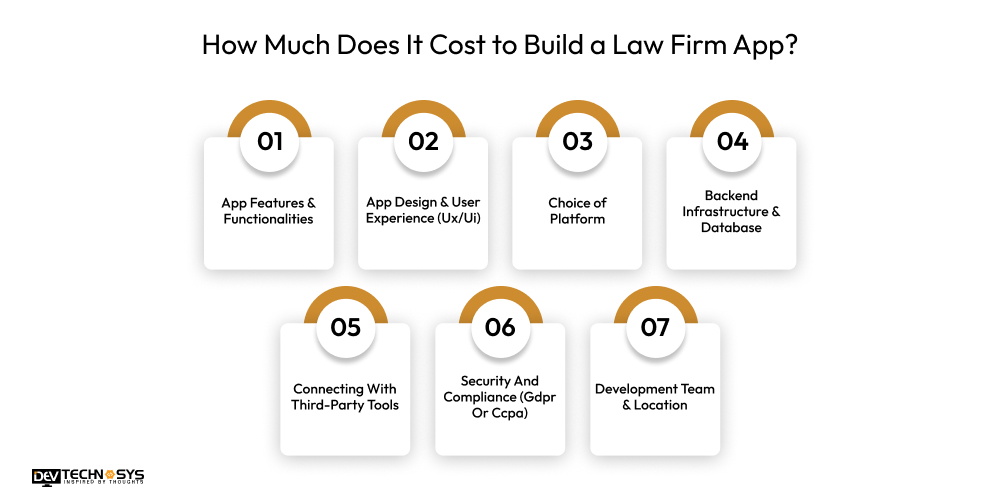
1. App Features & Functionalities
The features you would like to include, i.e., a legal chatbot, document scanning, integrated payment gateways, etc. These more complex features increase law firm app development costs. The more features your app includes, the higher the cost. Apps that are not feature-rich will always be cheaper than those with many features.
| Complexity Level | Estimated Cost (USD) |
| Basic Features | $3,000 – $6,000 |
| Intermediate Features | $6,000 – $12,000 |
| Advanced Features | $12,000 – $20,000+ |
2. App Design & User Experience (Ux/Ui)
The design of the app and how it “looks” and “works” are important. A professional app for a certain legal field should look professional, meaning it should have custom animation, a custom dashboard, and smooth & easy navigation. In the reality of developing an app for a law firm client, having an attractive user experience & app interface costs more.
| Design Complexity | Estimated Cost (USD) |
| Standard UI/UX | $1,500 – $3,000 |
| Custom UI/UX | $3,000 – $6,000 |
| Premium UI/UX | $6,000 – $10,000+ |
3. Choice of Platform
Developing for the iOS or Android platforms is less expensive than developing a cross-platform app, as either of the platforms is completely different, but it may be relevant to use a hybrid or cross-platform approach to reach a larger audience. Hybrid or cross-platform apps, though slightly more expensive, could be the way to go.
| Platform Type | Estimated Cost (USD) |
| Single Platform (iOS or Android) | $3,000 – $8,000 |
| Cross-Platform / Hybrid | $8,000 – $15,000+ |
| Native for Both Platforms | $12,000 – $20,000+ |
4. Backend Infrastructure & Database
The cost to make a law firm app depends on what the app needs. Law firm apps typically want some level of secure database to store client information, case information, documents, and employee information.
Building a secure backend with encryption and possibly cloud-embedded with the application will contribute to the overall law firm app development cost.
| Backend Type | Estimated Cost (USD) |
| Basic Backend | $2,000 – $4,000 |
| Intermediate Backend | $4,000 – $8,000 |
| Advanced Backend | $8,000 – $15,000+ |

5. Connecting With Third-Party Tools
Features for e-signature, payment processing, video conferencing, CRM tools, etc, will require staff development time or a free third-party API. Each increase in the app features may increase the lawyer app maintenance cost.
| Integration Type | Estimated Cost (USD) |
| Basic Integrations | $1,000 – $2,500 |
| Medium Integrations | $2,500 – $5,000 |
| Advanced Integrations | $5,000 – $8,000+ |
6. Security And Compliance (Gdpr Or Ccpa)
The cost of adding security protection and protocols usually increases the cost of making a law firm app. Law apps or applications used by legal firms usually deal with sensitive data and information, so as part of the app development, security protection, as a rule, should include encryption, cloud hosting, and GDPR or CCPA compliance, none of which are negotiable.
| Security Level | Estimated Cost (USD) |
| Basic Security | $1,500 – $3,000 |
| Intermediate Security | $3,000 – $6,000 |
| Enterprise Security | $6,000 – $10,000+ |
7. Development Team & Location
The location of your app development team and their experience will have an impact on the cost to create a law firm app. For example, hiring developers in the US or UK from on-demand app development companies will be more expensive than outsourcing to places like India, where there are developers who are just as experienced, but charge much less.
| Location | Estimated Hourly Rate | Approx. Project Cost (USD) |
| India / Southeast Asia | $20 – $50/hr | $8,000 – $15,000 |
| Eastern Europe | $40 – $80/hr | $12,000 – $20,000 |
| US / UK / Western Europe | $80 – $150/hr | $20,000 – $30,000+ |
By understanding these seven factors, law firms can plan their budget and build an app that fits their clients’ needs, while preventing overspending. If law firms use an experienced law firm app development agency, then they will ensure that what you are spending vs. quality vs. functionality is in balance.
How Law Firm App Monetization Works?
Law Firm Apps are versatile tools that not only improve client services and case management capabilities, but they are also powerful revenue generators.
When the right monetization methods are utilized, Law Firms can improve profitability while providing value for client services. Below, we provide Five Law Firm App Monetization options:
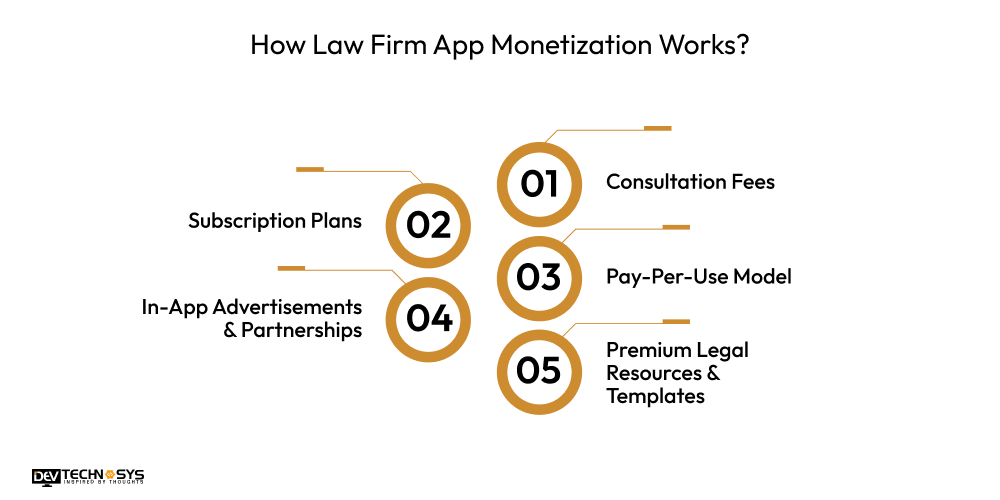
1. Consultation Fees
One of the basic methods of monetizing an app is to charge clients for consultations directly through the app. Clients may arrange appointments, schedule video calls, or request legal advice; payments are remitted to the firm by the integrated payment gateway as soon as the consultation is booked. This makes for an easy and secure transaction and revenue stream for the firm.
2. Subscription Plans
Law firms could create multiple subscription plans for the continued service to the client. For example, clients may pay on a monthly or yearly basis for unlimited document reviews, priority consultations, or updates on their case in real time. This could generate recurring revenue for the firm while offering premium, personalized legal support to the client.
3. Pay-Per-Use Model
Some applications allow clients to pay for certain services like contract drafting, legal document authentication, or notarization, on a pay-per-use basis. According to the legal software development company, this model offers clients the flexibility of choosing legal support when they need it without any level of commitment to a subscription service.
4. In-App Advertisements & Partnerships
Law firms could partner with businesses, like legal insurance providers or financial institutions, to provide in-app advertisements or links to the business’s product or service.
Strategic promotion by an event or law firm on social media (i.e., do a live outside of court with lawyers for an event) may also allow firms to generate affiliate income from the legal tech or document service.
5. Premium Legal Resources & Templates
Apart from advertising, law firm apps could sell premium templates, eBooks, or guides for contracts, agreements, or compliance documents. Anything the law firm can offer the client, accurate and validated access to by charging them, is a value-added service for the client and passive income for the firm.
Tech Stack for Law Firm App Development
Legal software development involves choosing the right tools and technologies to ensure security, efficiency, and scalability. If you are unaware of the tech stack for your law firm app, here is a list of the comprehensive tech stacks covering various aspects of mobile app development for law firms.
| Category | Technologies/Tools |
| Frontend (UI/UX) | React Native, Flutter, Swift (iOS), Kotlin (Android), HTML5, CSS3, JavaScript |
| Backend | Node.js, Django, Ruby on Rails, Laravel, .NET Core |
| Database | PostgreSQL, MySQL, MongoDB, Firebase Realtime Database |
| Cloud & Hosting | AWS, Google Cloud, Microsoft Azure, Heroku |
| Authentication | OAuth 2.0, Firebase Auth, JWT (JSON Web Token) |
| APIs & Integration | RESTful APIs, GraphQL, Legal Document APIs, Payment Gateway APIs (Stripe, PayPal) |
| Video Conferencing | WebRTC, Twilio, Zoom SDK |
| Push Notifications | Firebase Cloud Messaging (FCM), OneSignal |
| Data Security & Compliance | SSL/TLS, AES Encryption, GDPR & HIPAA Compliance, Biometric Authentication |
| Analytics & Monitoring | Google Analytics, Firebase Analytics, Mixpanel, New Relic |
| Payment Processing | Stripe, Razorpay, PayPal |
Wrapping Up!
Even though some law firms prefer to work with old-fashioned methods, a legal firm application can be a game-changer for your business in the current tech-driven world.
Going digital nowadays is the norm rather than a trend, specifically if entrepreneurs want their business to reach more people and remain competitive in a cutthroat competitive world. If you also don’t have your law firm app, there’s no delay; you can act now.
So, consult a mobile application development company if you want to make a law firm app. Dev Technosys is right here if you need any help. Our team of dedicated developers can help you with everything from the market research phase to app maintenance, taking your business to the next level.
Frequently Asked Questions
Find answers to the most common questions related to this article.
The cost to develop a law firm mobile app or website can vary depending on different factors. On average, the law firm app or website development cost can be estimated as $8000 to $30000.
Based on the app’s complexity level, the timeline to create a law firm app can be 3 to 11 months. A simple app requires less time to develop, while feature-rich apps require around 1 year to develop.
The 5 things you must include in your law firm website:
Case results
Legal Resources
Consultation forms
News and press release
Award and recognitions
This objective can be attained by using the following:
Push notification for case updates
In-app messaging
Appointment reminders
Online scheduling for convenience
Mobile-friendly access to legal documents and resources
A mobile app streamlines the legal process by following ways
Convert all legal documents into digital documentation
Create electronic invoices
Access research database and legal resources
Set tasks for the team
Set deadlines.