























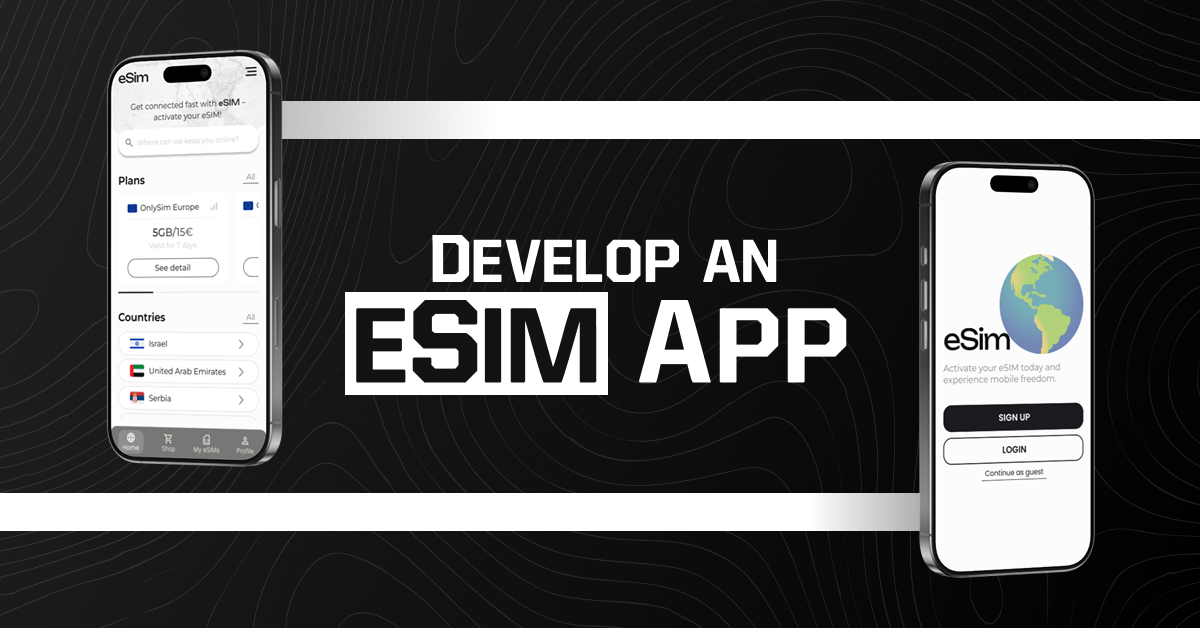
“Tap-and-Go eSIM”
Imagine landing in a new country and instantly connecting to a local mobile network, no physical SIM cards, no queues at airport kiosks, just seamless connectivity.
Welcome to the world of eSIM technology, a game-changer for the travel industry.
As global travelers demand more convenience and flexibility, eSIM apps are quickly becoming essential tools for staying connected abroad.
But how do you develop an eSIM app that truly meets the needs of modern explorers?
From regulatory hurdles to UX design, the journey is both complex and exciting.
In this blog, we’ll dive into the key steps to building a robust, user-friendly eSIM app tailored for the travel market, empowering users to switch networks, manage data plans, and roam the world without limits.
Let’s get started.
Global Market Projections of eSIM Applications
- The eSIM apps market is valued at around $10.32 billion in 2024; it is expected to increase to around $17.67 billion by the end of 2033.
- As per the recent study, North America holds the largest revenue share of the eSIM market, which is around 42.8% in 2024.
- According to a solution-wise, the connectivity services segment records the highest market share of around 87.5% in 2024.
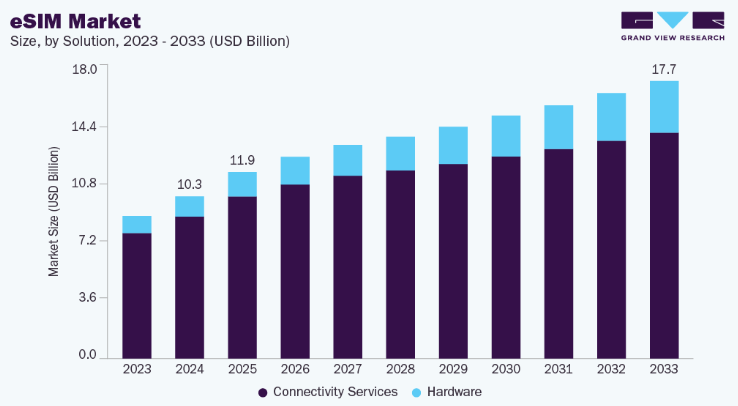
- With a deep knowledge, the eSIM applications market is projected to increase with a CAGR of 5.1% from 2025 to 2033.
- As we look at the application-wise, the M2M segment dominates the eSIM market and accounts for the largest revenue share in 2025.
What is an eSIM App?
An eSIM app is a mobile application where users can digitally purchase data plans without the need for a physical SIM and easily provide seamless connectivity.
It acts as a virtual SIM, and some of the applications also provide a secondary line for calls and texts for business or personal use. This platform also offers multiple SIMs for multiple purposes and allows users to switch them as per their requirements.
Why Businesses Want to Invest in eSIM App Development?
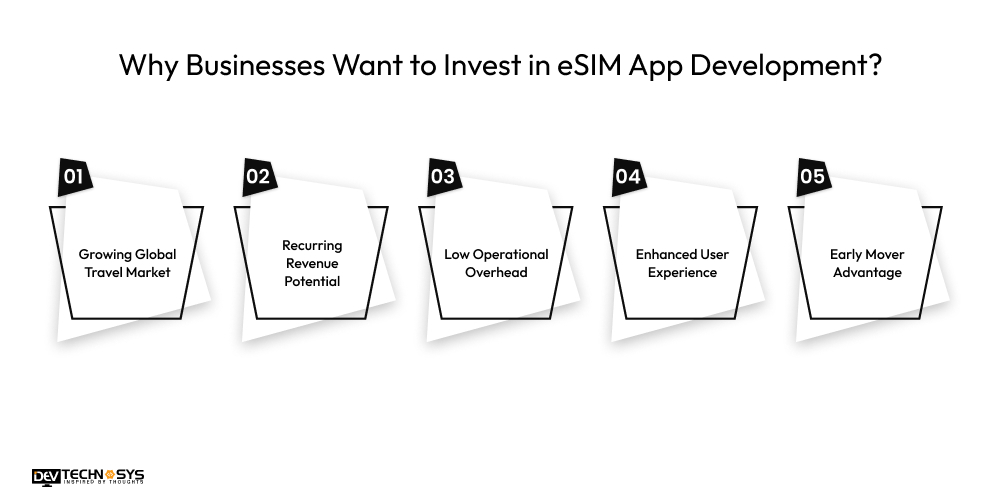
1. Growing Global Travel Market
As international travel rebounds, demand for seamless connectivity rises. eSIM apps provide instant access to local networks, helping travelers avoid roaming fees and stay connected, making it a lucrative opportunity for businesses targeting tech-savvy, global consumers.
Bonus Read: Telecom Software Development Cost
2. Recurring Revenue Potential
eSIM apps enable subscription-based models and data plan purchases. This recurring revenue stream creates sustainable profit opportunities, allowing businesses to monetize user engagement continuously rather than relying solely on one-time purchases or downloads.
3. Low Operational Overhead
Unlike physical SIM distribution, eSIM apps reduce logistics, inventory, and manufacturing costs. Businesses can scale faster and operate leaner by going digital, increasing margins while still offering high-quality, on-demand telecom services to customers worldwide.
4. Enhanced User Experience
The eSIM on demand app development solutions offer a frictionless experience, no physical swapping, no store visits. This digital convenience boosts customer satisfaction, drives loyalty, and aligns with user expectations in today’s mobile-first world, especially among digital nomads and frequent travelers.
5. Early Mover Advantage
The eSIM ecosystem is still emerging. Investing early allows businesses to establish market presence, build brand authority, and innovate ahead of competitors, positioning themselves as leaders in a rapidly growing and evolving digital connectivity landscape.
What is the Role of AI in eSIM Applications?
- AI evaluates location, speed, and signal quality to automatically connect users to the best network available.
- AI analyzes usage history and travel patterns to suggest the most suitable and cost-effective data plans.
- AI-powered chatbots offer instant, accurate assistance, reducing support costs and enhancing overall user satisfaction and trust.
- AI monitors usage patterns to detect suspicious behavior, preventing identity theft and unauthorized access to eSIM profiles.
- AI uses geolocation data to deliver region-specific offers, content, and updates directly through the eSIM app.
Also read: Top eSIM Apps To Use Globally
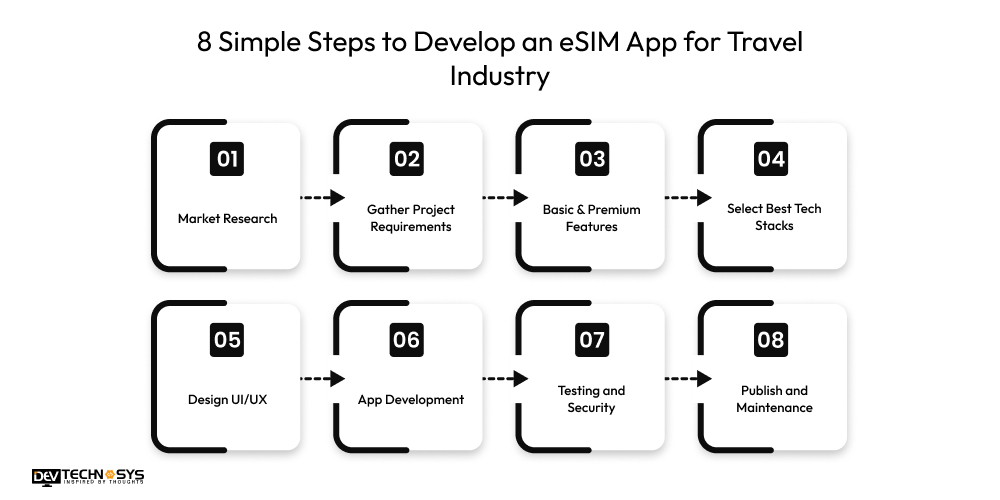
8 Simple Steps to Develop an eSIM App for Travel Industry
To create an eSIM app, you will need to focus on the basic and advanced requirements and integrate the customized features to increase user engagement. Follow the development steps that guide perfectly and lead to successful app development. So, let’s explore the eSIM app development process:
- Market Research
- Gather Project Requirements
- Basic & Premium Features
- Select Best Tech Stacks
- Design UI/UX
- App Development
- Testing and Security
- Publish and Maintenance
1. Market Research
In the first step to make an eSIM app, research the market about the latest trends and which type of eSIM applications can gain higher success rates. You can also observe the existing eSIM applications and understand their service criteria and working process to evaluate in your app.
2. Gather Project Requirements
Let’s begin the second stage to create an eSIM app, hire consulting experts from a travel app development company to gather the project’s basic and advanced requirements. Create a clear and structured sheet of needs that can reduce data redundancy and misunderstanding.
3. Basic & Premium Features
Moving to the third step of travel eSIM app development, select the basic and premium features to integrate into your project. It includes various features, such as carrier switching, digital SIM management, virtual numbers, security & privacy, and international data & roaming.
4. Select Best Tech Stacks
In the fourth stage to build an eSIM app, choosing tech stacks is one of the most important phases of every mobile app development service. It involves different types of tech stacks such as frontend & backend development, designing tools, testing, database, cloud storage, and more.
5. Design UI/UX
Let’s move forward to the fifth step of developing eSIM apps for telecom and design a user interface with a unique visual appearance. It includes various UI elements such as layouts, templates, forms, wireframes, prototyping, themes, fonts, styles, colors, and plugins.
6. App Development
Hire professional coders from a GPS tracking app development company to begin the real coding. Implement the third-party integrations, such as payment gateways, social media logins, communication tools, analytics, CRM, ERP, and more. Make sure all third-party tools and applications are successfully integrated.
7. Testing and Security
Move to the second last stage to develop an eSIM app, test the application under various techniques such as application testing, unit testing, integration testing, and more. After that, implement security measurements like encryption techniques, two-factor authentication, and biometrics.
8. Publish and Maintenance
To publish the app on the live phase, hire an experienced web app development services provider to ensure that all deployment elements are successfully integrated. After release, conduct the maintenance services such as regular backups, design enhancements, fixing bugs or glitches, and performance optimization.
You can reach out anytime; we are available 24/7. Our team provides a quick response.

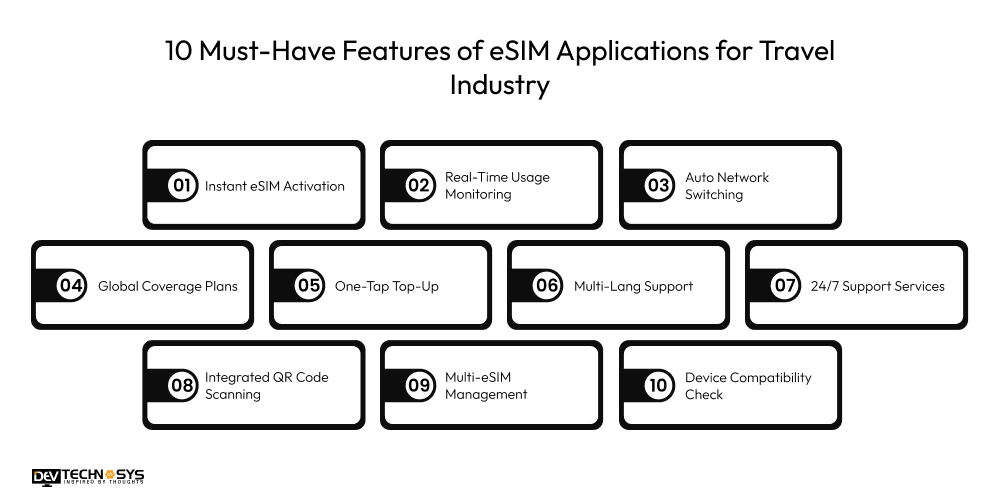
10 Must-Have Features of eSIM Applications for Travel Industry
-
Instant eSIM Activation
The eSIM apps enable travelers to activate the eSIM instantly and access the connectivity without visiting physical stores.
-
Real-Time Usage Monitoring
The multi-network eSIM app allows users to monitor their daily data usage, and it helps to avoid overages and manage consumption.
-
Auto Network Switching
The travel connectivity app automatically switches to the best available network, and it can maintain reliable connectivity across different countries.
-
Global Coverage Plans
The digital SIM card app has a wide variety of coverage plans that allow easy access to multiple destinations and offer seamless connectivity.
-
One-Tap Top-Up
The eSIM app for travel allows users to one-tap for data renewal or top-up while traveling and also switch devices.
-
Multi-Lang Support
A eSIM activation app supports multiple languages, and users can change the app’s language as per their convenience and requirement.
-
24/7 Support Services
An eSIM app like Saily provides 24/7 customer support services that can handle the customers’ raised concerns and solve them immediately.
-
Integrated QR Code Scanning
This feature provides the benefits of eSIM for travelers, enabling users to scan a QR code for quick eSIM setup and eliminating the manual setup.
-
Multi-eSIM Management
The eSIM for international travel enables users to switch and manage multiple eSIMs, and it is useful for frequent travelers.
-
Device Compatibility Check
The advantages of eSIM technology for travel apps include checking the device compatibility to ensure it supports eSIM and specific networks.

What is the Cost to Build an eSIM App?
The cost to develop an eSIM app is around $8,000 to $25,000, based on the specific requirements and demands. There are various factors that can impact the cost, such as complexity, features, functions, backend infrastructure, deployment platforms, and development team. It can influence the cost and change the overall project budget. Let’s take a look at the cost table for detailed information:
Tier |
Included Features |
Estimated Cost (USD) |
| Basic MVP | User login, plan listing, QR code activation, basic UI | $8,000 – $10,000 |
| Standard MVP | Real-time usage tracking, multilingual support, and payment integration | $10,000 – $13,000 |
| Feature-Rich MVP | Plan comparison, customer support chat, and offline install instructions | $13,000 – $16,000 |
| Multi-Region App | Global coverage, multi-eSIM support, auto network switching | $16,000 – $18,000 |
| Business-Ready Version | Loyalty/referral programs, local number support, push notifications | $18,000 – $22,000 |
| Premium Version | Backup/restore, itinerary integration, advanced UI/UX, compliance | $22,000 – $25,000 |
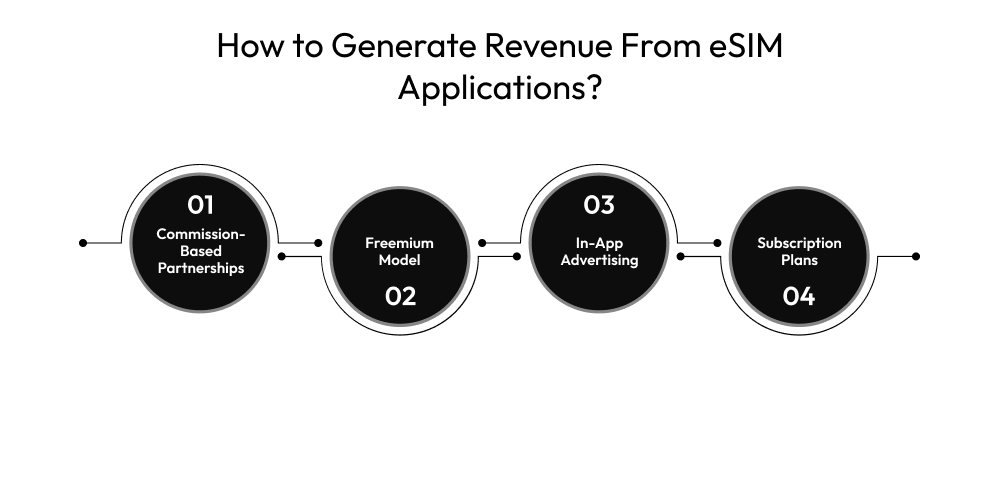
How to Generate Revenue From eSIM Applications?
Create a mobile app for eSIM is a great decision because its demand has increased. But generating profit is a difficult task. Just look at the following monetization techniques and apply them to your application.
1. Commission-Based Partnerships
The eSIM applications partner with global telecom providers and earn commissions on each sale through the application. Charge a commission of around 8% to 12% on each sale. This monetization approach helps businesses to generate new revenue streams.
2. Freemium Model
The travel industry eSIM solutions offer limited or basic features for free users. If they want to access the premium or additional features, then they need to purchase them or a subscription plan. According to the travel app development services provider, it can be another income source method and increase the business valuation.
3. In-App Advertising
The apps of eSIM technology in travel sell an advertisement space for third-party businesses or organizations, and charge an acceptable fee for every ad that is displayed on the app. Various types of advertising formats are available, such as banner ads, native ads, image ads, and display ads.
4. Subscription Plans
The eSIM applications offer paid subscription plans for users to access the unlimited accessibility of the app. It includes various types of plans such as basic, premium, and enterprise. Users purchase premium or enterprise plans on a monthly or annual basis.
Conclusion
In this blog, we explored how to develop an eSIM app for the travel industry and why eSIM applications are booming in the market. We think that you have cleared all your confusion and doubts regarding the eSIM app development for the travel industry.
Are you interested to develop an eSIM app? Then who is holding you back? Just share your project’s custom requirements with a successful mobile app development agency to get the solution at a lower cost.
Frequently Asked Questions
Q1. How Much Does it Cost to Develop an eSIM App for Travel Industry?
The cost to build an eSIM app lies between $8,000 and $25,000 or higher. The eSIM app development cost can change due to key factors such as features, size, complexity, backend infrastructure, development team, and tech stacks.
Q2. How Long Does it Take to Create an eSIM App for Travel Industry?
The timeline of eSIM app development is around 6 to 15 weeks. It is usually based on various reasons, such as project complexity, size, number of features, developers’ working hours, and more.
Q3. Which Technologies are Used to Make an eSIM App for Travel Industry?
Here we provide the list of technologies that are used to make an eSIM app:
- Java
- Python
- C++
- C#
- PHP
- Flutter
Q4. What Platforms/Devices Support eSIM?
Here is the list of eSIM-supported devices:
- Newer iPhone Models(iPhone XS and later)
- Samsung Galaxy S20 or Newer
- Google Pixel Phones
- Apple Watch, iPads, Windows, and more
Q5. What Are The Key Challenges In Developing An eSIM App?
- Device and OS fragmentation
- Ensuring a secure and seamless UX
- Integrating with complex telecom APIs
- Regulatory compliance
- High development cost and time













