













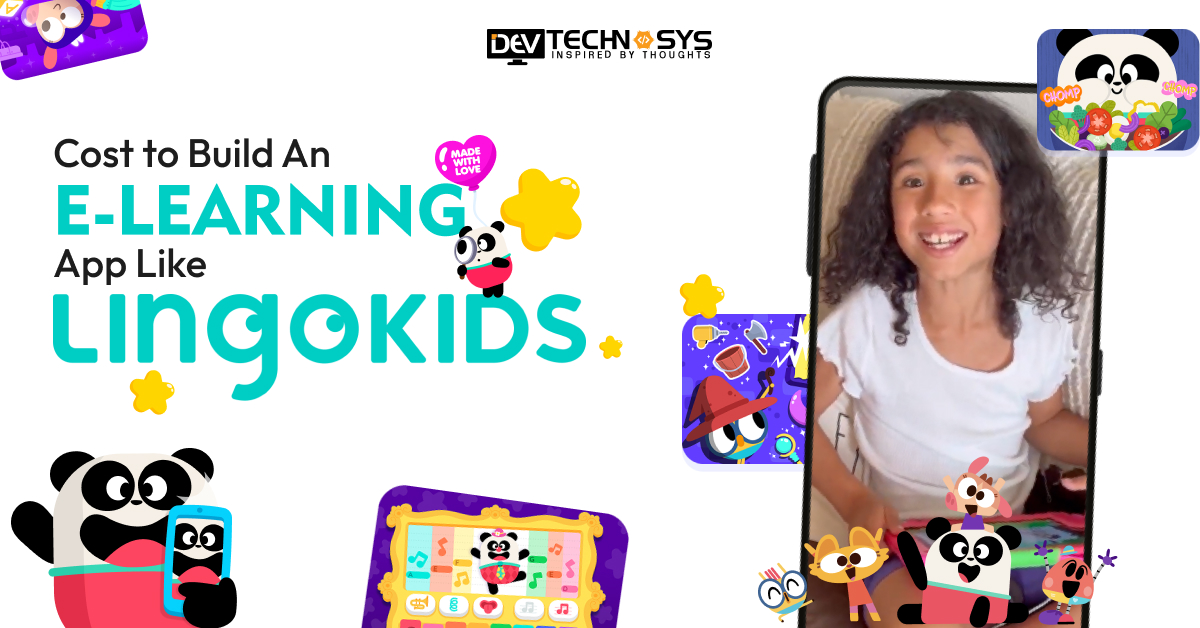
In today’s digital age, educational apps like Lingokids are transforming how children learn, making it fun, interactive, and accessible from anywhere.
With the growing demand for engaging, child-friendly eLearning platforms, many entrepreneurs and educators are asking: How much does it cost to build an e-learning app like Lingokids?
The answer isn’t one-size-fits-all.
It depends on features, design complexity, technology stack, and development resources. Whether you’re a startup looking to enter the edtech space or an established brand expanding into mobile learning, understanding the cost breakdown is crucial.
In this blog, we’ll explore the key factors that influence development costs, typical pricing ranges, and smart ways to optimize your investment.
Let’s start!
Market Analysis of Global E-Learning Applications
- The global e-learning applications market was valued at around $299.67 billion in 2024; this is expected to increase to $842.64 billion by the end of 2030.
- As per the recent survey, the North America region holds the market revenue share of around 35% in 2024.
- As we look technology-wise, the cloud computing segment holds the largest share of e-learning apps market in 2024.
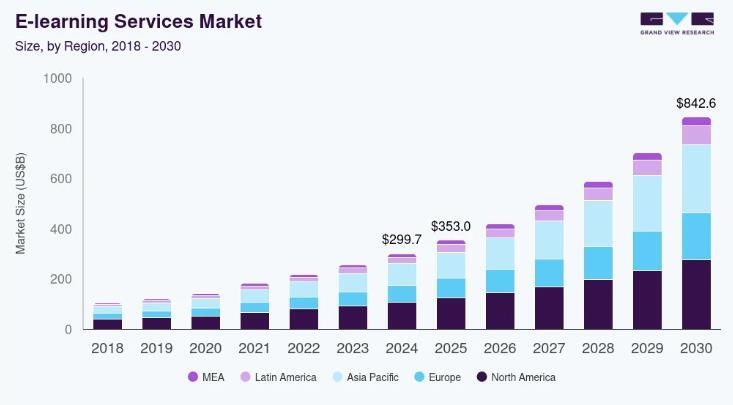
- According to a ground-level report, the e-learning applications market is projected to grow with a CAGR of 19.0% from 2025 to 2030.
- The custom e-learning segment led the market and accounted for around 29% global revenue share.
What is Lingokids?
Lingokids is a fun, interactive eLearning app designed to teach kids ages 2–8 essential skills through games, songs, and activities. Focused on language learning and early childhood education.
Apps like Quizle and Lingokids offer a safe, ad-free environment where children can explore subjects like English, math, science, and social-emotional development at their own pace.
What is the Cost to Build an E-learning App Like Lingokids?
The cost to develop an E-learning app like Lingokids $8,000 to $25,000, depending on the custom requirements. The cost of developing an education app like Lingokids can change due to various factors such as project complexity, features, functions, infrastructure, deployment platforms, design, and more.
Component |
Estimated Cost Range (USD) |
| UI/UX Design | $1,000 – $3,000 |
| App Development (Front & Back End) | $7,000 – $15,000 |
| Content Integration | $500 – $2,500 |
| Gamification Features | $500 – $2,500 |
| Admin Panel | $1,000 – $3,000 |
| Testing & Deployment | $1,000 – $4,000 |
Estimated Development Cost: $8,000 – $25,000+
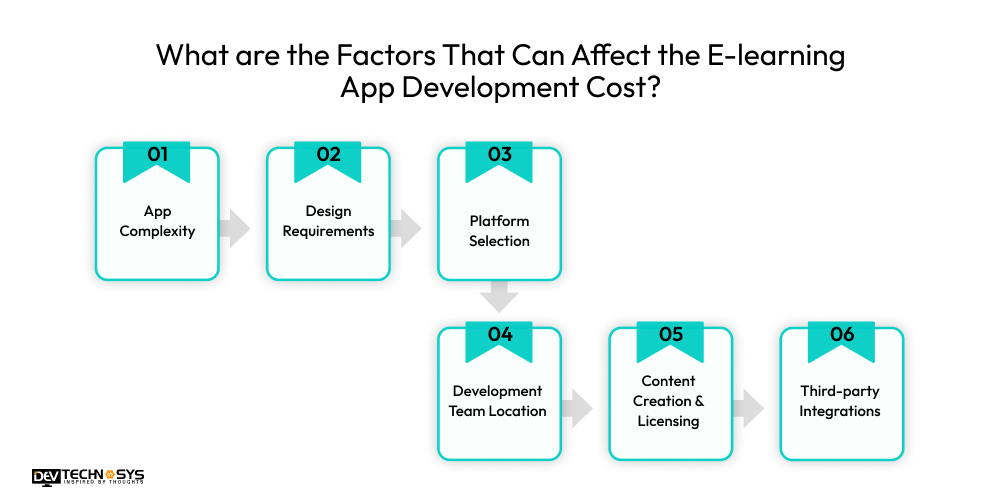
What are the Factors That Can Affect the E-learning App Development Cost?
It includes various factors that impact the cost to develop an e-learning app like Lingokids, such as the development team, platform choice, design, and many more.
1. App Complexity
The more features you include, like gamification, progress tracking, or AI-based recommendations, the higher the cost. Simple apps cost less, while feature-rich platforms require more development time, advanced coding, and integration, raising the e-learning app development cost.
Level |
Description |
Estimated Cost Impact |
| Basic | Simple features like video lessons and quizzes | $8,000 – $12,000 |
| Moderate | Add gamification, progress tracking | $12,000 – $18,000 |
| Advanced | AI features, real-time chat, | $18,000 – $25,000 |
2. Design Requirements
Child-friendly, interactive UI/UX with animations, illustrations, and sound effects needs specialized design. Custom illustrations or animations increase both design time and cost compared to using pre-built templates or basic UI elements.
Design Level |
Description |
Estimated Cost Impact |
| Basic UI | Simple screens, minimal visuals | $1,000 – $2,000 |
| Interactive UI | Engaging visuals, animations, and transitions | $2,000 – $4,000 |
| Custom Illustrations | Custom graphics, character design, animations | $4,000 – $6,000 |
3. Platform Selection
Building a native app for both iOS and Android costs more than developing a cross-platform solution using frameworks like Flutter or React Native. Each platform adds to development, testing, and maintenance efforts, affecting the total mobile app development cost.
Platform Type |
Description |
Estimated Cost Impact |
| Single Platform (iOS or Android) | Focus on one platform only | $8,000 – $12,000 |
| Cross-platform | Flutter/React Native for both platforms | $12,000 – $18,000 |
| Native (iOS + Android) | Separate native apps for both platforms | $18,000 – $25,000 |
4. Development Team Location
Developer rates vary significantly by region. Hiring in North America or Europe is more expensive than working with teams in India or Southeast Asia, which can reduce costs while maintaining quality if managed properly.
Region |
Description |
Estimated Cost Impact |
| Asia (e.g., India) | Cost-effective, skilled teams | $8,000 – $12,000 |
| Eastern Europe | Balance of cost and quality | $12,000 – $18,000 |
| North America/UK | Premium rates, top-tier service | $18,000 – $25,000 |
5. Content Creation & Licensing
Creating original educational content, videos, and games can be expensive. Alternatively, licensing third-party content may incur recurring fees. The kids learning app development cost varies based on quality, volume, and whether it’s created in-house or outsourced.
Content Type |
Description |
Estimated Cost Impact |
| Basic Content | Static lessons, simple quizzes | $1,000 – $3,000 |
| Multimedia Content | Animated videos, interactive games | $3,000 – $6,000 |
| Licensed Content | Third-party educational material (annual fees) | $4,000 – $8,000 |
6. Third-party Integrations
Integrating external tools for payments, analytics, chat, or cloud storage can increase the cost to create an e-learning app like Lingokids. Some APIs are free, but many have monthly fees or require custom development to fit app requirements.
Integration Type |
Description |
Estimated Cost Impact |
| Basic (Analytics, Email) | Free/low-cost tools | $500 – $1,000 |
| Payment Gateways | Stripe, PayPal, etc. | $1,000 – $2,000 |
| Advanced APIs | AI tools, cloud storage, chat systems | $2,000 – $4,000 |
You can reach out anytime; we are available 24/7. Our team provides a quick response.

How to Reduce the Cost to Build an E-learning App Like Lingokids?
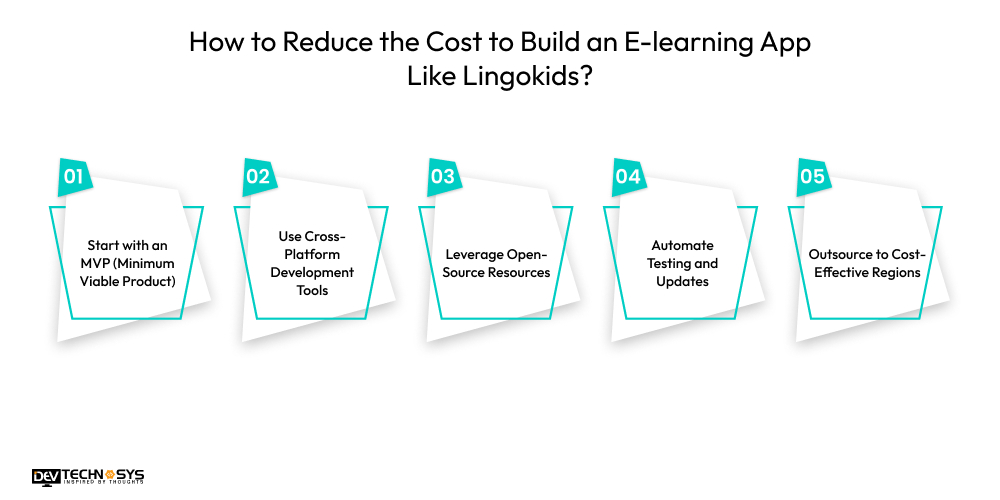
Here we provide some approaches that help to reduce the overall e-learning app development cost:
1. Start with an MVP (Minimum Viable Product)
Focus on essential features like lessons, progress tracking, and basic UI. Launch early to test the market, gather feedback, and iterate, saving time and Lingokids app development cost by avoiding unnecessary features initially.
Action |
Estimated Savings |
| Build only core features (e.g., login, 3–5 learning modules) | $3,000–$5,000 |
| Use basic UI/UX design templates | $500–$1,500 |
| Limit platforms initially (e.g., Android only) | $1,000–$3,000 |
2. Use Cross-Platform Development Tools
Utilize frameworks like Flutter or React Native to build apps for iOS and Android simultaneously. This reduces development time and team size, minimizing costs without sacrificing functionality or user experience across platforms.
Action |
Estimated Savings |
| Use Flutter for both iOS and Android | $2,000–$4,000 |
| Reuse UI components across screens | $500–$1,000 |
| Minimize native code integration | $1,000+ |
3. Leverage Open-Source Resources
Incorporate open-source libraries for features like video playback, authentication, and UI components. This eliminates the need to build everything from scratch, cutting the cost to develop educational app significantly while maintaining quality.
Action |
Estimated Savings |
| Use open-source LMS frameworks | $1,500–$3,000 |
| Use free UI libraries | $500–$1,000 |
| Integrate free APIs for content delivery | $1,000–$2,000 |
4. Automate Testing and Updates
Implement CI/CD pipelines and automated testing tools to streamline app updates, bug fixes, and deployments. Automation reduces manual effort, improves efficiency, and helps avoid costly errors during development and maintenance.
Action |
Estimated Savings |
| Use automated test tools | $1,000–$2,000 |
| Set up CI/CD pipelines | $500–$1,500 |
| Implement crash reporting tools | $500–$1,000 |
5. Outsource to Cost-Effective Regions
Hire dedicated developers or agencies in regions like Eastern Europe, South Asia, or Latin America. This helps access skilled talent at lower hourly rates, reducing overall development costs without compromising on quality.
Action |
Estimated Savings |
| Hire developers from India, Ukraine, or the Philippines | $3,000–$7,000 |
| Use freelance platforms | $1,000–$3,000 |
| Hire specialized micro-agencies | $2,000–$4,000 |
Top 10 E-learning Apps Like Lingokids
Explore the Lingokids alternative that has gained massive success rates and popularity across the globe. Let’s take a look at the best education apps:
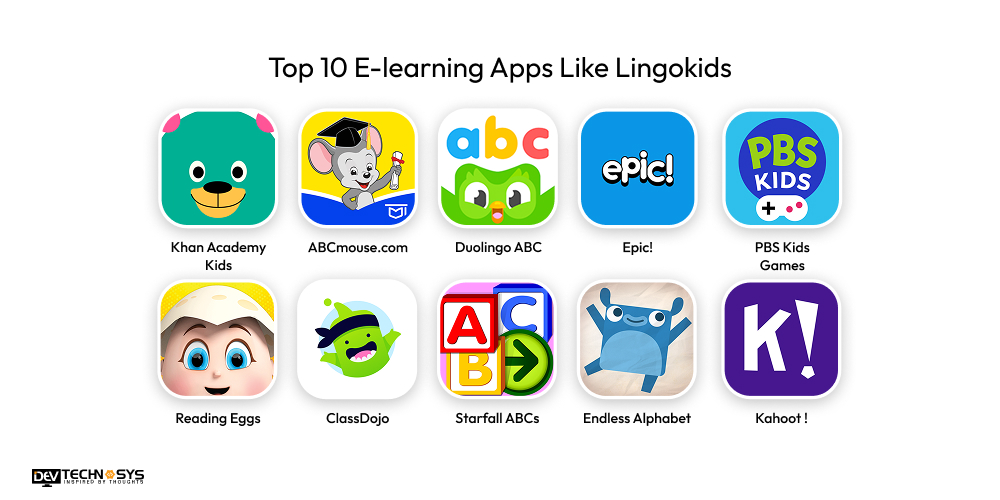
App Name |
Estimated Downloads |
Avg. Rating |
Launch Year |
Platform Availability |
| Khan Academy Kids | 10M+ | 4.7 | 2018 | Android, iOS |
| ABCmouse.com | 10M+ | 3.2 | 2012 | Android, iOS, Web |
| Duolingo ABC | 10M+ | 4.2 | 2020 | Android, iOS |
| Epic! – Kids’ Books and Reading | 10M+ | 4.0 | 2013 | Android, iOS, Web |
| PBS Kids Games | 10M+ | 3.4 | 2015 | Android, iOS |
| Reading Eggs | 1M+ | 4.2 | 2008 (web), app 2015 | Android, iOS |
| ClassDojo | 10M+ | 4.7 | 2011 | Android, iOS, Web |
| Starfall ABCs | 1M+ | 3.6 | 2002 (web), app 2013 | Android, iOS |
| Endless Alphabet | 1M+ | 4.4 | 2013 | Android, iOS |
| Kahoot! | 100K | 4.6 | 2013 | Android, iOS |

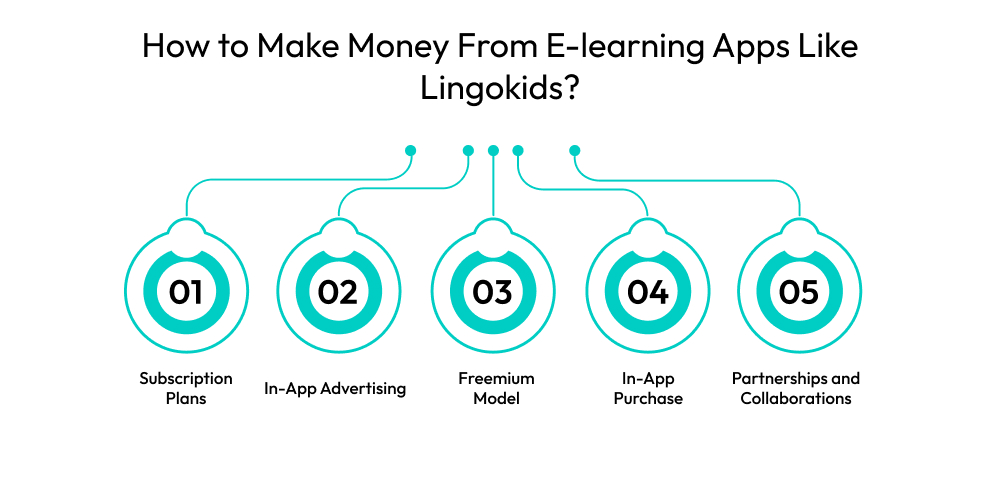
How to Make Money From E-learning Apps Like Lingokids?
Building an e-learning app like Lingokids can be a lucrative opportunity for businesses, and they can easily expand this from the beginning. So, let’s explore the various types of monetization techniques:
1. Subscription Plans
The best kids learning apps offer paid subscription plans such as basic, premium, and enterprise. With the help of these plans, users can access the live online classes, premium features, and others. Users may need to pay monthly or yearly for a premium or enterprise plan.
2. In-App Advertising
A similar app like Lingokids, enables third-party businesses to display or show their products in the application as advertising. The Lingokids alternatives can charge fees of around 7% to 14% on each ad. It includes different ad formats like native, display, pop-up window, and banner ads.
3. Freemium Model
The Lingokids clone apps offer limited features for free users with the basic plan. If users need to access the premium features, then they need to purchase the additional features or premium subscription plans. It can be a profitable revenue stream and the best income source.
4. In-App Purchase
The e-learning apps like Udemy or Lingokids allow users to purchase the virtual goods inside the application. An app like Mondly includes various types of goods such as kids’ toys, language packages, personalized avatars, and more.
5. Partnerships and Collaborations
Move to the fourth monetization model: partner with related businesses, such as book services and online tutoring services. They can sell their services through Lingokids clone apps and charge an acceptable fee on every purchase, which can increase the overall valuation of the business.
Conclusion
In this blog, we talked in detail about how much it costs to build an e-learning app like Lingokids and what factors can affect the cost. You have to know how to avoid these factors to build an app within a fixed budget with proper planning.
We also provide the cost-reducing factors that provide the best ways to reduce the extra cost and maintain the budget. Do you want to build an e-learning app like Lingokids? Then you can consult with an education app development company to get affordable solutions with rich features.
Frequently Asked Questions
Q1. How Much Does it Cost to Build an E-learning App Like Lingokids?
The cost to develop an e-learning app like Lingokids is around $8,000 to $25,000 or higher. The overall development cost can be influenced by crucial factors such as premium features, functions, complexity, project requirements, development team, and tech stacks.
Q2. How Long Does it Take to Create an E-learning App Like Lingokids?
To create an e-learning app like Lingokids, it may take around 5 to 15 weeks, depending on project requirements. The timeline is mainly based on the various ways ,such as project complexity, number of features, and developers’ working hours.
Q3. How Much Does it Cost to Hire E-Learning App Developers?
The cost to hire e-learning app developers is around $15 to $25 per hour. The developers’ hiring cost can fluctuate due to several reasons, such as developers’ experience level, project requirements, complexity, rich skill set, developers’ location, and more.
Q4. What are the Factors that Affect the Cost to build an E-learning App Like Lingokids?
There are key factors that can impact the e-learning app development cost. Here is the list:
- Development Team
- Backend Infrastructure
- Deployment Platforms
- Basic and Advanced Features
- App Complexity
- Third-Party Integrations
Q5. What Challenges Occurred During E-learning App Development?
- Scalability Issues
- Integration with Third-Party Tools
- Gamification Implementation
- Data Privacy & Security
- Real-time Collaboration Features
- High Development Cost & Time