




















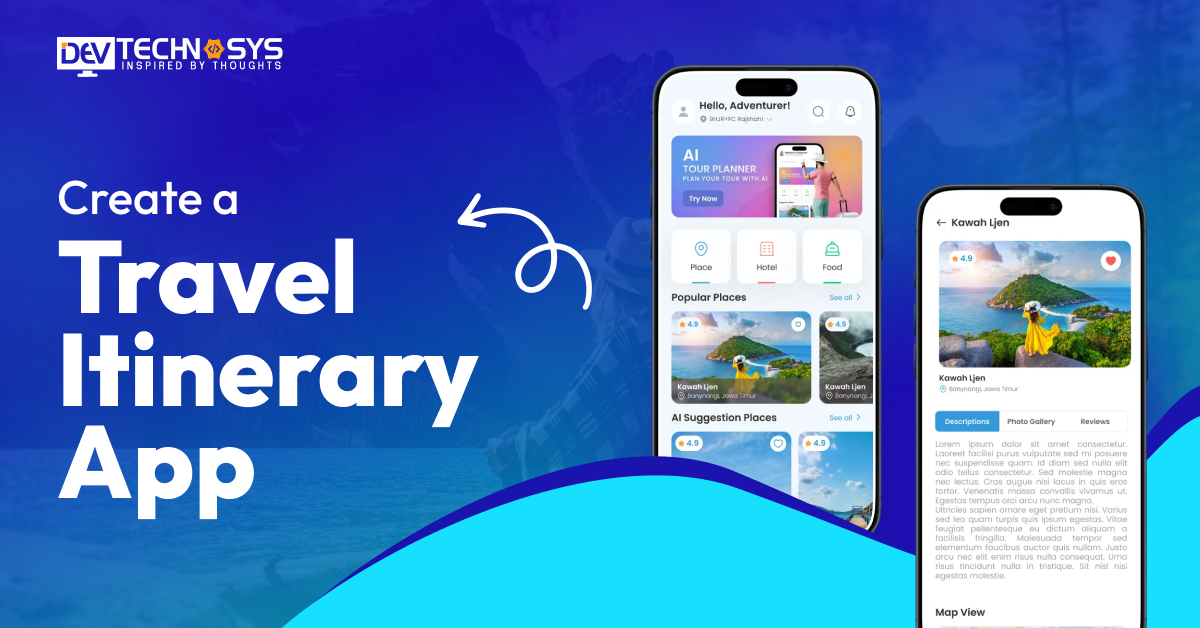
In today’s world, users crave convenience and personalization, as well as seamless trip planning experiences. A Travel Itinerary App is the ultimate answer! Users can manage their trip, track all bookings, view offline maps, and receive real-time alerts. For entrepreneurial-minded thinkers, investing in a Travel Itinerary App, presents a golden opportunity to tap into the burgeoning travel tech market, increase user engagement, and generate multiple revenue streams.
Developing an app with the potential for success requires more than an app idea; it will take planning, aligning the app to essential and advanced functionality, a cost breakdown, and a tech stack. In this guide, we will go over everything you need to know to create a travel itinerary app, user-friendly and profit-generating, empowering travelers and positioning your brand in an ever-competitive travel space. So let’s dive in!
What is a Travel Itinerary App?
A Travel Itinerary App is a mobile or web application that exists to empower users to plan, organize, and manage their unique travel experiences. The best vacation spot finder apps let travelers create an itinerary of activities, track bookings, access maps, set reminders, and receive travel suggestions to facilitate an experience that is user-friendly, easy, and frictionless in nature.
Market Stats On Travel Itinerary App
- The global travel app market is estimated to be worth approximately $13.6 billion in 2023 and is projected to reach about $23.5 billion by 2030.
- More than 70% of tourists use mobile apps to go over and book their trips. Travel itinerary apps have an average user engagement of 45–50%.
- About 60% of app users say they prefer an app that combines travel itinerary planning with booking.

- Although travel apps are available worldwide, the Asia-Pacific region is expected to be the fastest adopting region for travel app growth.
- User retention from personalized recommendations, one of the most valuable types of travel app functionality, can be as high as 30%.
- About 40% of travelers reported using itinerary apps to make updates or changes at the last minute.
How To Create A Travel Itinerary App?
To build a travel itinerary app, it can be accomplished through several phases, and utilizing a skilled travel mobile app development company can reduce the overall timeline through experience. Below are the six steps for route planner app development:
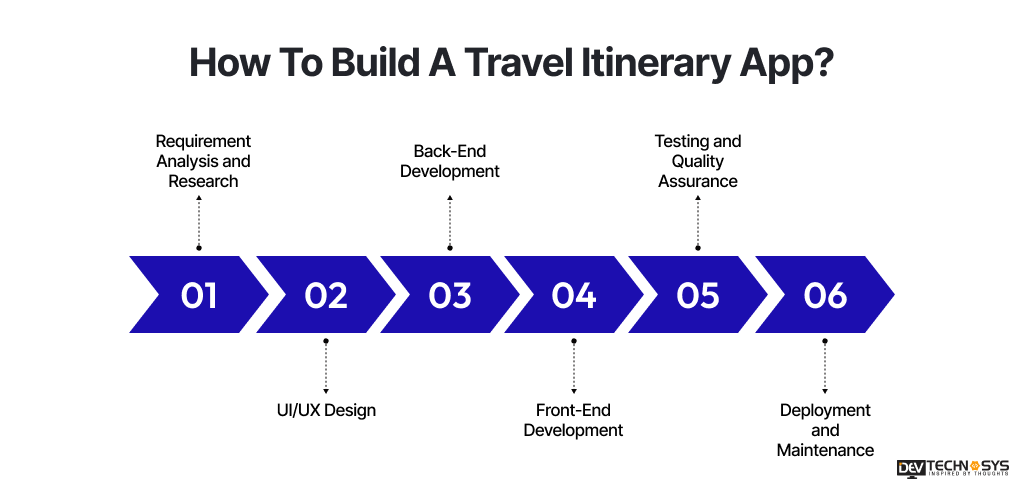
1. Requirement Analysis and Research
The first step is to create a travel itinerary app, identify the targeted users, construct the purpose of the app, and analyze competing travel apps.
To determine which base features to include in the app, the travel application development company can take into consideration current trends in the market as well as user expectations for travel apps in the basic areas of trip planning, management of bookings, real-time updates, and personalized recommendations. A roadmap is created in order to define the direction of the project.
2. UI/UX Design
An intuitive and aesthetically pleasing interface is an important factor for any travel application. Hire designers from an AI development company to plan a screenshot with wireframes and prototypes to show how navigation, configurations, and interaction would appear for the user experience.
Features focused on an engaging user experience for users would include things like a drag-and-drop itinerary planner, travel itinerary templates, interactive maps, and ease of access to the users’ bookings.
3. Back-End Development
The back-end interaction is responsible for data storage, back-end logic, and user authentication to ensure a safe user experience for their data. An itinerary builder for travel agents would create a strong back-end system to provide the user with a system to deal with trip schedules, manage bookings/user profiles, and send notifications.
Developers would improve a strong relationship with APIs for their flight/hotel/transport weather service, which generates real-time information for travelers.
4. Front-End Development
With front-end development, travel agent itinerary builders focus on integrating the user interface with the app. Hire developers from a hotel booking app development company to manage the search features for ease of use with searching for booking recommendations, customizing itineraries, suggesting personalized recommendations, and providing the user with responsive screens to navigate different features on different devices.
5. Testing and Quality Assurance
In the fifth stage to create a travel itinerary planning app, the application will go through some testing to eradicate bugs, manage performance, or handle the security information.
Developers will test the application for functionality, usability, or compatibility to ensure the app runs effectively and efficiently on the different devices, to ensure a trusted and reliable use for the user experience.
6. Deployment and Maintenance
In the last stage of the travel app development process, after the developers successfully develop the application and provide a trial or exit point mode, users will be launched in an app store and be able to download it for use.
The application would be monitored for back-end and readjusted for user information for the user to explore changes within their user experience. App updates would sustain efficient use or allow users to expect changes in the app.
Original layers of applications would persist, but they may include new features for updated maintainability, and user acceptance would always come first, with a qualification from developers for user satisfaction and retention.
Which Tools Or Platforms Are Recommended For Planning Travel Itineraries?
Are you also someone who is going on a trip to JAPAN and wondering which places to visit and when to? If yes you must be wondering about what if there will be a platform for this right? We are answering this most searched question on google “Which tools or platforms are recommended for planning travel itineraries?” Here is the list of platforms that are suggested to create travel itinerary in 2025- 2050.
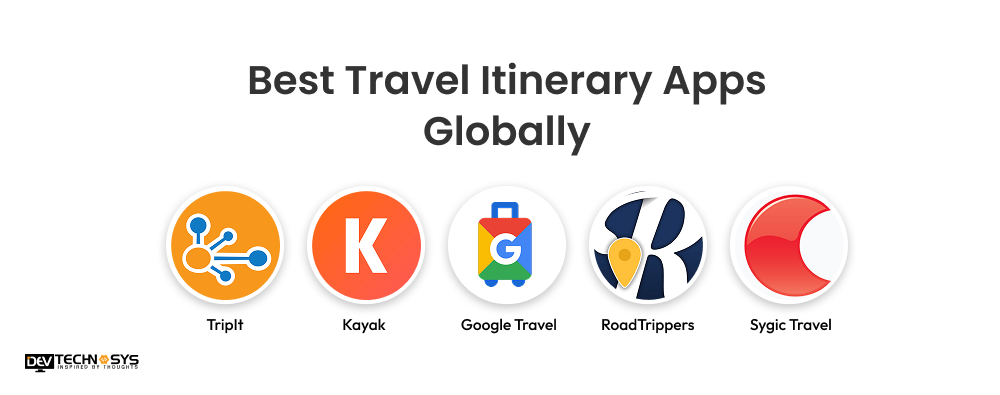
1. TripIt
TripIt automatically collects and combines travel plans into one itinerary from confirmation emails sent to users from their flights, hotels, and car rentals.
Users can view their schedules offline, receive real-time alerts, and share their plans with a friend or colleague. According to the mobile app development company, it is a great travel app for active travelers because it collects everything in one simple app.
2. Kayak:
Kayak provides more comprehensive trip planning, including searching flights, hotels, and rental cars. Kayak offers real-time price alerts, organizing itineraries, updating living activity recommendations, providing information to track expenses, and collaborative trip planning for solo travelers or groups. The app is globally viewed as the standard travel itinerary solution.
3. Google Travel:
Google Travel (previously called Google Trips) organizes travel information automatically from Gmail for a user’s flight, hotel, and activities. Google Travel organizes the daily itinerary, provides personal recommendations for activities, and has offline meeting availability.
Bonus Read: Build Camping Location Finder App
The features of Google Travel simply meld into Maps and the other Google services, and makes planning travel very inviting for users who want a convenient and easy way to travel.
4. RoadTrippers:
RoadTrippers is specifically intended to help plan road trips for where to stop for attractions, restaurants, and the most scenic routes. Roadtrippers app offers full itinerary details, travel costs, and plans for who is traveling within the trips. With interactive maps and suggested highlights, Roadtrippers makes planning a road trip fun, even across the world.
5. Sygic Travel
Sygic Travel provides detailed guides for cities, trip planning, and offline maps. Users can build custom itineraries, view attractions, and book tours/tickets all in one location while facilitating offline access, route optimization, and GPS navigation integration. For those travelers who like a comprehensive, organized travel experience, Sygic Travel is perfect.

Why Invest In Creating A Travel Itinerary App?
Investing in a travel itinerary app can be very lucrative and strategically advantageous for businesses within the travel and tourism sectors. Here are five beneficial reasons to build an application like Culture Trip:
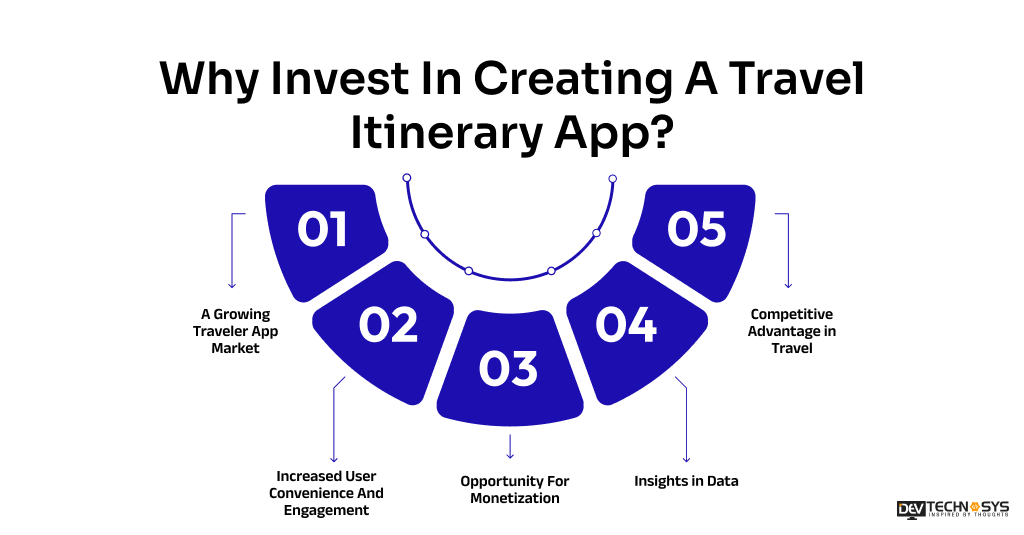
1. A Growing Traveler App Market
The travel app market is thriving as more and more users use smartphones, and there is a rapid shift to digital travel planning. Travelers prefer to use apps that allow them to plan trips quickly, efficiently, and access real-time updates.
Investing in developing a travel itinerary app ensures your business and app are able to benefit from a growing clientele base all over the world.
2. Increased User Convenience And Engagement
Reward app development solutions comfort your customers’ travel planning by aggregating their bookings, schedules, and activities in one place. Users can design their own itineraries, have offline maps, alerts, and share their plans with friends or family.
Providing that kind of service, all while increasing user engagement, retention, and loyalty, can foster a strong connection between a travel itinerary app and its users.
3. Opportunity For Monetization
Travel itinerary applications can earn revenue in a variety of ways. Businesses can earn by charging premium subscription fees, in-app advertisements, use affiliate models with hotels, flights, and tours, or partnering with local services. This means app owners can receive a consistent revenue stream while offering benefits services to the users.
4. Insights in Data
Best trip planning applications can provide valuable insights into user behavior, preferences and booking history, which can be used for targeted marketing, personalized recommendations and for evaluation on service offerings. Experiences in data can lead to higher customer satisfaction and offer prospects for strategic decision making, partnerships and upselling.
5. Competitive Advantage in Travel
In addition to the previous point, having a travel itinerary app sets a travel business apart from normal competitors who solely rely on booking or off-line services. It positions the brand to be seen as tech-savvy, customer-centric and innovative which builds credibility as many travelers today are looking for personalized and seamless experiences.
Read more: Best Vacation Spot Finder App
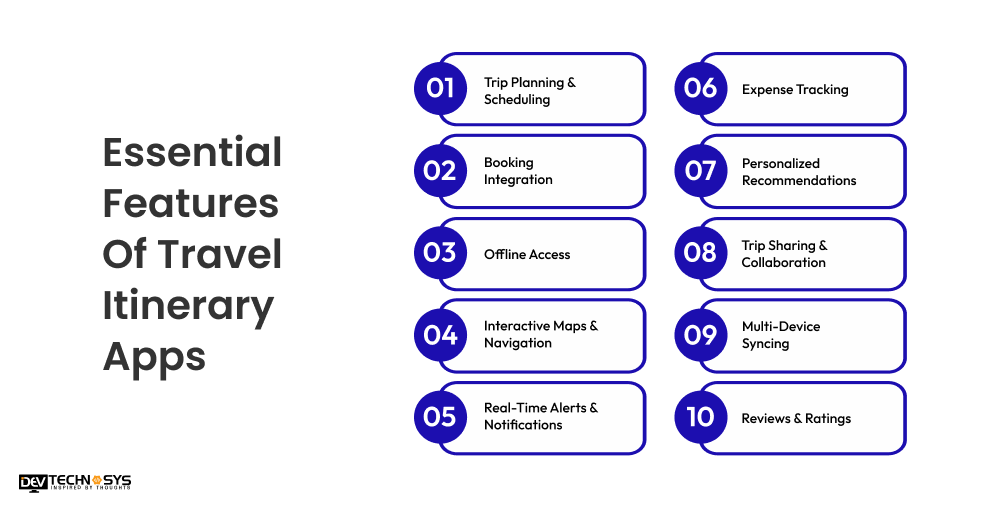
Essential Features Of Travel Itinerary Apps
-
Trip Planning & Scheduling
Both the app and user can create, organize and customize a daily itinerary with times, activities and notes that will allow for a seamless experience.
-
Booking Integration
Users can view, organize, and manage all bookings for flights, hotels, and car rentals, as well as tours, all within one application, which provides ease for users.
-
Offline Access
Provides offline availability to itineraries, maps, and travel information, assuring travelers are able to navigate and plan without continued access to the internet.
-
Interactive Maps & Navigation
Includes GPS mapping and travel itineraries with directions, as well as option-based suggestions for attractions, restaurants, and services, to make it easy for users when traveling.
-
Real-Time Alerts & Notifications
An app like Omio sends notifications about delays, gate changes, weather alerts, etc., to travel users so that they are always aware of up-to-date travel arrangements.
-
Expense Tracking
Users may track expenses, budgets, and spending habits during vacations and o trips in an efficient manner.
-
Personalized Recommendations
Users make selections based on AI or preferences over restaurants and activities which assist with travel style and preferences.
-
Trip Sharing & Collaboration
Users may share itineraries with friends, family, or colleagues and collaborate their plans for efficiency.
-
Multi-Device Syncing
The itinerary and travel documents may sync wherever and whenever or always on smartphones, tablets, or desktops.
-
Reviews & Ratings
Users provide reviews or write ratings of hotels, restaurants, or attractions to meaningfully impact their travel with good decisions based on feedback related to planning their trip.
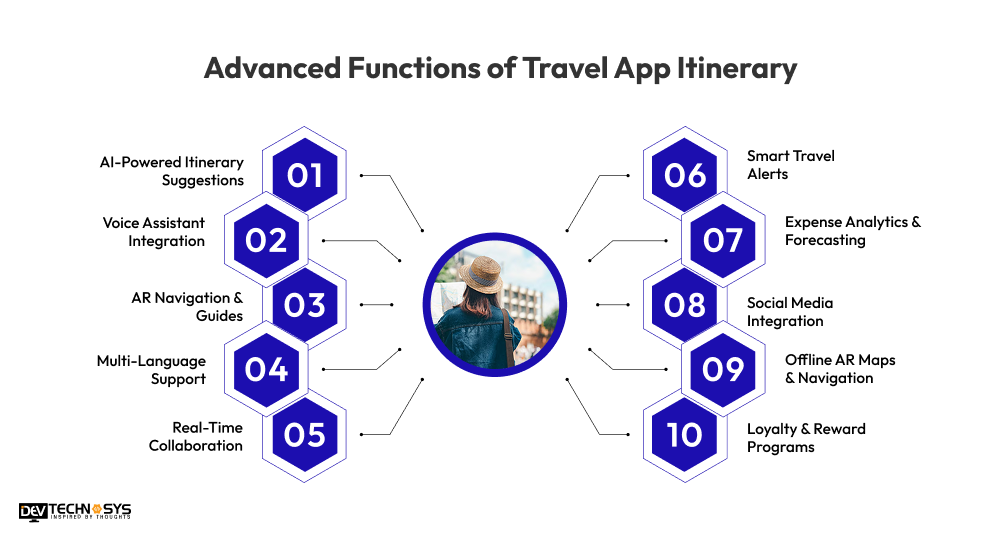
Advanced Functions of Travel App Itinerary
-
AI-Powered Itinerary Suggestions
The AI generates itineraries with modeled data regarding past trips, and real time engagement measures for personalization With this type of iterative bi-conceptual programmed data model, it may even take into consideration your preferences for individualized experience with concern to optimizing travel arrangements.
-
Voice Assistant Integration
Provides voice commands to create, modify, or access itineraries for quick and convenient trip planning while hands-free.
-
AR Navigation & Guides
Uses augmented reality to provide interactive directions, points of interest and landmark information to create an immersive travel experience.
-
Multi-Language Support
Offers translations and content localized for travelers visiting countries around the globe, so users can navigate easily and understand.
-
Real-Time Collaboration
Travel itinerary app MVP features allow different users to edit and update the same, shared itinerary at the same time and in real time, allowing for simpler user collaboration for group travel.
-
Smart Travel Alerts
Predictive alerts on delays, cancellations, gate changes, weather, or traffic disruptions empowering users to adjust changed plans proactively.
-
Expense Analytics & Forecasting
Analyze user spending trends, forecast costs of upcoming trips, and provide insights to help user budget accordingly.
-
Social Media Integration
The best travel itinerary apps share itineraries, travel photos, and experiences within their travel network by sharing to social platforms.
-
Offline AR Maps & Navigation
Take advantage of augmented reality capability to provide offline maps and activate navigation, allowing the ability to explore in real-time, interactively without a mobile internet connection in a remote or foreign location.
-
Loyalty & Reward Programs
Track users rewards, discounts, or loyalty points from hotel stay, flight mentions, and services users have taken partnered to, therefore offering added value to user experience and incentive.

What Are The Latest Trends In Travel App Technology?
1. AI-Powered Personalization
Applications can now use AI to provide travelers with personalized travel suggestions, itineraries, and deals, which are based on a user’s own preferences, prior search history, and behavior.
2. AR & VR Integration
The Augmented Reality (AR) feature allows travelers to explore a destination virtually, while the Virtual Reality (VR) allows travelers to have immersive experiences of hotel experiences, landmarks, and tours, before traveling.
3. Voice Search & Assistance
Voice features now allow users to book tickets, locate attractions nearby, and get directional assistance, all hands-free, and integrate with voice assistance for convenience.
4. Mobile Wallets & Contactless
Payments: While still considered needless, in-app secure payments and digital wallets are considered the norm, decreasing the need to carry cash and making the booking process easier.
5. AI & Chatbots Customer Support
Intelligent chatbots provide instant the ability to support users as it relates to inquiries, bookings, cancellations, and finding local info to create a better user experience.
6. Integration with IoT Devices
Integrating with smart devices in hotels and transportation system applications allows for seamless check-in and smart room controls as well as personalized services for travelers.
7. Blockchain for Secure Transactions
Blockchain & cryptocurrencies provide apps with secure, transparent & fraud-free payments, and verification of bookings by travel arms when making choices through specific travel apps.
8. Social & Community Features
Reviews from travelers, shared to social apps and community forums offers increased engagement & trust for customers traveling to new destinations.
How Much Does It Cost To Create a Travel Itinerary App?
The cost to develop a travel itinerary app varies from $8,000 to $30,000, fluctuating greatly based on multiple aspects. While there are apps available at no cost, with limited functionality, there are applications or custom-built applications that will require a substantial financial commitment.
The most impactful cost factors will lead to better planning for both businesses and users. Here are six examples that affect the overall travel itinerary app development cost:
Cost Factor |
Estimated Cost Range (USD) |
| Platform Choice | iOS Only: $8,000 – $12,000 Android Only: $8,000 – $12,000 Both (Native): $15,000 – $25,000 Cross-Platform: $10,000 – $18,000 |
| App Features & Complexity | Basic App: $8,000 – $12,000 Medium App: $12,000 – $20,000 Advanced App: $20,000 – $30,000+ |
| UI/UX Design | $3,000 – $7,000 |
| Third-Party Integrations | $2,000 – $6,000 |
| Backend Development | $4,000 – $10,000 |
| Testing & Deployment | $1,500 – $3,000 |
1. Platform Choice
The vacation planner app will impact the travel itinerary app development cost, whether built for iOS, Android, or both iOS & Android at the same time.
If more than one platform is to be developed at the same time, the travel app development cost will increase due to the need for more resources and time to complete. While cross-platform may decrease costs, it may limit some native functionalities as well.
2. App Features and Complexity
The complexity and number of features ultimately will impact the cost to create a travel itinerary app. The apps that perform low-level activities, such as building an itinerary and integrating bookings & offline access, will cost less than the app with advanced features, such as AI-recommended itinerary suggestions, AR navigation, custom alerts, and multi-user collaborative itineraries.
3. UI / UX Design
It will be important to have an intuitive layout and design for the user experience of the travel app. Areas of design that take time to develop would include a good visual design with consistent animations, custom and interactive maps, and a dashboard that is user persona-driven. Spending more time on great design will decrease the on-demand app development cost but will keep the users more engaged.
4. Integration of Third-Party Service
Whenever API integration is needed in the app, i.e., for flights, hotels, car rentals, maps, or weather services, more code and testing are needed, and there could be incidental licensing fees. Integration adds both time and travel itinerary app development cost.
5. Backend Services
The backend services will have data storage needs for images, initial notifications, server-side logic to support any api’s, and functions will need to be developed in order to call the APIs. A strong and scalable backend that supports user accounts, third-party services, and real-time updates adds to the cost of Android app development services.
How Can Travel Itinerary Apps Be Monetized?
There are various ways to monetize an MVP travel itinerary app, which also supports user enjoyment. Here are five examples.
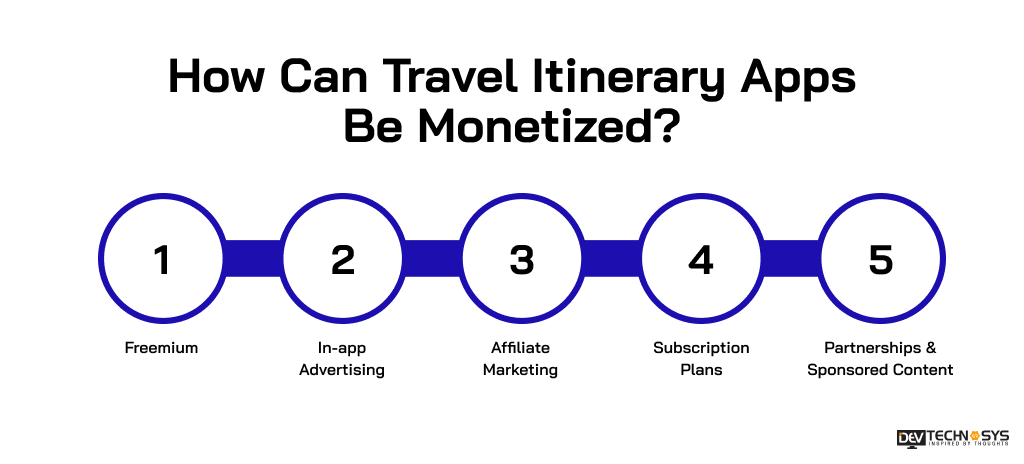
1. Freemium
The app is offered freely with basic itinerary planning and limited features. However, the app could offer paid features that would add a level of comfort, i.e., integration of AI recommendations, saving itinerary offline, or Augmented Reality navigation. This encourages app use and the user to pay for better comfort or experience.
2. In-app Advertising
Limited or non-intrusive in app ads can be implemented such as banners or sponsored listings for hotels, restaurants, or local attractions. Partnering with travel related companies ensures that the ads in the app have value to a traveler’s experience versus being frustrating while using the app.
3. Affiliate Marketing
By integrating third-party ticketing services for flights, hotels, tours and/or transportation, commissions can be earned based on bookings completed using the app. The app can build in a percentage of commission on transactions through the app.
4. Subscription Plans
If businesses build a travel booking app like Hopper, they offer subscription plans that include exclusive features that the app user can secure by paying. Such as only for paid features, personalized travel guides, itinerary sharing, or advanced travel analytics. Subscriptions create a consistent and predictable revenue stream.
5. Partnerships & Sponsored Content
Collaborate with travel agencies, airlines, or local businesses for sponsored content, promotions, or curated travel packages. This not only generates revenue but also adds value to users by highlighting unique experiences.
Best Tech Stack For Travel Itinerary Apps
Layer/Component |
Recommended Technology/Tools |
| Frontend (Mobile App) | React Native, Flutter, Swift (iOS), Kotlin (Android) |
| Backend | Node.js, Python (Django/Flask), Ruby on Rails, Java (Spring) |
| Database | PostgreSQL, MySQL, MongoDB, Firebase |
| Cloud/Hosting | AWS, Google Cloud, Microsoft Azure |
| APIs | Google Maps API, Flight/Hotel Booking APIs, Weather APIs |
| Notifications | Firebase Cloud Messaging (FCM), OneSignal |
| Payment Gateway | Stripe, PayPal, Razorpay |
| Analytics | Google Analytics, Mixpanel, Firebase Analytics |
| Security | OAuth 2.0, JWT, SSL/TLS encryption |
| AI/AR Integration | TensorFlow, OpenAI APIs, ARKit, ARCore |
Conclusion
So we are done! In conclusion of this blog we have described the process to create a Travel Itinerary App requires proper planning, careful selection of features, and appropriate technology standards for it to work properly on your chosen platform.
Just as important, if you add some important advanced features including using AI to suggest activities while working with off-line access and leveraging real-time alerts, you could add a user-friendly and meaningful experience for your users.
It is advised to work with a professional travel app development company with experience designing, developing and maintaining travel apps. In doing so you will be in the best position to build a travel itinerary app that works well, is user-friendly, and has a competitive advantage against other businesses creating travel apps. So are you ready to build your dream travel itinerary app?
FAQs
Q1. How Long Does It Take To Develop A Travel Itinerary App?
The time required to make a travel itinerary app will depend on the complexity and features you want to build into it. A basic travel app can be developed within 3–4 months, while others that are more complex with features like AI and Augmented Reality could take 6–9 months or longer.
Q2. What Are The Key Features To Include In A Travel App?
Some must-have features include working on trip planning, booking integration, offline access, interactive maps, real-time alerts and expense tracking, social sharing. These must-have features will provide your users convenience and engagement, while complimenting smooth travel experiences.
Q3. How Much Does It Typically Cost To Create A Travel Itinerary App?
If you’re still not getting the answer on How much does it typically cost to develop a travel Itinerary App? Here it is for you in simple words. The cost to develop a travel planner app is $8,000 to $30,000 or more with advanced features and or an app with robust features, including developing, designing and supporting the travel app.
Q4. Which Tech Stack Is Best to Make A Travel Itinerary App?
A technology stack can be powered by React Native or Flutter for frontend, Node.js or Python for backend, cloud hosting solution, and APIs for flights, hotels, maps, and any real-time notifications that may be needed.
Q5. Can I Incorporate AI or AR in My Travel Itinerary Application?
Yes, advanced features will enhance experience, ease of use and user engagement along with differentiation in the travel space and market. For example, other advanced features to consider include AI capabilities to enhance experience with personalized recommendations or AR elements for easy navigation or landmarks when visiting the area.
Q6. Which Companies Are The Best For Travel Itinerary App Development?
If you want to invest in travel itinerary mobile app development for the upcoming year from 2025 to 2050, you should consider that Dev Technosys is the best for this. Yes, you heard it, Dev Technosys is the best travel app development company with 15+ years of experience building travel app solutions with empowering integrations of AI, IoT, blockchain and many more leading technologies.