
















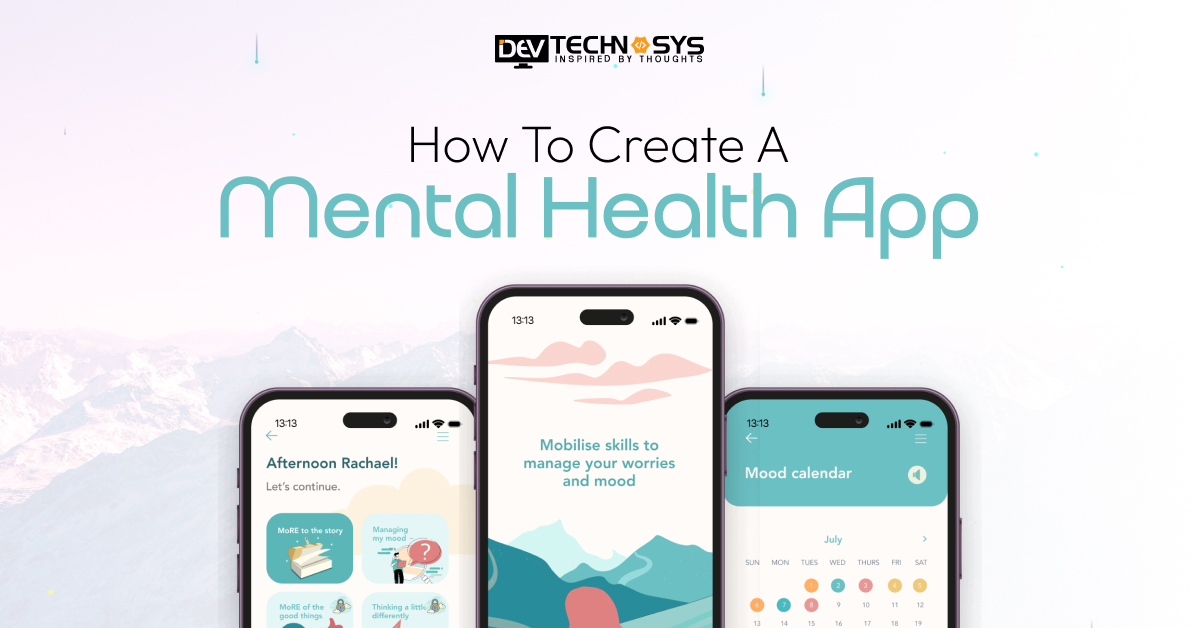
In 2025, we are witnessing a massive increase in Mental health applications. The global mental health apps market size is projected to reach USD 17.52 billion by 2030, growing at a CAGR of 14.6% from 2025 to 2030. It is mainly because today’s youth is more aware of mental health issues and demands proper care and seeks advanced solutions for them. That’s where mental health apps come in!
You may not believe it, but nearly 1 in 5 adults in the U.S. struggles with mental health. This calls for a more innovative healthcare system and applications that address mental health issues. Mental health app development is a small, innovative step towards improving access to mental healthcare.
But the question is: how to build a secure mental health platform that protects user data and provides personalized support? In this blog, you will learn how to create a mental health app, covering all crucial factors, including development steps, features, benefits, and costs. So, let’s dive in!
Mental Health App Market Stats
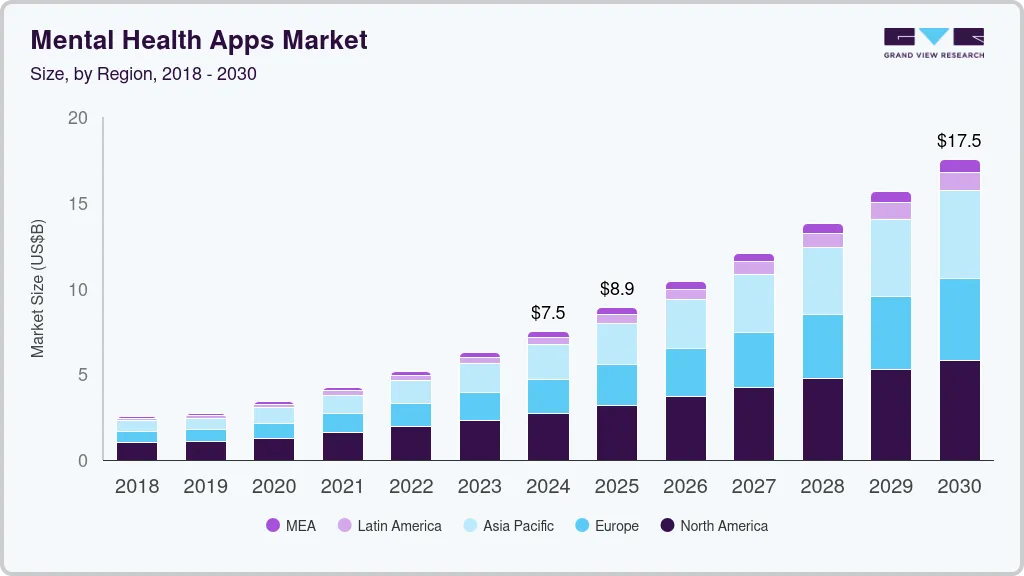
- The global mental health apps market size was estimated at USD 7.48 billion in 2024 and is projected to reach USD 17.52 billion by 2030, growing at a CAGR of 6% from 2025 to 2030.
- North America dominated the mental health apps market, accounting for 4% of revenue in 2024.
- By application, the depression and anxiety management segment accounted for 7% of market revenue in 2024.
- Some key players in the market include Mindscape, Calm, MoodMission Pty Ltd., Sanvello Health, Headspace Inc., Youper, Inc., Happify, Bearable, BetterHelp, Talkspace, MindShift, and MoodKit.
What is a Mental Health App?
A mental health app is a mobile application that provides a platform for mental health patients seeking professional help and monitors their condition in a guided space. These apps offer professional support for conditions like anxiety, depression, and insomnia. Also, mobile apps for mental health can either be used independently or as a supplement to professional therapy.
Keep in mind that mental health applications are not typically used to replace the treatment provided by a mental health expert. Instead, mental health applications offer people support between consultations or after completing therapy. They may give therapeutic activities, self-help resources, encouragement, and more.
What are the Types of Mental Health Apps You can Consider for Development?
Before diving into on-demand app development for mental well-being, let’s see what types of mental health delivery apps we can you can build:
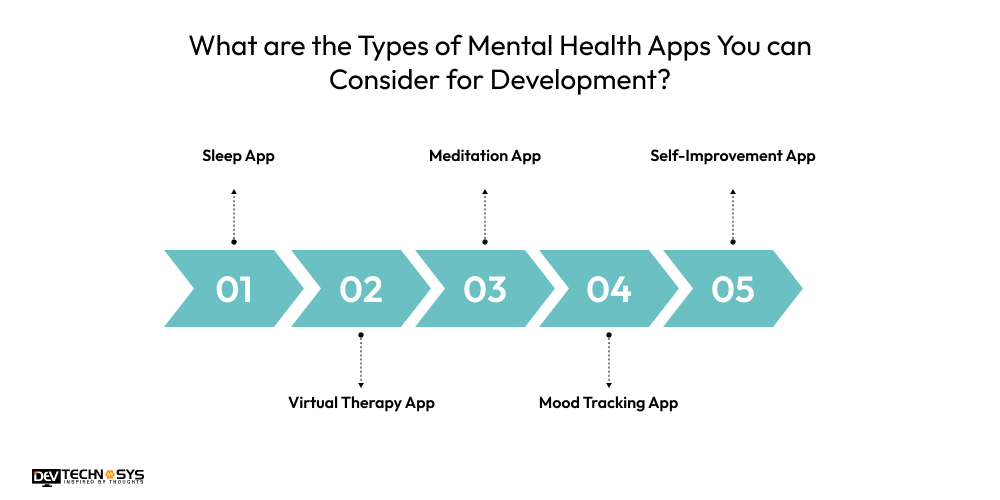
1. Sleep App
Sleep apps is used to monitor sleep patterns, the app provides guided meditations, and uses soothing sounds to improve sleep and support better mental health.
2. Virtual Therapy App
Virtual therapy apps help by connecting users with professional and licensed therapists virtually, offering confidential, easily accessible mental health support by using chats, calls, or video sessions.
3. Meditation App
Meditation applications provide guided sessions on mindfulness, breathing exercises, and relaxing sounds, which help reduce stress and promote emotional balance and focus.
4. Mood Tracking App
Mood tracking apps are one of the best types of mental health apps that let users log emotions, identify triggers, and analyze patterns to better understand and manage their mental well-being.
5. Self-Improvement App
If you want to create a mental health app, go for a self-improvement app. Self-improvement apps boost productivity, focus, and wellness by helping users build habits, track goals, and foster consistent personal growth.
Why Should Businesses Invest in Mental Health App Development?
Deciding to create a mental health app can benefit businesses in multiple ways. There are some business benefits to developing a mental health and wellness app.
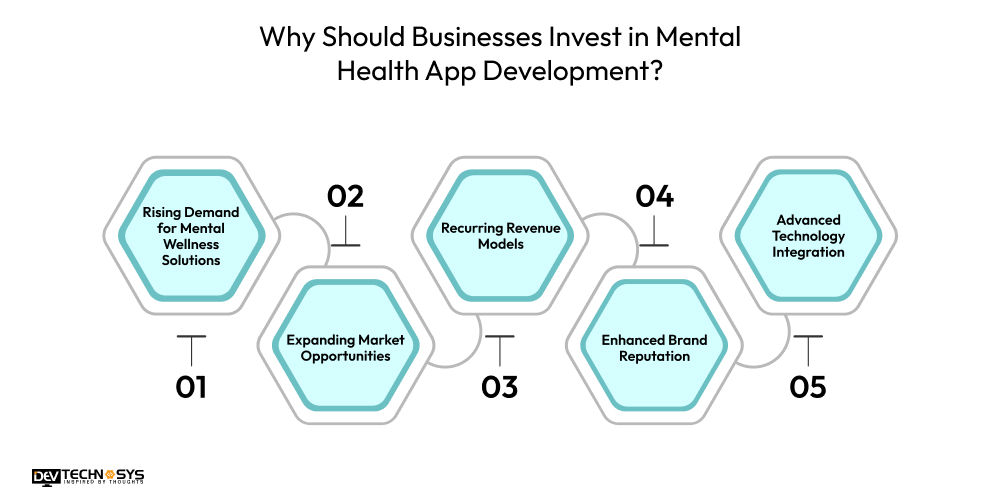
1. Rising Demand for Mental Wellness Solutions
It is profitable for businesses to create a mental health app as global awareness of mental health is increasing. Investing in mental health app development leads to the creation of apps that offer affordable, accessible, and personalized support for mental wellness.
2. Expanding Market Opportunities
One main reason for businesses to develop a mental health app is the expanding market of mental health apps. Market expansion offers businesses the opportunity to tap into a high-demand industry with strong long-term growth potential.
3. Recurring Revenue Models
Businesses can generate consistent income through subscription plans, in-app purchases, and premium features. It ensures the generation of stable revenue and customer retention.
4. Enhanced Brand Reputation
Developing a mental health app shows social responsibility, which helps brands build trust, credibility, and a positive image among health-conscious audiences.
5. Advanced Technology Integration
Businesses can deliver innovative and personalized solutions with the help of AI, machine learning, and wearable integrations. It enhances user engagement and overall app efficiency.
Top 10 Mental Health Apps to Explore in 2025
Here’s the list of popular mental health apps 2025. All the top mental health apps on this list offer unique tools to improve users’ mental health, anxiety, sleep, and emotional well-being.
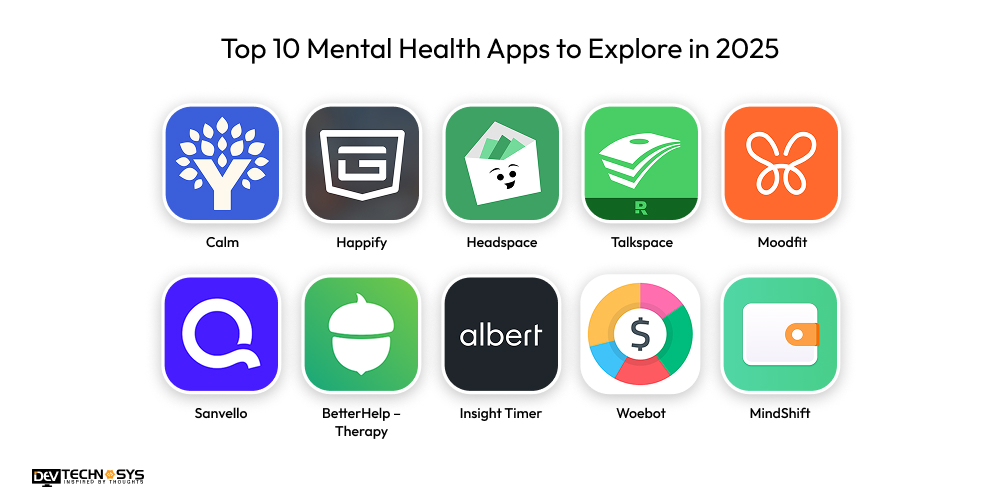
| App Name | Launch Year | Rating | Platform Availability |
| Calm | 2012 | 4.8★ | iOS & Android |
| Happify | 2012 | 4.4★ | iOS & Android |
| Headspace | 2012 | 4.7★ | iOS & Android |
| Talkspace | 2012 | 4.7★ | iOS & Android |
| Moodfit | 2018 | 4.6★ | iOS & Android |
| Sanvello | 2015 | 4.8★ | iOS & Android |
| BetterHelp – Therapy | 2013 | 4.7★ | iOS & Android |
| Insight Timer | 2009 | 4.9★ | iOS & Android |
| Woebot | 2017 | 4.6★ | iOS & Android |
| MindShift | 2019 | 4.5★ | iOS & Android |
What is the Process of Developing a Mental Health Mobile App?
This section talks about the mobile app development process of mental health apps. If you want to build a mental health app that is user-focused, compliant, and built to scale, then follow the steps below:
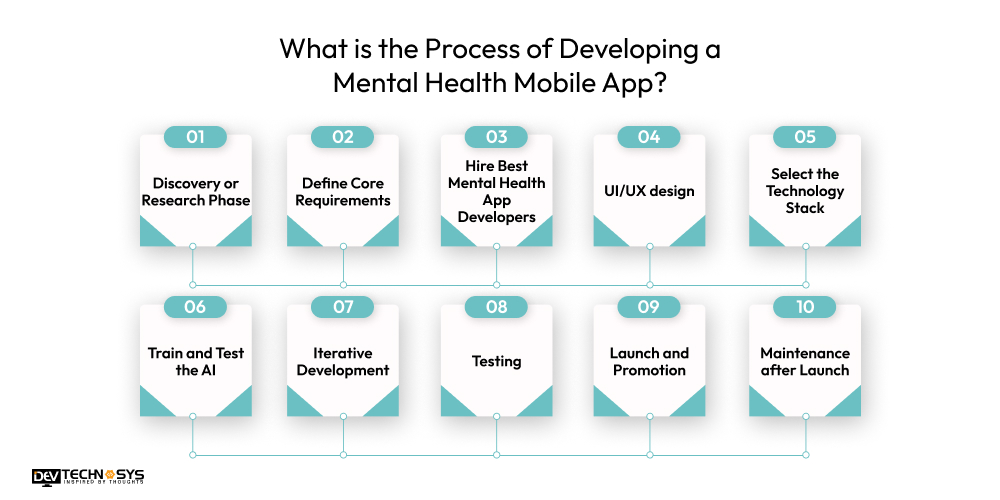
1. Discovery or Research Phase
If you want to create a mental health app, start with clarity. What is the purpose of building the app? Is your target audience young adults, working professionals, or patients in clinical programs? And what specific problem are you trying to solve?
Knowing this upfront will guide the design, feature set, and interaction tone. Before you develop apps like CVS Health, it is crucial to identify compliance requirements for the app ( For example: HIPAA, HITECH, FDA, FTC, NCPDP, OCR, CFR 42 Part 2, GDPR, EU MDR).
2. Define Core Requirements
The next step to build a mental health app focuses on identifying the app’s functional and non-functional requirements, defining compliance specifications aligned with healthcare standards, and translating regulations into technical requirements. Top mental health app development experts will design a resilient architecture and select a secure technology stack for data safety and compliance.

3. Hire Best Mental Health App Developers
With a health app development plan in hand, you can start looking for a health app development vendor. Hire mobile app developers with a ton of experience to build a secure, scalable, and user-friendly solution. The developers you will choose add advanced features, ensure security, and deliver a seamless experience that promotes users’ mental well-being and trust.
4. UI/UX design
UI/UX design prioritizes creating a smooth, accessible, and empathetic user experience. It involves a user-centered process of research, ideation, prototyping, and testing, with a strong emphasis on creating a calm, intuitive, and secure experience.
The key principles include reducing cognitive load through clear navigation, using calming color palettes and sounds, and ensuring user privacy. You can also integrate features such as mood tracking and guided exercises.
5. Select the Technology Stack
Experts from a healthcare app development company will choose the tools, platforms, and frameworks that support your app’s core needs. It includes natural language processing models for conversational systems, emotion recognition systems, cloud storage, and mobile frameworks for iOS and Android.
6. Train and Test the AI
If your app relies on emotional cues or therapeutic dialogue, you’ll need to fine-tune the AI accordingly. Use real-world data (ethically sourced) to train the model. Test it on various devices and platforms, and with real users. Take their feedback to ensure that responses are supportive, sensitive, and helpful.
7. Iterative Development
Looking to build a mental health app? The development process needs a skilled team of developers experienced in building secure, user-friendly, and compliant healthcare solutions. Depending on the project’s scope and complexity, at least two developers handle server-side development, APIs, and front-end functionality to turn the UI into a mental care and wellness app.
Make sure your Android app development company uses agile methodology, faster deployment, and cost efficiency. The key stages include business analysis, technical documentation, front-end development, and backend development.
8. Testing
The testing phase ensures your mental health app runs smoothly and securely. QA experts from a reputable iPhone app development company will conduct functional, usability, and security testing to detect and fix bugs, ensuring reliability, data protection, and a seamless user experience before launch.
9. Launch and Promotion
Once the testing procedure is done, the app is ready for deployment on app stores. Launch strategies include social media campaigns, influencer partnerships, mental health community outreach, and app store optimization to attract users and raise awareness.
If you want to develop a mental health app with SaMD features, you need to take an extra step during the pre-launch phase: submitting the rolled-out pilot to the regulators. After receiving their positive response, the app can go to the market.
10. Maintenance after Launch
If you are someone looking to build an app like Capsule, do not skip this step. Post-launch, continuous maintenance ensures the app stays updated, secure, and bug-free. Regular performance monitoring, feature updates, and integration with user feedback help enhance user satisfaction and maintain app stability over time.
What are the Must-Have Features to Add in A Mental Health App?
Whether you want a custom website development or app development, you need to add appropriate features to make it successful.
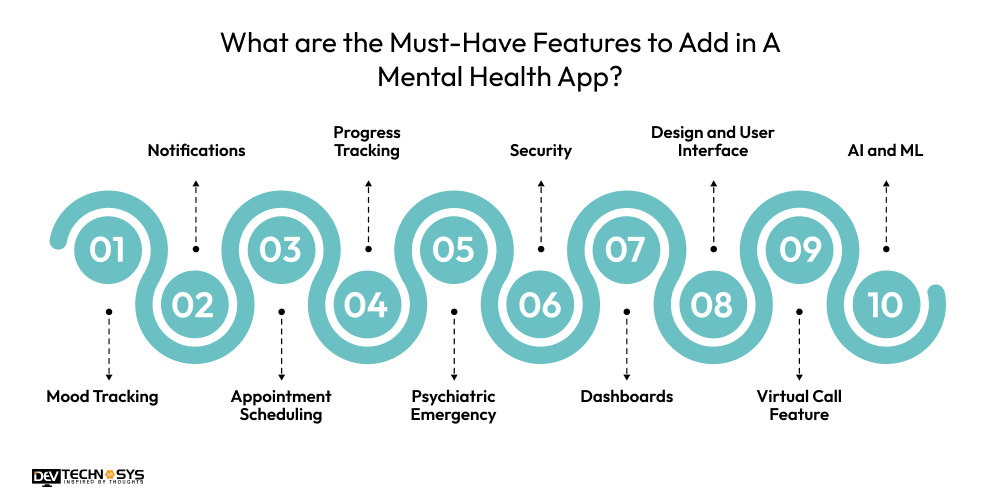
1. Mood Tracking
If you want to build a mental health app, don’t forget to add a mood-tracking feature. It allows users to record emotions daily and identify patterns or habits in their behavior for better self-awareness.
2. Notifications
The notification feature in a mental health application sends personalized reminders to users, reminding them about their therapy sessions, meditation, journaling, or self-care activities.
Read also: Top Behaviour Tracking Apps
3. Appointment Scheduling
Appointment scheduling is a crucial feature to add to an AI mental care app. Enables users to easily book, reschedule, or cancel sessions with mental health professionals.
4. Progress Tracking
If you want to develop a mental care app, then you have to add a progress-tracking feature. It helps users monitor improvement through insights, reports, and goal-based achievements.
5. Psychiatric Emergency
A psychiatric emergency feature can be added in a mental health app to provide quick access to crisis helplines or emergency contacts during critical situations.
6. Security
To build a mental health app, you need to ensure security and strong data protection using encryption, authentication, and HIPAA/GDPR compliance.
7. Dashboards
A well-designed dashboard in a mental health and wellness app gives a clear picture of user data, therapy sessions, and progress through visual analytics.
8. Design and User Interface
The UI of good apps for mental health must contain calm colors, simple layouts, and accessibility for a stress-free user experience.
9. Virtual Call Feature
The virtual call feature allows secure video or audio sessions between users and therapists without requiring them to be physically present.
10. AI and ML
Good apps for mental health use AI and ML to offer personalized recommendations, predictive analytics, and mood-based insights for improved user support.
How Can Mobile Technology and AI Enhance Mental Health App Development?
How can mobile technology and AI be combined to create a 24/7 virtual mental health assistant? Well, there are many ways mobile technology and AI can enhance mental health app development by enabling personalized care, real-time monitoring, and predictive insights. Here’s how mobile technology and AI enhance mental health care app development:
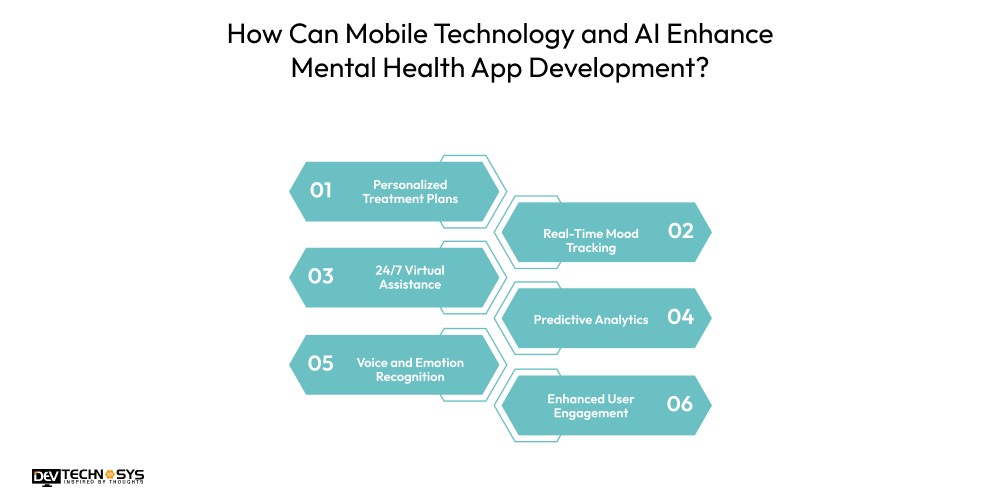
- Personalized Treatment Plans: By analyzing user data, AI provides customized therapy sessions, exercises, and wellness recommendations
- Real-Time Mood Tracking: AI and mobile detectors are used to track the mood, sleep level, and sleeping patterns of users.
- 24/7 Virtual Assistance: With AI chatbots, users will get instant emotional support and crisis guidance anywhere and anytime.
- Predictive Analytics: AI detects early signs of anxiety, depression, or relapse using behavior data.
- Voice and Emotion Recognition: AI tools analyze voice tone and expressions of users to assess their mental state.
- Enhanced User Engagement: With the help of push notifications, reminders, and gamified progress monitoring, AI helps improve consistency.
What is the Cost to Create a Mental Health App?
The cost to create a mental health app ranges from $8,000 to $25,000 or higher. The cost range differs depending on factors like features, platform choice, UI design, tech-stack, and more. The mental health app development cost for basic features and functionalities will be around $8,00 to $12,000.
If you want a mid-tier mental health and wellness application, the cost of development will be around $15,000 to $18,000. However, cross-platform mental health mobile app development cost with advanced features and functionalities may exceed $25,000.
| App Type / Complexity | Estimated Cost (USD) | Development Timeline |
| Basic Mental Health App (mood tracking, reminders, simple UI) | $8,000 – $12,000 | 2 – 3 months |
| Medium Complexity App (chat support, progress tracking, analytics) | $12,000 – $18,000 | 3 – 5 months |
| Advanced Mental Health App (AI chatbot, video therapy, wearable integration) | $18,000 – $25,000 | 5 – 7 months |
Factors Affecting the Cost to Create a Mental Health Application
The cost to create a mental health app can differ depending on various factors that we are going to cover in this section. Consider these factors affecting the mental health app development cost before jumping into the development:
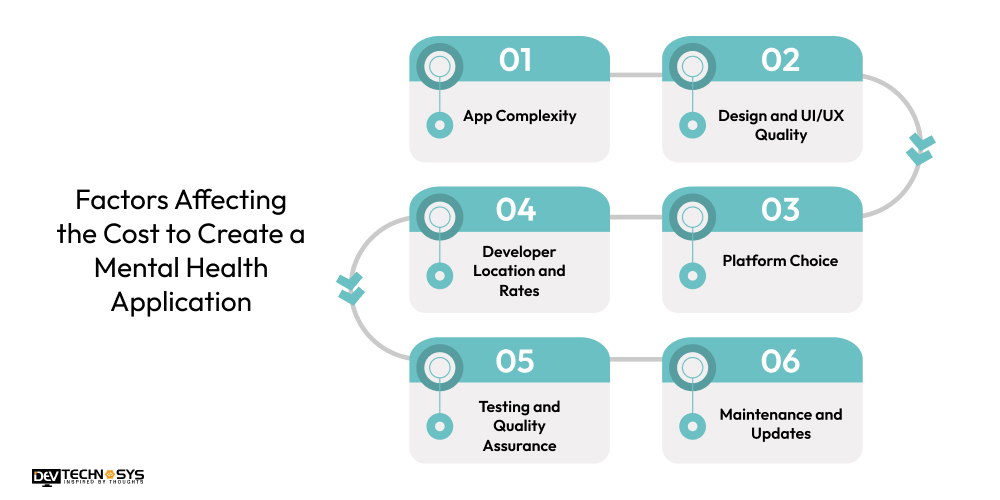
1. App Complexity
The cost to develop a mental health app can be influenced due to the addition of advanced features like AI chatbots, video therapy, or data analytics. The mental health app development cost increases with the number of features you add, so select features wisely.
| Complexity Level | Estimated Cost (USD) | Development Timeline |
| Basic (mood tracker, reminders) | $8,000 – $12,000 | 2 – 3 months |
| Medium (chat, analytics, journaling) | $12,000 – $18,000 | 3 – 5 months |
| Advanced (AI chatbot, video therapy, integrations) | $18,000 – $25,000 | 5 – 7 months |
2. Design and UI/UX Quality
Intuitive and accessible interface designs and layouts tailored to mental health users require more time and expertise. If the quality of UI/UX is high, the cost to build a mental health app will be higher as well. The table below showcases the cost to develop a mental health app according to design level.
| Design Quality | Estimated Cost (USD) | Development Timeline |
| Standard UI (simple layouts) | $8,000 – $11,000 | 2 – 3 months |
| Custom UI/UX (animations, accessibility design) | $12,000 – $18,000 | 3 – 4 months |
| Premium UI/UX (personalized experience, advanced visuals) | $18,000 – $25,000 | 4 – 6 months |
3. Platform Choice
The cost to build a mental health app increases with the choice of platform (Android, iOS, or both). Remember, if you choose cross-platform (Android and iOS), then the cost to build a mental health app will be higher than creating a single-platform app.
| Platform Type | Estimated Cost (USD) | Development Timeline |
| Android or iOS (single platform) | $8,000 – $14,000 | 2 – 4 months |
| Cross-Platform (Flutter/React Native) | $14,000 – $20,000 | 4 – 5 months |
| Native (Android + iOS separately) | $18,000 – $25,000 | 5 – 7 months |
4. Developer Location and Rates
The geographic location of developers or a development company will also impact the cost to make a mental health app. If you hire dedicated developers from countries like North America or Europe, then the cost to build a mental health app will be higher than hiring experts in Asia.
| Region | Estimated Cost (USD) | Development Timeline |
| Asia (India, Vietnam) | $8,000 – $14,000 | 2 – 4 months |
| Eastern Europe | $12,000 – $20,000 | 3 – 5 months |
| North America / Western Europe | $18,000 – $25,000 | 4 – 7 months |
5. Testing and Quality Assurance
Continuous testing is an important aspect of app development, but it also impacts the cost to make a mental health app. To ensure smooth and error-free performance of the mental health care app and data security requires additional resources.
| Testing Type | Estimated Cost (USD) | Development Timeline |
| Basic Testing (manual) | $8,000 – $12,000 | 2 – 3 months |
| Standard QA (manual + automated) | $12,000 – $18,000 | 3 – 5 months |
| Advanced QA (security & compliance testing) | $18,000 – $25,000 | 4 – 6 months |
6. Maintenance and Updates
Post launch services are an ongoing cost, but are crucial to keep the app updated and relevant in the long run. Post-launch improvements, bug fixes, security fixes, and advanced feature updates impact long-term costs. Here’s the table highlighting the cost to make a mental health app according to maintenance services.
| Maintenance Type | Estimated Cost (USD) | Development Timeline |
| Basic (bug fixes, minor updates) | $8,000 – $10,000/year | Ongoing |
| Moderate (feature updates, monitoring) | $10,000 – $18,000/year | Ongoing |
| Advanced (regular upgrades, scalability support) | $18,000 – $25,000/year | Ongoing |

Monetization Strategies For Mental Health Apps
Monetization is crucial for mental health apps to ensure their sustainability, growth, and ability to provide valuable services. Monetization for mental health apps primarily uses various effective strategies like the freemium model, subscription plans, and more. Let’s take a look:
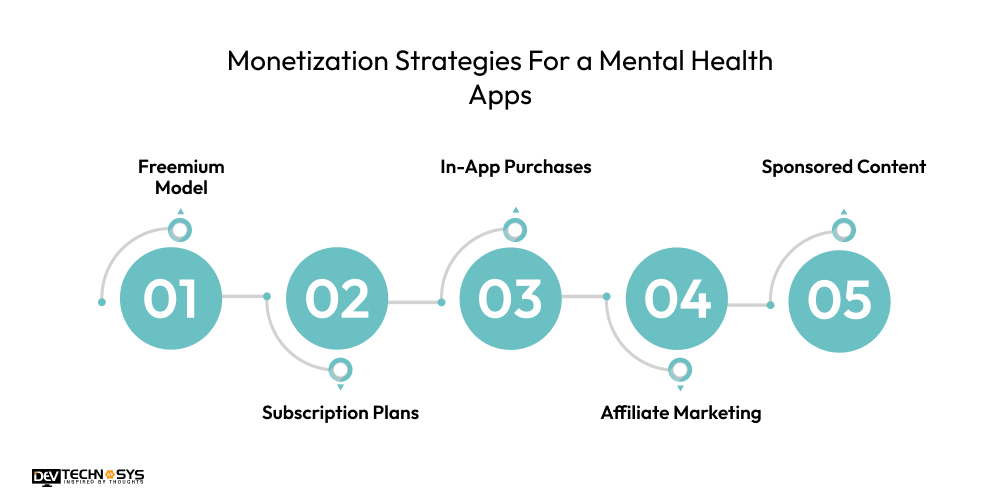
- Freemium Model: Provide free basic features and charge users for premium features and tools like AI therapy sessions, advanced analytics, or guided meditation programs.
- Subscription Plans: This plan offers flexible weekly, monthly, or yearly subscriptions granting access to exclusive therapy sessions, expert content, and personalized wellness insights.
- In-App Purchases: It lets users buy premium resources like guided meditations, mental wellness programs, or self-improvement courses directly within the mental health
- Affiliate Marketing: Form a partnership with wellness brands, therapists, or fitness partners and promote relevant products. It will help businesses earn commissions on successful referrals.
- Sponsored Content: Partner with mental health professionals or organizations to feature sponsored educational videos, articles, or mindfulness content for revenue.
Conclusion
After seeing all the factors and steps of developing a successful mental health app in the above sections, we can conclude that creating a mental health app needs a balanced mix of empathy, technology, and innovation. By using AI and professional guidance, businesses can offer impactful and user-centric solutions for emotional well-being. If you are looking for a top mobile app development company to build your next-gen mental health app, contact Dev Technosys. And stay tuned for more information and updates.
FAQs
Q1. Can You Compare Native vs Hybrid App Development Approaches for a Mental Health App?
Native mental health apps offer better performance, security, and user experience but cost more to build for each platform. Hybrid mental health apps, built using frameworks like Flutter or React Native, are more cost-effective and faster to develop but may sacrifice slight performance precision.
Q2. How to Integrate Certified Therapists into a Virtual Mental Health Ecosystem?
To integrate therapists in a virtual mental health ecosystem:
- Create verified professional profiles with credentials
- Enable secure video/audio consultation features
- Ensure HIPAA or GDPR compliance
- Use scheduling
- Encrypted communication
- Payment gateways to support smooth user interactions.
Q3. What Are the Must-Have Features in a Mental Health App?
Essential features include mood tracking, AI chatbots, appointment scheduling, virtual therapy, data analytics, emergency support, and progress tracking to enhance user engagement and outcomes.
Q4. How Much Does It Cost to Build a Mental Health App?
The cost to build a mental health app typically ranges between $8,000 and $25,000 and higher, depending on app complexity, platform choice, UI/UX design, and compliance with mental health standards.
Q5. Why Should Businesses Invest in Mental Health App Development?
Investing in mental health apps helps businesses promote well-being, expand healthcare access, build brand trust, and tap into a fast-growing digital wellness market.