


















“Everyone ends up buying/selling real estate property sooner or later.”
In recent times, the way people buy, rent, and invest in properties has been transformed. With a desire for ease, modern consumers are seeking an advanced way to hunt their dream property. And this new wave has created demand for real estate app development. Building a real estate app is the best way to participate in the rapidly growing market, earn recurring revenue, and reach a larger audience.
There has been an unprecedented rise in online property searches, intensifying market competition. You have come to the right place if you’re wondering how to build a real estate app, maximize its potential, and make it profitable. In this post, we’ll guide you on what is real estate mobile app development, the steps involved in the development process, the real estate app types, and more.
Global Real Estate Software Market Size
- In 2025, the global real estate software market was valued at USD 10,285.7 million.
- By 2030, it is estimated to reach USD 21,776.9 million.
- From 2026 to 2030, the market is expected to grow at a CAGR of 11.3%.
- In 2025, the residential segment accounted for 52.04% of the market share.
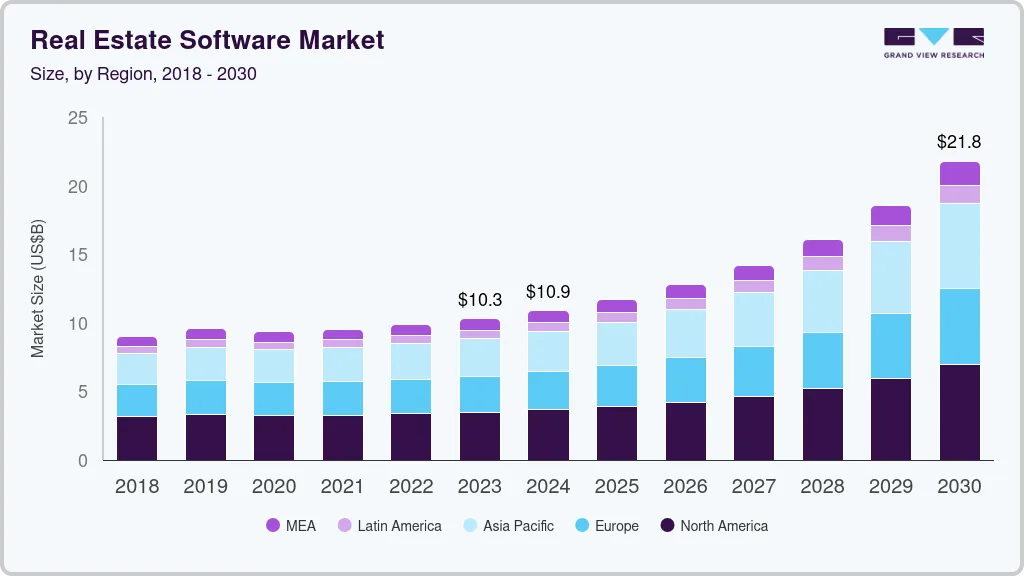
- With a CAGR of 13.7%, the Asia Pacific is the fastest-developing regional market.
- In 2025, the cloud segment accounted for 52.37% of the market share by deployment.
What is a Real Estate Mobile Application?
Before we jump into the real estate app development process, let’s talk about what is a real estate mobile application is. In simple terms, a real estate mobile application is a digital platform that enables users to buy, lease, sell, and manage properties.
With a real estate mobile application, buyers can search for their desired properties, check prices, and interact with sellers or agents. These applications primarily focus on improving the usability of the real estate market.
Real estate mobile app development is the process of building a digital platform to streamline property-related services. Home search mobile apps are developed with the aim of addressing the diverse real estate market requirements. From seamless property search to virtual tour, real estate software development provides solutions for a range of tasks, enhancing efficiency.
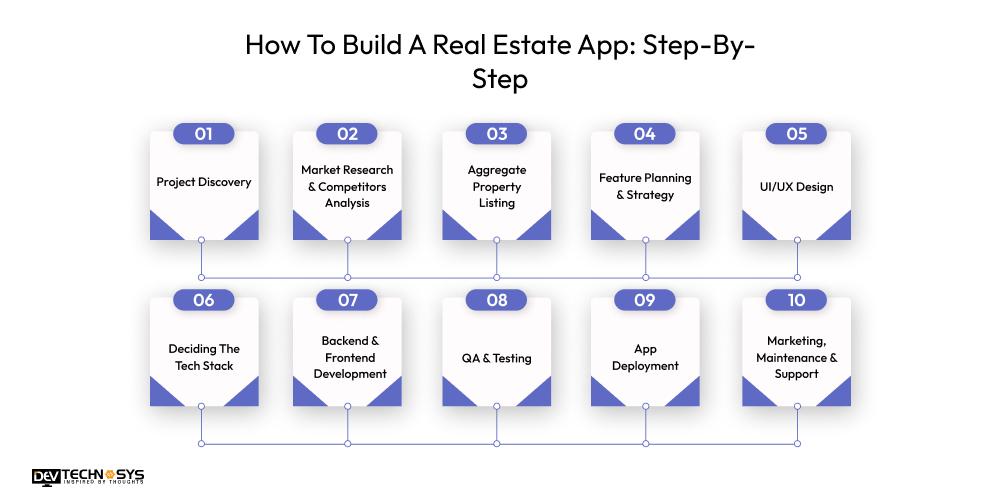
How To Build A Real Estate App: Step-By-Step
If you’re someone who is navigating the housing and property market, then a real estate mobile is your go-to. But how to build a custom real estate mobile app that stands out? In this section, we’ll walk through the complete process of real estate app development. By strategically following these steps, you can bring your real estate app idea to life.
1. Project Discovery
Preparation is a must for a property app development. You must define your app’s goal and establish a clear vision for the development process.
Without proper planning and defined objectives, the product will eventually fail. So ask yourself whether you want to build an app for house-hunting, property management, or real estate companies.
2. Market Research & Competitors Analysis
Before you start the property management app development process, take time to understand the market and analyze competitors. Take a closer look at the top real estate apps and find the gaps to shine your mobile app.
Understand your targeted audience: who are you building this app for? Follow the latest market trends and know what’s hot in the real estate tech market.
3. Aggregate Property Listing
This step in the property listing app development process makes a real estate property distinct from others. Property listing covers the major area of real estate application, making it necessary for custom real estate app development.
Listings are a ready-to-integrate real estate database of apartments, houses, and properties. This step in how build a real estate app will ensure your application offers something unique to users after release.
4. Feature Planning & Strategy
Now it’s time to put everything in place. This stage serves as the blueprint for your real estate marketplace app development. Break the project into various manageable stages. Start with an MVP to validate the concept. Plan an early monetization strategy and integrate with real estate systems to deliver real-time property updates.
5. UI/UX Design
Once your app idea is solidified, design takes the central stage in the real estate app development lifecycle. A custom real estate mobile application must be easy to navigate with an attractive interface.
Simple filter function with a brief property description and high-quality property images. And consider cross-platform or hybrid app development because your app needs to look and work seamlessly everywhere.
6. Deciding The Tech Stack
The choice of real estate app tech stack will determine the app’s scalability, performance, and long-term viability. You can hire specialized real estate app developers to help you choose the appropriate tech stack for the app like API integration, MLS integration, IoT, etc.
Your choice of technology stack should meet diverse technical requirements. Compared to other industries, the real estate industry is embracing the latest technological developments.
7. Backend & Frontend Development
This step in the development process of a real estate application turns your design into functionality. The frontend should be fast, smooth, and responsive, while the backend powers your mobile app. Integrate payment gateways for secure transactions. Hiring a real estate app development company will save you a lot of headaches during this stage.
8. QA & Testing
The testing and quality assurance stage ensures that your real estate app provides a smooth user experience. Rigorous testing catches bugs early, before users see them. Test your app’s performance to safeguard its reliability and stability.
This step is critical for a polished, reliable app and for avoiding costly updates later. In the process of how to develop a real estate app, test payment processing to prevent failure of payments under heavy traffic.
9. App Deployment
After finalizing the real estate app development services, it is time to launch your real estate mobile app to the market. Launch your app on app stores, follow their guidelines to avoid delays, and use ASO to help people find it. A strong strategy sets the stage for early success. Strategic planning and execution are key to the success of your real estate app launch.
10. Marketing, Maintenance & Support
After the launch, a strong marketing strategy is needed to attract a wide range of audiences. With paid ads and social media promotions, you can expand the reach.
Handle troubleshooting issues, user questions, and quick bug fixes. Regularly update your app with new features and design improvements. Ensure your real estate mobile application stays current and well-maintained through continuous support and maintenance.
Want a chatbot demo or pricing? Fill the form and talk to our experts today.
Pick what you need below — you can select more than one — then tap Get detail to continue.
-
Chatbot demo dashboard
-
Cost to develop an app
-
Industry report
-
Case study
What Are The Different Kinds Of Real Estate Apps?
Real estate tech solutions addresses the needs of buyers, managers, sellers, investors, and brokers. There are many options for how to develop a real estate app, so everyone can pick the one that best suits their needs. Let’s discuss the different types of real estate apps.
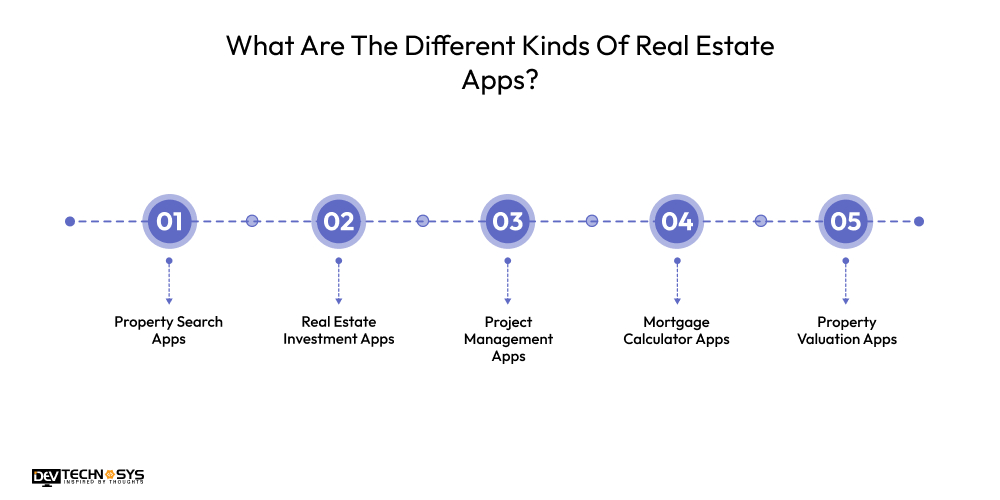
1. Property Search Apps
With in-depth listings, property search apps help users find homes and apartments. Advanced search filter options, interactive maps, and virtual tours are the core features of property app development. To make a real estate app that operates on a B2C model, simplifies property search, saves time, and provides real-time availability updates.
2. Real Estate Investment Apps
Real investment apps target individual investors and institutions. It makes real estate investment easy and smart, with property valuation tools, financial analysis, and market analysis. Secure, transparent transactions enhance investment efficiency.
3. Project Management Apps
These apps assist landlords and property managers in rent collection and lease management. Automating the rental procedure reduces the manual workload and streamlines property operations. Property management app development provides tenant communication tools, and tenants can track their maintenance.
4. Mortgage Calculator Apps
Core features of real estate applications include interest comparisons, loan calculators, personalized loan accommodations, and monthly payment management. It helps users to compare various mortgage products and empowers financial planning.
5. Property Valuation Apps
Property valuation app development provides insights into market trends and compares sales data to help buyers and sellers make confident decisions. Automated Valuation models and predictive analytics are its core features.
You can reach out anytime; we are available 24/7. Our team provides a quick response.

What Are The Essential Features Of Real Estate Mobile Apps?
To make your real estate app noticeable, you need to add essential features that meet user and market requirements, sustain engagement, and speed up property transactions. These features are necessary for every real estate app.
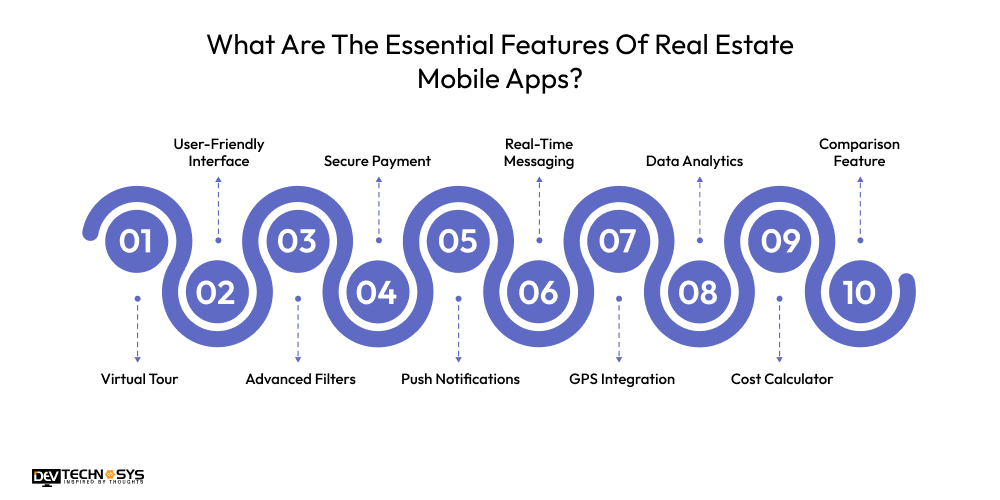
i. Virtual Tour
Including virtual property tours feature in your real estate application will provide users with an immersive experience. It allows for exploring the desired property without physically visiting.
ii. User-Friendly Interface
Implementing an aesthetically pleasing design when you make a real estate app ensures seamless navigation. The app’s simplicity and clarity enhance user satisfaction. The onboarding process must be as easy as possible.
iii. Advanced Filters
For any real estate mobile app development services, the functionality of search and filter is the cornerstone. Filter customization allows users to specify tier preferences and requirements.
iv. Secure Payment
Another feature to include in the real estate marketplace app development is the integration of secure payment gateways. When you create a real estate app that meets security compliance standards, it adds an extra layer of trust.
v. Push Notifications
Push notifications for listings feature keeps the user informed about new listings, upcoming property viewings, price reductions, and timely alerts of new market trends.
vi. Real-Time Messaging
In the world of real estate, effective communication is central. The real-time property updates provides direct communication between the buyer, seller, and agents.
vii. GPS Integration
The interactive property maps integration in real estate software development provides users with detailed information about the property location, adding convenience and value.
viii. Data Analytics
With the integration of robust analytics tools, users can get access to valuable market insights, customer behavior, and property performance.
ix. Cost Calculator
Mortgage calculator integration in Real estate app development allows user to receive an automated estimate of the property’s cost.
x. Comparison Feature
Adding this feature to the real estate application wil allow tenants and homeowners to compare multiple housing offers on a single page.

What Tech Stack Is Required For Real Estate App Development?
When it comes to create a real estate app, there are many options tailored to the different industry standards. It is making it challenging to choose the most appropriate tech stack for custom real estate app development cost.
Given the special needs and demands of the real estate market, it is crucial to maintain a perfect balance in the technology stack. The table below shows the technology stack needed for real estate software development.
Layer |
Purpose |
Common Technologies |
| Mobile Frontend | Build iOS & Android apps | Flutter, React Native, Swift, Kotlin |
| Web Frontend | Admin panel & web portal | React.js, Angular |
| Backend | APIs, business logic, data handling | Node.js, Python (Django/FastAPI), Java |
| Database | Store property & user data | PostgreSQL, MySQL, MongoDB |
| Cloud & Hosting | Scalability & performance | AWS, Azure, Google Cloud |
| Maps & Location | Property search by location | Google Maps API, Mapbox |
| Payments | Rent, booking & subscriptions | Stripe, PayPal, Razorpay |
| Security & Auth | Secure user access | JWT, OAuth 2.0, Firebase Auth |
| Media Storage | Property images & videos | AWS S3, Cloudinary |
| Notifications | Alerts & communication | Firebase Cloud Messaging, Twilio |
Final Thoughts!
Real estate web and mobile app development opens new business perspectives and boosts user satisfaction. After reading this blog, you have understood how custom real estate app solutions are must for today’s real estate business. And you’re ready to elevate your idea of creating a real estate app.
So, determine the market trends, specialty, and audience, and choose the right real estate app development company to stay ahead in the ever-evolving real estate industry. With a focus on secure technology and user experience, you can build a rental property management app that will stand out in the market and drive competition.
Frequently Asked Questions
Find answers to the most common questions related to this article.
The different types of real estate apps are:
* Property Management Apps
* Mortgage Calculator Apps
* Property Search & Listing Apps
* Real Estate Investment Apps
To build a real estate mobile app, conduct market research, design an intuitive user experience, build an MVP, rigorously test the application for reliable performance, and finally implement marketing strategies.
The key features of a mobile real estate app include property listings, filter search, map integration, real-time chat, property profiles, cost calculator, communication tools, push notifications, and user profiles.
The primary reasons for developing a real estate app are to stay ahead of the competition in today’s digital world. It facilitates property browsing with a customized search and seamless communication, attracting more prospects.
Several factors shape the timeline of real estate mobile app development, such as complexity, features, and the developemnt team. Roughly, it takes about 3 to 6 months to make a real estate mobile app.