
















Key takeaways:
-
- According to Canvo, with a valuation of $38 to $40 billion, the tree care services sector in the United States has created a high demand for digital arborist booking solutions.
- The average cost of developing a customized tree trimming app starts at about $30,000 and can reach up to $150,000 or more, depending on your platform, specifications, and complexity.
- Core features comprise online bookings, GPS tracking, secure payment processing, and AI-powered estimations, as well as separate user, arborist, and admin panels.
- Companies can generate continuous revenue through commission-based bookings, subscription options, premium memberships, and advertising in the app.
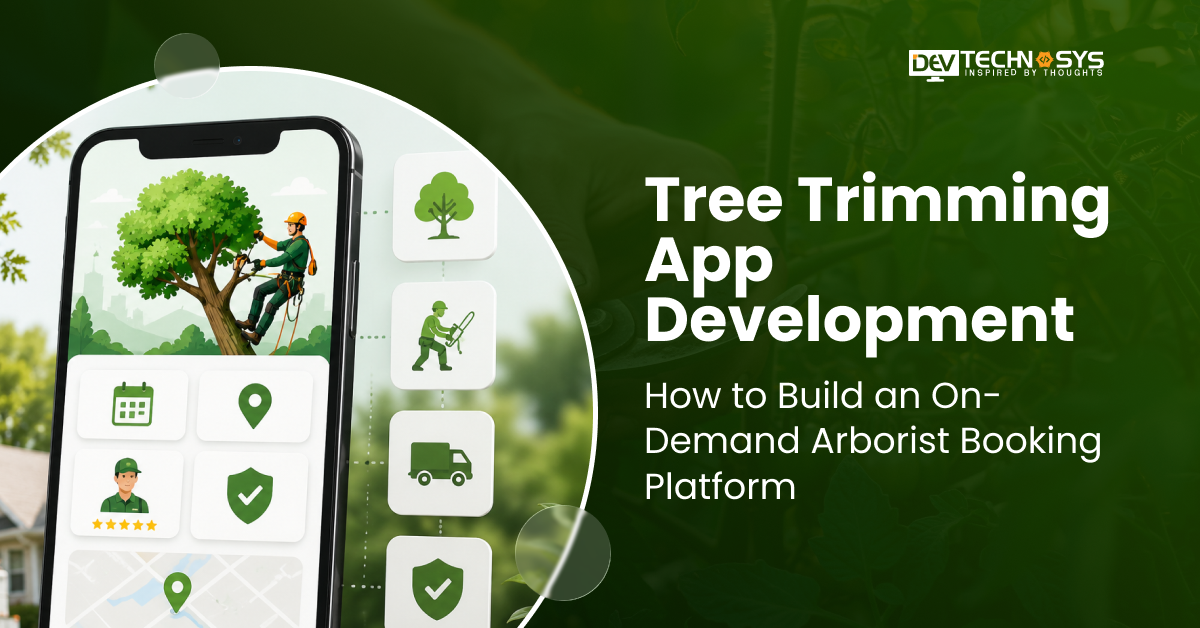
Tree care firms are adapting to a technological era where customers want all sorts of tree services, from trimming and pruning to urgent tree removals, done online. These clients expect quick scheduling and real-time updates. A tree trimming application builds a bridge between the clients and professional arborists, making the process of booking services easier. From the business perspective, it automates the everyday activities and increases customer satisfaction.
In this blog, we have explained the process of tree trimming app development, from market trends and functionality to the costs of on-demand tree trimming app development. In short, this blog covers everything from tree care app development to deployment and scaling.
Tree Care Industry Statistics & Market Overview (2026)
The tree services industry is on the rise as demand continues to grow for residential landscaping, commercial property maintenance, and emergency tree services. Additionally, the use of mobile booking online platforms is reshaping the way customers find arborist services.
Here are some statistics that show the growth potential for the sector and increasing opportunities for businesses investing in tree trimming app development:
Market Insight |
Latest Statistics |
Sources |
| Estimated U.S. Tree Care Industry Size | $38–40 Billion | Canvo (compiled from IBISWorld – Tree Trimming Services market data) |
| U.S. Landscaping Services Industry Size (2025) | $188.8 Billion | National Association of Landscape Professionals (NALP), citing IBISWorld Landscaping Services Industry Report |
| Global Landscaping Services Market (2026) | $372.2 Billion | Grand View Research – Landscaping Service Market Report |
| Global Landscaping Market CAGR (2025–2030) | 6.6% | Grand View Research – Landscaping Service Market Report |
| U.S. Landscaping Businesses | 692,777+ | National Association of Landscape Professionals (NALP), citing IBISWorld |
| Employment in U.S. Landscaping Industry | 1.4 Million+ Professionals | National Association of Landscape Professionals (NALP), citing the IBISWorld Landscaping Services Industry Report |
What is a Tree Trimming Application?
A tree trimming mobile app refers to an application that can be accessed on-demand and connects clients to arborists. This app enables clients to request tree trimming services, obtain estimates, schedule appointments, pay for the service, and track their service.
Unlike conventional methods involving phone calls, emails, and in-person visits, the tree trimming application makes the entire customer experience digital and efficient. With the app, the clients just have to click a few buttons and get access to all tree service providers.
Here is the simple comparison between the Traditional process and App-based booking for tree trimming:
Traditional Process |
Tree Trimming App |
| Delayed quotations | Instant or digital estimates |
| No real-time tracking | GPS-based live tracking |
| Phone calls during business hours | 24/7 online booking |
| Paper invoices | Digital invoices and service history |
| Limited communication | In-app chat and notifications |
| Cash or offline payments | Secure online payment options |
| Manual scheduling | Automated appointment management |
Types of Tree Service Apps
Different tree care companies have different operational requirements based on their size, target audience, and range of services. For example, one company might need a simple customer booking interface while a large business may require a complete ecosystem with different apps for the clients, tree doctors, or administrators. Understanding these types of apps is crucial for effective development of the solutions.
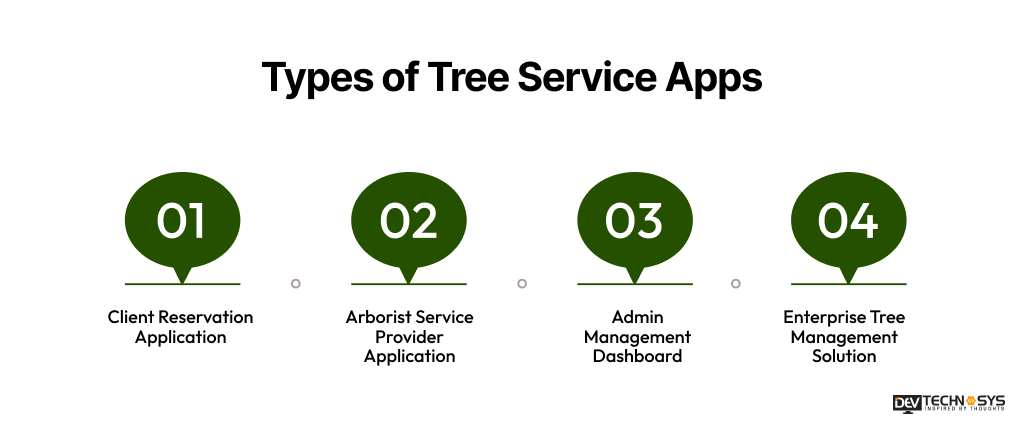
1. Client Reservation Application
A customer reservation application is a type of service for domestic occupants, rental administrations, business customers, and regions that want a tree care application. The application allows the customer to find the services offered, book appointments, estimate costs, and pay for the service using their devices.
Best for: Companies that provide tree cutting services, landscaping businesses, and companies that provide tree care.
2. Arborist Service Provider Application
The program is meant for arborists and field specialists only. The agents can use the app to supervise their daily tasks, travel to the customer’s location, modify job status, contact the clients, and assess their earnings. The participants can utilize the app instead of paperwork, speeding the process and minimizing delays. Businesses investing in arborist app development can streamline field operations.
Best suited for: Arborists, trimming teams, and free sellers.

3. Admin Management Dashboard
The admin dashboard serves as the command post of the platform. Owners and managers can view their bookings, check arborists, arrange payments, assess how well the business is doing, and resolve any arising issues. It further provides real-time information on earnings, labor usage, and consumer satisfaction.
Best for: Tree care firms managing several units of crews and locations.
4. Enterprise Tree Management Solution
Big corporations like cities, power companies, golf courses, schools, and commercial properties need enterprise solutions to control thousands of trees in various locations. The focus of such systems is on preventive servicing, monitoring of compliance, and ensuring massive asset control.
Suitable for: Authorities, utility companies, and big property management companies.
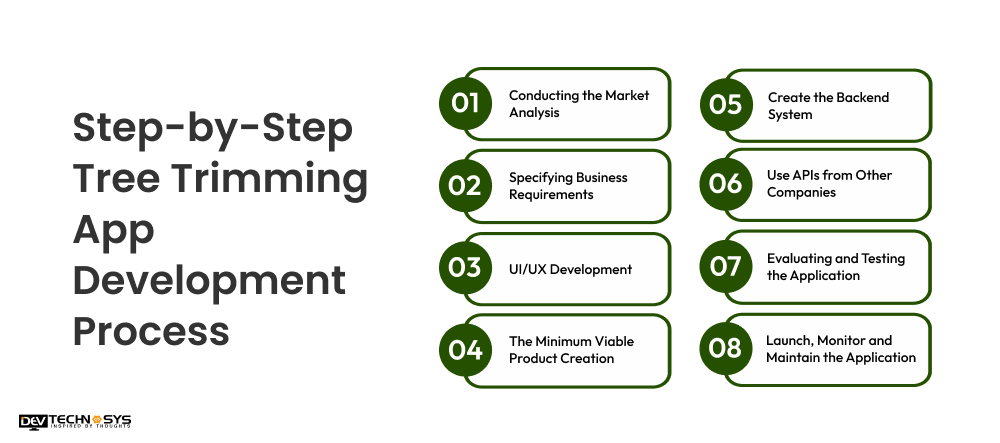
Step-by-Step Tree Trimming App Development Process
To build a tree trimming app, businesses require careful planning, user-friendly design, and the right technologies. Whether you want to build a basic platform for a local tree care company or you are launching a nationwide arborist marketplace, it is necessary to follow a structured development process. It reduces risks, controls costs, and delivers a high-quality product.
Every business has unique requirements, making Custom Arborist App Development the preferred approach. Here is the step-by-step process to build a successful on-demand tree care app:
1. Conducting the Market Analysis
In this initial stage, the goal is to estimate the market needs of the tree care sector, customer requirements, and competitors’ operations. It is essential to investigate existing solutions in the sphere of tree service applications, identify the gaps in the market, and define target clients. Good market research allows one to shape the concept of the solution, revise the unique selling proposition, and ultimately build a solution that will satisfy the needs of users and deal with the problems they encounter.
2. Specifying Business Requirements
At this stage, the initial work is done before entering the development phase. It is significant to formulate business goals, technical features of the application, roles of users, and service flow. It is necessary to determine the services you are going to provide, the pricing approach, payment methods, and service organization specifications.
3. UI/UX Development
Make an effective and attractive interface that makes it easy for users to book services and for arborists to run their everyday operations. Applying prototyping, wireframes, and layout design with a focus on the user experience helps you provide a perfect UI/UX that improves usability and leads to greater customer activity.
4. The Minimum Viable Product Creation
Create a product with the features needed to get registered, book the service, schedule appointments, make payments, and get notifications. The MVP launch will give you the chance to check and test the market, analyze user feedback, and validate the business idea before introducing complex features and developing it at a large scale.
5. Create the Backend System
The task that comes next is to create a reliable and effective backend that will take care of users’ profiles, bookings, financial transactions, alerts, and data. The backend works as the center of the application, providing opportunities for smooth interaction between users and tree service specialists and administrators.
6. Use APIs from Other Companies
Utilizing trustworthy third-party services allows you to improve the profile of your application significantly without creating each feature on your own. APIs for weather applications, GPS, payment systems, data storage services, and notifications allow users to have the best experience while reducing the final working time of the application.
7. Evaluating and Testing the Application
Carry out all the tests to identify and fix the problems before the launch process starts. Validate all the functions, performance, privacy, payment, integration with APIs, and compatibility with different OS and devices. A proper and comprehensive flow of quality assurance work leads to a reliable and functional app that is easy to use for everyone.
8. Launch, Monitor and Maintain the Application
As soon as testing is done, launch the application in the Apple App Store and Google Play Store. After the launch, keep monitoring the performance of the application, fix bugs, make the necessary updates, collect user feedback, and improve the application. Regular monitoring will ensure the security of the application and improve user experience.
Key Features of a Tree Trimming App
A successful tree trimming app should provide a seamless experience to customers. It also enables the arborists and administrators to manage their operations efficiently. There are three main panels on the platform: Customer, Arborist, and Admin.
Here are the main features of each of them:
User Panel Features |
Arborist Panel Features |
Admin Panel Features |
| User Registration & Login | Profile Management | User Management |
| In-App Chat | Job Status Updates | Reports & Analytics |
| Service Booking | Job Request Management | Arborist Verification |
| Secure Online Payments | Digital Cost Estimation | Pricing Management |
| Booking History | Earnings Dashboard | Content Management |
| Ratings & Reviews | Digital Invoice Generation | Notification Management |
| Appointment Scheduling | Calendar & Schedule Management | Booking Management |
| GPS Location & Live Tracking | GPS Navigation | Payment & Commission Management |
| Photo Upload for Tree Inspection | Customer Information | Service Area Management |
| Push Notifications | Before & After Photo Upload | Customer Support Management |
Advanced Features To Integrate in Your Tree Trimming App
Basic features help in launching the app, but you can integrate some advanced technologies. They can improve customer experience, optimize operations, and provide a good advantage.
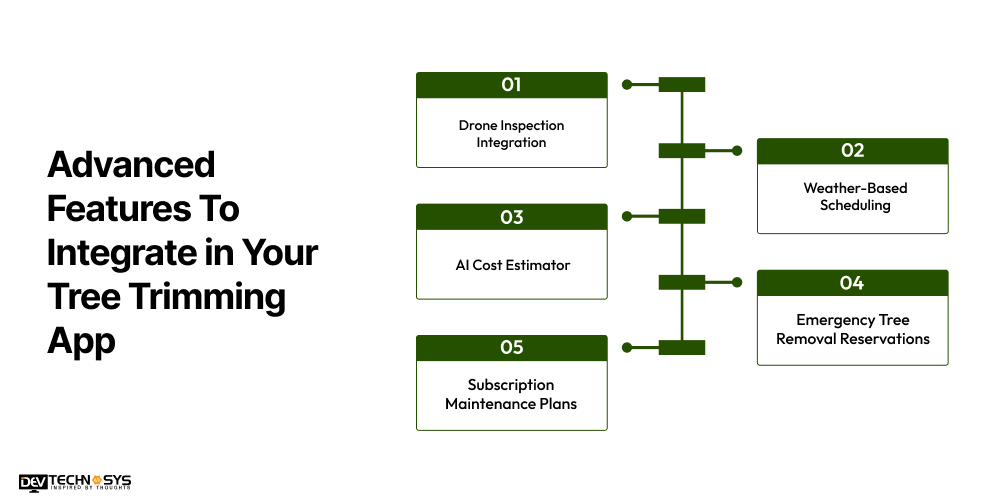
Drone Inspection Integration
Using drones helps arborists get high-quality aerial images and videos of tall trees or inaccessible places. Because of this, they can enhance the accuracy of inspection processes, ensure safety, and make more efficient plans.
Weather-Based Scheduling
Tree trimming jobs depend heavily on the weather conditions. Thus, when integrated with weather APIs, the application can plan appointments automatically while informing customers and service providers during heavy rain, storms, or strong wind.
AI Cost Estimator
Machine-learning technologies can help determine the costs of the service depending on the species of the tree, height, diameter of the trunk, location, images, and previous projects. This also reduces the manual effort of making the quotation and speeds up the booking decisions.
Emergency Tree Removal Reservations
In the aftermath of hurricanes or natural calamities, customers expect quick help. The emergency reservation function allows urgent requests to receive priority and directs an arborist closest to them.
Subscription Maintenance Plans
Clients are able to subscribe to annual or quarterly maintenance schemes, through which they get their trees regularly inspected, pruned, fertilized, and assessed for their health status. It paves the way for repeat revenues and building prolonged relationships with customers.
Tree Trimming App Development Cost in 2026
The tree trimming app development cost depends on various factors, such as the complexity of the app, supported platforms, third-party integrations, UI/UX designs, AI capabilities, and the location of the development team.
Working with a professional tree trimming app development company also helps businesses optimize development costs by selecting the right technologies and prioritizing essential features.
Estimated Development Cost
App Type |
Estimated Cost (USD) |
| Basic App | $30,000 – $50,000 |
| Medium Complexity App | $50,000 – $90,000 |
| Enterprise Solution | $90,000 – $150,000+ |
Factors Affecting Development Cost
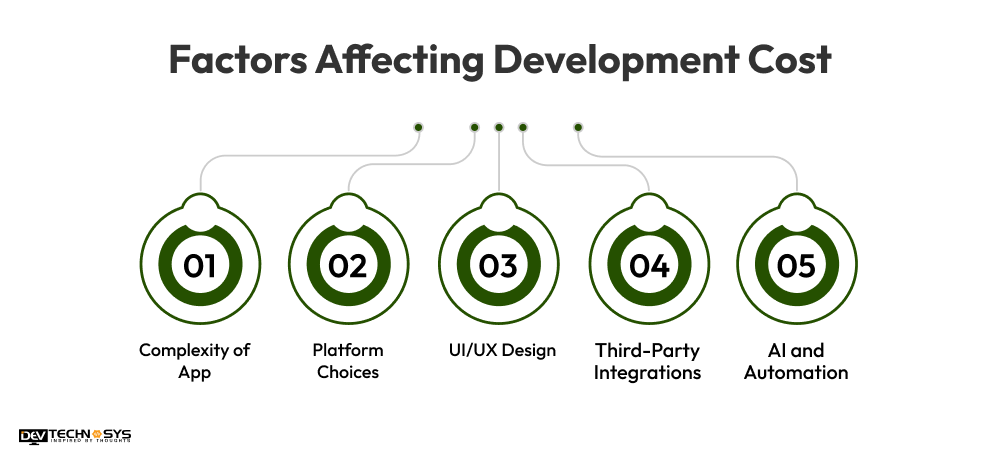
1. Complexity of App
The complexity of the tree trimming app influences the ultimate cost of development. A simple app will have a much smaller budget than an advanced one with cutting-edge options such as artificial intelligence, GPS tracking, real-time notifications, etc.
2. Platform Choices
If the app is to be made both for Android and iOS, it always becomes more expensive than developing for one particular platform. The use of cross-platform frameworks such as Flutter or React Native will reduce the cost of app development.
3. UI/UX Design
A good interface raises user involvement and makes navigation easy. Customized designs, animations, smart processes, and responsive design mean that more work is needed for design and development, leading to a larger budget but a better customer experience.
4. Third-Party Integrations
The use of APIs such as Google Maps, Stripe, PayPal, Firebase, Twilio, and weather services allows for the increased functionality of the app. However, the use of such APIs increases the development costs and requires testing and maintenance.
5. AI and Automation
AI features such as tree disease detection, image recognition, predictive maintenance, and smart scheduling are meant to enhance business processes, but their execution presumes specialized development, machine learning, and optimization, which increases costs.
Technology Stack for Tree Trimming App Development
Choosing the right technology stack is very important for developing a secure, scalable, and high-performing tree trimming app. Faster development, easier maintenance, and better user experience can be achieved through modern technologies.
Category |
Recommended Technologies |
| Frontend (Android & iOS) | Flutter, React Native |
| Web Frontend | React.js, Angular |
| Maps & Navigation | Google Maps API, Mapbox |
| Database | PostgreSQL, MySQL, MongoDB |
| Payment Gateway | Stripe, PayPal, Square |
| AI & Machine Learning | TensorFlow, OpenAI APIs, Google Vertex AI |
| Backend | Node.js, Python (Django), Laravel |
| Cloud Hosting | AWS, Microsoft Azure, Google Cloud |
| Push Notifications | Firebase Cloud Messaging (FCM), OneSignal |
| Authentication | Firebase Authentication, OAuth 2.0 |
With the help of a well-planned technology stack, not only is your current business supported, but your future integrations are also sorted out. This allows you to integrate advanced capabilities, such as predictive maintenance, AI diagnostics, and drone inspections, without rebuilding the entire platform.
How To Make Money From a Tree Trimming App?
A properly developed tree trimming application can make money in different ways instead of just depending on revenue generated from the sale of tree trimming services. Hence, it is important to choose the right strategy to make money from a tree trimming app. Here are some of the ways:
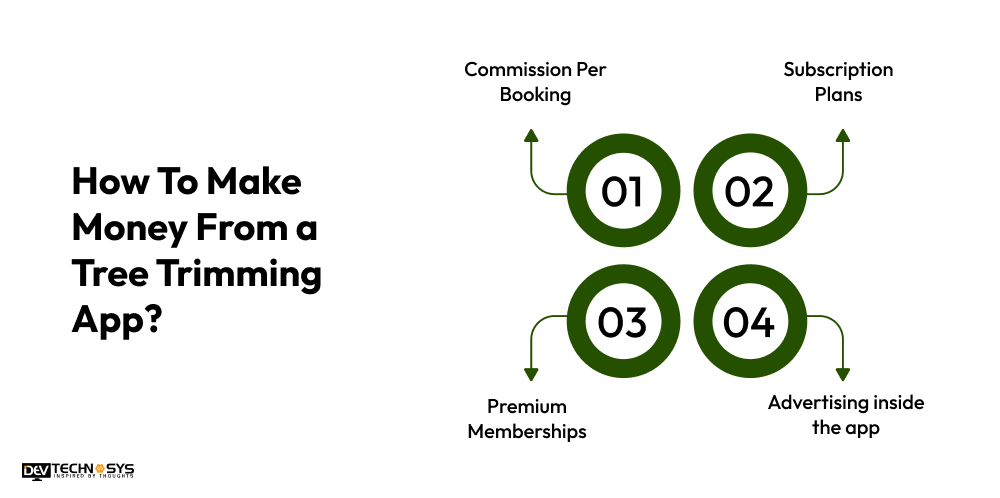
1. Commission Per Booking
Using a commission-based model, a platform can earn from a certain percentage or a flat rate for every completed tree service booking. This monetization technique grows with the business and is capable of generating revenue without upfront costs for service providers while motivating the platform to get more customers.
2. Subscription Plans
With subscription plans, customers or businesses can benefit from exclusive services with monthly or yearly payments. The model facilitates predictable recurring revenue, provides better customer retention, and promotes long-lasting involvement with the platform.
3. Premium Memberships
As with regular memberships, premium memberships enable users to enjoy certain perks, including quicker booking, dedicated customer support, special discounts, loyalty rewards, and advanced feature usage. By attaining a better user experience, this type of membership enhances user loyalty, increases customer lifetime value, and creates a form of recurring revenue for the system.
4. Advertising inside the app
By adding advertising inside the app, suppliers of landscaping materials, gardening products, equipment manufacturers, and home improvement brands can advertise their services/products there. As a result, the company obtains an additional passive revenue stream while making relevant recommendations and enabling partnerships for the users of the app without disturbing the core booking experience.
Common Challenges in Tree Trimming App Development and Their Solutions
It can be quite challenging to develop a tree trimming app as there are many features to be integrated. Businesses might face issues related to customer expectations, workforce management, pricing, weather conditions, and operational efficiency. If you identify these challenges at an early stage, then it can be quite easy to avoid them.
Here are some of the challenges and their solutions that businesses should implement:
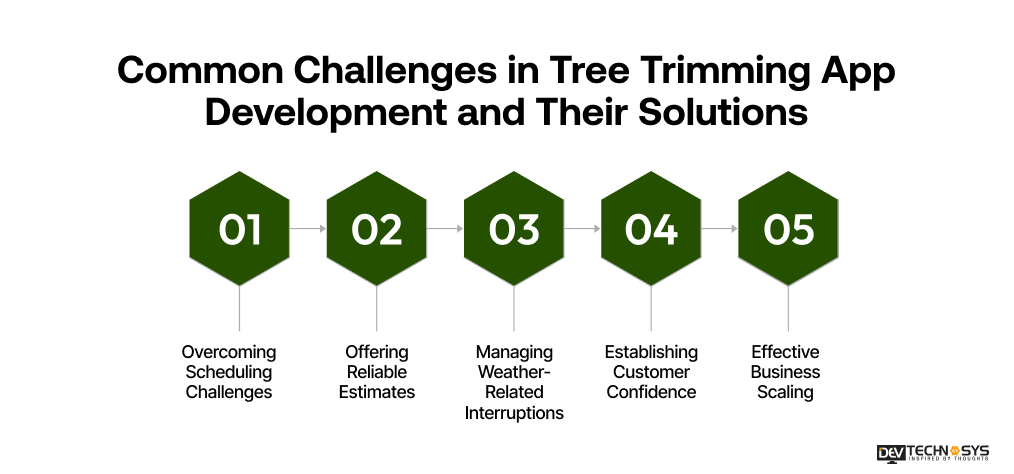
1. Overcoming Scheduling Challenges
Mismanagement in scheduling can happen because of various activities at one time, such as coordinating multiple bookings, service locations, and availability of arborists. Because of this, businesses overlap, become less efficient, and are not able to provide a seamless customer experience. To solve this issue, businesses should integrate AI-powered scheduling systems along with real-time calendar synchronization. It automatically assigns the job based on their availability.
2. Offering Reliable Estimates
It can be quite challenging to provide an accurate estimate for the tree trimming services without visiting the site physically or getting it inspected by an arborist. Businesses can solve this problem by allowing customers to send teh pictures of their trees and integrate them with AI-powered estimation tools. They can analyze the size, condition, and service requirements of the tree and generate more accurate preliminary estimates.
3. Managing Weather-Related Interruptions
Tree trimming services can be disrupted heavily because of the weather. Frequent rescheduling is needed due to rain, storms, and high winds. Businesses can integrate real-time weather APIs to monitor weather conditions, notify customers and arborists, automatically adjust appointments, and reduce operational disruptions.
4. Establishing Customer Confidence
Most customers hesitate to hire arborists for tree pruning services because of certain concerns, such as safety and reliability. To establish credibility and ensure more bookings, it is necessary to verify arborist certifications, offer secure payment options, display customer ratings and reviews, and maintain transparent pricing with your customers.
5. Effective Business Scaling
When the customer base increases, it becomes challenging to manage bookings, teams, and various service areas. You need to have a centralized admin dashboard wth GPS tracking, analytics, automated job allocation, and performance monitoring. Businesses can scale their operations efficiently while ensuring high service quality.
Future Trends in Tree Service App Development
Technical innovations make services in tree care more effective, data-based, and customer-oriented. Companies that adopt new technologies will be better prepared for future customer needs and to compete in the market.
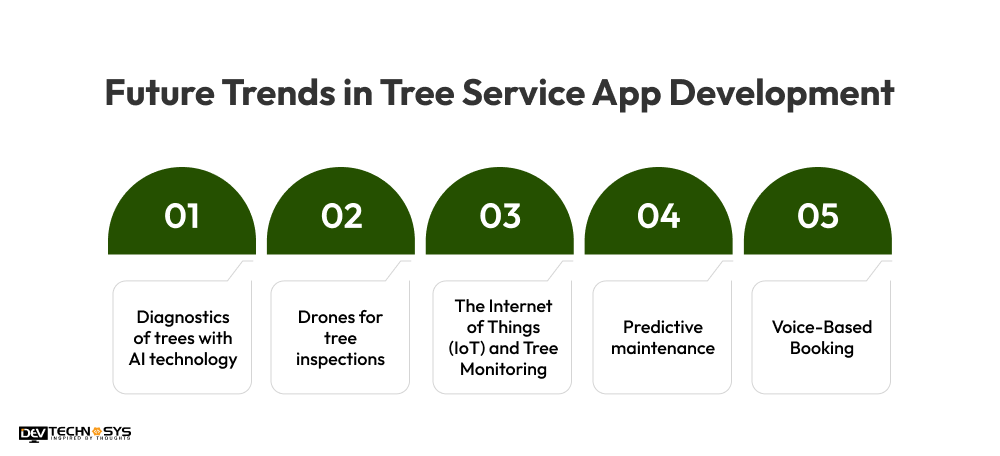
Diagnostics of trees with AI technology
Artificial intelligence impacts tree inspections by processing images for the detection of diseases, insect infestations, structural damage, and lack of nutrients. Thus, arborists can make faster and better decisions before arriving at the site of inspection.
Drones for tree inspections
Drone technology is becoming a key instrument for examining tall or dangerous trees. Aerial images allow arborists to evaluate the state of trees more precisely while ensuring the safety of workers and speeding up the inspection process.
The Internet of Things (IoT) and Tree Monitoring
The Internet of Things (IoT) enables the installation of smart sensors on trees to measure levels of moisture, soil composition, temperature, and tree stability. This technology allows constant data monitoring, allowing for proactive maintenance and reducing the chances of sudden tree failures.
Predictive maintenance
Predictive maintenance utilizes machine learning algorithms to analyze historical maintenance records, climatic conditions, and health data regarding the trees. This will enable companies to know the best time to conduct maintenance on the trees.
Voice-Based Booking
With the usage of voice-activated assistants becoming more popular, clients are expected to book tree care services with such devices as Alexa, Siri, and Google Assistant, making it easier for clients to schedule appointments.
Conclusion
There is a rising need for digital tree care solutions as customers are looking for quicker options to obtain an arborist’s service. A custom tree care app can help streamline scheduling, payments, communication, and managing staff, making operations more efficient. With state-of-the-art technologies such as AI, GPS tracking, and real-time alerts, businesses can continue to compete in the marketplace while finding fresh revenue streams.
If you’re searching for the best tree care app development company, Dev Technosys has experience creating mobile and web applications tailored to specific business needs. Whether it is UI/UX design, back-end development, or integrations, our team provides a very user-friendly solution!
Frequently Asked Questions
Find answers to the most common questions related to this article.
Generally, the cost of creating a tree trimming app ranges between $30,000 and over $180,000, depending on features, level of complexity, platform compatibility, customization aspects, AI technology use, integration with third-party components, and the location of the development team.
While the minimum viable product can be created in 4-5 months, the full-featured version incorporating advanced AI technology, real-time analytics, and detailed tracking can take between 6 and 8 months to completion.
Overall, the tree trimming app must contain features like allowing clients to register, make reservations, and schedule appointments, GPS tracking, payment integration, add photos, receive notifications, and chat online with experts.
Yes, AI can help assess tree health, identify cases of damage through images, automatically calculate prices, predict the timing of maintenance work, and compile schedules of activities in a highly efficient way.
Tree trimming application development can be useful for tree service businesses, certified arborists, landscaping companies, local governments, utility companies, property management companies, and businesspersons planning to create on-demand home services.