

















“Innovative emotional support”
In this current generation, people are more stressed about their work, lives, and careers. But with the transformative potential of emotional companion apps, they can change their behaviors, manage their mental health, and enjoy life without anxiety and bad emotions.
As per the recorded survey, the emotional companion apps market was valued at $2.5 billion in 2023, and it is projected to be around $40.15 billion by the end of 2033.
This collective data shows that investing in the emotional companion app is not just a massive opportunity for entrepreneurs but also a lucrative one. It can lead the way to generating new revenue streams and significantly grow their businesses.
This energetic blog provides detailed information on how to build an emotional companion app, from conceptualization to development and launch, and how it can take businesses to the next level.
Quick Summary: In this blog, we will explore how to build an emotional companion app and similar apps. We will also provide the cost of emotional companion development, robust development stages, and features.
What is the Emotional Companion App?
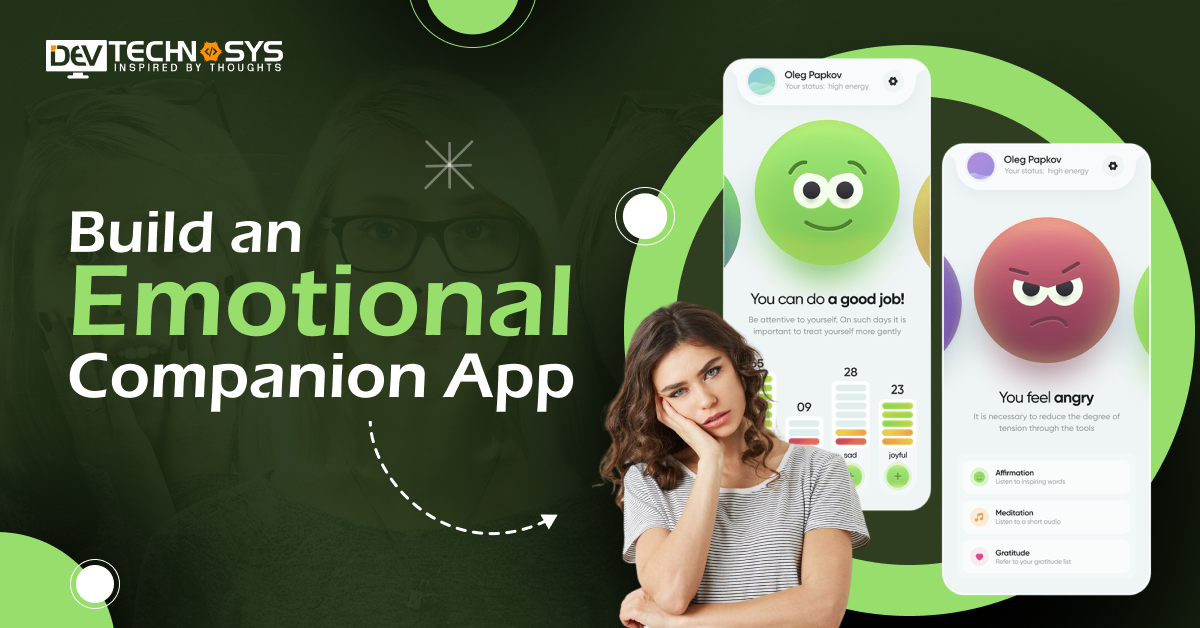
The Emotional Companion app allows users to manage their anxiety and helps them maintain emotional connections and stress. It offers a wide range of features, such as mood tracking, user profiles, connecting with mental health professionals, meditation, data collection, and AI analytics. An app like MoodMission mainly focuses on understanding the users to manage their mental health issues and mood swings.
- The emotional companion app market is expected to grow at a compound annual growth rate of 15.3% from 2024 to 2032.
- It allows users to track their mood swings and identify the trigger patterns and stress reduction.
- According to the global market, the average revenue per user is expected to be around $74.12.
7 Major Key Steps to Build an Emotional Companion App
For an efficient emotional companion app development, you must observe the robust development stages for successful development. These development stages can ensure the app’s scalability, usability, and effectiveness. So, here we provide the significant mobile app development process:
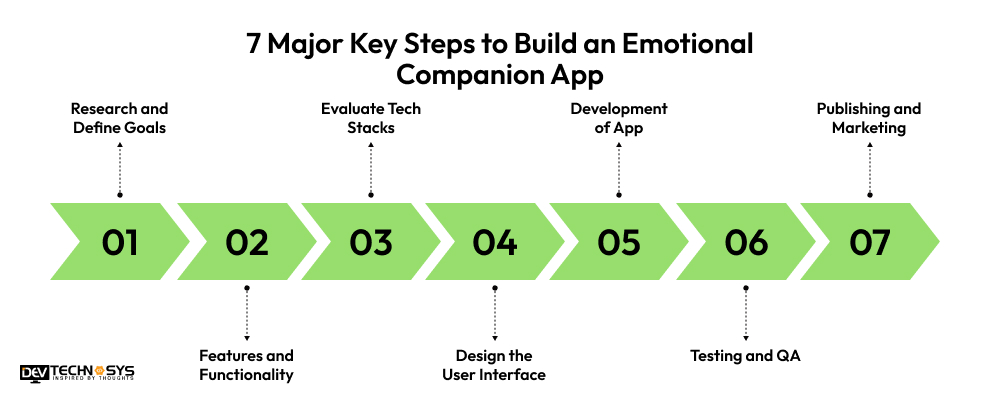
1. Research and Define Goals
Let’s start with the first stage of development: defining your project’s clear goals and requirements that can impact the competitive market. Discover what types of apps can reach a larger scale in the market and observe similar emotional companion apps to understand their workings. Prepare sheet of primary or ideal users of the app.
2. Features and Functionality
In the second stage of development, hire mobile app developers to create a list of features and functions that must be added to your emotional companion app. Prepare a plan for competing with your competitors and how you can compete with their services. It involves advanced features such as manage mental health, track mood swings, and personalized recommendations.
3. Evaluate Tech Stacks
Let’s move to the third stage of development: choosing the best tech stacks for successful emotional companion app development. Analyze and compare the existing apps’ tech stacks to your tech stacks. This includes the latest programming languages, deployment platforms, APIs, cloud storage, security measurements, and more.
4. Design the User Interface
In the design stage, hire dedicated developers to create a UI/UX with a simple interface that enables users or customers to interact easily with the app. This is one of the most crucial stages of development, and it involves many premium designs, such as layouts, dashboards, and plugins.
5. Development of App
In this development stage, you must assemble professional developers to easily implement all the app’s features and functions. It includes many implementation resources such as models, modules, built-in features, classes, objects, etc. This stage is also a vital step in overall development, and developers have to integrate the resources carefully.
6. Testing and QA
In this testing phase, look for iPhone or Android app developers for hire to test the emotional companion app under different conditions to ensure all the features are correctly working. Search for the bugs or glitches that can automatically create their space in the app. After that, check the app’s quality because it may be reduced in the implementation phase.
7. Publishing and Marketing
Let’s finish the development process and hire experienced developers to launch the app on the selected platforms, such as Android or iOS. After the app is successfully released, it’s time to market and promote it in this competitive market. Marketing can take different formats, such as affiliate marketing, email marketing, content marketing, and social media platforms.
Must-Have Features to Build an Emotional Companion App
To understand the services of the emotional companion app, one must know the premium features of the app because this can make it easy to understand the app’s workings. So, here is a list of the features.
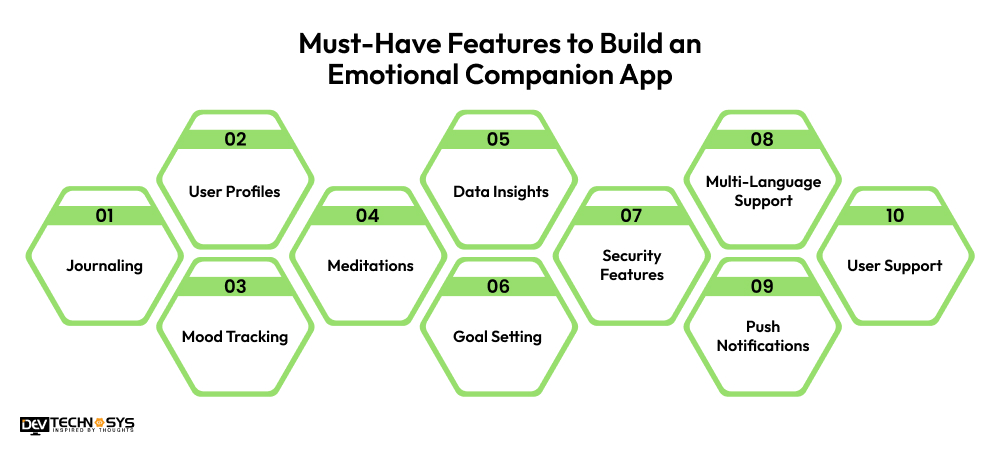
| Features | Description |
| Journaling | It allows users to express their feelings and emotions to encourage their self-reflection. |
| User Profiles | This platform allows users to create free accounts using mobile numbers, email, social media platforms, and a guest. |
| Mood Tracking | Develop a mental healthcare app like MindDoc that allows users to track their mood swings patterns and identify the trigger spot. |
| Meditations | It offers a wide range of guided meditations, including those for reducing stress, improving sleeping, managing anxiety, and more. |
| Data Insights | The emotional companion app observes the user’s emotional spots and patterns by mood tracking. It can be in the audio or video formats. |
| Goal Setting | This platform allows users to set their personal goals about their mental health, and users can track their personal goals. |
| Security Features | The emotional companion app has robust security measures to protect the user’s sensitive mental health data from data breaches. |
| Multi-Language Support | This platform supports the multi-language according to the user’s flexibility. Contact a mindfulness app development company to install this feature in your app. |
| Push Notifications | It sends message alerts to users regarding new updates, reminders for mental health tracking, and more. |
| User Support | User support is available for 24/7 to solve the users problems via chat, call, email, and other communication options. |
The Cost to Build an Emotional Companion App
The cost to create an emotional companion app is based on various crucial factors, which can fluctuate the overall app development cost. These factors include the project’s requirements, complexity, features, functions, infrastructure, size, development team, maintenance, and deployment platforms. The emotional companion mobile app development cost is around $8,000 to $25,000 or more.
So, here we provide detailed information on cost with the type of app’s complexity:
| Emotional Companion App Development | Estimated Cost | Time Frame |
| Basic App Development | $8000 – $14000 | 3 to 5 Months |
| Mid-Complex App Development | $14000 – $21000 | 5 to 9 Months |
| High-Complex App Development | $25000+ | 9+ Months |
The maintenance cost of your app can be around 15% to 20% of the overall healthcare app development cost. Some vital factors, such as networking, customer support, domain renewal, and SSL certificates, can change the development budget.
How to Make Money From the Emotional Companion App?
It’s great to make an emotional companion app with extensive functionalities, but businesses are unfamiliar with how to make profitable opportunities from it. So, here we provide monetization techniques that can easily generate new revenue streams:
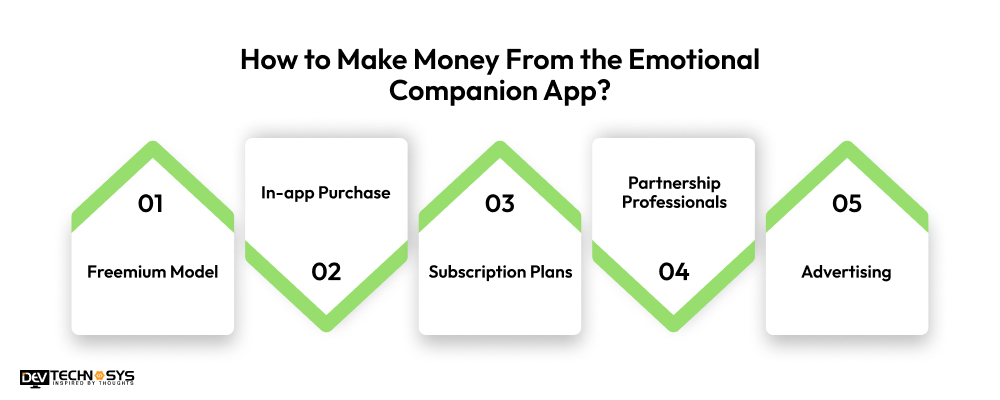
1. Freemium Model
In the first monetization technique, an emotional companion app offers a basic version with limited features and functions. If a user wants to access all the services and features of the app, they have to purchase subscription plans and additional features. So, the freemium model can generate new revenue streams for businesses.
2. In-app Purchase
Let’s come to the second monetization technique, user wants to access the individual feature or selected guided meditation series, then they purchase the additional features inside the app.
So, these additional purchases can lead the way in increasing the user base and overall company’s valuation.
3. Subscription Plans
In the third monetization technique, an emotional companion app offers various subscription plans with different costs. To access the app’s premium features and services, users must buy subscription plans such as premium and enterprise. According to the Android app development company, these subscription plans can be a huge profit-generating opportunity for businesses.
4. Partnership Professionals
In this monetization technique, an emotional companion app allows businesses or agencies to sell their services and products via the app and earn a commission-based income on every sale of their products. These commission-based earnings can increase the company’s valuation.
Also read: Top Mood Tracker Applications
5. Advertising
Let’s move to the final monetization technique; this platform allows vendors or merchants to display or show their products in your app as advertising. Advertising can vary in different formats, such as native ads, display ads, banner ads, image ads, video ads, and pop-up window ads.
How Dev Technosys Will Help You?
In the final stage, we delved into the robust process to build an emotional companion app and the associated development costs. This discussion has dispelled any uncertainties you may have had about the app’s development. Investing in this app presents a promising opportunity for business growth and the potential to soar to new heights of success. The app boasts various advanced features, from managing mental health to tracking mood swings and identifying trigger patterns, all designed to enhance user experience.
Book an appointment with a mental health app development company to create an emotional companion app within a cost-effective budget and time frame.
Frequently Asked Questions
1. How Long Does it Take to Build an Emotional Companion App?
To develop an emotional companion app usually takes 3 to 8 months, depending on the project requirements and the developer’s working hours.
2. How Much Does the Cost to Make an Emotional Companion App?
The cost to build an emotional companion app ranges between $8,000 and $25,000, depending on the app’s complexity, features, functions, size, and deployment platforms.
3. Why do Businesses Invest in Emotional Companion App Development?
Businesses invest in emotional companion app development to receive higher success rates and generate new revenue streams.
- Globally reached
- Increased sales
- Brand reputation
- User insights
4. Which Technologies Are Used to Build an Emotional Companion App?
Powerful technologies are used to create an emotional companion app; here is the list of the technologies:
- Python
- Java
- PHP
- Kotlin
- Flutter
5. How Much Does it Cost to Hire Developers to Build an Emotional Companion App?
The cost to hire developers to build an emotional companion app is around $15 to $25 per hour. It is usually based on the developers’ working experience and location.