



















Key takeaways:
-
-
- The cost to develop route optimization software typically ranges from $8,000 to $25,000, depending on algorithm complexity and real-time traffic integration.
- The global route optimization software market is expected to exceed $21.46 billion by 2030, with route optimization solutions playing a critical role in delivery efficiency and supply chain innovation.
- Platforms like Google Maps API, Mapbox, and HERE Technologies provide essential mapping, geolocation, and traffic data for building intelligent routing solutions.
-
“Track Routes Easily”
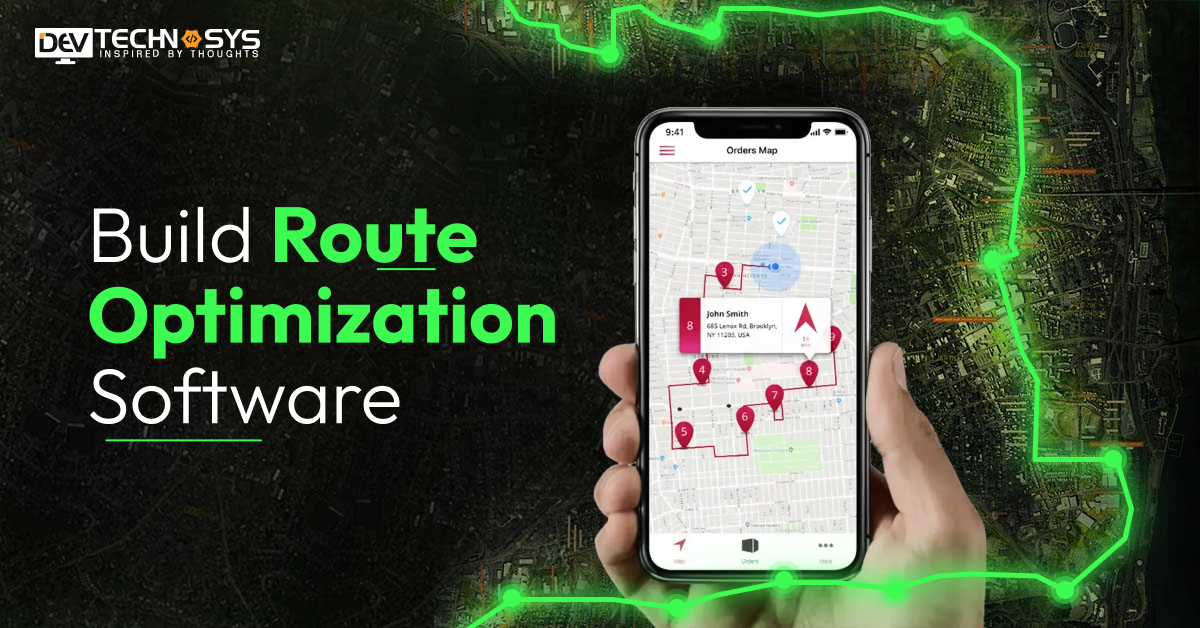
Route optimization software is designed to help businesses plan routes that save time, reduce fuel consumption, and improve delivery efficiency.
To build route optimization software, developers combine mapping technologies, real-time traffic data, and smart algorithms. The process begins with collecting accurate location and traffic information from GPS, maps, and APIs.
Over recent years, we have seen a rapid growth in route optimization software. As per the market analysis, it is expected to grow with a CAGR of 14.4% during the forecast period.
That’s why most entrepreneurs are ready to create route optimization software and take their business to the next level.
Let’s explore the best routes!
Current and Future Market Projections of Route Optimization Software
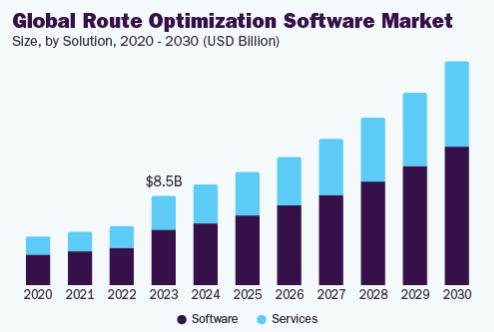
- The global route optimization software market was valued at around $8.51 billion by 2023.
- The route optimization software is projected to grow to around $21.46 billion by the end of 2030.
- According to the recent study, the route optimization software is projected to grow with a Compound Annual Growth Rate (CAGR) of 4% from 2024 to 2030.
- As for the industry vertical, the ride-hailing and taxi services are expected to grow with a CAGR of 8% from 2024 to 2030.
- With a deep knowledge, the large enterprises dominate the route optimization software market, holding the largest revenue share in 2024.
What is Route Optimization Software?
The route optimization software is a digital tool and application that helps businesses plan the perfect route for timely delivery. It helps delivery vehicles optimize their operations by considering various factors, including vehicle traffic, delivery window times, vehicle capacity, and driver schedules.
This software features advanced capabilities, including real-time traffic data, route planning, proof of delivery, dynamic routing, and fleet management integration.
Route4Me: Success Story
- Route4Me was launched in 2009 by Dan Khasis in Fort Lee, New Jersey, and serves 25,000 businesses globally.
- As for the industry recognition, the Route4Me name was a finalist in the UPS and Astrolabs smart logistics.
- Estimated annual revenue between $50M–$100M, serving over 21,000 customers across 100
- Optimized over 30 million routes, reducing over 40 billion miles driven, contributing to sustainability efforts.
- Route4Me mobile apps crossed 2 million downloads and provide features like voice integration and real-time tracking.
Different Types of Route Optimization Software
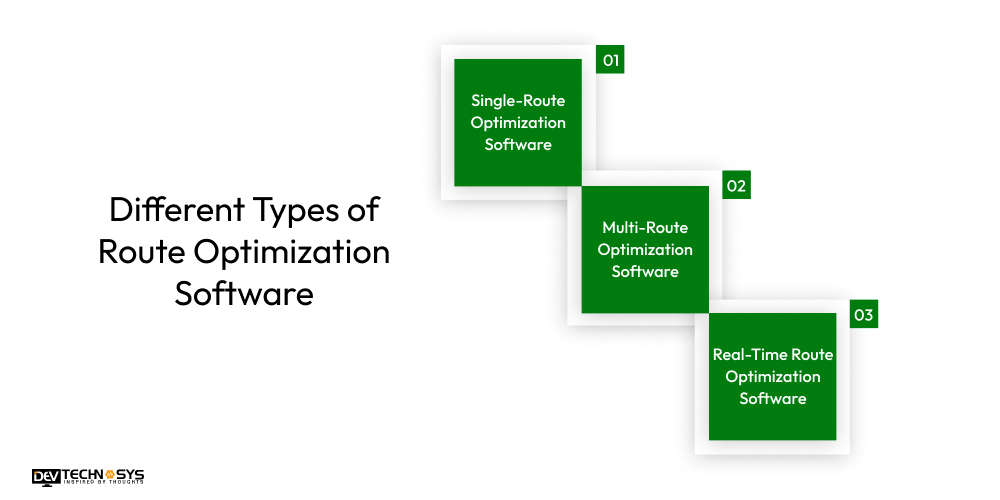
Route optimization software comes in three main types: single-route for individual drivers, multi-route for fleet management, and dynamic real-time optimization that adapts to traffic, weather, and delivery changes for maximum efficiency.
1. Single-Route Optimization Software
This software focuses on optimizing a single route for one vehicle or driver. It calculates the fastest or shortest path between stops, minimizing travel time and fuel costs. Ideal for small businesses or individual drivers, it enhances efficiency without handling complex multi-vehicle logistics.
2. Multi-Route Optimization Software
Designed for fleets, this software optimizes multiple routes simultaneously across several vehicles. It balances workloads, prevents overlapping routes, and reduces overall travel distance.
Commonly used by delivery companies and logistics providers, it ensures timely deliveries while minimizing operational costs and maximizing resource utilization.
3. Real-Time Route Optimization Software
This type adapts routes in real-time based on traffic, weather, and delivery changes. It continuously recalculates optimal paths, improving responsiveness and reducing delays.
Ideal for urban delivery services and ride-sharing platforms, it enhances customer satisfaction and operational efficiency in unpredictable environments.
10 Popular Route Optimization Software
Are you looking to build route optimization software? Then you need to observe the existing software that helps to understand the overall working process and success criteria.
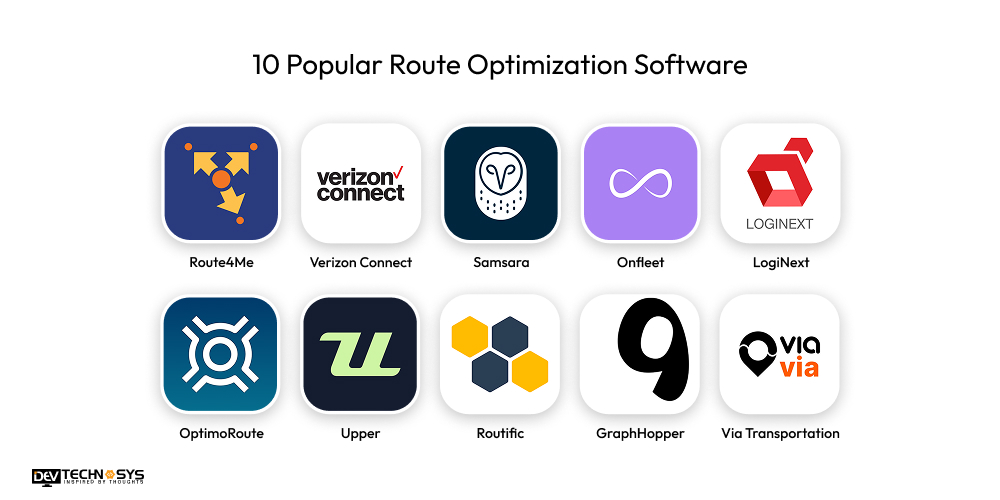
| Software | Launch Year | Platform Availability | Unique Feature |
| Route4Me | 2009 | Web, iOS, Android | Multi-stop route planning with real-time optimization |
| Verizon Connect | 2008 | Web, iOS, Android | Dynamic routing with ‘what-if’ modeling for alternative routes |
| Samsara | 2011 | Web, iOS, Android | Integration with Nextbillion.ai for complex multi-vehicle routing |
| Onfleet | 2012 | Web, iOS, Android | Real-time driver communication via the Onfleet Driver App |
| LogiNext | 2014 | Web, iOS, Android | Automated driver allocation based on real-time data |
| OptimoRoute | 2016 | Web, iOS, Android | Skill-based routing with appointment management |
| Upper | 2019 | Web, iOS, Android | AI-powered route optimization with transparent pricing |
| Routific | 2014 | Web, iOS, Android | Clean interface with a freemium model for local deliveries |
| GraphHopper | 2014 | Web, Android, iOS, Raspberry Pi | Open-source routing library supporting various algorithms |
| Via Transportation | 2012 | Web, iOS, Android | Dynamic shared ride routing for microtransit and paratransit |
Why Businesses Want to Invest in Route Optimization Software Development?
In this digital era, everyone wants convenience and flexibility, which is why the demand for route optimization software has increased. Investing in the fleet management app development is a massive opportunity for businesses to expand into global markets to increase sales. So, let’s explore the benefits of route optimization software for businesses:
- Reduce Operational Cost
- Enhance Customer Experience
- Competitive Advantage
- Improved Delivery Efficiency
- Data-Driven Insights
1. Reduce Operational Cost
The route optimization software plays a vital role in reducing the operational cost, as it includes saving fuel consumption, vehicle maintenance expenses, labour hours cost, and more.
These reduce operational cost, converting into a profitable opportunity for businesses, and most fleet drivers use this software to reduce their overall operational cost.
2. Enhance Customer Experience
If businesses develop logistics management software, it can enhance the customer experience by utilizing advanced features such as accurate route optimization, predictive delivery windows, real-time tracking, and push notifications. The customer uses the reliable services, such as better communication, fewer delays, and more.
3. Competitive Advantage
Let’s move to the third benefit: develop route optimization software with unique features and services can lead to gaining a competitive advantage.
The unique features are automated route planning, multi-stop route planning, driver management, proof of delivery, cost optimization, and geofencing. So, these premium features can increase user engagement and reach a global audience.
4. Improved Delivery Efficiency
Connect to the fourth benefit to develop an app like Motive Fleet, these software and applications allow drivers to make more stops in one day, which can increase productivity.
It enables businesses to meet the deliveries, handle faster deliveries, improve customer satisfaction, and complete more orders compared to others.
5. Data-Driven Insights
Modern route optimization software collects valuable data on routes, traffic patterns, and delivery performance. Businesses can analyze this information to identify bottlenecks, optimize schedules, and make informed strategic decisions.
Insights from the software also support predictive planning, cost forecasting, and continuous improvement initiatives.
Want a chatbot demo or pricing? Fill the form and talk to our experts today.
Pick what you need below — you can select more than one — then tap Get detail to continue.
-
Chatbot demo dashboard
-
Cost to develop an app
-
Industry report
-
Case study
The Role of AI in Route Optimization Software
- AI predicts traffic patterns using historical and real-time data, helping routes avoid congestion and reduce delivery delays effectively.
- AI continuously updates routes in real-time, adapting to traffic, weather, and unexpected obstacles to ensure optimal delivery efficiency.
- AI assigns vehicles and drivers based on route complexity, availability, and skills, improving overall fleet utilization and productivity.
- AI optimizes routes for multiple vehicles simultaneously, ensuring balanced workloads and preventing route overlaps or inefficiencies.
- AI predicts accurate delivery times, providing real-time updates to customers, reducing missed deliveries, and improving satisfaction.
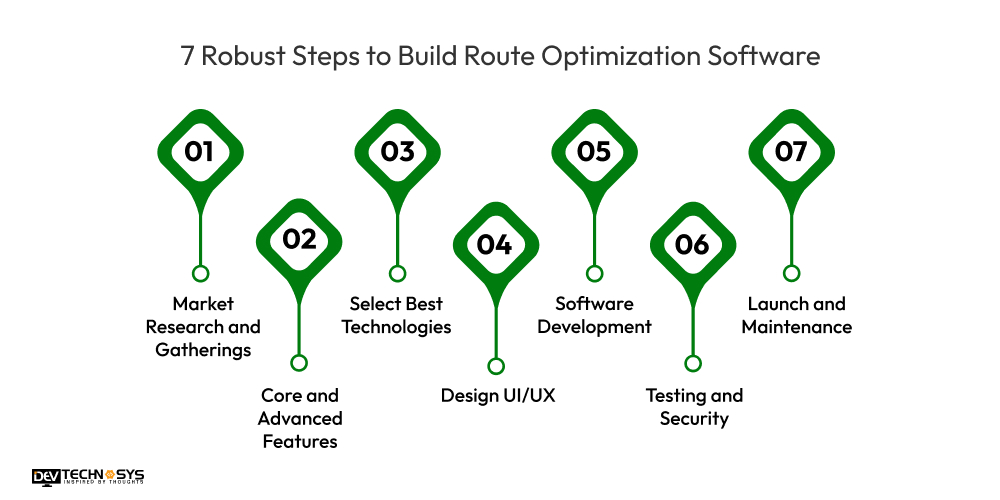
7 Robust Steps to Build Route Optimization Software
Finally, you have reached the section you have been waiting for from the start of the blog. To build route optimization software, businesses need to follow the proper steps for creating successful software and understand them with in-depth knowledge. So, let’s explore the various steps of route optimization on demand app development:
- Market Research and Gatherings
- Core and Advanced Features
- Select Best Technologies
- Design UI/UX
- Software Development
- Testing and Security
- Launch and Maintenance
1. Market Research and Gatherings
Let’s begin the first stage to build route optimization software, and research in this competitive market about which existing software has the highest success rates.
And what types of software are in high demand? After that, identify your project requirements and needs that must be integrated and make a structured sheet.
2. Core and Advanced Features
In the second stage, to create route optimization software, hire mobile app developers to identify core and advanced features that must be added to your software.
It includes real-time tracking, driver management, geofencing, proof of delivery, dynamic routing, push notifications, and fleet management integration. Also, identify the primary and secondary users of the software.
3. Select Best Technologies
Moving to the third stage to make route optimization software, choose the best tech stack for a reliable and successful software. It includes various tech stacks such as cloud storage, database, testing, security, designing, frontend, backend, and more. So, select the reliable technologies that help build a strong software to easily handle a large number of operations.
4. Design UI/UX
Reach the fourth stage of route optimization software development, hire dedicated developers to design a user-friendly interface that enables users to easily access all the software’s services.
It includes various design tools such as Sketch, Figma, Adobe XD, Invision, and more. Choose the various design elements according to your preference, such as themes, layouts, templates, and fonts.
5. Software Development
In the fifth stage, to create route optimization software, assemble highly talented developers to begin the real coding for frontend and backend development.
Integrate the third-party tools and applications such as payment gateways, social media platforms, and more. Implement the large storage database and add functions and modules.
6. Testing and Security
Progress to the sixth stage to make route optimization software. Before launching the software in the live phase, test it using various techniques, including unit, integration, functional, and more.
If errors and bugs are found, then fix them immediately to increase the overall performance. Implement the robust security measurements such as two-factor authentication, HIPAA, encryption techniques, and more.
7. Launch and Maintenance
Finally, now the time has come to end the development process by releasing them to the live phase. After being successfully published, hire a fleet management app development company to conduct the maintenance services to keep the software up-to-date.
It consists of various maintenance services, including bug fixes, regular updates, new feature additions, OS version upgrades, security issue resolutions, and performance optimizations.
What Advantages Does Route Optimization Software Offer Users?
Route optimization software enables users to reduce costs, save time, improve customer satisfaction, enhance driver safety, support scalability, make real-time adjustments, and gain a competitive edge. Explore the various advantages that users gain:
1. Environmental Sustainability
By optimizing routes and reducing unnecessary mileage, the software lowers fuel consumption and greenhouse gas emissions. It helps businesses adopt eco-friendly practices and contribute to environmental sustainability while maintaining cost efficiency.
2. Enhanced Driver Safety
Optimized routes avoid dangerous roads, heavy traffic, and risky driving conditions. This reduces the likelihood of accidents, minimizes stress for drivers, and promotes safer transportation operations across the fleet.
3. Scalability for Growing Businesses
As businesses expand, route optimization software easily handles increasing delivery volumes and fleet sizes. It allows seamless scaling without the need for additional staff or complex manual planning.
4. Real-Time Problem Solving
The software can dynamically adjust routes due to accidents, traffic jams, or last-minute changes. This flexibility ensures timely deliveries and reduces operational disruptions.
5. Competitive Advantage
Efficient routing improves service reliability, reduces costs, and enhances customer satisfaction. Businesses gain a strategic edge over competitors through faster, more dependable, and cost-effective delivery services.
10 Must-Have Premium Features of Route Optimization Software
Are you ready to build route optimization software? First, you need to know about the core and advanced features that must be integrated. So, let’s explore a wide range of premium features:
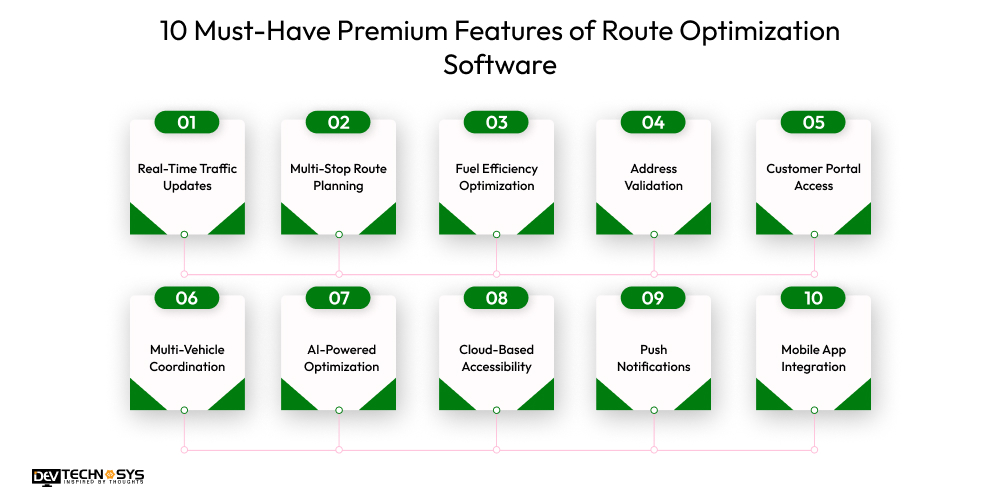
1. Real-Time Traffic Updates
The route optimization software provides real-time traffic updates, enabling users to reroute and avoid traffic and congestion.
2. Multi-Stop Route Planning
It allows users to plan for multiple stops, reducing traffic and travel distance, and easily deliver packages or other items on time without delays.
3. Fuel Efficiency Optimization
The fleet routing software suggests the shortest route that can reduce fuel consumption and other operational costs.
4. Address Validation
The route management system ensures that it provides an accurate location for delivering packages or other items, thereby reducing missed deliveries and incorrect addresses.
5. Customer Portal Access
This feature offers a customer portal that enables users to track their delivery in real-time and get updates, increasing the transparency.
6. Multi-Vehicle Coordination
It allows users to optimize the route for their multiple vehicles, which can reduce the workload and overlap.
7. AI-Powered Optimization
The fleet route optimization software uses machine learning to provide better route decisions and understand the changing patterns.
8. Cloud-Based Accessibility
With the help of cloud-based accessibility, managers or users can access route planning from anywhere and on any device connected to a stable internet connection.
9. Push Notifications
The route planning software sends real-time alert messages to drivers and users regarding delivery delays, route changes, and any other relevant updates.
10. Mobile App Integration
It allows users to check their deliveries on their smartphones, and it helps drivers get a navigation and communication tool.

The Cost to Build Route Optimization Software
The cost to build route optimization software is around $8,000 to $25,000, depending on various factors such as premium features, complexity, infrastructure, and deployment platforms. The cost of customized route optimization software varies because it includes selected features, each with its own cost.
There are additional factors that can also influence the cost, such as testing, designing, maintenance, security measures, development team, and more.
Let’s check the cost table below:
| Component | Estimated Cost (USD) |
| Basic Route Planning Module | $2,000 – $5,000 |
| Real-Time Traffic Integration | $1,000 – $3,000 |
| Mobile App (iOS/Android) | $2,500 – $6,000 |
| Fleet Management Module | $1,500 – $4,000 |
| Analytics & Reporting | $1,000 – $2,500 |
| Cloud & Backend Infrastructure | $1,000 – $3,000 |
| Customer Portal & Notifications | $1,000 – $3,000 |
Total Estimated Cost: $8,000 – $25,000+
5 Crucial Factors That Affect the Route Optimization Software Development Cost
Do you want to develop route optimization software within a fixed budget? Then this section is necessary for you, as it helps you to avoid the factors that affect the overall route optimization software development cost. So, let’s explore the crucial factors:
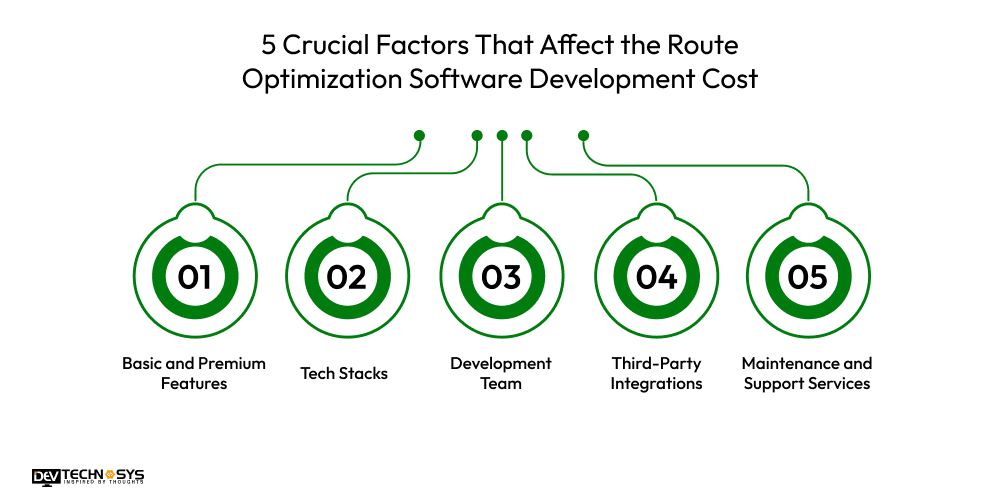
1. Basic and Premium Features
In the first cost affecting factor, basic and premium features are one of the common factors that can easily influence the cost to build an app like Onfleet. Basic features include simple route calculation, multi-stop route planning, and basic analytics.
Premium functionalities involve AI-powered route optimization, fleet management, and real-time traffic updates. These advanced features raise the cost to build route optimization software.
| Feature Type | Example Features | Estimated Cost (USD) |
| Basic Features | Multi-stop route planning, basic analytics, simple notifications | $3,000 – $8,000 |
| Premium Features | Real-time traffic updates, AI-powered optimization, fleet management | $5,000 – $15,000 |
2. Tech Stacks
Connect to the third cost-affecting factor, there are various types of tech stacks, and their cost is also different from each other. Selecting the best tech stack is also necessary for the successful development of a project.
Some of the tech stack are highly paid, such as programming languages, cloud storage, database, authorization, and more. Ultimately, select technologies based on your overall project development budget.
| Component | Estimated Cost (USD) |
| Frontend (Web & Mobile) | $2,000 – $6,000 |
| Backend & Database | $3,000 – $8,000 |
| Cloud Infrastructure | $1,500 – $4,000 |
| AI/ML Algorithms | $2,500 – $6,000 |
3. Development Team
Moving to the second factor, the developer’s team is a crucial factor that can highly impact the cost to develop an app like Autosist; in fact, businesses need to change their project planning.
If your project complexity and size are high, then you need to hire experienced developers, and they demand a high salary package. Therefore, select the developers based on your project budget.
| Role | Estimated Cost (USD) |
| Project Manager | $1,500 – $3,000 |
| UI/UX Designer | $1,000 – $2,500 |
| Frontend Developer | $2,000 – $4,500 |
| Backend Developer | $2,500 – $5,000 |
| QA Engineer | $1,000 – $2,500 |
4. Third-Party Integrations
Coming to the fourth factor, integrating the third-party tools and applications can be another cost-affecting factor, because some third-party APIs or tools have higher licensing fees.
There are various third-party applications such as traffic data services, weather APIs, GPS & mapping APIs, payment gateways, CRM systems, and telematics devices. These third-party integrations can increase the overall route optimization software development cost.
| Integration Type | Estimated Cost (USD) |
| GPS & Mapping APIs | $500 – $2,000 |
| Traffic Data Services | $500 – $1,500 |
| Fleet Management Systems | $1,000 – $3,000 |
| Weather APIs | $300 – $1,000 |
| CRM & ERP Integration | $1,000 – $3,000 |
| Payment Gateways | $500 – $1,500 |
5. Maintenance and Support Services
In the last cost-affecting factor, maintenance and support services are crucial for every software and mobile app development. There are many maintenance services that incur high expenses, such as updating outdated features, adding new enhancements, implementing regular updates, addressing security concerns, and more.
The customer support team handles user concerns and resolves them as soon as possible. So, these maintenance and support services can lead the way to raising the mobile app development cost.
| Service Type | Estimated Cost (USD per year) |
| Bug Fixes & Updates | $1,000 – $3,000 |
| Server & Cloud Maintenance | $500 – $2,000 |
| Customer Support | $1,000 – $2,500 |
| Feature Upgrades | $1,500 – $4,000 |

Robust Tech Stacks to Build Route Optimization Software
| Layer | Technology / Tools |
| Frontend (Web & Mobile) | React, Angular, Vue.js, Flutter, React Native |
| Backend | Node.js, Python (Django/Flask), Java (Spring Boot), Ruby on Rails |
| Database | PostgreSQL, MySQL, MongoDB, Firebase |
| Cloud & Hosting | AWS, Google Cloud, Microsoft Azure, DigitalOcean |
| APIs & Integrations | Google Maps API, Mapbox, OpenStreetMap, TomTom |
| AI / Machine Learning | TensorFlow, PyTorch, Scikit-learn |
| Real-Time Data / Messaging | Firebase, Socket.io, Kafka |
| DevOps & CI/CD | Docker, Kubernetes, Jenkins, GitHub Actions |
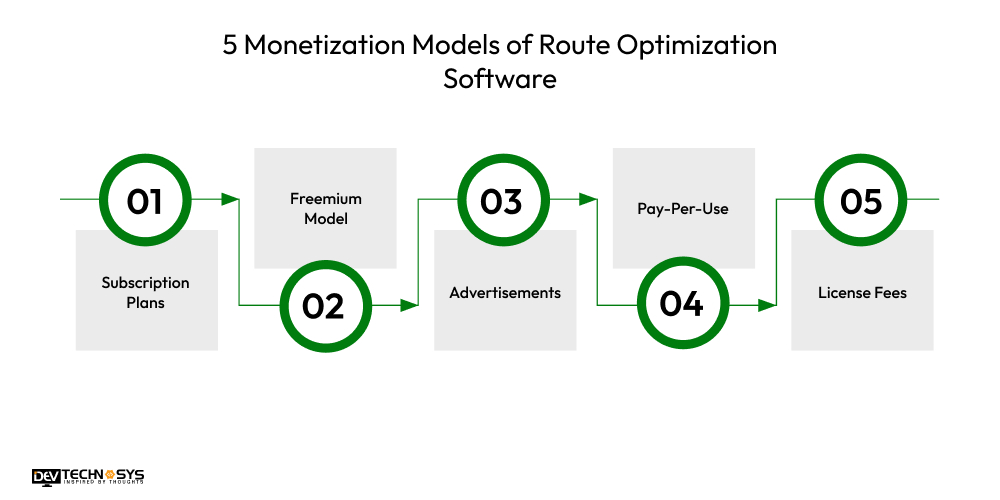
5 Monetization Models of Route Optimization Software
Every business builds software and applications to make money and increase its business valuation. So, how can businesses generate money from route optimization software?
There are various money-making techniques that help them generate higher revenue streams. So, let’s explore the wide range of monetization techniques:
- Subscription Plans
- Freemium Model
- Advertisements
- Pay-Per-Use
- License Fees
1. Subscription Plans
In the first money-making technique, businesses can offer subscription plans to access the premium features and functions of route optimization software.
It includes various plans such as free, premium, and enterprise. If any user wants to use the rich features, then they need to purchase the premium or enterprise plan. These subscription models can easily generate new revenue streams.
2. Freemium Model
Let’s talk about the second money-generating technique, route optimization software offers basic and limited features for freemium users.
To access the full potential of the software, they need to buy the additional services within the software. These freemium models can be a new income source and increase the overall valuation.
3. Advertisements
The third monetization technique is for businesses to show third-party organizations’ products and services in their software as advertisements.
There are different types of advertisements, such as banner ads, video ads, native ads, pop-up window ads, and more. Businesses can charge fees for displaying the advertisements, which can generate new revenue streams for businesses.
4. Pay-Per-Use
Customers are charged based on the number of routes, deliveries, or optimization requests processed. This flexible model is ideal for businesses with fluctuating workloads, as they only pay for what they use. It ensures affordability for small operations while allowing the software provider to scale revenue with usage.
5. License Fees
A one-time fee grants lifetime access to the software. This model appeals to companies that prefer owning software rather than paying recurring charges. Licenses often include limited updates or support, and businesses may need to pay extra for major feature upgrades or integration with other systems.
How Dev Technosys Will Help You Build Route Optimization Software?
Dev Technosys is a premier fleet management software development company that delivers thousands of successful projects worldwide. They have a team of dedicated developers with a rich skill set and extensive experience in developing route optimization software with customized functionalities.
Integrate advanced features such as AI-powered optimization, cloud-based accessibility, multi-stop route planner, fuel efficiency optimization, and more.
As we discussed in the blog, the route optimization software is a massive opportunity for entrepreneurs to grow their business and take it to the next level.
Frequently Asked Questions
1. How Much Does it Cost to Build Route Optimization Software?
The cost to develop route optimization software ranges from $8,000 to $25,000. The cost can be influenced due to several factors such as project complexity, infrastructure, development team, infrastructure, and deployment platforms.
2. How Long Does it Take to Create Route Optimization Software?
To create route optimization software, it normally takes around 4 to 10 weeks. The development timeline is based on the developers’ working hours, the number of features, project complexity, and size.
3. Which Technologies Are Used to Make Route Optimization Software?
There are various popular or robust technologies that are used to make route optimization software:
- Java
- Python
- C++
- PHP
- React Native
- Flutter
4. What Are the Future Trends in Route Optimization Software?
It includes many future trends in the route optimization software:
- Predictive delivery analytics
- AI-driven route
- Dynamic traffic adjustment
- Cloud-based platforms
- IoT-enabled logistics
5. What Challenges Faced During Route Optimization Software Development?
Many different types of challenges are faced during route optimization software development:
- Higher development cost
- Scalability and performance
- Real-time computation
- Route complexity handling
- Data accuracy issues