















Quick Cost Summary for Restaurant Mobile App Development
Overall Cost Range:
Restaurant mobile app development typically costs $10,000 to $30,000+ depending on interactive design, dashboards, analytics features, AI integration, app complexity, and compliance requirements.
Cost by Complexity:
- Restaurant App MVP Cost: $10,000–$15,000
This version includes a user profile, push notifications, an admin panel, a restaurant profile, a delivery partner panel, order history, and secure payment integration. - Mid-Level Restaurant App Development Cost: $15,000–$25,000
Such solutions include POS integration, real-time order tracking, and role-based access control. U.S. businesses may prefer to build custom apps for better control. - Advanced Restaurant Mobile App Development Cost: $25,000–$30,000+
The enterprise-grade application includes AI-powered recommendations and advanced analytical dashboards, automated marketing, compliance, and real-time delivery management.
Key Cost Factors:
App complexity, number of platforms, UI/UX design, online ordering, payment gateways, AI features, third-party APIs, security, compliance, cloud infrastructure, testing, scalability, and post-launch support.
Development Timeline:
A restaurant mobile app generally takes 3 to 9+ months to design, develop, integrate, test, and launch.
Additional Development Costs:
U.S. businesses might experience a higher budget because of predictive analytics, restaurant app maintenance, technical support, or future app enhancements.
Did you know the global market of online food delivery is expected to hit $505 billion by the year 2030, rising at a CAGR of over 10%. There are millions of users who trust restaurant apps for quick ordering, reservations, and loyalty rewards. In today’s modern world, restaurants provide more than just good food and nice ambiance; they also offer convenience, speed, and customer engagement. With food delivery apps and online ordering becoming the norm, having your own restaurant mobile app is no longer a luxury but a must-have tool to stay competitive.
Naturally, the first question most restaurant owners ask before taking the leap is: “What is the cost to build a restaurant mobile app?”
That’s exactly what we’ll cover in this restaurant mobile app development cost blog. We understand your concerns, so this guide is designed to give you a clear understanding of the development cost required. From core features and design elements to the development team and ongoing maintenance, the cost to build a restaurant mobile app depends on various factors. So, without further ado, let’s begin!
Restaurant Mobile App Market Statistics 2026-2027
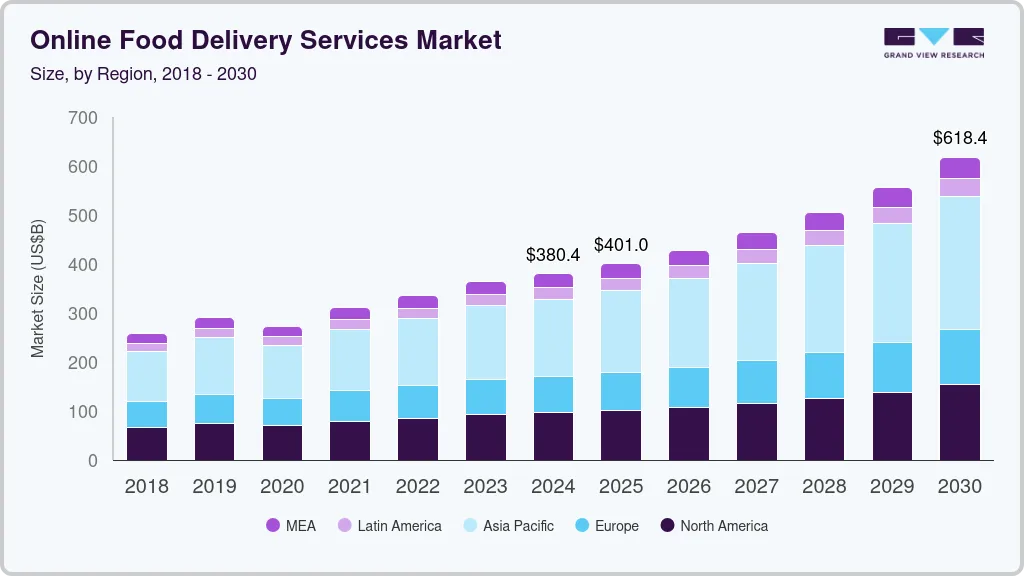
Before starting the project, we need to understand the market trends in detail to help businesses generate better ROI from the restaurant mobile app. We learned the following from the report by Grand View Research:
- The global online food delivery services market size is projected to reach USD 618.36 billion by 2030.
- The global restaurant management software market size is projected to reach USD 14.70 billion by 2030, growing at a CAGR of 17.4% from 2026 to 2030.
- The North American online food delivery services market held a significant share of over 25%.
- The online food delivery services market in the Asia Pacific is growing significantly at a CAGR of over 10.1% from 2026 to 2030.
- By type, the platform-to-consumer segment held a market share of over 73%.
- By payment method, the online payment segment accounted for the largest market share of over 79%.
How Much Does it Cost to Build a Restaurant Mobile App?
Now is the time to know the cost to develop a mobile app. The average price of restaurant mobile app development starts from $8000 – $30,000. However, the cost varies depending on the app you choose to develop. The type of app and its duration offer the actual cost of developing a restaurant mobile app. Below we have mentioned a table to make you understand what we just said.
Restaurant Mobile App Complexity |
Cost to Develop a Restaurant App |
| Simple Restaurant App Development | $10,000 – $15,000 |
| Medium Restaurant App Development | $15,000 – $25000 |
| Complex Restaurant App Development | $22,000 – $30,000+ |
Note: This is an estimated cost. The final price should be confirmed after the project discussion with our team.
However, you must choose delivery service app development company to understand the cost more thoroughly. A firm with years of experience will help you get an accurate cost estimation of restaurant mobile apps. If you have decided to develop a mobile restaurant app for your business, you must look for the best one. We would like to add that the cost of restaurant mobile app development varies on several factors. We have mentioned all those factors in a separate section to make you deeply understand each one.
Free App Idea Reality Check: Let's Stress-Test Your Concept
Share your app idea with us. Within 3 business days, we'll uncover UX gaps, feature opportunities, and potential development challenges, so you can build with confidence. No strings attached.
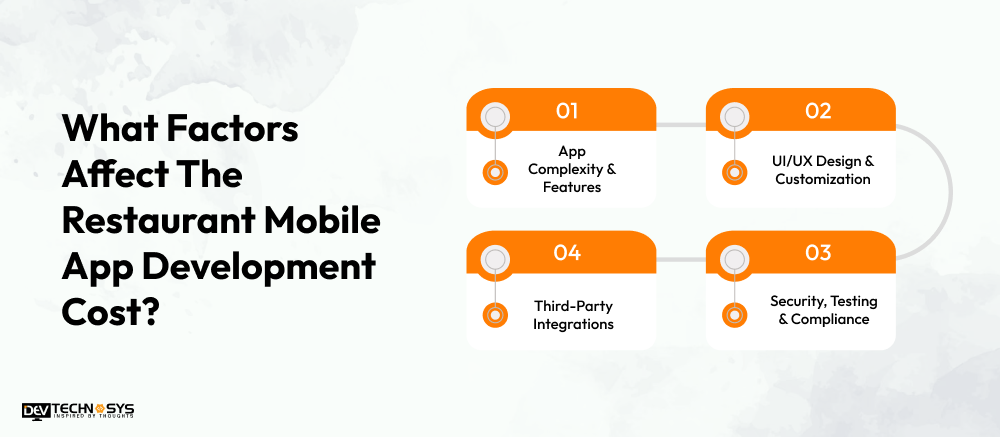
What Factors Affect The Restaurant Mobile App Development Cost?
Restaurant mobile app development cost depends on security, third-party integration, design, and more. A basic restaurant app can cost less than an enterprise-grade platform. Business leaders must understand these cost drivers, as they can affect the overall project budget.
1. App Size
Yes, you heard it right. App size is one factor influencing the cost of developing a mobile app. It is essential to know that if your restaurant business is large, then the cost will be a little expensive for you. The size of the app varies depending on the size of the business itself. Hire the best on-demand app development company that may charge you somewhere between $8,000 and $15,000 for a simple restaurant mobile application.
| App Size | Description | Estimated Cost ($) |
| Small | Basic app with 3–5 screens, minimal features | 8,000 – 12,000 |
| Medium | 6–12 screens, moderate features, simple backend | 12,000 – 18,000 |
| Large | 13+ screens, multiple modules, advanced backend | 18,000 – 25,000 |
2. Platforms and Devices
App platform and choice of the device are other factors that prominently affect the development cost. It will cost you more if you are about to develop a mobile app for both Android and iOS platforms. Many on-demand app development companies choose only one platform to launch the application. Therefore, android and iOS app development are great for enhancing your business’s user base.
| Platform | Description | Estimated Cost ($) |
| Single Platform | iOS or Android only | 8,000 – 14,000 |
| Cross-Platform | iOS and Android | 15,000 – 25,000 |
| Device Compatibility | Smartphones only vs smartphones + tablets | 10,000 – 22,000 |
3. Features and Functions
Features and functions are other elements that influence the cost of developing a mobile app. But to get an accurate estimation related to features, you need to hire developers which may offer you an idea about the cost. It is essential to know adding several features and functions and their complexity influence the cost of development.
| Feature Level | Description | Estimated Cost ($) |
| Basic Features | Centralized menu management, simple ordering, basic notifications | 8,000 – 12,000 |
| Moderate Features | Table booking, payment integration, kitchen display system, loyalty | 12,000 – 18,000 |
| Advanced Features | Custom analytics, AI suggestions, POS integration, multi-language | 18,000 – 25,000 |
4. UI/UX
It is another factor that influences the overall cost of developing a mobile app. Building the best and most user-friendly UI/UX that can stand out of the box is vital. It is essential to know the user interface and experience since it involves the brand logo, wireframes, and many other things in the application. You must hire a food delivery app developer to design a more appealing and attractive user interface.
| Design Complexity | Description | Estimated Cost ($) |
| Basic UI/UX | Standard layouts, minimal branding | 8,000 – 11,000 |
| Moderate UI/UX | Custom layouts, improved navigation | 11,000 – 17,000 |
| Advanced UI/UX | Interactive designs, animations, and branded experience | 17,000 – 25,000 |
5. Development Team
Many people cannot understand that this factor can also influence the development cost when you need an overall cost estimation. You must include this factor in the cost of developing a restaurant mobile app. It is essential to remember that the team size and hourly charges matter a lot. The overall development cost will be estimated with the hourly cost of development.
Team Type |
Description |
Estimated Cost ($) |
| Small Team | 2–3 developers, limited features | 8,000 – 12,000 |
| Medium Team | 4–6 developers, designers, QA support | 12,000 – 18,000 |
| Large Team | 7+ developers, full-stack, QA, project manager | 18,000 – 25,000 |
6. Cost of App Maintenance
App maintenance services for the entertainment industry are essential to keep your app updated. Several app maintenance services for entertainment industry service providers charge for providing your app upgraded version.
An app must be maintained to be updated with new features and functionalities and address various bugs. To reach a real target from the application, you must opt for these services and get your application upgraded.
Maintenance Type |
Description |
Estimated Annual Cost ($) |
| Basic | Minor updates, bug fixes | 1,000 – 3,000 |
| Moderate | Regular updates, feature additions | 3,000 – 5,000 |
| Comprehensive | Full support, security updates, enhancements | 5,000 – 8,000 |
What Factors Can Lower the Cost of Restaurant Mobile App Development?
Now that we have seen the factors that increase the cost of restaurant mobile app development, let’s see the factors that can reduce it. Businesses that choose to partner with an experienced restaurant mobile app development company will find better solutions to minimize budget. Here are some of the factors that can help reduce the cost of building a restaurant mobile app.
1. Choosing a Simple MVP (Minimum Viable Product)
Whether you want to build a cross-city food ordering app or an advanced level mobile app, always build a minimum viable product. These comprises of features like digital menu board, online ordering, and payment integration, which reduces initial costs. Advanced functionalities can be added in later updates as your business grows.
| MVP Type | Estimated Cost ($) | Cost Reduction |
| Small MVP | 8,000 – 12,000 | Saves 20–40% compared to full-feature app |
| Medium MVP | 12,000 – 15,000 | Saves 10–25% compared to advanced app |
2. Limiting Platforms Initially
Launching your restaurant app on a single platform, either iOS or Android, rather than both at the same time, decreases development, testing, and maintenance costs. You can expand to multiple platforms once the app gains traction.
| Platform Choice | Estimated Cost ($) | Cost Reduction |
| Single Platform | 8,000 – 14,000 | Saves 20–35% vs. cross-platform |
| Cross-Platform Later | 15,000 – 25,000 | Delays extra costs until app proves ROI |
3. Using Pre-Built Templates or Frameworks
Leveraging pre-designed app templates or development frameworks accelerates the build process and reduces coding requirements. This approach ensures the development of a professional-looking app with no sky-high costs associated with custom design and development from scratch.
| Platform Choice | Estimated Cost ($) | Cost Reduction |
| Single Platform | 8,000 – 14,000 | Saves 20–35% vs. cross-platform |
| Cross-Platform Later | 15,000 – 25,000 | Delays extra costs until app proves ROI |
4. Prioritizing Essential Features
Restaurant management app development companies that focus on core functionalities such as online ordering, table booking, push notifications, and loyalty programs. It keep the initial development cost low. It also ensure delivering real value to users and generating revenue quickly.
| Template Use | Estimated Cost ($) | Cost Reduction |
| Basic Templates | 8,000 – 12,000 | Saves 20–30% vs custom build |
| Frameworks Only | 12,000 – 16,000 | Saves 10–20% for faster development |
5. Outsourcing Development Strategically
Hiring experienced developers from regions offering lower rates allows businesses to save up on development costs without compromising quality. Choosing the right provider for food delivery mobile app for restaurants ensures timely delivery and scalable app solutions.
| Feature Level | Estimated Cost ($) | Cost Reduction |
| Basic Features | 8,000 – 12,000 | Saves 25–40% vs advanced features |
| Moderate Features | 12,000 – 16,000 | Saves 10–20% by deferring non-essential features |
6. Integrating Existing APIs
To reduce the need for custom coding, use pre-built APIs for payments, analytics, maps, or customer engagement. Integrating existing APIs minimizes restaurant app development costs while ensuring the app stays reliable with ready-to-use components.
| API Integration | Description | Estimated Cost ($) |
| Custom Development | Build all features from scratch | 18,000 – 25,000 |
| API-Based | Integrate ready-made payment, map, analytics APIs | 8,000 – 16,000 |
Dev Technosys has developed a secure & scalable application with essential features. We had asked for ongoing maintenance that is also provided by their efficient team members.
What Are The Features That Affect The Cost of Restaurant Mobile App Development?
As we mentioned earlier, several factors affect the cost to develop mobile apps. If you want to know the features that affect the mobile app development cost. In case you must read the following features mentioned below.
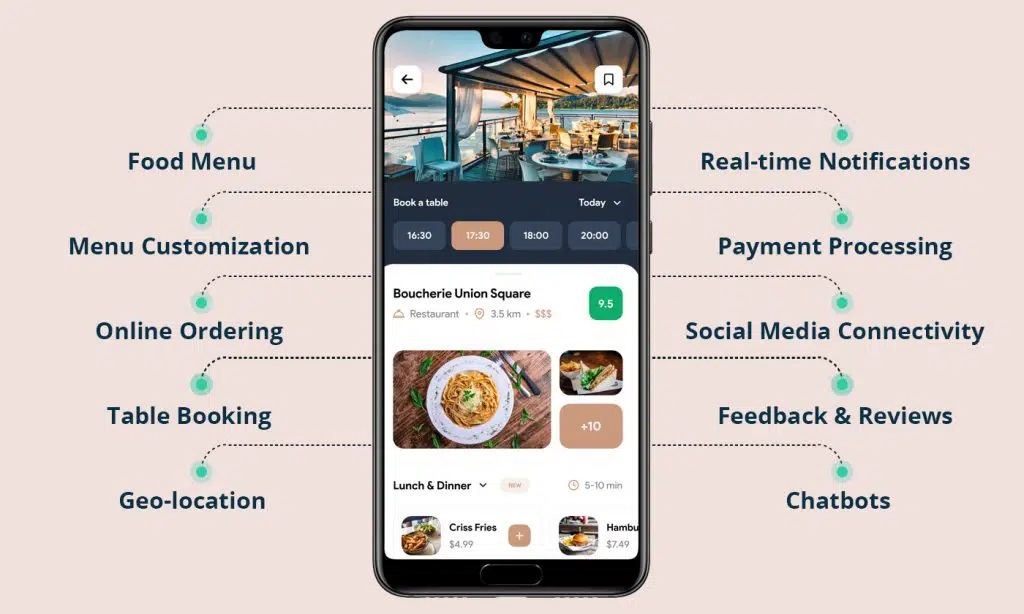
1. Bookings/Order History
It is one of the essential features to add to a mobile restaurant app. Remembering booking and order history is not possible for everyone. You must add this feature to offer the customers ease while using mobile apps. It will provide information about upcoming or previous booking history/order history.
2. Food Menu
Restaurant applications need to offer a list of various food options broken down into categories. The categories must be mentioned with the information of each one’s price with accurate photographs.
3. Search Filter
You should know that a search involves more than just typing in the name of a particular restaurant. A restaurant mobile app must provide the following search criteria: date, time, number of people, and cuisine. It would be best to offer your mobile app users an option to search for restaurants using criteria other than nearby options.
4. Creating a Custom Menu
Many people have their food preferences. You should add this feature in your restaurant to offer customers custom menus according to their needs. Some people seek a location that can recognize their eating preferences and cater to them accordingly.
5. Payment Gateway
Your app should offer users preference in payment. As the world has become digital, every mobile app provides the security and protection of users’ personal information. Food delivery app features must also consist of a secure payment gateway with local and international methods.
6. Social Media Integration
The mobile app must allow users to sign up or register on restaurant mobile apps using their other social media accounts. Social media integration will help them share their images on various sites and register quickly. It is essential to know that this feature will allow customers to post a review that will be seen on numerous platforms to use appropriately.

7. Rating & Reviews
If you want to create a mobile application. In that case, you should include this feature to offer customers rates, comments, and reviews about particular restaurants and services they received. The feedback can provide suggestions to other customers considering placing a food order.
8. Customer Support
You must add AI-powered chat support in your application to offer your customers value. The chatbot will help your customers to ask and get help about anything related to a restaurant owner or management. They can talk to the restaurant owner about this.
9. Online Order Process
The online order feature is a mandatory element in restaurant mobile apps that allow users to choose and order food conveniently. It is helpful for people who have different doubts about the restaurant, and with the help of a chatbot, they clear and are now ready to order the food.
10. Reserve a Table
Adding this feature to your restaurant mobile app will offer some people ease in visiting the restaurant. With the help of these features, people can decide to reserve a table before leaving their house.
11. Geolocation Feature
It is essential to add a geolocation feature to your restaurant app. It is a vital feature that offers value to customers with more ease. It will also help expose your business by providing services in several locations.
12. Notification Alerts
This feature is crucial as it offers users information on everything that is relevant to them or that can be profitable to them in any way. They can access all the information related to food delivery orders, a pickup order, or a table reservation together with the lucrative bargains, offers, and discounts.
How Does a Restaurant Mobile App Make Money?
Mobile apps earn revenue through various monetization strategies, including in-app ordering & delivery fees, subscription plans, in-app advertising, affiliate marketing, and more. Let’s learn about these money-generating strategies in detail:
1. In-App Ordering & Delivery Fees
This is the most common method for restaurant app monetization. Many restaurant apps generate revenue by charging a small convenience or service fee on each order placed through the app. While using this strategy, you can earn money while providing users with a fast, convenient, and seamless ordering experience.
2. Subscription Plans
Premium subscription plans include offering exclusive benefits like special discounts, loyalty rewards, free delivery, and early access to the latest items. A restaurant management app with these plans attracts more customers, increasing overall user engagement. This model ensures a steady method of recurring revenue while enhancing customer loyalty and engagement.
3. In-App Advertising
Restaurants and food-related brands can advertise within the app, targeting users based on preferences, location, or ordering history. Advertising revenue grows with increasing user engagement and provides businesses with a channel to reach highly relevant customers.
4. Loyalty Programs & Promotions
Monetization can be achieved by partnering with restaurants for sponsored promotions, discount campaigns, or reward points. Users are encouraged to order more frequently, generating income for the platform while improving user retention and engagement.
5. Affiliate Marketing
Apps can integrate third-party services, such as grocery deliveries, wine clubs, or cooking kits, and earn commissions on each purchase made through referral links. This strategy diversifies revenue streams and provides users with additional value.
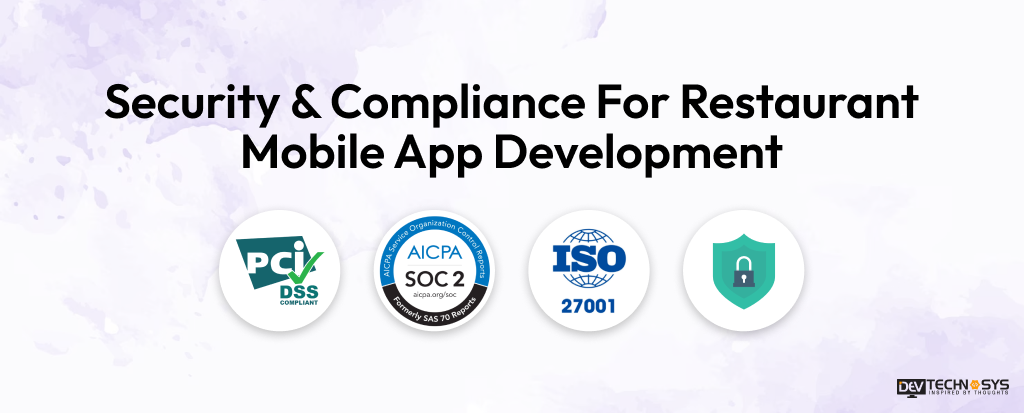
How Security & Compliance Affect Restaurant Mobile App Development Cost?
Now that you have gained knowledge of restaurant app features and cost, it’s time to know the impact of security and compliance. Whether the application is for local or international users, it should meet the legal requirements. This not only builds trust among the customers but also gives a competitive edge to the business.
1. PCI DSS Compliance
Many customers prefer to pay with their credit or debit cards for a service from a restaurant mobile app. Their card details need to be protected from fraud. PCI DSS compliance is built into our development workflow, covering aspects like data handling and encryption.
2. SOC 2 Security Controls
This compliance should be considered an important factor for restaurant app development cost breakdown, as engineers will put in extra effort. Following the SOC 2 framework is a standard operating procedure, not an exception. This handles user profiles and protects data accessed over the application.
3. ISO 27001
We follow ISO 27001 as standard practice. This protects the entire app data from unauthorized access, data leaks, and malicious attacks. The cost of implementing ISO standards ranges from $10,000 to $40,000+ because it requires additional technical effort.
4. Additional Security
Security best practices such as Data Encryption, MFA, RBAC, secure APIs, and testing are equally important for a white-label restaurant app. A food delivery app development company ensures that all of the essential practices are followed to protect the data.
Security & Compliance Requirement |
Estimated Cost |
| PCI DSS Payment Security | $2,000 – $5,000+ |
| SOC 2 Security Controls & Readiness | $3,000 – $7,000+ |
| ISO 27001 Security Framework | $3,000 – $8,000+ |
| Data Encryption, MFA, RBAC & Security Testing | $2,000 – $6,000+ |
ROI of Restaurant Mobile App Development: Where Does the Investment Pay Off?
Simply understanding restaurant mobile app development cost and the factors is not enough. US businesses must know how much return on investment the solution will provide once it is launched on the Google Play Store and Apple App Store.
A simple way to estimate the financial return is:
Restaurant App ROI = (Incremental Revenue + Cost Savings − App Investment) ÷ App Investment × 100
Businesses can provide rewards for customers on specific orders to increase revenue. By viewing rewards, customers place a bulk order that increases profits. The best thing businesses can do is to choose AI development services for the restaurant app.
The artificial intelligence features will recommend top food outlets based on the user’s search history. To turn customer data into a long-term revenue opportunity, businesses can provide a promotional offer or share vouchers. Customers value such loyalty programs and prefer to choose the same service provider.
Why Choose Dev Technosys for Restaurant Mobile App Development?
With more than 15 years of experience in building restaurant apps, we have achieved a 93% happy client rate. We build projects with compliance and AI-powered features to create better revenue opportunities for US businesses.
We are a leading dineout app development company that focuses on specific details before starting work on a solution. Our experts connect apps with POS, CRM, and secure payment gateways as third-party integrations. To date, we have built 25+ restaurant apps with 30% operational cost reductions. If you are ready to earn more with a restaurant mobile app, request a quote.
Planning a Food Delivery Project?
Get a tailored development cost estimate in a few simple steps.
- 3 quick steps
- 100% free
- Reply in 1 business day
2 Minutes Read
Is That All?
Hopefully, the blog mentioned above was quite helpful for you in knowing about the cost of developing a restaurant app. We almost stated every factor influencing the cost of developing a Restaurant mobile app.
However, if you still find it difficult somewhere, in that case, you must contact our experts. You can get in touch with our team and resolve your doubts about your app development idea. You can turn your dream to create a mobile application idea into reality with the help of our experts.
Frequently Asked Questions
Find answers to the most common questions related to this article.
When selecting one of these options, go for custom restaurant app development, as it will provide greater control over features & functionalities. Comparatively, a white-label solution does not provide better revenue options and is not flexible to make suitable app changes whenever required.
The cost varies due to multiple factors such as the number of features, level of customization, UI/UX design quality, platforms supported, and ongoing maintenance. More advanced and feature-rich apps naturally require higher investment.
Yes, you can lower costs by starting with an MVP, focusing on essential features, limiting initial platforms, and using pre-built templates or APIs instead of full custom development for payments, analytics, and location services.
Absolutely. App maintenance costs can range from 15 to 20% of the original development cost annually. This covers bug fixes, updates, new feature integration, and ensuring smooth performance as operating systems and user needs evolve.
Mostly, yes. Outsourcing to skilled development companies or freelancers often costs less than hiring a full in-house team. However, costs vary by region, with developers in Asia generally charging less than those in the US or Europe.