
















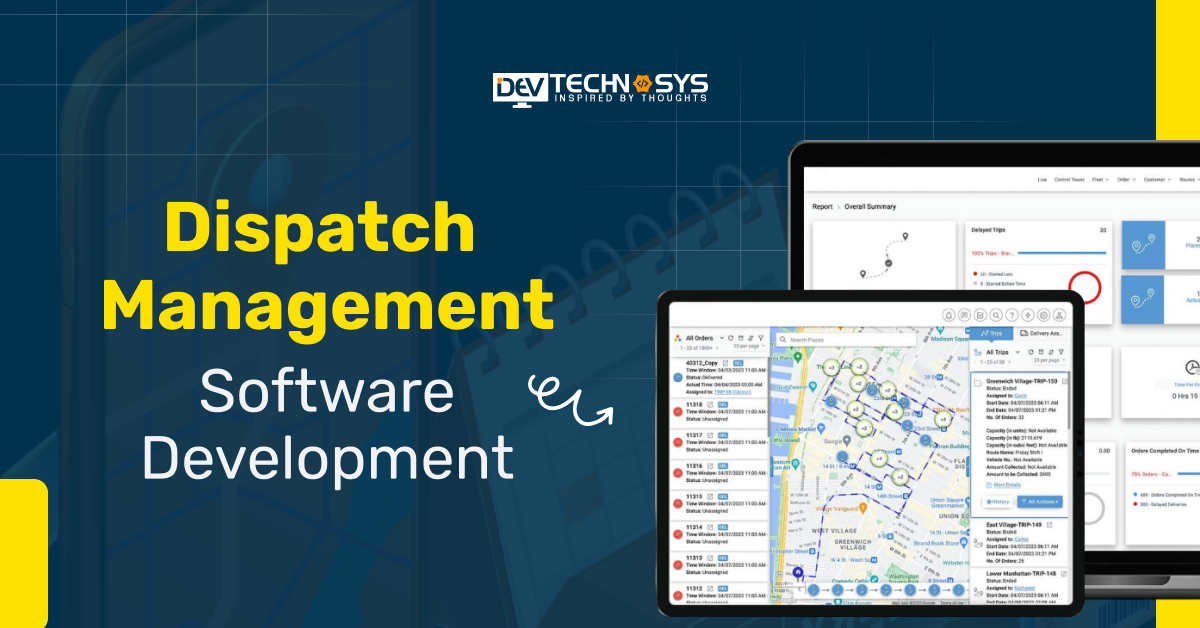
“Deliver products on time with fleet dispatch manager software.”
Delivery of products has now become a crucial part of our life. We order something and expect timely delivery with negligible charges. To make this process smooth and seamless, businesses invested their money in dispatch management software development. This helped them to propose a new fleet solution for their target audiences.
Almost 60% of the people worldwide are using logistics and fleet apps to get their products timely. So, it is an important move for investors to make dispatch management software with the lowest possible cost that provides quality to users.
In this blog, we will study different aspects related to the development of fleet and logistics software with detailed information. So, let’s get started.
What is Dispatch Management Software?
A digital tool called dispatch management software was created to maximize field operations, delivery, and service job scheduling, tracking, and coordination. By allocating tasks to the best people or vehicles based on location, availability, and urgency, it automates dispatching. By facilitating real-time communication between field agents, dispatchers, and drivers, a scheduling & dispatch management software increases productivity and decreases delays.
GPS monitoring, route optimization, automated notifications, and reporting tools are common features. It is used by sectors like field service management, emergency services, logistics, and transportation. For example AgTech software development services are used in agriculture to improve customer satisfaction, minimize expenses, and streamline operations.
How Does Dispatch Management Software Work?
By automating dispatching tasks, dispatch management software simplifies field operations scheduling, tracking, and coordination. For increased efficiency, it guarantees effective resource allocation, real-time communication, and optimum routing.
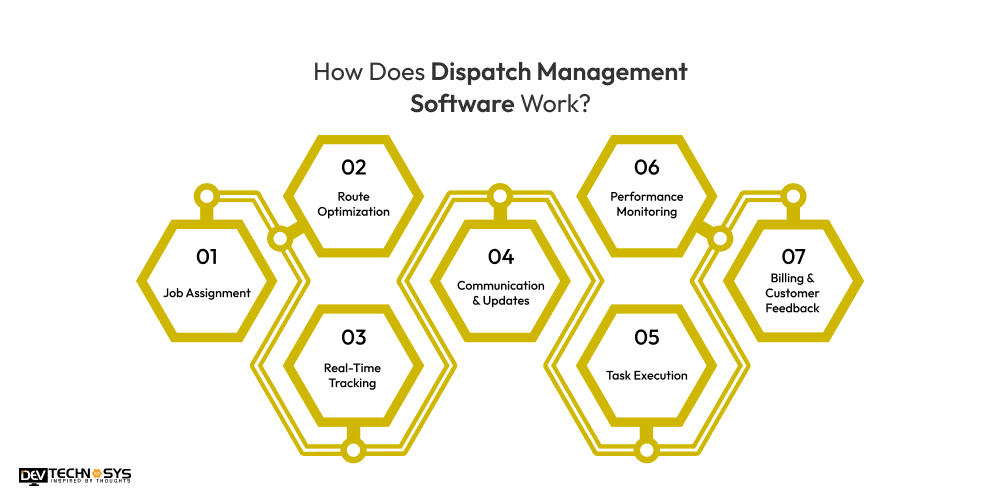
1. Job Assignment
After receiving job requests, the system automatically matches them with the best employee or vehicle based on variables including workload, proximity, and availability.
2. Route Optimization
The software finds the most effective routes by using GPS and AI-powered algorithms. Businesses can develop a logistic management software that can reduce delays, fuel expenses, and travel time.
3. Real-Time Tracking
Dispatchers ensure visibility and prompt reaction to unforeseen developments by tracking the real-time location of field agents or vehicles.
4. Communication & Updates
Customers, field agents, and dispatchers are kept updated on job status, delays, and updates through automated notifications and in-app messaging.
5. Task Execution
Field workers do the tasks they are given and can take notes, pictures, or electronic signatures as evidence of their compliance and service.
6. Performance Monitoring
The software generates reports for process enhancements by gathering information on agent performance. It is mandatory to contact a software product development company to enhance travel efficiency, and job completion times.
7. Billing & Customer Feedback
Automated billing and gathering client feedback after a service is rendered contribute to increased operational effectiveness and service quality.
Market Stats of the Logistics Industry
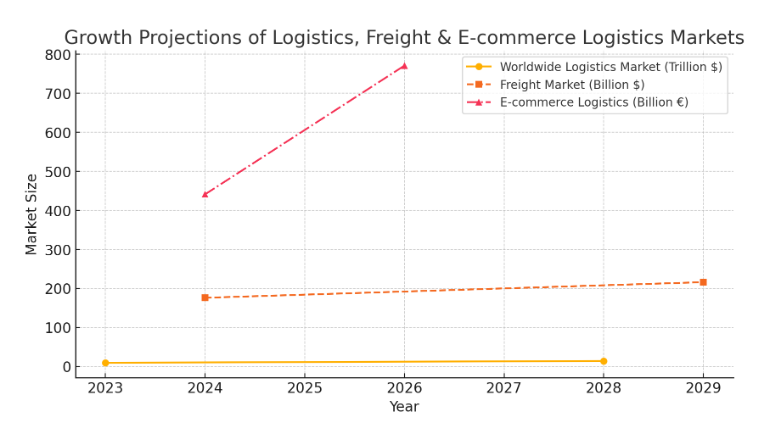
- The worldwide logistics market, valued at about $9.41 Trillion in 2023.
- The logistics sector is expected to grow to a size of over $14.08 Trillion by 2028.
- The freight market was valued at $176 Billion in 2024 and is anticipated to grow during the coming years.
- The market is expected to grow to a size of almost $216 Billion in 2029.
- The global market for e-commerce logistics was valued at more than 441 Billion Euros in 2024.
- The E-commerce logistics market is expected to reach a size of around 8 Billion Euros by 2026.
How to Develop Dispatch Management Software?
It is necessary for businesses to know the truck dispatch management software development process. In this section, we will discuss development steps in a sequential manner. So, let’s move on:
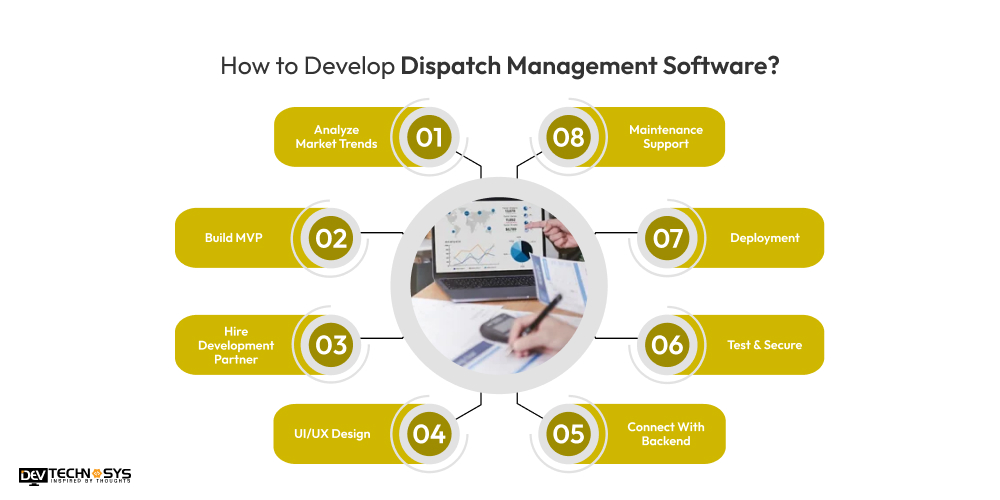
1. Analyze Market Trends
Start by carrying out in-depth market research to comprehend the demands of the industry, the products of competitors, and developments in technology. You should contact a SaaS development company to determine the problems that companies may encounter.
You can use this information to identify target consumer segments, pricing methods, and important features. Making sure your software fills in current gaps and provides a competitive advantage is the aim.
- Conduct surveys and analyze competitors.
- Check compliance with industry standards.
- Focus on essential features like live tracking.
2. Build MVP
To test your idea in the market, create a Minimum Viable Product (MVP) with the necessary characteristics. Prioritize essential features such as real-time communication, automated scheduling, driver tracking, and route optimization.
An MVP facilitates a quicker time to market and offers insightful input from early adopters. Use their recommendations to improve and broaden your product even more.
- Focus on core dispatch functionalities.
- Design a model to handle future integrations.
- Test with real users and adjust based on feedback.
3. Hire Development Partner
Businesses must approach a supply chain management software development company for the success of their program. Select a group that has developed software for transportation and logistics. Examine their prior work, technical proficiency, and deadline-meeting skills.
Project management abilities and clear communication are crucial. Working with an experienced partner guarantees scalable architecture, timely delivery, and effective development.
- Ensure relevant experience in logistics software.
- Verify their expertise in various technologies.
- Define project scope and security measures.
4. UI/UX Design
Create an interface that is easy to use and straightforward so that drivers, dispatchers, and consumers can navigate more easily. Give top priority to a responsive design with minimum learning curves and clear visual components.
Assure easy access to crucial data, such as delivery timetables, vehicle status, and routes. To get feedback and make the required changes for a seamless user experience, conduct usability testing.
- Make a simple and attractive interface.
- Make it mobile-friendly for easy access.
- Ensure compliance with accessibility guidelines.
5. Connect With Backend
Your dispatch management software is built on top of the backend infrastructure. To guarantee smooth data flow between users, cars, and dispatchers, it is important to know the cost of logistics app development. So, you can put in place reliable APIs and database management solutions.
For effective load control and real-time data synchronization, use scalable cloud solutions. Put data security first by implementing access controls and encryption to safeguard private data.
- Use efficient APIs and WebSockets for real-time tracking.
- Avoid bottlenecks in communication between frontend and backend.
- Implement encryption and authentication tasks.
6. Test & Secure
To find and fix bugs, performance problems, and security flaws, do thorough testing. Test various devices and operating systems for usability, performance, and functionality. Put cybersecurity safeguards in place, such as role-based access restriction, encryption, and frequent security audits.
A solid testing plan guarantees that your software functions properly in practical situations. Additionally, using suitable security algorithms is necessary to ensure user privacy.
- The system should handle peak dispatch requests.
- Conduct penetration testing and apply security patches.
- Ensure smooth operation on different network conditions.
7. Deployment
Deploy the software after it has successfully completed all tests. If necessary, think about an on-premises deployment or pick a suitable cloud service provider for hosting. During the initial rollout, keep an eye on performance to promptly address any unforeseen problems.
To guarantee a smooth transition, you must approach an MVP app development company to give users thorough documentation and training.
- Test the final product in a controlled setup.
- Create a backup recovery plan.
- Track usage and errors in real-time for immediate fixes.
8. Maintenance Support
Provide continuing support and maintenance after launch to guarantee the software stays effective and current. Release frequent updates with new features and security fixes, keep an eye on system performance, and fix user-reported problems.
Create a specialized support staff to provide prompt assistance. The software’s durability and user happiness will be increased by ongoing development based on user input and market trend analysis.
- Keep software up to date with security patches.
- Set up alerts for system failures and downtimes.
- Encourage users to report issues and request features for future updates.

Exciting Features of Dispatch Management Software
Innovative features in dispatch management software simplify logistical processes, increase delivery effectiveness, and improve management in general. These ten essential features make it an important tool:
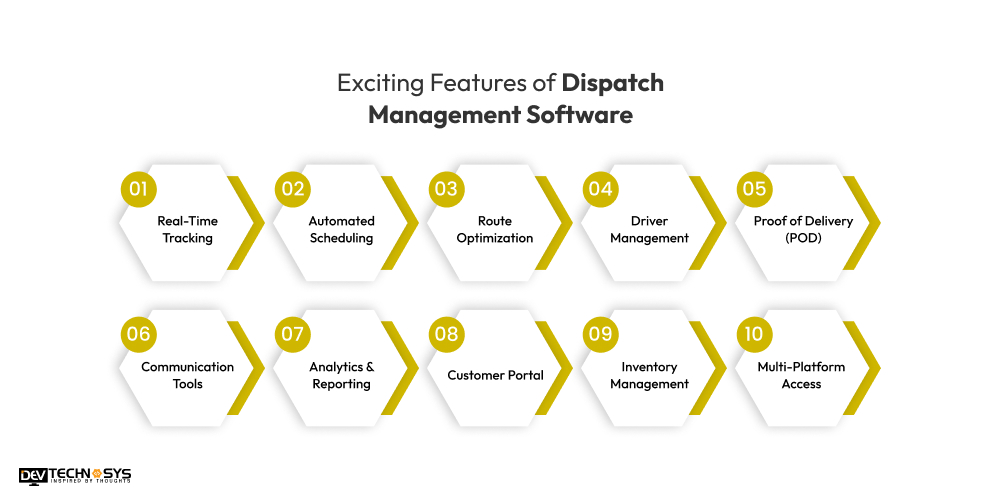
1. Real-Time Tracking
Use GPS technology to track deliveries and cars in real-time. By giving dispatchers precise location information, this function guarantees improved visibility and prompt decision-making.
2. Automated Scheduling
Utilize AI-powered algorithms to optimize delivery timetables. By allocating the optimal routes and cars, automated scheduling minimizes delays and lowers fuel usage.
3. Route Optimization
Determine the best routes for drivers to take depending on distance, traffic, and delivery priority. It is beneficial to develop a logistics app like porter to lower operating expenses and transit time.
4. Driver Management
Assign responsibilities, keep an eye on driver performance, and make sure safety regulations are followed. For greater accountability, dispatchers can monitor driving behavior, breaks, and work hours.
5. Proof of Delivery (POD)
Take pictures, barcode scans, or electronic signatures as evidence of a successful delivery. A dispatch fleet management software provides transparency to improve digital verification.
6. Communication Tools
Enable dispatchers, drivers, and clients to communicate in real-time. All parties involved are kept up to date on delivery updates through instant chat and notifications.
7. Analytics & Reporting
Provide thorough reports on fuel consumption, driver effectiveness, and delivery performance. Businesses may enhance operations and make data-driven decisions with the aid of these insights.
8. Customer Portal
Give clients the ability to interact with support staff, track shipments, and get notifications. Lalamove is one of the best logistics apps for Android and iOS that increase client happiness and provide improved openness.
9. Inventory Management
To keep an eye on stock levels, oversee warehouse operations, and avoid delivery errors, incorporate inventory tracking. This guarantees precise and effective dispatching.
10. Multi-Platform Access
Use mobile devices, tablets, or PCs to access the software. Dispatchers and drivers can oversee operations while on the road thanks to multi-platform compatibility, which increases productivity and flexibility.
What is the Dispatch Management Software Development Cost?
The budget can be greatly impacted by a number of cost factors during the logistics dispatch management software development process. Businesses may efficiently control their dispatch management software development cost by having a thorough understanding of the below factors:
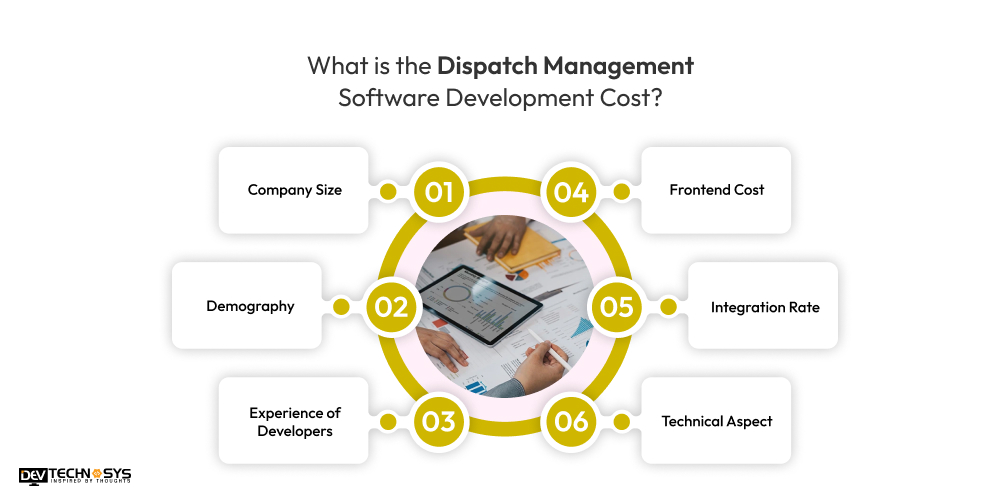
1. Company Size
Your company’s size affects the features and complexity of the program. While small firms can prefer a straightforward, affordable system, larger corporations frequently require bespoke systems with sophisticated functionality. The cost to develop dispatch management software is directly impacted by the size of activities.
| Company Size | Estimated Cost |
| Small Enterprises | $8,000-$12,000 |
| Medium-sized Enterprises | $12,000-$16,000 |
| Big Enterprises | $16,000-$20,000 |
2. Demography
The software development cost is significantly influenced by geographic location. Costs will go up if developers are hired from areas with greater labor costs, such as Western Europe or North America. However, less cost to develop dispatch manager software are found in places like Asia, Latin America, and Eastern Europe.
| Location Factor | Estimated Cost |
| USA | $25000-$30000 |
| Australia | $20000-$25000 |
| India | $5000-$12000 |
| UK | $15000-$20000 |
| UAE | $8000-$15000 |
| Brazil | $12000-$16000 |
3. Experience of Developers
The cost to build dispatch management software is influenced by the level of experience and skill of your development team. Though their expertise might guarantee quicker delivery and fewer mistakes, senior developers and specialized workers command greater salaries. The trick is striking a balance between experience and financial limitations.
| Team’s Expertise Level | Cost Estimation (USD) |
| Junior/Entry-Level | $8000-$12000 |
| Mid-Level/Experienced | $12000-$16000 |
| Senior/Expert | $16000-$20000 |
| Professional | $20000-$24000 |
4. Frontend Cost
It takes talented UI/UX designers to create an interface that is both intuitive and easy to use. The complexity of the design, the quantity of displays, and the platform compatibility all affect the logistics management software development cost. The user experience is improved by a well-designed frontend, which could support a larger investment.
| Designing Cost | Estimated Cost |
| Navigable Panels | $5,000-$10,000 |
| Responsiveness | $10,500-$15,000 |
| On-Click Functions | $15,000-$20,000 |
5. Integration Rate
The cost to build dispatch management software increases when third-party APIs and systems, such as ERP programs, payment gateways, and GPS tracking, are integrated. The costs increase with the number and complexity of integrations. Managing APIs effectively guarantees uninterrupted connectivity at a reasonable cost.
| Backend Infrastructure | Estimated Cost |
| Databases | $8,000-$10,000 |
| API Integration | $10,000-$15,000 |
| Node Installation | $15,000-$17,000 |
| React Framework | $17,000-$20,000 |
6. Technical Aspect
The total is impacted by technical factors including database administration, cloud infrastructure, security protocols, and scalability. Using cutting-edge technologies or specially designed solutions is more expensive than using open-source frameworks or pre-made modules. Effective cost control can be achieved by creating a balance between market and business.
| Technical Model | Estimated Cost |
| Artificial Intelligence | $30,000-$40,000 |
| Blockchain | $35,000-$50,000 |
| Cloud Computing | $40,000-$45,000 |
| Cyber Security | $45,000-$50,000 |
Benefits of Creating Dispatch Management Software
Businesses can increase customer satisfaction and streamline processes by developing dispatch management software. These are the top five benefits of dispatch management software for entrepreneurs:
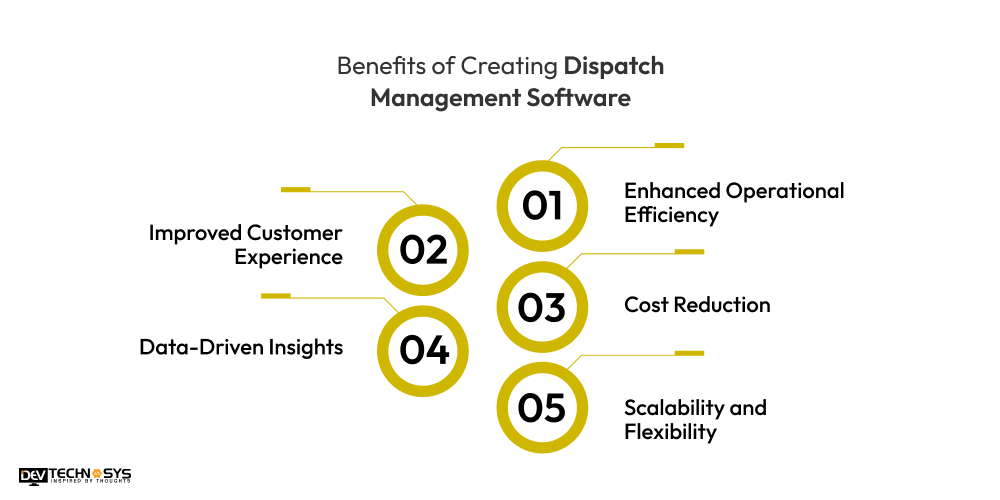
1. Enhanced Operational Efficiency
Delivery timetables are accelerated, errors are reduced, and manual labor is reduced when dispatch operations are automated. Effective fleet management is further ensured by automatic route optimization and real-time tracking.
2. Improved Customer Experience
Customers are kept informed at every stage of the shipment process with accurate delivery tracking and real-time updates. Businesses must look for software developers for hire to provide arrival timings and proactive notifications that increase client loyalty and satisfaction.
3. Cost Reduction
Significant cost reductions are achieved by streamlining routes, cutting down on idle time, and using less fuel. You can build dispatch management software for automated scheduling that also optimizes resource use and reduces labor expenditures.
4. Data-Driven Insights
Delivery schedules, operational constraints, and driver performance are all insightfully revealed by thorough analytics and reporting. Entrepreneurs should hire an IoT app development company to improve efficiency and streamline procedures by making automated decisions.
5. Scalability and Flexibility
A dispatch management system that is custom-built can readily grow with the company. Without requiring extensive reconstruction, the program can be modified to accommodate shifting requirements, such as growing fleets, adding new delivery zones, or incorporating third-party solutions.

How to Monetize Dispatch Management Software?
Using a variety of tactics, monetizing dispatch management software can produce steady income. These six strategies can help you get the most out of your software solution:
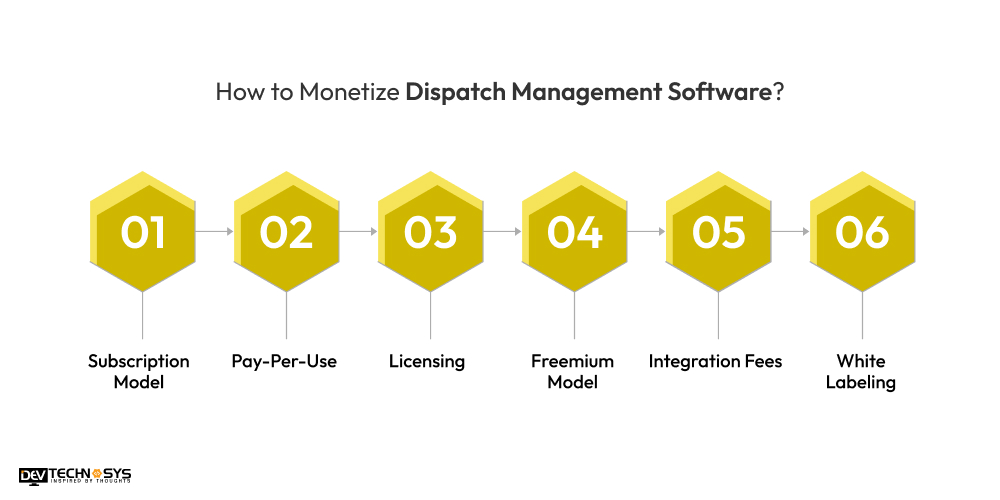
1. Subscription Model
Provide tiers of subscription plans with varying degrees of functionality and access. Companies can select a plan that works for their size and requirements, giving you a steady, recurring income.
2. Pay-Per-Use
Adopt a pay-per-use strategy in which companies make payments according to the quantity of users, cars, or dispatches they track. It is profitable to approach a custom software development company for businesses with varying delivery volumes to implement this flexible pricing.
3. Licensing
For businesses that would rather use an on-premises solution, charge a one-time licensing cost. This strategy is appropriate for big businesses looking for complete software ownership and provides instant money.
4. Freemium Model
Provide a feature-limited free version to entice companies to upgrade to a premium plan for more sophisticated capabilities. A web development company may help you to boost conversion potential and draw in a large user base with this model.
5. Integration Fees
Charge for the integration of third-party services, such as CRM systems, payment gateways, and GPS monitoring. Additional money can be generated through custom connectors made to meet certain corporate demands.
6. White Labeling
Give other businesses permission to rebrand and resell your software by licensing it as a white-label solution. Without incurring extra development expenses, this strategy broadens your market reach and increases revenue.
In a Nutshell!!
Investing money in the custom dispatch management software development may help businesses to overcome the problem of delayed deliveries. Additionally, it will also assist them to manage all tasks through dispatch field service cloud management software. So, it is necessary to study some facts before starting:
- You need to properly examine current trends in the logistics and fleet industry.
- Know the role of Artificial Intelligence in logistics & supply chain management systems.
- Connect with a reliable partner to create dispatch management software at affordable rates.
- Use authorized monetary services to make large profits.
These points will help you to easily start the development process without wasting much time. So, if you want a leading edge over others, it is necessary for you to initiate your online delivery business.
FAQs
Q1. Which is the Best Dispatch Management Software in USA?
Samsara, Onfleet, Route4Me, and WorkWave are among the top dispatch management programs available in the United States. The best option is determined by the size of the company, the demands of the sector, and necessary features like real-time tracking and route optimization.
Q2. How Long Does it Take to Build Dispatch Management Software?
Depending on features, complexity, and team experience, developing dispatch management software usually takes three to twelve months. A complex system with AI-powered routing can take a year or longer, while a basic one with rudimentary tracking might take three to six months.
Q3. What is the Cost of Hiring Logistics Software Developers?
In the USA, employing logistics software engineers might cost anything from $50 to $150 per hour. The annual salary of a full-time developer might range from $80,000 to $150,000, based on location and experience. Lower costs, usually between $30 and $70 per hour, may be offered by offshore developers from areas like Asia or Eastern Europe.
Q4. How Much Does it Cost to Maintain Dispatch Management Software?
For dispatch software, annual maintenance expenses range from 15% to 20% of the original development cost. This covers bug patches, server expenses, software upgrades, and the addition of new features. Businesses typically spend between $5,000 and $50,000 annually, depending on cloud infrastructure and system complexity.
Q5. What Technologies are Used for Dispatch Management Software Development?
- Cloud Computing & SaaS Platforms – Enables remote access, scalability, and real-time data processing.
- AI & Machine Learning – Enhances route optimization, predictive analytics, and automated decision-making.
- Mobile & Web Development Frameworks – Utilizes React, Angular, or Flutter for user-friendly applications.
Q6. How Dispatch Management Software Provides Data Security?
- End-to-End Encryption – Ensures secure data transmission between devices and servers.
- Role-Based Access Control – Restricts access to sensitive information based on user roles.
- Regular Data Backups – Protects against data loss and ensures adherence to industry standards like GDPR or HIPAA.