








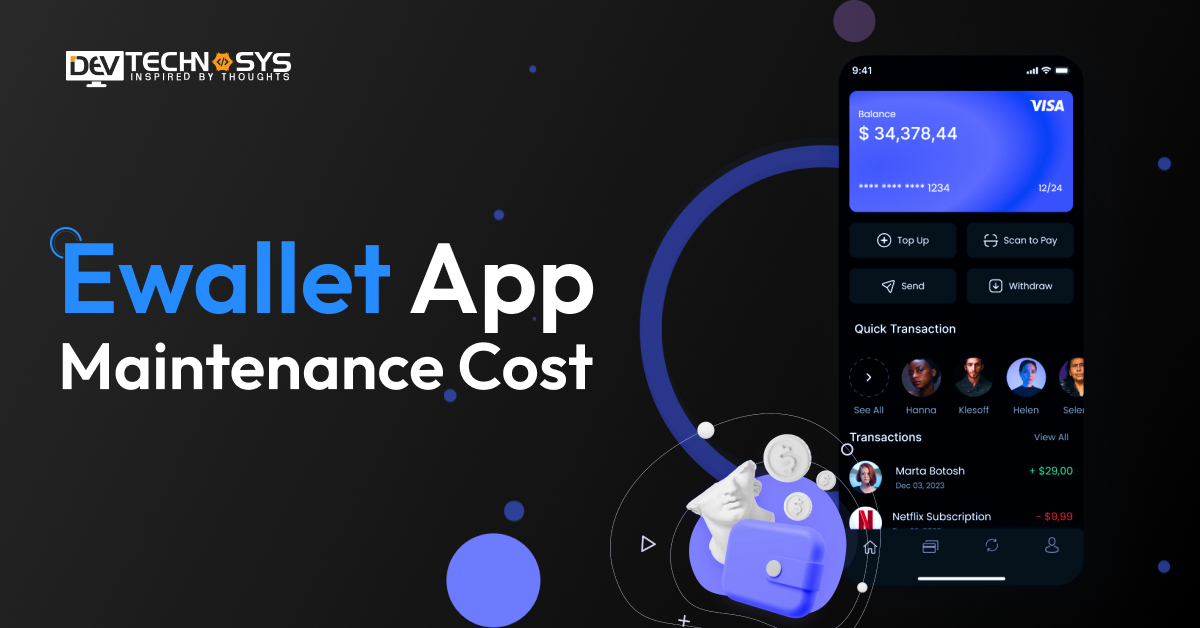
“Keep your fintech business updated by regularly maintaining ewallet applications.”
As people are getting digitized, the use of ewallet applications are increasing. For a business investor, it is a good chance to invest in this industry. There are a lot of things they have to understand like development and maintenance cost. The ewallet app maintenance cost varies according to several market factors that get changed every time.
It is necessary to understand different aspects related to the maintenance of various ewallet applications. It starts by understanding the need for maintaining an ewallet app. Then factors affecting cost and reliable reducing methods.
There are a lot more things to discuss that we will see in this blog. So, let’s not waste much time and get started with it.
What is Ewallet Maintenance?
The continuous process of updating, improving, and safeguarding digital wallet apps following their release is known as ewallet maintenance. To give consumers a smooth and safe transaction experience, you can develop an ewallet app like Paytm with good maintenance. It performs tasks like bug fixes, API updates, performance optimization, data security, and OS or regulatory adaptation.
- Bug Fixing: Identifies and resolves functional and technical issues that arise during app usage.
- Security Updates: Implements the latest encryption and compliance protocols to protect user data.
- Performance Optimization: Enhances speed, reduces load times, and improves responsiveness.
- Version Compatibility: Keeps the app updated with new OS versions and third-party integrations.
- Feature Upgrades: Adds or improves features based on user feedback and market trends.
Benefits of Maintaining Ewallet Applications
To enhance digital payments, maintaining ewallet apps is essential that ensures security and usability. Businesses may stay competitive and meet regulatory standards with regular upgrades and enhancements:
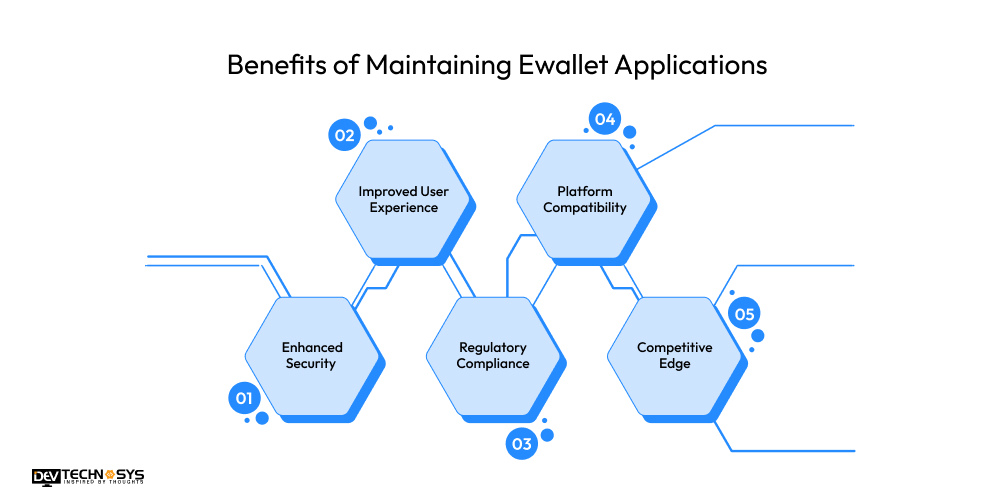
1. Enhanced Security
Patching vulnerabilities and updating encryption algorithms are two ways that regular maintenance improves an eWallet’s security. This shields private user information from online attacks and fraudulent schemes. Improved security reduces financial losses and increases user trust.
2. Improved User Experience
A speedier and more seamless interface is the consequence of maintenance, which enables bug fixes and performance optimization for apps. Additionally, it makes it possible to incorporate new features that satisfy consumer demands.
3. Regulatory Compliance
Frequent updates guarantee that ewallet apps conforms with evolving data protection and financial standards. This lowers the possibility of fines and harm to one’s reputation. Maintaining compliance also gives consumers peace of mind that their transactions are secure and authentic.
4. Platform Compatibility
Compatibility with the newest devices and operating system versions is ensured by maintaining the application. It stops errors or crashes brought on by out-of-date program environments. Maintaining compatibility increases the app’s accessibility and reach among a variety of user populations.
5. Competitive Edge
Continuous maintenance helps to launch new features and enhanced services before rivals do. It also makes it possible to quickly adjust to consumer input and market developments. In a congested market, keeping a competitive edge draws in new consumers and keeps hold of current ones.
Want a chatbot demo or pricing? Fill the form and talk to our experts today.
Pick what you need below — you can select more than one — then tap Get detail to continue.
-
Chatbot demo dashboard
-
Cost to develop an app
-
Industry report
-
Case study
Using AI to Enhance Ewallet Maintenance Process
By incorporating AI into the ewallet maintenance procedure, operations are streamlined, the cost to build an ewallet app is decreased, and real-time problem solving is guaranteed. A more secure, responsive, and effective app environment results from AI’s ability to handle system problems, automate upgrades, and enhance user engagement by analyzing behavioral patterns.
- Predictive Maintenance: AI analyzes usage data to forecast and prevent potential system failures before they occur.
- Anomaly Detection: Identifies unusual transaction patterns or system behavior to enhance fraud prevention.
- Automated Updates: Schedules and deploys system updates or patches without manual intervention.
- User Behavior Analysis: Learns from user activity to recommend personalized features or fixes.
- Performance Monitoring: Continuously tracks app performance metrics and suggests optimization strategies.
Average Price Breakdown for Ewallet App Maintenance Cost
To keep an ewallet app competitive, secure, and functional, it is important to know the Ewallet app maintenance cost. The complexity, user base, and technology stack affects the maintenance cost of mobile apps.
A typical cost breakdown of maintaining an ewallet application is shown below to assist businesses in estimating and allocating their annual budget for the best possible app performance:
| Component | Estimated Annual Cost (USD) |
| Bug Fixes & Error Handling | $2,000 – $4,000 |
| Security Updates & Patching | $1,500 – $3,000 |
| Server Hosting & Infrastructure | $3,000 – $6,000 |
| API Updates & Integration | $1,200 – $2,500 |
| OS & Device Compatibility | $1,500 – $3,000 |
| UI/UX Enhancements | $1,000 – $2,000 |
| Performance Optimization | $1,000 – $2,000 |
| Technical Support | $2,000 – $3,500 |
| Monitoring & Analytics Tools | $1,000 – $2,000 |
| Compliance & Legal Updates | $800 – $1,500 |
What Factors Influence the Ewallet App Maintenance Cost?
A number of operational and technical factors affect the ewallet app maintenance cost. Comprehending these elements facilitates budgetary planning and resource optimization for long-term viability:
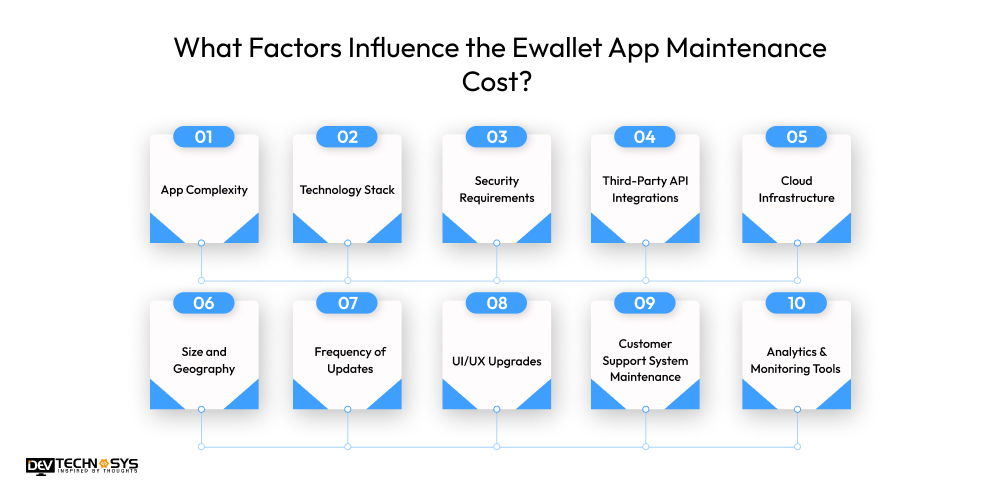
1. App Complexity
More upkeep is needed for more advanced apps with features like AI chatbots, multi-currency wallets, and biometric login. These parts require frequent testing, improvement, and optimization. The cost to maintain ewallet apps is high, which is the direct result of increased complexity.
| Component | Estimated Cost/Month |
| Biometric Authentication | $300 – $600 |
| Multi-Currency Wallets | $200 – $500 |
| AI-Based Chatbot | $400 – $800 |
2. Technology Stack
Databases, programming languages, and development frameworks all have an impact on maintenance simplicity. Costs are increased by certain stacks’ lack of community support or specialist skill requirements. Long-term costs are frequently reduced when scalable and well-liked technologies are used.
| Component | Estimated Cost/Month |
| Backend Framework | $250 – $600 |
| Frontend Framework | $150 – $400 |
| Database Management | $200 – $500 |
| DevOps Tools | $100 – $300 |
3. Security Requirements
The annual cost to maintain a mobile wallet app goes up with high-level security mechanisms like two-factor authentication, fraud detection, and end-to-end encryption. To combat emerging risks, these features require frequent updates. Ongoing costs are increased by adherence to security standards.
| Component | Estimated Cost/Month |
| End-to-End Encryption | $200 – $400 |
| Real-Time Fraud Detection | $300 – $700 |
| Two-Factor Authentication | $150 – $350 |

4. Third-Party API Integrations
Regular updates and monitoring are necessary for integration with banking APIs, KYC services, and payment gateways. App instability may result from modifications to third-party APIs, necessitating urgent adjustments. The potential maintenance workload rises with each additional dependence.
| Component | Estimated Cost/Month |
| Payment Gateway API | $250 – $600 |
| KYC Verification API | $100 – $300 |
| Currency Exchange API | $100 – $250 |
5. Cloud Infrastructure
Utilizing cloud platforms entails paying for bandwidth, storage, and server uptime. Although expandable, the price fluctuates according to usage and spikes in traffic. To control the Android app maintenance cost, selecting the best cloud plan and maximizing server use are crucial.
| Component | Estimated Cost/Month |
| Hosting & Bandwidth | $300 – $900 |
| Storage Management | $150 – $400 |
| Load Balancers | $100 – $300 |
6. Size and Geography
Apps with a sizable or worldwide user base might need more extensive testing, multilingual support, and updates for regional compliance. Separate regulatory requirements may also exist in different geographic areas. Naturally, greater scope necessitates greater maintenance expenditure.
| Component | Estimated Cost/Month |
| Multi-Language Support | $200 – $400 |
| Geo-Location Compliance | $150 – $350 |
| Regional Tax Configs | $100 – $250 |
| Global CDN Services | $200 – $500 |
7. Frequency of Updates
A specialized staff and testing resources are needed for frequent upgrades that include bug patches, new features, or regulatory changes. Every update increases the monthly maintenance cost for digital wallet apps even while it helps retain users. Managed update cycles can aid in cost control.
| Component | Estimated Cost/Month |
| Bug Fixes & Patches | $200 – $400 |
| Feature Rollouts | $300 – $700 |
| Regression Testing | $150 – $350 |
8. UI/UX Upgrades
Consistent enhancements to the user interface and experience guarantee that the application stays user-friendly and competitive. However, backend modifications and testing are frequently necessary for design changes. The digital wallet app upkeep cost may rise with frequent UI/UX iterations.
| Component | Estimated Cost/Month |
| Design Enhancements | $250 – $500 |
| User Journey Optimization | $150 – $400 |
| Accessibility Improvements | $100 – $250 |
9. Customer Support System Maintenance
AI-driven support tools, help desks, and live chat require frequent bug fixes, content refreshes, and updates. Training chatbots or hiring employees are additional steps in maintaining a responsive customer service system. There is an ongoing expense component to these systems.
| Component | Estimated Cost/Month |
| Live Chat System | $100 – $300 |
| AI Chatbot Maintenance | $150 – $400 |
| Support Ticket System | $200 – $500 |
10. Analytics & Monitoring Tools
Proactive maintenance is aided by tools for monitoring user activity, app performance, and crash reports. Nevertheless, these tools have costs related to license, customisation, and data storage. The recurring cost increases with the depth of the analytics.
| Component | Estimated Cost/Month |
| User Behavior Tracking | $150 – $400 |
| Crash Reporting Tools | $100 – $300 |
| Real-Time Performance Logs | $200 – $500 |
| Funnel & Conversion Metrics | $150 – $350 |
| Custom Dashboard/Reports | $100 – $300 |
How to Reduce the Cost to Maintain Ewallet Applications?
For ewallet apps to expand and allocate resources, maintenance expenses must be decreased. By employing clever tactics, costs can be minimized without sacrificing the functionality and quality:
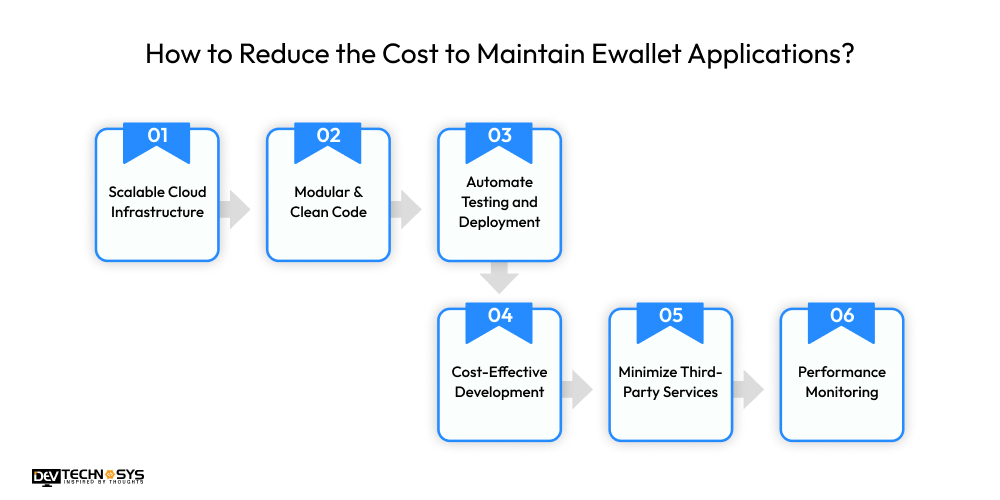
1. Scalable Cloud Infrastructure
By utilizing scalable cloud services, the application can modify resources, by cutting down the Bug fixing and update cost for ewallet apps. Pay-as-you-go options are frequently offered by cloud providers, which aid in cost control.
2. Modular & Clean Code
Writing modular, well-structured code makes updates and troubleshooting easier, which saves time and effort when performing maintenance. Clean code lowers the possibility of errors and facilitates the implementation of future improvements.
3. Automate Testing and Deployment
Automated testing procedures minimizes manual quality assurance work and finds flaws early. You can hire dedicated developers to streamline deployment pipelines, which reduce human mistake. When combined, these automation techniques improve app dependability and save labor expenses.
4. Cost-Effective Development
Controlling maintenance costs is made easier by selecting the best technology stack and development methodology that strikes a balance between cost and functionality. Complexity is decreased by giving priority to necessary features and refraining from over-engineering.
5. Minimize Third-Party Services
The ewallet software support cost and integration difficulties are reduced by relying less on pricey third-party APIs or plugins. Reducing external dependency expenses can be achieved by creating in-house alternatives or by using necessary services sparingly.
6. Performance Monitoring
Using technologies for continuous performance monitoring makes it easier to identify and address problems early on before they become more serious. Early detection of mistakes and bottlenecks lowers the need for expensive emergency repairs.
How to Maintain Ewallet Applications?
To guarantee the seamless functioning of ewallet apps, regular and organized maintenance is essential. By taking important precautions, problems can be avoided and user confidence can be increased:
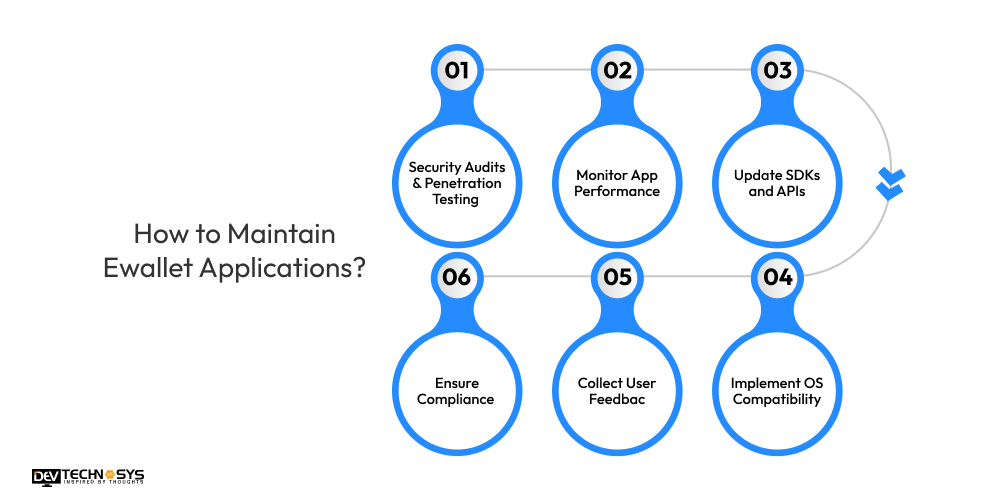
1. Security Audits & Penetration Testing
Finding weaknesses and possible points of entry for cyberattacks is accomplished by conducting regular penetration tests and security audits. These assessments support the improvement of transaction security, authentication, and data encryption. It guarantees that the app will continue to withstand changing threats.
- Are there any new vulnerabilities?
- How to conduct penetration testing?
2. Monitor App Performance
Monitoring server response, load times, and app speed aids in the early detection of performance problems. Tools for performance monitoring offer up-to-date information on user interactions and system health. Better uptime, faster fixes, and more user satisfaction are made possible by this.
- Which metrics should we track?
- What tools can be used for real-time performance?
3. Update SDKs and APIs
Updating third-party APIs and SDKs guarantees compatibility with security patches, new features, and performance enhancements. Security flaws or app problems may result from outdated integrations. Frequent updates preserve the functionality and dependability of the software.
- Are there any used SDKs or APIs?
- How to update third-party APIs?
4. Implement OS Compatibility
It’s crucial to make sure your ewallet software supports the most recent versions of mobile operating systems. The mobile app maintenance and support services avoid problems like crashes, missing functionalities, and damaged layouts. Keeping up with operating system updates helps retain users.
- Is the app tested on the latest versions?
- How do we handle compatibility issues?

5. Collect User Feedback
Finding problems and areas for improvement can be facilitated by compiling information from user reviews, surveys, or in-app comments. Updates to features and development priorities are guided by ongoing user feedback. Resolving user issues quickly increases retention and happiness.
- What channels are most effective for collecting feedback?
- How to review and act on user feedback?
6. Ensure Compliance
It’s crucial to keep the eWallet app compliant with evolving financial and data privacy laws like GDPR and PCI DSS. Updates and compliance audits shield the company from fines. Additionally, it guarantees legal activities and fosters user trust.
- Are there any new regional regulations?
- How do we verify data handling and transactions?
Types of Ewallet App Maintenance
Depending on the goal and intention of the updates, there are various forms of ewallet app maintenance. In order to maintain the functionality and security with high user expectations, each type is essential:
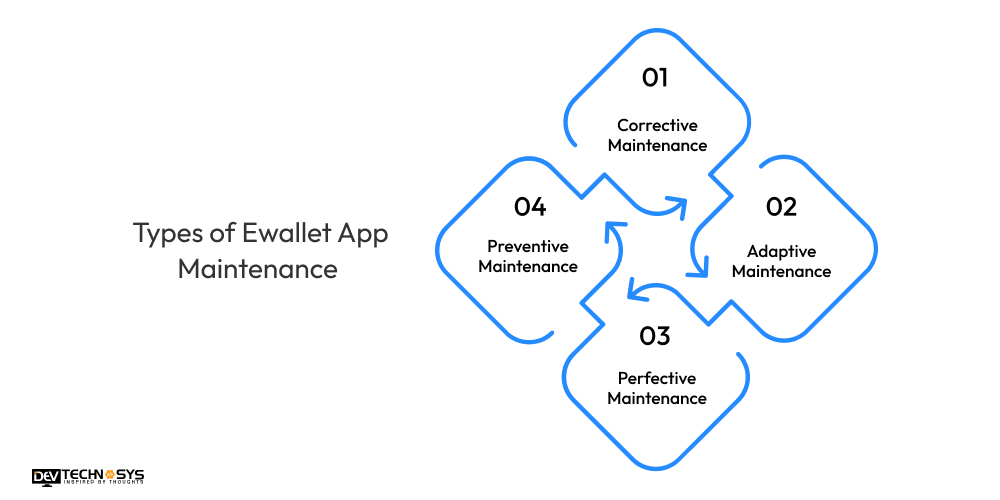
1. Corrective Maintenance
Finding and resolving bugs, failures, or performance problems after the software has been released is the major goal of corrective maintenance. It guarantees that functionality and user experience are not impacted by known issues. Reactive in nature, this kind is typically started by user input or crash reports.
- Bug resolution based on user reports
- Error log monitoring and troubleshooting
2. Adaptive Maintenance
Updating the application to guarantee compatibility for new hardware, operating systems, or third-party services is known as adaptive maintenance. As the external tech landscape changes, businesses can develop an e-wallet mobile app like Google Pay and go for preventing delay in updates.
- OS and device compatibility updates
- API and SDK integration updates
3. Perfective Maintenance
Enhancing current functionality and refining the application in response to user feedback and behavior is known as perfective maintenance. To boost customer happiness, it incorporates usability enhancements or adjustments. This kind keeps the app user-friendly and competitive.
- UI/UX improvements
- Feature upgrades and enhancements
4. Preventive Maintenance
The goal of preventive maintenance is to proactively detect possible problems and maximize performance before they materialize. It seeks to preserve app security and stability while lowering long-term risks. Regular performance checks and code rewriting are examples of this kind.
- Code cleanup and optimization
- Regular security audits and performance reviews
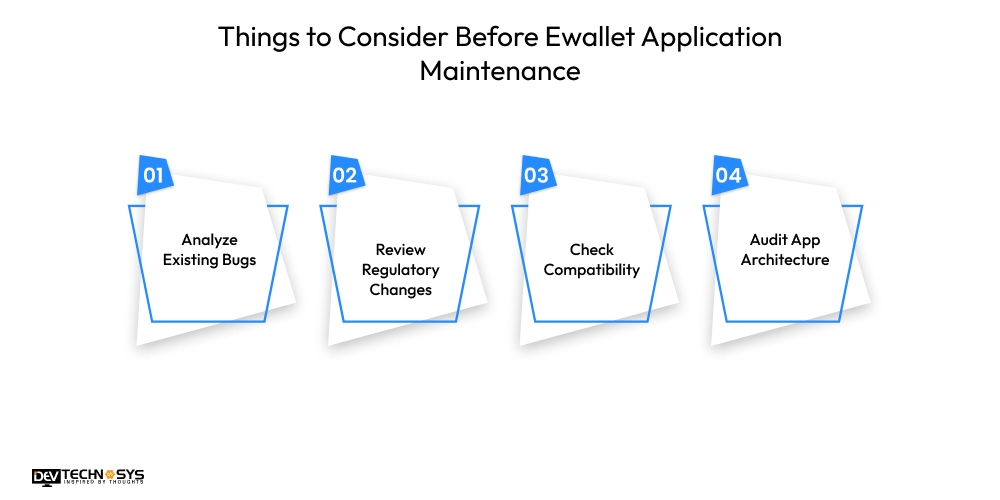
Things to Consider Before Ewallet Application Maintenance
It’s crucial to assess the app’s present condition and outside variables that could influence updates. A smart evaluation aids in effective resource allocation, planning, and stability and compliance assurance:
1. Analyze Existing Bugs
Find and rank bugs that impact usability, security, and performance. Early bug fixes for high-impact issues might avoid significant downtime or unhappy customers. This investigation is guided by crash reports, logs, and user comments.
2. Review Regulatory Changes
Keep modifications to regional compliance standards, PCI-DSS, GDPR, and other financial rules. There could be fines or suspensions for noncompliance. These strategies for mobile app maintenance make you alter maintenance schedules to accommodate these updated specifications.
3. Check Compatibility
Test the app on the newest mobile devices, screen sizes, and operating systems. Security flaws, poor user experience, or crashes could result from incompatibility. Before implementing any new maintenance, make the necessary updates to SDKs and APIs.
4. Audit App Architecture
Examine the framework, third-party dependencies, and underlying source. A neat, modular design lowers expenses and makes maintenance easier. When updating, look for bottlenecks or legacy code that has to be refactored.
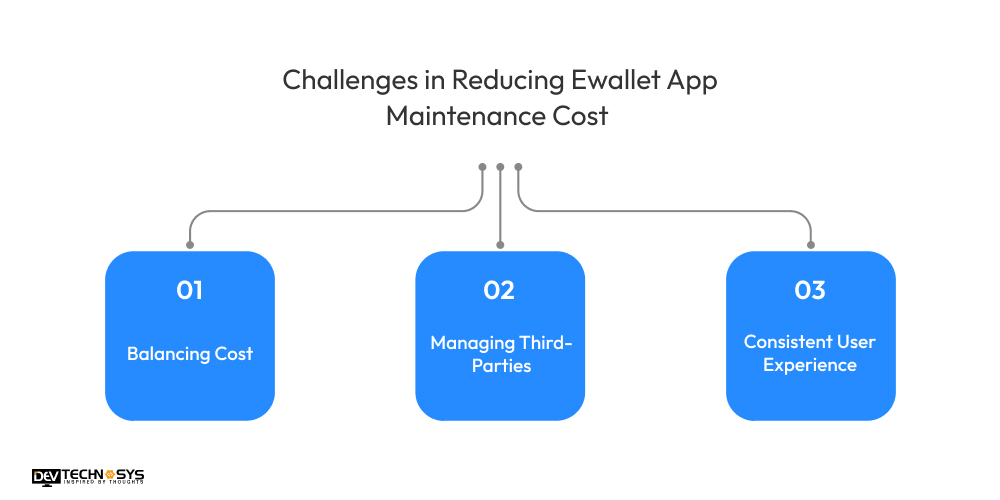
Challenges in Reducing Ewallet App Maintenance Cost
It might be challenging to lower ewallet app maintenance expenses. Keeping costs under control while preserving program performance and user experience consistency are major difficulties:
1. Balancing Cost
Lower maintenance funding could lead to poorer security, slower updates, or worse performance. For developing platforms, finding the ideal balance without compromising quality is frequently challenging.
Solution: To reduce manual overhead, prioritize important maintenance chores and employ automation.
2. Managing Third-Parties
With increase in fluctuating integration fees, relying on external APIs may result in higher mobile app development expenses. This necessitates regular updating and results in unforeseen costs.
Solution: Pick trustworthy outside vendors with dependable APIs and clear price structures.
3. Consistent User Experience
Mobile wallet maintenance pricing measures may result in abrupt user interface behavior and slow performance. This could harm customer retention and satisfaction.
Solution: To update UI effectively and affordably, use modular design and reusable components.
Let’s Summarize!!
We have discussed various factors that influence the ewallet app maintenance cost along with their reducing methods. So, if you have already developed an ewallet application, then it is necessary for you to start maintaining the platform:
- Approach an experienced ewallet app development company for app maintenance.
- Conduct strict testing and security checks.
- Keep a flexible budget that can be modified easily.
- Look upon various market trends in ewallet app maintenance.
The above points will help a business investor in delivering a smart and efficient platform to users. Additionally, this guarantees revenue and business growth.
Frequently Asked Questions
Find answers to the most common questions related to this article.
An eWallet app's yearly maintenance expenses typically fall between 15% and 25% of the app's original development cost. For instance, if the development of your app costs $60,000, you should budget between $9,000 and $15,000 annually for maintenance.
Bug fixes and resolving technical issues.
Security updates and implementing patches.
System updates with new OS versions.
Protects user data and maintains compliance.
Ensures smooth performance.
Prevents major breakdowns.
App Complexity: More features and custom modules.
Tech Stack: Use of APIs and payment gateways.
Platform Size: Supporting multiple platforms.
Yes, you can reduce expenses by limiting third-party dependencies, designing clean, modular code, and utilizing cloud-based infrastructure. Long-term costs and manual labor are also decreased by automating tests and updates. Costly emergency repairs can be avoided with routine preventative maintenance.
Every month, eWallet apps should receive small upgrades, and every three to six months, they should receive substantial changes. It is recommended that security patches and OS compatibility tests be performed more often, particularly following system updates.