


















Hiring dedicated developers a crucial and strategic choice for businesses interested in developing high-quality and scalable digital products. Before that comes a choice, Model selection. Decide between a monthly or an hourly model. The development model can significantly impact the cost of the project, flexibility, and overall success.
The monthly hiring model offers a fixed cost and long-term commitment, whereas the Hourly model offers greater flexibility. Today’s blog will help you understand the hourly and monthly developer hiring model and how these models help startups, SMEs, and enterprises make informed decisions tailored to their budget, development timeline, and project scope. Now, let’s cut to the chase and dive straight into the specifics to hire dedicated developers on monthly vs hourly model.
What is a Dedicated Developer?
A dedicated developer is a professional with the skills to work on a project for a specified period. A developer functions as an extension of your in-house team.
Dedicated developers are not like shared or freelance resources that focus solely on your business requirements, ensuring better communication, accountability, and consistency.
Dedicated developers are ideal for long-term projects, progressive web apps development, complex applications, or companies seeking flexible scaling without the cost and effort of hiring full-time, in-house talent.
When to Hire a Dedicated Developer?
Before deciding to hire dedicated developers on monthly vs hourly model, let’s understand why you need to hire a dedicated developer. Here are some situations where you need to employ dedicated low code development providers.
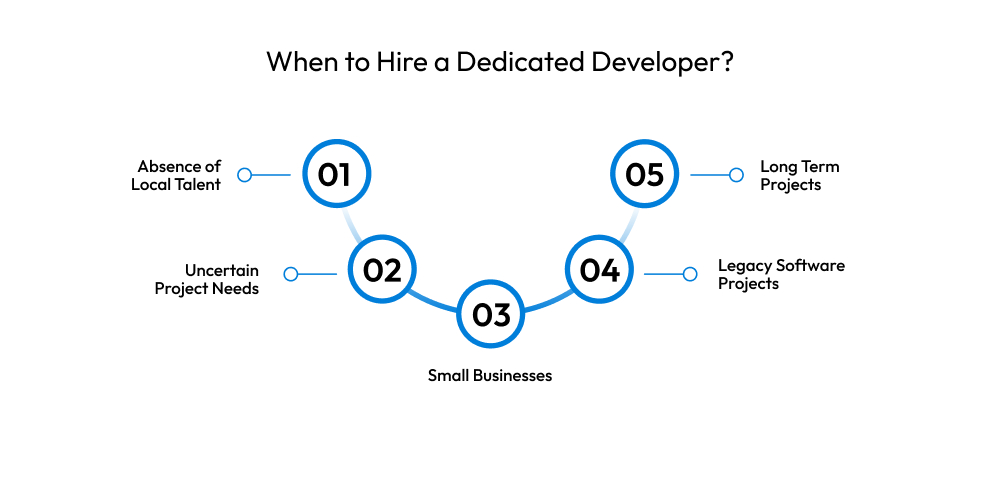
1. Absence of Local Talent
If local salaries are too high, you can hire an Indian programmer as a cost-effective solution for your business. This allows you to access skilled hybrid app development experts without incurring the high costs associated with local hiring.
2. Uncertain Project Needs
When your project requirements are not defined completely, hire dedicated developers monthly vs hourly basis provides flexibility in terms of project requirements, deadlines, and other parameters. You can hire offshore dedicated developers with just a preliminary idea and collaborate on the details as you progress.
3. Small Businesses
For startups, especially during the early stages, hiring dedicated developers from India is an excellent idea. Your in-house iPhone app development team can focus on the business aspects. At the same time, dedicated developers will handle transforming your idea into a functional product, without the need for onboarding, office space, or equipment.
4. Legacy Software Projects
For older software product that requires updates and new features, hire full-time dedicated developers from top firm can be an ideal choice. Hire remote developers monthly who are familiar with the product and can continually improve it to meet current market demands.
5. Long Term Projects
For a long-term project, whether for iOS or Android app development, particularly one built from scratch with a new concept, a monthly developer hiring model will be beneficial because it enables focusing entirely on project development, whether it’s a mobile app or a web development project.
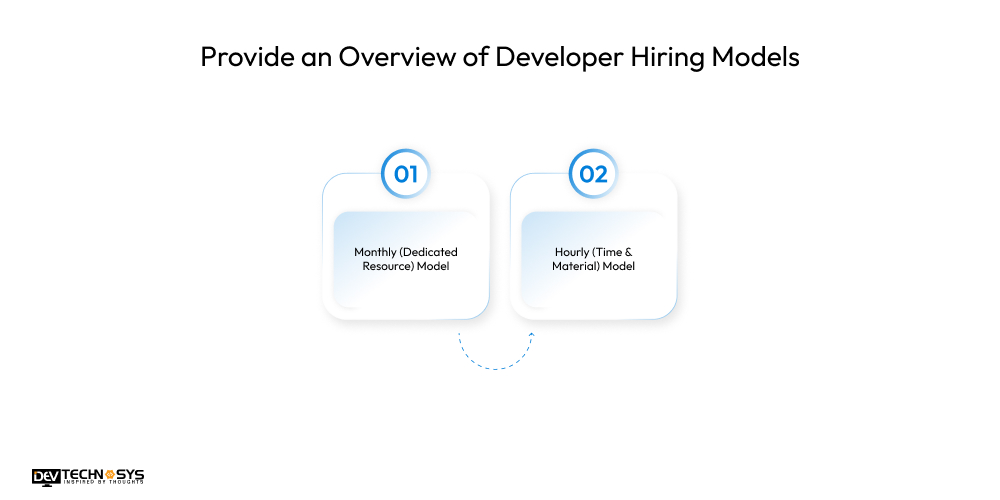
Provide an Overview of Developer Hiring Models
Wondering which developer hiring model is better to choose? Choosing the right one between the hourly developer hiring model is essential for balancing cost, control, and flexibility.
Among the most preferred engagement options are the Monthly (Dedicated Resource) Model and the Hourly (Time & Material) Model. Each model caters to different project needs, timelines, and business goals.
1. Monthly (Dedicated Resource) Model
The Monthly Dedicated Resource Model (DRM) is an outsourcing approach where businesses hire skilled professionals, such as developers, designers, or marketers, who work exclusively on their project for a fixed monthly fee.
These resources function like virtual employees, offering deep focus, better collaboration, and long-term commitment. Unlike fixed-price or pure time-and-material models, DRM ensures resources are not shared across multiple clients, and scope changes do not typically incur heavy renegotiation costs.
Key Characteristics of Monthly Models:
- Exclusive Focus: Hourly vs full-time developers work solely on your project, ensuring higher dedication and better alignment with business goals.
- Fixed Monthly Cost: Predictable pricing, usually based on approximately 160 working hours per month, with flexibility for extended support if required.
- Client Control: Hire dedicated developers on monthly vs hourly model is crucial. If you want to manage daily tasks, workflows, and priorities, similar to an in-house team setup, then hire a dedicated monthly developer.
- Flexibility: Easily scale the team up or down or shift development priorities without major contract changes.
- Seamless Integration: Dedicated resources integrate smoothly with your internal team, tools, and communication processes.
2. Hourly (Time & Material) Model
The Hourly or Time & Material (T&M) Model is a flexible engagement structure where clients pay only for the actual hours worked and any direct material or tool-related costs.
This model is best suited for projects with unclear scopes, frequent changes, or agile Hybris or Native mobile app development requirements. Billing is typically done on a periodic basis with detailed timesheets and progress reports for transparency.
Key Characteristics of the Hourly Model:
- Agreed Rates: hire remote developers hourly, daily, or weekly rates for different roles such as developers, testers, or analysts.
- Time Tracking: All work hours are tracked and shared with the client, ensuring accurate and transparent billing.
- Material Costs: Any direct expenses for software, tools, or resources are billed separately, usually with minimal markup.
- Iterative Billing: Regular invoicing (often monthly) with detailed progress updates, allowing better control and adaptability.
Here’s the table explaining the monthly and hourly hiring models based on various factors:
| Factor | Monthly Model | Hourly Model |
| Pricing | Fixed monthly cost | Pay per hour |
| Cost Predictability | High | Medium |
| Best For | Long-term projects | Short-term or flexible tasks |
| Client Control | Full control | Task-based control |
| Flexibility | High | Very high |
| Team Integration | Strong | Limited |
Which Hiring Models Are Best Suited For Your Projects?
Choosing between a monthly or hourly developer hiring model depends largely on your project duration, complexity, and business stage. Each of these software development engagement models offers distinct advantages, and understanding where your project fits can help you make the right decision.
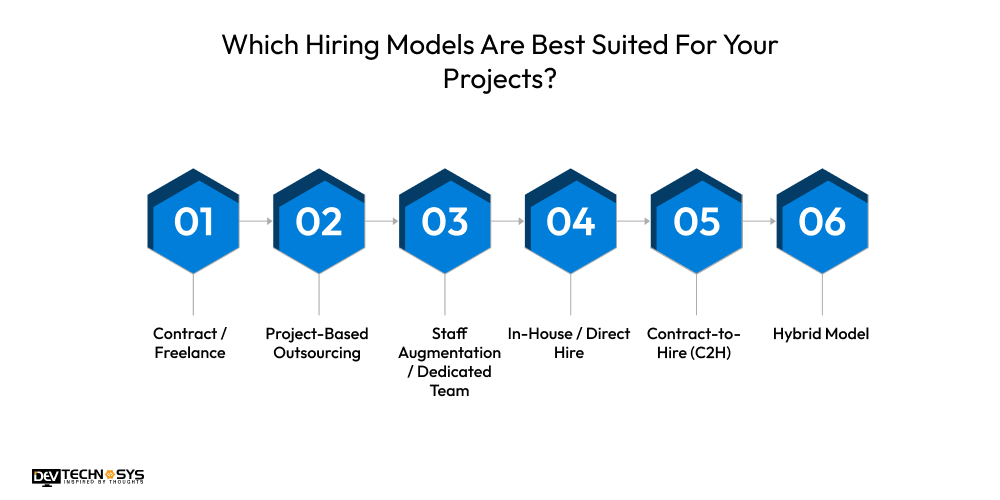
1. Contract / Freelance
This model is best for short-term tasks, urgent fixes, or specialized expertise. Flexible hourly developers offer maximum flexibility with minimal commitment, which is best suited for businesses that need quick support without long-term obligations, internal management responsibilities, or permanent hiring investments.
2. Project-Based Outsourcing
Project-based outsourcing in which businesses outsource developers monthly for well-defined projects with fixed scope, timelines, and deliverables. It allows businesses to control costs, reduce management effort, and ensure timely delivery without handling day-to-day development activities or technical supervision internally.
3. Staff Augmentation / Dedicated Team
This monthly hiring mode is ideal for long-term projects or rapid team scaling. Dedicated professionals work as an extension of your in-house team, offering better control, consistent productivity, deep domain knowledge, and long-term alignment with evolving business objectives.
4. In-House / Direct Hire
In-house hiring is best for core products and strategic initiatives. It is the best model to hire dedicated developers, which ensures full ownership, strong cultural alignment, and long-term stability, though it requires higher investment in recruitment, infrastructure, training, employee retention, and operational management.
5. Contract-to-Hire (C2H)
The contract-to-hire model allows businesses to evaluate a developer’s technical skills and cultural fit before permanent hiring, reducing recruitment risks, improving hiring confidence, and ensuring long-term workforce quality and team compatibility.
6. Hybrid Model
No need to choose between hourly vs full-time developers, the hybrid model combines in-house teams with external developers, making it ideal for complex or evolving projects. It offers flexibility, cost efficiency, balanced control, faster scalability, and optimized resource utilization across different development phases.
| Project Type | Best Hiring Model | Reason |
| Long-Term Projects | Monthly Model | Dedicated focus and predictable costs |
| Short-Term or MVP Development | Hourly Model | Flexible and pay-as-you-go |
| Startups | Hourly then proceed to Monthly | Cost control, then scalability |
| Enterprises | Monthly Model | Stability and long-term support |

What are the Business Benefits of Hiring Monthly or Hourly Developers?
Now that we have reviewed the best hiring model for developers, let’s move on and discuss the benefits you can get if you hire dedicated developers monthly vs hourly rates. Take a look at these significant monthly vs hourly developer hiring benefits to explore.
Benefits of Hiring Monthly Developers:
- Predictable Monthly Costs: Monthly hiring offers fixed pricing, making budgeting easier and eliminating unexpected development expenses. This cost predictability helps businesses plan long-term projects more efficiently without worrying about fluctuating hourly charges.
- Dedicated Focus and Productivity: Developers work exclusively on your project, ensuring full attention, faster execution, and higher productivity. This dedicated approach reduces context switching and improves overall development efficiency.
- Better Control and Collaboration: Monthly developers function like an extension of your in-house team. You can manage priorities, workflows, and timelines directly, resulting in smoother communication and stronger collaboration.
- Scalability and Flexibility: Businesses looking for Xamarin App Development can easily scale resources up or down on a monthly basis. This flexibility allows quick adaptation to changing project requirements without complex contract revisions.
- Long-Term Product Knowledge: Over time, monthly wearable app development providers gain a deep understanding of your product, codebase, and business goals. This continuity improves code quality, simplifies maintenance, and supports long-term product growth.
Benefits of Hiring Hourly Developers:
- Pay Only For Actual Work: Among monthly vs hourly developers, Hourly hiring allows you to pay strictly for the time spent on development. This prevents unnecessary expenses and makes it ideal for small tasks, maintenance work, or projects with a limited scope.
- High Flexibility And Control: Hire developers hourly as they easily adjust work hours, priorities, or developer involvement based on project needs. This flexibility is perfect for projects with changing requirements or uncertain timelines.
- Ideal For Short-Term Projects: Hourly offshore dedicated developers are not only more affordable but well-suited for Mobile App Prototyping, bug fixes, feature enhancements, and quick updates where full-time resources are not required.
- Transparent Billing And Tracking: With detailed time tracking and task-based reports, pay per hour developers provide you with complete visibility into progress and costs, ensuring transparency and accountability throughout the project.
- Easy Scaling Without Commitment: Choosing to hire hourly developers between hourly vs full-time developers lets you scale development effort up or down without long-term commitments, helping businesses manage resources efficiently while maintaining budget control.
Want a chatbot demo or pricing? Fill the form and talk to our experts today.
Pick what you need below — you can select more than one — then tap Get detail to continue.
-
Chatbot demo dashboard
-
Cost to develop an app
-
Industry report
-
Case study
What is the Cost to Hire Dedicated Developers: Monthly vs Hourly?
The cost to hire dedicated developers on Monthly vs Hourly model differs depending on various factors. The dedicated developers monthly cost can be around $8,000 to $25,000 annually. To hire monthly dedicated developers, you need to pay $ 500 to $10,000+.
Whereas the hourly developer hiring model can range between $15 and $120 per hour. Here’s the detailed monthly vs hourly developers cost comparison.
● Cost for Monthly Developer Hiring
In the monthly model, you pay a fixed fee for developers working full-time on your project. Costs scale with team size and experience level. A small team can range from $3,000 to $6,000. A mid-sized team can be hired for $3,000 to $6,000, and a senior and expanded team can charge $12,000. Here’s the table outlining the cost to hire dedicated developers for IoT Application Development.
| Hiring Type | Estimated Monthly Cost | Best Use Case |
| Junior Developer | $500 – $2,000 | Basic features, support tasks |
| Mid-Level Developer | $2,000 – $4,500 | Core development, APIs, integrations |
| Senior Developer | $4,500 – $8,000 | Architecture, complex logic, leadership |
| Small Team | $3,000 – $6,000 | MVPs, early-stage products |
| Mid Team | $3,000 – $7,000 | Growing products, SaaS apps |
| Large / Senior Team | $8,500 – $10,000 | Enterprise or long-term platforms |
● Cost for Hourly Developer Hiring
In the hourly model, you pay for the actual hours worked, with rates based on the developer’s expertise. Businesses can hire junior developers for $10 to $25, whereas mid-level developers can be hired for $25 to $50 per hour.
If you wish to hire a dedicated enterprise mobility solution provider with an advanced skill set, they can charge $50 to $100. Here’s the dedicated developers pricing comparison table.
| Developer Level | Hourly Rate |
| Junior Developer | $10 to $15 per hour |
| Mid-Level Developer | $15 to $30 per hour |
| Senior Developer | $30 to $50 per hour |
What are the Common Mistakes to Avoid When Hiring Dedicated Developers?
Before you hire dedicated developers on a monthly vs hourly model, take a step back and first pay attention to the common mistakes that businesses often make when choosing an hourly vs monthly developer model. Now let’s take a look at these common mistakes in detail.
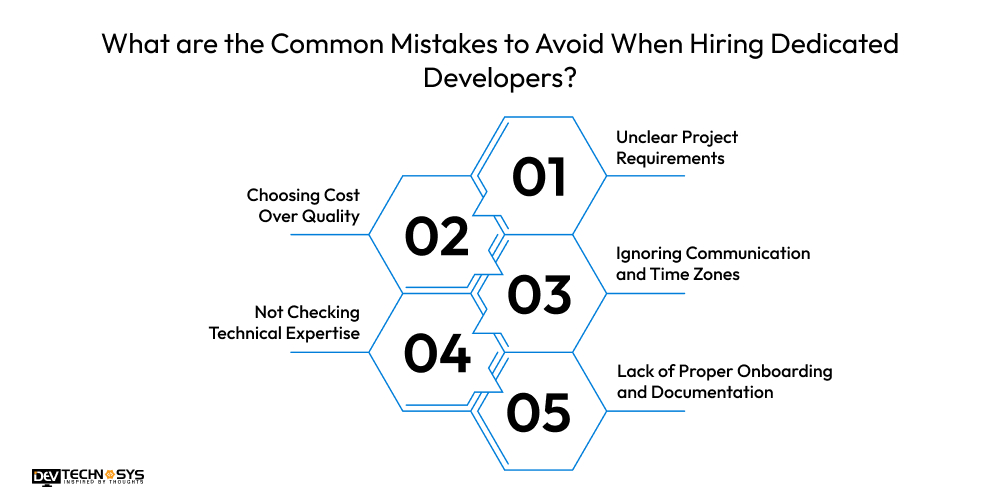
1. Unclear Project Requirements
If you hire dedicated developers on monthly vs hourly model without clearly defined goals, scope, or deliverables, it often leads to miscommunication, delays, and cost overruns. A vague roadmap makes it difficult for developers to align their efforts with your business expectations, timelines, and long-term product vision.
2. Choosing Cost Over Quality
Focusing only on the lowest price can compromise code quality, security, and performance. Inexperienced developers may increase long-term costs due to frequent fixes, rework, technical debt, and poor scalability of the final product.
3. Ignoring Communication and Time Zones
Overlooking communication processes or time zone compatibility can slow progress and cause misunderstandings. Regular updates, overlapping working hours, defined communication channels, and the right collaboration tools are essential for smooth coordination and transparency.
4. Not Checking Technical Expertise
Failing to assess a developer’s technical skills, past experience, and domain knowledge can result in poor execution. Always evaluate portfolios, conduct technical interviews, review real-world projects, and verify expertise in relevant technologies.
5. Lack of Proper Onboarding and Documentation
Skipping structured onboarding and documentation makes it harder for developers to understand workflows and expectations. Proper onboarding ensures faster productivity, better collaboration, consistent development standards, and smoother integration with internal teams.
Monthly vs Hourly Model: Final Verdict
Choosing between the monthly and hourly developer hiring model depends on your project scope, timeline, and budget stability. The monthly model is ideal for long-term projects requiring dedicated focus, predictable costs, and close collaboration.
In contrast, the hourly model works best for short-term tasks, MVPs, or projects with evolving requirements where flexibility and pay-as-you-go pricing matter most. By aligning your business goals with the right hiring approach, you can maximize productivity, control costs, and ensure successful project delivery.
How Dev Technosys Will Help?
We hope this blog helped you understand the developer hiring models a bit better. With this information, choosing between a monthly vs hourly developer model will become easier for you.
And if you are a business looking to hire dedicated developers on monthly vs hourly model, then talk to our experts at Dev Technosys. From app ideation to mobile app design services to development and deployment, we will guide you on every step, regardless of the model you choose.
We ensure skilled talent, transparent communication, scalable teams, and on-time delivery to help you achieve long-term success. Stay tuned for more details.
Frequently Asked Questions
Find answers to the most common questions related to this article.
The monthly model provides dedicated developers at a fixed monthly cost with full-time involvement, while the hourly model charges only for actual hours worked, offering flexibility for short-term tasks or changing workloads.
Monthly hiring is more cost-effective for long-term projects with consistent development needs. In contrast, hourly hiring works better for short-term assignments, limited tasks, or projects with frequently changing requirements.
Choose the monthly model when your project requires continuous development, predictable budgeting, full-time developer availability, and close collaboration similar to working with an in-house development team.
The hourly model is ideal for MVP development, maintenance work, bug fixing, feature enhancements, or projects with evolving scopes where flexibility and pay-as-you-go pricing are essential.
Yes, developers hired under the monthly model work exclusively on your project, ensuring complete focus, better accountability, faster turnaround, and a deeper understanding of your business goals and product requirements.