


















“The Cost of Innovation in Swiss Pharmaceutical Apps.”
Switzerland is one of the most desirable locations for businesses looking for top-notch pharmaceutical app development, thanks to its booming digital economy and healthcare technology. But mobile app development requires careful planning, technology, and, more importantly, the right investment strategy.
GMP/GDP compliant pharma app development cannot begin without considering one crucial factor: cost. Knowing the cost is essential before proceeding with the Pharma app development in Switzerland.
In this blog, we will decode the actual pharmaceuticals app development cost in Switzerland, check out the factors affecting it, and offer suggestions for reducing development costs. So, cutting to the chase, let’s dive straight into it!
Present and Future Stats of Pharmasutical App Market in Switzerland
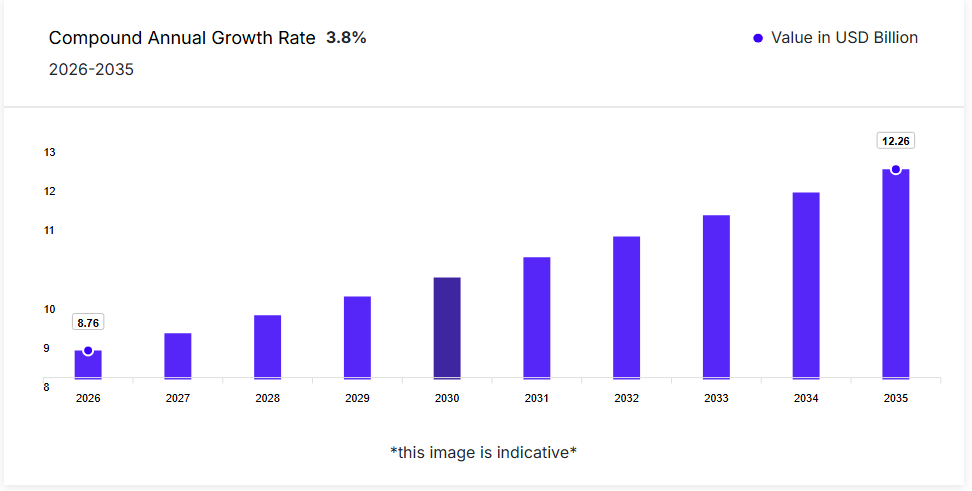
- The Swiss pharmaceutical market was valued at USD 8.44 billion in 2025.
- It is expected to grow at a CAGR of 3.80% during the forecast period of 2026-2035 and attain a market value of USD 12.26 billion by 2035.
- The broader European mHealth apps market generated US$8.9 billion in revenue in 2023 and is projected to grow at a CAGR of 15.5% from 2024 to 2030.
- Major market trends in the market include digital innovation, strategic R&D partnerships, and rising chronic disease burden, all contributing to accelerated drug discovery and long-term therapeutic demand.
How Much Does It Cost to Develop Pharmaceuticals App in Switzerland?
The pharmaceutical mobile app development cost in Switzerland typically lies between CHF 6,400 and CHF 20,000. A basic pharmaceuticals app development cost in Switzerland usually costs around CHF 6,400 to CHF 9,600. The mid-level pharma application development pricing can be around CHF 9,600 to CHF 14,400.
Adding advanced features like strong data encryption, real-time inventory management, and analytics can increase the cost of pharma software development in Switzerland to up to CHF 20,000 or higher.
The cost to develop a pharmaceutical app in Switzerland can also be significantly impacted by factors like platform choice, UI/UX quality, security standards, and maintenance planning.
App Type |
Estimated Cost (CHF) |
Development Timeline |
| Basic Pharmaceuticals App | CHF 6,400 to CHF 9,600 | 6 to 8 weeks |
| Mid-Level Pharmaceuticals App | CHF 9,600 to CHF 14,400 | 8 to 12 weeks |
| Advanced Pharmaceuticals App | CHF 14,400 to CHF 20,000 | 12 to 16 weeks |
What Factors Can Affect the Cost To Build a Pharmaceutical App in Switzerland?
Now that we have learned the cost to develop a pharmaceutical app, let’s move on to the factors that affect it. Here are the key factors affecting pharmaceuticals app development cost in Switzerland.
1. Complexity of Features
Features are one of the major factors that affect the Pharmaceutical mobile app cost in Switzerland. Basic online pharmacy app development with a simple interface and essential features can not cost much. However, the addition of advanced features can increase the cost to develop a pharmaceutical app in Switzerland.
Feature Complexity |
Estimated Cost (CHF) |
Timeline |
| Basic | CHF 6,400 – 9,600 | 4–6 weeks |
| Moderate | CHF 9,600 – 14,400 | 8–10 weeks |
| Advanced | CHF 14,400 – 20,000 | 12–16 weeks |
2. Platform Availability
The choice of platform: Android, iOS, or both, can influence the cost to build pharmaceutical app in Switzerland. Native apps may not cost that much, but developing a cross-platform pharma app can significantly impact the average cost to develop a pharma app in Switzerland.
Platform Scope |
Cost Range (CHF) |
Timeline |
| Single Platform (iOS OR Android) | CHF 6,400 – 11,200 | 6–10 weeks |
| Dual Platform (iOS & Android) | CHF 11,200 – 17,600 | 10–14 weeks |
| Cross-Platform + Web | CHF 14,400 – 20,000 | 14–18 weeks |
3. UI/UX Design
UI/UX design development directly impacts both the cost to build a pharmaceutical app in Switzerland and the user experience. Custom interfaces, advanced interactions, and accessibility-focused designs can hike up the Pharmaceuticals app development cost in Switzerland.
Design Level |
Cost Range (CHF) |
Timeline |
| Basic UI | CHF 6,400 – 8,000 | 3–5 weeks |
| Custom UI/UX | CHF 8,000 – 12,000 | 5–8 weeks |
| Advanced UX | CHF 12,000 – 16,000 | 8–12 weeks |
4. Security Measurements
User data security is an essential factor that affects the ePharmacy app development cost Switzerland. Security measures may include biometrics, authentication, and encryption measures. Here’s a table highlighting the GMP/GDP-compliant pharma app development costs based on security measures.
Security Tier |
Cost Range (CHF) |
Timeline |
| Basic Security | CHF 6,400 – 9,600 | 2–4 weeks |
| Intermediate Security | CHF 9,600 – 14,400 | 4–8 weeks |
| High/Compliance | CHF 14,400 – 20,000 | 8–12 weeks |
5. Maintenance Service
Maintenance services are an ongoing cost that can impact the total cost of pharma software development in Switzerland. But ignoring maintenance can lead to poor performance and outdated features, resulting in a poor user experience. It is beneficial to hire dedicated developers for the post-launch maintenance of your pharma app.
Maintenance Package |
Monthly Cost (CHF) |
Duration |
| Basic Support | ~CHF 400 – 800 / month | 6–12 months |
| Standard | ~CHF 800 – 1,200 / month | 6–12 months |
| Premium | ~CHF 1,200 – 2,000 / month | 6–12 months |
Want a chatbot demo or pricing? Fill the form and talk to our experts today.
Pick what you need below — you can select more than one — then tap Get detail to continue.
-
Chatbot demo dashboard
-
Cost to develop an app
-
Industry report
-
Case study
3 Practical Case Studies on Pricing Strategies
Well, glad you made it till here. Now, let’s see the real-time estimate of the pharmaceuticals app development cost in Switzerland. Take a good look at these case studies and see how they are used in Healthcare and pharmaceutical software development Switzerland.
1. Tiered Feature Development
This strategy launches an MVP with essential features, then adds advanced modules in phases. It reduces upfront costs, speeds market entry, and aligns development spending with real user demand and revenue growth.
Tier |
Development Cost (CHF) |
Timeline |
| Tier 1 (MVP) | CHF 6,500 – 8,000 | 5–6 weeks |
| Tier 2 (Growth) | CHF 9,000 – 12,000 | 6–8 weeks |
| Tier 3 (Advanced) | CHF 14,000 – 18,000 | 8–10 weeks |
2. Subscription-Based App Development
Subscription-based development focuses on recurring revenue by offering monthly or yearly plans. Users pay for continuous access to premium healthcare features, ensuring predictable income, higher retention, and long-term scalability for pharmaceutical platforms.
Subscription Tier |
Development Cost (CHF) |
Timeline |
| Basic Plan | CHF 7,000 – 9,000 | 5–6 weeks |
| Standard Plan | CHF 11,000 – 14,000 | 7–9 weeks |
| Premium Plan | CHF 16,000 – 20,000 | 10–12 weeks |
3. Freemium + Add-On Modules
The freemium model offers core app features for free to attract users, while advanced services are sold as paid add-ons. According to a top healthcare app development company, this approach boosts adoption, flexibility, and revenue without forcing upfront user commitment.
Component |
Cost to Develop (CHF) |
Timeline |
| Core App | CHF 6,000 – 8,000 | 4–5 weeks |
| Prescription Scanner | CHF 3,000 – 4,000 | 2–3 weeks |
| Doctor Consultation | CHF 4,000 – 6,000 | 3–4 weeks |
| Priority Delivery | CHF 2,000 – 3,000 | 2 weeks |
How to Reduce the Cost to Develop a Pharmaceutical App in Switzerland?
If you are looking for ways to reduce the Pharmaceutical mobile app cost in Switzerland, then you have arrived at the right place. Here are the factors that can help you reduce the Medical and pharma compliance app development cost to some extent.
1. Start with an MVP
Hire dedicated mvp developers to develop only essential features such as medicine listings, search, and notifications. An MVP reduces initial costs, shortens timelines, validates the idea quickly, and prevents heavy spending on untested advanced functionality.
2. Choose Cross-Platform Development
Using cross-platform frameworks like Flutter or React Native allows a single codebase for iOS and Android, significantly reducing development time, testing effort, maintenance costs, and overall project expenditure in Switzerland.
3. Prioritize Features Strategically
Boost your Healthcare App Development Ideas with features that directly support core user needs and business goals. Delaying complex or optional modules helps control budgets, avoid feature overload, and reduce unnecessary development and testing costs.

How Dev Technosys Will Help You?
In this blog, we tried to explain the Switzerland pharmaceuticals app development cost to you. We hope it will help you plan your app development budget more smartly. If you are a business looking to learn more about pharma app development price
Switzerland or want to develop a pharmaceutical app for your business, then contact a top medicine delivery app development company like Dev technosys. Stay tuned for more updates.
Frequently Asked Questions
Find answers to the most common questions related to this article.
The average cost to build a pharmaceutical app in Switzerland ranges from CHF 6,400 to CHF 20,000, depending on feature complexity, platform selection, UI/UX design quality, security standards, and regulatory compliance requirements.
Key cost-driving factors include feature complexity, number of supported platforms, security measures, compliance with Swiss and GDPR regulations, UI/UX customization level, third-party integrations, and post-launch maintenance requirements.
A pharmaceutical app typically takes between six and twenty weeks to develop, depending on app complexity, design requirements, platform coverage, testing effort, compliance validation, and integration with healthcare or pharmacy systems.
Yes, cross-platform development reduces development and maintenance costs by using a single codebase for iOS and Android, making it a cost-effective option for pharmaceutical startups with limited budgets and faster time-to-market goals.
Yes, pharmaceutical apps must follow strict data protection standards, including GDPR compliance, encrypted storage, secure authentication, and role-based access controls to protect sensitive medical and personal user information.