
















Key Takeaways:
-
- The Digital Health market generated revenue of US$197.88bn in 2025 and is expected to grow even more in the predicted period.
- AI & ML integration is enhancing the user experience by providing personalized medicine recommendations and predictive analytics.
- Telehealth Features are expanding access by enabling virtual consultations and digital prescriptions.
In 2025, the medicine delivery app market is evolving rapidly, enhancing the way people access medical care. With the constantly rising demand for convenience, personalization, and safety, these applications have evolved into a comprehensive digital healthcare ecosystem.
Businesses are also taking an interest in scalable architectures, user-friendly interfaces, and subscription models for chronic care and prescription management to meet the growing demand. From AI-driven recommendations and telehealth integration to blockchain security and drone-powered deliveries, medicine delivery app development market trends are setting new standards in the industry.
In today’s post, we will talk about the top medicine delivery app development market trends. These trends not only enhance healthcare accessibility but also transform the way patients and medical professionals interact in the digital age.
What is the Medicine Delivery App?
A medicine delivery app refers to an online platform that enables users to order over-the-counter medications and prescriptions online and have them delivered to their home. Top medicine delivery apps are available for many purposes, including ones for electronic prescribing, diagnosis and treatment, practice management, coding and billing, and CME or e-learning.
Medicine Delivery App Market Insights
- Revenue in the Digital Health market is projected to reach US$197.88bn in 2025.
- The pharmacy delivery app market growth and revenue are expected to exhibit an annual growth rate (CAGR 2025-2029) of 7.64%, resulting in a projected market volume of US$130.46 billion by 2029.
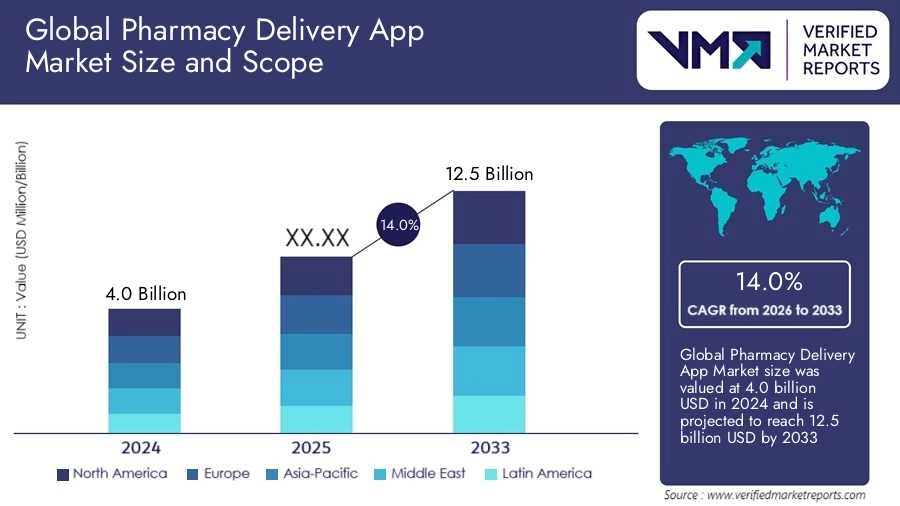
- North America leads with the highest market share at 35%, followed by Asia Pacific at 30%, Europe at 20%, Latin America at 10%, and the Middle East & Africa at 5%
- SMEs hold the largest share of the market at 55%, as small businesses are increasingly adopting pharmacy delivery apps due to their ease of use and lower costs.
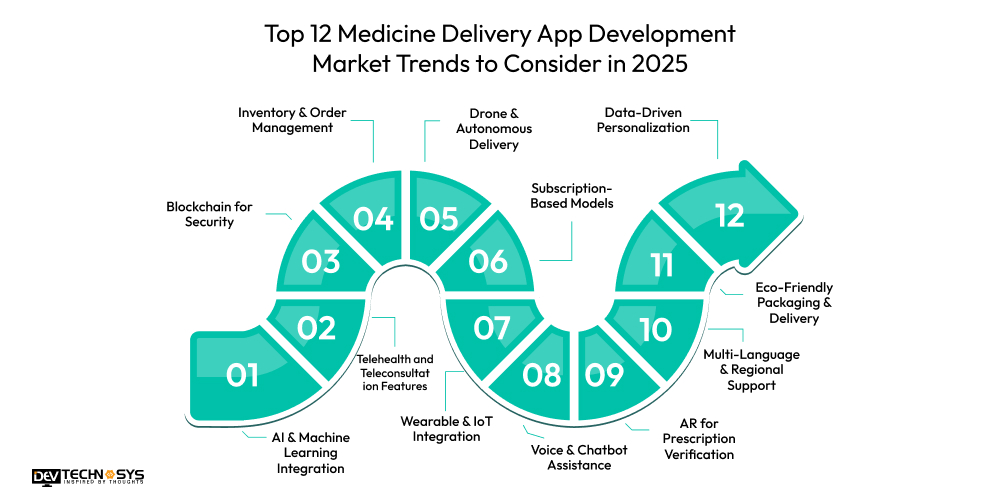
Top 12 Medicine Delivery App Development Market Trends to Consider in 2025
Here are the top medicine delivery app development market trends that businesses should consider before stepping into the online medicine delivery app development field. Take a look:
1. AI & Machine Learning Integration:
AI is one of the top market trends for medicine delivery app development. Experts use AI for personalized drug recommendations, advanced search functions, potential drug interaction checks, and to enhance overall user experience within the medicine delivery app. If you want to develop medicine delivery apps like Pharmeasy, then you need to integrate AI components into them.
2. Telehealth and Teleconsultation Features:
If you look into medicine delivery app development insights, then you’ll notice that telehealth features are the key players. You can enhance the convenience of digital prescriptions by adding advanced telemedicine features for virtual doctor consultations. It allows users to receive prescriptions and advice remotely.
3. Blockchain for Security:
When conducting medicine delivery app market analysis, you’ll find out the crucial role of blockchain, especially for app security. Experts use Blockchain technology to solve issues associated with data privacy and prescription security. It keeps patient information and transaction data secure.
4. Inventory & Order Management:
Inventory management is one of the most crucial digital pharmacy app development trends. Robust backend systems are crucial for managing inventory effectively, handling multiple orders simultaneously, and integrating with existing pharmacy workflows.
5. Drone & Autonomous Delivery:
Thanks to the pharmacy delivery app market growth, the drone and autonomous delivery trend is a big step towards improving delivery speed and efficiency. In remote or hard-to-reach areas, drone delivery is emerging as one of the most viable and exciting medicine delivery app development market trends.
6. Subscription-Based Models:
Introduction of subscription plans is one of the growing digital pharmacy app development trends. This trend is used for recurring medication needs. Subscription-based models are more beneficial for managing chronic conditions and ensuring consistent medication adherence.
7. Wearable & IoT Integration
Witnessing the growth of the pharmacy delivery app market, businesses wanting to build an ayurvedic medicine delivery app are merging medicine delivery apps with wearables and IoT devices. Syncing with a device to track vitals like blood pressure, glucose, or heart rate. This enables auto-reminders for refills and even smart prescription adjustments.
8. Voice & Chatbot Assistance
Voice and chatbot assistance is one of the most used medicine delivery app development market trends. AI-powered voice commands and chatbots make online medicine ordering easier, checking prescription details, and offering 24/7 assistance. If you want to create an ayurvedic medicine delivery app, then integrating voice and chatbot features is crucial.
9. AR for Prescription Verification
Understanding medicine delivery app market trends, such as the use of augmented reality, is important, as it enables providers to offer real-time prescription verification and dosage instructions, helping users better understand medications while reducing the chances of misuse or errors.
10. Multi-Language & Regional Support
The medicine delivery app market trends, like multi-language and regional support, are gaining popularity. Apps are focusing on multi-language accessibility to cater to diverse populations, ensuring rural and regional users can comfortably order medicines in their native language.
11. Eco-Friendly Packaging & Delivery
Medicine delivery app development market trends like eco-friendly packaging and sustainability are gaining importance. Medicine delivery apps are now adopting eco-friendly packaging and green delivery methods. It includes the usage of electric vehicles and biodegradable packaging materials.
12. Data-Driven Personalization
The medicine delivery app market trends, like using advanced analytics and data-driven personalization, are on the rise. Pharmacy apps are offering personalized health insights, medicine suggestions, and lifestyle tips. This makes them more than just delivery platforms, turning them into health management companions.
Conclusion
In the above post, we explored the top medicine delivery app development market trends. These market trends are making online medicine delivery app development more accessible, secure, and user-centric.
Thanks to the broad adoption of these trends, they are reshaping digital healthcare for both patients and providers. As technology continues to evolve, businesses that use these market trends are set to meet the increasing healthcare demands of 2025 and beyond.
FAQs
Q1. What Are The Most Widely Used Medicine Delivery App Development Trends?
The most popular trends include AI-driven recommendations, telemedicine consultations, blockchain for secure data handling, subscription-based models, drone deliveries, and scalable cloud-based architectures, all enhancing convenience, safety, and efficiency in medicine delivery apps.
Q2. How To Ensure Security In Medicine Delivery Apps?
You can ensure security in medicine delivery apps through:
- Blockchain Integration: Protects prescription data and transactions from tampering.
- Encryption & Compliance: End-to-end encryption with HIPAA/GDPR compliance safeguards sensitive patient details.
- Secure Payments: Reliable gateways ensure financial safety for users.
Q3. How Much Does It Cost To Build A Medicine Delivery App?
Typically, the medicine delivery app development cost ranges between $8,000 to $25,000, depending on features, platforms, and integrations. Complex apps with teleconsultation, AI, and blockchain features need more time as well as resources, which raises the overall budget and timeline.
Q4. Why Are Medicine Delivery Apps Gaining Popularity In 2025?
Medicine delivery apps are gaining popularity due to high demand for convenience, personalized medical services, quick pharmacy access, and remote consultations. Medicine delivery apps provide seamless digital healthcare experiences, satisfying modern patient needs with efficiency.
Q5. Do Medicine Delivery Apps Support Telemedicine?
Yes, many medicine delivery apps provide telemedicine support, connecting medical professionals with patients virtually, receiving digital prescriptions, and consulting remotely. This feature adds significant value by combining medication delivery with healthcare consultation in one unified platform.
Q6. Can AI Improve Medicine Delivery Apps?
AI enhances apps through personalized recommendations, predictive inventory management, automated customer support chatbots, and fraud detection. These capabilities enhance efficiency, streamline pharmacy operations, and deliver a more personalized, secure, and reliable experience for end-users.