













Key takeaways:
-
- Both Flutter and Native support AI-powered features, but Native provides better optimization for on-device AI, while Flutter excels at integrating cloud-based AI services across multiple platforms.
- Flutter is the preferred choice for startups and MVPs, enabling businesses to validate ideas quickly while minimizing initial investment.
- When developing a mobile application based on any one of the technologies, make sure to build it compliance-ready. This helps organizations avoid legal issues when deploying or submitting the app to the Google Play Store or the App Store.
- USA Businesses should assess the complete application lifecycle to plan return on investment. This includes app maintenance, cost, and scalability.
The foremost challenge for USA businesses is to select the right technology before developing a mobile app. This is because the right tech stack directly impacts development cost, ROI, security requirements, and long-term scalability.
The wrong decision can affect user experience or the budget. This is why selecting between Flutter and Native has become a critical strategic decision. Also, businesses should understand the ROI of Flutter app development or native app development.
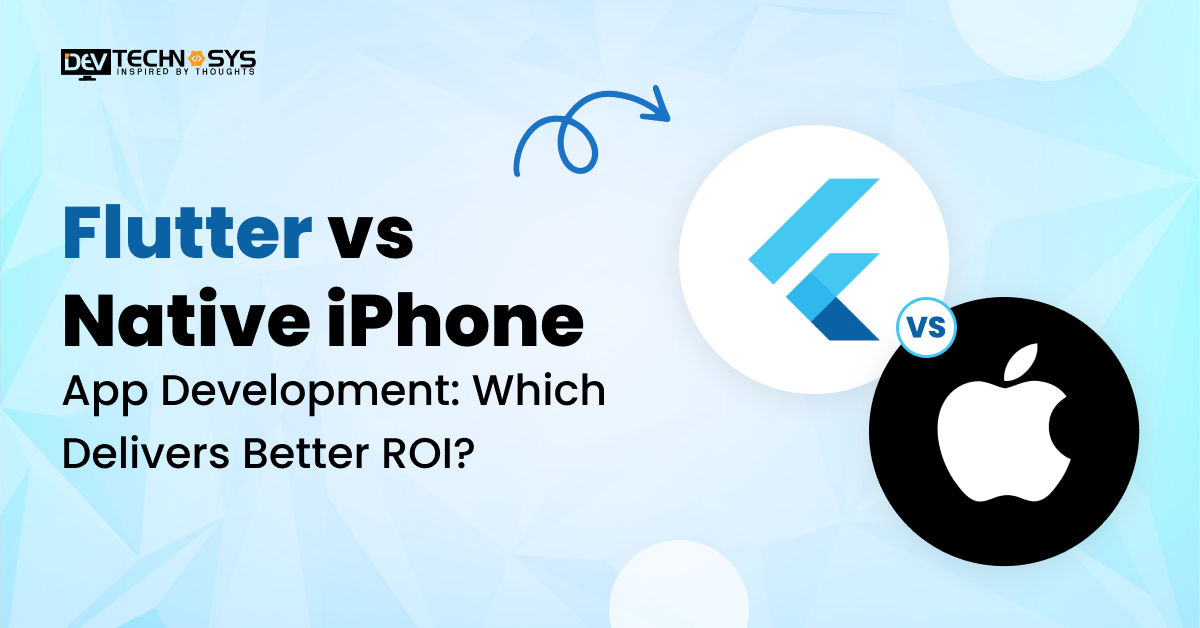
Flutter is perfect for businesses that want to achieve faster time-to-market at lower cost, while Native iPhone app development delivers better app performance and is ideal for building enterprise-grade mobile applications. While both technologies are effective, businesses should decide according to their specific business goals.
This guide compares Flutter vs Native iPhone app development on the basis of factors such as cost, performance, security, maintenance, and more. This will help businesses to choose the right approach that aligns with their investment strategy.
U.S. Mobile App Market Statistics 2026-2027
According to our findings from Precedence Research, the global market size of mobile applications is rapidly increasing. We have understood that businesses should choose Flutter vs Swift based on their business goals and ROI.

Some of the key findings include:
- The global application market growth rate is expected to grow at a CAGR of 14% by 2035. This data highlights the increased usage of mobile apps across industries.
- Gaming apps account for the largest market share, indicating that U.S. businesses can invest in gaming app development using Flutter or Native to generate long-term ROI.
- Due to increased demand for smart gadgets, most businesses are choosing Native to build robust, high-performing mobile applications.
- The constant rise of digital solutions and a mobile-first approach has accelerated businesses to partner with an experienced mobile app development company.
Understanding Flutter vs Native iPhone Development
Businesses should understand the capabilities of each technology before selecting iPhone app development. The choice between Flutter and Native influences development cost, competitive advantage, and return on investment. Before making a technology decision, businesses should understand how these differ and which best aligns with a business.
1. What is Flutter App Development?
Flutter is supported by Google and allows developers to build mobile apps with a single codebase. This technology supports application development across multiple platforms, including Windows, macOS, Linux, iOS, Android, and the web.
This is Google’s open UI toolkit that allows developers to build highly customized user interfaces while maintaining consistent performance. Small businesses find Flutter development effective because they can integrate multiple features and can run the same code in both iOS and Android apps with a manageable budget.
2. What is Native iOS App Development?
Native technology supports the development of Apple’s iOS ecosystem using Apple’s official development tools. These offer a higher level of performance. Businesses operating in industries such as healthcare, where large volumes of data are processed, prefer this technology.
Users get direct access to Apple services along with greater control over security and compliance. The cost of native iPhone app development is higher than that of Flutter because it requires expertise in Swift/Objective-C. An iPhone app development company often discusses the requirements and cost prior to avoid any issues later.
3. Core Similarities Between Flutter and Native Development
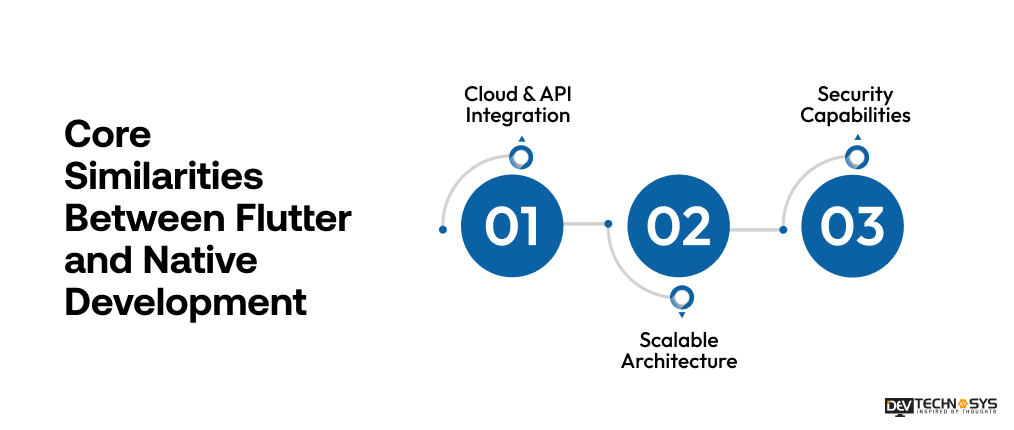
Although both follow different app development approaches, they share several capabilities that enable businesses to create feature-rich iPhone applications.
-
Cloud & API Integration
Choosing cross-platform vs native development can be critical, as both approaches integrate easily with cloud platforms, payment gateways, and essential mobile app architecture.
-
Scalable Architecture
Both technologies support scalable architectures to allow business expansion. An iPhone app developer pays attention to detail before starting the project to ensure that the application is future-ready.
-
Security Capabilities
The major business challenge is solved with either of the two technologies, which is to make the app compliance-ready. Whether it’s industry standards such as HIPAA, encryption, or data privacy, the benefits of native and Flutter development are similar.
Flutter vs Native iPhone App Development: Complete Comparison
Businesses that are focusing on long-term return on investment must carefully evaluate the comparison of Flutter vs Native app development. This decision should be based on cost, performance, growth strategy, and overcoming specific business challenges.
While both technologies can deliver high-quality iPhone applications, the decision should be made strategically. This comparison evaluates both approaches to maximize performance and seamlessly integrate with Apple’s capabilities.
Comparison Factor |
Flutter |
Native iPhone Development (Swift) |
| Development Cost | A standard app usually costs $80,000+ including development, testing, and maintenance. Developers use a single codebase to run both Android and iOS applications. | Native iPhone app development can cost $150,000+ because it requires programming expertise. |
| Development Time | Apps are usually developed within 6 months, but the project timelines can exceed this depending on UI/UX or features. | A standard native app usually takes 8+ months. If separate coding is required for iOS and Android, this time may be exceeded. |
| Platform Compatibility | Flutter supports multiple platforms, making it a preferred choice for businesses planning multi-platform expansion. | Native technology is the best for iPhone app development, while separate code is required for other platforms. |
| Performance | The code is generated via Ahead-of-Time (AOT) compilation and rendered using Skia, delivering near-native iOS performance for mobile applications. This makes the technology perfect for logistics, finance, and similar industries. | Native iPhone apps are created using Apple’s toolchain or the Core Animation framework, allowing them to have faster startup times. |
| User Interface & Experience | Flutter uses its own UI toolkit to maintain a consistent design across mobile apps. | Native uses SwiftUI and UIKit to meet interface guidelines and develop a responsive and highly polished user experience. |
| Access to Apple Features | Businesses that are focusing on increasing ROI must choose Flutter, which offers plugins to include iOS capabilities. Features include Apple Pay, GPS, and more. | Native provides direct access to Apple’s ecosystem and is a great choice for businesses that want to increase ROI. All the latest Apple features. |
| Security | Most enterprise applications require advanced security and third-party security frameworks that are available in Flutter. | All native security frameworks are included for app development to ensure that the data is safe. This makes it a preferred choice for highly regulated industries. |
| Maintenance & Updates | Although a Flutter app requires maintenance, it offers lower operational costs. | Native apps usually have higher maintenance costs because iOS and Android apps are maintained separately. |
| Scalability | Flutter apps are scalable due to patterns such as BLoC, Riverpod, Provider, and MVVM, and can also be integrated with microservices, REST APIs, and other services, allowing backend infrastructure to scale independently. | Uses Apple’s architecture patterns so that apps can handle complex workflows. |
| AI & Emerging Technologies | Easily integrates cloud-based AI services such as OpenAI, Gemini, Firebase AI, recommendation engines, and AI chatbots across multiple platforms. | Better optimized for on-device AI using Apple Intelligence, Core ML, Vision Framework, and other native machine learning capabilities. |
| Testing & Quality Assurance | Flutter reduces testing efforts because a single codebase needs to be checked. | Native apps need to be tested separately, which often increases quality assurance resources. |
| Long-Term Total Cost of Ownership | Flutter apps have lower TCO due to reduced cost throughout the application’s lifecycle. | The total cost of ownership is higher, but Native apps provide long-term value for businesses. |
| Best Business Use Cases | Among Flutter vs Native iOS, Flutter is perfect for startups that want to build MVPs or apps with a cross-platform. | It is ideal for high-volume data transfer or high-performance applications, such as IoT, gaming, or enterprise applications. |
| Return on Investment (ROI) | Businesses that want to know the ROI of Flutter App Development must believe that it offers greater value. Through a single codebase, apps can run on multiple platforms, allowing better market reach. | Native apps have lower compatibility issues and provide direct access to iOS features, leading to faster innovation. Businesses generate higher ROI with better app store rankings and high performance of the mobile apps. |
Planning a Mobile App?
Get a tailored development cost estimate in 3 simple steps — app basics, features, timeline, and your contact details.
- 3 quick steps
- 100% free
- Reply in 1 business day
2 Minutes Read
Which Technology Delivers Better ROI: Flutter or Native iPhone App Development?
Modern businesses prefer to invest in the technology that could deliver the best ROI. But the fact is important thing is business objectives and not the technology stack.
Flutter apps can be launched faster and generate better ROI because there is less infrastructure cost. It can be the best choice for small businesses that want t launch the app faster with manageable total cost of ownership.
On the contrary, native is great for enterprises that corely want Apple features. Though initial investment can be higher, apps built on Native deliver long-term return on investment.
In simpler terms, both technologies deliver better ROI, but their selection depends entirely on business goals. Businesses can hire dedicated developers to build a Flutter or Native mobile app based on their operational goals.
Industry Insight:
According to Statista, maximum app downloads have been noticed in 2026 due to ease of access and faster user responses. This indicates the growing demand for mobile app development.
Which Development Approach Offers Better User Experience?
Competition is increasing to build mobile apps with excellent UX. The right development approach means selecting features and functionality that align with legal risks, business objectives, and the target audience.
Businesses should collaborate with a CMMI Level 3-based company to understand mobile app development cost, tech stack, and a better approach to implement.
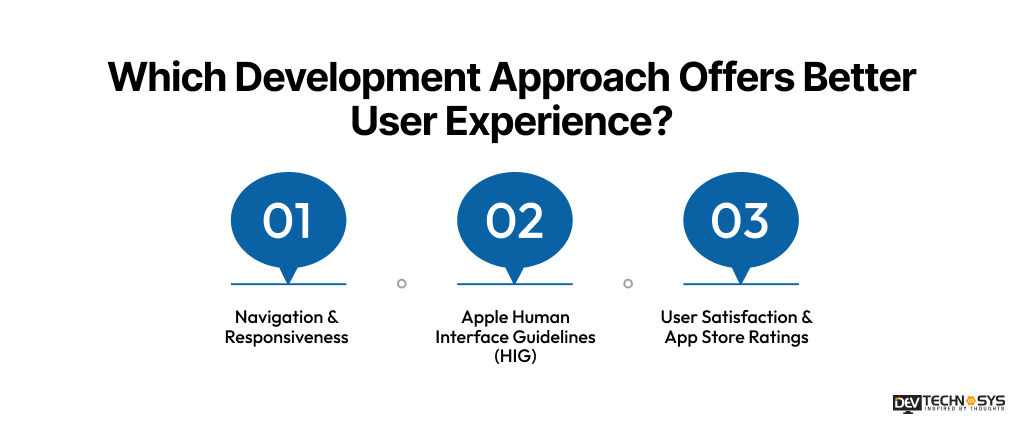
1. Navigation & Responsiveness
In Flutter vs Native UI, the latter offers seamless iOS interactions because it uses Apple’s built-in UI components, while Flutter delivers near-native responsiveness suitable for most business applications.
Best for:
- Flutter: eCommerce, Booking, SaaS, Enterprise Apps
- Native: Banking, Healthcare, Trading Apps
2. Apple Human Interface Guidelines (HIG)
Native automatically adopts Apple’s latest UI patterns and gestures, whereas Flutter can closely replicate them using Cupertino widgets but may require additional customization.
Best for:
- Flutter: Cross-platform products
- Native: Apple-first and premium iOS apps
3. User Satisfaction & App Store Ratings
When understanding Flutter vs Native performance, Flutter apps can achieve excellent ratings when optimized, while Native iOS apps benefit from a better user experience and UI.
Best for:
- Flutter: Startups, Retail, Food Delivery, Marketplace Apps
- Native: Healthcare, FinTech, Gaming, Media Streaming
Finance Application Uabpay
Delivered a Flutter-powered fintech application in 34 weeks with a 98.7% payment success rate
How we partnered with the client to build a secure, scalable, and feature-rich FinTech app with the dedicated development team.
Gary chen, Canada
Flutter FinTech App
34 Weeks
$60,000
Challenge
The main challenge was to create a PCI DSS-compliant payment platform and integrate security protocols while maintaining app performance.
Solution
Dev Technosys developed a Flutter-based cross-platform mobile application backed by Java Spring Boot microservices deployed on AWS. Fintech industry-related compliance was implemented while ensuring data security.
Results
- 3.2M+ secure transactions processed
- 1.1M+ active users onboarded
- 98.7% payment success rate
- 45% reduction in transaction failures
Flutter vs Native iPhone App Development: Security Comparison for US Businesses
In the USA, businesses need to comply with regulations to protect sensitive customer information. Security practices must be followed to prevent fraud. The following comparison highlights how both technologies perform across the security features and compliance standards most important to US businesses.
Security Factor |
Flutter |
Native iPhone Development |
Better Choice |
| Overall Security | Enterprise-grade security using native plugins and platform channels | Direct integration with Apple’s built-in security frameworks | Native |
| Development Approach | Uses Dart with native iOS security APIs | Uses Swift/Objective-C with Apple’s native APIs | Native |
| Secure Communication | HTTPS, TLS 1.2/1.3, Certificate Pinning | HTTPS, TLS 1.2/1.3, Certificate Pinning | Both |
| Data Encryption | AES-256, JWT, OAuth 2.0, encrypted databases | CryptoKit, AES-256, Secure Enclave, hardware-backed encryption | Native |
| Secure Local Storage | Apple Keychain via secure plugins | Native Keychain Services | Native |
| Face ID Authentication | Supported through native plugins | Native integration with LocalAuthentication | Native |
| Touch ID Authentication | Supported | Native support | Both |
| Apple Keychain | Plugin-based integration | Direct access to Keychain Services | Native |
| Secure Enclave | Supported via native APIs | Direct hardware-level integration | Native |
| Jailbreak Detection | Supported using third-party libraries | Advanced runtime detection | Native |
| Runtime Protection | Good | Excellent | Native |
| Apple Security Updates | Depends on plugin updates | Immediate support with latest iOS SDK | Native |
| Development Cost | Lower | Higher | Flutter |
| Best For | Cross-platform business applications | Security-critical iOS applications | Depends on business needs |
Compliance Requirements for US Mobile Apps
For businesses operating in the United States, regulatory compliance is often just as important as application security. The required standards depend on the industry, the type of data collected, and the geographic regions where the application is used.
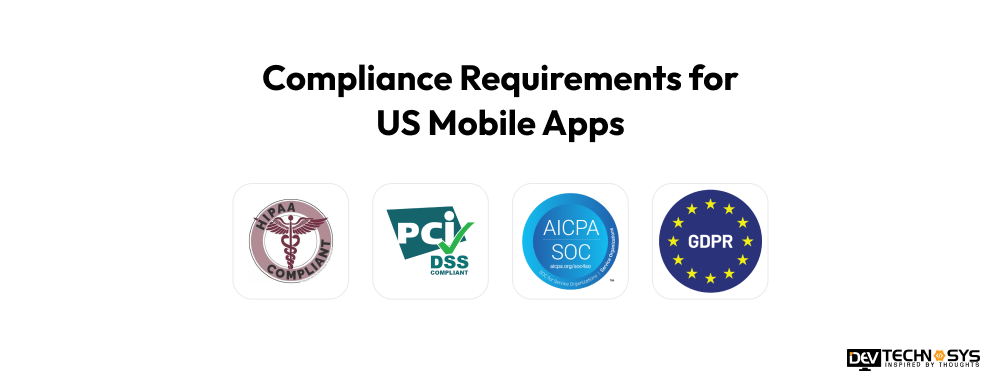
1. HIPAA for Healthcare Apps
The Health Insurance Portability and Accountability Act (HIPAA) is mandatory for healthcare providers and other associated services to ensure the privacy of sensitive information.
A HIPAA-compliant mobile application should include:
- End-to-end encryption
- Role-based access control (RBAC)
- Multi-factor authentication
- Audit logs
- Automatic session timeout
- Secure cloud infrastructure
- Data backup and disaster recovery
2. PCI DSS for Payment Security
When understanding Flutter vs Native iPhone App Development by a mobile app development company, businesses should also pay attention to the Payment Card Industry Data Security Standard (PCI DSS). This standard is important if the business includes credit/debit card transactions.
PCI DSS implementation includes:
- Secure payment gateways
- Strong encryption
- Tokenization
- Secure authentication
- Regular vulnerability testing
- Access control policies
3. SOC 2
This standard means that the app supports trust services such as security, scalability, confidentiality, and privacy of the users. Whether it is a Flutter or Native iOS mobile application, it needs to be built with compliance.
Key implementation practices include:
- Secure authentication and authorization
- Encryption of sensitive data
- Audit logging
- Role-based access control
- Continuous monitoring
- Secure cloud infrastructure
4. GDPR (For Global Applications)
Flutter vs Native iPhone app development comparison is enough to understand that GDPR is equally important. This ensures a secure backend architecture.
GDPR-compliant mobile applications should provide:
- Explicit user consent
- Data portability
- Right to delete personal data
- Privacy-by-design architecture
- Data minimization
- Secure data processing
- Transparent privacy policies
Which Businesses Should Choose Flutter?
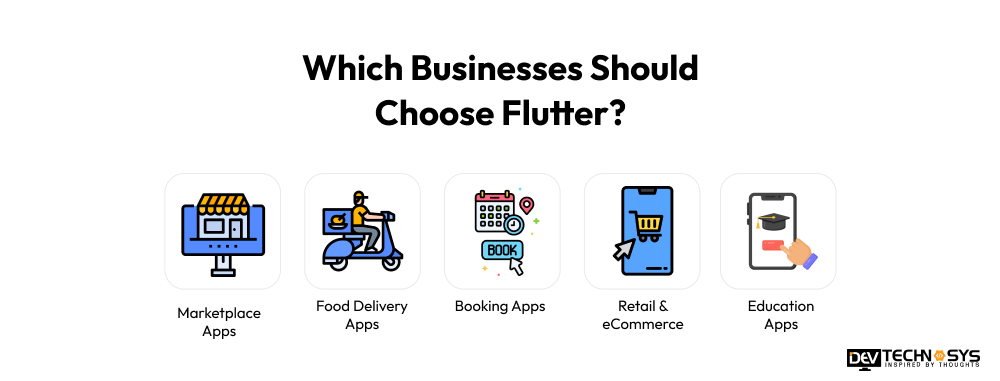
Organizations that are seeking feature-rich, cross-platform mobile apps must choose Flutter. They can even partner with a Flutter app development company to work with an experienced team and build apps at lower development costs.
Business Type |
Why Flutter is the Right Choice |
| Startups | Such businesses reduce development costs by 10% because a single codebase can run on iOS and Android. This makes Flutter the right choice for startups. |
| MVP (Minimum Viable Product) | Many enterprises build MVPs to share with a client initially, for which Flutter is an ideal choice. |
| Marketplace Apps | Flutter supports payments, authentication, and more features while minimizing development effort across platforms. |
| Food Delivery Apps | Such applications require plugins for order tracking, customer reviews, and overall app management. |
| Booking Apps | Such applications are feature-rich, and Flutter is the best for them. The technology allows calendar integrations and scalable backend connectivity. |
| Retail & eCommerce | The main aim of such businesses is to improve customer experience, for which an interactive mobile app is required. A consistent experience across apps is achieved with Flutter development. |
| Education Apps | The education industry has improved learning methods by developing e-learning platforms. These allow students to participate in quizzes, take live lessons, and clear doubts easily. |
| Internal Enterprise Apps | Most organizations build apps to manage HR operations or sales, for which Flutter is the best choice. |
Industry Insight:
According to Business of Apps, users are frequently downloading video streaming apps. As of 2025, around 17.5% of apps were downloaded from Google Play and 3.2% on iOS.
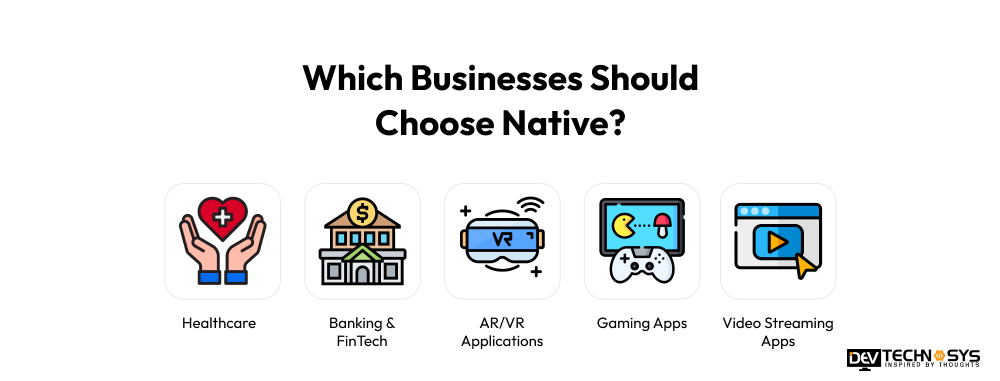
Which Businesses Should Choose Native?
Businesses that are seeking to build high-performing apps should choose Native. It gives access to the latest iOS features, security, and regulatory compliance. Enterprises often hire an iPhone app developer to design enterprise-grade quality applications.
Business Type |
Why Native is the Right Choice |
| Healthcare | Native development is ideal for the healthcare industry because it enables multiple patient-care features without compromising the app’s performance. |
| Banking & FinTech | Native offers the highest level of compliance and security required by such businesses, making it a perfect choice. |
| Trading Platforms | No doubt, Native offers the best security and is perfect for businesses that are into trading. Whether for cryptocurrency exchanges or stock trading, native applications offer the performance required for these demanding use cases. |
| AR/VR Applications | Applications using Apple’s ARKit, LiDAR scanner, 3D rendering, or immersive augmented reality experiences achieve better performance and smoother graphics through Native development. |
| Gaming Apps | The gaming industry is undergoing a revolution, and Native is the best choice for creating graphics-intensive games or animations. |
| Video Streaming Apps | Such applications must have high performance to increase user engagement, which is possible with Native. |
| Apple Watch Apps | Businesses that provide for Apple’s wearable ecosystem must choose Native. This allows seamless synchronization between iPhone and Apple Watch devices. |
| IoT Applications | Smart home applications require reliable communication with Apple frameworks to work properly. With the increase in the use of wearables, medical devices, etc., frameworks such as Core NFC, HomeKit, and more are required. |

Why US Businesses Partner with Professional Mobile App Development Companies?
USA businesses focusing on improving ROI must partner with an experienced mobile app development company, not just for technology selection. But to build mobile apps with a secure, scalable architecture. This will help businesses to streamline complex business operations, such as providing financial or healthcare services to users.
A dedicated development team builds an application with essential features, security, and compliance. Beyond deployment, companies also offer ongoing maintenance that helps businesses to maximize their return on investment. Moreover, businesses should always collaborate after signing a non-disclosure agreement to avoid any legal issues.
Industry Insight:
At Dev Technosys, we have worked on multiple Flutter and Native projects across multiple industries. We have found from our experience that clear business requirements are important to build a scalable mobile app.
Conclusion
The choice between Native or Flutter development depends on business goals, budget, and long-term growth strategy. Startups or enterprises should choose Flutter if they are looking for cross-platform app development, a faster time to market, and an excellent ROI. Native iPhone app development, however, remains a preferred choice for businesses that require direct access to iOS frameworks.
Fintech, gaming, AR/VR, and healthcare are a few industries that use native for seamless integration with Apple’s ecosystem and compliance with industry regulations. However, their technology choice should be informed after carefully understanding the Flutter vs Native iPhone app development comparison.
See What Our Clients Say
Trusted by U.S. Businesses for Flutter & Native iPhone App Development
Dev Technosys helped us evaluate whether Flutter or Native iPhone development was the right choice for our product. They recommended Native and delivered a high-value, enterprise-grade solution. Their strategic guidance helped us reduce development costs, accelerate our product launch, and maximize ROI.
Frequently Asked Questions
Find answers to the most common questions related to this article.
Flutter delivers excellent performance for most business applications, including eCommerce, healthcare, booking, and enterprise apps. However, Swift generally offers better performance for graphics-intensive applications, AR/VR experiences, gaming, and high-frequency financial trading because it communicates directly with iOS frameworks and hardware without an additional abstraction layer.
The cost of building apps with these technologies depends on app complexity, features required, and project scope. The cost typically ranges between $30,000 and $150,000. Some applications developed with Native might also be enterprise-grade applications that might cost $150,000+.
An existing native iOS app can be partially migrated by embedding Flutter into an existing Swift or Objective-C project. Developers add specific features and functionality to the Flutter code while maintaining the older app's functions. In the case of a full migration, the UI layer must be rebuilt to integrate with improved backend services. Also, Flutter plugins are integrated into the existing native iOS app for Face ID, Apple Store, and other features.
US businesses prefer to choose a technology based on app maintenance, as the total budget is affected. Flutter apps are easy to maintain because they are built from a single codebase, making it easier for developers to keep costs down. Maintaining native apps is quite expensive because separate codebases are maintained for iOS and Android. Businesses have to invest more to upgrade app features.
Latest Flutter development trends include Cloud-Native Mobile Development, Modular Architecture for Enterprise Apps, and AI-Powered Mobile Applications. The trends in Native iOS development are IoT-enabled mobile applications, CI/CD automation, and Cloud-native mobile architectures. Organizations must stay up to date with the trends to achieve higher customer satisfaction.
If businesses are planning for a five-year return on investment, then the choice should be made according to the platform. If an ROI is required for iOS and Android, Flutter is the best option. It is low-cost and delivers the best results. If an Apple-specific mobile app is required, Native is a good choice because it provides full control over iOS features.
Both technologies offer security features, but for enterprise-grade applications, Native is preferable. This is because it offers complete control over Apple’s ecosystem and provides multiple advanced features in the mobile application. However, small businesses can choose Flutter for security, as it will be a cost-effective solution.
Flutter definitely supports enterprise-grade applications, and it can even be upgraded to a native application to meet business requirements. Businesses that hire dedicated developers for app development can easily create high-level apps with core functionalities. Such apps are suitable for the fintech, retail, education, and healthcare industries.