


















Key Takeaways:
The patient portal app development cost in 2026 ranges from $4,999 to $94,999, depending on project complexity, features, security requirements, integrations, customization, and AI capabilities.
Cost Impacted by Project or Development Complexity
-
- Basic Patient Portals: $4,999–$24,999
- Mid-Level Patient Portals: $25,000–$49,999
- Advanced/Enterprise Portals: $50,000–$94,999
Cost Based on Patient Portal Types
-
- Standalone Patient Portal: $4,999–$19,999
- Integrated Patient Portal: $20,000–$39,999
- Mobile Patient Portal: $25,000–$49,999
- AI-Powered Patient Portal: $40,000–$74,999
- Enterprise Patient Portal: $60,000–$94,999
Cost Based on Development Location
-
- USA & Canada: $100–$200/hour
- Western Europe: $80–$150/hour/li>
- India: $25–$60/hour
Additional Costs
-
- Maintenance Cost: Annual maintenance may cost around 15 – 20% of the initial development cost, covering bug fixes, security patches, updates, and performance improvements.
- AI Integration: AI capabilities may add approximately 15 – 35% to the development budget, depending on features such as AI chatbots, symptom checkers, and predictive analytics.
- Security & Compliance: Requirements such as HIPAA, GDPR, FHIR, and HL7, along with authentication, encryption, and audit systems, can increase the overall patient portal development cost.
The digital transformation of the healthcare sector is already taking place. Nowadays, patient portals play a vital role in increasing patient engagement and simplifying healthcare services. Online app scheduling, secure messaging, access to medical records, telemedicine, etc., are some of the functionalities of these portals, making them a perfect solution for patients and healthcare professionals.
However, many organizations are concerned about the patient portal development cost. The cost of development varies depending on certain components, for example, the functions of the portal, maiden flight requirements, third-party integrations, AI technologies used, and the complexity of the platform.
This Patient Portal Development Pricing Guide covers the major cost factors, development timelines, portal types, pricing models, and technologies that influence the final investment.
Patient Portal Market Statistics in 2026
The healthcare industry shows an increasing interest in patient portals because of the fact that healthcare providers are focusing on digitalization, patient engagement, and distance care services. Growing demand for electronic health records (EHRs), telemedicine, and AI technologies is the driver behind the increase in the global market.
The statistics demonstrate why investing in the development of patient portals can be considered a smart step for health care providers in 2026.
| Market Statistic | 2026 Data | Source |
| Global Patient Portal Market Size | USD 5.9 Billion (2025), projected to reach USD 15.8 Billion by 2032 (15.1% CAGR) | Fortune Business Insights |
| Global Digital Health Market | Expected to exceed USD 650 Billion by 2030 | Grand View Research |
| Healthcare organizations offering patient portals | Over 70% | Office of the National Coordinator for Health IT (ONC) |
| Smartphone users accessing digital healthcare services | More than 60% | Statista |
What is Patient Portal Development?
The manner in which a patient portal comes about is through the creation of a protected web or mobile platform that gives patients access to healthcare services electronically. It is a central point where patients can request appointments, access their medical history, speak to the doctors, order medication, pay bills, and have consultations online.
Modern-day patient portals work well with EHRs, EMRs, lab systems, pharmacy systems, and hospital management software to give instant access to health data. These systems also come with maximum security features and are compliant with healthcare industry laws such as HIPAA, GDPR, HL7, and FHIR to guarantee the confidentiality of patient records.
By digitizing routine healthcare interactions, patient portals ease the burden for administrators, increase patient involvement, improve care coordination, and make the experience of obtaining healthcare much easier for everyone concerned.
Why Invest in Patient Portal Development in 2026?
Healthcare organizations are rapidly adopting patient portals as they increase both patient outcomes and operational efficiency. Patient portals are also an important part of broader healthcare app development, helping providers create connected digital experiences across appointments, records, communication, payments, and remote care.
Here are the top reasons why investing in patient portal development is a smart decision in 2026:
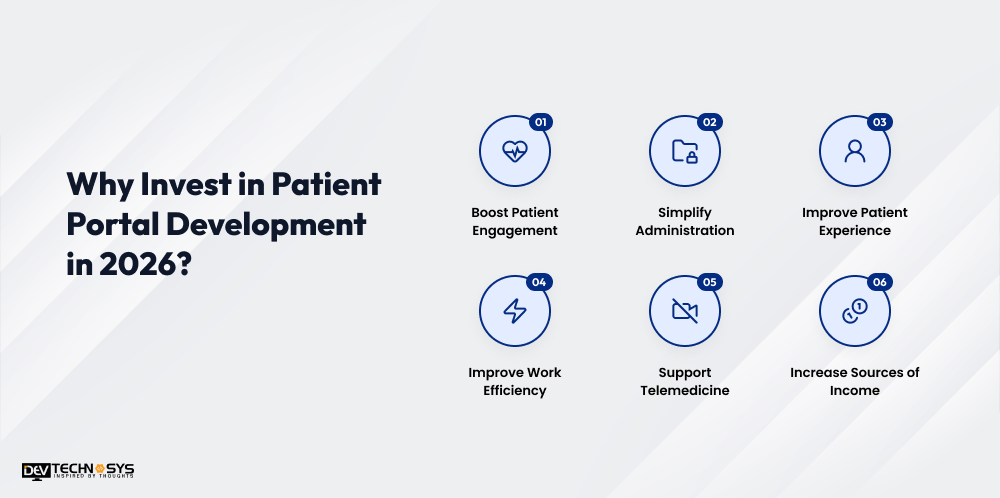
- Boost Patient Engagement: Enable patients to book appointments, view medical records, and connect with doctors around the clock.
- Simplify administration: Automate scheduling, billing, prescription refills, and routine patient questions.
- Improve Patient Experience: Provide a convenient, self-service platform with 24/7 access to healthcare services.
- Improve Work Efficiency: Reduce paperwork, decrease manual activities, and optimize healthcare processes.
- Support telemedicine: Secure video consultations and remote patient monitoring.
- Increase sources of income: Make money via online consultations, subscriptions, and digital health services.
Patient Portal Development Cost in 2026
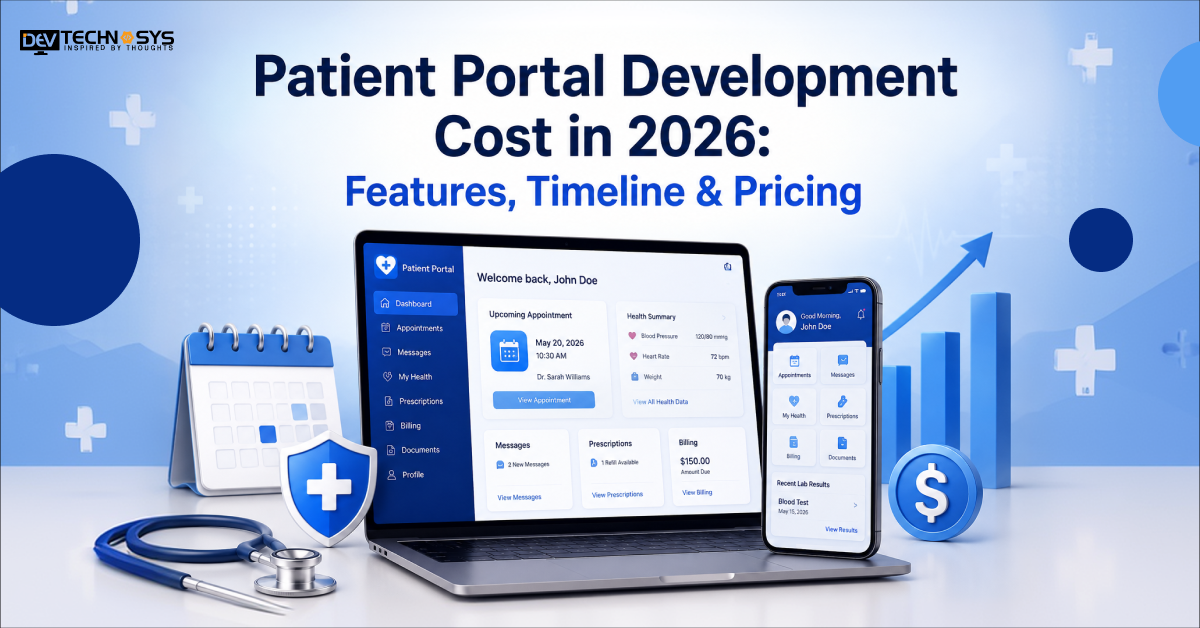
Patient portal development costs in 2026 typically fall within the range of $4,999 to more than $94,999, depending on the type and features of the portal, complexity of the app, healthcare connections, security features, AI capabilities, and location of the development team.
Patient Portal Development Cost by Complexity
- A basic patient portal generally features registration, security login, scheduling an appointment, patient files, medical history, notifications, and basic administration management.
- A moderate patient portal comes with the inclusion of secure messaging, online payments, prescription scheduling, lab results, telemedicine, and EHR/EMR integration. These capabilities can also support doctor on demand app development models by enabling virtual consultations, appointment scheduling, secure communication, and digital access to patient records.
- A high-end patient portal includes features such as a chatbot with the support of AI technology, predictive analytics, recommendations, wearables integration, reporting, etc.
- An enterprise patient portal can be used with large-scale hospitals and healthcare systems. The system can cover different facilities, use complex EHR integration, work simultaneously in different languages, and use AI and advanced analytics.
| Patient Portal Complexity | Estimated Cost | Timeline |
| Basic | $4,999 – $7,999 | 1–2 Months |
| Moderate | $7,999 – $9,999 | 2–3 Months |
| Advanced | $9,999 – $54,999 | 3–4 Months |
| Enterprise | $54,999 – $94,999+ | 4–5+ Months |
Patient Portal Development Cost by Development Location
The location of the development team is another factor that can have a considerable impact on the budget. Software development costs in countries such as the US or Western Europe are usually relatively high, while countries like India have lower prices while still having access to skilled healthcare experts.
| Development Region | Hourly Rate | Estimated Project Cost |
| USA & Canada | 100–200/hour | 40,000–94,999 |
| Western Europe | 80–150/hour | 35,000–89,999 |
| Eastern Europe | 40–80/hour | 20,000–64,999 |
| Australia | 70–140/hour | 30,000–79,999 |
| India | 25–60/hour | 4,999–49,999 |
Types of Patient Portals & Their Cost
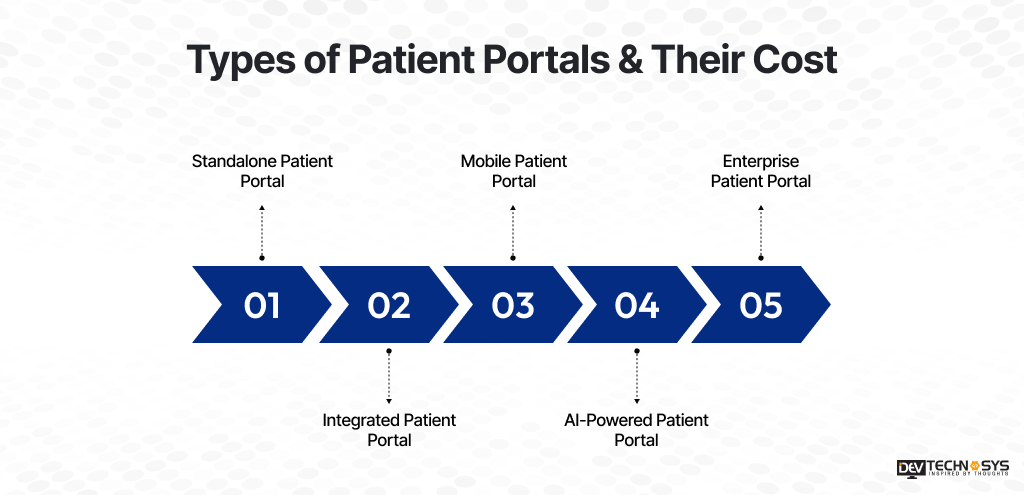
The Medical Patient Portal Development Cost can vary significantly depending on the healthcare provider, target users, integrations, security requirements, and functionality of the platform. From simple portals for small healthcare clinics to large platforms for the largest hospitals in a particular region, each type of patient portal entails different development costs and timelines.
| Patient Portal Type | Estimated Cost | Timeline |
| Standalone Patient Portal | 4,999–19,999 | 1–2 Months |
| Integrated Patient Portal | 20,000–39,999 | 2–3 Months |
| Mobile Patient Portal | 25,000–49,999 | 2–4 Months |
| AI-Powered Patient Portal | 40,000–69,999 | 3–4 Months |
| Enterprise Patient Portal | 70,000–94,999 | 4 Months |
| Overall Range | 4,999–94,999 | 1–4 Months |
1. Standalone Patient Portal
Standalone patient portals can offer basic functionalities such as patient registration, appointment booking, medical records access, secure messaging, ordering prescriptions, and getting notifications for medical patients. This solution can be used by small medical clinics or single healthcare practitioners looking for an economically advantageous option.
2. Integrated Patient Portal
An integrated patient portal acts as a bridge between EHR/EMR systems, such as laboratories and pharmacies, and payment processing systems as well as hospital management systems. Integration with EMR software development platforms allows patient portals to securely exchange medical records and other clinical information with existing healthcare systems.
Service Options
What Determines Patient Portal Development?
For healthcare workers for whom engagement, protection of data, or integration of systems calls for more than just the use of a conventional portal solution.
Searching for a basic patient portal?
Make sure you include features like booking appointments, registering patients, and accessing medical records securely in one platform.
For clinics and private practicesSearching for advanced healthcare solutions?
Calculate the costs of telemedicine, online payment, ordering prescriptions, and access to certain data.
For healthcare facilitiesIntegrating with other systems?
Link up patient portal systems with EHR, billing providers, and scheduling systems to automate daily tasks of healthcare organizations.
For healthcare IT teams and providers
3. AI-Powered Patient Portal
AI-powered patient portals utilize technologies such as chatbots, symptom checkers, predictive analytics, customized recommendations, virtual assistants, and automated summaries, among others. Through this technology, the company manages to offer its clients an advanced and convenient way of using its services.
4. Enterprise Patient Portal
The enterprise patient portal development cost is typically higher because these platforms are designed for hospitals, healthcare networks, and organizations managing multiple facilities and large patient populations. For large healthcare organizations, the hospital patient portal development cost can increase further when the platform requires multiple facility management, complex EHR integrations, multilingual functionality, advanced analytics, and enterprise-grade security.
5. Mobile Patient Portal
When telemedicine and video consultations are included, the telehealth patient portal development cost increases because additional video, communication, scheduling, security, and healthcare integration capabilities are required. Mobile portals can also connect with telehealth software development solutions to support these features.
Key Features Affecting Patient Portal Development Cost
The selection of functionalities affects the process of patient portal development. The basic functionalities are easy to develop, while more complex features like telemedicine, AI, predictive analytics, and EHR integration require more time.
Here are some of the basic key features and their estimated integration costs:
| Key Feature | Estimated Cost |
| Patient Registration & Secure Login | $2,000 – $5,000 |
| Appointment Booking & Scheduling | $3,000 – $7,000 |
| Electronic Medical Records (EMR/EHR) | $8,000 – $20,000 |
| Secure Patient-Doctor Messaging | $3,000 – $7,000 |
| Telemedicine & Video Consultation | $5,000 – $12,000 |
| Online Payments & Billing | $3,000 – $8,000 |
| Prescription & Medication Management | $4,000 – $9,000 |
| Lab Reports & Diagnostic Integration | $5,000 – $12,000 |
| AI Chatbot & Virtual Assistant | $5,000 – $15,000 |
| Analytics & Reporting Dashboard | $4,000 – $10,000 |
The more complex the system is, the more expensive it is. For instance, using an online appointment booking system does not cost much money compared to the cost associated with advanced analytics, AI features, telemedicine, and EHR/EMR integration.
Planning a Healthcare App Project?
Get a tailored development cost estimate in a few simple steps.
- 3 quick steps
- 100% free
- Reply in 1 business day
2 Minutes Read
Patient Portal Development Cost by Development Stage
The price of making a patient portal has to be divided into several parts, and each part has its function in the process. Understanding the Patient Portal Software Development Cost at each stage helps healthcare organizations allocate budgets more accurately and identify where most of their investment is required.
The patient portal development cost breakdown below shows the estimated investment and timeline for each major stage of the development lifecycle.
| Development Stage | Estimated Cost | Timeline | Purpose/Reason |
| Discovery & Requirement Analysis | 499–3,999 | 1–2 Weeks | Defines business requirements, user roles, application features, regulatory compliance, and technical specifications. |
| UI/UX Design | 499–5,999 | 2–4 Weeks | Creates a user-friendly interface for patients, medical representatives, and clinic managers. |
| Frontend Development | 999–12,999 | 4–8 Weeks | Builds interactive dashboards, appointment interfaces, messaging, and other essential user-facing features. |
| Backend Development | 1,499–19,999 | 6–10 Weeks | Develops databases, APIs, authentication, business logic, patient records, and secure data storage. |
| API & EHR/EMR Integrations | 499–14,999 | 3–6 Weeks | Integrates EHR/EMR systems with healthcare portals, laboratories, pharmacies, payment gateways, and telemedicine services. |
| Security & Compliance | 499–9,999 | 2–4 Weeks | Implements access controls, encryption, secure data storage, and applicable healthcare compliance measures. |
| Testing & Quality Assurance | 299–7,999 | 3–5 Weeks | Tests application functionality, performance, and security to identify bugs and vulnerabilities before launch. |
| Deployment & DevOps | 206–8,999 | 1–2 Weeks | Configures cloud infrastructure, server operations, deployment pipelines, and production environments. |
| Total | 4,999–94,999 | 1 – 4 Months | Covers the development lifecycle, from initial planning and design through implementation, testing, and product launch. |
Note: In Agile development, separate stages may affect each other, so their period should not be added together. The total period depends on the complexity of the project, integrations used, compliance requirements, and the number of experts involved.
Factors Affecting Patient Portal Development Cost
Several technical, regulatory, and business factors influence the overall cost of patient portal creation. Knowing these factors allows healthcare organizations to create adequate budgets and stay within the confines of their expenses. Here are some of the factors that can affect the patient portal development cost:
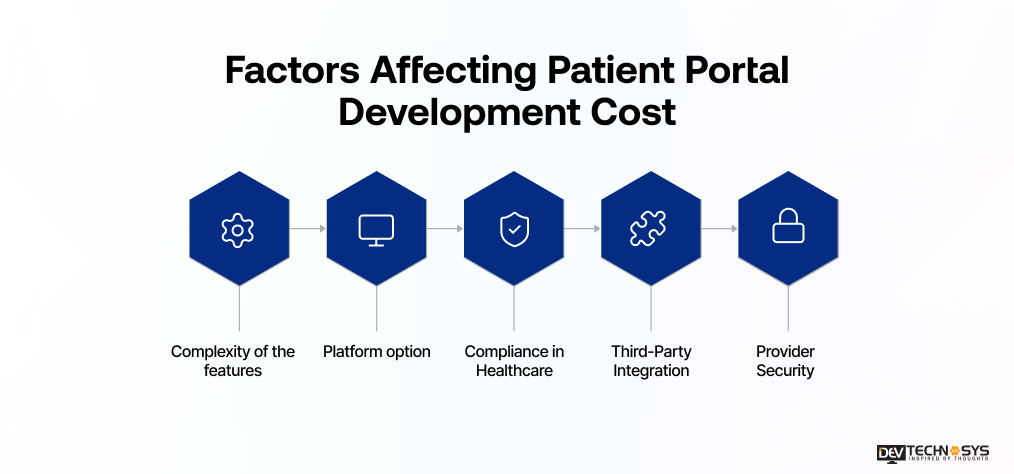
1 Complexity of the features
The custom patient portal development cost increases as organizations add specialized workflows, advanced dashboards, AI capabilities, telehealth, remote monitoring, predictive analytics, and customized integrations. Medical device software development experts create advanced portals that support remote patient monitoring and the collection of health data from connected medical devices.
2 Platform option
Health facilities can build an application, web portal, or cross-platform app. Building an application for more than one platform increases the complexity of development and, consequently, development costs but facilitates functional compatibility across various devices.
3 Compliance in Healthcare
It’s important for healthcare applications to comply with laws and regulations, including HIPAA, GDPR, HL7, and FHIR. The HIPAA-compliant patient portal development cost can increase because healthcare organizations need encryption, audit trails, consent management, secure authentication, and other safeguards to protect patient information.
4. Third-Party Integration
The EHR-integrated patient portal development cost can increase with the complexity of integrating EHR/EMR platforms, laboratories, pharmacies, payment systems, telemedicine platforms, and insurance systems. This is because more features can complicate the application and increase the price.
5. Provider Security
The established security measures aim to protect highly confidential patient information. For example, hacker attack prevention systems, end-to-end encryption, two-factor authentication, or role-based access control have an impact on the project costs.
How to Reduce Patient Portal Development Costs?
Creating a patient portal does not need to be overly expensive. If you’re evaluating the cost to develop a patient portal, starting with an MVP and prioritizing essential features can significantly reduce the initial investment.
Here are some of the ways that you can choose to reduce the cost to build a patient portal:
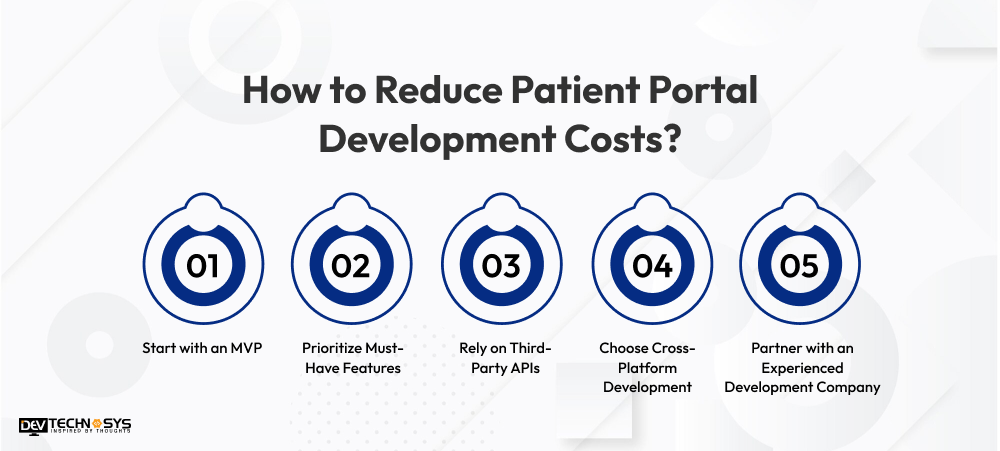
1. Start with an MVP
For the first release, focus on key functions such as registering patients, setting up their appointments, checking their medical history, and sending secure messages. Starting with an MVP is one of the most effective ways to control the cost to build a patient portal while validating the platform with real users.
2. Prioritize Must-Have Features
Do not try to add functions all in one go, but find the functions to be implemented that would serve the objectives of the business first. In this way, you will save some time on development, remain within the limitations of the budget, and avoid unnecessary spending.
3. Rely on Third-Party APIs
Instead of developing functions like payments, verification, notifications, and others from scratch, make use of reliable services to save time, reduce costs, and ensure their effective performance.
4. Choose Cross-Platform Development
Frameworks such as Flutter or React Native help in creating applications for Android and iOS via a single codebase, which leads to minimized expenses, reduced development time, and fewer maintenance efforts when compared to native application development.
5. Partner with an Experienced Development Company
The choice of a healthcare software development organization can help you in preventing expensive errors, speeding up development, and ensuring conformity with legislation like HIPAA and GDPR. Expert companies deliver scalable solutions faster, which gives you more benefits for your money.
How to Monetize a Patient Portal?
The patient portal improves the quality of medical assistance provided to patients; at the same time, it creates many opportunities for generating some revenue for medical organizations. By implementing digital healthcare solutions in conjunction with mutually beneficial relationships with partners, it becomes possible for providers to start earning income while delivering more value to their patients.
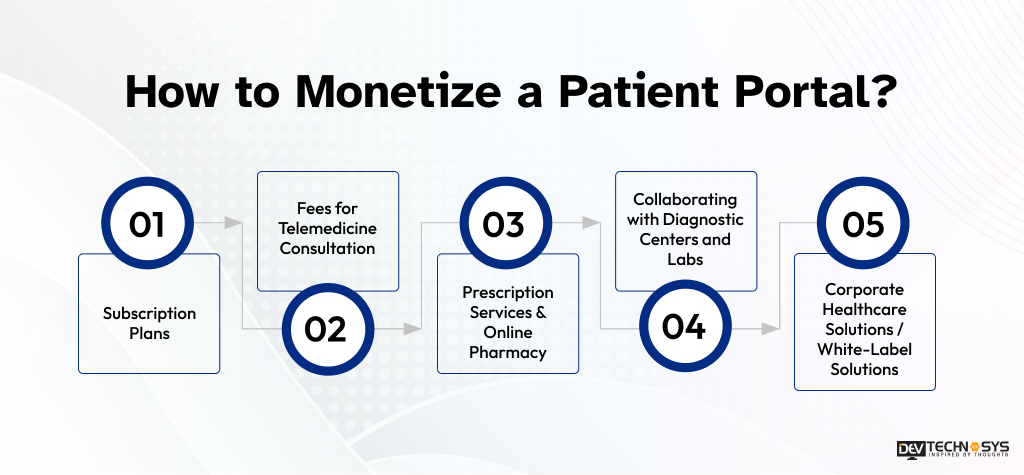
1. Subscription Plans
Monthly and annual subscription plans can be offered to users. Those plans can include numerous premium services that can provide users with endless telemedicine consultations and preferential appointment scheduling, as well as personalized health information and notifications regarding medications.
2. Fees for Telemedicine Consultation
Earn money through charging patients for medical consultations, follow-ups, and specialist video calls over the patient portal. Integrated payment gateways make it easier for patients to pay online and make it possible for medical personnel to expand their services beyond physical visits.
3. Prescription Services & Online Pharmacy
Integration with e-prescription app development solutions can allow physicians to issue prescriptions digitally while giving patients secure access to their medication information. Online pharmacies assist patients in ordering medications and receiving them at home while doctors enjoy a supplemental source of income through the pharmacy cooperation.
4. Collaborating with Diagnostic Centers and Labs
Work with lab testing agencies for convenient patient scheduling through the portal. Medical providers may cash in on referral fees from lab-test bookings made by patients directly through the portal, resulting in a seamless experience for scheduling tests, viewing lab test reports, and managing the process.
5. Corporate Healthcare Solutions / White-Label Solutions
The white label patient portal development cost depends on the level of branding, customization, integrations, security requirements, and licensing model required by the healthcare organization. Organizations will pay you licensing fees for the customized version of the solution, generating B2B business for you in the long run.
How Does AI Affect the Cost of Developing a Patient Portal?
Artificial intelligence can be a great way to improve the functionalities of a patient portal by making it more automated, personalized, and efficient in helping with some decisions. The AI patient portal development cost depends on the type and complexity of AI capabilities being implemented, such as chatbots, symptom checkers, predictive analytics, intelligent scheduling, and automated medical document processing.
Service Options
What Can We Create or Enhance for Your Patient Portal?
Discover the customized solutions that help to simply the patient portal process and improve workflows.
Personal Patient Portal
A user-friendly online or mobile portal that allows appointment scheduling, access to medical records, prescribed medications, and secure patient accounts.
Create Your Patient PortalHealthcare Integration and Automation
Link EHR systems with laboratory services and billing systems. Enable automatic notifications for appointment reminders, test results, and follow-ups.
Optimize Healthcare ProcessesPatient Portal Improvement and AI
Update current portals, enhance the patient experience, and offer AI-based advice for symptoms along with safe interaction methods.
Upgrade Your Patient Portal1. Chatbots and Virtual Assistants
Using chatbots powered by AI in patient portals will lead to an increase in costs connected with the development of such a product due to the need for the technology used (NLP, machine learning). Still, the implementation of AI will be able to reduce costs by answering patients’ questions and providing assistance at any time and making appointments.
2. AI Symptom Checker
The creation of an AI symptom checker is not cheap and calls for sophisticated algorithms along with medical data that must be constantly updated. It allows users to evaluate their symptoms prior to their consultations, resulting in better healthcare and eliminating unnecessary visits to hospitals.
3. Predictive Analytics and Personalized Medicine
The predictive analysis powered by AI involves the study of patients’ histories, medical records, and behaviors, aiming to identify possible health problems, as well as providing them with individualized treatment. However, the implementation process takes time and money, as it is necessary to invest in AI and train the model with the data.
4. Scheduling Appointments with Intelligence
The AI platform applies intelligent appointment scheduling technology. As a result, interactions are straightforward—doctors’ availability is cross-checked with patients’ needs and the importance of the meeting. Thus, even though the implementation of an intelligent scheduling system increases investment, compared to traditional methods, it eliminates scheduling conflicts, decreases absences, and raises organizational performance in the medical sphere.
5. AI-driven Processing of Medical Documents
AI has plenty of applications in medical document processing, including OCR-based prescription scanning, summarizing medical reports, and automating general documentation. Although sophisticated solutions require an increased level of investment, they reduce the amount of clerical work and improve the accuracy of produced documents.
Build vs Buy vs Hire a Development Partner: Which Option is Best?
The approach you select for the creation of the patient portal greatly influences its cost, time of development, customization, and long-term scalability. Essentially, there are 3 ways a medical organization can choose: develop the solution in-house, acquire a built solution, or use the services of a trusted developer.
| Factor | Build In-House | Buy Ready-Made | Hire Development Partner |
| Initial Cost | High | Low–Medium | $30,000–$150,000+ |
| Development Time | 8–15 Months | 1–3 Months | 3–12 Months |
| Customization | Very High | Limited | Very High |
| Scalability | High | Moderate | High |
| Integrations | Fully Custom | Limited | Fully Custom |
| Compliance | Your Responsibility | Vendor Dependent | Managed During Development |
| Maintenance | In-House Team | Vendor | Development Partner |
| Best For | Large Enterprises | Small Clinics | Growing Healthcare Businesses |
In summary, if the goal is to get a patient portal secured, scalable, and customized, the best choice for a medical organization is to hire an experienced patient portal development company, such as Dev Technosys, instead of building an internal IT team.
Conclusion
Investing in a patient portal means more than just using new technology. It also means creating a platform that will enhance their experience, boost efficiency, and help compete in the competitive digital healthcare market. Although on average the patient portal development cost ranges from $30,000 to above $150,000, the final price will depend on your company’s goals, necessary features, compliance criteria, and the level of customization needed.
The right development company will make sure you have a solution with all security guarantees, modern scalability, and readiness for the years ahead. If you want to create a personalized patient portal, then contact us to discuss your project and get a cost estimate. Dev Technosys provides HIPAA compliant software development solutions customized according to your specific needs and requirements.
Frequently Asked Questions
Find answers to the most common questions related to this article.
Patient portal development costs range from $4,999 to $94,999+ depending on the features and complexity of the project, third-party integrations that are being used, and security and compliance regulations.
The development of a basic patient portal should take around 1–2 months, while enterprise-grade solutions or advanced ones that involve AI, telemedicine, and electronic health records integrations can take 3–5 months.
The essential features of such portals include appointment booking, encrypted messaging, medical records access, online prescriptions, online payments, telemedicine, notifications, and dashboards. An advanced patient portal would include an AI chatbot, symptom checker, etc.
Yes, if the protected health information is being processed through the patient portal in the United States, compliance with HIPAA regulations should be followed in order to secure any data storage and transfer.
You should start by developing a minimum viable product, focus only on key features, use any third-party applications if possible, and collaborate with an experienced healthcare software development company. This will help reduce costs and ensure the quality, security, and scalability of the app.