



















Are you looking to build an eWallet app for your business? Then you have reached the correct place. We are living in such a world where all things right from shopping, ordering food, booking a taxi, etc. can be done by simply tapping on your mobile device.
It is often believed that the current era of mobile devices has certainly made our lives much easier and more comfortable.
So, mobile devices like smartphones and mobile apps have certainly made an essential impact on human lives. The different latest technologies, mobile apps, and smartphones, along with additional digital devices, are always the popular trend.
Also, mobile fees, as well as mobile wallets, are a few of the most updated as well as swiftly developing industries of the present time wherein every financial institution, as well as mobile app development organization as well as fee and payment gateway employer, is directly diving into the ewallet app development.
The success of trending eWallet apps for money transfer like Paytm, Phonepe, Mobikwik, etc. have been sensational and also inspirational for fintech mobile app development companies as well as entrepreneurs. Thus, in this guide, we will discuss the cost to build an ewallet app and what factors can affect the cost.
So let’s begin.
Future Predictions & Projections of eWallet Service
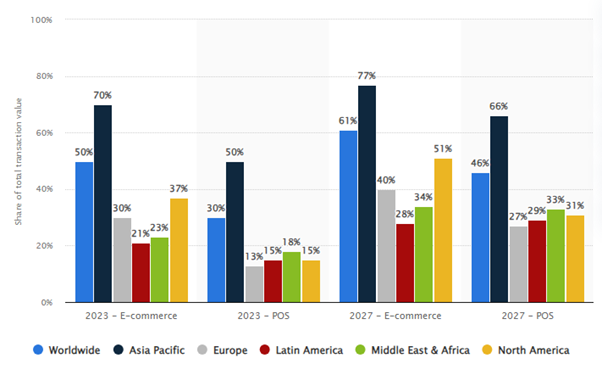
- Nearly 70% of online purchases in the area were made with wallets, which is more than 20% of all online purchases in Latin America and the Middle East and Africa. Less than half of all e-commerce payments were made with wallets in 2016. That number will rise to 61% in 2027.
- Top market research groups say that the global market for digital wallets will grow at a rate of 22% per year and reach $8.8 trillion by 2025.
- According to the data, more than 70% of users now use some kind of digital wallet to pay for things, up from only 30% a few years ago. This shows that digital wallets are becoming more popular.
- 56% of people used Google Pay the most, 53% liked Apple Pay, and 52% liked Samsung Pay.
- It was linked to at least two bank accounts for 43% of users and at least two debit or credit cards for 33%.
- There will be 5.2 billion digital wallet users around the world by 2026, up 53% from today. That’s more than 60% of the world’s population.
What is an eWallet App?
A digital wallet is also known as an eWallet app that allows users to store, manage and access electronic payment methods such as bank account information and credit cards.
E-wallets are useful for many purposes such as shopping online, paying bills, sending money to others, or making in-store payments using contactless payment methods such as NFC. There are many ewallet apps in the market like Freecharge, PhonePe, GPay, Samsung Pay etc.
So, if you are intrigued with the idea of e-wallet app development, it is best to first get your idea validated with an ewallet app development company. Also, then discuss the cost to build an ewallet app with them.
How Much Does it Cost to Build an eWallet App?
The ewallet mobile app development cost with all of the basic features will easily cost you around $10,000 to $15,000. However, if you wish to make the app with more advanced features, then, in that case, it will easily cost you around $15,000 to $25000.
But you must know the cost to build an eWallet app depends on the basis of your project requirements. Now, let’s look at the cost to build a mobile app table:
App Complexity |
Cost Estimation |
| Simple eWallet App | $10000-$15000 |
| Medium eWallet App | $15000-$20000 |
| Complex eWallet App | $25000 |
Besides, you can calculate the cost with the below formula:
Ewallet app development cost = developer’s hourly rate * total development time
Now you know the cost to develop an ewallet app, it is time to consult with a mobile banking app development company. But before that, let’s discuss the factors affecting the cost.
What is the Cost to Maintain Wallet Apps?
The cost to maintain wallet apps ranges from 10% to 15% of the initial development stage. This cost typically covers various aspects, including feature updates, hosting, security testing, bug fixes, and compliance. This helps in ensuring proper adherence to regulatory guidelines and smooth operations.
Factors Affecting E-Wallet App Development Cost
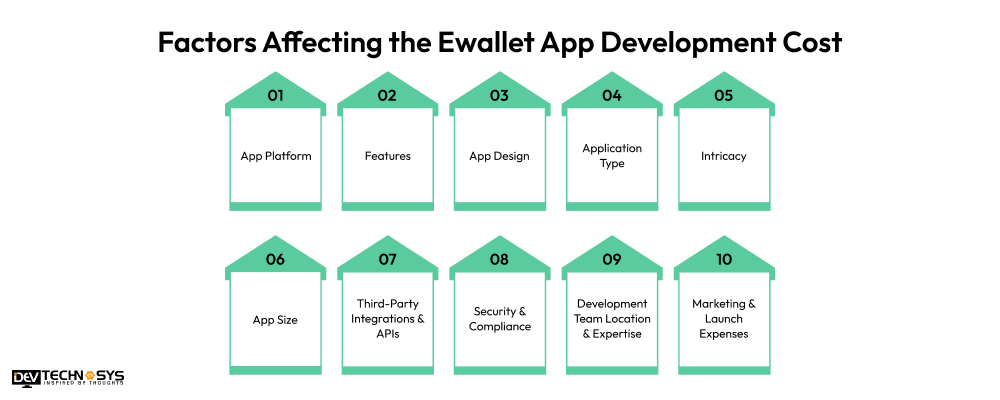
Since we have addressed the majority of the crucial elements, you may be asking what other aspects affect the cost to develop a fintech app like Wise. The app design, target platforms, chosen tech stack, and the intricacy of the functionalities to be incorporated have all had a significant impact on these expenses.
1. App platform
Creating apps for both the iOS and Android platforms could be more expensive than creating them for just one. The environment and requirements of each development can raise the price and duration to build an ewallet app.
Platform |
Development Cost |
Timescale |
| iOS, Android only, and Web | $2,000 – $4,000 | 1 – 5 Months |
| All (Native) | $5,000 – $9,000 | 2 – 3 Months |
| Cross-Platform | $5,000 – $9,000 | 3 – 4 Months |
2. Features
You’ll need extra time and money to design your eWallet app if you want to take into account more functionality. The best fintech apps that use eWallets typically have features like gift cards, loyalty programs, payment processing, coupons, and spending tracking capabilities.
Features |
Development Cost |
Timescale |
| Basic Listings & Search | $2,000 – $4,000 | 1 – 3 Months |
| Intermediate (Chat, Filters, Profile) | $5,000 – $9,000 | 2 – 5 Months |
| Advanced (AI, AR, Blockchain) | $5,000 – $9,000 | 3 – 4 Months |
3. App Design
The cost of developing your eWallet app may vary depending on its design. A very intricate or customized design will require more time and money to execute. Two important factors that influence fintech app development cost are the user interface and user experience design.
App Design |
Development Cost |
Timescale |
| Basic UI | $1,400 – $2,400 | 2 – 5 Weeks |
| Custom & Responsive UI/UX | $2,000 – $4,000 | 1 – 4 Months |
| High-End Interactive Design | $5,000 – $7,000 | 3- 5 Months |
4. Application Type
Various eWallet app kinds have various needs. For example, compared to an open wallet, a bitcoin wallet will require extremely complicated security procedures. The eWallet app development cost will depend on the type of app you decide to create.
Application Type |
Estimated Development Cost (USD) |
Timescale |
| Basic eWallet (payments, balance check) | $3,500 – $5,000 | 2 – 3 months |
| Standard eWallet (bill pay, transfers, history) | $5,500 – $7,000 | 3 – 4 months |
| Advanced eWallet (KYC, rewards, notifications) | $7,200 – $8,500 | 4 – 5 months |
5. Intricacy
The banking app development cost may vary depending on how complex your app is. Complex features that need more time and resources to implement, such multi-factor authentication or biometric authentication, may raise the cost of developing an app.
Intricacy Level |
Estimated Development Cost (USD) |
Timescale |
| Simple | $3,000 – $4,500 | 2 months |
| Moderate | $5,000 – $6,500 | 3 – 4 months |
| High (within budget) | $7,000 – $8,700 | 4 – 5 months |
6. App Size
The cost to build an ewallet app may vary depending on the size of your eWallet app. More features, more effort, more resources are needed for a huge app. It might therefore raise the eWallet app’s development expenses.
App Size |
Estimated Development Cost (USD) |
Timescale |
| Small (core wallet only) | $3,500 – $5,000 | 2 – 3 months |
| Medium (wallet + transfers + history) | $5,500 – $7,000 | 3 – 4 months |
| Large (wallet + transfers + rewards + security) | $7,200 – $8,700 | 4 – 5 months |
7. Third-Party Integrations & APIs
Third-party integrations require you to spend on testing the functionality of your eWallet when you add these APIs. To manage the seamless function and efficiency of these third-party APIs, you need to invest in coding and testing, which increases the eWallet mobile app development cost.
Third-party integration Complexity |
Development Cost |
Timescale |
| Basic Backend (CRUD APIs) | $2,400 – $3,500 | 2 – 5 Weeks |
| Scalable Backend + DB | $4,000 – $7,000 | 1 – 4 Months |
| Third-party Integrations | $3,500 – $6,000 | 3- 5 Months |
8. Security & Compliance
Investment in security and compliance affects the cost of developing an eWallet, as it requires compliance with additional laws and regulations, such as data encryption. These factors require you to pay more for different security gateways, which affects the overall budget.
Security Complexity |
Development Cost |
Timescale |
| Secure Payment Gateway (PCI DSS compliance) | $1,200 – $1,800 | 5 Weeks |
| Data Encryption | $2,700 – $4,800 | 5-6 Weeks |
| Multi-factor Authentication (MFA) | $5,800 – $8,200 | 3-4 Months |
9. Development Team Location & Expertise
If you hire a team from a different location, you will need to pay more for their accommodations and other related expenses. This increases the overall time to build an eWallet app. You must consider the team’s location and expertise, which affect the development cost of your application.
Team Size Complexity |
Development Cost |
Timescale |
| Middle East (UAE, Saudi Arabia) | $1,100 – $1,900 | 1-3 Months |
| US/Western Europe | $2,800 – $4,900 | 1-4 Months |
| Eastern Europe | $5,800 – $8,300 | 1-2 Months |
10. Marketing & Launch Expenses
Investment in marketing and launch expenses to promote your eWallet on multiple platforms increases the overall cost of app development. You must consider which platform you will promote your application on to manage overall expenses.
Marketing Complexity |
Development Cost |
Timescale |
| App Store Optimization (ASO) | $1,300 – $1,700 | 1-2 Months |
| Social Media Campaigns | $2,200 – $4,100 | 1-3 Months |
| Offline Marketing (Events, Flyers, PR) | $5,100 – $8,200 | 1-4 Months |

Important FAQs
Q1. What Are The Main Factors That Affect Ewallet App Development Cost?
A. The primary factors that influence eWallet app development costs include the tech stack, UI/UX design, targeted platforms, and desired features.
Q2. How Can I Reduce The Cost Of Ewallet App Development?
A. To reduce the cost of eWallet app development, strategies such as cross-platform development, utilizing pre-built APIs/SDKs, agile development, and automated testing are crucial.
Q3. How Do Third-Party APIs Affect The Ewallet App Cost?
A. Third-party APIs for KYC, payment gateways, and regulatory compliance have increased the overall development cost. However, by considering pre-built APIs, you can manage the overall expense more effectively.
How to Reduce The Cost to Develop E-Wallet Apps Without Compromising Quality
To reduce the cost of developing eWallet apps without compromising quality, cross-platform development, using pre-built APIs/SDKs, outsourcing Development, and other factors are important.
1. Cross-Platform Development
To reduce the cost to build e-wallet apps, consider using cross-platform frameworks such as React Native or Flutter. This strategy enables the creation of an app for both iOS and Android at a lower cost.
Cross-development is beneficial in reducing development costs without compromising quality. It is also helpful in reducing the chances of duplicate coding while ensuring a consistent user experience.
Strategies/Action |
Description |
Estimated Cost Reduction (USD) |
| Flutter framework | Single codebase for iOS & Android. | $2,000 – $5,000 |
| React Native | Fast development with native-like experience. | $1,000 – $2,000 |
| Shared UI components | Reusable design reduces design duplication. | $500 – $1,500 |
| Reduced testing workload | One test suite covers both platforms. | $500 – $1,000 |
| Faster time-to-market | Launch apps 30–40% faster. | $300 – $700 |
2. Start with MVP
Creating an e-wallet app with a minimum viable product helps emphasize providing only essential wallet features, which makes the app functional and efficient. Core features, such as history, payments, and transfers, reduce the cost of developing the app.
With an ewallet app development company, you can reduce investment expenses and integrate advanced features later, as needed, within your budget.
Strategies/Action |
Description |
Estimated Cost Reduction (USD) |
| Focus on essential features | Payments, transfers, and wallet top-ups only. | $1,500 – $4,000 |
| Avoid advanced add-ons initially | Loyalty, rewards, and AI insights deferred. | $500 – $1,000 |
| Faster launch | Quick entry to market with minimal features. | $300 – $700 |
| Reduced development hours | Less coding effort for the initial version. | $500 – $1,200 |
| Easy scalability later | Add features modularly with reduced rework. | $700 – $1,500 |
3. Use Pre-Built APIs/SDKs
The cost to make an eWallet can be reduced by taking advantage of pre-built SDKs and APIs for multiple operations, such as notifications, payments, and KYC. This helps reduce the additional cost of developing these features from scratch. It helps save time while ensuring the compliance and security of the application.
Strategies/Action |
Description |
Estimated Cost Reduction (USD) |
| Payment gateway APIs | Stripe, PayPal, and Razorpay integration. | $1,000 – $2,500 |
| KYC & identity verification SDKs | Jumio, Onfido integration for compliance. | $800 – $2,000 |
| SMS/OTP APIs | Twilio or Firebase for authentication. | $500 – $1,500 |
| Fraud detection APIs | AI-based fraud monitoring libraries. | $300 – $700 |
| Push notification SDKs | Firebase/OneSignal for engagement. | $700 – $1,500 |
4. Outsource Development
One of the major factors that impacts the cost of developing an eWallet app is labor expense. By hiring skilled developers from cost-effective places and geographical areas, you can have easy access to talent at a lower cost. This helps reduce operational expenses and the time to build an app.
Strategies/Action |
Description |
Estimated Cost Reduction (USD) |
| Hire Indian developers | Lower hourly rates ($10–15/hr). | $300 – $700 |
| Eastern Europe outsourcing | High quality with mid-range cost. | $400 – $900 |
| Southeast Asia teams | Skilled but cost-friendly developers. | $200 – $500 |
| Avoid expensive US/UK rates | Reduce costs from $10 to $12/hr to $10 to $13/hr. | $150 – $400 |
| Dedicated outsourcing companies | Pre-tested teams save hiring/training costs. | $150 – $350 |
5. Agile Development
The Agile method is a flexible approach that focuses on making progress through user feedback and testing. With this, you can reduce the cost of rework and make improvements in requirements for changes at an early stage. With the help of agile development, you can utilize resources more effectively while reducing the risk of maintaining app quality.
Strategies/Action |
Description |
Estimated Cost Reduction (USD) |
| Incremental releases | Build in sprints, deliver faster. | $300 – $700 |
| Early feedback | Users validate features before final release. | $400 – $900 |
| Reduced rework | Problems caught early avoid expensive fixes. | $200 – $500 |
| Continuous testing | Bugs were resolved quickly in each sprint. | $150 – $350 |
| Flexible scope changes | Add/remove features without a huge cost impact. | $200 – $400 |
6. Cloud Infrastructure
By considering cloud-based hosting solutions, such as Google Cloud, you can reduce the costs associated with infrastructure. With cloud services, the price can be reduced by offering scalability and built-in security. It also helps minimize the cost of e-Wallet app maintenance services while allocating a budget for feature enhancements.
Strategies/Action |
Description |
Estimated Cost Reduction (USD) |
| Pay-as-you-go servers | Only pay for actual usage (AWS/Azure/Google Cloud). | $300 – $700 |
| Auto-scaling resources | Scale up or down depending on traffic. | $200 – $500 |
| Managed database services | Use cloud-based databases instead of manual setup. | $150 – $350 |
| Lower maintenance costs | No in-house server maintenance needed. | $200 – $500 |
| Built-in security & compliance | Avoid extra cost of custom security solutions. | $100 – $300 |
| Disaster recovery & backups | Automated backups reduce downtime expenses. | $300 – $700 |
7. UI/UX Efficiency
The cost of developing an eWallet app can be reduced by utilizing a simple design and UX/UI interface, as well as leveraging pre-built UI kits and reusable components.
It helps in saving cost and time, which reduces the cost of revisions. It not only helps ensure a smooth user experience but also cuts expenses without compromising user satisfaction or application visibility.
Strategies/Action |
Description |
Estimated Cost Reduction (USD) |
| Use pre-built design kits | Leverage ready-made UI libraries. | $200 – $500 |
| Keep UI simple | Reduces design time and coding effort. | $150 – $400 |
| Standard navigation patterns | Avoids complex custom design structures. | $200 – $450 |
| Responsive layouts | One design works across multiple devices. | $150 – $350 |
| Reusable components | Faster design and coding cycles. | $100 – $250 |
| Minimal revisions | Simple UI leads to fewer redesigns. | $200 – $500 |
8. Automated Testing
AI has dramatically reduced the cost of manual labor. With AI-driven automated testing, you can now easily detect bugs in less time and at a lower price. Automated testing is an effective way to reduce the cost of building an eWallet as it minimizes manual effort. With this, you can ensure faster delivery and high quality results.
Strategies/Action |
Description |
Estimated Cost Reduction (USD) |
| Unit testing automation | Quickly checks small modules for errors. | $300 – $700 |
| Integration testing automation | Validates how modules work together. | $400 – $900 |
| Regression testing | Ensures updates don’t break old features. | $200 – $500 |
| Load & performance testing | Detects scaling issues early. | $150 – $350 |
| Faster bug detection | Reduces expensive post-launch fixes. | $200 – $400 |
| Continuous test pipelines (CI/CD) | Ongoing checks with every code update. |
$300 – $700 |
How AI Can Reduce E-Wallet Apps Development Cost
AI can reduce eWallet apps development cost through AI-powered code generation, automated testing, predictive analysis, and machine learning to detect fraud at an early stage. Let’s find out more about how you can reduce the cost of wallet app development.
1. AI-Powered Code Generation & Assistance
Now with AI-powered coding tools such as ChatGPT and GitHub Copilot, you can reduce repetitive tasks and bugs with auto-suggesting optimized code.
This tool also helps you achieve faster prototyping, allowing developers to focus on complex logic rather than basic structure. The fewer timelines and reduced manpower requirements with AI coding are a significant way to mitigate eWallet development costs.
2. AI in Testing & Quality Assurance
With AI-driven testing, you can reduce the cost of app development while assuring quality assurance. Automating regression helps in detecting issues at an early stage.
Additionally, predictive analytics enable you to identify high-risk areas in various aspects, such as code that reduces costly post-release fixes in the future. AI in testing also enhances load and performance testing, which reduces the cost associated with manual quality checks.
3. Smart API & Integration Optimization
AI in eWallet app development helps you reduce the chances of fraud. These applications are highly reliant on this-party integrations for KYC, payments, and notifications, which increases the threat of fraud.
AI enhances efficiency of fintech app development, where you can use advanced AI analytics to analyze security and costs. This which helps in reducing compatibility issues. It offers you budget-friendly integrations that reduce development overhead while ensuring more secure optimisation of the app.
4. AI for Fraud Detection & Security
AI in eWallet helps detect fraud at early stages, which in turn prevents it, a costly aspect of wallet app development. Here, AI leverages machine learning to easily identify suspicious activities and any unusual patterns.
Rather than investing in a complex fraud monitoring system, you can focus on pre-trained AI models, which reduces compliance risks and ensures regulatory adherence.
5. AI in Project Management
With AI-powered tools in project management, such as Clickup AI and Jira AI, you can ensure seamless optimisation of resources without delays. AI also helps in analysing past project patterns and allows developers to manage tasks in the future with a great plan.
This also allows you to manage projects within a proper timeline, cutting unnecessary costs while ensuring a high-quality app development process.
Key Features of the eWallet App
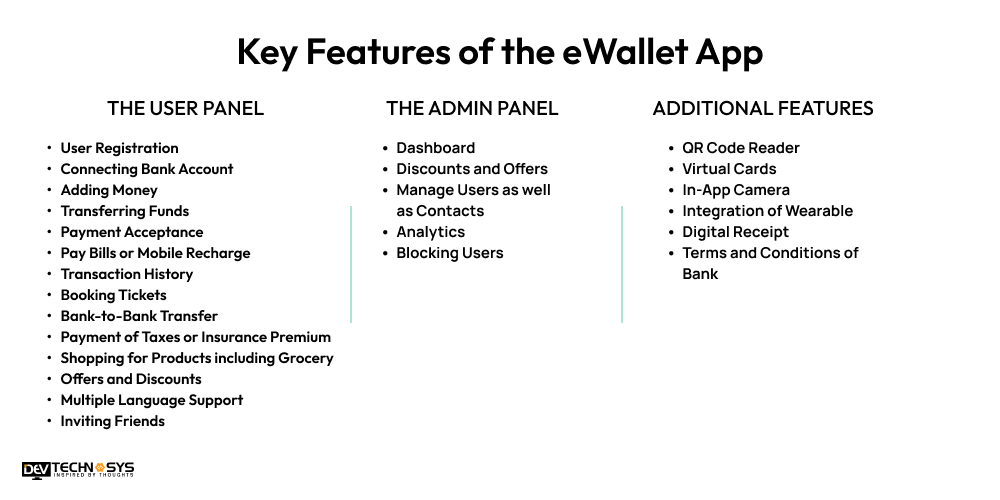
As there are two separate panels in the given eWallet app, the admin panel as well as the user panel, each panel has a few useful features. All of these features improve the performance of the app for the end-user along with assisting the admin to manage the app. There are already multiple trending mobile wallet apps actively functioning in the market.
1. The User Panel
-
User Registration
When the user starts the app, and before he or she uses it, the user needs to create his own account with his own email id or even his own social media credentials.
-
Connecting Bank Account
The users can easily select and enter their bank details for the purpose of making financial transactions. The users can even register with a given bank in order to make and carry out future payments.
-
Adding Money
The users can easily add money from the corresponding bank into the application as per their requirements.
-
Transferring Funds
When you build an ewallet app like Freecharge, allow users to easily transfer a certain dedicated amount of money by simply entering the receiver’s account details.
-
Payment Acceptance
The user can easily receive payments from different other users. Simply sharing their own account details, the user can easily accept payment.
-
Pay Bills or Mobile Recharge
The users can easily pay bills such as utility bills or recharge their mobile phones directly from the app in quite a convenient way.
-
Transaction History
The eWallet app like Google Pay keeps complete track of all of the past transactions which are made by the users. Also, users can easily search for a given transaction with a few advanced filters.
-
Booking Tickets
The user can easily reserve train tickets, bus, and flight tickets with quite an ease with the assistance of an eWallet app by simply entering the trip details such as date, destination, and time.
Even users can easily avoid long waiting times for booking tickets for movies as well as other events by using the application. This feature should be included in the wallet app design.
-
Bank-to-Bank Transfer
The app allows users to transfer or even send money directly to any bank easily. By simply entering the account number details of the particular receiver, the money can easily be transferred directly to the bank with just a few taps on the phone.
-
Payment of Taxes or Insurance Premium
Using the ewallet app like Apple Pay or other, you can easily pay income tax, sales tax, etc., or even your insurance premium with quite an ease.
-
Shopping for Products including Grocery
These apps make the lives of people much more flexible by easily allowing them to readily shop for not only grocery items but also different products such as apparel, electronic items, and much more.
-
Offers and Discounts
As the competition is getting tougher, the eWallet apps offer timely discounts as well as offers to attract a number of customers. Also, displaying these different discounts and offers under a particular separate category will certainly attract many more customers.
-
Multiple Language Support
The users can easily choose their own preferred language as per their choice. Offering different language support apart from Hindi and English assists the users to utilize the app with more flexibility as well as easily.
-
Inviting Friends
The users can easily earn special gift cards, huge discounts, and promotional items on each transaction by means of referring the app to their own friends.
2. The Admin Panel
The users can easily invite their friends as well as send and even receive funds. It assists the users in transferring funds quite easily by asking for the details each time.
-
Dashboard
When you Build an eWallet App, the admin can easily track all of the essential details as well as information of the users that are registered with the app.
-
Discounts and Offers
You should build an app like Cash, provide the latest discounts and offers to the users. Also, he gives offers related to rewards, referrals, etc.
-
Manage Users as well as Contacts
The admin can easily manage all of the users as well as contacts that are associated with the app and track and monitor them.
-
Analytics
The admin keeps real-time tracking of all the profits along with transactions made, as well as offers availed, the usability of the app, and the different other details directly from the given admin panel.
-
Blocking Users
As per the user’s behavior, the admin can easily block or even dismiss the user’s account from the app. Also, he can easily add a new user to the app. You can integrate this feature to build an ewallet app with the help of an on demand app development company.
3. Additional Features
Along with the basic features, there are some additional features that make the app much more reliable as well as flexible to the users.
-
QR Code Reader
The users can easily scan the QR code of the particular receiver in order to make the transaction quite swiftly and easily. Also, this online payment app development technology is quite convenient as well is most used among mobile users.
-
Virtual Cards
The users can easily develop or create a virtual card similar to their usual debit or credit card. Also, these virtual cards allow users to easily carry out different transactions with ease without actually entering their details at each time.
-
In-App Camera
This particular inbuilt feature, allows the user to scan the QR code easily. Even the users can easily transfer the different transaction receipts to any other user. Also, due to this, all of the transactions are duly confirmed to validate the entire transaction request in an instant.
-
Integration of Wearable
By means of connecting the app to different smart devices such as smartwatches, the concerned users can easily monitor all of their particular transactions right from their watch. hire dedicated developers who know how to integrate wearables with ewallet apps.
-
Digital Receipt
By generating digital receipts of all of the transactions as well as allowing the users to share all of these receipts with an app or through SMS and email, the users can easily maintain them.
-
Terms and Conditions of Bank
Even before you build an banking app like barclays, you need to have sufficient knowledge of the rules and regulations of online transactions with the bank. As you want to build an eWallet app, essentially you will execute as a particular bank.
Hence, you need to read all of the terms and conditions as per the government’s rules. You need to provide the security documents to the government according to the guidelines. Also, the most crucial aspect is that your app shouldn’t contain any illegal functionalities.
Want a chatbot demo or pricing? Fill the form and talk to our experts today.
Pick what you need below — you can select more than one — then tap Get detail to continue.
-
Chatbot demo dashboard
-
Cost to develop an app
-
Industry report
-
Case study
How to Create an eWallet App?
When you cost to build a payment app like ZainCash or other, it is a great way to enter the financial technology industry and provide users with a convenient way to manage their money. In this section, we will walk you through the steps to build an eWallet app.
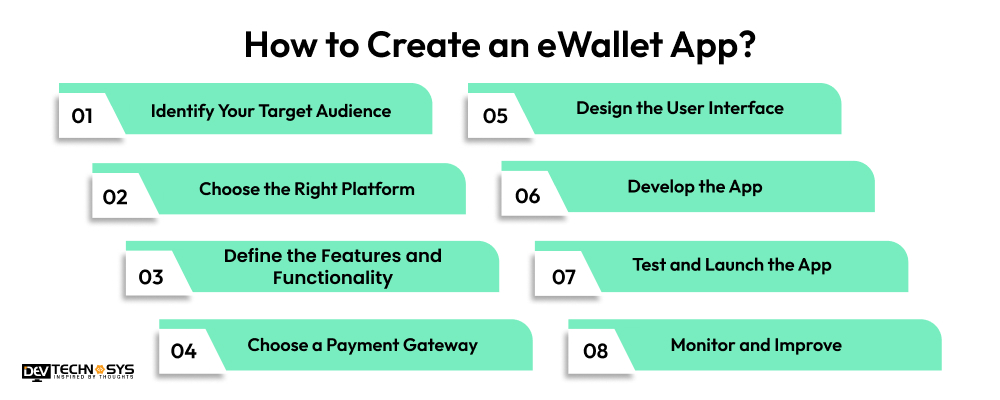
Step 1: Identify Your Target Audience
The first step in creating an eWallet app is identifying your target audience. But you should also validate your app idea with an Android app development company. Who do you want to use your app? Are you targeting individuals or businesses?
Are you targeting a specific demographic or geographic location? Once you have identified your target audience, you can begin to develop the features and functionality of your app.
Step 2: Choose the Right Platform
Once you have identified your target audience, you need to choose the right platform for top eWallet apps. Will your app be available on iOS, Android, or both? Each platform has its own set of requirements and restrictions, so it is important to do your research before making a decision.
Step 3: Define the Features and Functionality
The features and functionality of your eWallet app will be key to its success. You need to define the core features of your app, such as the ability to send and receive money, make purchases, and view transaction history. You may also want to include additional features such as the ability to split bills, set up automatic payments, and track expenses.
Step 4: Choose a Payment Gateway
A payment gateway is a service that allows you to accept payments through your app. You will need to choose a payment gateway that is compatible with your platform and meets your needs. Some popular payment gateways include PayPal, Stripe, and Braintree.
Step 5: Design the User Interface
The user interface to build an eWallet app will be critical to its success. The mobile app design company need to design an intuitive and user-friendly interface that makes it easy for users to navigate and perform the actions they want to take. Consider hiring a professional designer or using a pre-built UI kit to speed up the process.
Step 6: Develop the App
Once you have defined the features, choose the platform, and designed the user interface, you can begin to make an eWallet app. This will involve writing code, testing the app, and fixing any bugs or issues that arise during the development process. You must hire an on demand app development company that will consider using a cross-platform development tool to save time and resources.
Step 7: Test and Launch the App
Once your app is developed, it is important to thoroughly test it to ensure that it is functioning correctly and that there are no major bugs or issues. You can then launch your app on the app store and begin marketing it to your target audience.
Step 8: Monitor and Improve
After launching your eWallet app, it is important to monitor its usage and user feedback. This will allow you to identify any issues and make improvements to the app over time. You may also want to consider adding new features and functionality to keep your app competitive and relevant.
How to Make Money From E-Wallets
To generate revenue from eWallet transactions, fees, subscription-based offers, advertisements, and merchant commissions are stable methods. Let’s know more about how you can earn money from eWallets through an in-depth analysis.
1. Transaction Fees
Making money from eWallet transaction fees is one of the most steady sources of income. Here you can charge small transaction fees on transfers, payments, and bill settlements. These micro fees help you earn regular earnings, which is one of the most sustainable monetization strategies.
2. Merchant Commissions
Earning income from eWallet merchant commissions is a reliable method. Here, you can partner with retailers and e-commerce platforms to charge a commission on every payment processed. This is a stable source to have a consistent revenue stream and ensure long-term profitability.
3. Premium Features & Subscriptions
By offering premium features to users, you can charge them on a monthly or yearly basis. Premium subscriptions attract users towards factors like multi-currency wallets and higher transaction limits. This is a predictable source of earning recurring revenue while making your app stand out from other market rivals.
4. Advertisements & Offers
By attracting users’ attention by displaying targeted ads and sponsored offers from partners, you can earn extra money from eWallts. Personalized offers are also an efficient method that allows users to analyze spending data and helps them manage their expenses with control. This enables you to have a stable and consistent source of income.
Conclusion
In the current era, mobile apps have completely changed the entire scenario of the transfer of cash. Right from the electronic invoices, account stability as well as money switch, the different things are being paid with the assistance of the usage of mobile wallet packages. Now, mobile wallet apps have become a great concept for enterprises and startups. Now, mobile wallet apps have become a great concept for enterprises and startups.
eWallets have enhanced the overall economy as well as the financial sectors of different countries. Whether it is PayPal, Google Pay, or PayTM, they have changed the way people transact in the market and purchase products.
There have also been multiple investments in clone PayPal apps, so you can also build an app like PayPal. Therefore, it is your turn to invest in fintech app development. For better results, you can take help from a mobile app development company that can develop an ewallet app.
FAQs
Q1. How Much Time Does It Take to Create an eWallet App?
A. The time to build an ewallet app is not the same as it relies on your project requirements. Usually, it lies between 2-7 months or more. You can consult with a fintech app development company about the actual cost.
Q2. How Much Does It Cost to Build an eWallet App?
A. The cost to make an ewallet app will be between $10000-$25000. However, it is vital to know that the ewallet app development solution cost varies with different factors. And they are:
- Features & functionality
- App complexity
- Tech Stack
- Platform Choice
- Development Size
3. What is the Maintenance Cost of an eWallet App?
A. The cost of ewallet app maintenance services is between 15-20% of the total mobile app development cost. Generally, you need to pay between $1000-$5000 annually on your app’s maintenance.
Q4. How To Build An Ewallet App?
A. You can develop an ewallet app in the following steps:
- Conduct market study
- Create a feature list
- Design user interface
- Develop the backend
- Test & launch the app
5. What are The Top 5 eWallet Apps?
A. There are many apps in the market that are doing great and gaining user experience. Below are some of the ewallet apps that we have thoroughly researched and have a huge user base:
- PayPal
- Cash App
- Dwolla
- Google Pay
- Samsung Wallet