

















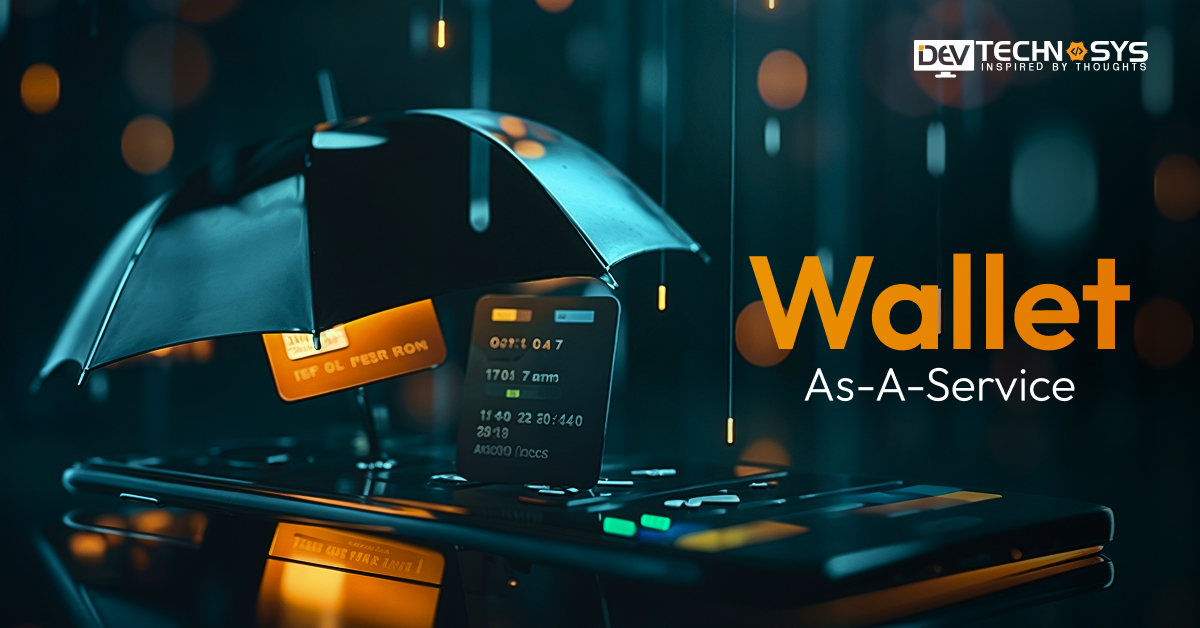
In a rapidly digitizing world, the Wallet-as-a-Service (WaaS) business model is changing the way firms provide financial services.
WaaS provides businesses of all types, not just banks and fintech companies, the ability to offer digital wallets as financial services to their customers.
With WaaS, companies are given the opportunity to embed secure, compliant, and full-functioning wallets into their existing apps in a matter of weeks, eliminating the need for costly and time-consuming infrastructural development.
From digital loyalty programs to offering customers crypto storage, the WaaS business model offers companies the ability to rapidly innovate and redefine ownership over the customer experience.
As the gap between technology and financial services continues to close, Wallet as a Service moves from being a simple utility to being a driving force of a new age in embedded finance. Are you prepared to develop the wallets of tomorrow?
What is Wallet-as-a-Service?
WaaS (Wallet as a Service) is a cloud and internet interface allowing businesses to incorporate digital wallets into their applications or systems seamlessly, having no need to build and design the infrastructure themselves. All the basic tools for payments, storage, and funds supervision, card issuance, compliance, and other functions essential for digital wallets are ready to use. This flexible and ready cloud interface allows businesses to accommodate their clients with personalized digital wallets and other quick, reliable, and scalable financial services.
Global Market Trends and Growth of Wallet-as-a-Service
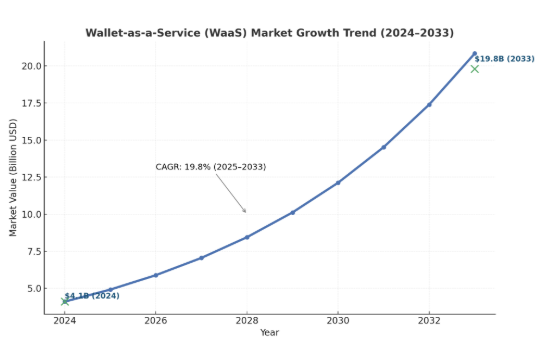
- According to the global market, the Wallet as a Service was valued at around $4.1 billion in 2024, and it is expected to reach around $19.8 billion by the end of 2033.
- Region-wise, North America holds the largest market revenue share of WaaS, with an estimated $1.5 billion in 2024.
- The WaaS market is expected to increase with a CAGR of 8% during the forecast period from 2025 to 2033.
- Key players in the WaaS market are PayPal Holdings, FIS, Stripe, Boku, Fiserv, Modulr, Galileo, and Marqeta.
- In a recent survey, the Asia-Pacific region shows the highest growth rate, with a CAGR of 2% from 2025 to 2033.
Why WaaS is a Game Changer for Businesses?
Wallet-as-a-Service empowers businesses to launch secure, feature-rich digital wallets without building from scratch. By offering plug-and-play infrastructure, built-in compliance, and scalable APIs, WaaS accelerates innovation, reduces costs, and enables brands to deliver seamless financial experiences, redefining how companies enter and thrive in the digital payments space.
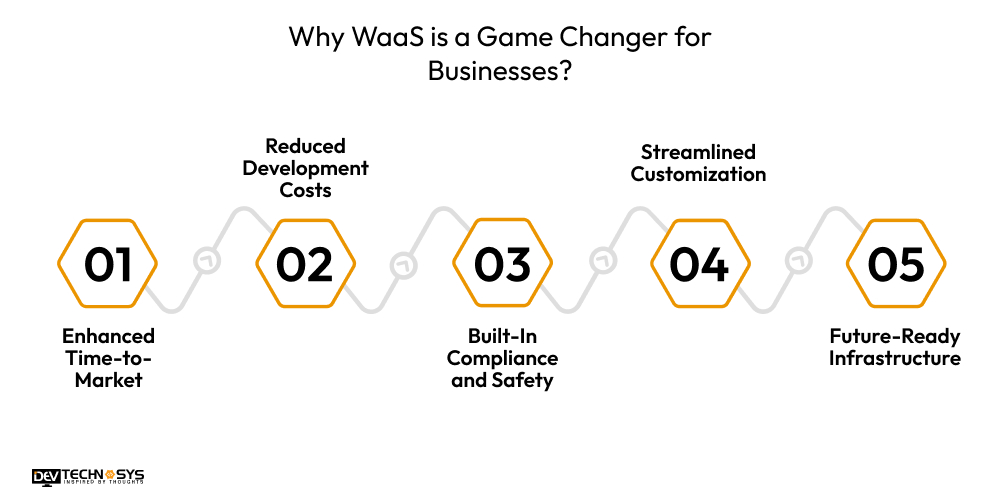
1. Enhanced Time-to-Market
Businesses are able to install digital wallet capabilities without the hassle of building a complicated infrastructure. Companies can go live in a matter of weeks due to prebuilt APIs, SDKs, and compliance modules, allowing them to capture market opportunities sooner. This is a significant decrease in the time needed to develop a binding digital wallet infrastructure.
2. Reduced Development Costs
The cost to build an ewallet app can be prohibitive due to the technology, talent, and regulatory compliance required. However, WaaS will let customers avoid those penalties and provide a developed and validated solution. Businesses can resource differently while also taking an enterprise solution provided by seasoned professionals.
3. Built-In Compliance and Safety
Regulatory controls, such as KYC, AML, and PCI-DSS, legal compliance requirements are automatically managed by the service, greatly minimizing legal business risk. Businesses can also offer financial services confidently while integrated and automated systems manage the bank-grade security, compliance, and foul play prevention.
4. Streamlined Customization
Businesses that subscribe to WaaS can tailor the wallet experience to fit their branding. Companies can modify the user interfaces and wallet capabilities to address the demand while controlling and optimizing the user journey.
5. Future-Ready Infrastructure
As businesses grow, so do their user demands. WaaS solutions are built to scale, supporting high transaction volumes, cross-border payments, and multi-currency support. This future-ready infrastructure ensures that companies can expand their offerings and adapt to market trends without major overhauls.
Use Cases and Industries Benefiting from WaaS
By offering ready-to-use infrastructure, secure APIs, and built-in compliance. WaaS enables companies to create scalable, branded financial solutions quickly, reducing costs, accelerating innovation, and unlocking new revenue streams across industries.
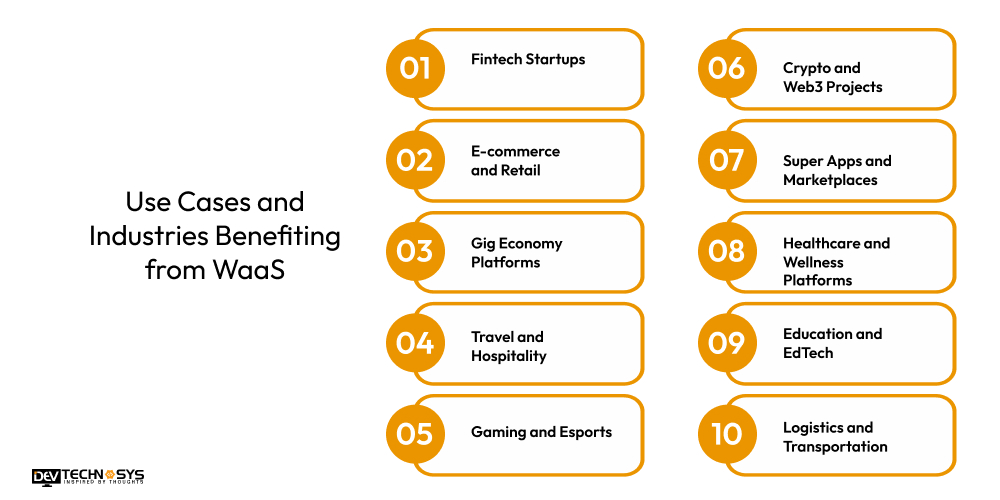
1. Fintech Startups
WaaS allows fintechs to launch digital wallets, neobanks, or P2P payment apps quickly. It removes the burden of building infrastructure from scratch, enabling rapid mobile wallet app development, built-in compliance, and faster scaling. Startups can focus on innovation while relying on secure, scalable backend systems provided by WaaS platforms.
2. E-commerce and Retail
Retailers can embed branded wallets for seamless checkout, loyalty programs, cashback, and gift card storage. WaaS enhances customer retention and engagement by providing a smoother payment experience while helping businesses track and analyze consumer spending behavior for personalized marketing and smarter inventory management.
3. Gig Economy Platforms
WaaS empowers gig platforms to offer real-time payouts, digital wallets for earnings, and spending features like bill pay or transfers. This improves financial access and flexibility for freelancers, drivers, and contractors, reducing their dependence on traditional banks and enhancing overall platform loyalty.
4. Travel and Hospitality
Travel companies can leverage WaaS to create wallets supporting multi-currency transactions, loyalty points, and local payments. Tourists benefit from easier currency exchanges, cashless payments, and rewards, while businesses streamline payment processes and deliver a more seamless and connected travel experience globally.
5. Gaming and Esports
Game developers and platforms use WaaS to enable in-game wallets, virtual currency management, tournament winnings, and NFT transactions. It offers players real-time rewards and secure transactions while supporting monetization and community engagement strategies, all without needing to build complex payment systems internally.
6. Crypto and Web3 Projects
Web3 companies use WaaS to bridge the gap between crypto and fiat systems. Custodial wallets, fiat ramps, and KYC/AML compliance are integrated easily, helping them onboard non-technical users while ensuring regulatory adherence and a secure environment for digital asset management.
7. Super Apps and Marketplaces
Platforms combining services (e.g., ride-hailing, delivery, e-commerce) benefit from WaaS by embedding unified wallets. Users can pay, transfer money, earn rewards, and access buy-now-pay-later (BNPL) services, all in one place, creating a closed-loop ecosystem that boosts engagement, retention, and cross-sell opportunities.
8. Healthcare and Wellness Platforms
Healthcare providers and wellness apps can integrate WaaS to manage patient co-pays, insurance reimbursements, or health savings wallets. This enables cashless, transparent billing, promotes faster settlements, and improves financial accessibility for patients while streamlining operations for clinics and telehealth platforms.
9. Education and EdTech
EdTech companies and institutions can use WaaS to handle tuition payments, scholarships, digital allowances, and micro-transactions for learning resources. Students and parents gain better financial control, while platforms offer a frictionless and secure way to manage education-related expenses digitally.
10. Logistics and Transportation
Courier services and transport platforms benefit from WaaS by enabling instant payments for drivers, digital toll wallets, and fuel reimbursements. This improves cash flow for workers, reduces delays, and enhances transparency and efficiency in operational payouts and expense tracking across fleets.

10 Key Features of Wallet-as-a-Service
Explore the best features of Waas(Wallet-as-a-Service) to use them for building digital wallets, which makes it easy for businesses when using Waas.
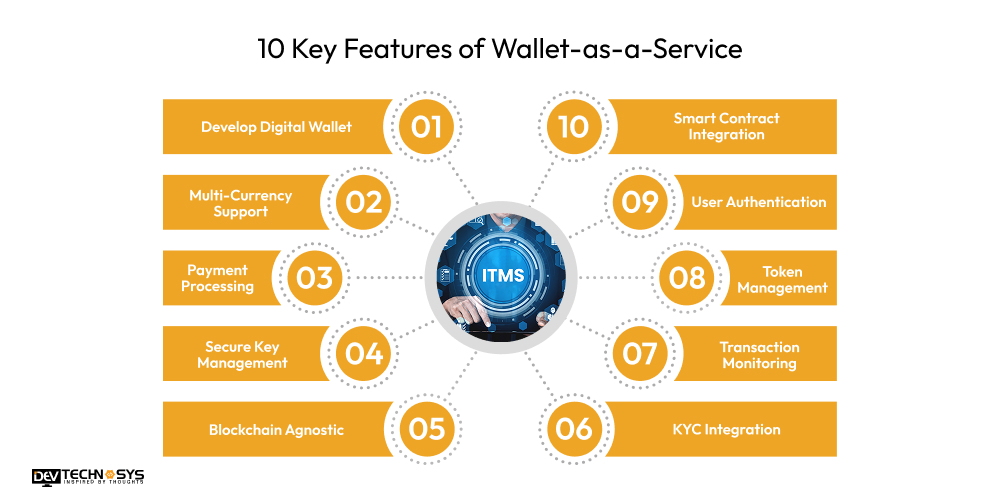
1. Develop Digital Wallet
Digital wallet as a service enables businesses to create digital wallets instantly, including custodial and non-custodial wallets with integrated strong security measures.
2. Multi-Currency Support
The Wallets as a Service manages and stores the various types of digital assets and fiat currencies, and displays the wallet balance in preferred denominations.
3. Payment Processing
Apps like Google Pay enable businesses to process payments through blockchain networks and other digital payment options such as cards, bank transfers, and more.
4. Secure Key Management
The web3 wallet as a service uses robust hardware security measures and multi-party computation to protect the private key, ensure secure backup, and signing.
5. Blockchain Agnostic
It supports a wide range of blockchain networks such as Ethereum, Solana, Bitcoin, Layer 2s, enabling businesses to build digital wallets on any top protocol.
6. KYC Integration
The Wallets as a service has Know Your Customer(KYC) integration, which ensures regulatory compliance and seamless user onboarding.
7. Transaction Monitoring
It enables businesses to track each transaction in real-time with automated alerts, prevent fraud, and ensure users’ safety.
8. Token Management
Banking application like Chime manage and store digital tokens such as fungible and non-fungible tokens with metadata.
9. User Authentication
The embedded wallet-as-a-service supports various authentications such as biometrics, two-factor authentication, and OAuth for user protection.
10. Smart Contract Integration
It enables support with smart contracts and various use cases like DeFi, staking, NFTs, and issuing tokens within the wallet.
Top 5 Wallet as a Service Providers
Before using a random Wallet as a Service provider, you must observe these top service providers, and they have already gained expertise. So, let’s take a look at the WaaS providers that build best ewallet applications:
1. Coinbase WaaS
The Coinbase Wallet as a service enables businesses to create a user-friendly digital wallet and customize it as per their preferences and requirements. It can be designed for both such as crypto native and traditional apps, which reduces the barriers for web3 adoption. This is ideal for those developers who need speed, security, and accessibility.
2. Fireblocks
Fireblocks offers enterprise-grade level Waas with robust security measures. It is ideal for institutions and large organizations. This Waas provider supports multi-chain assets, APIs, programmable wallets, and many more. Its pricing is so premium, but it offers higher security and scalability in both cold and hot wallet infrastructure.
3. Safeheron
Safeheron mainly focused on security first, such as zero-trust architecture and multi-party computation. Safeheron has expertise in creating non-custodial digital wallets, and this makes it suitable for regulated industries. It is best for those companies that follow the strict security mandates and integrate a technical but powerful solution.
4. Venly
It is one of the most well-known WaaS providers that can easily integrate with marketplaces, games, dApps, and more. This can enable fast wallet setup through email, social media logins, support NFTs, and offer multichain compatibility. It has strong expertise in gaming and the marketplace because of advanced developer tools and a user-friendly interface.
5. Magic
Magic offers a user-friendly developer interface that provides WaaS with simple logins such as email, social media logins, and more. It also focused on gaming and NFTs, handling key management security in the background and making a seamless onboarding. This supports Ethereum and other chains; it is best for those apps that want a Web2 feel when using Web3 features.
Challenges and Considerations
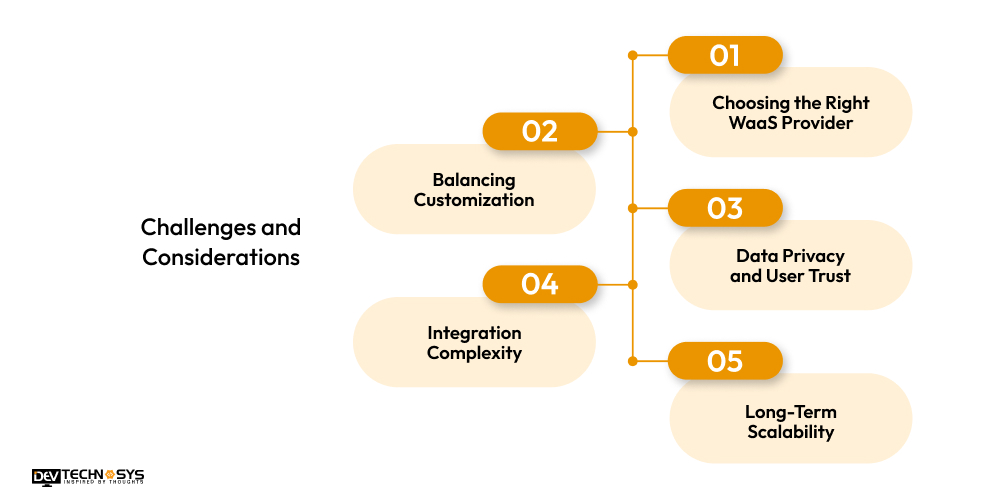
There are various types of challenges that occur when businesses use Wallet as a Service to build their own digital wallets. So, let’s consider the challenges:
1. Choosing the Right WaaS Provider
Selecting a provider with the right mix of features, compliance support, scalability, and integration capabilities is critical. A mismatch can lead to technical limitations, poor user experience, or regulatory issues. Businesses must evaluate vendors carefully based on their industry needs, future growth, and service-level agreements.
2. Balancing Customization
An app like PayPal offers standardized tools, but deep customization may be limited. Businesses must strike a balance between tailoring the wallet to fit their brand and user experience versus working within the constraints of the platform’s architecture and roadmap, which may not support niche or advanced features.
3. Data Privacy and User Trust
Handling financial data comes with high expectations around privacy and security. Businesses must ensure the WaaS provider follows strict data protection protocols and complies with regulations like GDPR. Clear communication about data use and transparent practices are essential for building and maintaining user trust.
4. Integration Complexity
Even with APIs, integrating WaaS into existing apps or backend systems can be complex, especially for legacy platforms. Proper technical planning, developer support, and sandbox testing are essential to avoid delays, minimize bugs, and ensure smooth wallet functionality within the broader digital ecosystem.
5. Long-Term Scalability
While WaaS simplifies initial deployment, businesses need assurance that the provider’s infrastructure can support future growth, new features, and evolving regulations. It’s important to align with a WaaS partner whose product roadmap and innovation strategy support long-term goals and adaptability to industry changes.
Compare Traditional Digital Wallets Vs. Wallet-As-A-Service Platforms
Let’s find out the difference between traditional digital wallets and WaaS platforms and select the best that fits your business needs and requirements.
| Feature | Traditional Digital Wallets | Wallet as a Service (WaaS) Platforms |
| Development Time | Long – requires building infrastructure from scratch | Short – pre-built modules and APIs speed up launch |
| Cost | High upfront and ongoing costs | Lower cost with pay-as-you-go or subscription models |
| Compliance & Licensing | Must be handled in-house | Often included or supported by the provider |
| Scalability | Difficult – requires additional resources | Built to scale with cloud-native infrastructure |
| Integration Complexity | High – custom-built solutions | Lower – plug-and-play APIs and SDKs |
| Security | Business is fully responsible | Shared responsibility with expert providers |
| Time to Market | Slow – can take months to years | Fast – weeks or even days |
| Customization | Full control over features and design | Customizable within the provider’s framework |
| Maintenance | Managed internally | Handled by WaaS provider |
| Use Case Flexibility | Limited to the business’s technical capacity | Wide range – payments, rewards, loyalty, crypto, and more |
Future Trends of Wallet as a Service
1. Global Interoperability
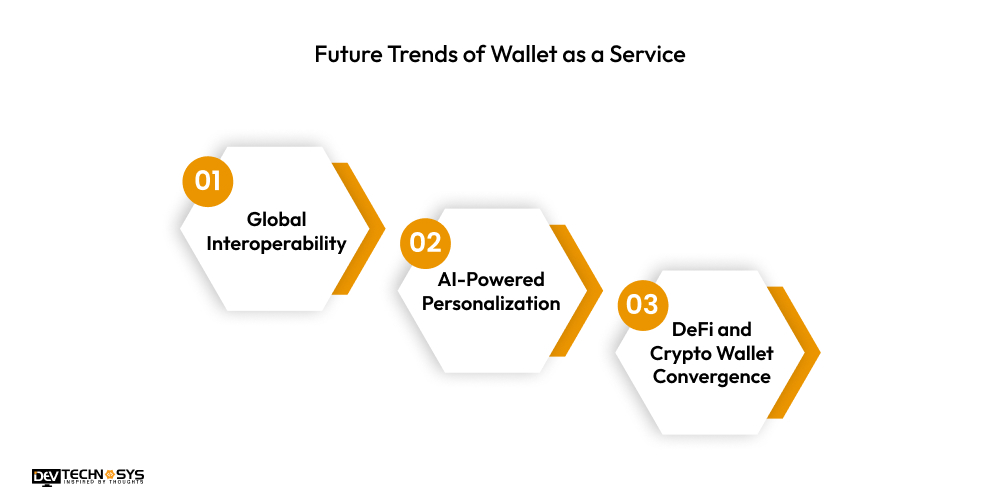
Globally, the WaaS platform enables digital wallets to support multiple currencies, interoperability, and cross-border transactions. WaaS platforms allow users to perform seamless transactions across banking, digital wallets, and decentralized networks.
2. AI-Powered Personalization
AI will enhance WaaS by delivering personalized financial insights, spending recommendations, fraud detection, and smart financial automation. According to the iPhone app development company, this creates adaptive wallet experiences tailored to user behavior, improving retention, engagement, and financial wellness.
3. DeFi and Crypto Wallet Convergence
WaaS will increasingly support digital assets and DeFi protocols, blurring lines between traditional finance and crypto. Institutions will use WaaS to offer secure access to tokenized assets, staking, lending, and decentralized exchanges, bridging the gap between compliance and innovation.

Conclusion
Wallet as a Service is revolutionizing how businesses build and scale digital wallets by offering ready-to-integrate, secure, and compliant infrastructure. It empowers startups and enterprises to launch financial products quickly without the burden of complex backend development. As demand for embedded finance grows, WaaS platforms provide the agility and scalability needed to stay competitive. Partnering with an experienced ewallet app development company can help you leverage WaaS effectively, ensuring a seamless, future-ready digital wallet solution tailored to your business needs.
Frequently Asked Questions
Q1. How WaaS Simplifies Embedded Finance for Non-Fintech Businesses?
Wallet as a Service (WaaS) simplifies embedded finance by providing secure, ready-made wallet infrastructure, allowing non-fintech businesses to offer financial services like payments, rewards, or credits without building complex systems.
Q2. Explain the Benefits of Integrating Wallet-as-a-Service for Fintech Startups?
Integrating WaaS helps fintech startups launch faster, reduce development costs, ensure regulatory compliance, and scale easily, allowing them to focus on innovation, user experience, and core business growth.
Q3. What are the Key Components and Functionality of Wallet-as-a-Service?
Key components of WaaS include wallet creation, KYC/AML compliance, transaction processing, fund custody, API integration, and multi-currency support, enabling seamless, secure, and scalable digital wallet functionality for various financial and non-financial applications.
Q4. What are the Regulatory Challenges for Companies Adopting WaaS Globally?
Companies adopting WaaS globally face regulatory challenges like varying KYC/AML requirements, data privacy laws (e.g., GDPR), cross-border compliance, licensing obligations, and evolving financial regulations across different jurisdictions and markets.
Q5. What is the Business Model Behind Wallet-as-a-Service Providers?
WaaS providers generate revenue by offering digital wallet infrastructure to businesses through subscription fees, transaction-based pricing, and white-label solutions, enabling companies to launch financial services.