















Key Takeaways:
- To build a banking app like Chase in 2026, involve several steps, such as market analysis, identifying features, tech stacks, designing UI/UX, development, testing, security, deployment, and maintenance services.
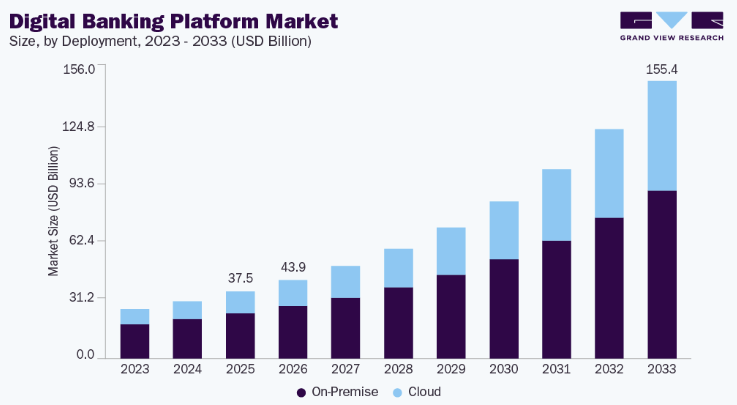
- The global market of banking applications is expected to increase to around $155.44 billion by the end of 2033, and also grow with a CAGR of 8%.
- Banking applications can generate higher revenue through monetization techniques, such as transaction fees, a freemium model, subscription plans, and many more.
- Integrate core and advanced features in banking apps like Chase, such as multi-factor authentication, fund transfers, real-time transactions, account management, and more.
According to McKinsey’s Global Banking Annual Review, the fintech market revenue reached around $650 billion in 2025 and is still a fraction of banking’s $7.3 trillion.
Nowadays, banking applications have gained a huge fanbase; around 86% US people use banking apps to adopt a massive experience and offer personalized recommendations to keep users loyal.
Entrepreneurs are ready to invest in it and be a part of the booming fintech industry. Banking apps like Chase transformed users’ banking experience by offering AI-based features, instant fund transfers, investment management, credit monitoring, and fraud detection.
In 2026, developing a banking app like Chase requires a strategic approach and integrating strong security measures(PCI DSS, SOC 2), privacy, transparency, and more.
Get ready to explore the guide to develop a banking app like Chase, features, security & privacy measures, development cost, and other useful information.
Market Statistics of Global Digital Banking Applications
According to the Grand View Research, these below points are current and future statistics of digital banking applications.
- The global digital baking applications are valued at around $43.9 billion in 2026. It is expected to grow to around $155.44 billion by the end of 2033.
- As per the deployment-wise, the on-premise charging segment led the digital banking market with around 5% in 2026.
- Looking at the regional outlook, the Asia-Pacific region holds the largest revenue share, around5% in 2026.
- In accordance with type insights, the investment banking segment records the highest market revenue share in 2026.
- The worldwide market of digital banking apps is projected to grow with a CAGR of 8% during the forecast period from 2026 to 2033.
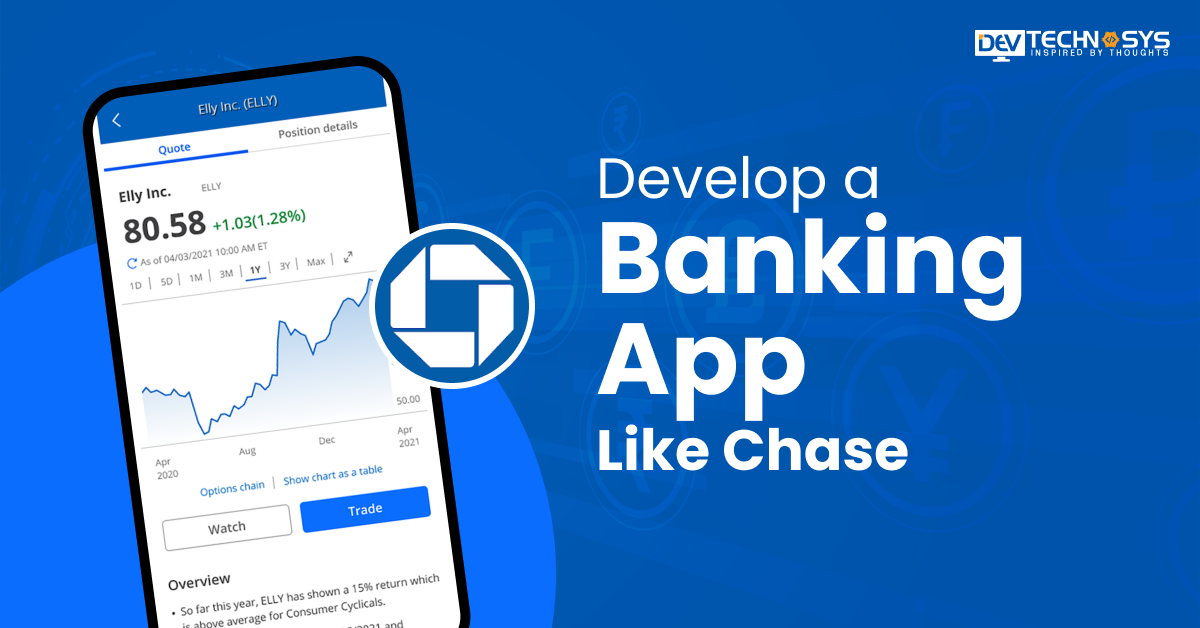
What is Chase?
The Chase app is a banking application for mobile devices created by JPMorgan Chase & Co that allows you to manage your banking activities from your smartphone or tablet. You can check your account balances, transfer funds, pay bills, deposit checks remotely, track your transactions, manage your credit card accounts, and have access to your investment accounts. The app is equipped with enhanced security features, personalized financial information, and real-time alerts to make banking easier and safer for customers.
How Does the Chase App Work?
After installing the Chase app, you must know about the working steps of how the Chase app works and what criteria you must follow. Let’s take a closer look at the steps below:
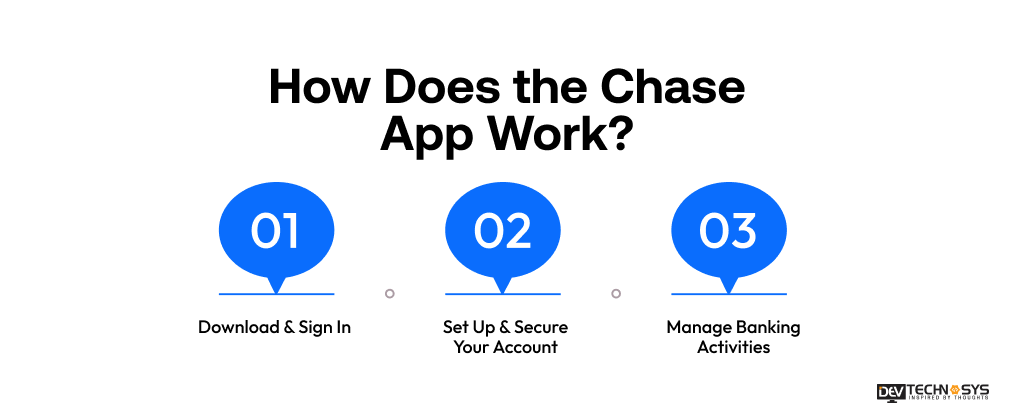
1. Download & Sign In
First of all, download the Chase app from the Play Store or App Store. Log in with your personal details and use phone numbers, email addresses, and social media logins.
2. Set Up & Secure Your Account
After that, set up your finance services via linked bank accounts, cards, and digital wallets. Users can also set up security measures, such as fingerprint, FaceID, and two-factor authentication, to make financial activities secure and safe.
3. Manage Banking Activities
Users can use the app to check their balance, make instant fund transfers, pay bills, recharge, and monitor transactions in real-time. Turn on notifications for alert messages for sending or receiving money.
Why Businesses Want to Invest in Banking App Development?
With the swift adoption of digital financial services, banking apps have become an important strategic investment for organizations. The role of mobile app development in banking helps organizations grow their customer base, generate new revenues, improve operational efficiency, and enhance the delivery of personalized experiences to their customers.
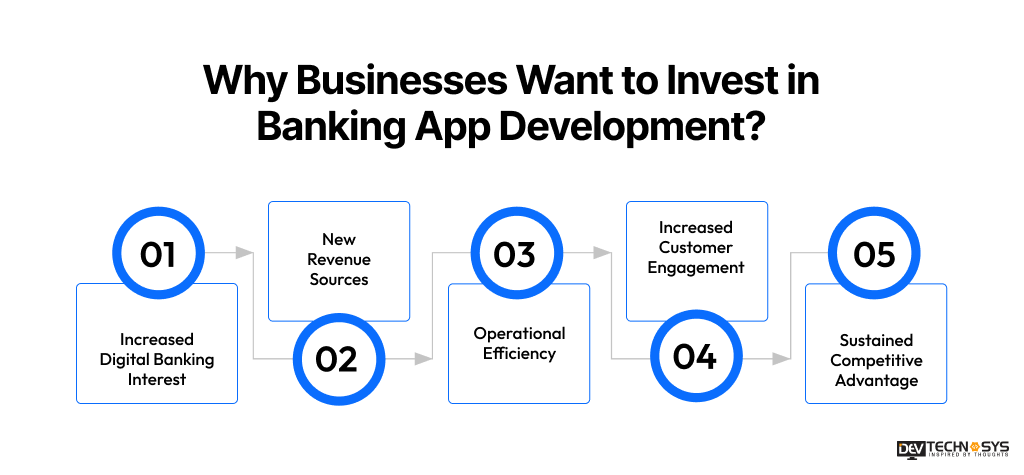
1. Increased Digital Banking Interest
As more people are moving toward digital options when doing their banking, it is becoming easier and quicker for them to use banking apps for managing their finances without having to go to a physical location or branch.
These apps have made it easier for users to manage their financial activities, access accounts, make payments, and send money instantly. More businesses are looking to develop banking apps to remain competitive and take advantage of this growing digital finance marketplace.
2. New Revenue Sources
The ewallet app development solutions are generating multiple revenue streams through transaction fees, subscription services, lending solutions, card options, and investment products. With more options to earn money, businesses can create diversification that expands their overall revenues and increases their customer counts, making the digital banking platforms very profitable long-term investments.
3. Operational Efficiency
Automating bank account opening, making payments, getting customer assistance, and handling bank account management via digital banking platforms reduces reliance on manual processes and physical infrastructure. Companies can decrease the cost of operating their business using technology to improve the way they deliver services to customers and grow their businesses.
4. Increased Customer Engagement
A payment app development solution will allow businesses to create unique opportunities for interacting with customers through the implementation of personalized promotions, financial information, push notifications, and customer loyalty programs.
The ability to frequently communicate with customers about their accounts will strengthen the relationship between a business and its customers, resulting in an increase in overall retention rates and the total amount of daily banking transactions performed by customers via the app.
5. Competitive Advantage
Developing a banking application allows you to compete against other financial institutions and fintech organizations (emerging). Developing applications using the latest technology, including artificial intelligence (AI) for personalizing customer experiences, enabling consumers to make payments electronically, allowing customers to access accounts and conduct transactions easily through open banking, and offering services to customers with real-time availability.
Industry Insights: According to Statista, Global mobile banking users exceed 2.1 billion, showing rapid digital adoption worldwide.
Banking App Development Process Step-by-Step
To develop a banking app like Chase requires a future-proof plan and involves various steps, such as gathering project requirements, selecting tech stacks, and many more. These steps explain each process in detail, and businesses get to know the working criteria of the digital banking app development process:
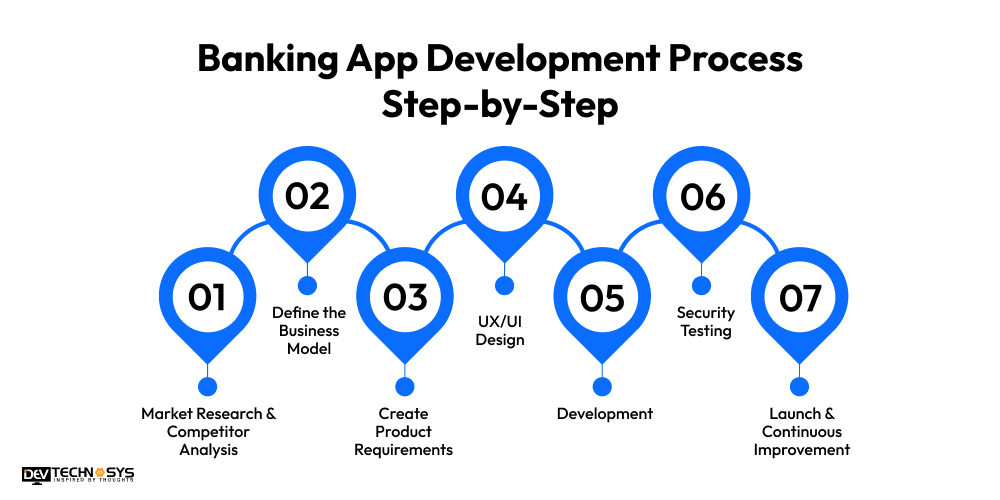
1. Market Research & Competitor Analysis
Start by looking at some of the leading banking apps on the market (e.g., JPMorgan Chase, Revolut, N26, SoFi) and what their functionality looks like, how they onboard customers, and how they monetize. What types of security do they offer?
What do their customers say about them, etc., and then see how these apps stack up against one another in terms of their overall market position. This can help you to make decisions about how users expect to interact with your app, and identify competitive gaps between your competitors.
2. Define the Business Model
Next, hire a mobile app development agency to choose a banking model that aligns with your corporate goals, regulatory strategy, and target audience. Consider traditional banking, neobanking, digital-only banking, or Banking-as-a-Service (BaaS).
Also, make sure to have a fully defined revenue stream, customer base, partner requirements, licensing requirements, and operational responsibilities before you start building your banking app to ensure that it is a long-term viable & scalable business.
3. Create Product Requirements
Next, create an in-depth product requirements document that details the user journey, functional specification, compliance obligations, and security controls for your banking app, as well as the associated workflows for account management, payment processing, onboarding, authentication, and regulatory reporting (KYC/AML). Having a comprehensive product requirements document will help to minimize development-related risk and maintain alignment among all stakeholders throughout the development process.
4. UX/UI Design
Hire creative designers from a fintech app development company to establish user-friendly, safe, and mobile-first experiences for users by simplifying complex tasks within financial operations. Create a focus on accessibility and having trust-building features, clear navigation, and smooth onboarding processes.
Banking apps can potentially create cognitive friction as well as create a sense of trust, security, and transparency. A platform’s effective UX/UI design is a significant indicator of the success of the business effort, as evidenced by improved customer satisfaction, retention, engagement & overall platform use.
5. Development
Once your team has successfully executed the above stages, you can begin building the banking platform through the development of the front-end user experience, back-end processes, and secure APIs. The front-end consists of the user experience for the customer.
The back-end consists of processing transactions, authenticating customers, storing customer information, and operating all the business logic of the banking platform. Using APIs enables you to connect to some or all of the following tools for use on the banking platform.
6. Security Testing
Prior to launching a banking platform, conduct extensive security testing on the entire solution to identify security vulnerabilities and compliance risks. The following are some typical activities performed during the security testing phase: penetration testing, vulnerability assessment reviews, secure coding procedures, API security validation, infrastructure audit, and authentication testing.
Employing a neobank app development company to conduct proactive assessments on the security of the banking platform helps to safeguard your sensitive financial data and minimize the risk of a cyber-attack.
7. Launch & Continuous Improvement
When monitoring a deployed application for its performance, security, and customer feedback over time, you will also want to track user behavior, fix issues with the app, roll out additional features based on user demands, and ensure that it continues to meet regulatory requirements. In order to remain competitive in the financial marketplace, banking applications must continue to evolve through regular updates, security enhancements, infrastructure optimizations, and innovation that is driven by customers.
Banking Regulations and Compliance Requirements
Mobile banking app development like Chase requires more privacy and compliance measures than an attractive or polished user interface. Mainly, financial applications are operated in a regulated environment, and compliance is essential for protecting customers’ data and their sensitive financial information.
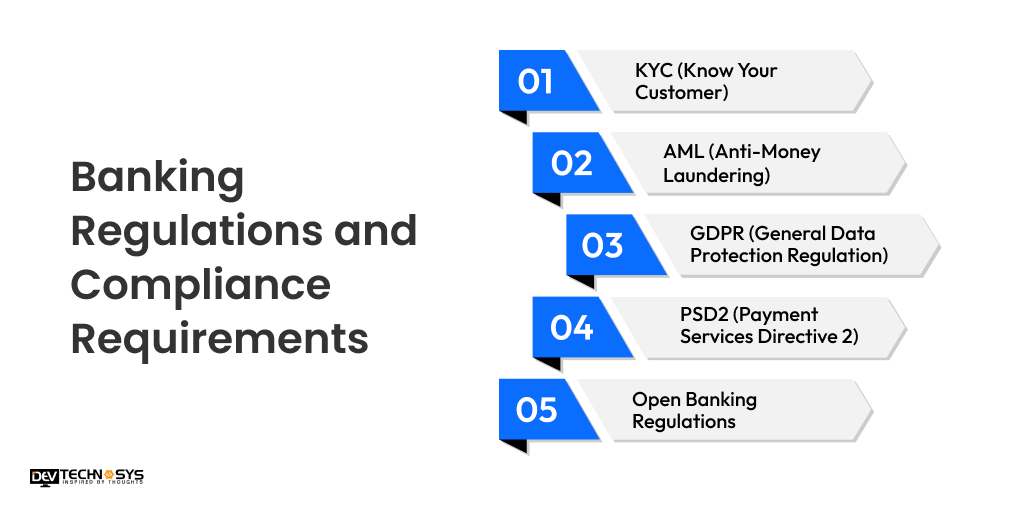
1. KYC (Know Your Customer)
KYC is used to verify the user’s identity before granted their access to financial services. Banking apps like Chase, Revolut, and more implement KYC to document verification, customer due diligence (CDD), eKYC APIs, biometric authentication, and more. KYC helps financial services providers to prevent fraud, account takeovers, and more.
2. AML (Anti-Money Laundering)
Detect and report suspicious financial activity (money laundering), from a customer’s lifecycle. Fintech platform providers must use a combination of monitoring engines for transaction monitoring, screening for sanctions, PEP checking, behavioral analytics, and risk scoring models to detect the activity.
3. GDPR (General Data Protection Regulation)
If a fintech application defers data ownership status to EU residents (e.g., collects, processes, or stores), compliance is required for GDPR (General Data Protection Regulation). Included in compliance are consent management, encryption, audit logging, privacy-by-design architecture, and rights management.
4. PSD2 (Payment Services Directive 2)
For fintech providers offering payment services or accessing data from banks in Europe, compliance is required for PSD2 (Payment Services Directive 2). Areas of compliance include secure API design, strongly authenticated customer authentication, consent management, use of standard OAuth 2.0 authorization protocol, and transaction risk analysis.
5. Open Banking Regulations
Open banking laws are necessary in cases where a fintech platform is able to gain access to banking client data or accept payments via bank APIs. These are controlled by someone other than the user. These requirements involve the following technology solutions: API Gateway, OpenID Connect, OAuth 2.0, Consent Orchestration, Tokenization, and Secure Data Sharing Infrastructure.
Real-World Case Study: Uabpay
With an initial MVP budget of around $14K, we created a digital banking app, Uabpay, for a client. The functional requirements of the project were expanded when our client requested more advanced features such as eKYC verification, integration to multiple banks, real-time monitoring of transactions, AI-powered fraud detection, and role-based access.
Among the many challenges faced during the project were inconsistencies with 3rd party APIs, regulatory compliance issues, and being able to process the payment securely. Ultimately, the final product was able to provide secure onboarding, faster transaction processing, increased user engagement, and support the client’s objectives for the growth of their digital banking business.
Narayan Das-(Project Manager)
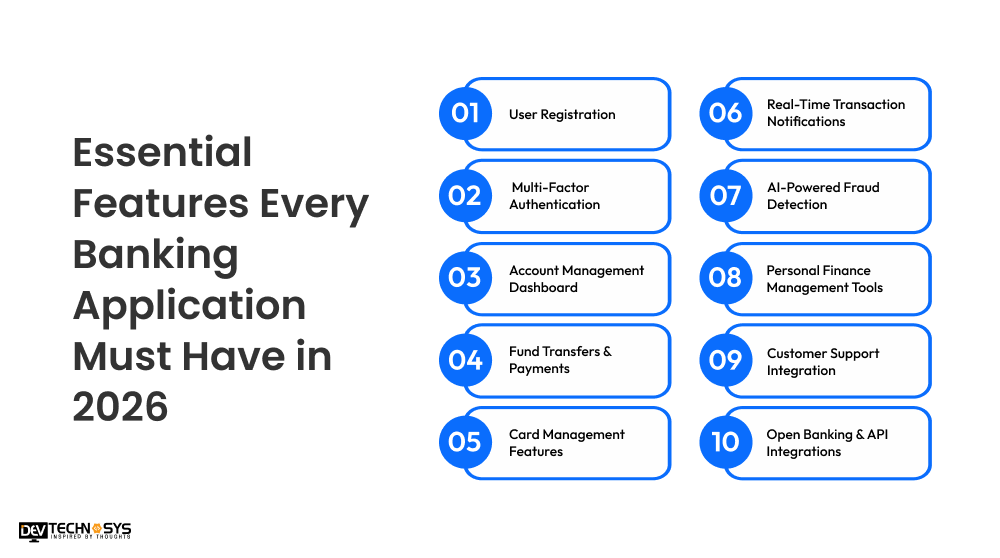
Essential Features Every Banking Application Must Have in 2026
In 2026, banking apps will be expected to provide features that include secure customer onboarding, real-time transactions, analytic fraud detection powered by AI, and integrated options for users to manage their money better. So, the following banking app features are a must to integrate.
1. User Registration
A fintech app like Chase creates accounts without hassle, verifies identities through documents and biometric means, and automates compliance with KYC.
2. Multi-Factor Authentication
Use biometrics, OTPs, passkeys, device-based, multi-factor authentication to enhance the security of users’ accounts.
3. Account Management Dashboard
A white-label banking app like Chase gives users real-time access to balances, transaction history, statements, account details, and total cash flow.
4. Fund Transfers & Payments
A digital banking platform like Chase allows clients to safely and easily transfer funds domestically and internationally, and pay their bills through regular and scheduled recurring payments.
5. Card Management Features
The Chase mobile banking app freezes cards from within the application, increases/decrease limits to their cards, updates PINs, and creates virtual cards.
6. Real-Time Transaction Notifications
Banking software like Chase Send instant alerts for payments, fund transfers, any account activity, security events, or suspicious transactions.
7. AI-Powered Fraud Detection
Monitor users’ behaviors and identify transactions so that you can detect exceptional activity and stop fraud before the losses are incurred.
8. Personal Finance Management Tools
An AI banking app like Chase helps users manage their income, expenses, budgets, savings/accumulation of funds, making better financial decisions.
9. Customer Support Integration
Integrating support channels & technology, such as AI-driven chatbots, live chat options, and a full ticketing system, can provide faster solutions to your customers.
10. Open Banking & API Integrations
Chase app clone establishes robust security around external banking / open banking via API connection with their Financial Institution or payment processor.
See what the Chase Media Center Says about the Banking App
62% of consumers say they cannot live without their mobile banking app in daily financial life.
What is the Cost to Develop a Banking App Like Chase?
The banking app development cost starts from $30,000 to $150,000, or goes higher. Mainly, there are a number of factors that can highly affect the total cost to build a banking app like Chase. It includes what type of features are integrated, security measures, privacy techniques, and more. Additional factors also exist, such as maintenance services, testing methods, tech stacks, and many more.
Note: According to our project manager, we developed around 30+ banking applications with proper security measures(GDPR, PSD2, AML, KYC), and the estimated banking app development cost lies between $30,000 and $150,000.
Complexity Level |
App Scope |
Key Features |
Estimated Cost (USD) |
| Basic | MVP Banking App | Login, balance check, transaction history, basic transfers | $30,000 – $60,000 |
| Medium | Standard Digital Banking App | Bill payments, card management, notifications, KYC, fraud alerts | $60,000 – $100,000 |
| High | Advanced Banking App (Chase-like) | AI fraud detection, real-time payments, credit score tools, budgeting, and investment features | $100,000 – $150,000 |

1. App Characteristics and Complexity
Feature quantity and complexity have a large effect on development costs as features such as account management, money transfers, bill payments, budgeting tools, AI-based insights, and investment services. It requires extra development time, testing, and backend infrastructure, driving up the cost of the overall mobile banking app development services.
2. Security & Compliance Regulations
A secure banking app like Chase must adhere to financial regulations in addition to implementing complex, robust security measures. Biometric authentication, data encryption, fraud detection, secure APIs, and compliance audits all require expert knowledge, making security one of the highest cost factors.
3. Platform Selection
Developing for either iOS or Android will greatly impact the overall costs of an application. Developing natively for each platform requires codebases, while cross-platform frameworks will reduce costs. Developing for multiple devices, operating systems, and screen sizes will also increase the complexity of your BNPL app development.
4. Third Party Integrations
Integrating different 3rd party systems (i.e., payment gateways, banking APIs, credit scoring systems, identity verification systems, and analytics tools) will require additional development hours. Integrating requires licensing fees, API usage fees, customization, and ongoing maintenance, all of which will contribute to the overall cost to develop a banking app like Chase.
5. Development Team and Location
The level of experience and location of a hybrid app development team will affect how much you pay for their services. For instance, if you hire specialized developers in the fields of fintech, UI/UX design, security, or quality assurance, you may pay more. However, you can trust that your banking application will be developed to a much higher standard and have the scalability needed for future growth.
Factor |
Cost Impact |
Affected Cost (USD) |
| App Characteristics and Complexity | Higher features and complexity increase cost | $10,000 – $60,000 |
| Security & Compliance Regulations | Strict banking regulations significantly increase the cost | $8,000 – $40,000 |
| Platform Selection | More platforms (iOS, Android, Web) increase cost | $5,000 – $25,000 |
| Third Party Integrations | More integrations increase development and testing costs | $5,000 – $30,000 |
| Development Team and Location | Team expertise and region strongly affect the overall cost | $10,000 – $50,000 |
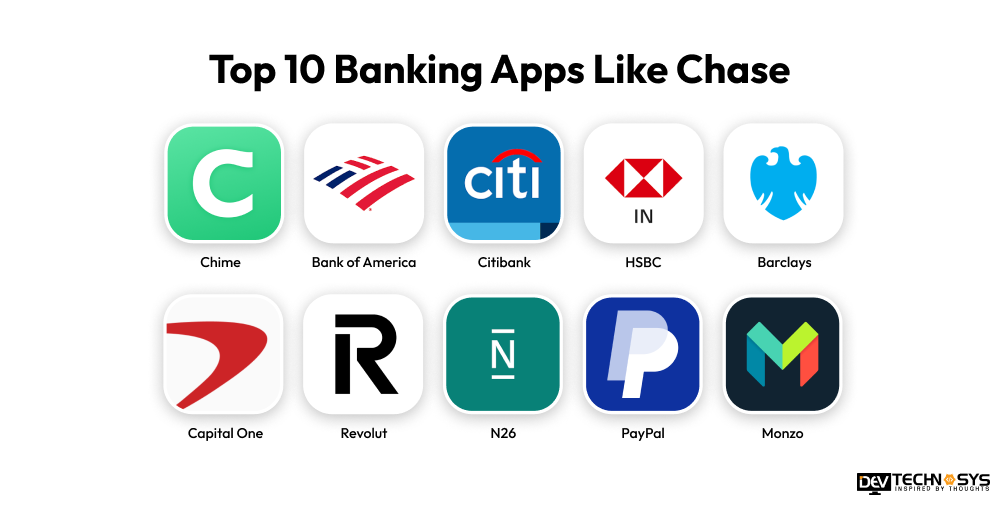
Top 10 Banking Apps Like Chase
Do you think that a custom banking app like Chase is the only fintech solution? There are many popular Chase alternatives that offer a wide range of financial services and offer strong security and compliance measures to securely send higher amount of money.
App |
Downloads (Approx.) |
Security Measures |
Best For / Used For |
Launched Year |
| Chime | 50M+ | Biometric login, encryption, fraud monitoring, instant card lock | Mobile-first banking, no-fee accounts, early salary access | 2013 |
| Bank of America | 50M+ | Face ID, encryption, real-time alerts, secure token access | Everyday banking, credit management | 2010 |
| Citibank | 10M+ | Biometric security, encryption, secure sessions | Global banking & credit services | 2010 |
| HSBC | 10M+ | Advanced encryption, biometric login, risk detection | International banking & transfers | 2012 |
| Barclays | 10M+ | Fraud detection AI, secure login, encryption | Savings, investments, credit cards | 2010 |
| Capital One | 50M+ | Virtual card numbers, biometric login, fraud alerts | Credit cards & digital banking | 2011 |
| Revolut | 50M+ | App PIN, biometric auth, instant fraud freeze | Digital banking, crypto, global spending | 2015 |
| N26 | 10M+ | 2FA, real-time notifications, device verification | Mobile-first banking | 2015 |
| PayPal | 500M+ | Encryption, tokenization, and AI fraud detection | Online payments & money transfers | 1998 |
| Monzo | 10M+ | Biometric login, instant card freeze, encryption, alerts | Budgeting & mobile banking | 2015 |
1. Chime
Chime is one of the successful US-based banking platforms that enable users to perform financial services securely. An app like Chime offers various features, such as instant fund transfers, debit card controls, budgeting tools, direct deposit, and more. Mainly, Chime manages banking operations without using traditional banking services.
2. Revolut
Revolut acts like a financial super app; it offers a wide range of financial services, such as crypto trading, currency exchange, budgeting tools, global spending, and instant money transfers. Involves modern functionalities, like robust security features, real-time notifications, and virtual cards, popular for international usage.
3. Monzo
Monzo is basically a UK-based banking application and is famous for helping younger users adopt banking services. It is a mobile-first banking platform and provides next-gen services, such as card controls, savings pots, fee-free spending abroad, easy financial management, and instant spending alerts.
What Tech Stacks Are Used to Develop a Banking App Like Chase?
The technologies used for money transfer app development services, such as Chase, include Java or Kotlin for Android, Swift for iOS, and React Native or Flutter for cross-platform development. On the back-end, technologies include Java, Spring Boot, Node.js, and .NET; in terms of databases, they use PostgreSQL, MongoDB, or secure cloud platforms.
Layer |
Technologies Used |
| Mobile Frontend | Swift (iOS), Kotlin (Android), Flutter, React Native |
| Web Frontend | React.js, Angular |
| Backend | Java, Spring Boot, Node.js, .NET |
| Databases | PostgreSQL, MySQL, MongoDB, Oracle DB |
| Cloud Infrastructure | AWS, Microsoft Azure, Google Cloud Platform |
| APIs & Communication | REST APIs, GraphQL, gRPC |
| Security | OAuth 2.0, JWT, SSL/TLS, AES Encryption |
| DevOps & CI/CD | Docker, Kubernetes, Jenkins, GitLab CI |
| Authentication | Multi-Factor Authentication (MFA), Biometric APIs |
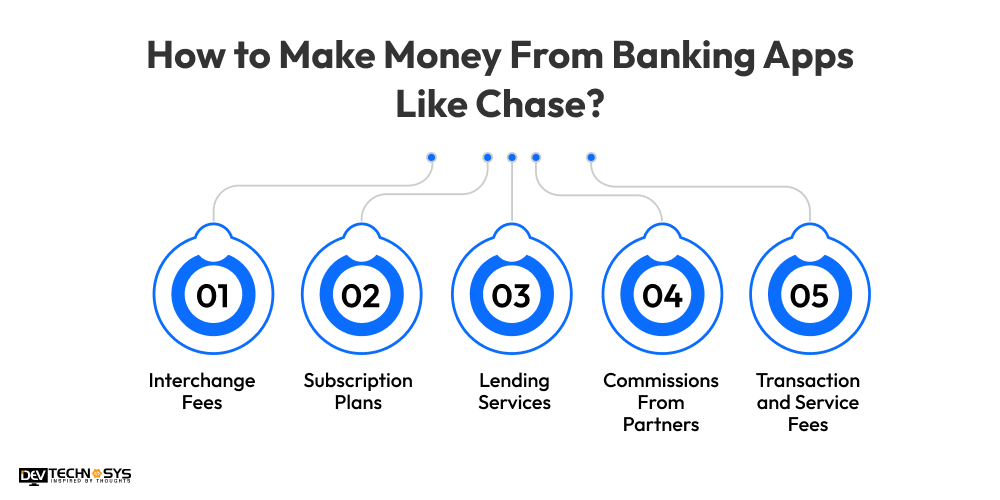
How to Make Money From Banking Apps Like Chase?
Income is generated from banking on demand app development solutions through exchange fees on card transactions, monthly subscription fees, lending products, commissions from enterprises that refer customers, and transaction fees. The various features and types used by the customer to generate recurring income enable app owners to build sustainable recurring revenue that provides valuable benefits to the users, which will create long-term engagement.
1. Interchange Fees
When consumers use their debit cards or credit cards through a banking facility and make a purchase, a small percentage of the fee associated with those transactions is earned via merchant interchange fees. Merchant interchange fees are typically very low per transaction, but provide recurring revenue streams for the banking app, the more your customers spend.
2. Subscription Plans
You can create two different accounts on your banking app that allow customers to upgrade to premium packages that have higher transaction limits and additional features (e.g., budgeting tools, credit score monitoring, priority customer support) than standard banking accounts. You will continue to generate monthly or annual revenue from your premium accounts and will be able to offer more to your customers as a result.
3. Lending Services
An enterprise banking app like Chase, providing loans directly through the banking app to customers, is another excellent opportunity to create revenue. Interest charged on the loans provided to customers and any fees associated with the loan can produce significant amounts of revenue if appropriately assessed and risks are managed correctly.
4. Commissions From Partners
By allowing your customers to view and enroll in insurance products, investment products, savings products, and other products offered by your financial partners via your banking app. According to the top banking app development companies in USA, you can receive commission when they complete a purchase or enroll in a product.
5. Transaction and Service Fees
Charge for services including international transfer fees, immediate withdrawal fees, foreign currency exchange, premium card fees, and small business banking fees. A few cents in aggregate fees over a large number of customers can result in significant income for the owner of the banking application.
You can reach out anytime; we are available 24/7. Our team provides a quick response.

Conclusion
Develop a banking app like Chase will require an alignment of strategic elements: secure technology, regulatory compliance, user-centric design, and scalable financial infrastructure. To succeed, organizations must incorporate the necessary components within their application offerings, including digital payments, account management tools, AI-enabled insights, fraud detection mechanisms, and built-in customer support.
Organizations will also need to develop partnerships with an experienced mobile banking app development company and adopt a forward-thinking methodology in order to develop a competitive banking application. Enabling organizations to achieve accelerated growth, build customer loyalty, and drive long-term profitability.
Frequently Asked Questions
Find answers to the most common questions related to this article.
A mobile application provided by a licensed bank that offers customers the necessary tools for accessing their account information, managing their finances, and completing various types of financial transactions. Whereas a fintech mobile app specializes in providing only selected types of financial solutions, such as budgeting, investing, lending, and making payments, and may work with a bank to provide those services rather than offering traditional banking services to customers themselves.
The cost to build a banking app like Chase is around $30,000 to $150,000, depending on the project demands and requirements. Many factors affect the cost, such as features, functions, project size, development team, backend infrastructure, deployment platforms, customization level, and more.
To create a banking app like Chase, it usually takes around 3 to 6 months or longer. The total development timeline can be influenced due to various factors, such as project complexity, design UI/UX, number of features or services, third-party integrations, and many more.
There are many different types of challenges are occurred during the Chase app development process. Here is the list of challenges:
● Higher Operational Cost
● Real-Time Transaction Processing
● Downtime and System Reliability
● Audit and Reporting Requirements
● Fraud Detection and Prevention
● API and Third-Party Integrations
Powerful technologies are used to develop a banking app like Chase. It includes various tech stacks for different development processes:
● Java
● Python
● HTML5
● JavaScript
● MongoDB
● MYSQL
The digital banking applications use encryption techniques like end-to-end encryption(AES-256) for storing data and easily sharing sensitive data in a decrypted form. TLS 1.3 for data in transit, and the useful information is tokenized to prevent breaches and malware.
If your device is lost or stolen, banking applications like Chase enable users to immediately freeze their accounts and reset credentials from another device. Also, the Chase-like app detects unusual activity, blocks access, and requires authentication to prevent unauthorized transactions.