









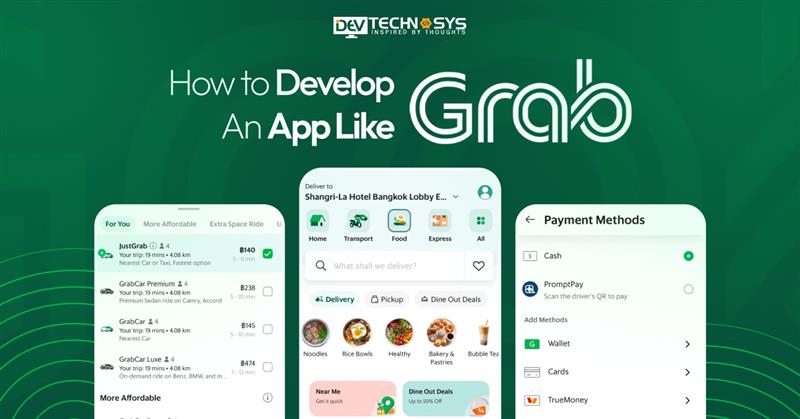
Whether you want to order groceries or transport yourself from one place to another, no app is more reliable than Grab. As a multi-service super app, Grab has established its foothold in the on-demand pickup and delivery industry. According to Yahoo Finance, Grab’s revenue in Q3 2025 grew 22% year over year (YoY) to $873 million.
Sensing a profitable opportunity, businesses began investing more in Grab taxi clone app development. But how to develop an app like Grab? That’s what we are going to find out in this blog.
From real-time tracking and secure payments to lightning-fast performance, every detail matters. The good news? You don’t need to reinvent the wheel. Read the blog carefully till the end to know how to build an app like Grab from scratch. Let’s get started!
What is a Grab App?
Grab is a powerful all-in-one mobile app that delivers food, groceries, and express services. It connects everything directly to users’ doorsteps. Beyond deliveries, Grab also provides financial services, including a secure authentication (OAuth 2.0, JWT), secure cashless payment platform, insurance options, and investment solutions. Operating across eight countries, Grab serves as a single platform for everyday on-demand needs.
Grab ride-sharing and delivery services are available in 200 U.S cities thanks to its global ride-sharing partnership with Lyft. The first phase of this two-way integration is set to launch in the coming weeks, further expanding Grab’s reach and convenience.
Grab Super App Market Statistics You Should Know
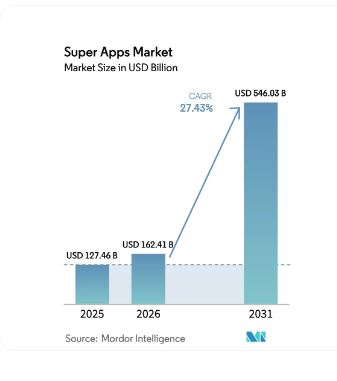
- The super apps market size is expected to reach USD 162.41 billion in 2026 and is forecast to reach USD 546.03 billion by 2031, with a 27.43% CAGR over 2026–2031.
- By platform, hybrid operating systems are projected to expand at a 31.74% CAGR through 2031.
- By device, wearables and IoT devices register the fastest 29.94% CAGR to 2031.
- By deployment type, Cloud Infrastructure (AWS / Google Cloud / Azure) held 84.25% revenue share in 2025 and is set to grow at 28.41% CAGR to 2031.
- By end-user, government and public-sector agencies exhibit the highest CAGR of 27.67% through 2031.
How Does the Grab Super App Work?
Before you develop an app like Grab, you must know its workflow. It helps you understand how the app works and how users can use it. Below is the working process of the Grab app, as explained by a multi-service mobile application development company.
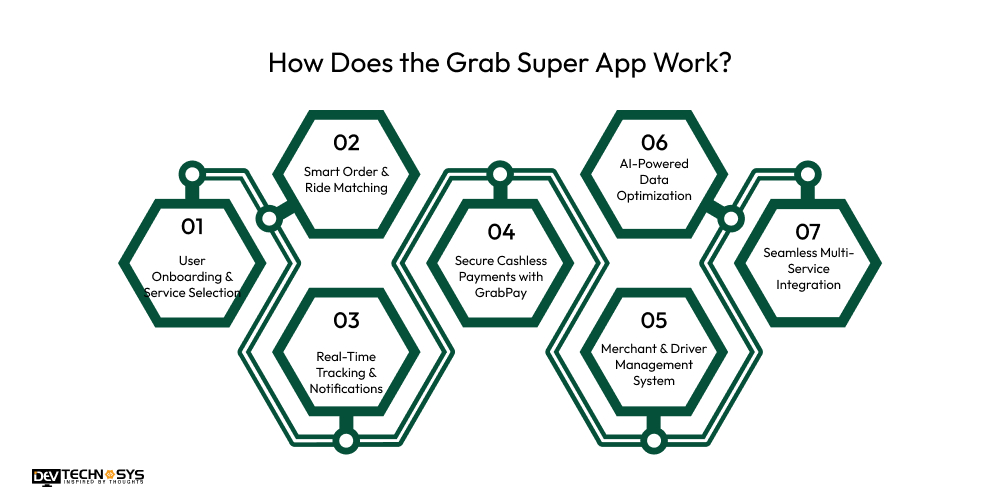
1. User Onboarding & Service Selection: Open the app, sign up in seconds, grant location access, and select the services you need in an instant. Whether it’s food delivery, rides, grocery shopping, parcel delivery, or digital payments, get all services in a single app for a smooth navigation experience.
2. Smart Order & Ride Matching: After placing an order or booking a ride, Grab’s intelligent algorithms connect users with the nearest available driver or merchant. It uses location, demand, estimated delivery time, traffic conditions, and service availability to assign drivers.
3. Real-Time Tracking & Notifications: Users can track rides or deliveries in real time, receive instant updates, and communicate directly with drivers or merchants for a hassle-free experience, greater transparency, and timely issue resolution.
4. Secure Cashless Payments with GrabPay: GrabPay allows fast and secure digital payments. Users can apply offers, earn rewards, and access financial services such as insurance and investments, ensuring seamless, cash-free, and trusted transactions.
5. Merchant & Driver Management System: Dedicated dashboards are used for pricing, menus, and order management. Drivers receive information like task alerts, optimized routes, and detailed earnings insights. It improves service quality and operational efficiency.
6. AI-Powered Data Optimization: Grab Super app development for startups and enterprises involves adding AI-powered optimization,which helps them grow and enhance customer satisfaction through AI and analytics. AI optimization improves delivery efficiency, pricing accuracy, demand forecasting, and personalized user recommendations.
7. Seamless Multi-Service Integration: Full integration of delivery, transport, and fintech services lets users switch back and forth between services with ease, without leaving the app. It creates a convenient, unified, and time-saving ecosystem.
What are the Top 10 Super Apps Like Grab Dominating the On-Demand Economy?
Grab is indeed one of the best apps for on-demand delivery and pickup, but it’s not the only one. If you are a fan of Grab and looking for more apps like this, take a look at the ist below. These Location-based service apps are dominating the on-demand services industry.
| App | Launch Year | Offerings | Platform |
| Uber | 2011 | Rides, food delivery, logistics | iOS, Android, Web |
| Lyft | 2012 | Rides, shared transport | iOS, Android |
| DoorDash | 2013 | Food, grocery, retail delivery | iOS, Android, Web |
| Curb | 2007 | Taxi rides, payments | iOS, Android |
| Bolt | 2013 | Rides, scooters, and delivery | iOS, Android, Web |
| Revolut | 2015 | Banking, payments, insurance, investments | iOS, Android, Web |
| Klarna | 2005 | Buy-now-pay-later, payments | iOS, Android, Web |
| Wingz | 2011 | Pre-booked rides | iOS, Android |
| Gojek | 2015 | Rides, food, delivery, e-wallet | iOS, Android |
| Rappi | 2015 | Food, groceries, errands, payments | iOS, Android |
1. Uber:
Uber is a leading multi-service super app platform that focuses on ride-hailing, food delivery (Uber Eats), package delivery, and financial services into a single ecosystem. Uber serves millions of users, along with rapid n expansion into new markets and services. It enhances user retention and engagement.
Industry Insights: As DriveMond stated, the Uber One subscription service saw 55% growth, reaching 46 million members who now account for 50% of total bookings.
2. Lyft:
Lyft is a perfec example of multi-service app development solutions. It serves as a model for on-demand platforms seeking to increase user engagement. It offers ride-sharing and food delivery services across various countries. Lyft acts as a model for on-demand platforms, prioritizing higher engagement. As a top Grab alternative, Lyft leverages AI and a microservices architecture to deliver a more personalized experience.
3. DoorDash:
DoorDash has established itself as the dominant leader in the U.S. on-demand delivery market, evolving from a restaurant-focused startup into a broader “super app” for local commerce. It prioritizes seamless, high-speed user experience, featuring live map tracking (Google Maps API/Mapbox), RESTful APIs & GraphQL APIs, in-app communication, and secure payment processing (Stripe/Braintree).
Industry Insights: According to a report by Business of Apps, DoorDash holds 60%-67% share of the food delivery market in the U.S as of 2024-2025, far outpacing competitors like Uber Eats and Grubhub.
4. Curb:
Curb super app development focuses on creating an all-in-one ecosystem integrating multiple on-demand services, such as ride-hailing, food delivery, and payments, into a single, unified platform. It connects over 100,000+ drivers across 65+ cities in the United States, Canada, and the United Kingdom. If you want to create an app like Grab or Curb, contact a reputed app on-demand service app development firm.
5. Bolt:
Bolt is a unified financial and commerce platform that acts as a “financial operating system.” It combines traditional banking, decentralized finance (DeFi), and AI-driven shopping into a single platform. As a top Grab Alternative, it integrates numerous services into a single interface, including ride-hailing, food and grocery delivery, parcel delivery, financial services, and micromobility. For bolt-like taxi booking and logistics app development, contact a reliable and experinced company.
Industry Indights: Statista’s latest reports state that as of early 2025, Bolt has gained revenue of approximately $6.82B to $8.4B.
Why Building a Super App Like Grab Is a Smart Business Move?
Grab app development 2026 brings various business benefits. It helps businesses secure multiple revenue streams, improve user loyalty, increase operational efficiency, and gain a competitive advantage. Important benefits for businesses include:
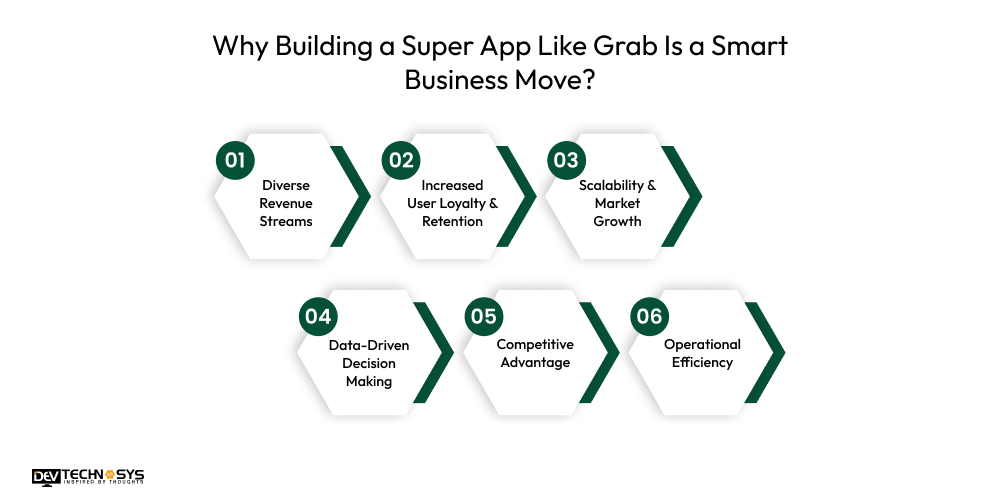
- Diverse Revenue Streams: In addition to in-app advertising, subscription fees, and financial services such as digital wallets, a grab multi-service platform also earns commissions on rides, meals, and deliveries.
- Increased User Loyalty & Retention: By providing several services (ride-hailing, food delivery, grocery, and payments) in a single app, it fosters convenience and recurring usage.
- Scalability & Market Growth: Businesses should build a super app like Grab to scale, enabling easy expansion into new services or cities and helping quickly capture market share.
- Data-Driven Decision Making: Better services and more individualized marketing are made possible by access to real-time analytics that help understand user behavior.
- Competitive Advantage: A feature-rich app that offers safe, on-demand services (such as secure payments and real-time tracking) puts the company ahead of more established rivals.
- Operational Efficiency: Streamlined operations through Payment Gateway Integration & Digital Wallets, in-app assistance, and an AI-based order-matching system save time and money.
What are the Key Development Steps to Build a Multi-Service Super App Like Grab?
The process to make an app like Grab includes market research and designing user flows for customers, drivers, and restaurant interfaces. Grab super app development process also incorporates cross-platform frameworks and implements iterative testing to ensure scalability and speed. Here’s the Grab app development guide with a step-by-step explanation.
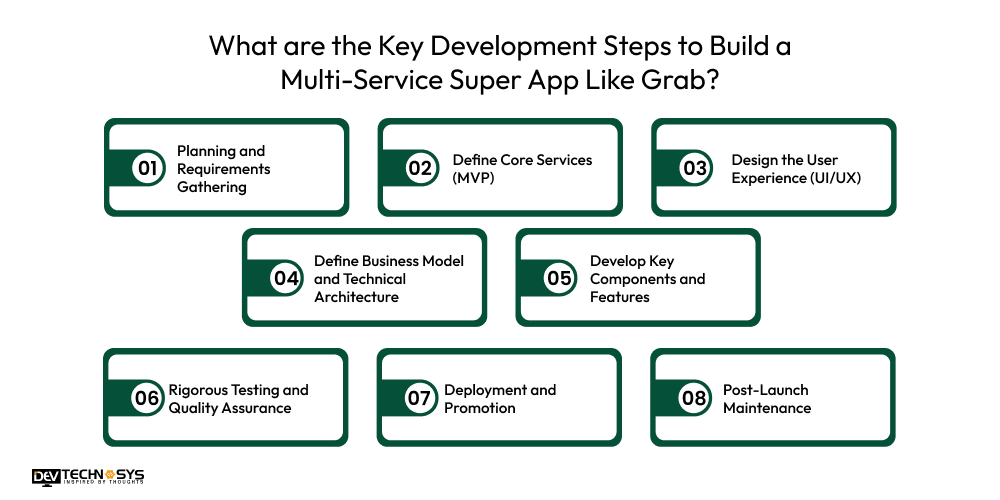
Step 1. Planning and Requirements Gathering
The first step to develop an app like Grab involves planning and gathering project requirements. Do thorough market research to know who your users are, what they need, and what features they want to see in the app. Study top competitors to know what their strengths and weaknesses are. Using agile methodology and project management helps make the mobile and web app development process smoother. This way, your Grab alternative app will meet user expectations.
Step 2: Define Core Services (MVP):
The next step in courier and logistics app development like Grab, is defining core services. Don’t make the mistake of launching all services at once. It is ok to start with high-frequency, core services to create a Minimum Viable Product (MVP). Some examples include ride-hailing + payments, or food delivery and courier. This MVP-first approach lowers risk, shortens time-to-market, allowing businesses to validate demand before expanding to super app ecosystem.
Industry Insights: Specialized MVPs can shorten time-to-market by 60% compared to constructing a whole product from scratch, according to a study by Intel Market Research.
Step 3. Design the User Experience (UI/UX)
The third step to develop an app like Grab is creating a stunning and intuitive UI/UX design. Create a unified interface that lets users seamlessly navigate diverse services without feeling overwhelmed. Through consistent branding, ensure your Grab similar app has a unified look and feel across all services. It builds brand recognition and user trust.
Designers from a top ride hailing app development company must create wireframes for key screens (e.g., app home, booking, and payment) to validate the flow before coding.
Step 4. Define Business Model and Technical Architecture
Business Model for Grab Taxi Clone App:
What is the business model of a ride-hailing company like Grab? Grab’s business model is centered on a “super app” strategy, acting as a multi-sided platform that connects users with drivers, merchants, and service providers. If you want to develop an app like Grab, make sure it provides ride-hailing, food delivery, and financial services. Grab ride hailing app generates revenue primarily through commissions (10-30%) on transactions, in-app advertising, subscription fees, and payment processing fees.
Industry Insights: Grab’s Fourth quarter Report states that through the commission model, Grab Takes 16% to 25% (up to 30% in some services) on rides, food, and deliveries.
From a technical perspective:
- Microservices Architecture: For a shopping app development like Grab, each service (rides, food, payments) operates independently. It ensures scalable mobile app development and improved readability.
- API-First Development: To make an app like Grab, ensure adding third-party integrations, and plan for future service expansion. An API-first approach ensures faster deployment of new services without disrupting existing workflows.
- Scalable Cloud Infrastructure: The best tech stack for building an app like Grab includes platforms such as AWS or Google Cloud that support high traffic, real-time operations, and rapid growth. The table below highlights the tech stack required to create an app like Grab.
| Category | Tools / Technologies |
| App Development | React Native, Flutter |
| Backend Services | Node.js, Spring Boot |
| System Architecture | Microservices, API-First |
| Database & Cache | PostgreSQL, MongoDB, Redis |
| Cloud-based backend | AWS, Google Cloud |
| Payments | Stripe, Razorpay |
| Maps & Tracking | Google Maps, WebSockets |
| Security | OAuth 2.0, JWT |

Step 5: Develop Key Components and Features
In the 5th step, eCommerce app development experts focus on building essential modules, including ride-hailing and delivery app features like user registration, service selection, real-time tracking, payment processing, and notifications. It also involves reviews, driver and merchant dashboards, admin panels, and analytics. Strong security, performance optimization, and scalability are critical to build an app like Grab.
Step 6: Rigorous Testing and Quality Assurance
The next step to build a transportation app like Grab is testing. Testing is a crucial process to ensure that all features and functionalities are working fine. goes beyond basic functionality. The testers from a top taxi booking app development company will test for performance, security, load testing, and usability testing. Quality Analysis ensures the app remains fast, stable, and secure, even with thousands of users simultaneously.
Step 7: Deployment and Promotion
After testing, it’s time to deploy the app on app stores. This is the phase in which the product transitions from development to a live environment, becoming accessible to end users. Monitoring tools are set up to monitor the performance and errors. Marketing efforts help with early adoption. marketing strategies, which involve digital ads, referral programs, and merchant onboarding campaigns.
Step 8: Post-Launch Maintenance
After deployment, it is crucial to offer ongoing maintenance. includes bug fixes, performance optimizations, feature updates, security updates, and the addition of new services based on user feedback and analytics. Continuous improvement helps the app evolve into a true super app over time.
By now, you might have an idea of how to create an app like Grab Taxi. In the above section, we have explained the entire process in simple steps. To further refine your understanding, we’ll discuss the core features required to build an app like Grab.
What is the Feature Checklist for Grab Super App Development?
The features (user panel, driver panel, and admin panel) play a crucial role in improving the performance of the Grab ride-sharing app. Given below are some of the advanced features are required to build a Grab-like super app. Take a look:
| Customer App Features | Driver App Features | Admin Panel Features |
| User Registration & Login | Driver Registration & KYC | Admin Dashboard |
| Service Selection | Ride Request Management | User, Merchant Management |
| Real-Time GPS Tracking | Navigation & Route Optimization | Trip & Order Monitoring |
| Fare Estimation | Earnings & Payout Tracking | Commission & Pricing Control |
| Multiple Payment Options | Accept / Reject Requests | Payment & Revenue Reports |
| In-App Notifications | In-App Chat & Notifications | Analytics & Performance Insights |
| Ratings & Reviews | Driver Availability Toggle | Ratings, Dispute Handling |
| Ride / Order History | Ride History | Content and Promotions Management |
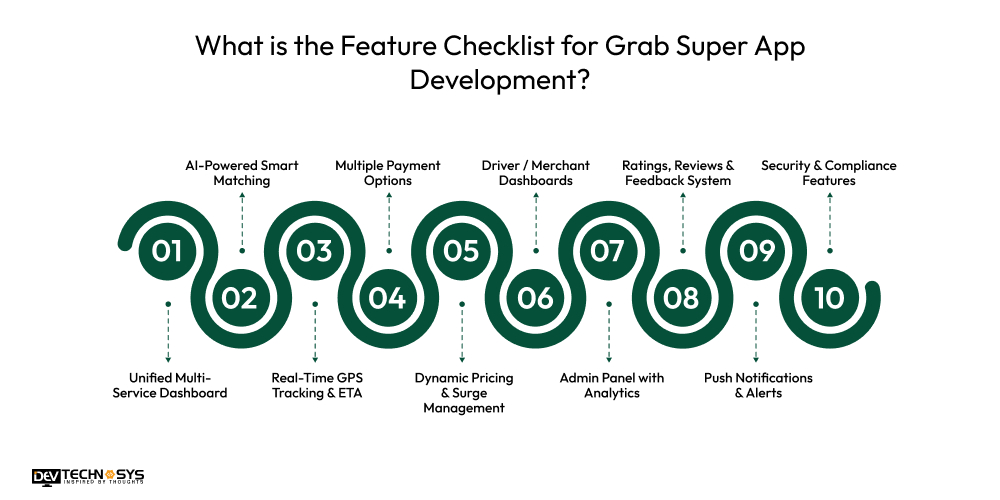
1. Unified Multi-Service Dashboard
The multi-service dashboard feature gives users access to ride-hailing, food delivery, courier services, and payments in one app. Users can switch between services without exiting the app, creating a seamless experience.
2. AI-Powered Smart Matching
Use of an AI-powered smart-matching feature leads to optimized rides, food and grocery deliveries, and service allocation. AI smart-matching enhances user experience and operational efficiency by providing faster response times, efficient route planning, and better use of drivers and resources.
3. Real-Time GPS Tracking & ETA
GPS Tracking & Geolocation APIs is probably one of the most crucial Grab app features to add in grab app alternative. App uses GPS for real-time data processing (WebSockets / Firebase) and track the location of drivers, deliveries, and orders live with accurate ETAs. It keeps users notified and informed.
Industry Insights: Approximately 92% of users cite real-time tracking as a key reason for loyalty to ride-hailing and delivery apps. Source: VentaGenie
4. Multiple Payment Options
Adding multiple payment methods to your Brab super app platform is a wise choice. Payment options include Wallet, cards, UPI, BNPL, and in-app cashless transactions. It gives users the power to pay however they want.
Want a chatbot demo or pricing? Fill the form and talk to our experts today.
Pick what you need below — you can select more than one — then tap Get detail to continue.
-
Chatbot demo dashboard
-
Cost to develop an app
-
Industry report
-
Case study
5. Dynamic Pricing & Surge Management
This feature automatically adjusts fares or delivery fees depending on real-time demand, traffic conditions, and service availability. Dynamic pricing helps maximize driver earnings, balance supply and demand, and ensure fair pricing in high demand. To build a food delivery app like Grab, you need to incorporate this feature.
6. Driver / Merchant Dashboards
Experts must build a transportation app like Grab with a merchant dashboard feature. Dedicated dashboards turn real-time insights into earnings, trips, order history, and performance metrics. Drivers and merchants can monitor activity, track payments, manage availability, and improve service efficiency directly from the app.
7. Admin Panel with Analytics
Build a shopping app like Grab with adam panel admin panel, which is an important feature that helps manage users, services, commissions, and promotions, and monitor KPIs. Advanced analytics help make data-driven decisions to optimize operations and improve service efficiency.
8. Ratings, Reviews & Feedback System
This feature ensures high service quality and builds customer trust. Users can rate rides, deliveries, or services, leave feedback, and report issues. At the same time, admins can monitor reviews to identify areas for improvement. If you want to build a grocery delivery app like Grab, adding this feature is essential.
9. Push Notifications & Alerts
The notifications feature sends real-time updates on rides, deliveries, promotions, and app announcements. They keep users, drivers, and merchants informed. Push notifications are used make an app like Grab to increase engagement, drive repeat usage, and ensure timely communication.
10. Security & Compliance Features
Security is essential, so add measures like KYC verification, fraud detection, end-to-end encryption, and PCI-DSS-compliant payment processing. Security and compliance features protect user data, ensure secure transactions, and build trust in your super app.
Contact a top logistics app development company to build a next-gen super app like Grab for your business using these advanced features.
What is the Cost to Build a Taxi Booking App Like Grab?
Want to know how much does it costs to develop an app like Grab? The cost to develop a taxi-booking app like Grab in 2026 ranges from $8,000 to $25,000+, depending on feature complexity, the number of platforms, and the location/expertise of the development team. The basic cost to make an app like Grab ranges from $8,000 to $12,000. In contrast, a full-featured grab ride share app developed by a top ride-hailing app development company with AI-based, multi-service capabilities can cost over $25,000.
| App Type / Scope | Estimated Cost (USD) |
| Basic MVP Taxi App | $8,000 – $12,000 |
| Standard / Mid‑Tier App | $12,000 – $16,000 |
| Full‑Featured Super App | $16,000 – $20,000+ |
| Enterprise‑Level / Large Scale | $20,000 – $25,000+ |
There are various factors, like features, app type, platform type, design, and development team location, that can affect the cost to create an app like Grab. Here are some of the major ones to consider:
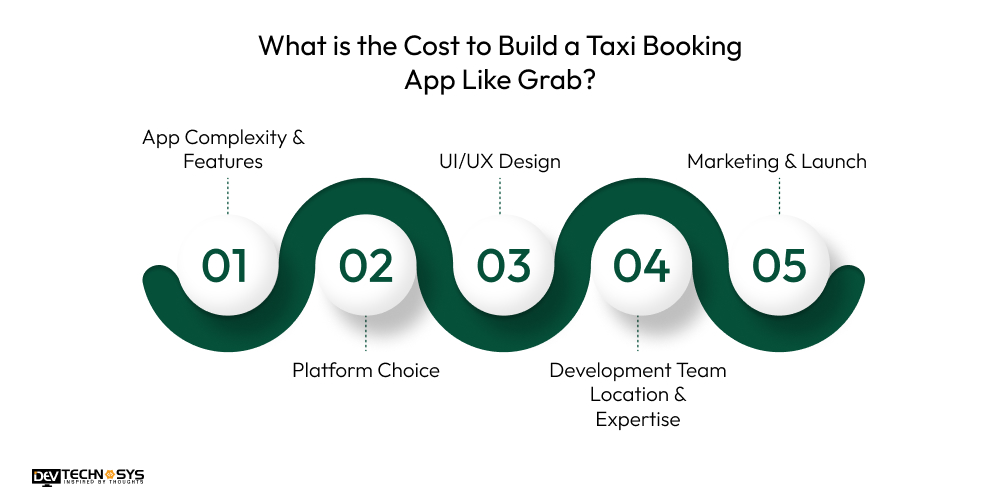
1. App Complexity & Features
Adding multiple modules like ride-hailing, food delivery, courier services, digital wallet, AI-based matching, and in-app chat increases the Grab-like app development cost More advanced features require additional coding, testing, and backend support, which directly impacts the overall budget and timeline.
| Feature Scope | Estimated Cost (USD) |
| Basic ride-hailing only | $4,000 – $6,000 |
| Ride-hailing + food delivery | $6,000 – $8,000 |
| Full multi-service (rides, delivery, wallet, AI features) | $8,000 – $10,000 |
2. Platform Choice
Choosing whether to develop for iOS, Android, or both affects the total cost. Cross-platform frameworks like Flutter or React Native can reduce development time and expenses, while native apps offer better performance but require separate development for each platform, increasing costs.
| Platform | Estimated Cost (USD) |
| Single platform (iOS or Android) | $2,000 – $3,500 |
| Cross-platform (Flutter / React Native) | $2,500 – $5,000 |
| Native both platforms (iOS + Android) | $5,000 – $6,000 |
3. UI/UX Design
Custom, intuitive UI/UX with animations, transitions, and smooth navigation costs more than standard templates. Investing in high-quality design enhances user experience and retention but requires more design resources, prototyping, and iterations, increasing both time and budget for app development.
| Design Type | Estimated Cost (USD) |
| Basic templates / standard screens | $1,500 – $2,500 |
| Custom design, animations, and smooth navigation | $2,500 – $4,000 |
4. Development Team Location & Expertise
Developer rates from top vary by region and experience level. Hiring highly skilled teams from a top food delivery app development company ensures faster delivery, higher code quality, and fewer errors, but comes at a premium. Offshore or less experienced teams may reduce costs, but could extend timelines or affect app quality.
| Team Type | Estimated Cost (USD) |
| Offshore / junior developers | $2,500 – $4,000 |
| Onshore/experienced developers | $4,500 – $7,000 |
5. Marketing & Launch
Launching an app involves costs beyond development, including app store submissions, promotional campaigns, initial user acquisition, and advertising. Proper marketing ensures downloads, engagement, and adoption, and these expenses must be factored into the total budget for building a Grab-like super app.
| Marketing Activity | Estimated Cost (USD) |
| App store submission | $200 – $500 |
| Initial promotional campaigns | $500 – $1,500 |
| Paid ads/user acquisition | $500 – $1,000 |
What Business Monetization Are Models Used For Grab-Style Apps?
Monetization is a crucial aspect that interests businesses the most. Here ,we have mentioned some crucial strategies to generate money from grab clone apps. Take a look at these strategies and implement them to earn lucrative revenue.
| Revenue Stream | Revenue Contribution | Growth Trend |
| Food & Grocery Delivery | ~40% of total revenue | ~15% YoY growth |
| Mobility & Ride-Hailing | ~35% of total revenue | ~12% YoY growth |
| Fintech & Payments | ~20% of total revenue | ~50% YoY growth |
| Ads & Subscriptions | ~5% of total revenue | ~40% YoY growth |
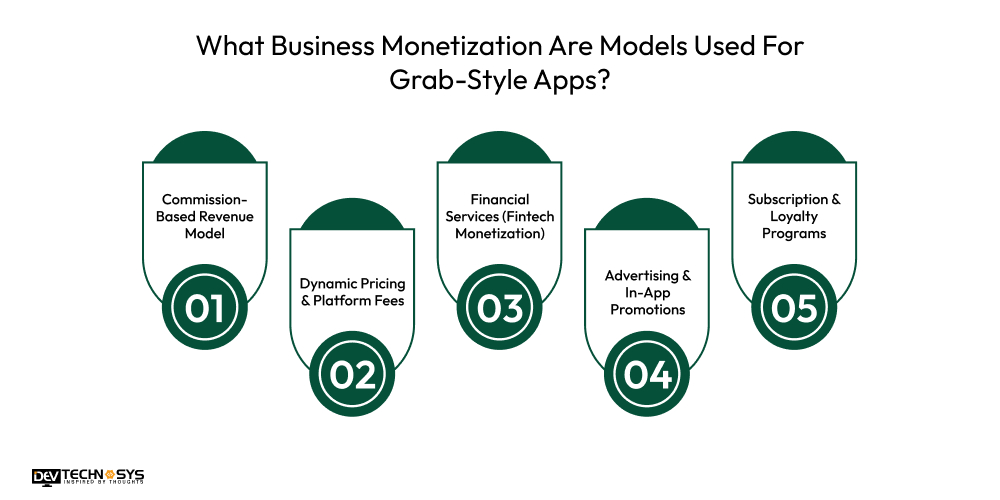
1. Commission-Based Revenue Model
The commission model is the primary transaction-based monetization model, in which the platform earns a percentage from service providers such as drivers, restaurants, and merchants. Ride-hailing typically charges a 10–20% commission per trip, while food and mart deliveries charge 15-25% per order, plus logistics service fees.
2. Dynamic Pricing & Platform Fees
Grab-style apps use AI-driven dynamic pricing to maximize revenue during peak demand. Surge pricing increases fares by 1.2x–2.0x during rush hours or adverse conditions. Additional service, booking, and cancellation fees ($0.50–$2) further support platform maintenance and profitability.
3. Financial Services (Fintech Monetization)
Fintech acts as a high-margin revenue stream by offering digital wallet integration in apps, payments, lending, and insurance services. Platforms earn through merchant discount rates (1–2%), interest margins from BNPL or loans, insurance commissions, and transaction fees on wallet recharges and in-app payments.
4. Advertising & In-App Promotions
With a large active user base, Grab-style apps monetize through targeted advertising. Revenue comes from sponsored listings, in-app banner ads, and merchant-funded promotional campaigns that boost visibility and order volume, creating a win-win model for merchants and the platform.
5. Subscription & Loyalty Programs
Subscription models provide recurring revenue while improving user retention. Users pay monthly fees ($2–$3) for discounted rides and deliveries, while drivers or merchants subscribe for benefits like lower commissions, priority bookings, enhanced analytics, or premium placement across the platform.
Future Trends in Super App Development
The future of super apps like Grab is driven by AI-native customization, embedded Finance, and the evolution into vertical-specific, mini-app ecosystems to increase user retention. The main emerging trends shaping the future of Grab-like apps in 2025-2026 include:
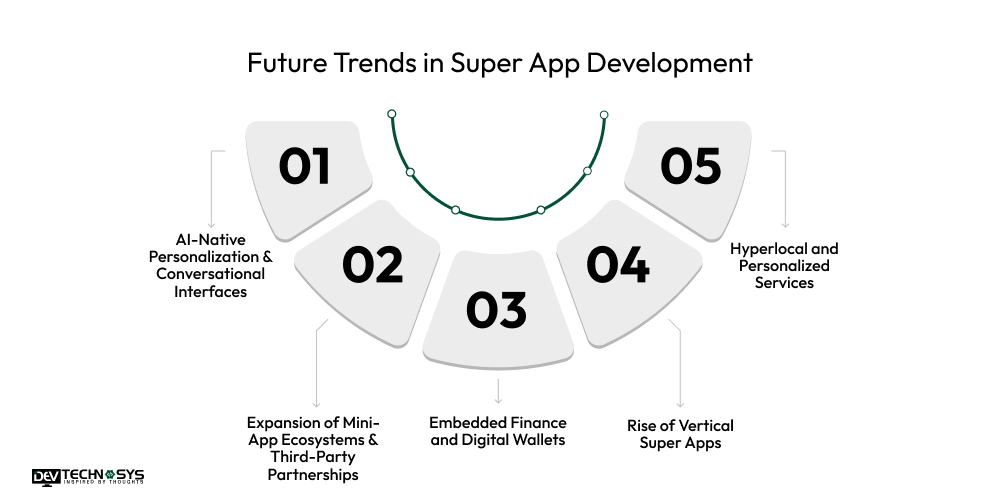
● AI-Native Personalization & Conversational Interfaces:
Beyond simple chatbots, AI has moved from service aggregation to intelligent, predictive experiences. AI makes the food delivery app like Grab more intuitive, responsive, and secure with customized UI, automates workflows, and provides tailored services.
● Expansion of Mini-App Ecosystems & Third-Party Partnerships:
Super apps like Grab and Uber are becoming platforms that host mini-apps within the main app, allowing third-party partners to seamlessly integrate services without users leaving the app, thereby increasing user engagement.
● Embedded Finance and Digital Wallets:
Financial services, including UPI-style payments, Buy Now, Pay Later, and insurance, are moving from the periphery to the core. Additionally, digital wallets are driving daily user engagement.
● Rise of Vertical Super Apps:
Instead of being “everything for everyone,” new super apps are focusing on specific industries, such as Healthcare (telemedicine + records), Work (collaboration + productivity), or Finance. This approach enables deeper feature integration, and higher user trust within a single domain.
● Hyperlocal and Personalized Services:
Customizing services to specific neighborhoods and communities, moving away from one-size-fits-all, is becoming a key differentiator for user relevance. AI-driven personalization and local data help apps deliver faster services, smarter recommendations, and better user retention.
Conclusion
Building an app like Grab requires a well-planned strategy, the right technology stack, and a phased development approach. Start with core services such as ride-hailing or food delivery, focus on seamless user experience, scalable architecture, and secure payments. Contact a top multi-service app development company like Dev Technosys to give shape to your dream of developing a super app.
Frequently Asked Questions
Find answers to the most common questions related to this article.
The cost to build a Grab mobile app depends on features, platforms, and region. A basic MVP can cost between $8,000 and $25,000, while a full-scale super app with multiple services and advanced features may require a higher investment.
Grab app development typically takes 3 to 6 months for an MVP, including design, development, and testing. A fully featured super app with ride-hailing, food delivery, and fintech services can take 6 to 12 months or more.
Essential features required to build an app like Grab include user registration, service selection, real-time GPS tracking, secure payments, driver and merchant dashboards, admin panel, ratings and reviews, notifications, and analytics for performance monitoring.
Popular technology stack choices for developing alternative platforms include Flutter or React Native for cross-platform development, Node.js or Django for backend, AWS or Google Cloud for hosting, Firebase for notifications, and Stripe or Razorpay for secure payments.
Yes. Launching with an MVP is recommended. It helps validate the market, reduce development costs, and gather user feedback before scaling to additional services like food delivery, grocery, or fintech solutions.