













“Authentic Voices Only”
Have you ever wished there was a special app just for you and your friends who share the same hobbies or ideas?
Well, guess what.
You can actually build one!
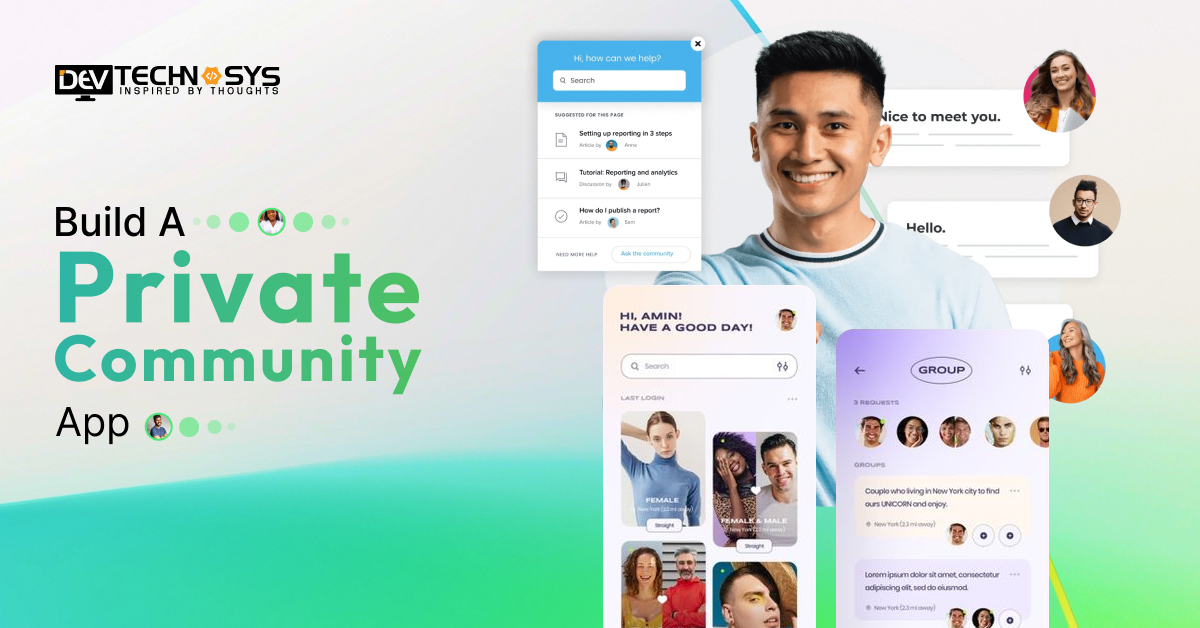
A private community app is a cool space where only invited people can chat, share, and connect safely. Whether you’re into gaming, art, books, or saving the planet, a private app helps bring your group closer without the noise of public social media.
With rising demand for secure, focused platforms, private community apps valued at $0.3 billion in 2024 are projected to reach a market size of $0.64 billion by the year 2033.
Private community app development offers businesses a profitable path, supported by clear trends in user engagement and growth.
In this blog, we will provide detailed information about how to build a private community app for like-minded people.
What is a Private Community App?
Private community apps are online spaces where a small group of people can share, meet, and talk to each other in a safe, only-invited area. It’s not like public social media; it has limited access, better privacy, and talks that are focused on shared hobbies or goals.
An app like Reddit allows businesses, artists, clubs, and unique groups that want to connect with each other in a useful way without outside distractions or unwanted content to do so.
- Invite-Only Access
- User Profiles
- Event Management
- Polls & Surveys
Future and Present Market Projections of Private Community Applications
- There will be a market for $0.64 billion worth of private community apps by 2033, up from $0.3 billion in 2024.
- The market for online community interaction platforms and software is projected to grow at a rate of 7% per year until 2033.
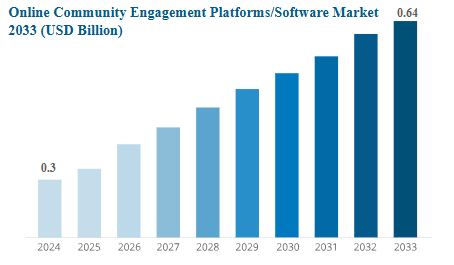
- The market for online community interaction tools and software is mainly driven by people who work from home and work together digitally.
- You should know that the online community interaction platforms and software market is divided into segments based on the type of platform or software used. These segments are cloud-based and on-premise.
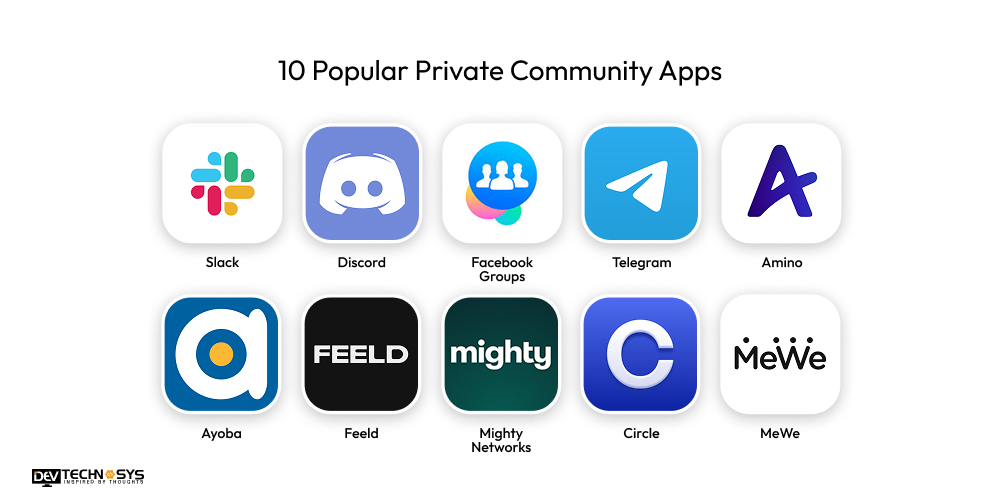
10 Popular Private Community Apps
Check out these 10 well-known private community apps that let you make safe, interesting, and purpose-driven spaces for people with similar interests. These apps are great for brands, creators, educators, and niche communities.
App Name |
Launch Year |
Downloads |
User Rating |
Platform Availability |
| Slack | 2013 | 10M+ | 4.7 | iOS, Android, Web |
| Discord | 2015 | 100M+ | 4.7 | iOS, Android, Web |
| Facebook Groups | 2010 | 1B+ | 4.3 | iOS, Android, Web |
| Telegram | 2013 | 500M+ | 4.5 | iOS, Android, Web |
| Amino | 2012 | 13M+ | 4.3 | iOS, Android, Web |
| Ayoba | 2019 | 35M+ | 4.5 | iOS, Android, Web |
| Feeld | 2014 | 1.6M+ | 4.4 | iOS, Android, Web |
| Mighty Networks | 2017 | 10M+ | 4.6 | iOS, Android, Web |
| Circle | 2020 | 1M+ | 4.7 | iOS, Android, Web |
| MeWe | 2012 | 1M+ | 4.4 | iOS, Android, Web |
Why Today’s Businesses Want to Invest in Private Community App Development?
In today’s digital-first world, businesses are shifting away from traditional social media and moving towards more focused, controlled environments, like private community apps. Here are five key reasons why modern businesses are increasingly investing in private community or messaging app development:
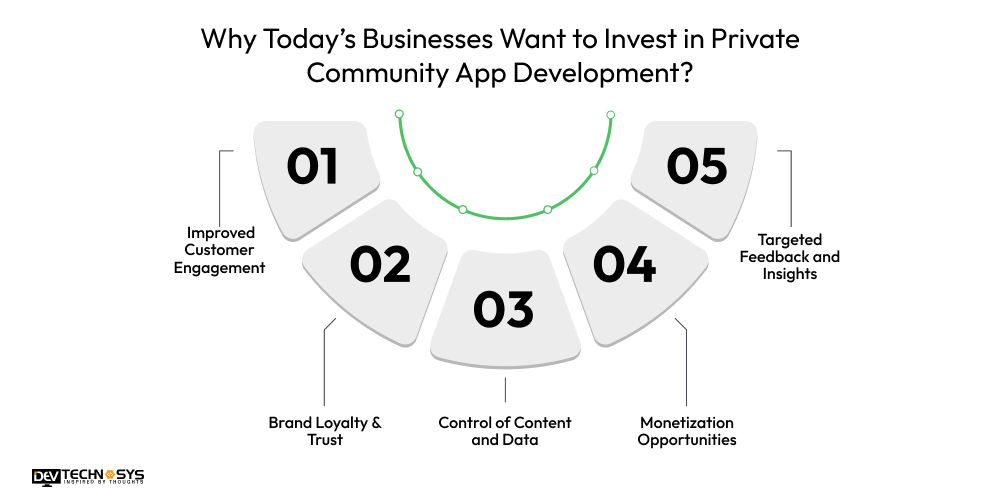
1. Improved Customer Engagement
Unlike public platforms, where material is readily forgotten, social media app development solutions enable businesses to engage their target audience directly in a distraction-free environment. Brands may connect closely with their consumers and create meaningful two-way conversations by using tools such as forums, live chats, and surveys.
2. Brand Loyalty & Trust
Businesses may increase trust and brand loyalty by providing members with an exclusive location. Members feel more appreciated and connected when they are part of a private group where their thoughts and presence are important. This sense of belonging frequently leads to higher client retention.
3. Control of Content and Data
Private community on-demand app development solutions provide businesses complete control over what is posted, how it is monitored, and who may see it. Unlike public platforms that commercialize user data, private communities offer a safe environment in which businesses may preserve their members’ privacy while efficiently managing their content strategy.
4. Monetization Opportunities
Businesses may monetize private community applications in a variety of ways, including subscription models and premium memberships. These platforms also enable the selling of unique content, events, or items, resulting in new income streams directly from interested users.
5. Targeted Feedback and Insights
Businesses may gain useful data via direct interactions, surveys, and habit monitoring within the app. According to the online community platforms development company, this feedback loop enables organizations to enhance goods, services, and customer experiences in real time, providing a competitive advantage.
How Exactly Can AI Make the Private Community App Work Better?
- AI detects and removes harmful or inappropriate content quickly, ensuring a safe and respectful environment for all community members.
- AI suggests relevant posts, groups, or events based on user behavior, boosting engagement and keeping members interested and active.
- AI improves search results by understanding user intent, helping members find topics, people, and content more effectively.
- AI reads the emotional tone of messages to detect negativity or dissatisfaction early, helping admins respond proactively.
- AI analyzes member behavior to forecast interest in upcoming events, helping organizers plan and target effectively.
Want a chatbot demo or pricing? Fill the form and talk to our experts today.
Pick what you need below — you can select more than one — then tap Get detail to continue.
-
Chatbot demo dashboard
-
Cost to develop an app
-
Industry report
-
Case study
7 Robust Steps to Build a Private Community App
Build a Private Community App: Make your own safe and welcoming space where people with similar interests can meet, share ideas, chat, and grow together. This is great for friends, groups, creators, or businesses that want more privacy and stronger connections.
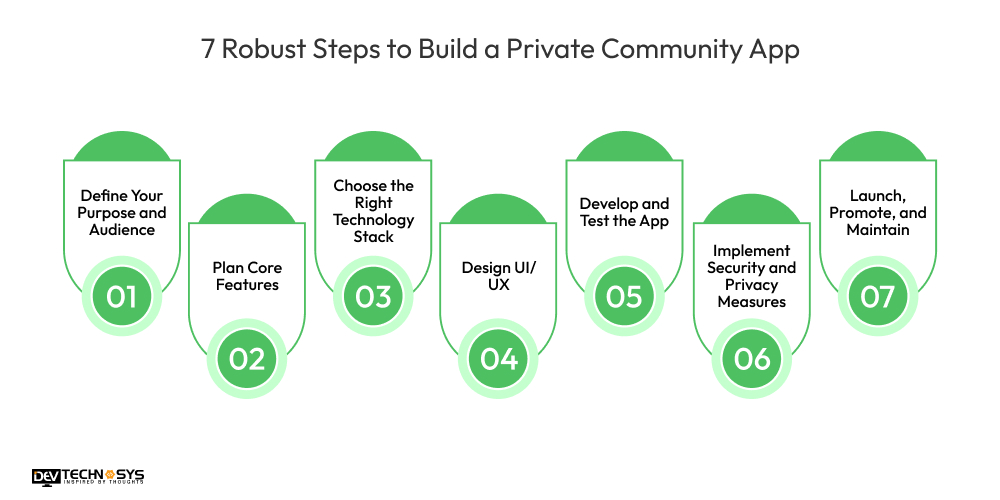
1. Define Your Purpose and Audience
Hire professional developers from mobile app development firm to identify the main goal of your app and who will use it. Understanding your target audience’s interests and needs helps shape features, design, and content to create a space that truly connects like-minded people.
| What common interests connect my audience? |
| How will users benefit from joining? |
| What goals do I want to achieve? |
2. Plan Core Features
Decide which features your app needs, such as member profiles, private messaging, discussion forums, content sharing, and admin controls. Focus on tools that foster secure interactions and engagement, ensuring users feel safe and involved within the community.
| What main features does my app need? |
| Should there be event or poll features? |
| Should users have profiles? |
3. Choose the Right Technology Stack
Select programming languages, frameworks, and databases that best suit your app’s scale and complexity. Hire an Android applicatoin development company to consider scalability, security, and cross-platform compatibility (iOS, Android, web) to provide a smooth user experience across devices.
| What programming languages fit my app’s needs? |
| Should I build native or cross-platform? |
| Do I need real-time messaging features? |
4. Design UI/UX
Create an intuitive, visually appealing design with easy navigation. A clean interface helps users find content quickly and engage with others effortlessly. Pay attention to accessibility and mobile responsiveness for wider reach.
| Is the design simple and clear? |
| Is the color scheme consistent and friendly? |
| Have I considered accessibility for all users? |
5. Develop and Test the App
In the fifth stage of Android or iOS app development services, begin coding your app, integrating planned features step-by-step. Conduct thorough testing to identify bugs, usability issues, and security flaws. Iterative testing and feedback loops ensure a reliable, smooth, and secure app experience.
| Have I started coding core features? |
| Is the app running smoothly on all platforms? |
| Are there any bugs or glitches? |
6. Implement Security and Privacy Measures
Add strong authentication, data encryption, and privacy controls to protect user information. Make sure only approved members can join and participate, maintaining the private, safe atmosphere your community expects.
| Do I have secure login methods? |
| Are privacy settings available for users? |
| Is user activity protected from outsiders? |
7. Launch, Promote, and Maintain
Move to the last social media app development services, release your app to your target audience, promote it through marketing channels, and gather user feedback. Regularly update the app with improvements, new features, and security patches to keep the community thriving and engaged.
| Is the app ready to launch? |
| How will I promote the app? |
| Are there support options for users? |
10 Must-Have Advanced Features of Private Community App
To truly stand out and foster meaningful engagement, a private community app must go beyond basic functions. Here are 10 advanced private community app features that elevate user experience and community value:
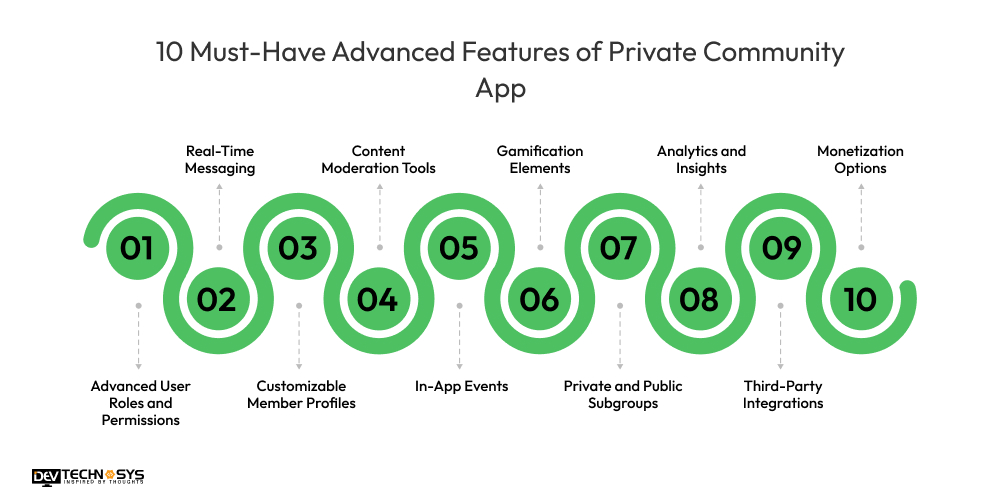
1. Advanced User Roles and Permissions
The mobile app for private groups assigns several access levels to govern who may post, moderate, or adjust settings, ensuring that operations run smoothly and safely.
2. Real-Time Messaging
A private social network app offers instant chat and push alerts, keeping users engaged and informed about new posts, responses, and announcements in real time.
3. Customizable Member Profiles
An app for like-minded individuals allows users to establish extensive profiles with biographies, interests, and tags to help members connect based on common interests.
4. Content Moderation Tools
The members-only social app offers automated filters, report mechanisms, and moderator dashboards that contribute to a courteous and safe atmosphere.
5. In-App Events
Tribe community app increases participation and establishes community culture, hosts events, webinars, or live Q&A sessions within the app.
6. Gamification Elements
Introduce badges, points, or leaderboards to reward participation, stimulate contributions, and enhance the app’s interactivity.
7. Private and Public Subgroups
A secure community chat app allows users to join or establish topic-specific subgroups for concentrated conversations without overwhelming the mainstream.
8. Analytics and Insights
The private discussion app provide administrators with statistics on user activity, engagement trends, and popular content to help them make better decisions.

9. Third-Party Integrations
Connect with tools such as Zoom, Google Calendar, or payment gateways to enhance the user experience and functionality.
10. Monetization Options
Enable premium memberships, paywalled content, or donation options to help creators and make cash.
The Cost to Build a Private Community App
The cost to develop a private community app can range from $8,000 to $25,000 or more, depending on features, complexity, design, and development team location. Basic apps with standard features may cost around $10,000–$15,000, while more advanced apps with real-time chat, custom design, and integrations can reach $25,000+.
Ongoing costs include maintenance, server hosting, and updates. Choosing between custom private community platform development and using no-code/low-code platforms also affects the cost to develop a mobile app. Planning carefully and prioritizing core features helps manage costs while still delivering a high-quality, secure user experience.
Cost to Build a Private Community App
Private Community App Development
|
Estimated Cost |
Time Frame |
Basic Mobile App Development
|
$8000 – $12000 | 2 to 4 Months |
Mid-Premium Mobile App Development
|
$13000 – $21000 | 4 to 8 Months |
High-Premium Mobile App Development
|
$25000+ | 9+ Months |
Private Community App Development Costs Can Be Affected By Key Factors
Key factors like features, design, platform, and team location can affect the cost to create a social media app. Knowing these factors can help you plan better, stay within budget, and make a scalable, high-quality app that meets the needs of your community.
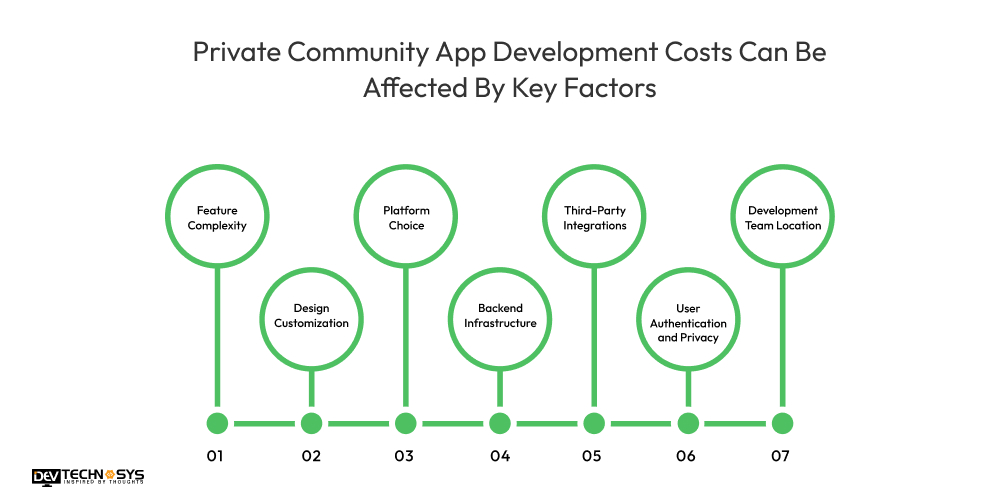
1. Feature Complexity
Refers to the app’s variety and depth of features, such as chat, forums, AI, live streaming, and file sharing. More complicated features necessitate more private community platform development time and testing, which immediately raises costs, particularly when incorporating real-time communication, analytics, or highly interactive user interfaces.
Feature Level |
Examples |
Estimated Cost (USD) |
| Basic Features | User profiles, posts, comments, and likes | $5,000 – $7,000 |
| Intermediate Features | Group chats, polls, events, and file sharing | $8,000 – $12,000 |
| Advanced Features | Real-time chat, AI, live streaming, custom feed | $15,000 – $20,000 |
2. Design Customization
The layout, color palette, icons, animations, and responsiveness of the user interface all contribute to the app’s appearance and feel. A truly unique design involves more effort and creativity than pre-built templates, which increases the social media app development cost. It guarantees that the app is consistent with your brand identity and user experience expectations.
Design Type |
Details |
Estimated Cost (USD) |
| Template-Based UI | Standard layouts, minimal customization | $2,000 – $4,000 |
| Semi-Custom UI | Custom colors, fonts, and basic layout changes | $4,000 – $8,000 |
| Fully Custom Design | Unique branding, animations, and responsive design | $8,000 – $12,000
|
3. Platform Choice
Choosing between iOS, Android, or both platforms affects the private community app development cost. Building a native app for each platform costs more than utilizing cross-platform frameworks like Flutter or React Native. The decision is determined by the devices used by your intended audience, as well as the required app performance and responsiveness.
Platform Type |
Details |
Estimated Cost (USD) |
| Single Platform | iOS or Android only | $5,000 – $10,000 |
| Cross-Platform | React Native, Flutter | $10,000 – $15,000 |
| Native Both | Separate native apps for iOS and Android | $15,000 – $20,000 |
4. Backend Infrastructure
It describes the server, database, and application logic that power the program. A robust backend enables user administration, content storage, and real-time functionality. Costs rise with complexity, scalability, security, and integration requirements. A reliable backend guarantees stable performance despite an increase in user volume.
Backend Type |
Details |
Estimated Cost (USD) |
| Basic Backend | User auth, content storage | $3,000 – $7,000 |
| Scalable Backend | APIs, messaging, notifications, secure hosting | $7,000 – $10,000 |
| Custom Infrastructure | Real-time, cloud-native, admin panels | $10,000 – $15,000
|
5. Third-Party Integrations
Using external services like as payment gateways, analytics tools, video conferencing, or email systems improves functionality while increasing costs. These connections make development easier, but they may need license costs and additional private community platform development effort to set up, test, and ensure they operate properly within your app.
Integration Type |
Examples |
Estimated Cost (USD) |
| Basic APIs | Google Maps, Calendar, Mailchimp | $1,000 – $3,000 |
| Payments & Analytics | Stripe, PayPal, Google Analytics | $3,000 – $6,000 |
| Video, CRM, AI Tools | Zoom, HubSpot, ChatGPT, Firebase | $6,000 – $10,000 |
6. User Authentication and Privacy
Secure login, multi-factor authentication, and data protection are among the measures used to safeguard the security of user information. Compliance with privacy rules such as GDPR increases private community platform development time. Strong privacy features increase user confidence, but they must be carefully planned and implemented to fulfill legal and technological requirements.
Security Level |
Features |
Estimated Cost (USD) |
| Basic Login | Email/password, forgot password | $1,500 – $3,000 |
| Enhanced Security | OTP, social login, profile verification | $3,000 – $5,000 |
| Full Privacy Features | GDPR, encryption, activity logs | $5,000 – $7,000
|
7. Development Team Location
The geographical location of your private online community platform development team significantly influences the cost to create a mobile app. Developers in North America or Europe charge higher rates than those in Asia or Eastern Europe. While prices vary, it is critical to balance them with experience and communication to achieve excellence.
Region |
Average Hourly Rate (USD) |
Estimated Project Cost |
| South Asia (India) | $10 – $30/hr | $8,000 – $25,000 |
| Eastern Europe | $40 – $60/hr | $25,000 – $40,000 |
| Western Europe / US | $80 – $100/hr | $50,000 – $80,000+ |

How to Make Money From Private Community Apps?
Building a private community app is not just about connecting like-minded people, it can also be a profitable venture. Here are five effective ways to monetize your app:
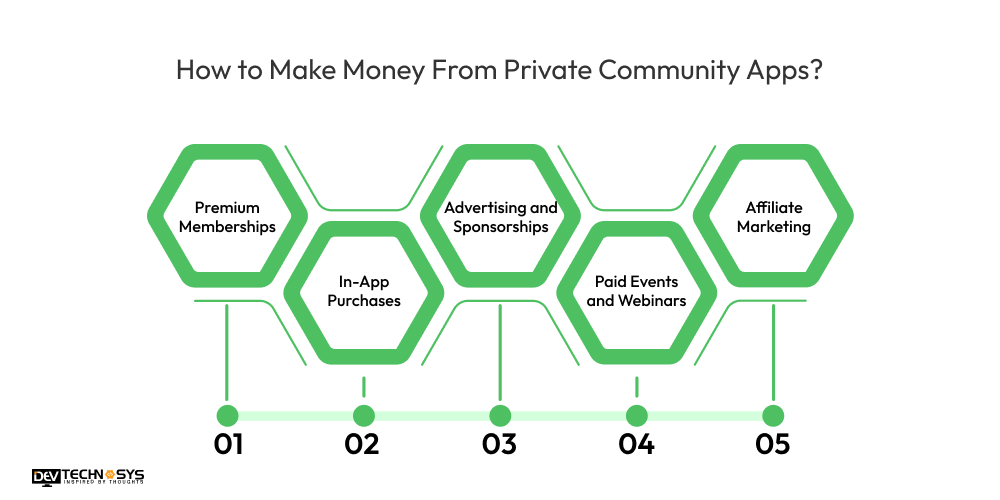
1. Premium Memberships
Provide free basic access, but charge for premium services. These might include unique content, sophisticated tools, or access to exclusive groups and events. This subscription model generates consistent income while encouraging consumers to participate more fully.
2. In-App Purchases
Allow members to purchase digital items such as badges, stickers, and virtual presents. These microtransactions improve the user experience while earning more cash. You may also sell downloaded products, like eBooks or courses, directly from the app.
3. Advertising and Sponsorships
Carefully integrated advertising or sponsored articles can generate cash without interfering with the user experience. Partner with businesses that are relevant to your community’s interests. Sponsored events and promotions provide organizations with targeted marketing possibilities while also providing value to its users.
4. Paid Events and Webinars
Organize exclusive live events, seminars, or webinars that people may pay to attend. According to the chatbot development services provider, these might be educational, entertaining, or networking events that provide unique value to your community and generate new money.
5. Affiliate Marketing
Promote items or services from partner companies and earn commissions on sales made via your app. Share relevant affiliate links in blogs, emails, or special offers to add value while also monetizing user activity.
Conclusion
Building a private community app for like-minded people is a great way to bring people together safely and privately. It needs careful planning, the right features, and a simple design. Working with a good social media app development company can help you create an app that is user-friendly and secure.
This company can guide you through choosing technology, building the app, and launching it successfully. In the end, a well-made app helps users connect, share, and grow their community easily and happily.
Frequently Asked Questions
Q1. How Much Does it Cost to Build a Private Community App?
The cost to develop a private community app varies from $8,000 to $25,000+, depending on features, design, platform choice, and development team location. Maintenance and updates add to ongoing expenses.
Q2. How Long Does It Take to Create a Private Community App?
To create a private community app, it typically takes 3 to 6 months, depending on feature complexity, design, platform choice, and development team size. More advanced apps with custom features may require longer private community mobile app development time.
Q3. Which Technologies Are Used to Make a Private Community App?
Technologies to make a private community app, it include React Native or Flutter for cross-platform development, Swift for iOS, Kotlin for Android, Node.js or Ruby on Rails for backend, and databases like Firebase or MongoDB.
Q4. How Do I Promote My Private Community App?
Promote your private community app using social media marketing, influencer partnerships, app store optimization (ASO), email campaigns, content marketing, and targeted ads to reach the right audience and boost downloads and user engagement effectively.
Q5. What Maintenance is Required After Launch?
After launch, maintenance includes fixing bugs, updating features, improving app performance, ensuring security, monitoring server health, providing user support, and regularly releasing updates to keep the app reliable, secure, and engaging for users.