











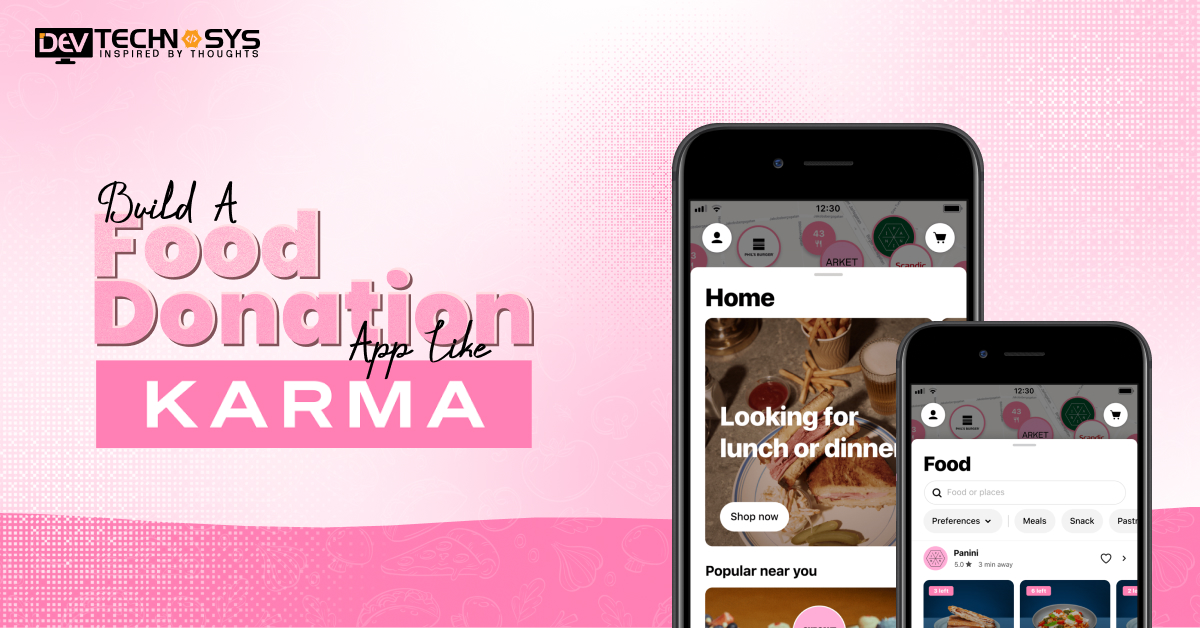
Imagine turning surplus food into a powerful force for good, just like Karma did.
With millions of tons of edible food wasted every year, building a food donation app can make a real difference.
Whether you’re a developer, entrepreneur, or someone passionate about reducing waste and feeding communities, creating a platform that connects restaurants, stores, and individuals with charities is a meaningful step.
Key takeaways:
-
- The market for food donation applications is expected to develop at a high cumulative annual growth rate (CAGR) of 98%, reaching $172.4 billion by 2032.
- Successful platforms like Karma thrive by connecting food businesses with charities and users through real-time listings, intuitive interfaces, and sustainability-focused missions.
- The cost to build a food donation app like Karma typically ranges from $8,000 to $25,000, depending on features, tech stack, platform (iOS/Android/web), and backend integration.
- Core features include user registration, real-time food listings, donation tracking, map-based location services, push notifications, and ratings/reviews.
In this guide, we’ll walk you through how to build a food donation app like Karma, from core features and tech stack to design tips and impact strategies.
No jargon, just clear, simple steps to help you launch your own app that fights food waste and feeds those in need.
Ready to turn your idea into action?
Let’s dive into the world of smart food sharing and socially responsible tech.
Market Analysis of Food Donation Applications
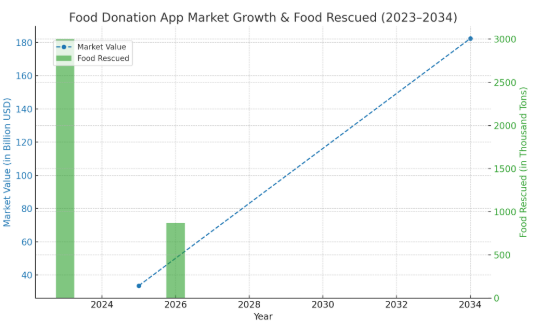
- According to the global market, the food donation application market was valued at around $33.6 billion in 2025, and it is projected to increase to around $182.4 billion by the end of 2034.
- As per the ground-level report, the apps to donate food locally are expected to grow with a compound growth rate of 85% during the forecast period of 2025 to 2034.
- The future of the food waste app industry is anticipated to be more influenced by regions such as the Middle East and Latin America as investments in sustainable practices rise.
- In 2026, 870,000 tons of food were rescued thanks to a food donation platform segment, and app-based rescue operations increased rescues by almost 2% annually.
- Apps that save food, like Feeding In 2023, America’s MealConnect saved 5 billion pounds of food, which is about 20% of the food that Feeding America gave out.
What is Karma?
Karma is an app that helps people save food by letting them buy cheap extra food from restaurants, coffee shops, and grocery stores. The app links companies with customers who want to save money and help the environment. It was first released in Sweden. Food waste management app like Karma is good for the environment and their pockets because users are told when food is nearby.
Karma’s Success Story
- Launched in Sweden in November 2016 by four co‑founders to fight food waste via a discounted surplus‑food marketplace.
- Expanded into London in February 2018 and Paris in 2019, entering major European markets rapidly.
- Raised US $12 million in Series A funding in August 2018, led by Kinnevik, Bessemer, and Electrolux.
- Awarded recognition, including Forbes 30 Under 30 for co‑founder Elsa Bernadotte in social entrepreneurship.
- Within years, served over 1 million users and partnered with 1,500+ businesses across Sweden, the UK, and France.
- Rescued over 1,200 tonnes of food; equivalent to 4 million+ meals saved from landfill.
- Achieved run‑rate gross transactional value from €2.7 M to €12+ M in one year, 94 % profit margin.
Different Types of Food Donation Applications
Explore various food donation app models, from peer-to-peer sharing and surplus meal rescues to large-scale redistribution, that effectively reduce food waste, support communities, and promote sustainable access to nutritious food for those in need.
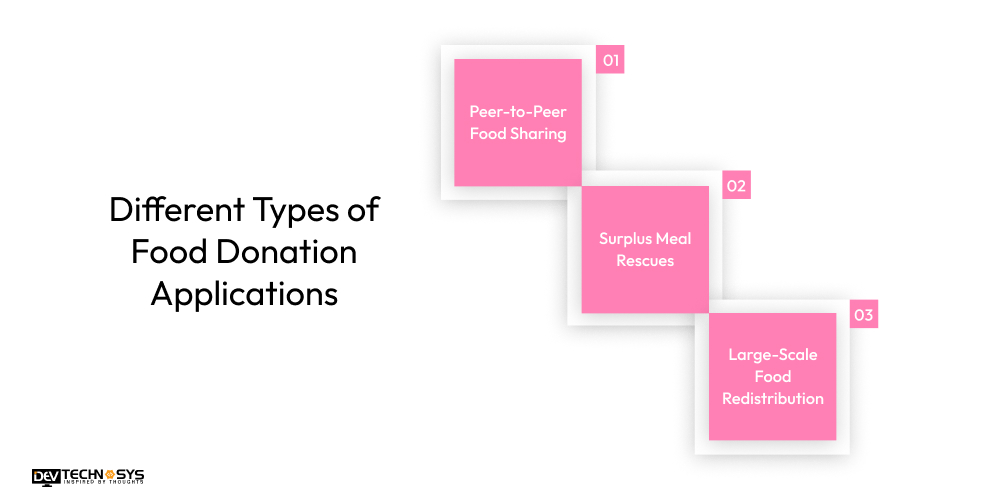
1. Peer-to-Peer Food Sharing
Peer-to-peer food sharing applications link neighbors in need of food with those who have more. In order to encourage community-driven food redistribution, users can post extra groceries or prepared meals for free. This concept promotes more thoughtful, sustainable consumption practices, decreases home food waste, and strengthens ties throughout the community.
2. Surplus Meal Rescues
Restaurants, cafés, and retail establishments can offer unsold but fully edible food at a discount by using surplus meal rescue services. Through a food ordering app, customers buy surprise meal packages, saving food from going to waste. This strategy gives consumers access to reasonably priced meals while also helping businesses and the environment.
3. Large-Scale Food Redistribution
Food banks and charities receive donations from producers, farmers, and retailers, which are managed by extensive food redistribution networks. These services divert excess food to underserved populations using data analytics and logistics networks. They guarantee better use of edible excess across regions, minimize landfill waste, and systematically combat hunger.
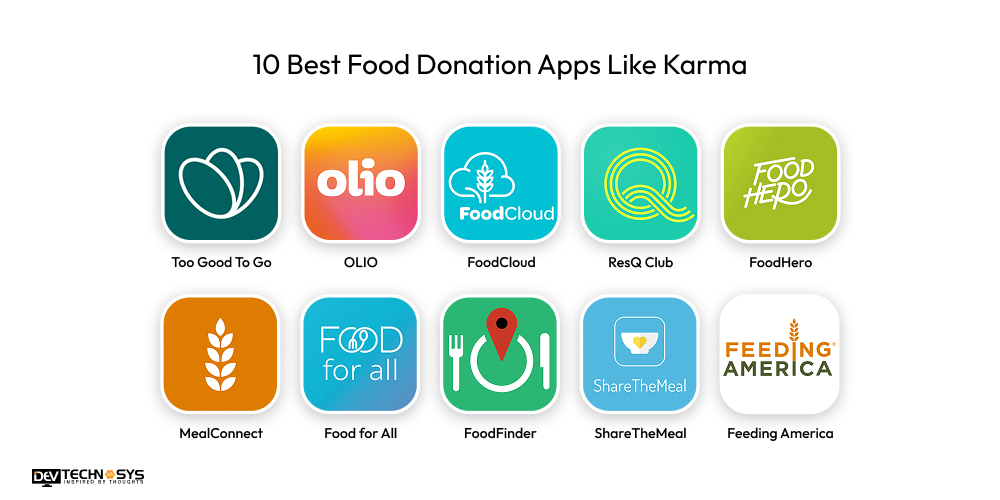
10 Best Food Donation Apps Like Karma
Discover the best food donation applications similar to Karma that help reduce food waste, connect donors with recipients, and promote sustainable and affordable access to surplus meals and groceries.
| App Name | Downloads | Rating | Launch Year | Platforms |
| Too Good To Go | 50M+ | 4.6 | 2016 | iOS, Android |
| OLIO | 5M+ | 4.7 | 2015 | iOS, Android |
| FoodCloud | 10M+ | 4.5 | 2013 | iOS, Android |
| ResQ Club | 1M+ | 4.8 | 2016 | iOS, Android |
| FoodHero | 100K+ | 3.2 | 2018 | iOS, Android |
| MealConnect | 1K+ | 3.9 | 2012 | iOS, Android |
| Food for All | 50K+ | 2.9 | 2017 | iOS, Android |
| FoodFinder | 10K+ | 4.1 | 2016 | iOS, Android |
| ShareTheMeal | 1M+ | 4.7 | 2015 | iOS, Android |
| Feeding America | 1M+ | 4.2 | 2010 | iOS, Android |
Why Today’s Businesses Want to Invest in Food Donation App Development?
These reasons collectively explain why food donation app development has become an attractive, impactful investment for modern businesses aiming to drive sustainability, efficiency, and growth.
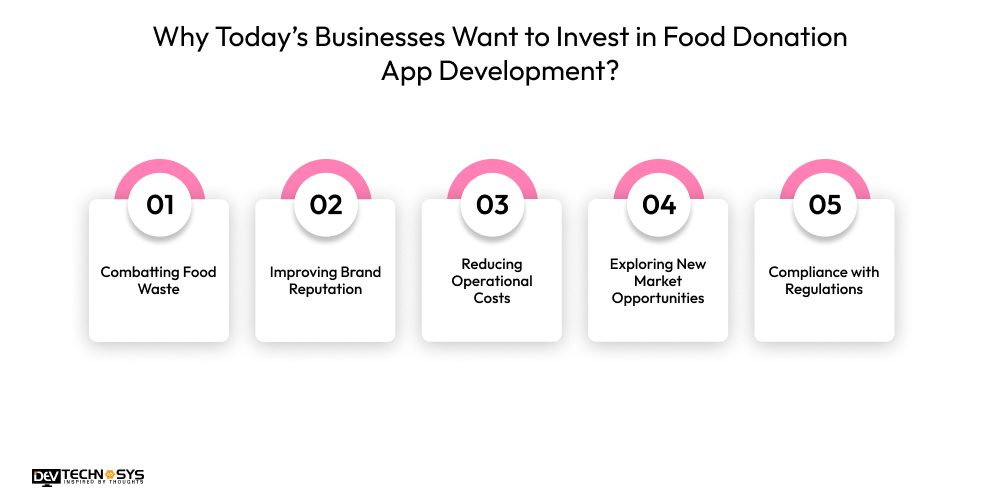
1. Combatting Food Waste
Food waste is a massive global problem, contributing significantly to greenhouse gas emissions and resource depletion. Businesses recognize that developing food donation apps helps divert surplus food from landfills, reducing environmental footprints and aligning with growing consumer demand for sustainable practices. Investing in these apps supports corporate social responsibility and environmental stewardship.
2. Improving Brand Reputation
Consumers are increasingly choosing brands that display social responsibility. Businesses that engage in food delivery app development can demonstrate their commitment to minimizing waste and helping communities.
This enhances public perception, increases customer trust, and distinguishes businesses in a competitive market, resulting in more customer loyalty and long-term involvement.
3. Reducing Operational Costs
A food donation app for restaurants simplifies the process of dispersing extra food, allowing businesses to reduce disposal expenses associated with wasted food.
Automating food contributions via smartphone technology improves inventory management, lowers spoilage, and guarantees that excess supplies reach people in need effectively, resulting in both economic and social benefits.
4. Exploring New Market Opportunities
The donate food app connects businesses with customers and nonprofits, generating new revenue streams and partnerships. They provide opportunities for partnership with local organizations, attracting socially conscious customers, and expanding market reach.
According to the charity donation app development company, this new ecosystem has the potential to increase sales, attract more customers, and diversify the company’s methods.
5. Compliance with Regulations
Many governments throughout the world are establishing legislation to limit food waste and encourage donations, with some granting tax breaks or subsidies.
Creating food donation apps helps businesses keep compliance with legal requirements, avoid penalties, and take advantage of available incentives, making app investment a financially sound decision.
How AI Can Help Food Donation Apps Perform Their Operations?
- AI predicts surplus food availability by analyzing sales and inventory trends, optimizing donation timing and quantities.
- Machine learning matches donors with nearby recipients, improving food distribution efficiency and reducing delivery times.
- AI in food industry optimizes routing for pickup and delivery, reducing transportation costs and carbon emissions.
- AI-powered chatbots assist users with app navigation, donation scheduling, and real-time support, enhancing user experience.
- Image recognition helps verify food quality and safety, ensuring only fresh, edible items are donated.
- Data analytics identify waste patterns, enabling businesses to adjust procurement and minimize surplus generation.
7 Powerful Steps to Build a Food Donation App Like Karma
Learn how to create a meaningful app that connects food donors with those in need. From planning and design to development and launch, follow these essential steps to build a sustainable, user-friendly food donation platform. So, let’s explore the food donation mobile app development process:
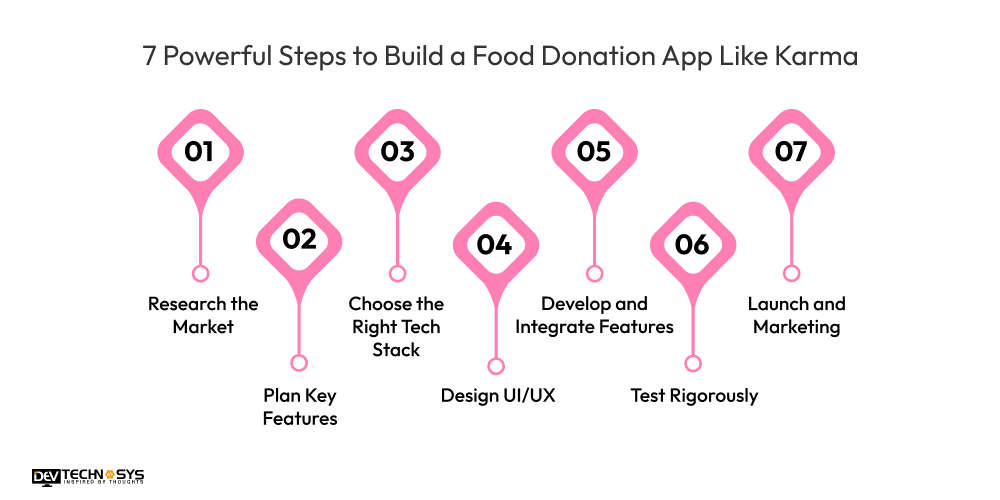
1. Research the Market
Begin by understanding the food donation landscape, including study platforms like Karma, local regulations, and your target users. Identify your niche: restaurants, grocery stores, or individuals. Hire dedicated developers to analyze pain points and opportunities to tailor your app to specific needs. Strong research ensures your app stands out and delivers real value to donors and recipients.
2. Plan Key Features
Outline essential features like real-time listings, location tracking, user profiles, and notifications. Create a user journey for donors, recipients, and admins to ensure smooth interactions. Keep the interface simple, intuitive, and goal-oriented. Prioritizing user experience early sets the foundation for higher engagement and meaningful impact.
3. Choose the Right Tech Stack
In the third stage, to build an app like Karma, hire mobile app developers to select technologies that align with your app’s goals and scalability. Use tools like React Native or Flutter for cross-platform development, Node.js for backend, and Firebase for real-time updates. Make sure the tech stack supports performance, security, and integration with maps, payment gateways, or third-party services if needed.
4. Design UI/UX
Your design should inspire trust and ease of use. Use clean layouts, warm color schemes, and clear calls to action. Ensure accessibility for all users, including those from non-tech-savvy backgrounds. A compassionate design approach helps build emotional connection and trust, encouraging users to contribute and participate more.
5. Develop and Integrate Features
Hire a professional mobile app development company to code your app with essential features like user authentication, food item uploads, donation matching, and in-app communication. Include real-time inventory tracking and a robust admin dashboard. Prioritize functionality that ensures transparency, security, and simplicity throughout the donation process to build reliability and encourage repeat use.
6. Test Rigorously
Conduct extensive testing, unit, usability, and beta testing, to fix bugs and refine the user experience. Involve real users from your target groups for honest feedback. Regular updates and iterations based on feedback will help build a stable, user-friendly app that effectively serves the needs of both donors and recipients.
7. Launch and Marketing
In the last stage to develop an app like Karma, consult with an Android app development company to start with a soft launch in a focused area to gather data and user reactions. Build partnerships with local food vendors and nonprofits. Promote the app through social media, local campaigns, and sustainability influencers. Highlight the social impact of each donation to motivate users and build long-term engagement.

What Benefits Can Users Get From Food Donation Apps?
Discover how food donation apps help users save money, improve food access, build community connections, reduce environmental impact, and enjoy convenient, easy-to-use features for donating and receiving surplus food.
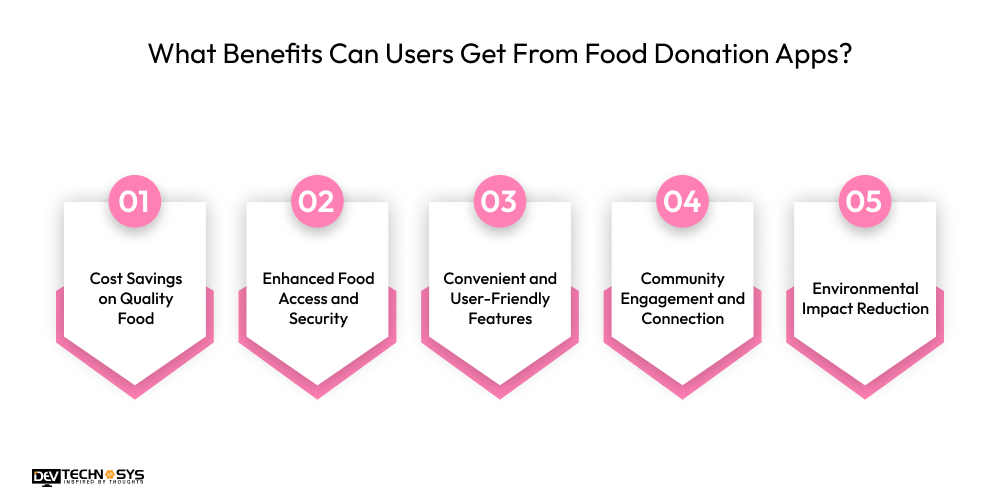
1. Cost Savings on Quality Food
Karma alternatives give customers access to surplus meals and goods at greatly reduced prices. This allows individuals and families to save money while still enjoying nutritious, high-quality food that would otherwise go to waste, making healthy eating more accessible.
2. Enhanced Food Access and Security
These apps make it easier for users to access food, particularly in disadvantaged or low-income neighborhoods. By connecting surplus food with people in need, they assist in alleviating hunger and enhancing overall food security for vulnerable groups.
3. Convenient and User-Friendly Features
Food donation apps like Too Good To Go frequently incorporate user-friendly interfaces, real-time notifications, and flexible pickup or delivery choices. These features simplify accessing or giving food, saving consumers time and effort while increasing involvement and effect.
4. Community Engagement and Connection
Users can contribute to their local communities by sharing or receiving extra food. This engagement strengthens social bonds, promotes teamwork, and establishes a supportive network focused on waste reduction and helping others.
5. Environmental Impact Reduction
Users of Karma clone apps actively help to reduce food waste, lowering landfill use and greenhouse gas emissions. This contributes to climate change mitigation and the development of a more sustainable food system for future generations.
10 Must-Have Essential Features of Food Donation Apps Like Karma
These features collectively make food donation apps effective, user-friendly, and impactful in reducing food waste while supporting communities.
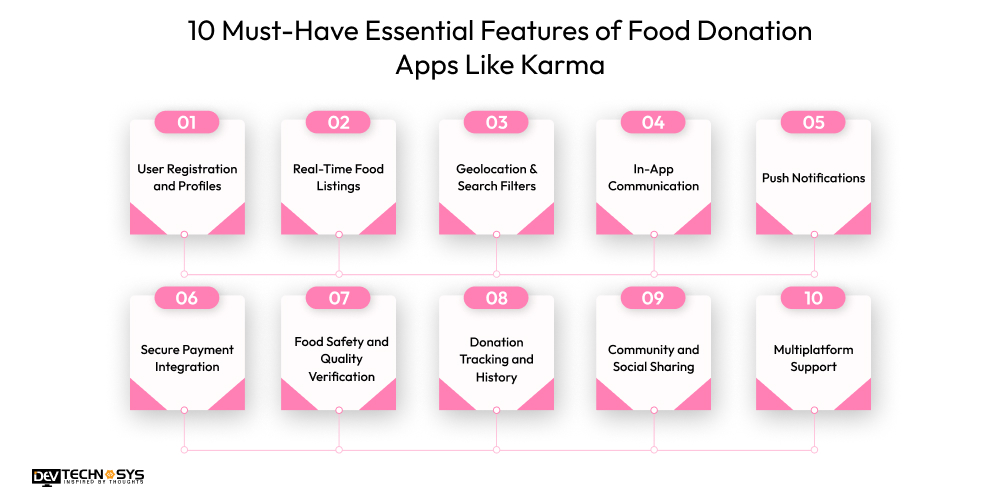
1. User Registration and Profiles
The Karma clone apps make it easy for users and businesses to manage their donations, preferences, and history, hence improving user experience and trust.
2. Real-Time Food Listings
Karma alternatives allow businesses and individuals to publish surplus food goods instantaneously, complete with images, descriptions, and amounts.
3. Geolocation & Search Filters
A similar app like Karma allows consumers to rapidly locate nearby food donations. Filters like food type, distance, and time might help you refine your searches more efficiently.
4. In-App Communication
Built-in messaging and chat tools help donors and recipients coordinate pickup and delivery without leaving the app.
5. Push Notifications
Timely notifications keep users up to date on new listings, donation reminders, and pickup confirmations, improving engagement and reducing food waste.
6. Secure Payment Integration
A similar app like Karma integrated payment gateways provide secure, frictionless transactions for apps that sell extra food at a discount, increasing customer confidence.
7. Food Safety and Quality Verification
Features like as picture verification and AI-based inspections ensure that donated food satisfies safety standards, protecting beneficiaries while preserving platform trust.
8. Donation Tracking and History
Karma clone apps enable users to track their donation activity, view previous transactions, and measure impact indicators, such as meals saved, promoting transparency and motivation.
9. Community and Social Sharing
Social features encourage users to share donations, achievements, or campaigns on social media, thereby increasing the app’s user base and community spirit.
10. Multiplatform Support
Karma alternatives have availability on iOS, Android, and the web, which assures broad accessibility, allowing more people to engage in food donation campaigns regardless of device preference.
The Cost to Build a Food Donation App Like Karma
The cost to develop a food donation app like Karma typically ranges between $8,000 and $25,000, depending on the features, design complexity, and platform choice (iOS, Android, or web). Core components like user registration, geolocation, real-time listings, payment integration, and push notifications drive development time.
Additional expenses include backend infrastructure, security, AI features, and testing. Costs vary by development team location and experience. Ongoing maintenance and marketing should also be considered. Investing wisely ensures a scalable, secure, and user-friendly app that effectively reduces food waste.
| Development Component | Estimated Cost (USD) | Description |
| User Registration & Login | $5,000 – $8,000 | Secure sign-up and profile management |
| Real-Time Food Listings | $7,000 – $12,000 | Posting and browsing surplus food |
| Geolocation & Search | $4,000 – $7,000 | Location tracking and filtering |
| In-App Messaging | $3,000 – $6,000 | Communication between donors and receivers |
| Push Notifications | $2,000 – $4,000 | Alerts for new listings and updates |
| Payment Integration | $6,000 – $10,000 | Secure transactions for food purchases |
| Food Safety Verification | $5,000 – $9,000 | Ensuring food quality and safety |
| Backend & Infrastructure | $10,000 – $16,000 | Server, database, and API development |
| UI/UX Design | $7,000 – $12,000 | User interface and experience design |
| Testing & QA | $4,000 – $8,000 | Ensuring app stability and performance |
What Are the Major Factors That Impact the Food Donation App Development Cost?
Key cost drivers include feature complexity, platform selection, design quality, backend infrastructure, and development team expertise. These factors determine the time, resources, and technology needed, directly influencing the overall food donation app development cost.
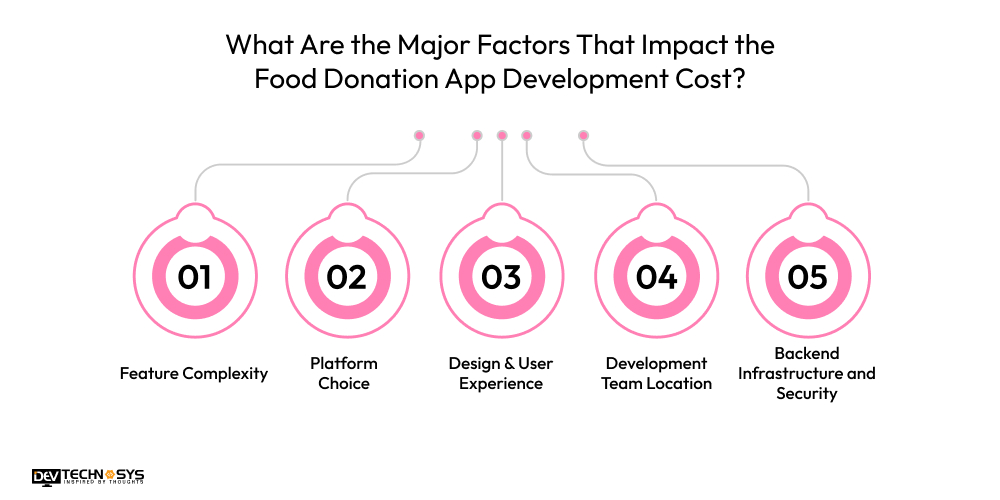
1. Feature Complexity
The amount and sophistication of features such as real-time food listings, geolocation, payment integration, and AI-powered food authentication all have a significant impact on Karma app development cost.
More complex functionalities necessitate additional development time, specialized skills, and thorough testing, which raises the overall food delivery app development cost.
| Feature Type | Estimated Cost (USD) | Description |
| Basic Features | $5,000 – $7,000 | User registration, food listing, search |
| Advanced Features | $8000 – $12,000 | AI food verification, payment integration |
| Real-time Updates & Notifications | $4,000 – $6,000 | Push notifications, in-app messaging |
2. Platform Choice
Developing for many platforms (iOS, Android, and web) incurs higher expenditures than working on a single one. Cross-platform compatibility and responsive design necessitate additional development resources to maintain a consistent user experience across devices.
| Platform | Estimated Cost (USD) | Description |
| Single Platform (iOS or Android) | $10,000 – $14,000 | Developing for one platform only |
| Cross-Platform (iOS + Android) | $12,000 – $18,000 | Supporting multiple platforms |
| Web App | $11,000 – $15,000 | Browser-based app for wider accessibility |
3. Design & User Experience
To create intuitive and appealing interfaces, talented designers are required. Custom animations, accessibility features, and user-friendly navigation increase design costs while improving app engagement and retention.
The high-quality designs and premium themes can increase the total food donation mobile app development cost.
| Design Aspect | Estimated Cost (USD) | Description |
| Basic UI/UX Design | $5,000 – $10,000 | Simple, functional interface |
| Advanced Design | $10,000 – $15,000 | Custom animations, accessibility features |
4. Development Team Location
Rates are affected by the development team’s geographic location and amount of experience. Teams in North America or Europe tend to charge more than those in Asia or Eastern Europe. Choosing qualified developers improves quality but may boost the total Karma app development cost.
| Location / Expertise Level | Hourly Rate (USD) | Estimated Total Cost (USD) |
| North America / Europe (Expert) | $30 – $50 | $25,000 – $50,000+ |
| Asia / Eastern Europe (Mid-Level) | $15 – $25 | $8,000 – $25,000 |
| Freelancers / Junior Teams | $12 – $30 | $8,000 – $30,000 |
5. Backend Infrastructure and Security
Building a scalable, secure backend to manage user data, transactions, and real-time updates requires a major investment. The mobile app maintenance service includes data privacy, encryption, server upkeep, and regulatory compliance all contribute to increased complexity and cost.
| Infrastructure Component | Estimated Cost (USD) | Description |
| Basic Backend | $5,000 – $10,000 | Server setup, database management |
| Advanced Security & Compliance | $10,000 – $15,000 | Data encryption, privacy compliance |
| Scalability & Maintenance | $5,000 – $8,000 | Server scaling, ongoing support |
Tech Stacks Required to Build A Food Donation App Like Karma
| Area | Technologies Used |
| Frontend | React Native, Flutter, Swift, Kotlin |
| Backend | Node.js, Django, Ruby on Rails |
| Database | PostgreSQL, MongoDB |
| Hosting | AWS, Google Cloud |
| Auth & Login | Firebase Auth, OAuth 2.0 |
| Payments | Stripe, PayPal |
| Maps | Google Maps API, Mapbox |
| Notifications | Firebase Cloud Messaging, OneSignal |

5 Monetization Techniques of Food Donation Apps Like Karma
It’s great to create a mobile app like Karma, but the primary concern is how to create new revenue streams. By combining social impact with smart monetization strategies, food donation apps like Karma can become both financially successful and environmentally transformative.
1. Commission for Discounted Meals
One of the most direct monetization ways is to charge a modest commission for each meal sold through the app. Restaurants and supermarket retailers list surplus food at reduced prices, and the platform earns a certain percentage every sale. With a high volume and daily usage, this can earn significant revenue over time.
2. Subscription Plans for Businesses
Provide tiered subscription packages to partner restaurants, retailers, and NGOs. Premium plans may contain additional features such as priority listings, real-time statistics, promotional tools, and access to high-performance delivery networks. This recurrent income helps to stabilize cash flow while giving additional value to business customers.
3. Sponsored Listings and Promotions
Food waste donation apps, like other marketplace platforms, can sell ad space and provide sponsored listings. As we earlier discussed with an iPhone app development company, businesses can pay to have their surplus food items or profiles appear at the top of search results.
4. Data Analysis Services
Over time, the app accumulates useful information about consumer behavior, food trends, waste patterns, and demand hotspots. This information can be anonymized and sold to food industry players, NGOs, and legislators who are interested in improving food supply chains and reducing waste.
5. Corporate Social Responsibility (CSR) Partnerships
Partnering with huge organizations that want to increase their CSR footprint can be quite profitable. Companies can sponsor donations, fund app development, or provide marketing assistance in exchange for branding and goodwill awareness, transforming social impact into a revenue opportunity.
How Dev Technosys Will Help You to Build A Food Donation App Like Karma?
As a leading food donation app development company, Dev Technosys offers end-to-end solutions tailored to your vision. From UI/UX design and robust backend development to AI integration and cross-platform deployment, our expert team ensures a scalable, secure, and user-friendly app. We focus on performance, usability, and sustainability to create impactful digital platforms that reduce food waste and support communities. With agile methodology and ongoing support, Dev Technosys helps turn your food donation app idea into a successful reality.
Frequently Asked Questions
Find answers to the most common questions related to this article.
The cost to develop a food donation app like Karma typically ranges from $8,000 to $25,000, depending on features, platform choice, design complexity, and development team location.
To create a food donation app like Karma typically takes 3 to 6 months, depending on app complexity, feature set, team size, and whether you're building for one or multiple platforms.
Here are the key technologies commonly used to make a food donation app like Karma:
Java
Python
HTML/CSS
PHP
js
Ruby on Rails
Start by researching your target audience, defining core features, and creating a detailed app plan. Then, choose a skilled development team to build a scalable, user-friendly, and secure MVP.
Your food wastage reduction through donation app should include user registration, real-time food listings, geolocation, in-app messaging, push notifications, donation tracking, secure payments, food safety checks, and an intuitive, user-friendly interface.