



















Key Takeaways:
Banking app development costs typically range between $8,000 and $30,000+, depending on the app’s complexity, security standards, and feature set. Basic MVP banking apps may start around $8,000 – $14,000, mid-level applications can range from $14,000 – $22,000. While large-scale digital banking platforms with advanced fintech capabilities may exceed $22,000 – $30,000+.
Cost Breakdown by Development Complexity
-
- Basic / MVP Banking App: Includes fundamental features such as user registration, account overview, simple fund transfers, transaction history, and basic authentication.
- Mid-Level Banking App: Includes enhanced UI/UX, bill payments, third-party integrations, biometric login, push notifications, and stronger data encryption.
- Advanced / Enterprise Banking Platform: Includes AI-powered insights, fraud detection systems, multi-currency support, open banking APIs, blockchain integrations, and advanced compliance mechanisms.
Key Factors Influencing Cost
-
- Feature Complexity: Advanced capabilities like AI-driven financial insights, automated budgeting tools, and real-time fraud detection increase development costs.
- Security & Compliance: Banking apps must follow strict regulations such as KYC, AML, PCI-DSS, and data protection standards, which significantly impact development budgets.
- Technology & Integrations: Integrating payment gateways, banking APIs, analytics tools, and cloud infrastructure increases overall development costs.
Development Timeline
-
- Basic Banking App: 3 – 5+ months
- Mid-Level Banking App: 6 – 9+ months
- Advanced Banking Platform: 9 – 14+ months or longer.
Banking App Development Cost by Country
-
- North America (USA & Canada): $50 – $90 per hour
- Western Europe (UK, Germany, France): $45 – $80 per hour
- Eastern Europe (Poland, Ukraine, Romania): $40 – $70 per hour
Additional Costs to Consider
-
- App Maintenance & Updates: Ongoing maintenance usually costs 15% – 20% of the initial development cost annually, covering updates, security patches, and performance improvements.
- Regulatory Compliance & Legal Costs: Banking applications may require certifications, financial regulations compliance, and security audits before launch.
- Cloud Hosting & Infrastructure: Secure cloud servers, databases, and data backup solutions add operational costs after the app goes live.
The rising demand for digital finance has made mobile banking an essential aspect of modern fintech startups. Be it seamless fund transfer or immediate balance check, a well-built banking app can enhance user experience and loyalty.
This has also attracted entrepreneurs to invest in building financial apps for the mobile-first generation. However, the most common question remains the same: how much does banking app development cost?
There is no fixed answer to this question. There are multiple factors that drive the overall cost to build a banking app like chase. Learning about these cost drivers is essential in developing a secure, scalable, and user-friendly banking application.
This guide breaks down the cost aspects thoroughly to provide entrepreneurs with clarity on investment and budget. Move ahead with us to create a successful digital banking solution.
Market Predictions on the Banking Apps
The financial app market is growing globally because of the increasing adoption of mobile banking app development solutions. It is also creating significant opportunities for entrepreneurs seeking to invest in the banking industry. Here are the market statistics analyzed by Precedence Research, which clearly explain the growth of banking apps.
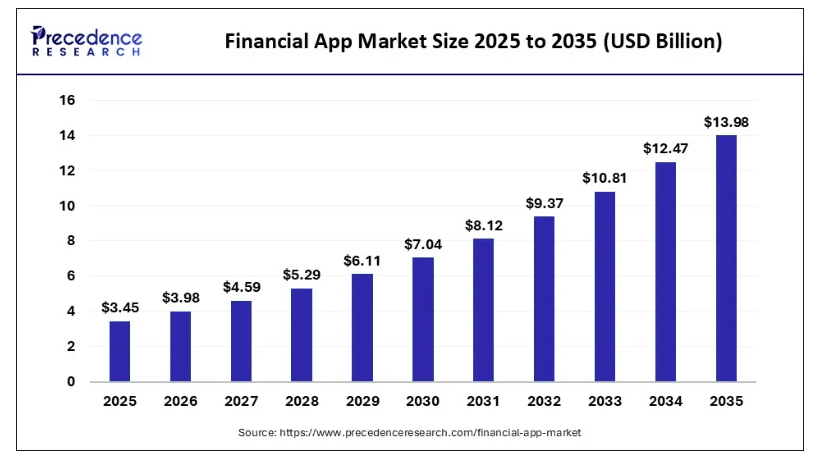
- The global financial app market reached USD 3.45 billion in 2025.
- The market is projected to grow to USD 3.98 billion in 2026.
- By 2035, the global financial app market is expected to reach approximately USD 13.98 billion.
- The financial app market is forecast to grow at a CAGR of 15.02% from 2026 to 2035.
- North America dominated the global financial app market in 2025, due to its strong fintech infrastructure.
What is the Average Cost to Build a Banking App?
The average cost to develop a mobile app can commonly be estimated between $8,000 and $30,000. The overall budget is evaluated on the basis of the app’s complexity.
- Simple apps are less complex because they work on an MVP strategy, with limited but core integrations. So, it costs somewhere between $8,000 and $14,000.
- A mid-range app has moderate complexity as it combines some basic as well as advanced modules and extensions. Therefore, its final budget ranges from $14,000 to $22,000.
- A fully featured, advanced app has a highly modern combination of technologies, increasing complexity. Hence, the overall price of an advanced app can be from $22,000 to $30,000.
It is explained more elaborately through the cost breakdown table below:
App Type |
Complexity Level |
Description |
Estimated Cost |
| Simple Banking App | Low | Works on an MVP strategy with limited but core integrations and basic features. | $8,000 – $14,000 |
| Mid-Range Banking App | Moderate | Includes both basic and some advanced modules and extensions. | $14,000 – $22,000 |
| Advanced Banking App | High | Fully featured app using modern technologies with complex integrations. | $22,000 – $30,000 |
What Factors Affect the Cost of Banking App Development?
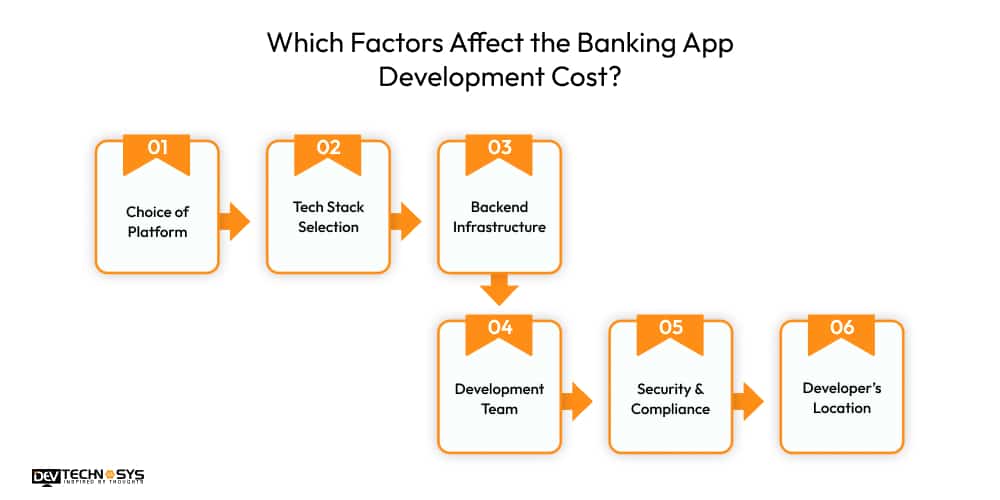
The final development expenses are highly dependent on several influences. It includes the app’s features, security, development team and their location, tech stack, and so on. We have explained some of these cost-affecting factors along with cost breakdown tables for better understanding.
1. Choice of Platform
Bank app development pricing depends on the platform selection, such as iOS, Android, or both. Developing separate apps for different platforms requires additional design, development, and testing efforts. This can significantly affect and increase the overall time, resources, and budget requirements.
Platform Option |
Description |
Estimated Cost |
| Single Platform App | Development for either Android or iOS, only with basic functionality. | $8,000 – $12,000 |
| Cross-Platform App | One codebase supporting both Android and iOS platforms. | $12,000 – $20,000 |
| Native Apps (Android + iOS) | Separate native apps for both platforms with high performance. | $20,000 – $30,000 |
2. Tech Stack Selection
The frameworks, technologies, and tools selected for mobile and web app development impact the development price. Advanced and specialized technologies usually need extra integration efforts and experienced developers. This can remarkably raise the time and cost to make a banking app.
Tech Stack Level |
Description |
Estimated Cost |
| Basic Tech Stack | Standard frameworks and tools for small-scale banking apps. | $2,000 – $4,000 |
| Standard Tech Stack | Modern technologies with scalability and improved performance. | $4,000 – $7,000 |
| Advanced Tech Stack | AI integration, microservices, and cloud-native architecture. | $7,000 – $10,000 |
3. Backend Infrastructure
A banking app manages user data, transactions, APIs, and system performance, which require strong backend infrastructure. The complexity increases with the development and maintenance of secure servers, databases, and cloud services. It crucially influences the overall development expenses.
Backend Type |
Description |
Estimated Cost |
| Basic Backend Setup | Simple server architecture with essential APIs and a database. | $4,000 – $7,000 |
| Standard Infrastructure | Secure cloud backend with integrations and scalability. | $7,000 – $11,000 |
| Advanced Cloud Backend | High-performance infrastructure with microservices and automation. | $11,000 – $15,000 |
4. Development Team
The type of development team, like freelancers, in-house teams, or a mobile app development company, can affect the overall cost. Freelancers charge lower rates but offer limited resources, whereas in-house teams require regular salaries. Banking app development agencies cost more but offer full-service expertise and structured processes.
Team Type |
Description |
Estimated Cost |
| Freelancer Developers | Independent developers suitable for small projects. | $3,000 – $6,000 |
| In-House Development Team | Dedicated internal team with full project control. | $6,000 – $10,000 |
| Development Agency | Professional fintech development companies with full services. | $10,000 – $15,000 |
5. Security & Compliance
Banking apps should be built considering and following strict security protocols and financial regulations. For this, features like encryption, secure authentication, fraud detection, and regulatory compliance are added. This asks for additional development, audits, and testing, raising the cost of eWallet app development.
Security Level |
Description |
Estimated Cost |
| Basic Security | User authentication, encryption, and standard security protocols. | $1,500 – $3,000 |
| Standard Security | Multi-factor authentication and regulatory compliance. | $3,000 – $4,500 |
| Advanced Security | End-to-end encryption, fraud detection, and banking compliance. | $4,500 – $6,000 |
6. Developer’s Location
The location of the development team has a huge impact on the hourly rates. Developers from North America, Australia, and Western Europe have elevated per-hour costs. Whereas developers from Southeast Asia, Eastern Europe, and Latin America. This selection can increase the development expenses.
Region |
Description |
Estimated Cost |
| Asia (India, Southeast Asia) | Cost-effective development with skilled fintech developers. | $2,000 – $3,500 |
| Eastern Europe | Balanced cost and high-quality engineering expertise. | $3,500 – $5,000 |
| North America / Western Europe | Premium development services with higher hourly rates. | $5,000 – $6,000 |
Planning a Mobile App?
Get a tailored development cost estimate in 3 simple steps — app basics, features, timeline, and your contact details.
- 3 quick steps
- 100% free
- Reply in 1 business day
2 Minutes Read
Estimated Cost Breakdown for Various Banking App Types
The cost to create a mobile app offering bank services also depends on the type. Each type of banking app requires different features, security levels, integrations, and compliance standards. These variations can simply affect the overall cost to develop a banking app.
1. Retail Banking Apps
Retail banking apps are the solution for consumers to manage their personal finances. Retail banking apps have features, such as balance checks, mobile check deposits, fund transfers, bill payments, savings account management, and more.
2. Payment & Money Transfer Apps
Payment apps are designed to let users transfer funds instantly with their loved ones, friends, and family. Payment apps usually offer features such as peer-to-peer payments, QR code payments, a digital wallet, bank account integration, and more.
3. Investment & Wealth Management Apps
Investment apps allow users to invest in stocks, ETFs, mutual funds, and other assets directly via their smartphones. Investment apps have features like portfolio tracking, automated investing, financial insights, and real-time market data.
4. Lending & Loan Management Apps
Lending and loan management apps allow users to apply for personal loans, business loans, or credit lines. These apps come with features like eligibility checks, document uploads, an EMI calculator, and loan tracking.
5. Corporate Banking Apps
Mobile banking app development services allow businesses to manage their finances in a modern way. Corporate banking apps generally have features like payroll management, bulk payments, account monitoring, expense tracking, and team-based access for employees
6. Personal Finance Management (PFM) Apps
Personal Finance Management (PFM) apps allow users to track expenses, manage budgets, analyze spending, and set financial goals. PFM apps are usually integrated with multiple bank accounts to give a complete picture of a user’s finances.
7. Digital-Only (Neobank) Apps
Neobank apps are digital-only banking solutions that do not have physical branches. They are designed to provide a complete digital banking experience. Develop a Neobank that must have features like instant account creation, budgeting, and financial services at lower fees.
Have a look at the price breakdown of different app types to build a banking app:
Banking App Type |
Estimated Development Cost |
Complexity Level |
Core Features |
| Retail Banking Apps | $12,000 – $28,000 | Medium–High | Balance check, fund transfer, bill payments, mobile check deposit, account management |
| Payment & Money Transfer Apps | $8,000 – $20,000 | Medium | Peer-to-peer payments, QR payments, digital wallet, bank integration |
| Investment & Wealth Management Apps | $15,000 – $29,000 | High | Stock trading, portfolio tracking, automated investing, market insights |
| Lending & Loan Management Apps | $10,000 – $24,000 | Medium–High | Loan application, eligibility checks, EMI calculator, document upload |
| Corporate Banking Apps | $20,000 – $30,000 | High | Payroll management, bulk payments, expense tracking, multi-user access |
| Personal Finance Management (PFM) Apps | $9,000 – $18,000 | Medium | Expense tracking, budgeting, financial insights, and bank account aggregation |
| Digital-Only (Neobank) Apps | $18,000 – $30,000 | High | Instant account opening, digital KYC, budgeting tools, spending analytics |
What is the Price Range for Building Popular Banking Apps?
Popular banking apps in the US show what they actually should have: convenience, security, and powerful financial tools. Chase Mobile, Bank of America Mobile Banking, Wells Fargo Mobile, Chime, etc., are some top mobile banking apps widely used in USA. Here, we will explain the development cost-estimation of such banking apps.
1. Chase Mobile
JPMorgan Chase’s mobile banking app is designed to help you manage your accounts, transfer funds, deposit checks, and pay bills. It also helps keep track of transactions and manage your cards. Chase Mobile adapts to modern mobile banking best practices and focuses on convenience, security, and a seamless digital banking experience.
Development Component |
Estimated Cost |
| UI/UX Design | $2,000 – $3,000 |
| Core Banking Features | $6,000 – $9,000 |
| Mobile Check Deposit & Card Controls | $3,000 – $4,000 |
| Security Implementation | $3,000 – $5,000 |
| Banking API & Payment Integrations | $3,000 – $4,000 |
| Testing & Deployment | $2,000 – $3,000 |
| Final Estimated Cost | $19,000 – $28,000 |
2. Bank of America Mobile Banking
Bank of America Mobile Banking delivers all that a bank app should deliver: account information and monitoring, bill payments, card management, and spending insights. Powered by the AI virtual assistant, Erica, for all your personal finance questions.
Development Component |
Estimated Cost |
| UI/UX Design | $2,000 – $3,000 |
| Core Banking Features | $5,000 – $8,000 |
| AI Assistant & Smart Insights | $3,000 – $5,000 |
| Security & Compliance | $3,000 – $4,000 |
| API & Third-Party Integrations | $3,000 – $4,000 |
| Testing & Launch | $2,000 – $3,000 |
| Final Estimated Cost | $18,000 – $27,000 |
3. Wells Fargo Mobile
Wells Fargo Mobile is the official banking app for Wells Fargo Bank. Manage your money from you mobile device and take care of everyday banking tasks: check balances, transfer funds, pay bills, and deposit checks. With simple authentication, secure banking is just a tap away.
Development Component |
Estimated Cost |
| UI/UX Design | $2,000 – $3,000 |
| Core Banking Features | $5,000 – $7,000 |
| Mobile Deposit & Notifications | $3,000 – $4,000 |
| Security Features | $3,000 – $4,000 |
| Backend Infrastructure | $3,000 – $4,000 |
| Testing & Deployment | $2,000 – $3,000 |
| Final Estimated Cost | $18,000 – $25,000 |

4. Chime
Chime Financial brings you a modern mobile banking experience that is digital-only and does not have any traditional banking branches. Chime offers early direct deposits, spending tracking, auto savings, fee-free banking, and more.
Development Component |
Estimated Cost |
| UI/UX Design | $2,000 – $3,000 |
| Digital Account Setup & KYC | $4,000 – $6,000 |
| Spending Insights & Auto Savings | $3,000 – $4,000 |
| Security & Identity Verification | $3,000 – $4,000 |
| Banking & Payment Integrations | $3,000 – $4,000 |
| Testing & Deployment | $2,000 – $3,000 |
| Final Estimated Cost | $17,000 – $24,000 |
5. Cash App
Cash App is a simple, sleek, and powerful banking service. It lets you send and receive money, buy and sell stocks, and store your money in your digital wallet. Here, one can manage all of their everyday payments.
Development Component |
Estimated Cost |
| UI/UX Design | $2,000 – $3,000 |
| Peer-to-Peer Payment System | $4,000 – $6,000 |
| Digital Wallet | $3,000 – $4,000 |
| Stock Investment Feature | $3,000 – $4,000 |
| Security & Payment Authentication | $2,000 – $3,000 |
| Testing & Deployment | $1,000 – $2,000 |
| Final Estimated Cost | $15,000 – $22,000 |
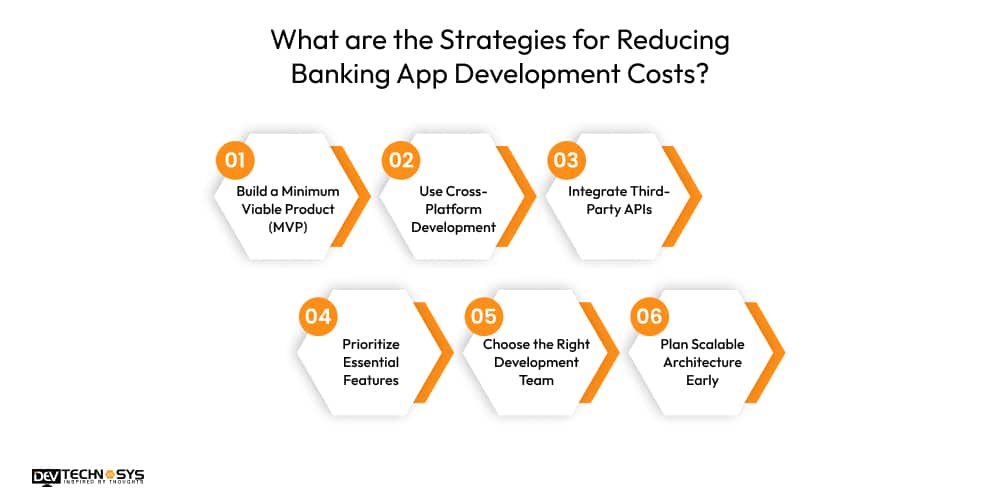
What are the Strategies for Reducing Banking App Development Costs?
Developing a banking application may be a costly process as it involves several complex features, integrations, and security systems. Multiple smart development strategies are available that businesses can implement to control costs. By implementing these measures in mobile app development services, users can get a reliable, scalable, and quality banking app.
1. Build a Minimum Viable Product (MVP)
It’s always best to start with a minimum viable product (MVP) to launch the banking app with only the core banking features. The most essential features are account access, transfers, and payments. It saves time and cost to create a banking app, and tests the product to get user validation.
2. Use Cross-Platform Development
With cross-platform development frameworks, you can develop a single application that works on both iOS and Android simultaneously. It eliminates the need to build two native applications with duplicate development work, decreasing the time and online banking app development cost.
3. Integrate Third-Party APIs
Instead of building every feature in-house, third-party APIs for payments, identity verification, analytics, and notifications can be leveraged. These will lower the timeline and fintech app development cost by a significant margin.
4. Prioritize Essential Features
To avoid any unnecessary custom banking app development cost, your focus should be on the core banking features. It includes access to accounts, payments, and transaction history. You can simply delay the implementation of other features like AI insights and analytics until later.
5. Choose the Right Development Team
Your choice of development partner or team can directly impact the mobile banking app development cost and efficiency. It is always best to go with a seasoned, fintech-savvy team to ensure the development is done efficiently and without technical glitches.
6. Plan Scalable Architecture Early
Planning for a scalable and well-structured digital banking architecture will avoid costly re-designs or infrastructure changes in the future. A well-structured backend and modular architecture will make it possible to add new features and integrations without significant digital banking app development cost.
Additional Costs Involved in Banking App Development
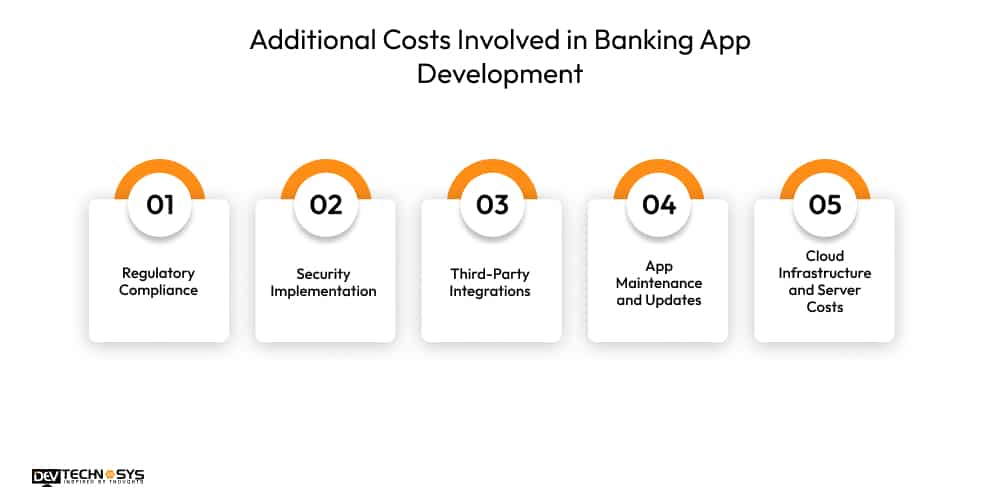
As we have gone through the overall cost structure of banking app development, there are some hidden costs too. These hidden or additional costs can appear during and after development. Such costs are mainly related to security, compliance, maintenance, and infrastructure requirements. In this section, we will learn about such costs in detail.
1. Regulatory Compliance
It is extremely compulsory for banks to follow strict financial regulations and data protection laws. Following these, the app can meet the legal standards requires audits, documentation, and continuous updates. It helps in complying with evolving government and financial authority requirements.
2. Security Implementation
Every banking app requires advanced security measures, including encryption, fraud detection systems, secure authentication, and regular security testing. It is mandatory to protect sensitive financial data and maintain user trust.
3. Third-Party Integrations
Payment gateways, credit score services, identity verification tools, notification systems, and other third-party integrations can add extra development expenses. It is because many third-party solution providers can charge setup and usage fees.
4. App Maintenance and Updates
After the app launch, a hybrid app development company works on regular updates, bug fixes, feature improvements, and compatibility. It is necessary for new devices and operating systems to maintain the stability and security of the banking app.
5. Cloud Infrastructure and Server Costs
Banking apps handle large volumes of financial data and transactions, integrating clouds and servers. Therefore, reliable cloud hosting, data storage, and server management are required to maintain performance, scalability, and uptime.
What Makes a Banking App Truly a Game-Changer in this Digitalized World?
A banking app in this generation is more than just an app. It is the key to smarter, quicker, and safer financial experiences. The successful apps can predict user needs, remove friction in money management, and make banking effortless.
Now, imagine the power of letting users send money instantly and monitor their spending quickly. All of this is done within a sleek, secure UI that also delivers actionable spending insights. The perfect app turns your fintech idea into a trusted digital financial companion.
We can help you bring your fintech vision to life and create a unique banking app. The app not just works, but captivates users, scales with your growth, and dominates your competition.
Which Banking App Monetization Models Are Driving Revenue?
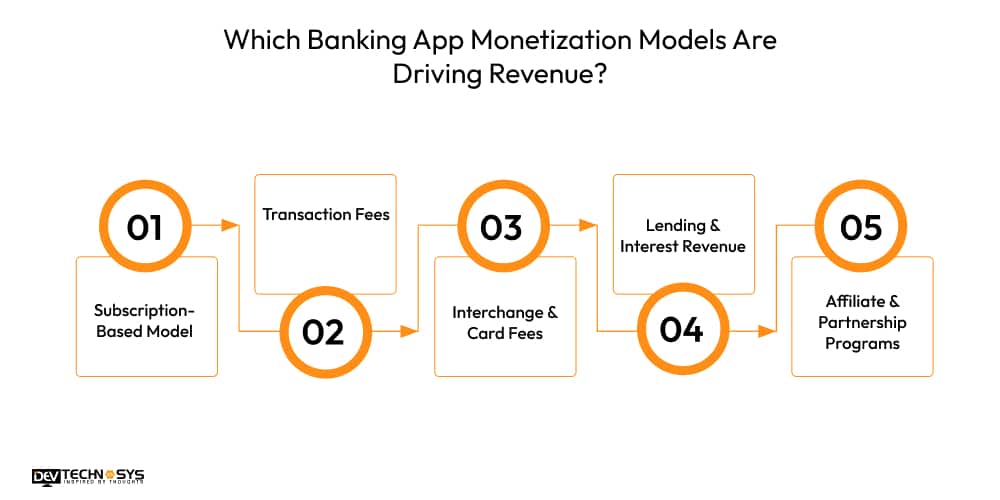
In this highly advanced world of fintech, banking apps have become money makers for entrepreneurs. Knowing these money-making models will help banks and fintech companies maximize revenue. It also provides users with useful services and convenience.
1. Subscription-Based Model
Users pay a recurring monthly or yearly fee for premium services. These services involve advanced analytics, priority support, or exclusive financial tools. This model provides a recurring revenue stream while increasing user retention by providing more value-added services.
2. Transaction Fees
The banking institution charges a fee for certain types of transactions, like cross-border payments, bill payments, or fund transfers. Even small per-transaction fees can add up with each transaction made, increasing revenue with the app’s user base.
3. Interchange & Card Fees
Revenue is generated every time a user makes a purchase using a debit or credit card linked to the app. The app earns a small percentage of the purchase amount from merchants or banks for every transaction. This can create a recurring revenue stream from everyday spending.
4. Lending & Interest Revenue
The personal loans, credit lines, or overdrafts can generate revenue by charging interest rates or late fees. This is a profitable model for fintech companies while providing essential and useful services to users.
5. Affiliate & Partnership Programs
Banking apps can partner with other services such as investment platforms, insurance companies, and e-commerce service providers. This can help them earn a commission or referral fee for every user who signs up for these partner services.
Final Words
For modern finances and financial institutions, banking app development is necessary. When an application is well built, it provides customers with convenience, security, and accessibility with seamless digital transactions.
With user-friendly design, strong security, and continuous updates, banks and fintech companies can improve digital banking experiences. It also helps the app stay competitive in this rapidly evolving online banking landscape. If you are interested in developing a banking app, you can reach out to an expert Fintech app development company.
Frequently Asked Questions
Find answers to the most common questions related to this article.
Usually, the average cost to make a banking app ranges somewhere between $8,000 and $30,000. The overall development cost is estimated according to the complexity of the application. The app’s complexity depends on the level of functionality, design sophistication, scalability requirements, and user experience it offers.
There are numerous factors affecting the banking app development budget. We are naming some of them below:
Choice of Platform
Tech Stack Selection
Backend Infrastructure
Development Team
Security & Compliance
Developer’s Location
These factors play a crucial role in measuring the overall cost, timeline, and complexity of the development process.
By integrating some cost-reducing strategies, businesses can reduce the cost of banking app development. These strategies are:
Build a Minimum Viable Product (MVP)
Use Cross-Platform Development
Integrate Third-Party APIs
Prioritize Essential Features
Choose the Right Development Team
Plan Scalable Architecture Early
These measures are preferred by many small-scale enterprises and startups, having a lower development budget.
Some of the hidden costs that come with the banking app development include:
Regulatory Compliance
Security Implementation
Third-Party Integrations
App Maintenance and Updates
Cloud Infrastructure and Server Costs
If these hidden costs are not planned properly and projected at the initial stage, they can affect the overall development expenses.
Yes, startups can usually build a banking app with a limited budget, integrating MVP development. In this type of development, the focus remains on the basics but core functionalities, design, security, backend, APIs, and more. Features and other integrations are later expanded to include advanced capabilities in response to user demand. It is like testing first what customers really want and then upgrading over time.