


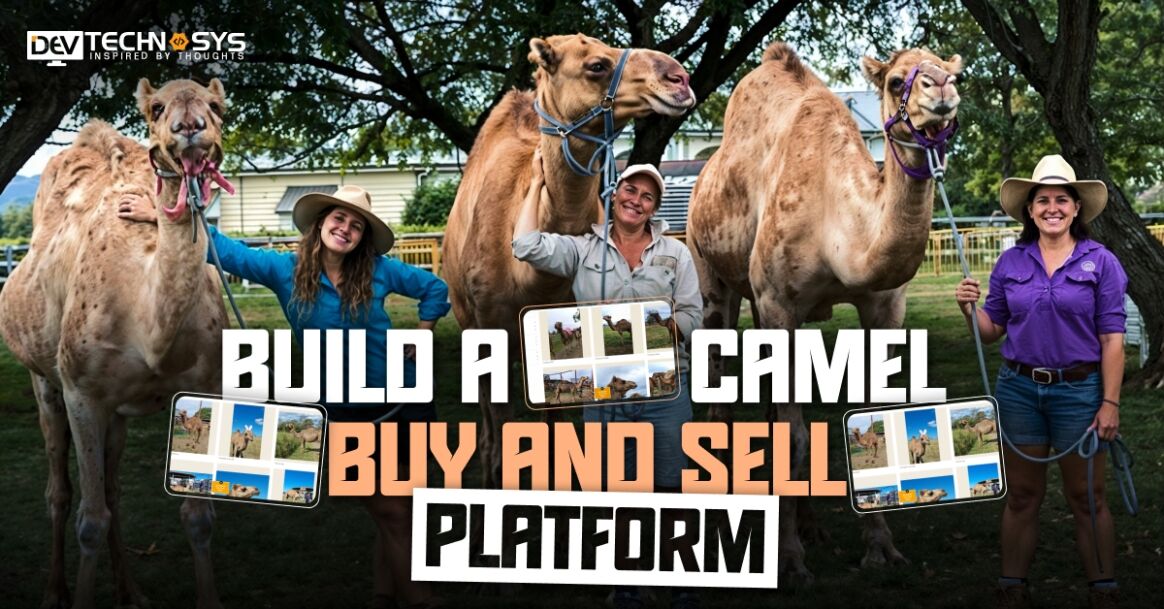
Key takeaways:
-
-
- The size of the worldwide market for cattle management software was projected to be USD90 billion in 2024 and is projected to grow to USD 2.10 billion in 2025.
- The cost to build a camel buy and sell platform is around $8,000 to $25,000, based on the complexity and premium features.
- Offering various types of monetization opportunities such as freemium model, advertising, and subscription plans.
-
Have you ever imagined a website where people can buy and sell camels just like they shop online?
In 2025, it’s easier than ever to make this idea real!
With more people using smartphones and the internet, even farmers and camel traders want smart ways to do business.
In this blog, you’ll learn how to build a simple online platform where buyers and sellers can connect, chat, and make deals for camels safely.
Don’t worry if it sounds hard, we’ll explain it step by step, using easy words.
Whether you love technology, animals, or just want to build something cool, this is your chance to mix all three.
Let’s explore how you can become the person who brings the camel market online in a smart way!
Global Market Stats of Cattle Management Platforms
- The market for software to manage cattle was worth USD 90 billion in 2024, and it’s projected to grow to USD 2.10 billion by 2025.
- From 2025 to 2030, the market for software that helps with managing cattle is expected to grow at a rate of 96% per year, which means it will reach USD 3.53 billion by 2030.
- With a share of64%, North America led the market for software to handle cattle in 2024.
- Afimilk Ltd., DeLaval, BouMatic, Merck & Co., Inc., Zoetis (Performance Livestock Analytics), Lely, GEA Group Aktiengesellschaft, and others are some of the biggest names in the cattle management software business.

What is the Camel Buy and Sell Platform?
The camel buy and sell is a digital marketplace where users can buy and sell camels and search for a wide variety of camels. It includes various features like secure payment options, delivery options, user registration, and many more.
It has a user-friendly interface that enables customers to quickly navigate all the functionalities of the platform. An app like Wallapop allows users can also search camels as per their breed preferences, such as Humr, Asail, Majaheem, and Maghateer.
Different Types of Camel Buy and Sell Platforms
Buy and sell camels easily with three different online platforms. Choose from a traditional market app, a premium breeder exchange, or a local community forum, each designed to suit your camel trading needs.

1. Traditional Camel Market App
A digital version of local camel souks, this platform connects breeders and buyers in real-time. It offers photos, lineage details, and auction-style bidding, replicating the traditional market experience with added convenience and regional language support.
2. Premium Camel Breeding Exchange
Designed for elite buyers and breeders, this platform specializes in high-value racing and beauty camels. It includes genetic tracking, vet certification, escrow services, and logistics coordination for international buyers, ensuring trust and transparency throughout transactions.
3. Community-Based Camel Trading Forum
A grassroots platform where small-scale herders can post listings, ask advice, and trade camels locally. Focused on accessibility and community support, it integrates messaging, local delivery options, and educational resources for sustainable camel rearing and fair trade.
10 Best Camel Buy and Sell Platforms
Before starting to build a camel buy and sell platform, you must observe these existing platforms to get an idea of the design and functionalities. So, let’s explore the best platforms:
| Platform Name | Description | Platform Availability | Launch Year | Ratings / Notes |
| Kijiji Pets | Canadian classifieds for pets (sale, adoption) | Website, mobile app | 2005 | Trusted, widely used in Canada |
| Pets4Homes | UK’s largest pet marketplace | Website | 2005 | Large, well-established community |
| Petfinder | US-based pet adoption and listing platform | Website, mobile app | 1996 | Highly rated for adoption and safety |
| Pettify | Nigeria’s popular pet marketplace with vet services | Website, iOS, Android app | Active | Good app reviews, vet connection |
| Hoobly | US classifieds with pets for sale/adoption | Website | Early 2000s | User-driven, varied pet listings |
| Gumtree Pets | UK/Australia classifieds with pets | Website, mobile app | 2000 | Popular local marketplace |
| Craigslist Pets | US classifieds with pet sales/adoption | Website | 1995 | Very popular, varies by city |
| Petzlover | Global pet classifieds for multiple species | Website | Active | Over 1.5 million users, multi-species |
| Petango | US-based adoption platform | Website | 2003 | Widely trusted for pet adoption |
| Adopt A Pet | US and Canada pet adoption listings | Website, mobile app | 2000s | High adoption success rate |
Why do Entrepreneurs Want to Invest in Camel Buy and Sell Platform Development?
Entrepreneurs invest in camel trading platforms to tap into a growing market, modernize traditional sales, capitalize on low competition, create diverse revenue streams, and support rural communities. These platforms offer scalable, efficient solutions that blend technology with heritage, driving both profit and social impact in emerging markets.
1. Growing Market Demand
Camel trading, especially in the Middle East and Africa, is a billion-dollar industry. With increasing demand for racing, dairy, and beauty camels, digital platforms offer a scalable solution to tap into this traditional yet lucrative market with modern convenience and broader reach.
2. Digital Transformation of Traditional Markets
Traditional camel markets are going digital, and entrepreneurs see an opportunity to modernize age-old practices. By creating platforms that connect buyers and sellers online, they reduce geographical barriers, streamline transactions, and bring efficiency to an industry still largely dependent on in-person, informal trade networks.
3. Niche with Low Competition
The camel trading niche remains relatively untapped in the digital space. Entrepreneurs recognize the potential to become early movers, dominate the market, and build brand loyalty before competition rises. Unlike saturated e-commerce sectors, camel trading platforms offer room for innovation and sustainable long-term growth.
4. Diverse Revenue Streams
Camel trading platforms can generate income through multiple channels, including listing fees, premium memberships, transaction commissions, veterinary services, and logistics support.
This diversity reduces dependency on a single income source and ensures steady returns, making it an attractive investment for entrepreneurs seeking profitability and business sustainability.
5. Support for Rural Economies
Investing in camel trading platforms supports rural breeders and herders by giving them access to wider markets. Entrepreneurs are increasingly motivated by social impact and sustainability. These platforms empower communities, promote fair trade, and align with global trends toward ethical and inclusive business models.
Want a chatbot demo or pricing? Fill the form and talk to our experts today.
Pick what you need below — you can select more than one — then tap Get detail to continue.
-
Chatbot demo dashboard
-
Cost to develop an app
-
Industry report
-
Case study
The Role of AI in Camel Buy and Sell Platforms
- AI analyzes camel health data to predict disease risks, ensuring buyers receive healthy animals and reducing losses for sellers.
- Automated pricing algorithms evaluate market trends, camel quality, and demand to suggest optimal prices for buyers and sellers.
- AI-powered image recognition verifies camel features, breed, and condition from photos, enhancing trust and transparency in transactions.
- Chatbots provide 24/7 customer support, answering queries instantly and guiding users through the buying and selling process efficiently.
- AI-driven logistics optimize delivery routes and schedules, ensuring timely and cost-effective transportation of camels between locations.
7 Simple Steps to Build a Camel Buy and Sell Platform
To create a camel buy and sell platform, you need to observe the important steps that help in understanding each process in a detailed explanation. It includes market research, competitors’ plans, designing, technologies, testing, and post-launch maintenance services. So, here we provide the steps to build online marketplace platform:
- Identify Project Needs
- Features and Functions
- Tech Stacks
- Design UI/UX
- Platform Development
- Testing and Security
- Release and Maintenance
1. Identify Project Needs
Let’s start the first stage to develop a camel buy and sell platform, and identify the primary and secondary requirements of your project. Observe the existing buy and sell platforms that are popular and trending in this competitive market. Make a future-proof plan for your project, and also talk about how your platform competes with other platforms.
2. Features and Functions
In the second stage, to create a camel buy and sell platform. Hire dedicated developers to find out the best features and functions that must be integrated into your project.
There is a wide variety of functionalities such as camel listing, search & filter, user registration, live bidding, transport management, secure payment gateways, and multi-currency support. So, select features and functions as per the project demand and personal preferences.
3. Tech Stacks
Moving to the third step of the camel buy and sell platform development, selecting the right tech stacks is one of the most important development processes.
There are various types of technologies that help to build a strong platform, such as cloud storage, APIs, databases, designing tools, testing, QA processes, and development frameworks. So, choosing the correct technologies leads to a successful or reliable platform development.
4. Design UI/UX
Coming to the fourth stage of development, hire mobile app developers to design a unique or attractive user interface that enables users to quickly interact with all functionalities.
It includes various types of design elements like layouts, templates, premium themes, fonts, progress bars, buttons, colors, and more. So, there are some designing tools that offer premium design styles, such as Figma, Marvel, Sketch, and Adobe XD.
5. Platform Development
In the fifth step to develop a camel buy and sell platform, assemble highly talented developers to begin the real coding for implementations. There are various third-party tools and applications that must be integrated, such as payment gateways, social media logins, CRM systems, Google Maps API, analytics, and many more. So, these can increase accessibility and flexibility.
6. Testing and Security
Let’s talk about the sixth step to make a camel buy and sell platform. Test the platform under various conditions or testing techniques such as unit testing, user acceptance testing, integration testing, security testing, and more.
Implement the robust security measurements such as two-factor authentication, encryption techniques, biometrics, firewalls, VPNs, IPS, and network segmentations.
7. Release and Maintenance
Now, release the camel buy and sell platform on the selected platforms such as Android, iOS, cross-platforms, and websites. After the successful publication, promote the platform to the global audience with marketing techniques.
Hire an e-commerce development company to start the maintenance services, such as fixing bugs or glitches, regular updates, performance optimization, solving security patches, updating new features, and installing the latest OS versions.
What are the Benefits of the Camel Buy and Sell Platform for Users?
There are many benefits for users from camel buy and sell platforms. It involves global market reach, 24/7 accessibility, convenience, and more. So, let’s take a view at the point below:
1. Direct Access to Sellers and Buyers
Users can connect directly with verified buyers or sellers, reducing reliance on brokers or middlemen, saving time and money while ensuring greater control over negotiations and transaction terms.
2. Wider Market Reach
The platform allows users to list or find camels across regions or countries, expanding business opportunities beyond local markets and increasing chances of finding the right buyer or seller.
3. Secure and Transparent Transactions
Integrated payment systems, seller verification, and digital documentation ensure transactions are safe, traceable, and trustworthy, giving users peace of mind when dealing with high-value animals or products.
4. Convenient Online Experience
Users can browse, list, and manage camel sales anytime from their phone or computer, eliminating the need for physical market visits and making the process faster and more efficient.
5. Access to Valuable Information
Detailed listings with breed, health, and pedigree data help buyers make informed decisions, while reviews and ratings guide users to reputable sellers, improving trust and decision-making confidence.
10 Must-Have Features of the Camel Buy and Sell Platform
To increase accessibility and flexibility, businesses need to integrate special features, so exploring the list of must-have features that are important. So, let’s take a look at the points below:
1. Camel Listings
The camel marketplace enables sellers to add, edit, and delete camel listings, including details such as pricing, breed, age, health records, and location.
2. Registration
The users can create their own account via personal information, email addresses, phone numbers, and social media logins.
3. Digital Document Upload
It enables sellers to upload their camel documents, such as an age verification certificate, lineage certificates, health records, and more.
4. Advanced Search & Filters
The camel buy and sell platform enables buyers to search as per the breed type, location, and pricing, to find quickly and easily.

5. Auction System
This platform allows sellers to organize an auction or live bidding for premium breed camels, and it can boost user engagement.
6. Multi-Currency Support
The camel sell and buy platform supports multiple currencies that enable international users to buy and sell camels, it can ensure transparency and flexibility.
7. In-App Messaging
An app like Best Buy offers a real-time communication system that facilitates negotiation and smooth communication between buyers and sellers, eliminating the need for external tools.
8. Secure Payment Integration
There are various secure payment gateways that are integrated, such as debit or credit cards, bank transfer, net banking, and digital wallets.
9. Multi-Language Support
The camel sell and buy platform offers multiple languages such as Arabic, Urdu, and English, making it flexible for users to change language as per their preferences.
10. Alert Messages
This platform sends alert messages and notifications to users for new listings, auction times, new updates, and more.

What is the Cost to Build a Camel Buy and Sell Platform?
The cost to develop a camel buy and sell platform is around $8,000 to $25,000. The overall project budget can fluctuate due to several factors, such as premium features, functions, complexity, project size, deployment platforms, testing, and security.
It also includes extra factors that influence the camel buy and sell platform development cost, such as maintenance, tech stacks, APIs, and development team. To get the estimated cost information, look at the table below:
| Feature / Module | Description | Estimated Cost (USD) |
| User Registration & Profiles | Secure sign-up/login, profile management, verification system | $1,000 – $2,000 |
| Camel Listings & Management | Add/edit/delete listings with photos, details, pricing | $1,200 – $2,500 |
| Search & Filter Functionality | Advanced search based on breed, age, price, location | $800 – $1,800 |
| Messaging System | In-app chat for buyer-seller communication | $1,000 – $4,000 |
| Payment Integration | Gateway integration (Stripe/PayPal), with basic escrow setup | $1,500 – $3,500 |
| Admin Dashboard | Backend to manage users, listings, payments, and platform settings | $1,500 – $3,000 |
| Mobile Responsiveness or Basic App | Mobile-optimized website or simple hybrid app (React Native/Flutter) | $5,000 – $8,000 |
Approximate Development Cost: $8,000 – $25,000+
5 Main Factors That Impact the Camel Buy and Sell Platform Development Cost
To fix the project budget, first, businesses need to know about the main factors that can highly impact the overall development cost. It involves various factors such as post-maintenance, tech stacks, designing, and testing. So, learn about the cost-affecting factors:
1. Developer’s Location
The developer’s living location is the main reason that can influence the cost to develop a camel buy and sell platform. There are many prime locations, such as the USA, UK, and Japan charge higher salaries for developers, which can influence the overall project budget. Businesses can hire developers from Asia and Eastern Europe, who demand average salary packages.
| Location | Hourly Rate (Approx) | Estimated Cost Range |
| South Asia (India) | $15 – $20 | $4,500 – $10,000 |
| Eastern Europe (Ukraine, Poland) | $30 – $50 | $6,000 – $12,000 |
| Western Europe (Germany, UK) | $40 – $60 | $14,000 – $20,000 |
| North America (USA, Canada) | $45 – $70 | $20,000 – $25,000+ |
2. Essential and Advanced Features
Moving on to the second cost-affecting factor, there are various features that require payment and take more time to integrate. Some of the unique or advanced features can raise the overall mobile app development cost.
It includes premium camel listings, auction systems, advanced search & filter, secure payment gateways, multi-currency support, and more. So, choose features as per your project budget and preferences.
| Feature Type | Description | Estimated Cost |
| Essential Features | User Signup/Login, Listings, Filters, Chat | $4,000 – $10,000 |
| Advanced Features | Real-time Chat, AI Recommendations, Auction System | $3,000 – $8,000 |
3. Third-Party Tools
In the third cost-affecting factor, third-party tools and applications are essential to integrate because they can increase the accessibility and flexibility of users.
But it can be another cost-affecting factor, due to its licensing fees and taking a long time to integrate. It includes various third-party tools such as payment gateways, analytics, CRM systems, social media login, maps & GPS, and many more.
| Tool Type | Examples | Estimated Cost (One-time/Monthly) |
| Payment Integration | Stripe, PayPal | $0 – $500 (setup) + 2.9% fee |
| SMS/Email Services | Twilio, SendGrid | $50 – $200/month |
| Maps & Location | Google Maps API | $0 – $200/month |
| Hosting & Storage | AWS, Firebase, DigitalOcean | $100 – $500/month |
| Analytics | Firebase, Google Analytics | Mostly Free – $100/month |
4. Design UI/UX
Let’s talk about the fourth cost-impacting factor, designing a user interface includes some premium themes, layouts, fonts, colors, styles, and navigation bars. These elements can be highly paid, which can influence the cost to build an online marketplace website.
There are also paid design tools such as Adobe XD, Marvel, Sketch, Figma, and InVision. So, high-quality designs can lead the way to influence the camel buy and sell platform development cost.
| Design Phase | Description | Estimated Cost |
| Wireframing & UX | Basic flow, layout, user experience | $1,000 – $3,000 |
| UI Design | Visual elements, icons, theme | $1,000 – $4,000 |
| Responsive Design | Mobile + Tablet optimization | $500 – $2,000 |
5. Platform Type
Coming to the last profit-generating technique, building an application for various platforms such as Android and iOS. Each platform has a different cost because developers need to build separate applications for both platforms.
So, it can increase the overall cost to build a camel buy and sell platform. Try cross-platform frameworks such as React Native and Flutter to build applications within a single platform.
| Platform Type | Description | Estimated Cost |
| Web Only | Desktop/Mobile Web | $4,000 – $8,000 |
| Mobile App (Android or iOS) | Native single platform | $6,000 – $12,000 |
| Mobile App (Both Android & iOS) | Requires dual development | $10,000 – $20,000 |
| Cross-platform App | Flutter, React Native | $6,000 – $14,000 |
5 Monetization Models of the Camel Buy and Sell Platform
Explore the different types of monetization techniques that help businesses generate new income sources to increase the business valuation. So, here we provide the popular monetization models for the camel buy and sell platform:
- Listing Fees
- Commission on Sales
- Subscription Plans
- Featured Ads and Promotions
- Logistics and Fulfillment Services
1. Listing Fees
Sellers pay a fixed fee to list products on the platform. An app like Karrot offers premium listings with better visibility or featured placement cost. This encourages quality listings while generating steady income from active users who want to maximize exposure and boost their chances of selling quickly.
2. Commission on Sales
Camel takes a percentage commission from each successful transaction. This model aligns platform revenue with seller success, incentivizing growth and user satisfaction.
Tiered commission rates can reward high-volume sellers, encouraging them to continue using the platform and ensuring consistent income through every transaction.
3. Subscription Plans
Vendors subscribe to monthly or yearly plans for added features like advanced analytics, marketing tools, or unlimited listings. Multiple tiers accommodate different business sizes, creating recurring revenue while helping sellers grow. A freemium option attracts new users who can upgrade as their needs expand.
4. Featured Ads and Promotions
If businesses build an app like Mercado Libre, users need to pay to promote their listings through sponsored placements, homepage features, or category highlights.
These ads drive visibility and sales, creating a competitive advertising space. The platform benefits from recurring ad revenue, especially during seasonal or high-demand periods.
5. Logistics and Fulfillment Services
Camel partners with logistics providers to offer optional delivery and fulfillment services. Sellers or buyers pay service fees for convenience and speed. This adds value while generating profit through service margins, especially in regions where reliable logistics are a key differentiator.
Conclusion
In this blog, we explored in detail how to build a camel buy and sell platform and how it can be a game-changing opportunity for businesses or entrepreneurs.
We also offer advanced functionalities to get an idea of how to integrate into your project, and also provide the total development cost. As we discussed in the above sections that how rapidly the camel buy and sell platform market is growing, so it is the right time to invest in it.
Do you want to create a camel buy and sell platform? If you agree, then share your project requirements with the best marketplace app development company to receive reliable solutions.
Frequently Asked Questions
1. How Much Does it Cost to Build a Camel Buy and Sell Platform?
The cost to develop a camel buy and sell platform ranges from $8,000 to $25,000. The development cost is mainly based on the key factors such as project complexity, platform type, tech stacks, third-party integration, and development team.
2. How Long Does it Take to Create a Camel Buy and Sell Platform?
To create a camel buy and sell platform, it usually takes around 4 to 9 weeks. The timeline depends on various factors, such as project size, the number of premium features, complexity, and the developers’ working hours.
3. What Are the Common Challenges that Occur During Camel Buy and Sell Platform Development?
Here is the list of challenges:
- Data Accuracy
- Payment Integration
- Logistics Coordination
- Marketplace Scalability
- Fraud Detection
4. What Types of Technologies Are Used to Make a Camel Buy and Sell Platform?
There are various technologies are used to make a camel buy and sell platform:
- Java
- Python
- C++
- .Net
- PHP
5. How Can I Monetize My Camel Buy and Sell Platform?
Here, we provide the best monetization techniques:
- Subscription Plans
- Freemium Model
- Advertising
- Partnership with Others
- Commission on Sales


