






Key Takeaways:
-
- The grocery delivery app development cost ranges from $30,000 to $150,000+. This cost can increase or decrease depending on factors such as features, complexity, platform, security, and third-party integrations.
- Building a grocery delivery app like Zapp requires a balance of user-friendly design, advanced technology, and efficient operations.
- The online grocery market around the globe is projected to exceed $1.5 trillion by 2030. In the United States alone, the demand for grocery delivery is consistently soaring and is expected to reach 3 million users.
- 70% of urban consumers prefer app-based grocery shopping for convenience, which increases demand for fresh produce, organic items, and ready-to-eat meals.
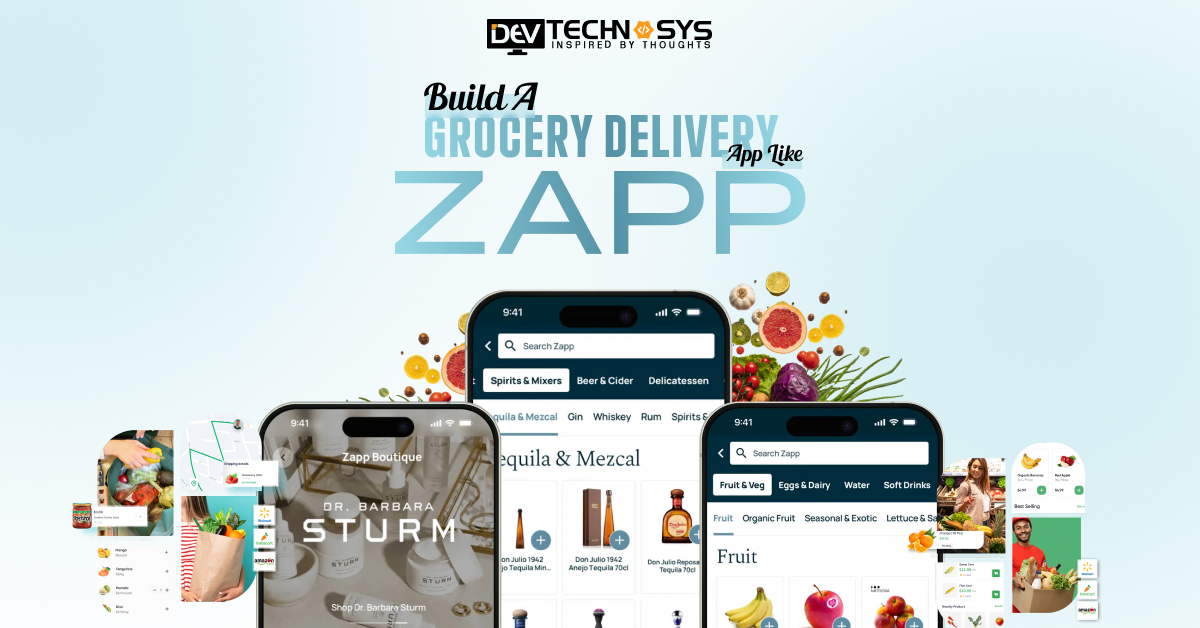
The concept of grocery delivery services existed several years ago as well. Still, they are now gaining momentum due to increasing adoption of smartphones. There are various grocery store delivery apps available in the market; among them, Zapp stands out as the best grocery delivery app with over 1 million downloads on the Google Play Store.
The global grocery delivery app market has seen remarkable growth in recent years, reaching USD 4.3 billion in 2025, and expected to reach USD 12.4 billion by 2033. In hopes of capitalizing on this high market demand, businesses started investing in similar apps like Zapp.
Grocery delivery app development is beneficial for businesses as it increases market reach and improves customer retention rate. In this guide, we will discuss how to build a grocery delivery app like Zapp, along with all essential factors like features, advantages, business models, and more. So, stay tuned in!
Grocery Delivery App Market Stats
- Delivery App Market is projected to grow from USD 81.54 Billion in 2026 to USD 203.90 Billion by 2034, exhibiting a compound annual growth rate (CAGR) of 72% during the forecast period (2026- 2034).
- North America, Asia Pacific, Europe, Latin America, and Middle East & Africa contributed significantly to the grocery delivery market, with North America leading at 40%, followed by Asia Pacific at 30%, Europe at 20%, Latin America at 5%, and Middle East & Africa at 5%.
- The Retail Delivery market has a projected market volume of US$729.82bn in 2026.
- Delivery Hero, through its subsidiary brands which include foodpanda, Glovo, PedidosYa, tabalat and Beamin, has the most active users.
What is The Zapp App?
Zapp is one of the leading Grocery Delivery Apps that helps users shop at their favourite brand stores and helps create the demand for new ones. Grocery apps like Zapp make it easy for people to get what they want, need, or love at great prices with super-fast delivery to their doorstep.
As the best grocery delivery app, Zapp helps you shop for your favourite food, groceries, pet care, electronics, brand stores, and many more with a home delivery service.
Key Features:
- Zapp grocery store delivery app helps users select their favorite food, groceries, stores, and daily essentials.
- Place your order securely by either a Zapp Safe Pay account or cash on delivery.
- Zapp also offers doorstep delivery with an average delivery time of 30 minutes.
- In-store top-ups in the Zapp grocery delivery app allow users an option to transfer their change directly to their Zapp Pay account while paying by cash.
What are the Types of Grocery Delivery Apps?
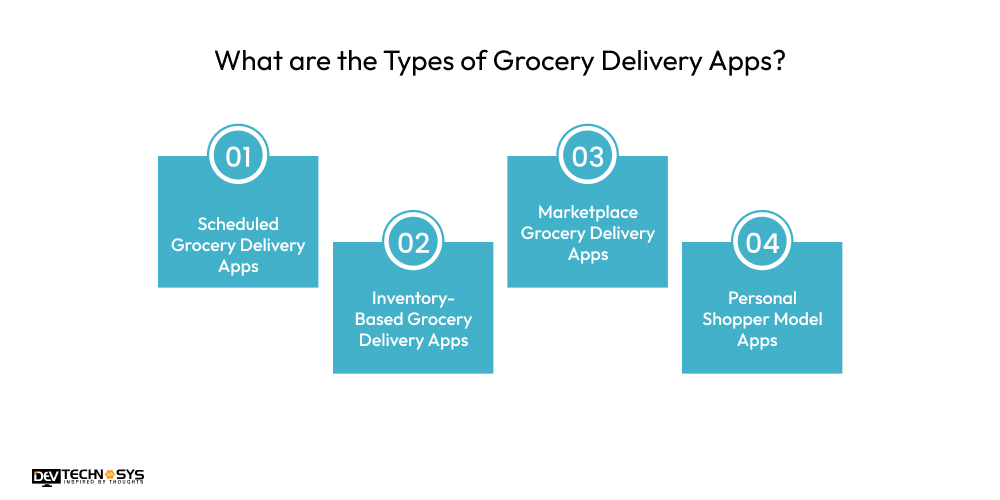
Before reaching out to an on-demand app development company for grocery app development, you need to know what type of 10-minute grocery delivery app you want to build. Here are some major types of grocery delivery apps you can consider:
1. Scheduled Grocery Delivery Apps
Scheduled grocery apps allow customers to place orders in advance, with deliveries made at decided times. They are often used for subscription-based grocery services.
2. Inventory-Based Grocery Delivery Apps
In inventory-based grocery delivery apps, owners take control of their own warehouse or dark stores. These apps offer better control over product quality and delivery speed. An app like Blinkit or Zapp are the perfect example.
3. Marketplace Grocery Delivery Apps
Marketplace grocery delivery apps act as a platform connecting multiple grocery stores with customers. Zapp clone app stores list their products, and delivery is handled by either the app’s logistics or the store.
4. Personal Shopper Model Apps
Personal shopper model app like Kibsons or Zapp allow customers to place orders, and personal shoppers purchase and deliver items from local stores. It is ideal for fresh produce and specialty items that need personal selection.
Why Should Businesses Consider Grocery Delivery App Development?
Before jumping into the grocery delivery app development process, let’s first learn some business benefits. Here are the reasons why businesses should build a grocery delivery app like Zapp:
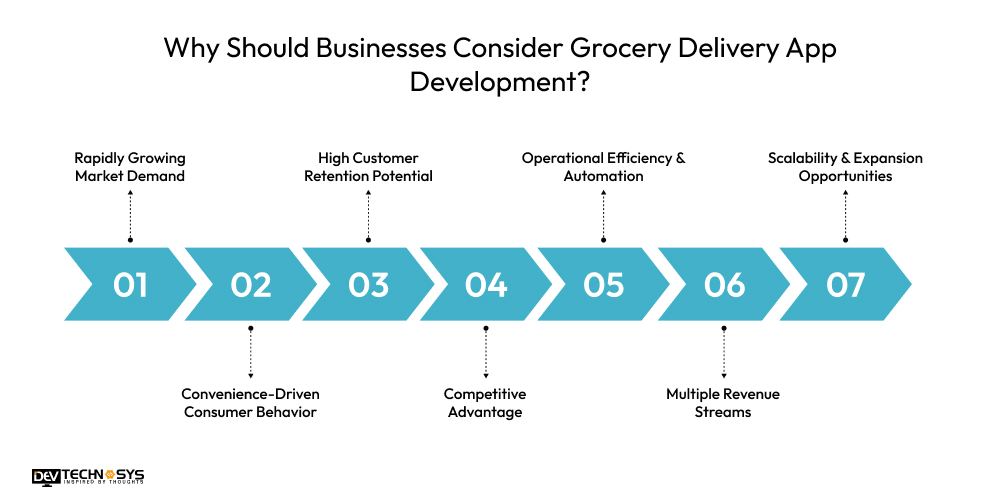
1. Rapidly Growing Market Demand
The global online grocery market is growing at a high rate, thanks to the urban lifestyles and increased digital adoption. Businesses should develop a grocery delivery app like Zapp for its long-term growth potential.
2. Convenience-Driven Consumer Behavior
Build a grocery delivery app like Zapp to provide customers with convenient delivery options. Customers prefer doorstep delivery, so an app like Shipt ensures you meet modern shopping preferences.
3. High Customer Retention Potential
Businesses must create a grocery delivery app like Zapp with Loyalty programs, subscription plans, and personalized offers to increase user engagement and customer retention rate, ensuring steady revenue.
4. Competitive Advantage
An app like zepto with advanced features like real-time tracking and personalized recommendations can set you apart from competitors. So it is beneficial for businesses to build a grocery delivery app like Zapp.
5. Operational Efficiency & Automation
Businesses want to build a grocery delivery app like Zapp for operational efficiency. Zapp alternatives help with Inventory management, order tracking, and route optimization, reducing human error and operational costs.
6. Multiple Revenue Streams
Grocery delivery apps like Instacart make earnings through product sales, delivery charges, in-app ads, premium subscriptions, and partnerships with local vendors. It opens multiple revenue streams for businesses.
7. Scalability & Expansion Opportunities
Businesses want to create a grocery delivery app like Zapp for expansion opportunities. They can start locally and scale to new cities or regions with minimal additional investment once their app is established.
Smart Steps to Develop a Grocery Delivery App Like Zapp
Online grocery app development requires a blend of technical expertise with advanced tools and technologies. The section below highlights the steps to develop a grocery delivery app like Zapp to upscale your business.
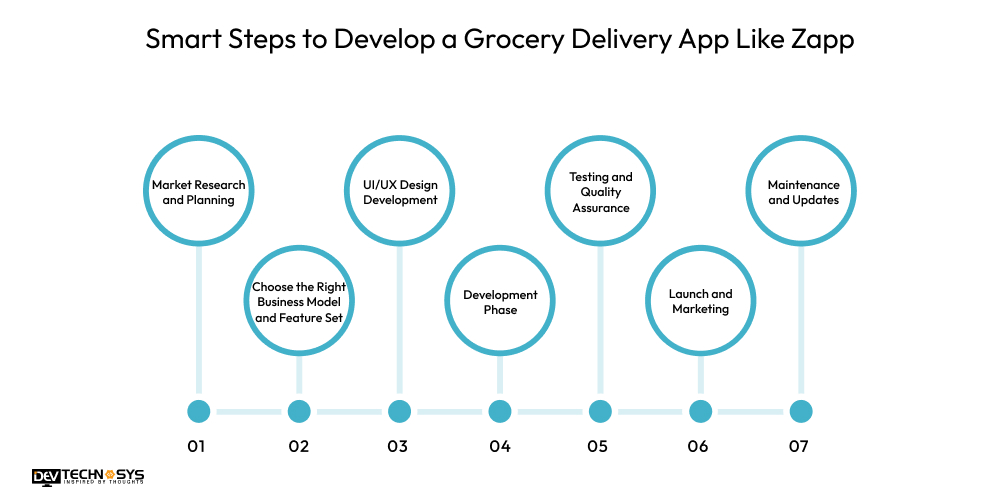
1. Market Research and Planning:
Building a market-leading grocery delivery app like Zapp requires in depth market research. It is essential to analyze the target audience’s needs and preferences so that your app can meet their needs and demands. Study strong competitors to identify what other apps are lacking and what you can provide better, and also think of unique features. To build a delivery service app that leads the competitive market, you need to:
- Define core features (fast delivery, real-time tracking, easy payments),
- Decide your monetization strategy (delivery fees, subscriptions, ads).
- Plan project timeline, budget, and technology stack.
2. Choose the Right Business Model and Feature Set
Building a successful grocery delivery app like Zapp starts with a strategic business model. You can opt for a marketplace model that connects users with multiple stores and earns commissions. You can also choose a Single store model if you want to on brand loyalty, or a warehouse model which controls the entire supply chain. Once your model is chosen, a strong feature set is crucial.
Essential features include a user-friendly product catalog, a shopping cart, and a secure payment gateway. For operational efficiency, you’ll need real-time order tracking and GPS tracking for drivers.To stand out, consider incorporating advanced features such as personalized recommendations or subscription plans to enhance convenience and foster customer loyalty.
3. UI/UX Design Development
The key to successfully developing Zapp clone app is to introduce an intuitive and user-friendly interface that focuses on simple navigation. The purpose of grocery app development is to ensure that customers can easily get the items they are looking for and proceed to purchase quickly.
The UI/UC designing process involves creating wireframes and interactive prototypes. Hire mobile app developers to create a design that ensures a seamless experience for all users, including customers, delivery agents, and store managers. Developers also need to prioritize mobile responsiveness and accessibility.
4. Development Phase
Hire skilled app developers from a top food delivery app development company to build an app like Zapp by adding crucial frontend and backend components. The backend is the foundation of the app, handling all the server-side logic and data.
The step is needed to set up a secure server and a scalable database to store user information, product details, and draw data. The frontend phase, on the other hand, focuses on creating the user-facing part of the app.
Mobile app developers can choose to build native apps or apps for both iOS and Android to expand their reach. Look for skilled in integrating essential features: user registration, product catalog, cart, payment gateways, GPS tracking, and notifications. Build an admin panel for order management, inventory, and analytics.
5. Testing and Quality Assurance
Perform comprehensive testing across devices and operating systems to ensure all features are functioning as expected. Testing is crucial to detect and fix bugs, glitches, crashes, and other performance related issues. Hire top developers from an Android app development company to conduct thorough testing, including login, payment, tracking, and notifications, before launching the app publicly.
6. Launch and Marketing
After passing the testing phase, it is time to deploy the Zapp clone app on Google Play and the Apple App Store. Preparing marketing campaigns using social media, influencer partnerships, and digital ads is necessary for the success of an app.
Hire the best grocery delivery app development company to monitor user feedback and app analytics closely. Regular updates are essential to fix bugs, introduce new features, and enhance the overall user experience, keeping your app competitive, reliable, and engaging in the rapidly growing grocery delivery market.
7. Maintenance and Updates
Providing regular maintenance and updates like new features, bug fixes, and security patches is crucial to ensure the app performs well in the long term. Developers need to continuously optimize delivery routes and app performance and include seasonal offers, new product categories, and loyalty programs.
To build an app like Ocado or Zapp, development experts need to provide 24/7 customer support and actively engage with users to gather feedback.
Features to Incorporate in a Grocery Delivery App Like Zapp
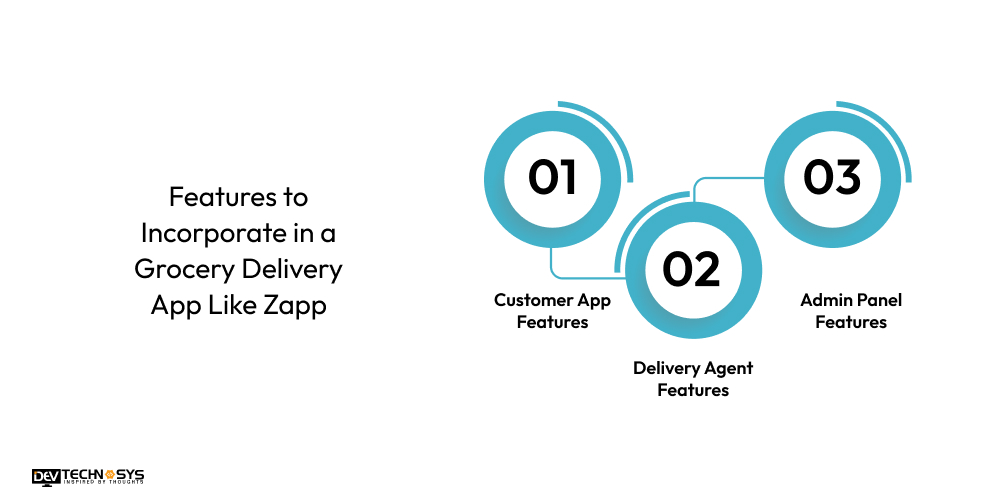
To build a grocery delivery app like Zapp, developers need to incorporate more than just basic features. Here’s the list of essential grocery app development features that apps like Zapp needs to offer seamless user experience and stand out in competitive market:
Feature Type |
Core Features |
Advanced Features |
| Customer App | User Registration & Login; Profile & Address Management; Product Catalog; Search, Filters & Categories; Product Details; Real-Time Stock Availability; Cart & Wishlist; Multiple Payment Methods; Order Placement & Tracking; Push Notifications; Ratings & Reviews; Offers & Promo Codes; Customer Support | AI-Powered Product Recommendations; Personalized Shopping; Voice Search; Smart Search & Filters; One-Tap Reordering; Scheduled & Recurring Orders; Real-Time Delivery Tracking; Dynamic Pricing & Offers; Digital Wallet & Loyalty Rewards; Subscription-Based Grocery Delivery; AI Shopping Assistant |
| Delivery Agent App | Agent Signup & Verification; Profile Management; Online/Offline Status; Instant Order Alerts; Order Acceptance; Route Navigation; Real-Time Delivery Updates; Earnings Dashboard; Payment Tracking; Customer/Admin Communication | AI Route Optimization; Multi-Order Delivery Management; Smart Delivery Batching; Dynamic Route Recalculation; Geo-Fencing; Proof of Delivery with Photo/OTP; Delivery Time Prediction; Automated Earnings Calculation; Performance Analytics; Fraud & Delivery Exception Detection |
| Admin Panel | Central Dashboard; Customer & Agent Management; Product & Inventory Management; Order Processing; Delivery Assignment; Payment & Refund Management; Discount & Promotion Management; Push Notifications; Content Management; Customer Support; Analytics & Reports | AI Demand Forecasting; Predictive Inventory Management; Dynamic Pricing Engine; Automated Delivery Assignment; Real-Time Fleet Monitoring; Advanced Sales & Customer Analytics; AI Fraud Detection; Personalized Promotion Engine; Vendor Performance Analytics; Business Intelligence Dashboard |
| Vendor/Store Panel | Store Registration & Management; Product Management; Inventory Updates; Order Management; Pricing Management; Promotion Management; Sales Dashboard | Automated Inventory Forecasting; AI-Based Demand Prediction; Smart Product Recommendations; Automated Reordering; Real-Time Store Performance Analytics; Dynamic Pricing; Multi-Store Management |
Free App Idea Reality Check: Let's Stress-Test Your Concept
Share your app idea with us. Within 3 business days, we'll uncover UX gaps, feature opportunities, and potential development challenges, so you can build with confidence. No strings attached.
Advanced Features for Grocery Delivery App Like Zapp
Besides the essential customer, delivery, and admin panel features, there are also some advanced features you need to include in Zapp app alternatives:
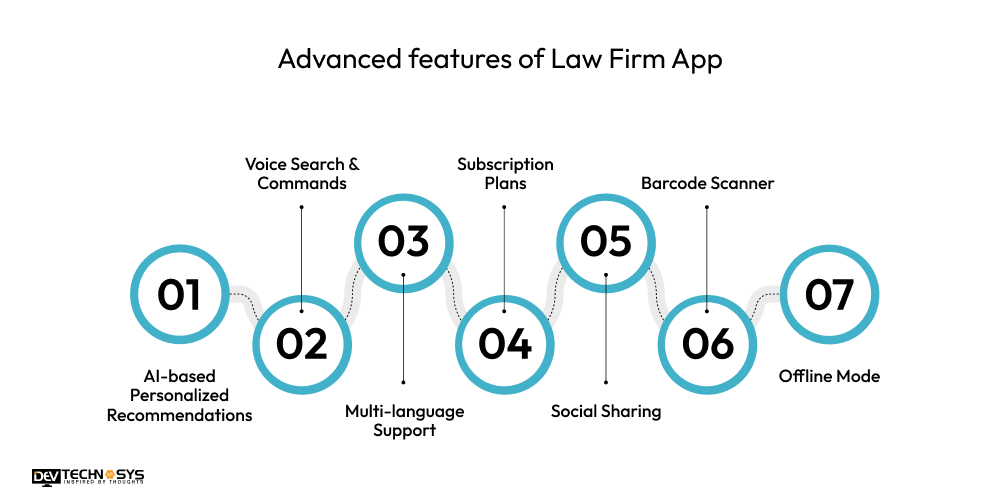
1. AI-based Personalized Recommendations
AI-based personalized recommendation feature uses AI to predict and recommend items, content, or services according to user preferences. Hire a top mobile app development company to incorporate this feature in your Zapp clone app.
2. Voice Search & Commands
Voice search is a crucial feature to add if you want to make an App Like Zapp. Voice search feature offers a hands-free experience by allowing users to search for specific items, check draw dates, or navigate the app without typing.
3. Multi-language Support
Create a mobile app like Zapp with a multi-language support feature. It allows the app’s content, including product descriptions, rules, and navigation, to be displayed in the user’s preferred language.
4. Subscription Plans
The subscription feature introduces a recurring revenue model by offering weekly or monthly subscription plans to receive products and automatically enter draws without manual effort. Thus increasing customer loyalty.
5. Social Sharing
This social sharing feature leverages social media platforms to boost the app’s visibility and user base. It is a great form of organic marketing, building community and generating excitement around the app.
6. Barcode Scanner
Barcode scanner is a helpful feature that enhances the grocery shopping experience by letting users to quickly add products to their virtual cart. It saves time and streamlines the draw entering process.
7. Offline Mode
Offline mode enables users to view previously loaded product catalogs, review their past ticket history, and read draw rules without an internet connection. It is a useful grocery app development feature.
User Case Study: Zapp Grocery Delivery App
Founded in London in 2020 by Joe Falter and Navid Hadzaad, Zapp quickly positioned itself as a premium, ultra-fast grocery delivery service, operating 24/7 through strategically located “dark stores” for rapid order fulfillment. Backed by major investors, including a $200 million Series B round led by Lightspeed and high-profile support from Formula 1 star Lewis Hamilton.
The company raised over $300 million in total funding, enabling expansion to select cities such as Amsterdam, Manchester, and Bristol before consolidating operations to focus solely on London. Zapp remains a competitive quick-commerce player by focusing on speed, premium service quality, and customer loyalty in a demanding urban market.
Why Should Customers Choose Apps Like Zapp?
Decision to build Zapp like app can be advantageous for customers as well. Here are the reasons why customers should choose similar apps like Zapp for their daily grocery needs.
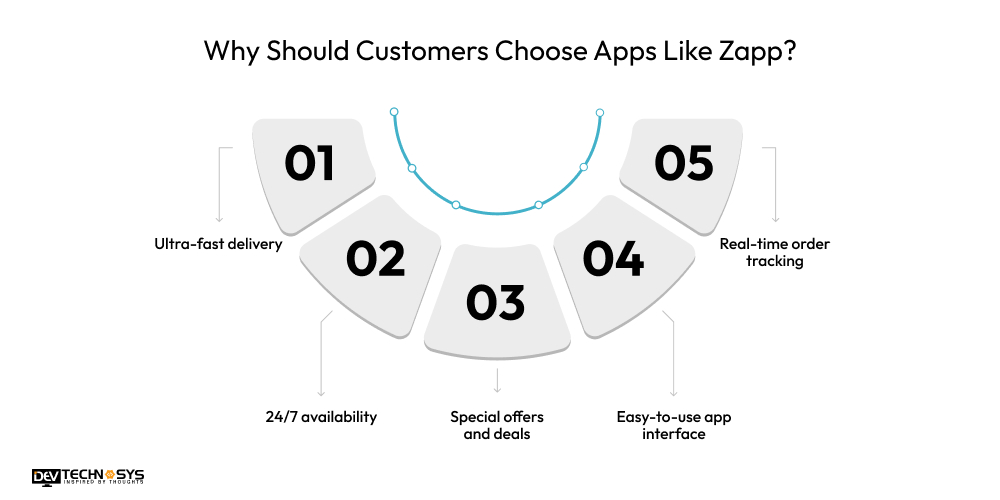
- Ultra-fast delivery: The zapp grocery delivery app provides fast delivery of grocery and other items within minutes, making last-minute shopping stress-free.
- 24/7 availability: The app like Zapp allows users to shop whenever you need, whether it’s early morning breakfast items or late-night cravings.
- Special offers and deals: The Zapp clone app provides exclusive deals, discounts, and loyalty rewards and opportunity to earn points to save more on future purchases.
- Easy-to-use app interface: Simple navigation and smart search features help you find and order products in seconds, enabling fast and seamless grocery shopping experience.
- Real-time order tracking: Know exactly when your order will arrive with live updates from checkout to delivery, providing transparency.
What is the Cost to Develop a Grocery Delivery App Like Zapp?
The grocery shopping mobile app development cost typically ranges between : $30,000 to $150,000+. There are various factors that can affect the Zapp app development cost including features, app complexity, platform choice, design of app, and more.
The basic grocery app development cost with limited features will be around $8,000 to $18,000. On the other hand, the cost to develop an app like Zapp with advanced features like voice search, multiple payment methods and real-time delivery status updates can rise up to $25,000 and above.
App Complexity |
Estimated Cost (USD) |
| Basic Grocery Delivery App (MVP) | $30,000–$50,000 |
| Mid-Level Grocery Delivery App | $50,000–$100,000 |
| Advanced Grocery Delivery App | $100,000–$150,000+ |
Factors Affecting Grocery Delivery App Development Cost
Now that we have learned about the cost to develop a grocery delivery app like Zapp, let’s move on to the cost-affecting factors. Here are the factors that can influence the grocery delivery app development cost.
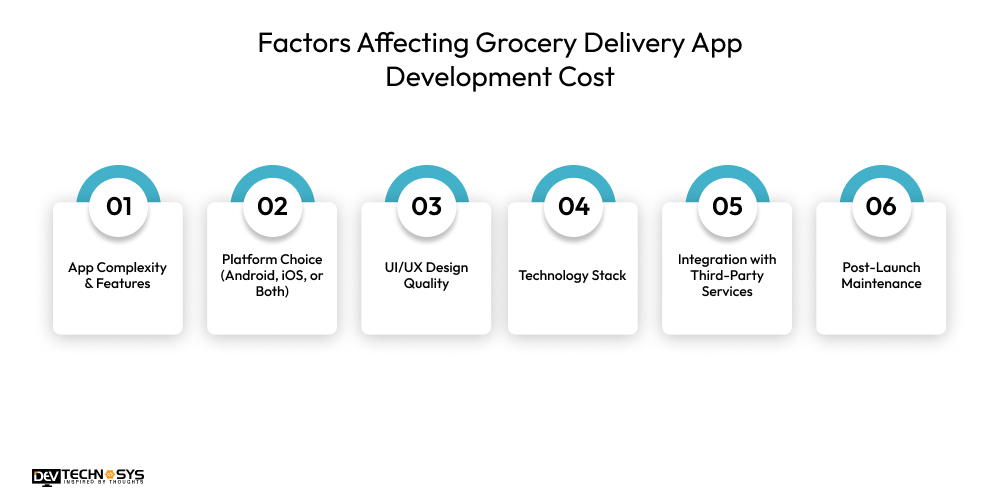
1. App Complexity & Features
The grocery app development cost can vary depending on the number of advanced features added to the app. The advanced feature may include AI recommendations, multi-payment systems, and real-time tracking. The cost to build an app like Zapp with advanced features requires a greater investment of time and budget for development.
Complexity Level |
Description |
Estimated Cost Range |
| Basic | Core features like product listing, cart, checkout | $8,000 – $12,000 |
| Mid-Level | Adds order tracking, multiple payment methods, offers | $12,000 – $18,000 |
| Advanced | AI-based recommendations, subscription plans, analytics | $18,000 – $25,000 |
 >
>
2. Platform Choice (Android, iOS, or Both)
The cost to build an app like Zapp for both platforms (iOS and Android) can increase the development cost. Whereas the grocery app development cost for native apps (either Android or iOS) is comparatively less than the cross-platform approach.
Platform |
Description |
Estimated Cost Range |
| Single Platform (Android or iOS) | Native or cross-platform targeting one OS | $8,000 – $14,000 |
| Cross-Platform | Flutter/React Native for both platforms | $12,000 – $18,000 |
| Native for Both Platforms | Separate builds for Android & iOS | $18,000 – $25,000 |
3. UI/UX Design Quality
A high-quality, visually appealing, and user-friendly design with animations or branding elements will demand more design hours than a basic interface, thus increasing the cost to create a grocery app like Zapp. A polished design builds trust and makes the app more appealing to users.
Design Level |
Description |
Estimated Cost Range |
| Basic UI | Simple layouts, minimal branding | $8,000 – $11,000 |
| Standard UI/UX | Branded theme, responsive layouts, better visuals | $11,000 – $17,000 |
| Premium UI/UX | Custom animations, micro-interactions, advanced visuals | $17,000 – $25,000 |
4. Technology Stack
The grocery store billing software cost can rise with the selection of programming languages, frameworks, and backend infrastructure (e.g., Flutter, React Native, Node.js). This selection of tech stack affects both cost and performance. Hire skilled developers who will pick the right tech stack for your grocery app.
Stack Choice |
Description |
Estimated Cost Range |
| Basic Stack | Simple backend, standard frameworks | $8,000 – $12,000 |
| Optimized Stack | Cloud-based hosting, optimized APIs | $12,000 – $18,000 |
| Advanced Stack | Scalable backend, microservices, advanced frameworks | $18,000 – $25,000 |
5. Integration with Third-Party Services
Incorporating features such as payment gateways, delivery route optimization APIs, analytics platforms, or loyalty programs increases the Zapp app development cost. However, not including these services can highly degrade the performance and quality of your app.
Integration Level |
Description |
Estimated Cost Range |
| Basic | Payment gateway & basic analytics | $8,000 – $10,000 |
| Mid-Level | Route optimization, loyalty programs | $10,000 – $15,000 |
| Advanced | AI-based personalization, CRM integration | $15,000 – $25,000 |
6. Post-Launch Maintenance
The cost to build a grocery delivery app like Zapp can increase due to grocery delivery app maintenance services. Post-launch services like continuous updates, bug fixes, and feature enhancements will incur additional ongoing costs to keep the app competitive.
Maintenance Level |
Description |
Estimated Annual Cost |
| Basic | Bug fixes & small updates | $2,000 – $4,000 |
| Standard | Regular updates & feature improvements | $4,000 – $7,000 |
| Advanced | Continuous monitoring, major upgrades | $7,000 – $10,000 |
How AI Enhances Grocery App Development?
Artificial Intelligence (AI) is transforming grocery delivery apps by making them more intuitive, efficient, and customer-centric. From personalizing the shopping experience to streamlining backend operations AI helps businesses manage inventory, optimize delivery routes, and ensure accurate order fulfillment.
By integrating AI into a grocery delivery app, businesses can stay ahead of competitors, reduce costs, and meet rising customer expectations in a highly competitive market.
AI enhances grocery delivery app development by offering:
- Personalized Suggestions: AI recommends products based on user behavior.
- Smart Pricing: Adjusts prices dynamically as per demand and trends.
- Voice & Chat Support: Enables easy ordering via voice or chatbots.
- Stock Predictions: Forecasts demand to manage inventory efficiently.
- Fast Delivery Routes: Optimizes paths for quicker deliveries.
- Fraud Prevention: Detects and blocks suspicious activities.
Monetization Strategies for Zapp Like Grocery Delivery Apps
A similar app like Zapp must include multiple potential revenue streams. When implemented strategically, these revenue generating strategies can make the platform more sustainable and profitable. These strategies include:
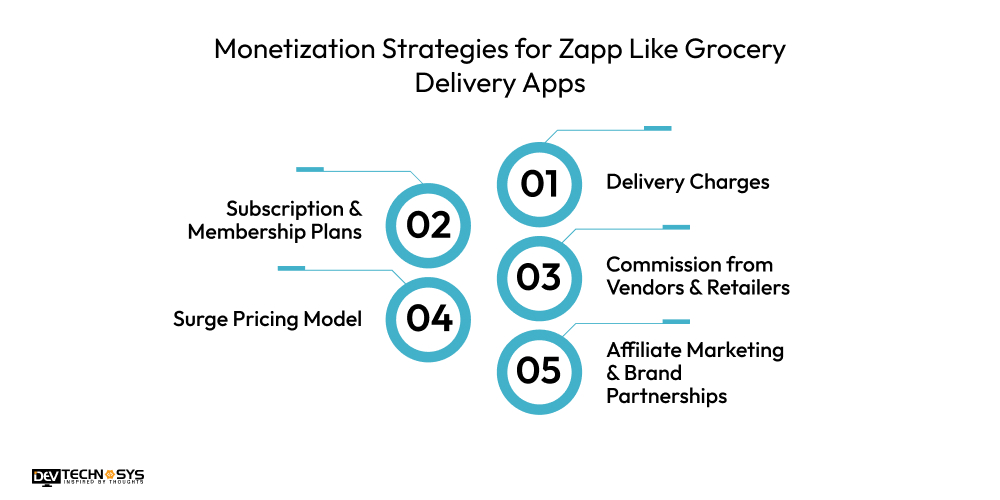
1. Delivery Charges
Charging a small amount of delivery fee per order is a straightforward and widely used model. Charges are based on factors like delivery distance, order volume, or time sensitivity. For example, same-day or instant deliveries cost a higher fee than scheduled deliveries.
2. Subscription & Membership Plans
According to companies providing Android app development services, offering monthly or annual subscription models provides customers with benefits like unlimited free deliveries, exclusive discounts, early access to sales, or priority delivery slots. This model ensures predictable recurring revenue.
3. Commission from Vendors & Retailers
The same-day grocery delivery app can take a fixed percentage commission from partner grocery stores on each order processed through the platform. This is a primary monetization driver in most delivery marketplaces, incentivizing the platform to bring high sales volume to vendors.
4. Surge Pricing Model
Similar to ride-hailing apps, prices can increase during peak demand hours, holiday seasons, or weather disruptions. According to a top supermarket billing software development company, this not only boosts revenue but also manages demand by encouraging off-peek ordering.
5. Affiliate Marketing & Brand Partnerships
By collaborating with consumer goods brands, an instant grocery delivery app can offer exclusive deals or bundled offers, making a commission for every transaction done or item sold via affiliate agreements. This also strengthens brand relationships and customer loyalty.
Planning a Grocery Project?
Get a tailored development cost estimate in a few simple steps.
- 3 quick steps
- 100% free
- Reply in 1 business day
2 Minutes Read
Security and Compliance for a Grocery Delivery App
In 2026 and beyond, security & compliance have become integral parts of online grocery store development. This is because the solution contains payment details, order history, and customers’ addresses, all of which are sensitive information.
Developers implement ISO standards to ensure that, even when the application is accessed by multiple users on multiple devices, the data remains secure. Businesses can implement security practices such as data encryption and API security to handle vulnerabilities. SOC 1 and SOC 2 are implemented for financial reporting and to maintain the app’s credibility.
These are not enough because location-specific compliance is also necessary. CCPA should be used for the California region, while GDPR is specific to Europe. While these compliances can add to the total budget, they are worth it for a business to maintain long-term credibility.
Conclusion
To build a grocery delivery app like Zapp, you need a clear and well-structured concept and development strategy. Start by identifying essential features such as simple product search, real-time order tracking, multiple secure payment options, and personalized recommendations to enhance the shopping experience.
Therefore, it is advisable to partner with an experienced grocery delivery app development company, such as Dev Technosys, to ensure a smooth and seamless development process.Stay tuned for more informative updates.
Frequently Asked Questions
Find answers to the most common questions related to this article.
The cost of developing a grocery delivery app like Zapp typically ranges between $30,000- $150,000+. This cost can vary depending on various factors like features, platform choice, complexity of app, tech stack, and more.
The process to develop a grocery delivery app like Zapp includes:
Build backend infrastructure (server, database, APIs).
Develop frontend apps for iOS and Android.
Integrate core features (registration, payments, tracking).
Create an admin panel for management.
Use a scalable and secure technology stack.
Before launching the grocery delivery app, it must undergo several tests and quality assurance measures. It includes:
Conducting functional and usability testing.
Perform performance and load testing.
Test security and data protection.
Identify and fix bugs promptly.
Yes, post-launch maintenance is essential for a grocery delivery app because it ensures smooth performance. The maintenance services include:
Validating smooth user experience across devices
Monitor app performance and fix bugs regularly.
Ensuring app security with timely patches.
Updating features based on user feedback.
Optimizing for new OS versions and devices.
Improving app speed and reliability continuously.
Keeping user experience fresh and engaging.
Supporting long-term growth and competitiveness.
Yes, Artificial Intelligence technology can enhance user experience and operational efficiency. It allows personalized product recommendations, improves demand forecasting, and streamlines smart inventory management to reduce wastage and stock-outs.