








Key Takeaways:
The online grocery delivery market size is estimated to grow from USD 0.91 trillion in 2026 to reach USD 43 trillion by 2031.
The cost to build a Multi-vendor grocery marketplace like Shipt lies between $8,000 and $30,000+, depending on features, platform choice, design, tech-stack, and location of development team.
To develop a simple grocery delivery startup solution, your development firm might take around 2 to 4 In comparison, mid-level and advanced apps require 6+ months.
To monetize a grocery delivery app, you need strategies like subscription plans, delivery charges, vendor commissions, in-app advertising, and convenience fees.
Imagine having the power to turn your everyday grocery shopping into a smooth, on-demand experience for users? No, we are not kidding. That’s what apps like Shipt can do for you, enabling users to browse, order, and receive everyday groceries within hours. That’s exactly what modern consumers expect today!
Platforms like Shipt are thriving as the global online grocery delivery market reached USD 1.06 trillion in 2026, with projections for 2031 of USD 1.74 trillion, growing at a 10.47% CAGR over 2026-2031, according to Morder Intelligence.
For entrepreneurs, this presents a massive opportunity. With over 850 million users annually ordering groceries online, developing a grocery delivery app can open a stable income source, recurring users, and long-term growth for businesses.
Read this guide till the end to know how to build an app like Shipt, covering all essentials, including development steps, features, costs, benefits, and more. We will cover every crucial aspect to help turn your idea into a successful on-demand business.
What is the Shipt App?
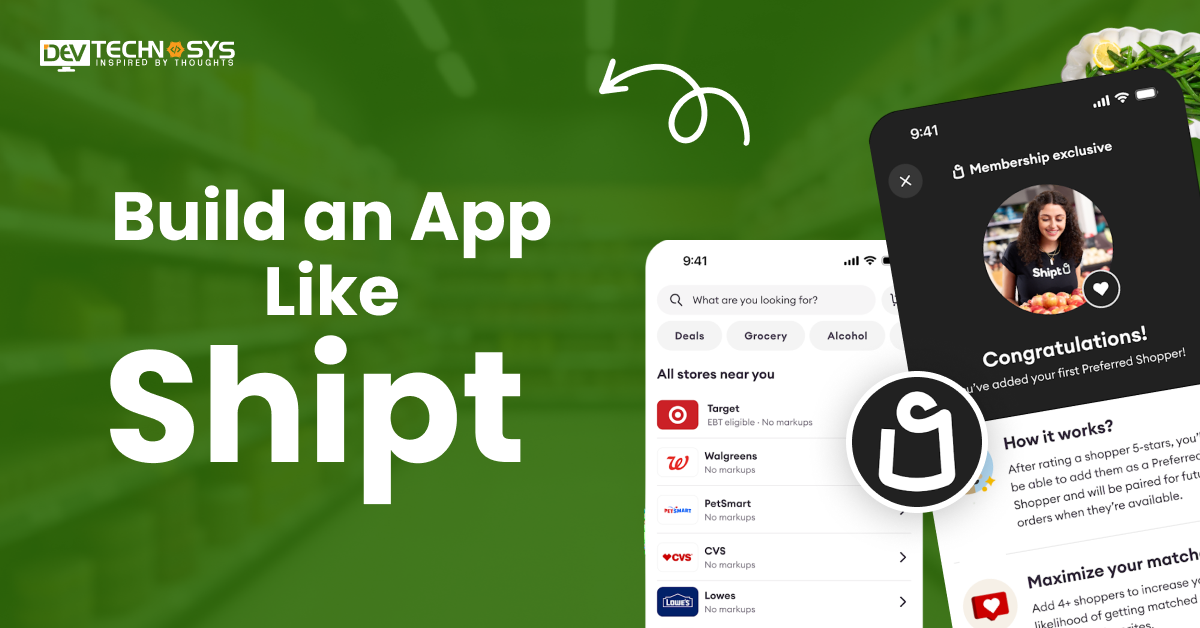
The Shipt App is a mobile platform that allows users to order groceries and more from their local stores and have them delivered to their doorstep on the same day. It may not be the largest, but it is definitely one of the most popular on-demand grocery delivery platforms in USA.
The Shipt app is available on both iOS and Android platforms. By bagging millions of downloads and providing grocery delivery services across 5,000 cities from over 130 retailers, it has become one of the prime examples of top-class grocery delivery app development.
Shipt is popularly known as the “same-day grocery delivery app.” The app covers over 20+ categories. But mainly it can be divided into two categories (The Fresh and From the Home)
How Does the Shipt App Work?
With the demand for on-demand grocery apps continuing to rise, businesses can invest in super app development like Shipt that offers convenience and stable revenue growth. Understanding how apps like Shipt work is simple. Let’s understand the functionality of apps liek Shipt in a few simple steps.
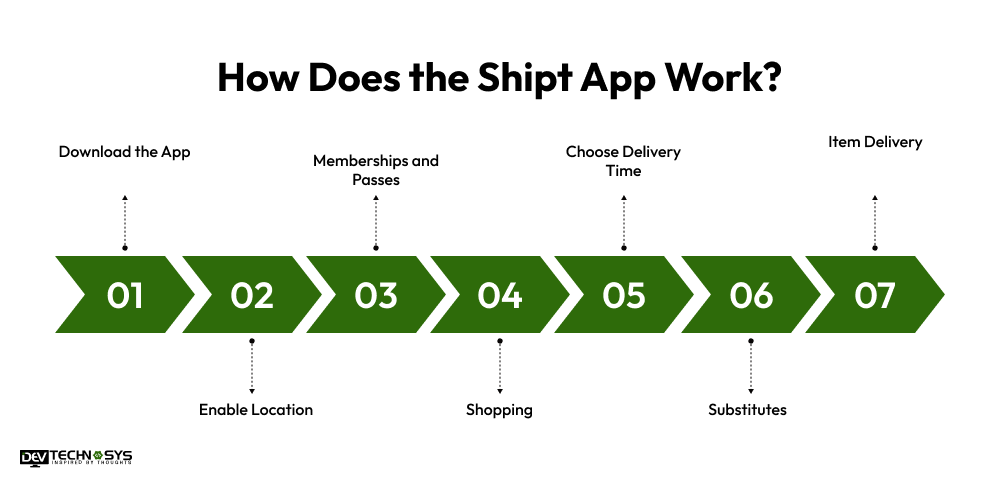
1. Download the App: First, you need to download the app like Shipt, on your phone and sign up using your mobile number and e-mail by browsing the grocery stores and products.
2. Enable Location: Location access helps users find the local store, delivery availability, and precise delivery estimates to offer a smoother experience.
3. Memberships and Passes: The grocery delivery app allows users to register for membership plans to reap the benefits, such as free deliveries, special offers, and discounts.
4. Shopping: Customers use the app to browse the products, add items to the cart, and utilize filters or recommendations to help them choose.
5. Choose Delivery Time: Users choose a delivery time slot that suits their schedule and availability.
6. Substitutes: Customers can outline their choices for replacements if an item is out of stock, allowing for adaptability when shopping.
7. Item Delivery: A grocery delivery app solution like Shipt allows shoppers to select and deliver the item, and users may follow it in real-time and give delivery and comments.
Grocery Delivery App Market Insights
The online grocery delivery market size is estimated to grow from USD91 trillion in 2026 to reach USD 2.43 trillion by 2031, at a CAGR of 21.68% during the forecast period (2026-2031)
Quick commerce, although smaller, is redefining consumer expectations with sub-30-minute fulfillment. The model posts a 45% forecast CAGR through 2031.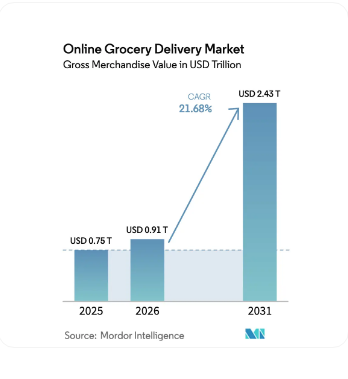
Pure-play e-grocery platforms, unburdened by legacy real estate, are scaling rapidly at a projected 95% CAGR.
By platform type, pure-play e-grocery platforms are forecast to register the highest CAGR at 95% over 2026–2031.
What are the Different Types of Grocery Delivery Apps?
Before exploring further, let’s take a look at the different types of grocery delivery apps that are ruling the market today. Each app type needs a unique business model, catering to different user needs, helping businesses select the right method.
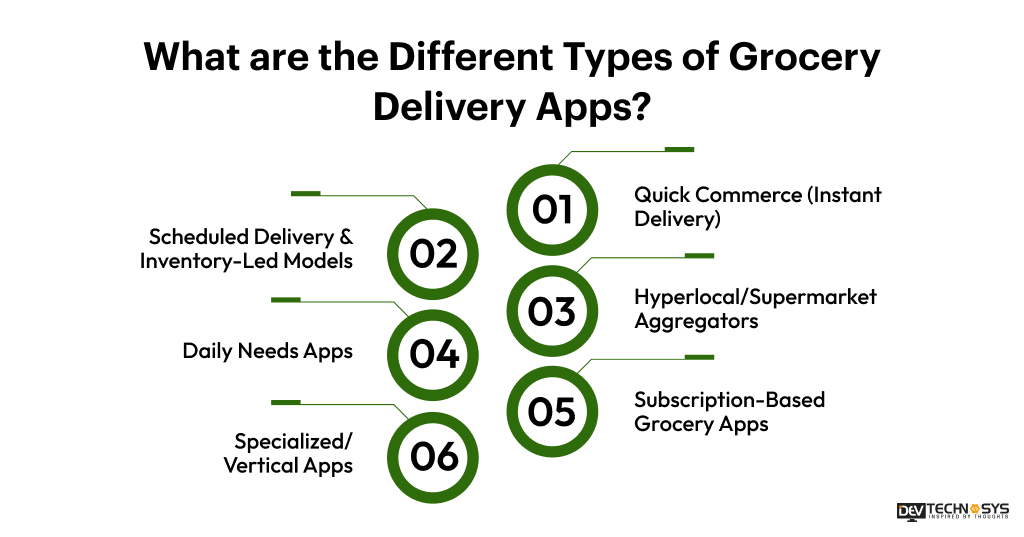
1. Quick Commerce (Instant Delivery):
Just like its name, the quick commerce app is known to provide instant delivery of groceries. It focuses on speed and convenience. These types of applications cater to people’s last- minute grocery requirements, including buying milk in the morning, snacks for parties, or a missing ingredient for a recipe.
2. Scheduled Delivery & Inventory-Led Models:
The scheduled delivery and inventory-led models focus on planned deliveries and in-house stock management. It is the best app for monthly household restocking and when you need a wide variety of fresh vegetables, electronics, and home essentials. The scheduled delivery app’s main focus is on efficiency and reliability over speed.
3. Hyperlocal/Supermarket Aggregators:
A hyperlocal or Supermarket aggregator app connects users to the local stores and nearby supermarkets, offering quick and hassle-free deliveries. These apps are best suited for customers who only prefer buying certain brands. The top examples include Instacart and Glovo. Thinking of hyperlocal grocery and food delivery app development in USA? Contact a top development provider with specialized skills.
4. Daily Needs Apps:
The daily need app is a bit different from other grocery delivery apps because it mainly delivers morning essentials ( milk, bread, eggs). To get these morning essentials delivered, users need to place the order the night before. The example includes: MilkBasket, Supr Daily.
5. Subscription-Based Grocery Apps
Top app development companies create subscription-based grocery apps for providing regular deliveries and subscription plans, including weekly or monthly grocery packages. These subscription-based on-demand grocery delivery apps ensure convenience and predictable revenue for businesses.
5. Specialized/Vertical Apps:
The specialized apps are used to order fresh meat, poultry, and seafood. The apps deliver these items to your doorstep within hours. Apps like ButcherBox are the perfect example of this model. It ensures curated, high-quality products and doorstep delivery for premium customer experiences.
Why Businesses Must Invest in Shipt Clone App Development?
There’s high demand for grocery delivery apps like Shipt in the market, creating huge opportunities for businesses to enter the digital delivery space. And what are the benefits of investing in Shipt app development? Well, let’s find out:
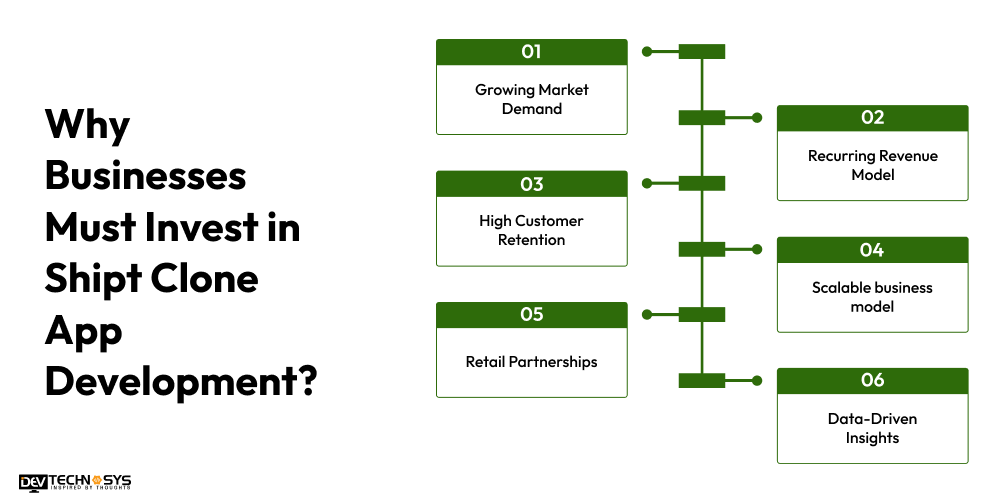
Growing Market Demand: Demand for online grocery shopping and doorstep delivery has grown significantly over the past few years, creating a significant opportunity for firms.
Recurring Revenue Model: Grocery delivery applications such as Shipt include subscription plans and delivery fees that can generate a consistent income.
High Customer Retention: The convenience and speedy delivery offered by these supermarket delivery apps might lead to repeat usage.
Scalable Business Model: Top grocery delivery app development companies should design an app like Shipt so that they can quickly reach across many regions and marketplaces to grow their business.
Retail Partnerships: Businesses that wish to partner with local establishments to extend their product offers can invest in apps like Shipt.
Data-Driven Insights: These grocery applications allow tracking user behavior to optimize the services & marketing.
This is how the Shipt clone app helps businesses build a scalable, profitable, and future-ready delivery platform.
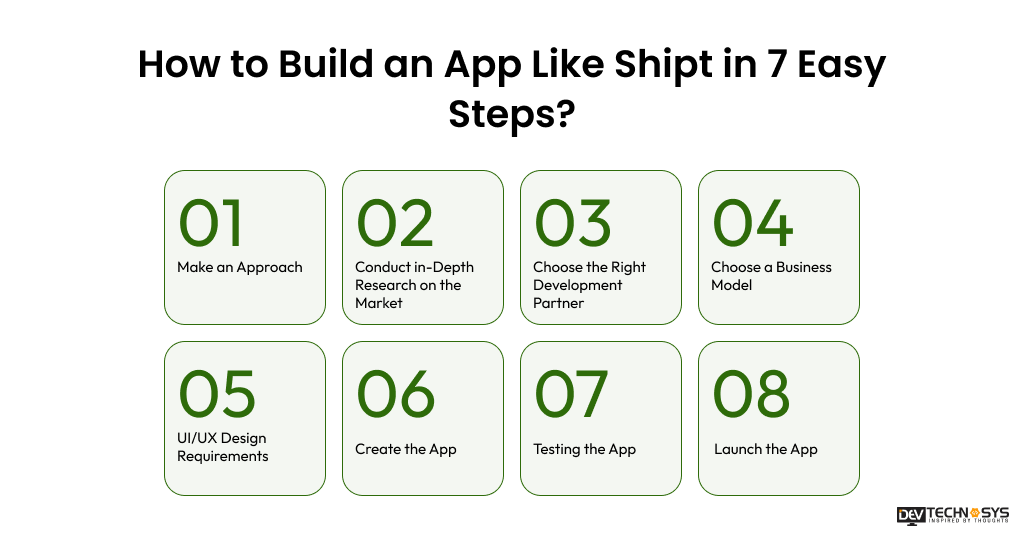
How to Build an App Like Shipt in 7 Easy Steps?
Do you want to build an app like Shipt? Well, grocery delivery app development involves making a clear strategy by merging smart planning, advanced technology, and user-centric features. Here’s a detailed process to design a scalable, efficient, and high-performance supermarket delivery platform.
Step 1. Make an Approach
Start the process of Shipt clone app development by listing your business needs. This way, you will be able to see why and how the app will be beneficial for your business. Decide what sets your grocery app apart from others. Businesses should also decide which grocery delivery app features are the most important to them. To develop a perfect app strategy, consider a range of factors when creating your app.
Industry Insights: According to Statista, the grocery delivery market growth is fueled by e-commerce adoption, changing consumer lifestyles, and demand for time-saving solutions
Step 2. Conduct in-Depth Research on the Market
Conducting research is one of the most important steps. To build an app like Shipt, your company needs to have an idea of the market’s behavior and new trends. Conduct competitor research to know their strength and create a strong strategy. Knowing what your target audience wants is also extremely crucial. Conducting research beforehand will help your team with smooth development and launch.
Step 3. Choose the Right Development Partner
After the market analysis, it’s time to select a reliable mobile application development company that will help you with the Shipt clone app development. They will ensure your app meets your business objectives. Search for a top Android app development company because the process might take some time. Don’t go overboard and select features and technologies that meet your objectives and best meet every one of the standards.
Step 4: Choose a Business Model
Choosing the correct business model is important to develop an app like Shipt. Select either a subscription, aggregator, or inventory-led business model. This decision will have a direct influence on revenue streams, operational processes, scalability, and long-term profitability. If you are not sure, you should work with your development team to determine which method is best for your business goals, target audience, and market trends.
Model |
Description |
Advantage |
| Subscription-Based | Users pay recurring fees for benefits like free delivery and discounts. | Stable, recurring revenue |
| Aggregator | Connects multiple stores without owning inventory. | Low cost, wide choice |
| Inventory-Led | The company owns stock and manages delivery. | Full control over quality |
| Hyperlocal | Partners with nearby stores for fast delivery. | Quick service, local reach |
| Marketplace | Multiple vendors sell via one platform. | Scalable product variety |
Step 5: UI/UX Design Requirements
Hire designers from a top development company to build a clean, intuitive, and user-friendly user interface for customers, shoppers, and admins. Prioritize easy navigation, quick checkout, and appealing visuals to improve the usability. A strong UI/UX ensures better user experience, higher retention rates, improved conversions, and overall app performance across different devices and platforms.
Step 6: Create the App
Your food delivery app development company will start by building wireframes and frontend interfaces, and then step by step build a Node.js backend for delivery apps. Integrate all required features, third-party APIs, and essential functionalities for smooth operations. Maintain continuous communication with stakeholders to ensure the app aligns with business goals, user expectations, and delivers a seamless, scalable experience.
Step 7. Testing the App
Once the Flutter delivery app development is done, it’s the quality assurance team’s turn to test the app for any bugs, glitches, and performance issues. Hire a grocery delivery app development firm that will test the app to ensure there are no bugs or performance issues that can affect the smooth user experience. After ensuring the function runs smoothly, the app will be deployed on app stores.
Step 8. Launch the App
You need to find an appropriate platform to distribute the software on the market. Users will be able to download the app from the iOS or Android store. The operating system might be the basis for the platform. After the launch, hire a major tech company founded in San Francisco to monitor your app on the basis of user ratings and keep updating it periodically for a better user experience.
Top 10 Shipt Alternatives Making Waves in 2026
Shipt is an amazing grocery delivery app, but it’s not the only one. Here are the top 10 Shipt app alternatives that you can explore in 2026. All the apps mentioned in the list below provide convenient grocery delivery, real-time tracking, and seamless payment options.
Platform |
Launch Year |
Ratings |
Platform Availability |
| Instacart | 2012 | 4.8 | iOS, Android, Web |
| DoorDash (Merchants) | 2013 | 4.6 | iOS, Android, Web |
| Gopuff | 2013 | 4.5 | iOS, Android |
| Walmart+ | 2020 | 4.4 | iOS, Android, Web |
| Amazon Fresh | 2007 | 4.5 | iOS, Android, Web |
| FreshDirect | 1998 | 4.3 | iOS, Android, Web |
| Thrive Market | 2014 | 4.5 | iOS, Android, Web |
| Roadie | 2014 | 4.3 | iOS, Android |
| Dumpling | 2017 | 4.5 | iOS, Android |
| Metrobi | 2019 | 4.5 | Web, SaaS |
1. DoorDash (For Merchants)
DoorDash is a high-tech food delivery and logistics business founded in January 2013. DoorDash provides on-demand delivery and links customers with local restaurants, grocery shops, and retail merchants. The app provides features (user panel and delivery agent panel) such as time monitoring, several payment choices, and effective logistics support. The software lets merchants reach out and deliver things to customers within minutes.
Industry Insights: According to Busines of Apps, DoorDash holds over 60% market share in the US, or up to 66% according to some reports.
2. Gopuff
Gopuff is an immediate delivery service bringing groceries, snacks, and everyday needs to your door, frequently within minutes. It operates in more than 1,000 cities in the US and UK, running 24/7 or late night and often charging a flat $2.95 delivery cost. On-demand logistics app development like Gopuff is best suited for those who want fast, trustworthy, and on-demand convenience services.
3. Walmart+
Walmart+ is a subscription service started by Sam Walton in 1962. It runs approximately 10,750 stores and eCommerce sites in 19 countries, serving a weekly client base of around 270 million. Same-day delivery from Walmart stores is a cost-effective choice for regular shoppers desiring convenience and savings. If you want to build on-demand app development solutions like Walmart, then contact a reliable app development company in USA..
4. Amazon Fresh
From Amazon, Amazon Fresh is a grocery delivery service that offers a large selection of fresh produce, household products, and everyday needs. It offers same-day delivery to Prime members and, in select areas, a “Just Walk Out” technology that lets customers shop without checking out in stores.
What Key Features are Used to Develop an App Like Shipt?
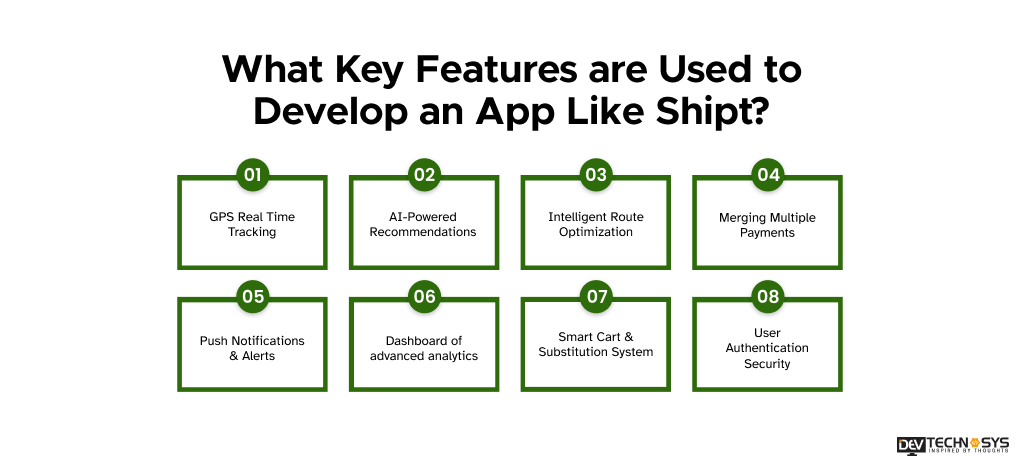
Develop an app like Shipt will require a set of crucial and advanced features to enhance the performance and appeal of your app. Adding the right features, such as route optimization and in-app payment, to a grocery app ensures seamless operations, real-time tracking, and a seamless grocery delivery experience for all users.
Customer Panel |
Driver Panel |
Admin Panel |
| User registration/login | Order acceptance/rejection | User & driver management |
| Product browsing & search | Real-time navigation | Order monitoring |
| Cart & checkout system | Pickup & delivery updates | Store/inventory control |
| Real-time order tracking | Route optimization | Payment & commission tracking |
| Multiple payment options | Earnings dashboard | Analytics & reports |
| Delivery scheduling feature | Availability status | Notification management |
| Order history & reviews | In-app chat support | System configuration |
1. GPS Real Time Tracking
A real-time order tracking app lets users see the delivery status and live location of the driver on the map. Real-time GPS tracking feature ensures transparency, creates trust, and improves overall client satisfaction.
2. AI-Powered Recommendations
It is an important feature that evaluates the user’s activity, purchase history, and preferences to recommend the right products. AI-powered recommendations help with engagement increase, enhance the grocery shopping experience, and increase overall conversion rates for the platform.
3. Intelligent Route Optimization
The app uses smart route optimization and algorithms to figure out the shortest route to the destination, enabling efficient delivery. Having smart route optimization reduces delivery time, fuel costs, and improves delivery efficiency for drivers and businesses.
4. Merging Multiple Payments
With multiple payment options involved, users can pay through their credit/debit cards, UPIs, in-app wallets, and digital payment gateways. It ensures secure transactions and offers users flexible and convenient check-out options.
5. Push Notifications & Alerts
Push notifications are a crucial feature to add if you want to build an app like Wolt. It provides users with real-time updates about their orders, offers, and delivery status. These real-time push notifications in delivery apps increase engagement, retention, and repeat usage of the app.
6. Dashboard of Advanced Analytics
The analytics dashboard provides valuable data and insights on sales, user behavior, and delivery success. This feature allows firms to make data-driven decisions and optimize operations efficiently.
7. Smart Cart & Substitution System
The smart cart will recommend a substitute for the sold-out item from the inventory. This feature allows users to approve or adjust substitutes at checkout, offering a smooth shopping experience.
8. User Authentication Security
Cloud-based grocery app development requires secure authentication to ensure safe access through OTP, email verification, or social sign-ins. It also secures user data and avoids fraud. It also helps establish confidence by ensuring account security is solid across the platform.
Industry Insights: According to WIfiTalents, the U.S. grocery market itself is massive, reaching around $1.5 trillion, with increasing digital transformation.
Tech Stack Required to Build an App Like Shipt
Experts providing iOS and Android app development services create a high-end grocery delivery app like Shipt using a robust and scalable technology stack. Adding technologies like RESTful APIs / GraphQL APIs, Cloud Computing, microservices architecture, and SQL / NoSQL helps manage real-time operations, user interactions, and logistics management.
According to a top mobile app development company in usa, the right combination of frontend, backend, and cloud technologies ensures smooth performance and reliability. A well-structured grocery app tech stack also supports fast development, secure transactions, and efficient delivery tracking for both users and drivers.
Layer |
Technologies |
| Frontend (Mobile App) | Flutter, React Native, Swift, Kotlin |
| Backend Development | Node.js, Django, Laravel, Spring Boot |
| Database Management | MongoDB, MySQL, PostgreSQL |
| Real-Time Tracking | Socket.io, Firebase Realtime DB, |
| Cloud & Hosting | AWS, Google Cloud, Microsoft Azure |
| Maps & Navigation | Google Maps API, Mapbox |
| Payment Gateway | Stripe, PayPal, Razorpay |
| Push Notifications | Firebase Cloud Messaging (FCM) |
| DevOps & CI/CD | Docker, Kubernetes, Jenkins |
| Analytics Tools | Google Analytics, Mixpanel |
What is the Average Cost to Build an App Like Shipt?
The cost to develop a mobile app is around $8,000 to $30,000+, depending on features, platform choice ( Android & iOS), UI/UX design, tech-stack, security, and maintenance.
Simple Grocery App: Developing a simple grocery app would cost you somewhere between $8,000 and $15,000. Such apps come with only basic features and functionality. The ideal way to test the market and confirm customer demand is before heading to advanced features.
Mid-Level Grocery App: To develop a Mid-level grocery app, you need to balance functionality, performance, and better operational control without high enterprise costs. Generally, the grocery delivery app development cost for mid-range apps will fall under $15,000 to $22,000.
Advanced Grocery App: Shipt clone app cost for advanced features like AI, real-time tracking, and scalable architecture will exceed the development cost to $30,000 or even higher.
App Type |
Estimated Cost (USD) |
Development Timeline |
| Simple Grocery App | $8,000 – $15,000 | 2 to 4 months |
| Mid-Level Grocery App | $15,000 – $22,000 | 4 to 6 months |
| Advanced Grocery App | $22,000 – $30,000+ | 6+ months |
The final cost to build a Shipt alternative app will depend on various factors. Knowing about these factors helps businesses plan budgets more efficiently and avoid unexpected expenses. Let’s check out some of the major cost-affected factors.
1. Feature Complexity
The complexity of features plays a major role in determining the total cost to build an app like Shipt. Adding advanced functionalities like real-time tracking, AI-based recommendations, route optimization, and multi-user panels requires more development time, skilled resources, and testing, which significantly increases the overall project budget.
Complexity Level |
Estimated Cost |
| Basic Features | $2,000 – $5,000 |
| Moderate Features | $5,000 – $8,000 |
| Advanced Features (AI, tracking) | $8,000 – $12,000+ |
2. Platform Choice
Choosing the right platform, whether iOS app development, Android app development, or both, directly affects the cost to create an app like Shipt. Native apps require separate development efforts, increasing expenses, while cross-platform frameworks can reduce the cost to develop an app like Shipt, but may limit performance or customization depending on the app’s complexity and requirements.
Platform Type |
Estimated Cost |
| Single Platform (Android/iOS) | $3,000 – $10,000 |
| Cross-Platform | $5,000 – $15,000 |
| Native (Both Platforms) | $15,000 – $20,000+ |
3. Location of Development Teams
The geographical location of your development team significantly impacts the budget. Developers in regions like North America or Europe charge higher rates compared to Asia. However, differences in cost to develop an app like Shipt also reflect expertise levels, communication, and project management quality.
Region |
Estimated Cost Impact |
| USA/Canada | High ($15,000 – $30,000+) |
| Europe/UK | Medium-High ($12,000 – $28,000) |
| Asia (India, etc.) | Cost-effective ($8,000 – $20,000) |
4. Third-Party Integrations
Integrating third-party services such as payment gateways, GPS tracking, push notifications, and analytics tools adds to development and operational costs. API integration for grocery apps requires subscription fees or usage-based pricing, which increases both the initial cost to develop an app like Shipt and the ongoing expenses over time.
Integration Type |
Estimated Cost |
| Payment Gateway | $1,000 – $3,000 |
| Maps & GPS | $1,500 – $4,000 |
| Notifications & Analytics | $1,000 – $3,000 |
| All Integrations Combined | $3,000 – $8,000+ |
5. Security Measures
Implementing strong security features like data encryption, secure authentication, and compliance with regulations is essential, but it adds to the cost of custom grocery delivery app development. Advanced security measures require additional development time, testing, and monitoring to protect user data and prevent cyber threats.
Security Level |
Estimated Cost |
| Basic Security | $1,000 – $3,000 |
| Standard Security | $3,000 – $7,000 |
| Advanced Security (Encryption, Compliance) | $7,000 – $12,000+ |
6. Maintenance Services
Maintenance is an ongoing cost that includes updates, bug fixes, performance optimization, and feature enhancements. Typically, to develop a grocery delivery app like Getir or Shipt, businesses have to pay around 15% to 25% of the initial development cost annually to ensure smooth performance, security updates, and long-term scalability.
Service Type |
Estimated Cost |
| Basic Maintenance | $1,000 – $2,000/year |
| Regular Updates & Support | $3,000 – $6,000/year |
| Advanced Maintenance | 12% to 20% of the total development cost/year |
Industry Insights: According to Gitnux, the last-mile delivery accounts for up to 53% of total shipping costs, making logistics one of the biggest cost drivers.

How Long Does it Take to Build an App Like Shipt?
The time required to build a grocery delivery app depends on its complexity, features, and level of integrations. To develop a simple app for the MVP launch, your development firm might take around 2 to 4 months. While mid-level and advanced apps require more time for design, development, testing, and deployment phases. Proper planning, team size, and technology stack also significantly influence the overall timeline.
App Type |
Estimated Time |
| Simple App | 2 – 4 months |
| Mid-Level App | 4 – 6 months |
| Advanced App | 6+ months |
Monetization Strategies for a Grocery Delivery App Like Shipt
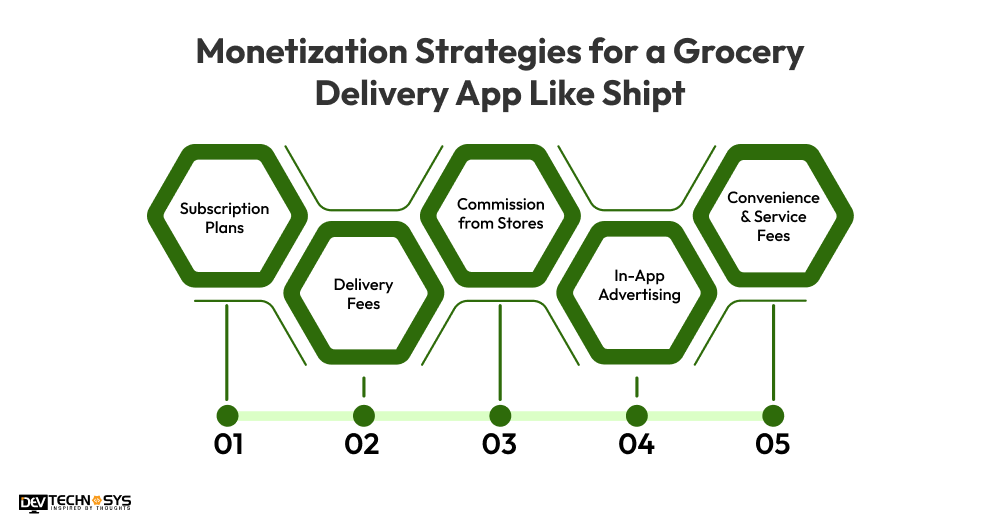
A grocery delivery app can generate consistent revenue through multiple monetization streams while enhancing user experience and business scalability at the same time. Here are some of the top monetization strategies to consider:
1. Subscription Plans
Offer monthly or annual subscription plans with benefits like free delivery, exclusive discounts, and priority support. The model generates predictable recurring revenue while improving customer retention, increasing order frequency, and building long-term engagement with the platform. It also helps create a loyal customer base and stabilizes long-term business growth.
2. Delivery Fees
Charge users a fixed, distance-based, or time-based delivery fee for each order. You can also implement dynamic pricing during peak hours or high-demand periods to maximize revenue and ensure efficient delivery operations. This approach ensures consistent earnings while balancing demand and supply effectively.
3. Commission from Stores
Earn commissions from partner grocery stores or vendors for every successful order placed through the platform. This model scales effectively with order volume and creates a win-win ecosystem for both the platform and retail partners. It also encourages more vendors to join and expand product availability.
4. In-App Advertising
Allow brands and grocery vendors to promote products through sponsored listings, banners, and featured placements. This strategy generates additional revenue while helping businesses boost visibility, attract customers, and increase product sales within the app. It enhances brand partnerships and opens new monetization opportunities.
5. Convenience & Service Fees
Introduce small convenience or service fees for order processing, packaging, or platform usage. When kept transparent and reasonable, these charges add to overall revenue without negatively impacting user experience or customer satisfaction. These fees help cover operational costs and improve overall platform profitability.
Instacart vs Shipt: Which One is Better?
Both Instacart and Shipt are popular grocery delivery platforms that provide similar services, including same-day delivery, real-time tracking, and multiple store options. However, they differ much in pricing, availability, and user experience.
Instacart is popular for its wider reach and store variety, while Shipt stands out for offering better membership value and Target integration. Let’s understand the strengths and USPs of each through a table:
Feature |
Instacart |
Shipt |
| Availability | Available across the U.S. & Canada | Available mainly in the U.S. |
| Delivery Fees | Starts at $3.99+ with service fees | $10 per order (non-members) |
| Membership Plan | $99/year (Instacart+) with reduced fees | $99/year with free delivery over $35 |
| Store Variety | Wider range of stores and retailers | Limited but strong Target partnership |
| Pricing | Slightly higher with service fees | Better value for frequent users |
| Delivery Speed | Same-day, sometimes within 1 hour | Same-day delivery available |
| User Experience | More flexibility and availability | Better for loyal, repeat users |
You can reach out anytime; we are available 24/7. Our team provides a quick response.

Why Dev Technosys is Your Trusted Partner?
Choosing the right development partner is crucial for building a scalable and high-performing app like Shipt. Dev Technosys is one of the best providers of grocery delivery app development services. It delivers innovative, reliable, and cost-effective solutions tailored to business needs. As clients, here’s what you can expect from us:
1. Expertise in On-Demand App Development: With 15+years of experience, the team specializes in building feature-rich grocery and delivery apps using modern technologies and industry best practices.
2. Customized & Scalable Solutions: Their 150+ skilled developers offer tailored app development services designed to meet unique business goals while ensuring scalability for future growth and expansion.
3. Advanced Tech Stack & Innovation: Dev Technosys leverages cutting-edge technologies like AI, cloud computing, and real-time tracking to build high-performance and future-ready applications.
4. User-Centric UI/UX Design: Their design approach focuses on intuitive navigation, seamless user experience, and engaging interfaces that enhance customer satisfaction and retention.
5. End-to-End Development Services: From ideation and development to deployment and maintenance, they provide complete support throughout the app lifecycle.
Conclusion
Building an app like Shipt requires the right blend of strategy, technology, and user-focused design. By starting with an MVP and advancing gradually, businesses can reduce risks, optimize costs, and effectively adjust to the current market trends and needs.
If you are a business looking forward to building a Shipt clone app for your business, contact Dev Technosys, a leading grocery delivery app development company in USA. With 15+ years of expertise in building scalable, on-demand grocery app solutions, we can turn your raw idea into a future-ready app.
Frequently Asked Questions
Find answers to the most common questions related to this article.
A Shipt clone app is a grocery delivery platform similar to Shipt that allows users to order groceries online, track deliveries in real time, and receive doorstep service with features like scheduling, payments, and user-friendly interfaces.
The cost to create an app like Shipt typically ranges between $8,000 to $30,000+, depending on features, platform selection, UI/UX design, integrations, and scalability requirements. Advanced apps with AI and automation features can significantly increase the overall grocery app development cost.
Developing a Shipt clone app usually takes around 2 to 6+ months, depending on app complexity, features, and integrations. Proper planning, team expertise, and technology stack also influence the timeline and ensure efficient development and deployment.
You can choose Android, iOS, or both platforms based on your target audience and budget. Cross-platform development is cost-effective and faster, while native development provides better performance, scalability, and customization for more complex applications.
Essential features include user registration, product browsing, cart management, secure payments, real-time tracking, delivery scheduling, notifications, and admin dashboards. These features ensure smooth operations, better user experience, and efficient management of orders and deliveries.
Grocery delivery apps generate revenue through subscription plans, delivery fees, commissions from vendors, in-app advertising, and service charges. Combining multiple monetization strategies helps businesses create consistent income streams and improve overall profitability in the competitive market.