



















Location-based apps have become the norm these days. Today, almost 90% of mobile applications have geolocation functionality. Even 80 out of 100 applications rely on real-time location data to function. Hence, the demand to build a location-based app is at its peak in 2026.
Regardless of business types and domains, location-based applications have become essential tools for all businesses. According to a report, the real-time location systems market size is expected to rise at a CAGR of 16.7% from 2025 to 2033. Therefore, the demand for location-based app development is skyrocketing.
Many businesses now want to invest in location-based apps to profit from the growing demand for such services. But, for that, they need an app that can lead the market by eliminating competition. But how to develop a location-based app that could lead the industry?
That’s exactly what we are going to discuss in today’s blog. We will dive into the world of GPS app development and learn every crucial factor needed to build an advanced location-based mobile app. From features to technologies to cost, we will cover everything in this blog, so if you want to learn how to make a location-based app in 2026, keep reading till the end.
What Are Location-based Apps?
Location-based applications are software that fetches the users’ real-time location while enabling businesses to offer services accordingly. Whenever we talk about location-based mobile app development, a few applications that first strike mind is – Uber, Ola, and Google Maps. These three are the most popular location applications earning huge popularity and success.

Inspired by the success and growth of location-based food delivery apps, fitness apps, taxi booking apps, and more, businesses of all sectors want to develop a location-based app.
So, if you are also planning to integrate a real-time location fetching or sharing functionality in your business app, this blog is for you. It will give you a detailed insight into how to make a geolocation app. Now, let’s take a glance at the ongoing market stats of such applications.
Location-based Apps Market Stats [2026Updated]
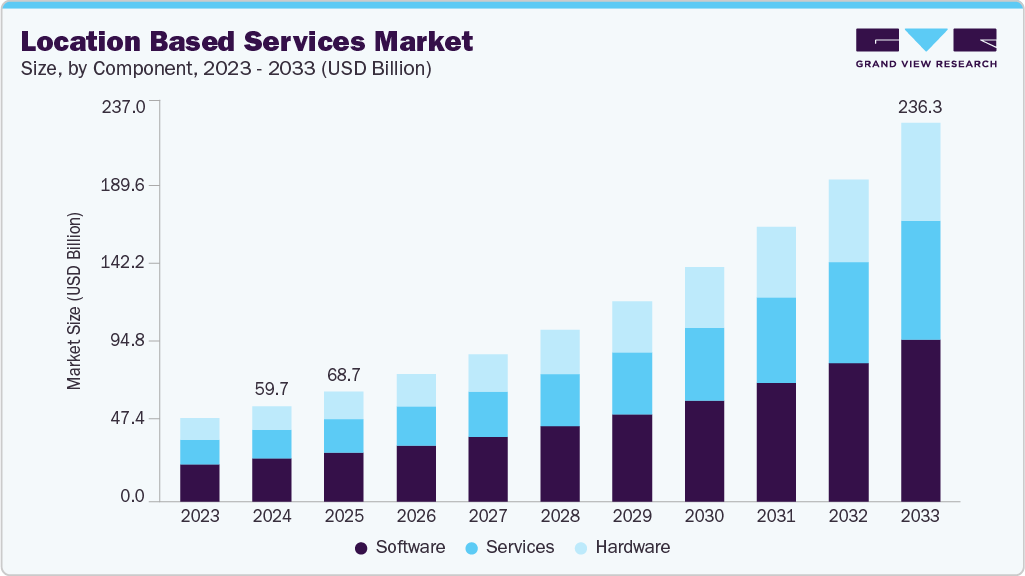
- The global location-based services market size was estimated at USD 59.65 billion in 2025 and is projected to reach USD 236.34 billion by 2033, growing at a CAGR of 16.7% from 2025 to 2033.
- The location-based services (LBS) market in the U.S. is expected to grow significantly at a CAGR of 15.6% from 2025 to 2033. The U.S. is home to major LBS-driven platforms like Google Maps, Apple Maps, Uber, and Waze.
- The location-based services (LBS) industry in the U.S. is expected to grow significantly over the forecast period.
- The location-based services (LBS) market in Europe is anticipated to register significant growth from 2025 to 2033.
By component, software led the market and held the largest revenue share of 44.50% in 2025.
Business Benefits of Investing in Location-Based Apps
Developing the best tracking app can be beneficial for businesses. Here are some of the key business benefits of developing a location-based app.
1. Enhanced Customer Engagement
Location-based apps like ETSY allow businesses to send personalized offers, notifications, and services depending on the real-time location of users, thus increasing engagement. It increases customer satisfaction.
2. Improved Marketing Strategies
Businesses can leverage geolocation data to run targeted campaigns, optimize promotions, and attract nearby customers, boosting foot traffic and conversion rates.
3. Operational Efficiency
Apps like Uber help optimize logistics, track deliveries, manage fleets, and monitor assets in real time. Geo-location apps help in reducing costs and enhancing operational productivity.
4. Competitive Advantage
Offering location-aware services differentiates a business from competitors, helping attract tech-savvy customers and increase market share in a competitive landscape.
5. Data-Driven Decision Making
Investing in doctor-on-demand apps with real-time location data can be beneficial for businesses. It allows businesses to analyze customer behavior, trends, and hotspots, supporting informed decisions for expansion, marketing, and service improvements.
Top 10 Location-Based Apps To Explore in 2026
Looking for the best geo-location apps? Look no further! Here are the top apps for location tracking that you can consider in 2026:
| App Name | Launch Year | Ratings | Downloads | Platform Availability |
| Google Maps | 2005 | 4.6/5 | 10B+ | iOS, Android |
| Waze | 2006 | 4.5/5 | 140M+ | iOS, Android |
| Glympse | 2008 | 4.2/5 | 10M+ | iOS, Android |
| Maps.me | 2010 | 4.4/5 | 100M+ | iOS, Android |
| Citymapper | 2011 | 4.3/5 | 10M+ | iOS, Android |
| Google Translate | 2006 | 4.5/5 | 1B+ | iOS, Android |
| Life360 | 2008 | 4.4/5 | 50M+ | iOS, Android |
| MapQuest | 1996 | 4.0/5 | 10M+ | iOS, Android |
| TripIt | 2008 | 4.3/5 | 10M+ | iOS, Android |
| Sygic GPS Navigation & Maps | 2004 | 4.5/5 | 100M+ | iOS, Android |
Key Features Required to Develop A Location-based App
Location based app development services use device location data to provide personalized and location-specific services. Here is the list of key features that are trending and businesses should include when they make a map-based app.
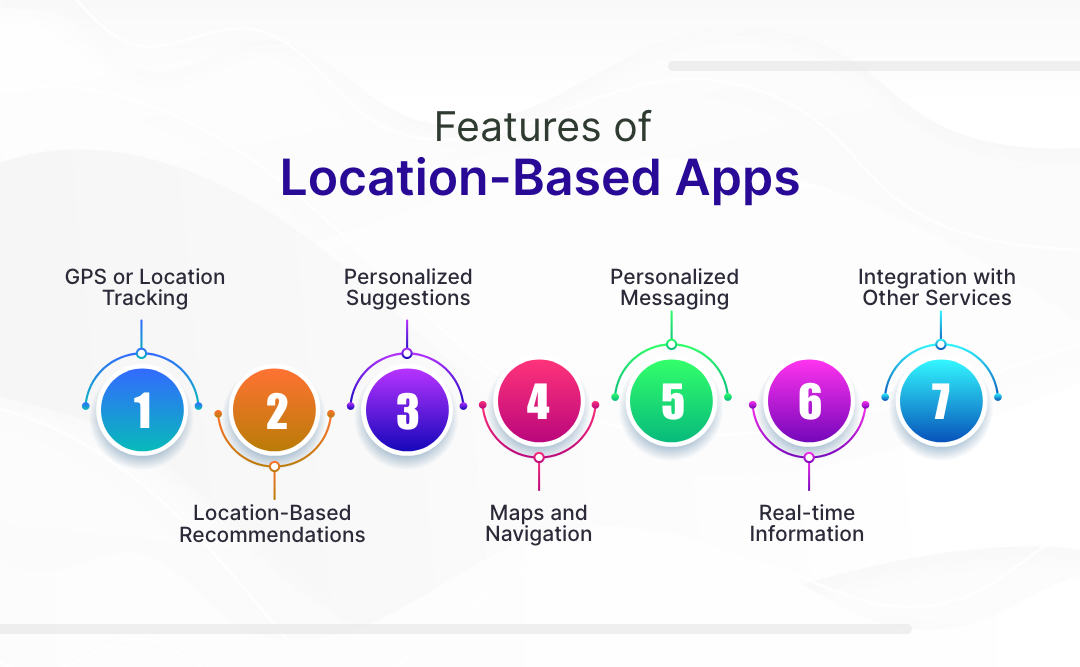
1. GPS or Location Tracking
Location-based apps like Google Maps use GPS technology to track the user’s location and provide relevant information based on their current location.
2. Location-Based Recommendations
On-demand apps, including GPS, use a user’s location to recommend nearby places to eat, drink, shop, or visit based on their preferences or search history.
3. Personalized Suggestions
The location-based applications first know the users well. Once the apps get well-versed in their audience’s behaviour and activities, they send personalized suggestions about local events, news, or other activities based on the user’s interests.
4. Maps and Navigation
Whenever you create a location-based app, do not forget to include built-in maps and navigation tools. It will help users navigate and find their way around their current location.
5. Personalized Mesaging
To make your location-based app unique, you can send custom messages to the users. It will enable your business application users to send messages or connect with others in their immediate vicinity. All the popular social media apps have this feature incorporated.
6. Real-time Information
The best location app always provides real-time information such as traffic conditions, weather, and local events to help users plan their activities. The process involves the incorporation of the latest tech stacks and third-party integrations.
7. Integration with Other Services
The location-based apps often integrate with other services. For instance, social media or ride-sharing services provide a seamless and comprehensive user experience.
Overall, location-based apps are designed to make it easier for users to navigate, discover new places, and find relevant information based on their current location. So, including the right features while developing a location-based app helps increase the application’s worth.
Step-by-Step Process to Develop A Location-based App
Are you planning to make a location-based application for your business? Try the following location-based mobile app development process. It will guide you through the step-by-step or creating a geolocation business application.

#Step 1 – Study the Market & Research Competitors
Before building location-based apps, it is crucial to get a better insight into the current market trends. Also, researching your competitors will help you know why their application is gaining profit and how you can beat them. So, enough time on the research to dig into every detail before your start building a location-based app.
Later, you can use that information to develop a mobile app worth competing with and help you improve business ROI. So, make a list of the ‘Top 10 location-based apps in the US’, study them, and then move to the next step.
#Step 2 – Bring A Unique App Idea
We all know that thousands of the best geolocation applications are available in the market today. So, if you want to outshine competitors, you must develop a unique idea to develop a location-based app. Once you are done with the competitor research, shortlist the perks of using your business application.
Always remember users look for their benefits before installing a particular application. So, think carefully about the useful features, functionalities, benefits, and costs of a location-based app. It will help to increase the chances of your application success.
Step 3 – Pick the Right Tech Stack & Features
When you finalize the idea to build a location-based app, the next step is to choose the technologies to use during mobile app development. The tech stacks are always determined by the application’s platform, i.e., iOS, Android, or Web. So, the choice will also depend on whether you require Android, iOS, or cross-platform app development services.
As soon as you decide on the development platform, think of the best features and tech stacks for your geolocation application based on the business domain.
#Step 4 – Decide the App Functions
Different geolocation applications work on different functions and gestures. Right? So, you need to decide on the functions for your location-based app. For instance, a basic location application has features including – Map view, route mapping, user-location detection, location history, and nearby places finder.
You need to incorporate premium and exclusive functions in your geolocation application for advanced functionality. For example, while considering Android App Development, you need to add functions like:–
- Ratings & recommendations
- Photo-based location search
- Radius setting
- Real-time updates based on traffic
- Weather forecast
- Location-sharing to contacts
#Step 5 – Think of Appealing UX/UI
What’s the first thing that attracts users? Design!, besides working hard on GPS mobile app development, spend some time thinking of an appealing application design. Start working on how your location application will look and other appearance factors. Make sure your application’s UX/UI should be clean and user-friendly.
None of the users will prefer an overly complicated business application. So, keep the app simple yet effective enough to catch the users’ attention at first glance. If you don’t know how to decide on the design of a location-based app, it is advisable to hire dedicated developers or creative designers.
#Step 6 – Make A Location-based App
Finally, the process of ‘How to create a geolocation app?’ comes in. Here you will have to use all the essential information and data gathered in the previous stages of geolocation app development. It is a very crucial step that requires immense expertise and knowledge. So, you should have a team of experienced developers or hire dedicated developers full-time or part-time, depending on the requirements.
Consulting the top mobile app development company would be a great move that will benefit you for years to come. So, think about it and make a wise decision.
#Step 7 – Test And Launch Your App
Once you complete the process of a map-based app development, test and launch it on the desired platform. Right after development, in-depth testing is a must to eliminate all the errors and bugs in the application. One must never ignore the importance of app testing, as one minor error can alter the performance of a mobile application while impacting its success and growth.
After testing, launch your geolocation application on the desired platform, i.e., Google Play Store, App Store, or both.
Use-Cases to Develop A Location-based App
For an entrepreneur, creating a GPS-enabled business application might seem to be a daunting task. But, once they know the use cases to create a location-based app, the process will become easier. So, let’s look at the five popular use cases to create a geolocation application.
|
Industry |
Application |
| Retail |
IKEA, Walmart |
|
E-Commerce |
eBay, Amazon |
| On-Demand Services |
UberEats, Zomato |
|
Horeca |
Foursquare, Yelp |
| Public Transportation |
Moovit, Uber |
|
Maps & Navigation |
Google Maps, Waze |
| Travel & Booking |
Airbnb, Trip Advisor |
|
Dating |
Tinder, OkCupid |
| Fitness |
My Fitness Pal, Nike Running Club |
|
AR Games |
Pokémon Go, The Witcher |
| Social Media |
Facebook, WhatsApp |
|
Photo Location Finder |
Google Photos, Explorest |
|
IoT |
Paw Scout, Whistle |
| Weather |
Yahoo Weather, Weather by Apple |
1. E-commerce Apps [ETSY, Amazon]
The e-commerce industry is experiencing tremendous benefits from developing a location-based application. The e-commerce apps like ETSY offer users the accurate location of the closest shipping centres and delivery offices. So, if you want to develop an app like Amazon or ETSY with GPS-enabled features, get in touch with a leading e-commerce app development company.
2. Transportation [Uber, Ola]
If you are in the automotive or transportation industry and planning to make a location-based app, apps like Uber are the best example to rely on. It is an on-demand taxi booking app that allows users to book a taxi from their location and experience hassle-free riding.
3. Maps & Navigation [Google Maps]
Regarding developing a GPS app, Google Maps tops the list. Other maps and navigation applications are Bing Maps, Waze, and MapQuest. Research states that around 40% of drivers or individuals lost time due to errors in the application location. As a result, they make use of maps and navigation apps like Waze.
4. On-demand Services [Doctor on Demand]
Like any other industry, the healthcare sector is also reaping the benefits of GPS-enabled mobile apps like doctor-on-demand. With the help of such healthcare applications, patients can easily look for healthcare professionals nearby or take expert assistance from their homes.
5. Travel & Booking [Airbnb]
Airbnb has permanently altered the travel and booking industries. The app’s success has prompted other companies to research how to create a similar geolocation software and compete for a piece of this extremely profitable market. Apps like Airbnb are developed to aid users in vacation planning, getting accommodations, and minimizing travel costs.
The list of the popular use cases of location-based apps is limited and continues. But, the five use cases mentioned in the list above are the top industries reaping the benefits of location-based application development.
What Technologies Are Required to Develop A Location-based App?
Now that you have an idea of the key features of location-based apps and the entire development process. What’s next? Knowing the latest technologies required during location-based app development is a must. Well, there are two types of location-based services available, i.e., outdoor and indoor. Each of the services has different associated technologies.
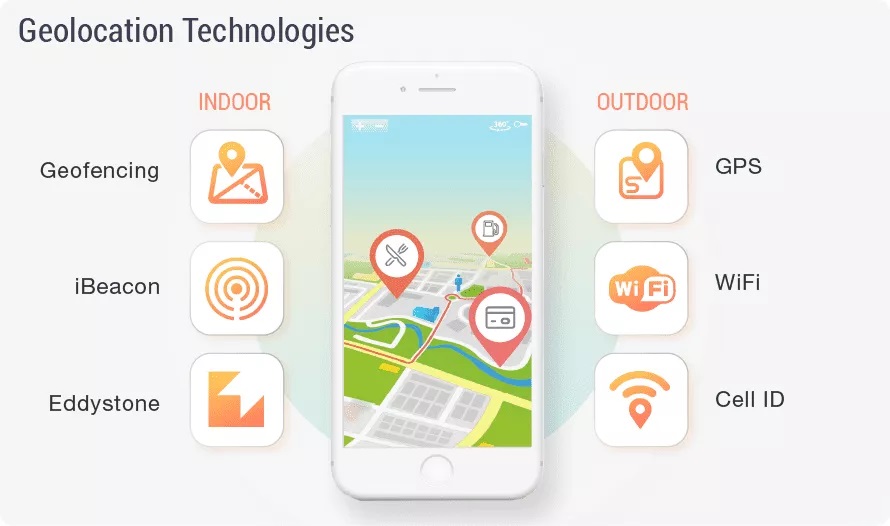
Outdoor Location-based Apps Technologies
|
GPS |
As all mobile devices have in-built GPS, so including this technology is the best way to locate a device outdoors. |
|
Cell ID |
If GPS is unavailable, cell towers close to the smartphone can trace the device’s location. This technology isn’t as accurate as GPS, but a good solution for megapolises. |
|
A-GPS |
This location-based app technology combines GPS and Cell ID features, ensuring high-level accuracy. A-GPS generates merged data received from the servers and satellite via WiFi. |
|
Wi-Fi Positioning |
It collects data from the internet and shows better accuracy due to the maximum WiFi access range. This technology works with high density in urban areas. |
Indoor Location-based Apps Technologies
|
Geofencing |
It is a location-based marketing technique that works by combining GPS with Wi-Fi or cellular data. |
|
iBeacon & Eddystone |
Both iBeacon and Eddystone use BLE technology for indoor positioning. iBeacon was developed by Apple, whereas, Eddystone is counted under toogle’s services. |
How Much Does It Cost to Develop A Location-Based App?
The average cost for location based application development lies in been $10,000 to $25,000, depending on multiple factors. The cost keeps varying as per the different features, functionalities, tech stacks, and more. To get a detailed overview of the entire cost estimation of location-based apps, look at the following table.
| Development Stage | Timeline | Estimated Cost (USD) |
| Requirement Analysis & Planning | 1–2 weeks | $500 – $1,500 |
| UI/UX Design | 2–3 weeks | $800 – $2,500 |
| Frontend Development | 3–5 weeks | $2,000 – $5,000 |
| Backend Development | 4–6 weeks | $3,000 – $7,000 |
| GPS & Map Integration | 2–3 weeks | $1,000 – $2,500 |
| Testing & QA | 1–2 weeks | $800 – $2,000 |
| Deployment & Launch | 1 week | $500 – $1,500 |
What Are the Factors That Can Affect Location-Based App Development Cost?
There are various factors that can affect the cost of location-based app development services. Here are some of the key factors that affect the cost to build a location-based app.
1. Platform Choice
The cost to develop a location-based app varies depending on platform choice (iOS, Android, or both). Cross-platform frameworks like React Native and Flutter can reduce the development and cost to build a location-based app.
| Platform | Timeline | Estimated Cost (USD) |
| iOS Only | 4–6 weeks | $3,000 – $6,000 |
| Android Only | 4–6 weeks | $3,000 – $6,000 |
| Both (Cross-Platform) | 6–10 weeks | $5,000 – $10,000 |
2. Feature Complexity
Feature complexity is another factor that impacts the cost to develop a location-based app. Advanced features such as real-time tracking, geofencing, in-app navigation, push notifications, and social integration in location-based apps like Swiggy increase development complexity and overall costs.
| Feature Level | Timeline | Estimated Cost (USD) |
| Basic Features | 4–6 weeks | $3,000 – $7,000 |
| Advanced Features | 6–10 weeks | $7,000 – $15,000 |
3. UI/UX Design
The cost to create a map-based app development varies depending on UI/UX design. Custom, interactive, and user-friendly designs cost more than basic templates but significantly enhance user engagement and retention.
| Design Type | Timeline | Estimated Cost (USD) |
| Basic Templates | 1–2 weeks | $500 – $1,000 |
| Custom Interactive Design | 2–4 weeks | $1,500 – $3,500 |
4. Backend & Tech Stack
The backend and tech stack also influence the cost to build a location-based app. Choosing robust technologies like Node.js, Python, AWS, or Firebase impacts scalability, speed, and app reliability, which in turn influences development costs.
| Backend Complexity | Timeline | Estimated Cost (USD) |
| Simple Backend | 3–5 weeks | $2,000 – $5,000 |
| Advanced Backend | 5–8 weeks | $5,000 – $8,000 |
5. Maintenance & Updates
The cost to create a location-based app differs depending on maintenance and updates. Ongoing bug fixes, feature upgrades, server hosting, and scaling require recurring investment, affecting long-term cost and app sustainability. Hire dedicated developers who offer maintenance services.
| Maintenance Type | Timeline | Estimated Cost (USD) |
| Basic Updates & Bug Fixes | Ongoing | $500 – $1,500/month |
| Feature Enhancements & Scaling | Ongoing | $1,500 – $3,000/month |
How Do Map-Based Apps Make Money?
Location-based apps make money in various ways. Whether by targeted advertising or selling user data to third parties. The latter is often used as an anonymized form for market research or advertising. Here are some of the popular monetization strategies:
1. In-App Advertising: Businesses pay to display location-targeted ads, promotions, or sponsored listings to nearby users, increasing visibility and app revenue.
2. Subscription Models: Users or businesses subscribe to premium features, such as ad-free experiences, advanced analytics, or exclusive location-based services.
3.Commission on Transactions: Apps facilitating bookings, orders, or reservations earn a commission on each transaction completed through the platform.
4.Freemium Model with Paid Upgrades: Basic features remain free, while advanced services like priority notifications, enhanced tracking, or premium content are paid.
5.Data Monetization: Aggregated and anonymized location data can be sold to businesses for market research, trend analysis, and targeted marketing campaigns.
6.Affiliate Marketing & Partnerships: Apps partner with local businesses, service providers, or restaurants, earning fees for directing customers to their offerings.
Create A Powerful Location-based App with Dev Technosys!
Established in 2010, Dev Technosys is a leading mobile app development company serving clients in the US, UAE, and other major reasons. So, if you are looking for location-based services app development, our dedicated developers can help you with location-based app development.
Creating a successful business application isn’t that challenging when you have the expertise and right knowledge of the latest tools and technologies. At Dev Technosys, we have it all.
So, do not wonder how to make a location-based app; instead, get a powerful location-based app while availing our mobiof le app development services. Drop your requirements today!
Conclusion
The above-provided details and information talk about location-based app development. Investing in a location-based app offers businesses a competitive edge by enhancing customer engagement, improving operational efficiency, and enabling data-driven decisions. If you want to develop a location-based app for any domain, contact Dev Technosys, a leading mobile app development company.
Our dedicated developers can help you with location-based app development. So, do not wonder how to make a location-based app; instead, get a powerful location-based app while availing our mobile app development services. Drop your requirements today!
Frequently Asked Questions
What Is the Location-Based App Development Cost?
The average cost for location-based mobile apps lies around $25,000 to $50,000 and more, depending on the type of application developed. So, businesses should finalize their app requirements, and then the developers can reveal the final mobile app development cost.
What Are the Benefits of Location-based Apps?
Location-based applications are becoming widely popular these days. Here are some major benefits of why your business needs location-based applications.
- Better customer experience
- Improved analytics
- Streamline business activities
- Accurate data gathering
- Real-time information analysis
What Are the Popular Location-based Apps?
There are several applications available that have geolocation services, including –
- Uber
- Moovit
- Google Maps
- Waze
- ETSY
How Do Location-based Apps Work?
Businesses can provide customers with services close to where they are right now, thanks to location-based apps. These apps communicate position information using Wi-Fi, cell tower data, and satellite/GPS; you can boost the GPS signal using Wi-Fi or a mobile network.
What Is A Location-based App?
Location-based apps offer services based on the users’ location determined using GPS technology, Cell ID, or Wi-Fi. Businesses or users can use these services to share the location with others.