





















Do you also want to use the full power of your vehicle? Want to customize or modify the hardware parts like engine tuning, transmission, and more? Then, automotive tuning software plays a crucial role in optimizing the performance of the vehicle and pushing your engine to its end limits. With the help of this, users can complete their personalized recommendations and fix the custom exhaust systems.
As per a recent study, the automotive tuning software market will be valued at around $11.55 billion in 2024. This is projected to grow around $15.99 billion by the end of 2034.
This collective data reveals that investing in automotive tuning software is an income-generating opportunity for entrepreneurs.
In this blog, we will explore how to build automotive tuning software, development costs, advanced features, and more.
Let’s begin the blog!
What is Automotive Tuning Software?
Automotive tuning software is used to improve engine performance and other control systems like fuel management and transmission. It enables users to change factors such as ignition timing, fuel maps, and throttle response to improve power, fuel efficiency, and vehicle dynamics.
Connect with a software development company to integrate these features into your software, such as real-time data logging, diagnostics, and performance analysis for specific vehicle optimization.
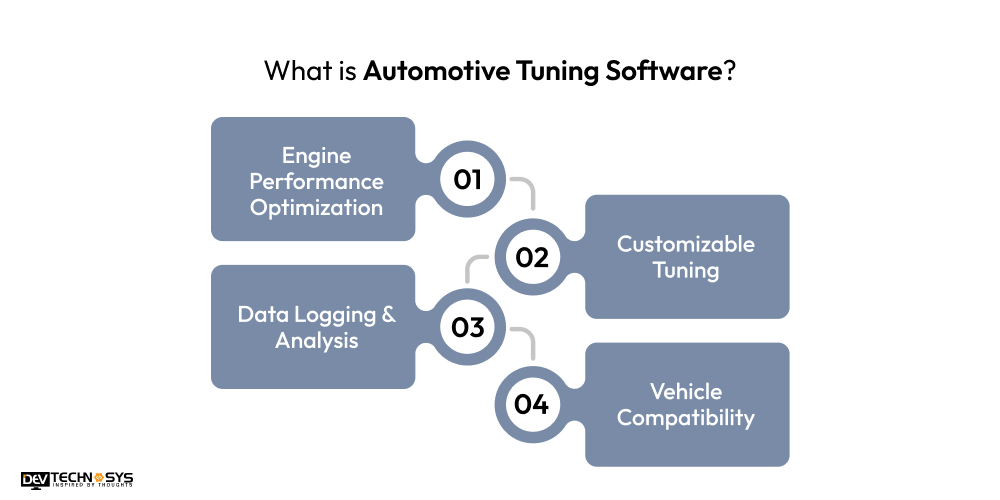
- Engine Performance Optimization
- Customizable Tuning
- Data Logging & Analysis
- Vehicle Compatibility
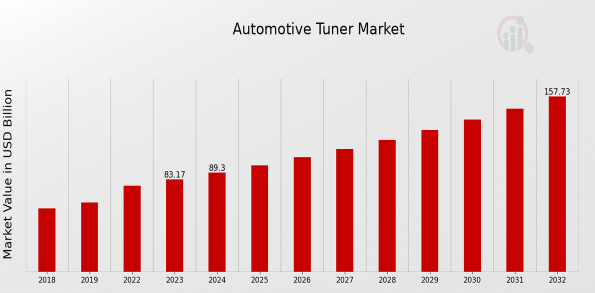
Market Analysis of Automotive Tuning Software
- By 2024, the automotive tuner market is expected to grow to $11.55 billion, and by 2034, it will reach $15.99
- According to a global market, the automotive tuning market is expected to grow at a compound annual growth rate of 31% during the forecast period from 2025 to 2034.
- Due to the presence of significant automakers and a robust aftermarket sector, North America is expected to lead the market for the duration of the projected period.
- The performance tuning sector is expected to have the biggest market share because to the increasing popularity of modified vehicles and the growing number of automotive enthusiasts.
- Advances in technology, such as data analytics and simulation tools, improve the efficiency and precision of vehicle tuning operations.
Top 10 Automotive Tuning Software
These software solutions cater to a wide range of automobiles and tuning demands, from casual amateurs to expert tuners, and include features such as engine optimization, diagnostics, and custom tuning. Here we provide the best car tuning software solutions:
| Software | Special Features | Launched Year |
| ECU Titanium | -Advanced ECU tuning capabilities
-Supports a wide range of vehicles -Large library of tuning files |
2008 |
| Cobb Tuning Accessport | – User-friendly interface
– Preloaded maps for quick tuning – Custom tune creation and real-time monitoring |
2004 |
| HP Tuners VCM Suite | – Custom tune creation
– Real-time data logging -Extensive diagnostic capabilities for GM, Ford, and Chrysler vehicles |
2007 |
| EcuTek ProECU | – Professional-grade tuning software
– Advanced data logging and diagnostics – Customizable ECU maps for Subaru, Nissan, and Toyota |
2003 |
| TunerPro | – Free-to-use software
– Flexible ECU tuning options – Custom tuning files and community-driven support |
2003 |
| Bully Dog GT Platinum | – Performance tuning for diesel and gas vehicles
– Real-time diagnostics and performance monitoring – Optimizes engine performance and fuel economy |
2009 |
| Megasquirt Tuning Software | – Aftermarket ECU tuning
– Highly customizable for various vehicles – Advanced features for fuel control, ignition timing, and more |
2000 |
| Race Technology Dash2 Pro | – Telemetry and data logging software
– Ideal for racing and high-performance vehicles – Provides precise tuning and performance analysis |
2010 |
| SCT X4 Power Flash Tuner | – Real-time data monitoring
– Custom tune creation for Ford, GM, and Dodge vehicles – Focuses on fuel efficiency optimization – Wiring diagrams |
2013 |
| Alientech KESSv2 | – ECU and TCU remapping
– Robust diagnostics and data logging – Professional-grade tool for reading and writing maps |
2012 |
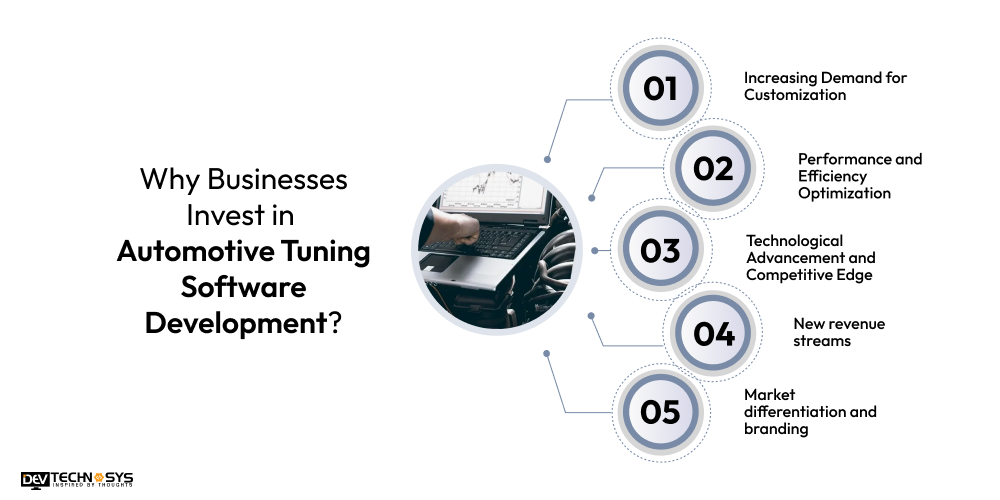
Why Businesses Invest in Automotive Tuning Software Development?
Businesses invest in automotive software development for a variety of strategic reasons, all with the goal of capitalizing on the rising demand for vehicle personalization, performance improvement, and efficiency. Here are five main reasons:
- Increasing Demand for Customization
- Performance and Efficiency Optimization
- Technological Advancement and Competitive Edge
- New revenue streams
- Market differentiation and branding
1. Increasing Demand for Customization
As car hobbyists and professional tuners strive to improve vehicle performance, tuning software becomes an essential tool for personalization. Businesses can tap into a market of car owners who want to improve engine performance, fuel efficiency, and overall driving experience. Offering software that allows for specific tuning addresses this demand, resulting in a profitable niche.
2. Performance and Efficiency Optimization
The custom vehicle tuning software improves vehicle performance by adjusting engine control unit (ECU) parameters. This enables businesses to provide goods that help clients gain more horsepower, improve fuel efficiency, and improve overall vehicle handling. The ability to optimize performance, whether in daily drivers or race cars, makes tuning options more appealing.
3. Technological Advancement and Competitive Edge
The automotive business is rapidly evolving, with new technologies such as electric cars (EVs) and hybrid systems. Investing in tuning software development helps firms keep ahead of the competition by offering solutions that are compatible with modern automobiles.
This technological advantage strengthens a company’s market position by providing unique features such as real-time data logging, AI-powered tuning, and cloud-based solutions.
4. New Revenue Streams
Engine tuning software for professionals provides numerous business prospects. Businesses can provide software subscriptions, customized tune files, and premium services such as professional calibration or remote tuning. They can also form relationships with tuning shops or vehicle manufacturers to provide customized solutions.
5. Market Differentiation and Branding
In a competitive industry, organizations who provide high-quality, dependable, and user-friendly tuning software can set themselves apart. Developing a reputation for innovation and performance optimization enables firms to acquire loyal customers and maintain long-term success in the automobile industry.
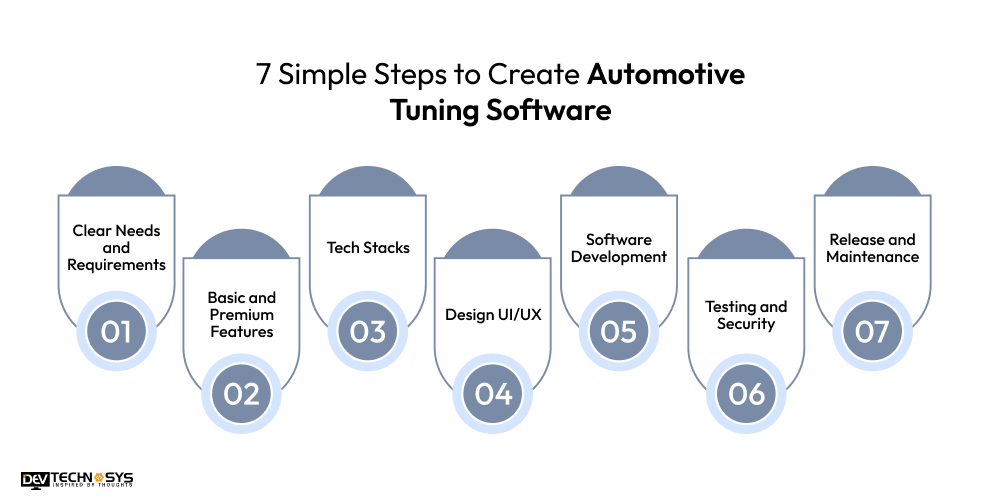
7 Simple Steps to Create Automotive Tuning Software
This is the most important section that helps businesses to understand each step of overall development. This section easily clears all the doubts regarding the development process and developing a custom vehicle tuning application with unique functionalities. So, here we provide the custom software development process:
- Clear Needs and Requirements
- Basic and Premium Features
- Tech Stacks
- Design UI/UX
- Software Development
- Testing and Security
- Release and Maintenance
1. Clear Needs and Requirements
Let’s begin the first development process, identify the essential requirements and needs of your project, and make a clear sheet of needs. Clear the future goals in the upcoming year where you want to stand your project in this competitive market.
| What are your project’s basic or core requirements? |
| Define your future goals. |
| Which automotive tuning software is more trending in this competitive market? |
2. Basic and Premium Features
Connect to the second stage of automotive tuning app development, observe the basic and premium features and create a list of features to reduce the misunderstanding. Hire software developers to integrate the features such as tune creation, cloud-based tuning, real-time data logging, and more.
| What are your project’s basic features and functions? |
| Analyze the popular automotive tuning software. |
| Make an organized sheet of features and functions to reduce confusion. |
3. Tech Stacks
Moving to the third stage of car remapping software development, choosing the best tech stacks is a complex or difficult task. You can also observe the existing software tech stacks and find the best technologies. There are various technologies, such as HTML, CSS(for the front end), Java and Python(for the backend), and MongoDB (for the database).
| Which type of tech stacks are used in your software development? |
| Define your scalability requirements. |
| Choose advanced or core tech stacks. |
4. Design UI/UX
In the fourth stage of ECU tuning software development, designing is the most crucial stage; it involves various types of designing resources such as templates, themes, and layouts. You can also hire experienced developers from a SaaS application development company to design a user-friendly interface for instant accessibility.
| What are wireframes in UX design? |
| What tools do you use for prototyping? |
| How do you ensure a responsive design? |
5. Software Development
Coming to the fifth stage of OBD2 tuning software development includes various advanced implementation phases such as third-party integrations, payment gateway integration, functionalities, and models. This development step mainly focused on the server-side implementations.
| How to process backend services? |
| Choose the experienced developers. |
| Implement a high number of features and functions. |
6. Testing and Security
Let’s move to the second-last step of development. Various software testing services, such as functional testing, unit testing, integration testing, and security testing, are used to fix bugs and errors. After that, security measurements such as encryption and multi-factor authentication are integrated to avoid vulnerabilities and malware.
| Make sure that all features and functions are working properly |
| Use various testing methods, such as unit and security testing |
| Implement robust security methods |
7. Release and Maintenance
Finally, the software will be launched in the live phase with integrated tools and functionalities. You can also consult with an experienced developer before releasing the software. After that, maintenance services are scheduled to maintain the software’s performance and fix bugs and glitches to increase overall speed times.
| Launch your software on the live phase. |
| Use the best marketing techniques to promote the software. |
| Assign the post-maintenance phases to maintain the software performance. |
10 Must-Have Advanced Features of Automotive Tuning Software
These advanced features provide comprehensive control and optimization for vehicle tuning, ensuring maximum performance and reliability. Here are 10 must-have advanced car tuning software features:
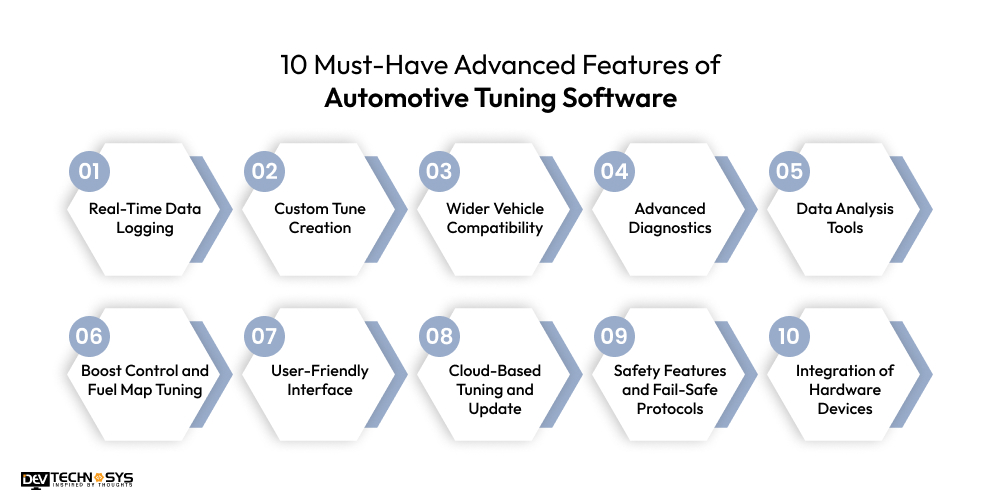
1. Real-Time Data Logging
Records and displays real-time engine parameters (e.g., RPM, boost pressure, fuel trims) for accurate adjustments and diagnostics.
2. Custom Tune Creation
Users can develop, upload, and download custom ECU maps, providing specialized solutions for a variety of driving circumstances and modifications.
3. Wider Vehicle Compatibility
Supports a wide range of vehicle makes, models, and aftermarket ECUs, ensuring that the software is usable across several cars.
4. Advanced Diagnostics
The ability to read and clear Diagnostic Trouble Codes (DTCs) assists users in identifying and troubleshooting faults with the engine, transmission, or other vehicle systems.
5. Data Analysis Tools
If you develop an automotive website, integrate the in-depth analysis of logged data, allowing users to detect performance bottlenecks and adjust engine settings using precise metrics.
6. Boost Control and Fuel Map Tuning
Users can modify boost pressure, air/fuel ratios, and ignition timing to increase power output and efficiency.
7. User-Friendly Interface
A straightforward, easy-to-use UI that streamlines the tuning process, making it accessible to both amateur and professional tuners.
8. Cloud-Based Tuning and Update
Automotive diagnostics and tuning solutions allows for remote tuning, cloud storage of tuning files, and simple upgrades to ensure compatibility with newer car models.
9. Safety Features and Fail-Safe Protocols
Implements fail-safes, such as boost or temperature threshold limitations, to prevent harmful overturning or engine damage.
10. Integration of Hardware Devices
Compatibility with OBD-II adapters, ECU programmers, and other tuning devices ensures efficient vehicle communication and data transfer.
The Cost to Build Automotive Tuning Software
The automotive software development cost ranges from $8,000 to $25,000 or more, depending on complexity. Key cost factors include development team (software engineers, UI/UX designers), vehicle compatibility (support for multiple models), integration with hardware (OBD-II, ECU programmers), and testing (dyno, real-world validation).
Additional costs come from licensing fees, maintenance, cloud hosting, and security features. Ongoing updates and customer support will also incur ongoing costs. For high-end, professional-grade software, costs can exceed this range.
Cost to Develop Automotive Tuning Software
| Automotive Tuning Software Development
|
Estimated Cost | Time Frame |
| Basic Software Development
|
$8000 – $12000 | 3 to 5 Months |
| Mid-Premium Software Development
|
$12000 – $19000 | 5 to 8 Months |
| High-Premium Software Development
|
$25000+ | 9+ Months |
What are the Factors That Affect Automotive Tuning Software Development Costs?
Several important aspects influence the development expenses of vehicle tuning software. These variables include design, continuing maintenance, and support. Here’s an overview of the most important ones:
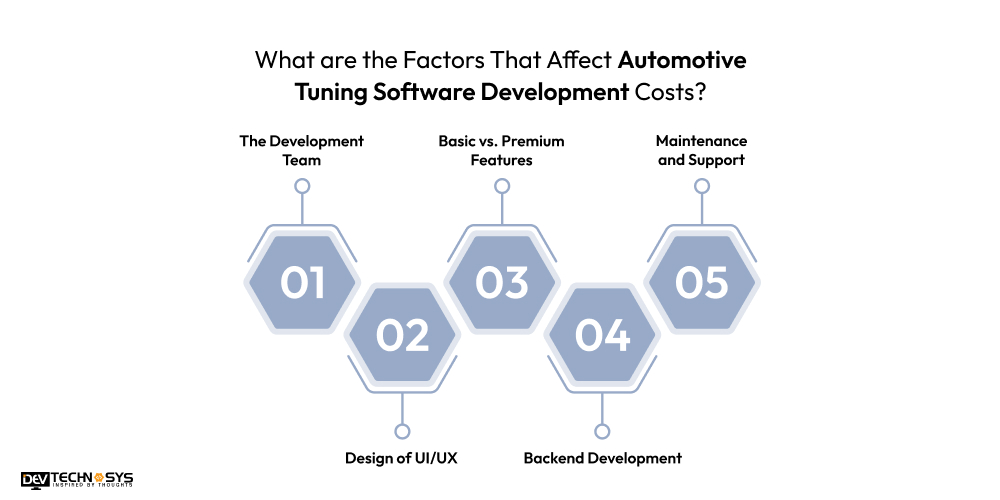
1. The Development Team
The number and experience of the development team have a significant impact on the software’s cost. A team often consists of software engineers, system architects, UI/UX designers, quality assurance testers, and project managers. Experienced developers, particularly those with specialist expertise of automotive systems, earn higher prices.
| Developer’s Location | Cost Estimation |
| Asia Pacific | $8,000 – $15,000 |
| North America | $15,000 – $20,000 |
| Eastern Europe | $13,000 – $18,000 |
| Western Europe | $16,000 – $25,000 |
2. Design of UI/UX
A user-friendly and visually appealing interface is critical when tweaking software. The design’s intricacy has a direct impact on software development costs. For software designed for both pros and casual users, the UI/UX must be both intuitive and powerful, which necessitates skilled designers and several iterations. Custom iconography, dashboard configurations, and data visualization tools drive up design expenses.
| Design Quality | Cost Estimation |
| Basic Design | $8,000 – $12,000 |
| Complex Design | $15,000 – $22,000 |
3. Basic vs. Premium Features
The features incorporated in the program have a significant impact on the cost to build car tuning software. Basic features like simple tuning options and diagnostics are less expensive, whereas premium features like advanced data logging, cloud synchronization, and AI-driven tuning algorithms add complexity and demand more resources.
| Features | Cost Estimation |
| Core Features(Basic ECU Remapping and Pre-Loaded Tuning Maps) | $8,000 – $12,000 |
| Advanced Features(Advanced ECU Tuning and Cloud-Based Tuning) | $15,000 – $20,000 |
4. Backend Development
The backend system manages vehicle data, processes custom tunes, and ensures safe data transfers. Backend software product development comprises connecting with vehicle communication protocols (e.g., OBD-II), providing cloud-based functionality (such as remote tuning and data storage), and guaranteeing scalability.
| Backend Development | Cost Estimation |
| Basic Backend Process | $10,000 – $18,000 |
| Premium Backend Process | $20,000 – $28,000 |
5. Maintenance and Support
Ongoing maintenance, bug fixes, and upgrades are critical for ensuring compatibility with new car models and improving performance. Furthermore, customer assistance, which may include user guides, online resources, and troubleshooting, might increase long-term expenditures. Regular upgrades and bug patches generate fees for the development team.
| Maintenance Phase | Cost Estimation |
| Simple Maintenance Phase | $2,000 – $4,000/year |
| Complex Maintenance Phase | $8,000 – $10,000/year |
5 Monetization Technique of Automotive Tuning Software
Automotive tuning software, used to enhance and customize vehicle performance, offers several monetization strategies. These techniques, alone or in combination, can generate significant revenue for developers while enhancing the user experience. Here are five common techniques:
- Subscription Model
- Freemium Model
- Pay-per-Tuning
- Affiliate marketing and partnerships
- Advertising
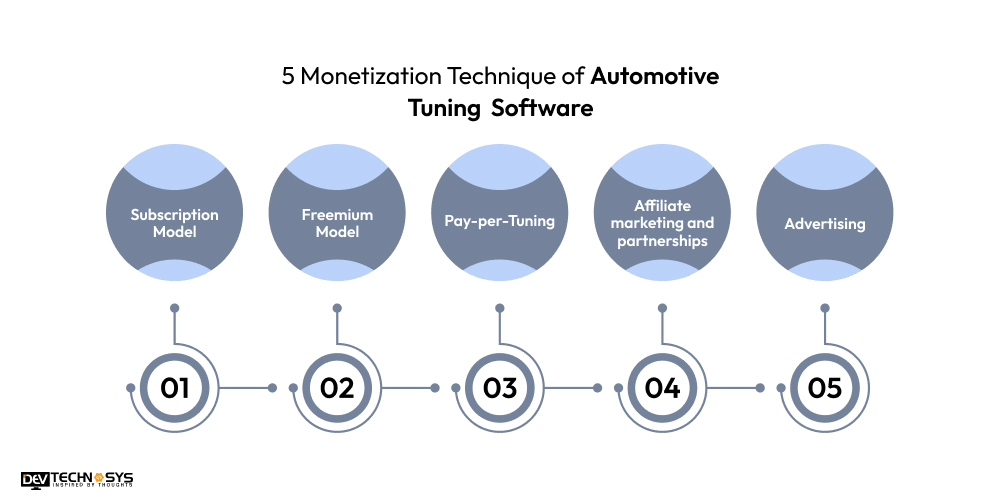
1. Subscription Model
Automotive tuning software can be offered as a subscription service, with users paying a regular charge for updates, enhanced features, and ongoing support. This arrangement assures consistent revenue for developers while keeping users engaged through regular software updates and access to new customization choices.
2. Freemium Model
A freemium approach provides basic tweaking functionality for free, with the opportunity of unlocking premium features via in-app purchases or one-time charges. This has the potential to attract a diverse set of customers, some of whom may later purchase to the premium version for further performance tuning and special tools.
3. Pay-per-Tuning
Customers can be charged for specific tuning services that they use. Users, for example, could pay for unique car profiles or specific tuning maps. Build an auto repair shop management software, it provides flexible strategy ensures that customers only pay for what they use.
4. Affiliate Marketing and Partnerships
Automotive tuning software can make money by recommending specific products like as performance chips, exhaust systems, or ECU upgrades. Software providers might link to these goods directly from the platform.
5. Advertising
Displaying tailored adverts within the software, particularly for automotive-related items or services, is another revenue strategy. If the software has a large user base, advertising can be a profitable source of money without charging consumers directly.
The Bottom Line
Standing on the last phase of this informational blog. We offered detailed information about how to build automotive tuning software that helps users optimize vehicles’ full power and create modifications on hardware parts. We also offer advanced features that make it easy for businesses to integrate features into their software. After that, we provide the best monetization techniques to increase the overall valuation of businesses.
Are you looking to create automotive tuning software with unique features? If yes. Then, you can contact the best automotive software development company to offer reliable software development solutions.
Frequently Asked Questions
1. How Much Does It Cost To Build Automotive Tuning Software?
To develop automotive tuning software, ranges from $8,000 to $25,000, depending on features, complexity, and platform. Integration with automobile models, specialized tuning, and continuous support all impact pricing.
2. How Much Time Does It Take To Make Automotive Tuning Software?
To make automotive tuning software, it typically takes 3 to 9 months, depending on complexity, features, and integration requirements. Customization, testing, and ensuring compatibility with various car models can extend the timeline.
3. What is Included in Car Tuning?
Adjusting engine performance, suspension settings, exhaust systems, and ECU remapping are all part of car tuning. Modifications to airflow, fuel systems, tires, and aesthetics may also be necessary to improve power, handling, and look.
4. What is ECU Software?
ECU software refers to the programming used to control a vehicle’s Engine Control Unit (ECU). It manages engine performance, fuel efficiency, emissions, and other vital systems, allowing for customization and optimization of vehicle functions.