


















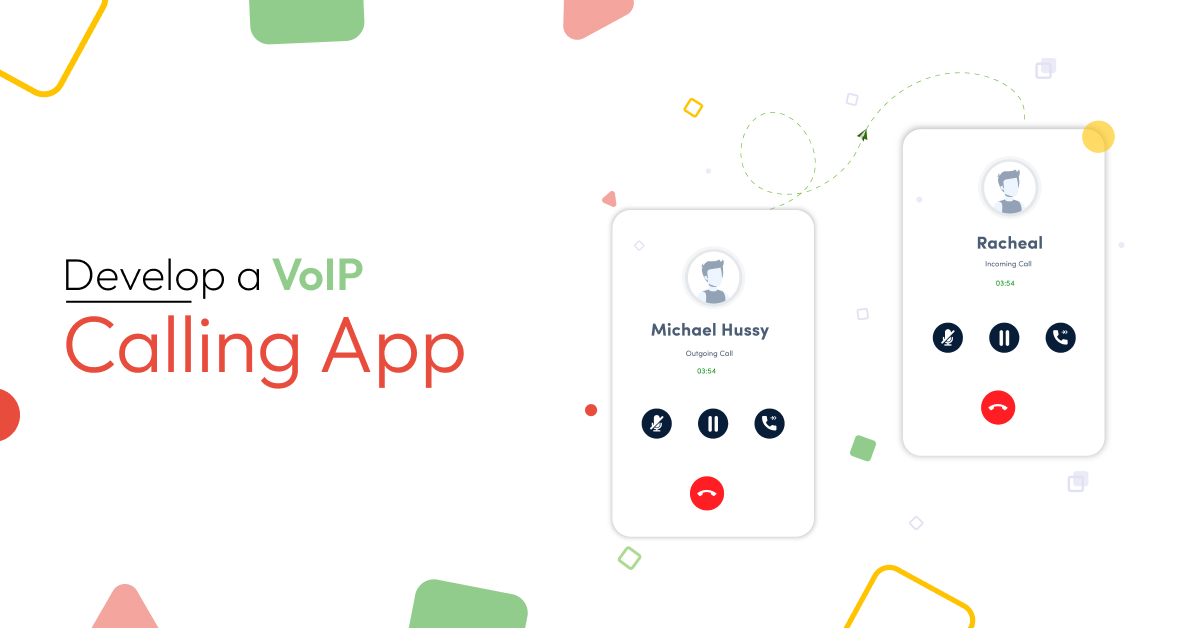
How can I develop a VoIP calling app?
Don’t worry, you’re not the only one seeking the answer to this question. Many startups and curious individuals want the answer to the same. After all, VoIP is valuable for companies and businesses around the globe to streamline communication.
A VoIP real-time audio streaming app can help businesses save a lot of money. Small-scale businesses and startups can save up to 40% on local calls and around 90% on international video or audio calls by using a cross-platform VoIP app.
In this guide to VoIP calling app development, we will address the features, cost, tech stack, and other crucial aspects you need to know to create a VoIP communication app for enterprises and startups. So, keep reading till the end!
Global VoIP Market Stats
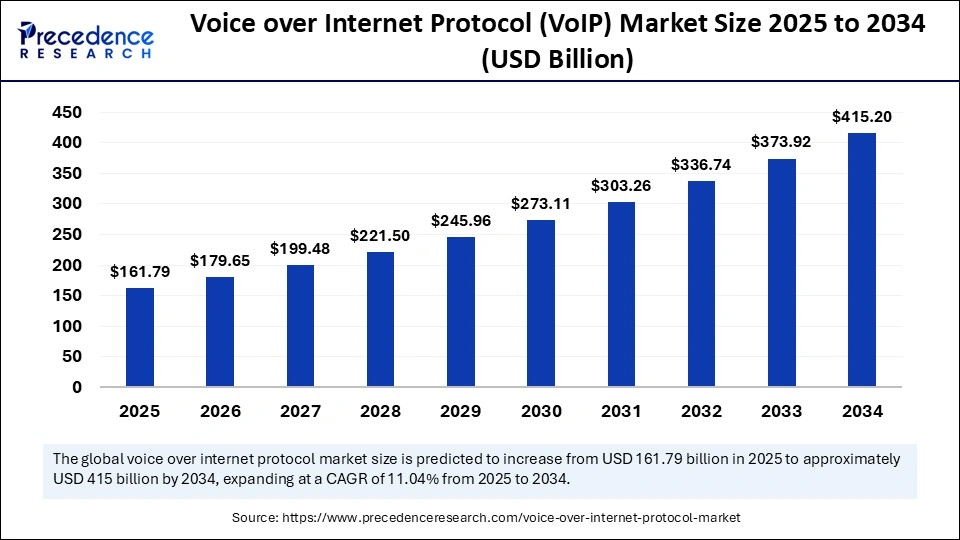
- The size of the global voice over internet protocol (VoIP) market was valued at USD 145.70 billion in 2024, with predictions to increase to USD 161.79 billion in 2025.
- The global VoIP market value is expected to reach USD 415.20 billion by 2034, at a CAGR of 11.04% between 2025 and 2034.
- The U.S. voice over internet protocol (VoIP) market size was valued at USD 52.45 billion in 2024, and it is predicted to accumulate $152.04 billion by 2034.
- The Asia Pacific region is expected to be the fastest CAGR during the forecast period.
- By service, the SIP trunking segment contributed the highest revenue share of 46% in 2024.
- By enterprise size, it is expected that the small and medium-sized enterprises (SMEs) segment will grow at the fastest rate during the forecast period.
What is a VoIP Calling App?
A VoIP calling app is a mobile application that enables voice or multimedia communication over the Internet, replacing traditional networks. The best VoIP calling app can convert your voice into digital data, send it over a broadband connection using the Internet, and then reassemble it as audio at the other end.
Its main applications include voice calls, video conferencing, and messaging, making it well-suited for current communication demands. Popular examples include apps like WhatsApp and Skype, as well as business-focused platforms that offer features such as video conferencing and texting, in addition to voice calls.
Why Businesses Should Invest in VoIP Calling App Development?
Investing in VoIP calling mobile app development offers businesses a strategic advantage, combining cost efficiency, scalability, and innovation. Here are the key benefits proving why the decision to develop a VoIP calling app is beneficial for businesses:
1. Cost Savings
One of the main reasons for businesses to develop a VoIP calling app is the cost-saving opportunity. App development is beneficial because it reduces infrastructure and call costs by routing communication through the internet.
2. Flexibility and Mobility
For businesses, deciding to create a VoIP calling app can bring flexibility and mobility in communication. Employees can make or receive calls from any device, anywhere, supporting remote work, global teams, and uninterrupted communication across different time zones.
3. Enhanced Communication & Features
An eSIM app like Saily contains voice, video, messaging, and conferencing with AI tools to provide a seamless and efficient communication experience across business operations. This is another crucial reason why businesses should make a VoIP calling app.
4. Scalability
Businesses should invest to create a VoIP calling app to easily scale up users, features, and operations without extra infrastructure costs. It allows startups and enterprises to adapt quickly to growing communication needs.
5. Improved Productivity & Customer Satisfaction
Businesses should build a VoIP calling app to improve productivity and ensure faster communication. Automation and collaboration tools help teams respond quickly, enhance workflow efficiency, and boost customer satisfaction through timely support.
6. Improved Customer Support
Advanced VoIP calling app features like IVR, call recording, and analytics streamline support operations. The VoIP solutions ensure quick resolutions, personalized service, and better customer experience.
Top 10 VoIP Calling Apps to Explore in 2025
VoIP apps are crucial for various industries, from restaurants to finance. Here are the top 10 VoIP calling apps to explore in 2025.
App |
Launch Year |
Rating |
Downloads |
Platforms |
| Nextiva | 2006 | 4.1/5 | 1M+ | iOS, Android, Web |
| Google Voice | 2009 | 4.4/5 | 100M+ | iOS, Android, Web |
| Dialpad Meetings | 2011 | 4.3/5 | 5M+ | iOS, Android, Web |
| RingCentral | 2003 | 4.2/5 | 10M+ | iOS, Android, Web |
| 8×8 | 2003 | 4.1/5 | 1M+ | iOS, Android, Web |
| Zoom Phone | 2019 | 4.6/5 | 500M+ | iOS, Android, Web |
| Aircall | 2014 | 4.3/5 | 1M+ | iOS, Android, Web |
| Vonage | 2001 | 4.2/5 | 10M+ | iOS, Android, Web |
| Rakuten Viber | 2010 | 4.5/5 | 1B+ | iOS, Android, Desktop |
| 3CX | 2005 | 4.4/5 | 1M+ | iOS, Android, Web |
How to Develop a VoIP Calling App in 8 Easy Steps?
Finally, let’s address the elephant in the room: how to develop a VoIP calling app? To build a VoIP for iOS and Android, you need to conduct thorough research and planning, pick the right technology, and form a robust infrastructure. The process of VoIP on-demand app development involves:
1. Step 1: Define Your App and Business Model
The first step to make VoIP calling app involves defining the development objectives. You must know why you want to build a VoIP calling app, who your target audience is, what features you want in your app, and also decide the budget for app development.
Determine whether you can utilize it as a robust communication tool or simply as a calling option to meet your business needs. Research your competitors and identify the gaps in their services to develop a more effective strategy and roadmap for your VoIP app.
2. Step 2: Hire Dedicated Developers or a Development Team
After clarifying the objectives, the next step to create a VoIP calling app is to hire the right development team. Choose a top web app development company with proven expertise in VoIP calling app development. Select ones that have a deep knowledge of VoIP features, technologies, solutions, trends, and other crucial aspects.
3. Step 3: Design an Intuitive UI/UX
Besides the VoIP app MVP features, if there’s something that defies the success of your custom VoIP app for iOS and Android, it’s the UI/UX. UI refers to user interface, and UX refers to user experience.
The UI of your VoIP app for Android or iOS should be simple and user-friendly with appealing designs, so users can easily navigate through the app. An engaging UI leads to a high user experience (UX). Don’t hold back on investment when it comes to creating a UI/IX for your VoIP communication app for enterprises.
4. Step 4: Selecting Technology Stack and Architecture
Once you have defined the core objectives, you need to decide on development timelines and infrastructure investments to build a VoIP app successfully. Decide whether to outsource the project to a white-label VoIP voice calling app provider or opt for in-house development, and hire a top blockchain development company based on that.
Select the VoIP app tech stack wisely. Go for a robust backend architecture using Node.js, Python, or Golang with AWS or Firebase for hosting. Additionally, consider using MySQL or MongoDB for your database. For better understanding, take a look at the table below showcasing the tech stack for VoIP app in 2025:
Module |
Tech / Tools |
Purpose |
| Backend | Node.js, Python, Golang | Server logic & real-time data |
| Communication | WebRTC, SIP | Voice & video calls |
| APIs/SDKs | Twilio, Agora, Vonage | Call, messaging, notifications |
| Database | MySQL, MongoDB, Firebase | Store users & call data |
| Hosting | AWS, Firebase, Azure | Server & call routing |
| Architecture | Microservices, Load Balancers | Scalability & reliability |
| Security | Encryption, OAuth, JWT | Secure calls & data |
Step 5: Developing a VoIP Calling App
This is the most important step of building VoIP communication app. To build a VoIP calling app, you need to add the essential and advanced features that make your VoIP app fully functional.
This includes secure user authentication for login and sign-up, as well as real-time VoIP video calling integration for seamless voice and video communication. Add push notifications to alert users about incoming calls or messages.
Step 6: Test the App
The next step to create a mobile app involves thorough testing. Your testing team will rigorously test the VoIP calling app to ensure the smooth performance of your VoIP app.
They will conduct performance, security, and functionality tests to verify voice clarity, video quality, low latency, and seamless performance across different devices and platforms. The testing phase helps detect and fix bugs, ensuring a reliable and user-friendly experience before launch.
Step 7: Deployment
After your app gets a ‘good to go’ from the testing team, deploy it to the application stores or as a web application. To launch a VoIP mobile app, ensure that proper onboarding, monitoring, and analytics are set up to track usage and performance. Smooth launch ensures users have access to your app with ease and experience seamless communication from the outset.
Step 8: Post-Launch Maintenance
The procedure to develop a VoIP App doesn’t end with launch. Continuous maintenance is essential after the launch to keep your VoIP app updated and functional.
This involves bug fixes, feature updates, performance optimization, and scaling infrastructure based on increasing user demand. According to companies that provide AI development services, regular updates enhance security, user satisfaction, and the app’s long-term success.
What are the Essential Features to Include in a VoIP Calling App?
To develop a VoIP app, you need to incorporate essential features like user authentication and audio/video streams. Here are the important features you need to add to a VoIP app:
-
User Authentication:
It is crucial to add a user identification feature in a VoIP app to secure the authentication system, such as email, phone number, or token-based logins, to protect user data and ensure its integrity.
-
UI & UX Design:
Design a simple and intuitive user interface for a seamless calling experience. Consider the user flow for placing, receiving, and managing calls.
-
Audio/Video Streams:
Implement the technology that handles the real-time exchange of audio and video data. Use audio and video codecs to ensure high-quality communication.
-
Push Notifications:
Use services like Firebase Cloud Messaging (FCM) or Apple Push Notification service (APNs) to alert users to incoming calls or messages even when the app is not active.
-
Contact Management:
It allows users to import contacts or add a few new ones within the app to streamline the calling process.
-
Auto-Attendant (IVR):
An automated system enables callers to reach the correct department or person by navigating menus.
-
CRM Integration:
Connects the VoIP system with customer relationship management software for a unified view of customer interactions.
-
Multi-Device Support:
It allows users to manage their VoIP calls from various devices, including mobile, desktop, and desk phones.

How Much Does it Cost to Build a VoIP Calling App?
The telecom software development cost ranges between $8,000 and $25,000. The VoIP calling app development cost, including basic and a few advanced features and functionalities, will be around $15,000 to $20,000.
However, if you want an app with advanced features and functionalities, then the VoIP app development cost will reach $25,000. The table below showcases the cost to develop a VoIP calling app:
Type |
Cost |
Time |
| Basic MVP (Single Platform) | $8,000–$15,000 | 2–3 months |
| Cross-Platform MVP | $15,000–$20,000 | 3–4 months |
| Feature-Rich MVP | $20,000–$25,000 | 4–5 months |
What Factors Affect the Costs to Make a VoIP Calling App?
Now that we have learned the cost to build a VoIP calling app, it’s time to look at the factors that affect the VoIP calling app development cost. Take a look:
1. Platform Choice
The platform you choose to run your VoIP app on can impact the cost to develop an eSIM app. Developing for iOS, Android, or both platforms can impact the total cost to build a VoIP calling app. Cross-platform apps are more expensive but reach a larger audience.
Level |
Estimated Cost (USD) |
Development Timeline |
| Single Platform (iOS or Android) | $8,000–$12,000 | 2–3 months |
| Cross-Platform (iOS + Android) | $12,000–$18,000 | 3–4 months |
| Web + Mobile + Desktop | $18,000–$25,000 | 4–5 months |
2. Feature Complexity
The cost to develop a VoIP calling app can differ depending on the complexity of features. Advanced features, such as video calling, messaging, call recording, encryption, and group calls, increase development time and cost. The table below showcases the cost to make a VoIP calling app according to features.
Level |
Estimated Cost (USD) |
Development Timeline |
| Low Complexity | $8,000–$11,000 | 2 months |
| Medium Complexity | $12,000–$18,000 | 3–4 months |
| High Complexity | $18,000–$25,000 | 4–5 months |
3. UI/UX Design
The UI/UX design can significantly impact the cost to create a VoIP calling app. A polished, intuitive design with custom animations and smooth navigation requires more resources and budget. The table below highlights the cost to make a VoIP calling app depending on the design level.
Level |
Estimated Cost (USD) |
Development Timeline |
| Basic UI/UX | $8,000–$10,000 | 1.5–2 months |
| Medium UI/UX | $11,000–$17,000 | 2.5–3.5 months |
| High UI/UX | $18,000–$25,000 | 4–5 months |
4. Security & Compliance
VoIP calling app development cost varies depending on the security level. Implementing end-to-end encryption, GDPR compliance, and secure authentication adds to development complexity and cost. Here’s the table that presents the cost to make a VoIP calling app based on security level.
Level |
Estimated Cost (USD) |
Development Timeline |
| Basic Security | $8,000–$11,000 | 2 months |
| Moderate Security | $12,000–$18,000 | 3–4 months |
| High/Regulated Security | $18,000–$25,000 | 4–5 months |
5. Maintenance & Updates
Maintenance and updates can also influence the cost to create a VoIP calling app. Ongoing updates, bug fixes, and the addition of new features post-launch contribute to the total long-term cost. Take a look at the table below and see how maintenance can affect the cost to develop a mobile app.
Level |
Estimated Annual Cost (USD) |
Update Timeline |
| Basic Maintenance | $1,500–$3,000 | 1–2 weeks per update |
| Moderate Maintenance | $4,000–$8,000 | 2–4 weeks per release |
| Extensive Maintenance | $8,000–$12,000+ | 4–6 weeks per cycle |
How Does a VoIP Calling App Make Money?
Developing a VoIP app brings various monetary benefits for businesses. Here’s how VoIP calling applications generate revenue for businesses:
1. Subscription Plans
VoIP apps can earn recurring revenue by offering monthly or yearly subscription plans that unlock premium features like HD video calls, call recording, and group conferencing for users.
2. In-App Purchases
Users can buy additional items such as extra call credits, virtual numbers, or fun stickers, generating extra income while enhancing personalization and engagement within the app.
3. Pay-Per-Use Model
Charge users based on specific services like international calls, advanced video meetings, or conference hosting, allowing flexible payment options and monetization based on individual usage patterns.
4. Advertising
Display in-app banner or video ads for free users and offer an ad-free premium version to generate income from multiple sources effectively.
5. Freemium Model
Provide free basic features and charge for advanced options like call encryption, analytics, and multi-device access to attract both casual and professional users.
Conclusion
So, you’ve made it till here. We hope the above-provided details and information helped you learn more about VoIP calling app development. Investing in a well-developed VoIP calling app not only enhances user experience but also opens new opportunities for growth, scalability, and long-term profitability in today’s digital communication landscape.
If you want to build a VoIP app for your business, consult DevTechnosys, a top mobile app development firm. And for more updates, stay tuned with us.
FAQ
Q1: What Are The Must-Have Features Of A VoIP Calling App?
A: Essential features include voice & video calls, instant messaging, push notifications, call recording, contact management, conference calls, security/encryption, and multi-device support.
Q2: What Technologies Are Used To Build A VoIP App?
A: Common technologies include WebRTC, SIP, Twilio, Agora, Vonage for real-time communication, Node.js/Python/Golang for backend, MySQL/MongoDB for databases, and AWS/Firebase for cloud hosting.
Q3: How Much Does It Cost To Develop A VoIP App?
A: Costs range from $8,000–$25,000 depending on complexity, platform choice, feature set, UI/UX design, and security requirements, with development taking 2–5 months.
Q4. What are the Key Trends in the Voice Over Internet Protocol (VoIP) Market?
A. Here are the key trends in the voice over internet protocol market:
- Cost-Efficient:
- Remote Work Trend:
- Advancements in Internet Infrastructure:
- Integration with Unified Communications:
- Smartphones & Apps Proliferation:
Q5: What Are The Types Of VoIP Communications?
A: Types include PC-to-PC, PC-to-Phone, Phone-to-Phone, Mobile VoIP, Video Conferencing, and Business/Enterprise VoIP for team collaboration and customer support.
Q6: What Are The Uses Of VoIP In A Calling App?
A: VoIP enables voice & video calls, instant messaging, conference calls, call recording, business communication, and helps reduce long-distance or international call costs.