







The rapid rise of NFT Arts has sparked the interest of many people who appreciate, create, and collect digital art. Everybody knows that NFT art marketplaces are basically platforms that let users interact, trade, and showcase their own digital art.
As a result, these platforms are never just for buying and selling NFTs. Since the demand for NFTs is going through the roof, the NFT art marketplace development has become one of the most exciting areas for business owners to invest in.
As per Statista, the market for NFTs will grow from $37.6 billion in 2025 to $820.6 billion in 2035. After witnessing the massive demand for the NFT marketplace, you must have thought to build an NFT art marketplace. Fair enough!
Therefore, this blog is a perfect place to understand how to make an NFT art marketplace from the ground up. We’ll also discuss features and costs and describe steps for NFT art auction marketplace development.
So, let’s begin!
What is NFT Art MarketPlace?
The person who buys NFT art gets a digital asset that they can then trade or sell on a blockchain site. An NFT art marketplace is where people can buy and sell individual artists’ and producers’ non-fungible tokens. The sale of NFTs is a way to marketplace digital art without building an extensive social network.
Blockchain deals happen on NFT marketplaces, making promoting yourself easier. You’ll need online blockchain wallet apps to buy and sell NFT art. That wallet lets you buy cryptocurrency from blockchain-based platforms like Bitcoin or Ethereum.
Market Statistics of NFT Art Marketplace
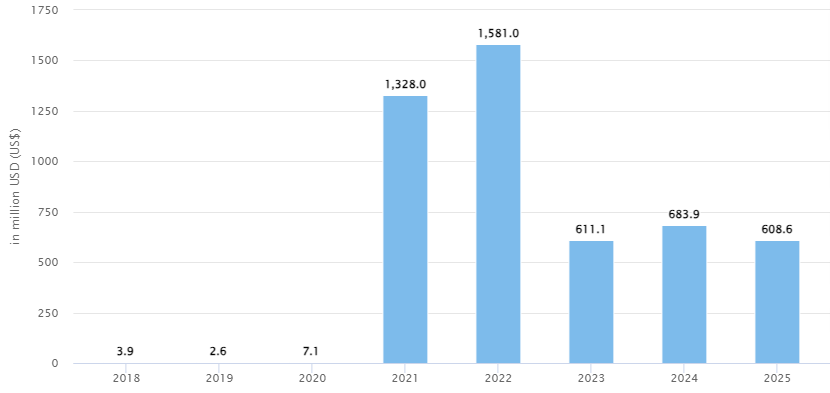
Source: Statista
- The NFT market is expected to bring in US$608.6 min 2025.
- With a compound annual growth rate (CAGR) of 0% from 2025 to 2025, the market is expected to bring in US$608.6m by 2025.
- The NFT art market is expected to bring in an average of US$52.3 per user in 2025.
- Compared to the rest of the world, the US market is projected to bring in the most money, reaching US$115,200,00 in 2025.
- There are likely to be 64 million users of the NFT painting market by 2025.
- The percentage of users is estimated to reach 15% by 2025, and it will rise to that level by 2025.
How Does NFT Art Marketplace Work?
Now that we know what an NFT art platform is, we can start the exciting working process of the NFT art marketplace. Most of the time, each NFT market works in the same way. Once a user has signed up, here are some steps explained by a marketplace development company you need to take:
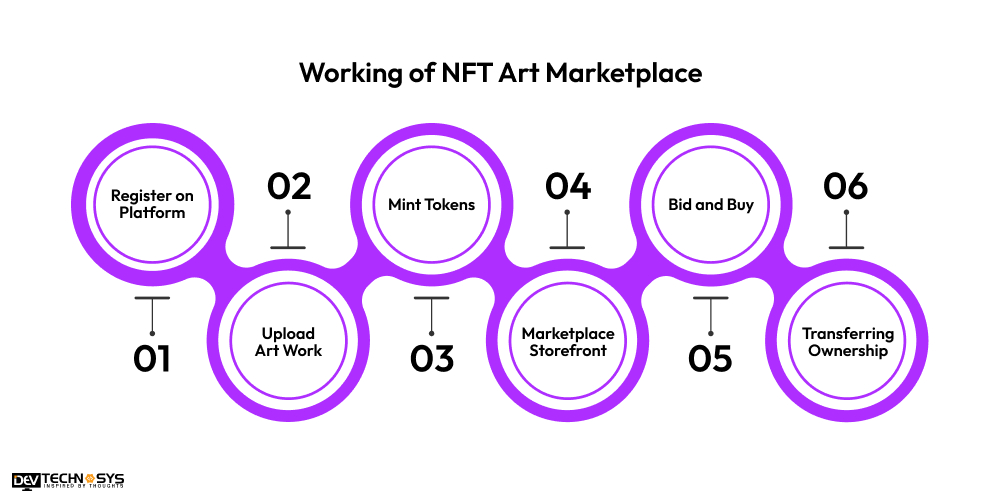
1. Register on Platform
By signing up for the NFT marketplace, artists can make their profile look bad in the NFT art market. They can get their hands on critical artistic features and art market tools.
2. Upload Artwork
Artists can show off their unique works by including descriptions that are related to the work, the name of the piece, and how much it costs. This makes it easy for buyers to look at the art.
3. Mint Tokens
Once all the information is gathered, the tokens are made into NFTs and put up for sale on the NFT Arts platform.
4. Marketplace Storefront
The impressive collection of works is shown in the marketplace storefront, which is also where people can start buying the best digital art marketplace.
5. Bid and Buy
Users can either pay a set price for the artwork they want to buy, or they can participate in the sale and bid on the artwork that they want. The people who bid the most money win the sale and get the piece of art.
6. Transferring Ownership
The user who won the bid gets tokens sent to their wallet, and the person who made the art sends cryptocurrencies to their wallet.
Major Difference Between NFT Digital Art and Traditional Art
Traditional art differs greatly from NFT art. The artist can choose the commission rate, making NFT art more profitable in some situations. It can be resold, unlike traditional art, and the artist gets paid every time. As per the marketplace development services provider, here are the following important differences you must check out:
Elements |
NFT Digital Art |
Traditional Art |
| Storage | With blockchain technology, NFT art needs a data file that is kept safe. | A place to store traditional art is needed. |
| Selling venues | At NFT markets, you can buy and sell art. | You can buy and sell traditional art online, in art stores, and at auctions. |
| Audience | Many people who might want to buy NFT art can find it on the internet. | If traditional work is displayed in a gallery or auction house, its audience is small. |
| Market volatility | The value of NFTs is not just based on money. | Things like social environment and value can affect the market for NFTs. |
How To Develop An NFT Art Marketplace?
You need to know a lot about blockchain technology and have a lot of technical expertise to build an NFT art marketplace project. Here is a general outline of the steps you need to take to create an NFT art platform.
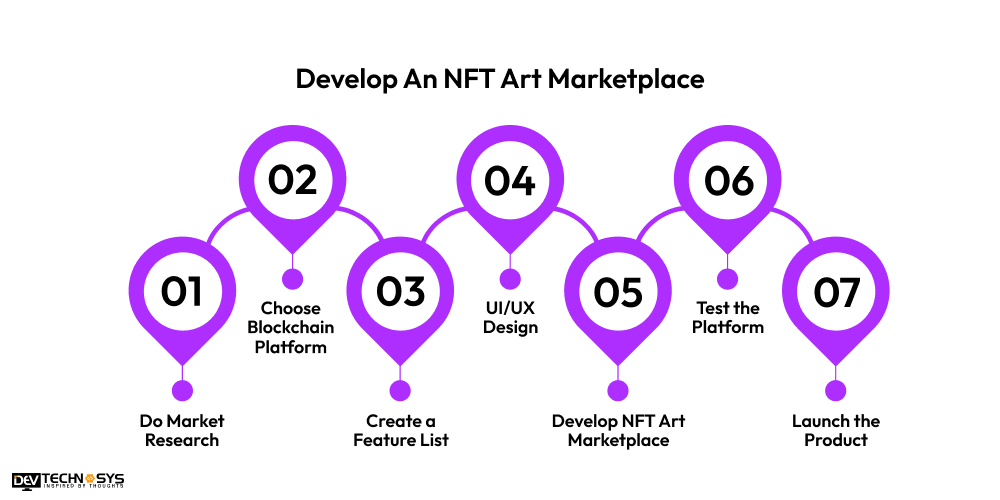
1. Do Market Research
First, figure out your niche. NFT art marketplace can be broad or narrow, like those that only sell digital art, music, or games. Focusing on a niche can help you get loyal customers and set you apart from other businesses in the same field.
Every NFT development company should pay attention to what the market is doing right now to stay in business. You should look at what your rivals are doing and decide what you like best about their markets and what you would like to keep or change.
2. Choose Blockchain Platform
To run your NFT art marketplace, the next step is to pick a blockchain platform. The most well-known blockchain platform for NFTs is Ethereum. However, Binance Smart Chain and Solana are also good choices. Before making a choice, you should look at each blockchain platform’s processing fees, ability to grow, and security features.
3. Create a Feature List
Once you’ve picked a blockchain platform, you need to decide what your NFT art marketplace development platform will have. A safe payment gateway, an easy-to-use interface, and smart contracts that can be changed to create and sell NFTs are some of the most important features.
You might also want to add extra features like sharing on social networks, artist bios, and curation. Picking the most important features is an important part of MVP app development.
It’s important to keep everything that a person might need, but you shouldn’t add too many of them. You can also use the following list of features to make a checklist for NFT clone art marketplace development.
4. UI/UX Design
Next is making your trading platform’s UI/UX design. Pay attention to fonts and colors as you define your style and make it unique and easy to spot. Don’t forget to think about how useful the platform is when you’re making a user experience.
Make it easy for users to use and get to. It’s vital that your digital art marketplace NFT is simple to find and use and that making and buying NFTs is easy to understand. The design should also work well on phones since many people use them to connect to the internet.
5. Develop NFT Art Marketplace
Coding is the next step to create an NFT art marketplace clone. When starting the NFT art marketplace development, you should pay extra attention to these things:
- Create smart contracts.Smart contracts are used to create NFTs and automatically carry out purchases when certain conditions are met.
- Set up a payment gateway. Setting up a secure link between your product and a crypto payment gateway service provider is an important step in the growth of an art market.
- Ensure security. Security is very important when it comes to money. We use strong security measures to protect your information.
Read also: Top Benefits & Features of The Top Music NFT Marketplace
6. Test the Platform
Testing your platform lets you find mistakes and bugs before and after the launch. The testing team will help you with quality assurance (QA), which checks that apps look good, work well, and do what they’re supposed to do on all devices. In the testing step, the goal is to find and fix any bugs so that the final product is the best it can be.
7. Launch the Product
After that, you can make the platform live and get feedback from the first users who use it. User reviews are very important when you create an NFT marketplace like OpenSea or others because they let you know how well your MVP is doing and help you make it better by making sure users have a great experience. Once it is set up, the platform can be used for what it was made for.
Key Features To Add In NFT Art Marketplace Development
Now that you know how to create an NFT art marketplace, let’s talk about the key features. When creating an NFT art platform, you need to think about the most important features of your website or app. You can add the following features to your potential audience to keep coming back and get more users to use your platform:
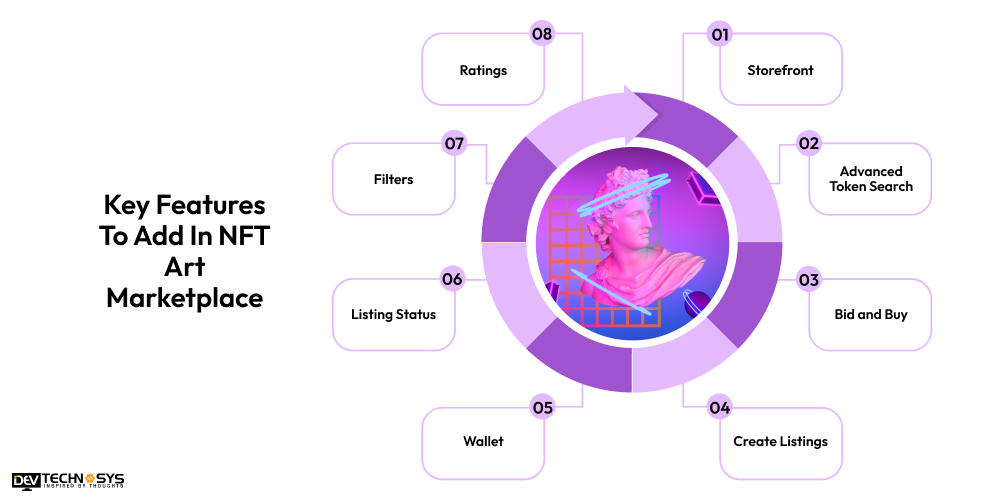
1. Storefront
A digital art marketplace NFT doing well will usually have a shop that works like a dashboard. It gives users all the information they need about asset owners, bids, previews, and the past of prices.
2. Advanced Token Search
Users should be able to easily get all the information they need about goods they need right away. The NFT art platform should have all of the products organized by type, like art, pictures, music, videos, and memes. The client is happier when the search is faster.
3. Bid and Buy
Users must be able to buy and sell NFTs recorded when you create an NFT marketplace like Rarible or another for artists. Their bids should have an expiration date, and they should be able to see details about the current status of those bids.
4. Create Listings
You should allow users to make digital collectibles and send them to other users. Make sure they don’t have to do much to do it. Make a page where they can send files and type in a complete description of the goods. It’s essential to have information like tags, names, and descriptions.
5. Wallet
Customers should be able to keep, send, and receive NFTs and cryptocurrencies in their digital art NFT marketplace’s wallet. You can make your own wallet or add apps like Coinbase or MyEtherWallet that are already out there.
6. Listing Status
Users who offer goods and pass the product verification process can get listing status. It lets you see where the approval process is at any given time. It makes collectible identification easier to do.
7. Filters
It is very helpful to use filters. In addition, getting to a website is easy. If you want to make a platform for selling collectible NFT art, you should add this function. Users can freely pick assets based on their type, payment gateway method, due date, and listing state.
8. Ratings
It’s a feature for users who are just starting out and don’t know how to choose goods quickly or how the system works. Users can tell if a seller they’re considering is reliable by looking at their reviews. Users who use an NFT marketplace for digital art can rate other users and give comments based on their own experiences. It lets other people see how trustworthy a person is.

Top 5 NFT Art Marketplaces in 2025
We picked a few from the NFT art market that either have the most popular or large numbers that interest and excite people with new ideas and experiments. Users are interested in these NFT art marketplaces, which can be used as models for new projects. Let’s have a look at the top 5 NFT marketplaces for artists.
Best NFT Art Marketplaces |
Available Platform |
Downloads |
Ratings |
| OpenSea | Android | iOS | 1M+ | 3.7 |
| Rarible | Android | iOS | 100K+ | 3.5 |
| Binance NFT | Android | iOS | 100M+ | 4.5 |
| Axie Infinity | Android | iOS | 100K+ | 3.5 |
| NBA Top Shot | Android | iOS | 10M+ | 4.1 |
How Much Does It Cost To Build An NFT Art Marketplace?
So, what investment will be required to develop an NFT art marketplace? This is the most essential question entrepreneurs ask first. It can be challenging to provide an exact cost to develop an NFT marketplace for artists due to variations in project requirements.
But we can give a rough estimate of the cost to develop an NFT art marketplace that can be around $8000 – $25000. While the ready-made solution is inexpensive, the NFT cost will be higher if you want to build your own art market from scratch. Here is the table of NFT art marketplace clone development costs.
Factor |
Approximate Cost |
| Development Team | $3,000 – $4,000 |
| Blockchain Integration | $1,000 – $1500 |
| Storage and Hosting | $900 – $2000 |
| Smart Contract Development | $2,000 – $4,000 |
| UI/UX Design | $2,000 – $5000 |
| Marketing and Promotion | $1500 – $3500 |
| Legal and Compliance | $1300 – $3000 |
Aside from these, other things that affect the best NFT art marketplace development cost are the features of the NFT marketplace, the size of your external NFT art marketplace development services team, and so on. So, it would be best to consult with an NFT token development company that can provide an actual cost estimation.
Ways To Monetize Your NFT Art Marketplace
An NFT art marketplace owner generally makes money from the commission and listing fees. You can pick the best one of several ways to make money, or you can mix them. Let’s take a look at them:
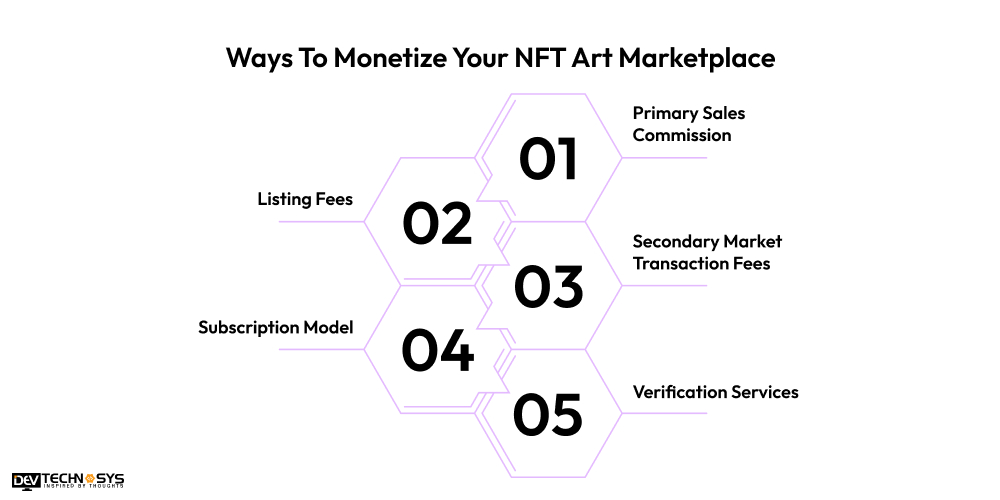
1. Primary Sales Commission
The major sales commission model is the main way that money is made in the NFT art market. By giving artists a cut of the first sale of NFTs, the marketplace can build a connection with them.
This commission keeps the site going and shows that the Ethereum development company is dedicated to helping artists and getting their work out there. As artists get better and more well-known, the market can benefit from its carefully chosen stock becoming more valuable and appealing.
2. Listing Fees
Artists and collectors can get into the NFT trade through listing fees. Businesses can charge a small fee to add NFTs. This keeps the collection clean and high-quality by preventing spam or low-value content.
This plan lets the marketplace keep a balance between being open to everyone and keeping some things out of reach of others. It also keeps the platform’s standards while making consistent revenue.
3. Secondary Market Transaction Fees
The NFT marketplace art has a steady flow of income after the first sale, thanks to transaction fees on the secondary market. By using smart contract development on the blockchain, the marketplace can get a cut of every resale deal without having to do anything.
This method not only encourages collectors to take part in the secondary market, but it also matches the marketplace’s goals with the NFTs’ long-term success and value.
4. Subscription Model
With the subscription approach, there are different levels of membership, each with its own set of premium features and content. This not only brings in regular money but it also makes the whole experience better for the user.
Premium members can get early access to new releases, see behind-the-scenes content that isn’t available to everyone, and even take part in events that are only open for a short time. This gives artists in the NFT art marketplace development solutions a sense of community and exclusivity.
5. Verification Services
The NFT art community is more trustworthy and real because of verification services. By charging artists to verify their work, the blockchain development platform can reassure collectors that the NFTs are real and unique.
This process of verifying each item not only makes the marketplace more trustworthy but also brings in money and helps artists tell their original pieces from possible fakes.
Final Thoughts
The NFT market has become more and more hyped in recent years. Many digital art marketplaces, including mass, art, sports, and game NFT platforms, allow users to buy and sell art, cards, and other collectibles.
While using a blockchain’s open and safe digital record, NFT makes one-of-a-kind digital treasures. If you want to control one of the most hopeful areas of technology, you can invest in an NFT art marketplace development.
You can easily decide what kind of platform you want to make and what parts it should have. However, consulting with an NFT marketplace development company that can create a robust NFT art marketplace within your budget would be best.
Frequently Asked Questions
1. Who Are The Most Common Mistakes To Avoid When Creating NFT Art?
Some common mistakes are not paying enough attention to the quality of your information, not figuring out gas costs, and not getting people to talk about your work. Don’t rush to mint without a clear plan or forget how important it is to sell your NFTs well.
2. How Much Does It Cost To Build An NFT Art Marketplace?
The cost to make an NFT art marketplace can range between $8000-$25000. However, crucial factors like platform choice, features, design, etc affect the total cost. So, getting help from an NFT art marketplace development company is best.
3. How Long Does It Take To Develop An NFT Art Marketplace?
The estimated NFT art marketplace development time depends on your project’s complexity. Generally, it can take between 2- 8 months to create an NFT art marketplace.
4. How To Make An NFT Marketplace?
- Define the requirements
- Choose Niche
- UI/UX Design
- Move to Front-End Development
- Use Smart Contracts Token Generator
- Integrating Digital Wallet
- Test and Deploy