


















Key Takeaways:
-
- Centralize Property Inquiries: Capture leads from property portals, websites, social media, calls, and WhatsApp in one CRM to prevent missed opportunities.
- Prioritize High-Intent Buyers: Score prospects using budget, preferred location, property type, and purchase timeline to focus on leads most likely to convert.
- Automate Follow-Ups: Use reminders and automated messages to maintain timely communication throughout the buyer journey.
A buyer submits inquiries for three apartments, receives a response from another broker first, and books a site visit before your agent even calls back. This is how property deals are lost due to the fact that inquiries made on property websites, listings, social networks, and referral sources can be distributed among the spreadsheets, email boxes, and mobile phones of agents, thus making it impossible to follow up on time.
A real estate lead management system helps agents and brokers to capture inquiries, assess buyers on the basis of their intent to buy a property, and measure various activities. A real estate CRM software system lets teams prioritize potential clients, set up automatic follow-ups, and speed up the process of working with prospects, helping ensure profitable customers make site visits and close deals.
What Is Real Estate Lead Management?
Real estate lead management is the process of collecting, organizing, verifying, and nurturing leads from the first inquiry through to the final transaction. It helps real estate agents, developers, and brokers track where leads come from, understand their property preferences, identify purchase intent, and follow up.
For example, when a buyer enquires about a 3BHK apartment through a property portal, a real estate CRM can record their budget, preferred location, and purchase timeline. The system can allocate the inquiry to an agent and set real estate lead follow up schedules, as well as monitor their progress from the initial meeting until the appointment for viewing an apartment has been made.
How a Real Estate CRM Helps Capture Property Leads?
CRM software designed by a skilled real estate CRM software development company brings together leads coming in from various sources, such as websites, social media channels, and property comparison websites, and ensures that the leads are transferred to the right agents for timely response. It also eliminates the chances of missed opportunities and lead conversion.
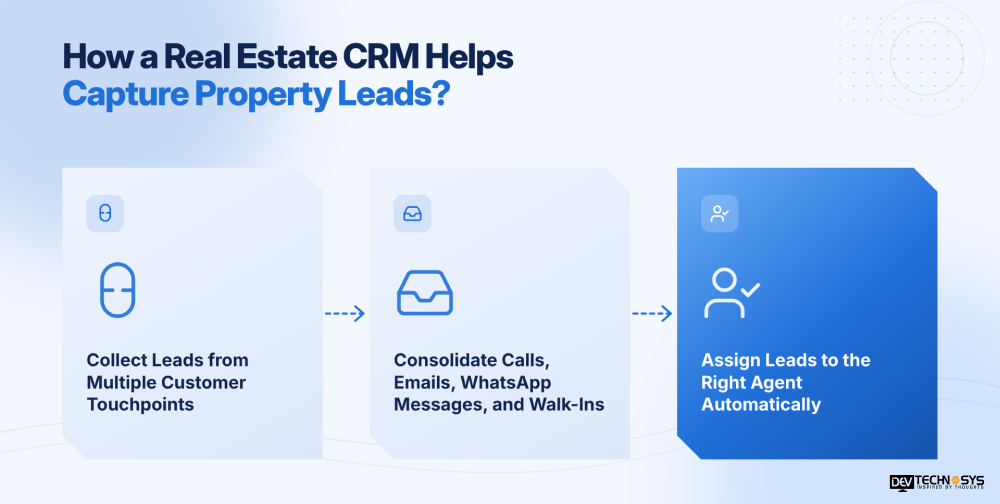
1. Collect Leads from Multiple Customer Touchpoints
Clients can receive inquiries from property websites, landing web pages, social media platforms, and pay-per-click marketing services. This can be done automatically through the With IDX CRM integration, which captures contact details, property preferences, and lead sources.
2. Consolidate Calls, Emails, WhatsApp Messages, and Walk-Ins
Store a complete lead record regardless of whether an inquiry comes in via call, email, WhatsApp, or walk-in. The benefits of a single record include recording the history of conversations over a period of time to avoid duplicate entry and keep track of follow-ups effectively.
3. Assign Leads to the Right Agent Automatically
A real estate CRM collects inquiries from multiple channels, organizes prospect information, and routes leads to the right agents. Real estate lead routing helps businesses respond faster and reduce missed sales opportunities.
How to Score and Prioritize Real Estate Leads with a CRM?
Not every property inquiry signals an immediate purchase. A real estate CRM helps agents score leads based on buying intent, budget, property preferences, and readiness to purchase. This allows sales teams to focus on prospects who are more likely to book a site visit or close a deal.
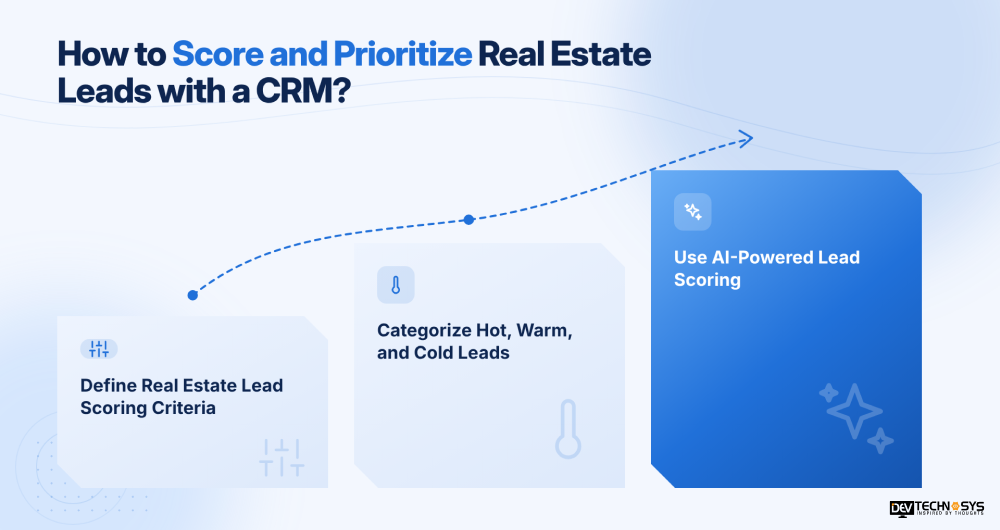
1. Define Real Estate Lead Scoring Criteria
Real estate lead scoring with AI helps analyze buyer budgets, preferred locations, property types, listing engagement, and purchase timelines to estimate conversion potential. For example, a buyer with a confirmed budget, repeated property views, and plans to purchase within a month may receive a higher score than someone casually browsing listings. A strong lead-scoring model helps agents prioritize high-intent prospects and schedule timely follow-ups.
2. Categorize Hot, Warm, and Cold Leads
- Hot leads: Buyers with a clear budget, strong purchase intent, and an immediate timeline. Prioritize calls and site visits.
- Warm leads: Prospects comparing properties or arranging finances. Share relevant listings and schedule follow-ups.
- Cold leads: Early-stage browsers with uncertain budgets or timelines. Nurture them through personalized real estate lead follow up and periodic communication.
3. Use AI-Powered Lead Scoring
Real estate app development services providers can build real estate CRM solutions with AI-powered features that analyze inquiry history, email and message engagement, property views, and past interactions to identify conversion patterns. Based on available data, the system can predict which prospects deserve faster follow-ups.
7 Ways to Convert More Property Leads with a Real Estate CRM
Generating property inquiries is only the first step; converting them into site visits and bookings requires timely communication and consistent follow-ups. According to the providers of real estate CRM software development services, a real estate CRM helps agents manage these activities systematically, reducing missed opportunities and improving lead conversion.
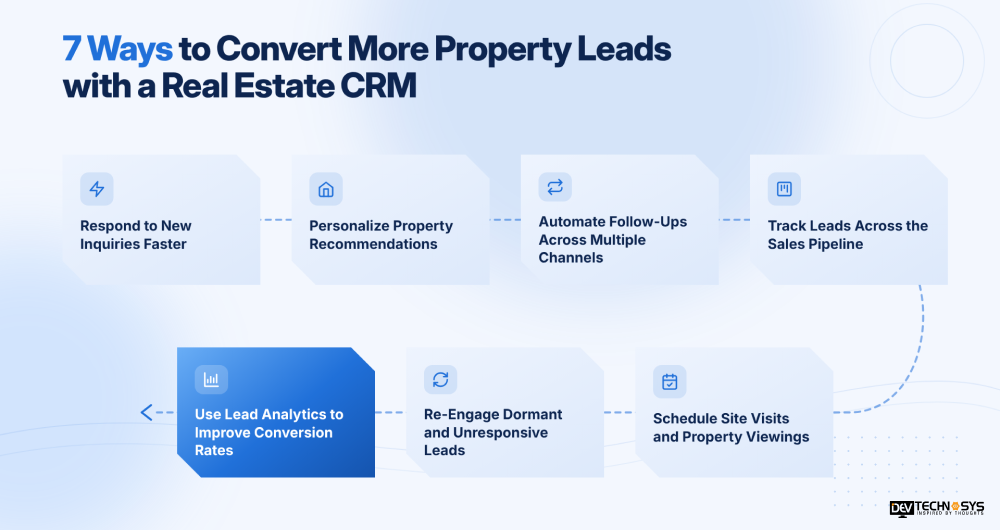
1. Respond to New Inquiries Faster
Automated notifications alert agents when new property inquiries arrive. Teams can respond while buyers are actively comparing listings, answer questions, and schedule follow-ups before prospects contact competing brokers.
2. Personalize Property Recommendations
Use CRM data such as budget, preferred location, property size, and amenities to recommend relevant listings. Build a real estate broker app with personalized suggestions to help buyers discover suitable properties instead of receiving generic promotional messages.
3. Automate Follow-Ups Across Multiple Channels
Set up follow-up reminders and automated messages through email, SMS, or WhatsApp integrations. Timely communication keeps prospects engaged without requiring agents to manually track every interaction.
4. Track Leads Across the Sales Pipeline
Monitor prospects from initial inquiry and qualification to site visits, negotiations, and booking. Real estate sales pipeline management visibility helps agents identify stalled leads, follow up on pending decisions, and maintain clear sales priorities.
5. Schedule Site Visits and Property Viewings
A CRM for property developers helps coordinate property visits, manage agent availability, and send appointment reminders through CRM workflows. Agents can track attendance and follow up after each visit to understand buyer feedback and next steps.
6. Re-Engage Dormant and Unresponsive Leads
Segment inactive prospects based on their last interaction, previous property interest, or purchase timeline. Share relevant new listings, price updates, or property alerts for buyers to restart conversations when their buying intent returns.
7. Use Lead Analytics to Improve Conversion Rates
Hire an experienced custom real estate property listing app development company to create a CRM that uses lead analytics to review lead sources, response times, site-visit bookings, and real estate lead conversion rates to identify what drives results.
Real Estate Lead Management Workflow: From Inquiry to Deal Closure
A structured real estate lead management workflow helps agents move prospects from their first property inquiry to a confirmed booking. A CRM ensures property inquiry management and organizes each stage, automates routine tasks, and ensures promising leads receive timely attention.
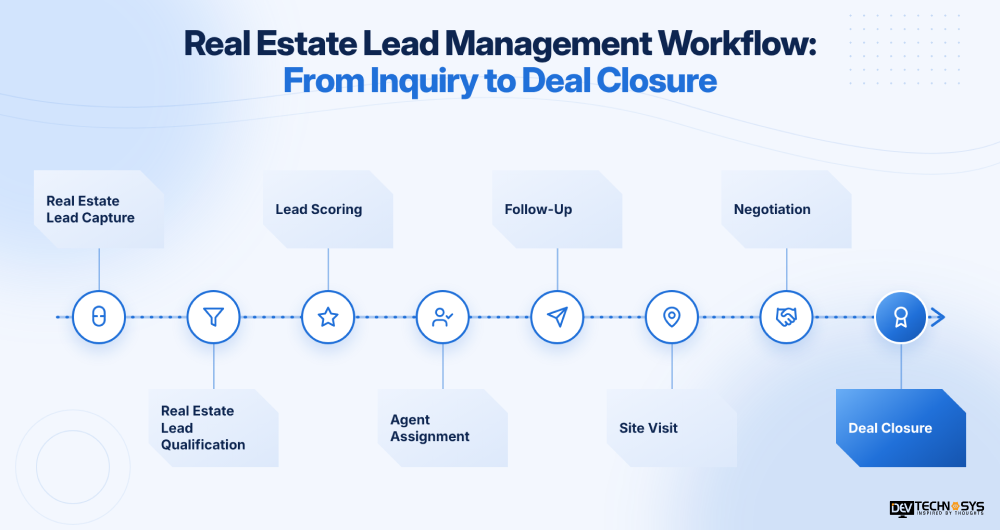
The typical workflow includes:
Lead capture → Qualification → Scoring → Agent assignment → Follow-up → Site visit → Negotiation → Deal closure.
- 1. Real Estate Lead Capture: Collect inquiries from property portals (lead capture forms), websites, social media, and phone calls.
Note: Real estate chatbot development can further automate lead capture by engaging website visitors, answering property-related questions, and collecting buyer details.
- Real Estate Lead Qualification: Record the buyer’s budget, preferred location, property type, and purchase timeline.
- Lead scoring: Rank prospects according to buying intent and readiness to purchase.
- Agent assignment: Route qualified leads to agents based on territory, expertise, or availability.
- Follow-up: Schedule calls, send reminders, and share relevant property details.
- Site visit: Coordinate property viewings and record buyer feedback.
- Negotiation: Track pricing discussions, objections, and pending decisions.
- Deal closure: Ensure proper real estate lead nurturing by lead status updates after booking or sale confirmation.
An AI-powered real estate CRM automates data entry, reduces manual work, triggers follow-up reminders, and updates lead statuses as prospects progress. If a buyer misses a site visit or stops responding, agents can spot the stalled opportunity and act. This visibility helps teams stay in consistent contact and move more qualified prospects toward conversion.
Essential Features to Look for in a Real Estate Lead Management CRM
Using the right real estate lead management CRM will allow real estate agents to gather leads, manage their most lucrative leads, and identify potential customers, all from one location. The following are some real estate app features that should be included:
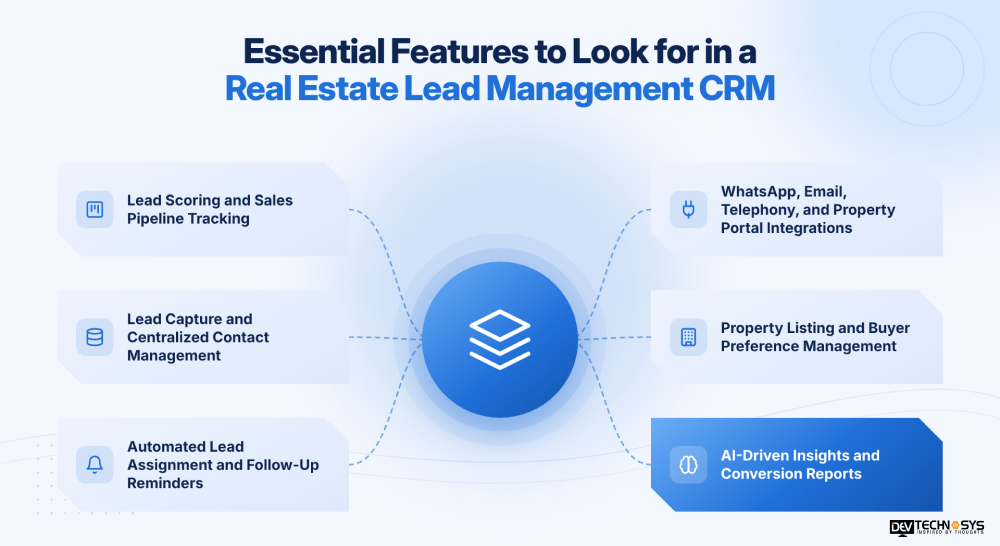
1. Lead Scoring and Sales Pipeline Tracking
Evaluate prospects based on their buying intentions, budget, and timeline for the purchase. Then, record their journey from inquiry to qualification, property viewing, negotiation, and closing the deal to discover stalled opportunities.
2. Lead Capture and Centralized Contact Management
Real estate agents are able to gather incoming inquiries received from their websites, third-party property portals, social media pages, and calls made directly to agents. Both prospective and existing customers are easier to track and manage. AI chatbots for real estate apps can help answer initial property questions, collect buyer details, and capture inquiries outside business hours.
3. Automated Lead Assignment and Follow-Up Reminders
Using the real estate lead generation system, real estate agents are able to assign new leads automatically by taking into account the properties they are likely to purchase, their budgets, and their availability. The resulting alerts will make it easier for agents to stay on top of incoming leads.
4. WhatsApp, Email, Telephony, and Property Portal Integrations
Integrate communication channels and property portals to streamline lead capture and follow-ups. MLS and API integration can also synchronize supported property listings and related data with the CRM. Depending on available integrations, agents can manage inquiries, track conversations, and coordinate responses from a connected CRM.
5. Property Listing and Buyer Preference Management
Keep track of property details, including pricing, location, amenities, and availability, as well as buyers’ demands. By doing so, agents can provide their clients with property recommendations, address such preferences, and help potential buyers find the necessary property.
6. AI-Driven Insights and Conversion Reports
Analyze engagement patterns, lead sources, response times, and conversion rates using CRM analytics. AI agents for real estate can handle tasks such as answering routine questions, qualifying inquiries, recommending listings, and initiating follow-ups, depending on their configuration.
How to Measure Real Estate Lead Management Performance?
Generating lots of inquiries is of no use if they do not result in property viewings or sales for the company. A real estate CRM can aid in pinpointing the reasons why potential clients drop off, as well as which marketing approach has generated the buyers prompted by the CRM to take action. With the right real estate IT solutions, businesses can track these metrics and improve their lead conversion strategy
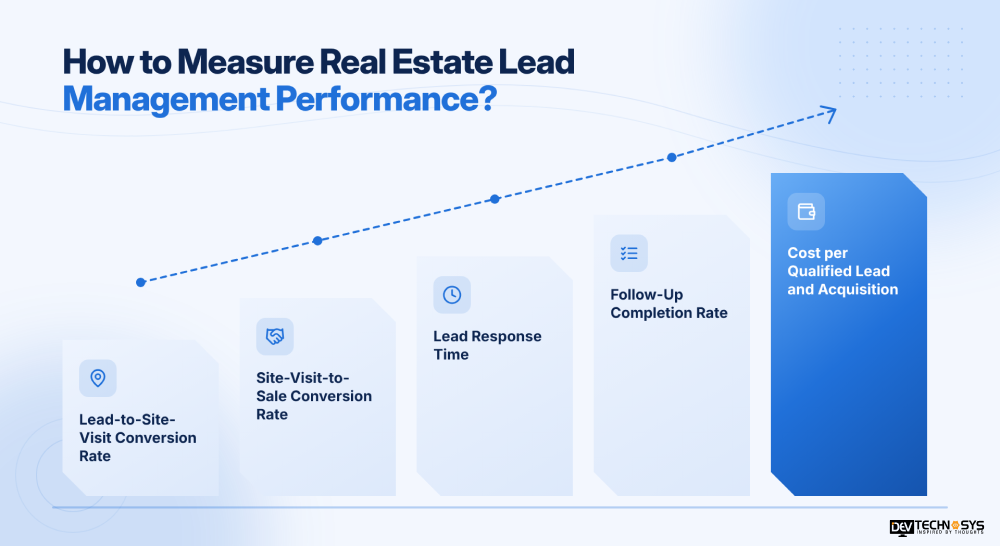
- Lead-to-Site-Visit Conversion Rate: Unveils the degree to which inquiries are converted into property visits, and low values indicate either low quality of the leads or delayed follow-ups.
- Site-Visit-to-Sale Conversion Rate: Shows whether property visits lead to bookings.
- Lead Response Time: Tracks how quickly agents respond to inquiries. Businesses investing in CRM software development services can implement automated alerts to help sales teams contact prospects promptly.
- Follow-Up Completion Rate: Indicates missed calls and messages from agents, leading to potential sales being lost.
- Cost per Qualified Lead and Acquisition: This metric helps identify which campaigns lead to qualified buyers and actual sales.
Common Real Estate Lead Management Mistakes to Avoid
Even with a steady flow of property inquiries, poor lead management can cost real estate businesses valuable sales opportunities. Avoid these common mistakes to improve follow-ups and convert more leads into bookings.
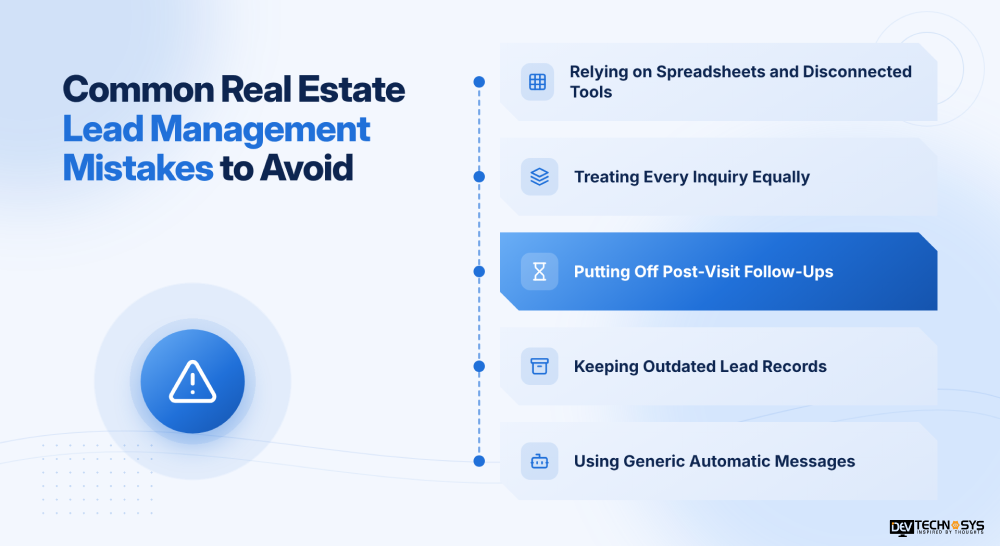
- Relying on Spreadsheets and Disconnected Tools: Having your data scattered makes it extremely tough to track communication, keep tabs on your progress, and follow up promptly.
- Treating Every Inquiry Equally: Rather than treating each inquiry the same, profile the prospective clients according to their budget, intent to buy, timing of purchase, etc.
- Putting Off Post-Visit Follow-Ups: Make sure you connect with your clients immediately after the property visit to address their concerns, collect feedback, answer their queries, and keep the purchase process going.
- Keeping Outdated Lead Records: Review and update your lead records every so often so that you do not miss any important sales opportunities.
- Using Generic Automatic Messages: Make sure your follow-up messages are customized according to buyer preferences, prior communication, and interests in properties.
How to Choose a Real Estate Lead Management Software Development Company?
Choosing the right development partner helps real estate businesses build a CRM that fits their sales workflows, property portfolio, and lead conversion goals. Evaluate these factors before making a decision:
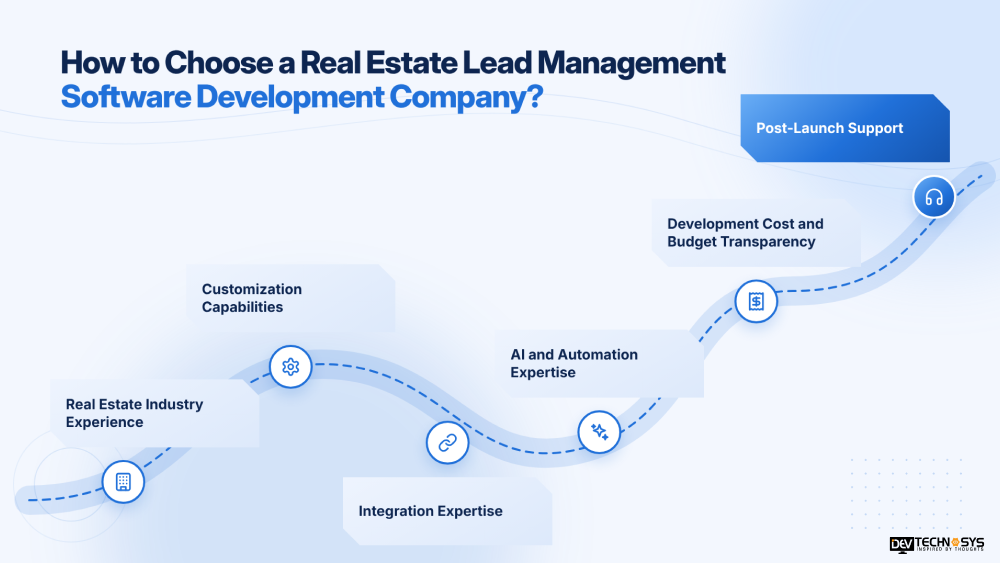
- Real Estate Industry Experience: Look for experience developing CRM solutions for property agents, brokers, and developers, including lead source tracking, property matching, and site-visit management.
- Customization Capabilities: Choose a broker app development company that can tailor lead scoring, automated follow-ups, sales pipelines, and reporting to your business requirements.
- Integration Expertise: Ensure the team can integrate property portals, WhatsApp, email, telephony, and other tools your sales team uses.
- AI and Automation Expertise: Assess its ability to implement predictive lead scoring, personalized property recommendations, and automated communication workflows if these features align with your needs.
- Development Cost and Budget Transparency: Compare estimates for development, integrations, testing, deployment, and maintenance. Ask for a detailed breakdown of real estate CRM software development cost to understand how customization, AI features, and third-party integrations affect the overall budget.
- Post-Launch Support: Select a real estate crm development company that confirms the availability of maintenance, bug fixes, performance monitoring, and future feature enhancements.
Conclusion: Turn More Property Inquiries into Closed Deals
Converting property inquiries into closed sales takes more than lead generation; it requires prompt responses, accurate assessment, and consistent follow-up. Real Estate CRM Integration with MLS, IDX & Property Portals helps agents identify serious buyers, automate simple actions, and track every potential buyer from the first inquiry to closing. If you are a business looking for property lead management software development services, contact Dev Technosys. Stay tuned for more informative updates.
Frequently Asked Questions
Find answers to the most common questions related to this article.
The ideal method to use is real estate lead management software to record inquiries, keep buyer information in an orderly fashion, evaluate the prospects, and make follow-ups automatically. You need to monitor leads from the first point of contact through to closing.
A real estate crm allows agents to be quicker in their responses, establish automated follow-ups, and monitor prospects’ activities. By locating high-intent buyers and maintaining regular communication with them, agents can raise their levels of engagement.
To score property leads, go ahead and analyze their income, desired location, type and category of property, time of purchase, and the extent of buyer engagement. Pay attention to buyers with realistic budgets, an understanding of what they need, and those who want to buy now.
Yes, there are options available for real estate CRM software systems to capture inquiries from the various property platforms they integrate with, depending on the access that is given, the integrations available, as well as the interoperability of the CRM with other systems.
By analyzing the interactions with consumers, their preferences regarding properties, how they respond to listings, and historical conversion trends, AI allows us to find leads with the highest probability of lead-to-appointment conversion. The system can score leads, suggest next steps, and prioritize leads for professional contact.