















The digital world is moving at a fast pace, and healthcare can now reach far beyond hospitals and clinics. With apps such as HealthTap, people can now access medical services more flexibly, allowing them to connect with doctor advisors who offer virtual consultations, speak with doctors 24/7, and receive immediate health advice at the touch of a screen.
The global digital health market is expected to reach a value of $ 660 billion by 2030, and the valuation of mobile health apps is predicted to exceed $174 billion during the same time frame.
There has never been a better opportunity to invest in developing a healthcare app. As patients increasingly demand quicker and more convenient care, healthcare providers and entrepreneurs must find ways to innovate or risk being left behind.
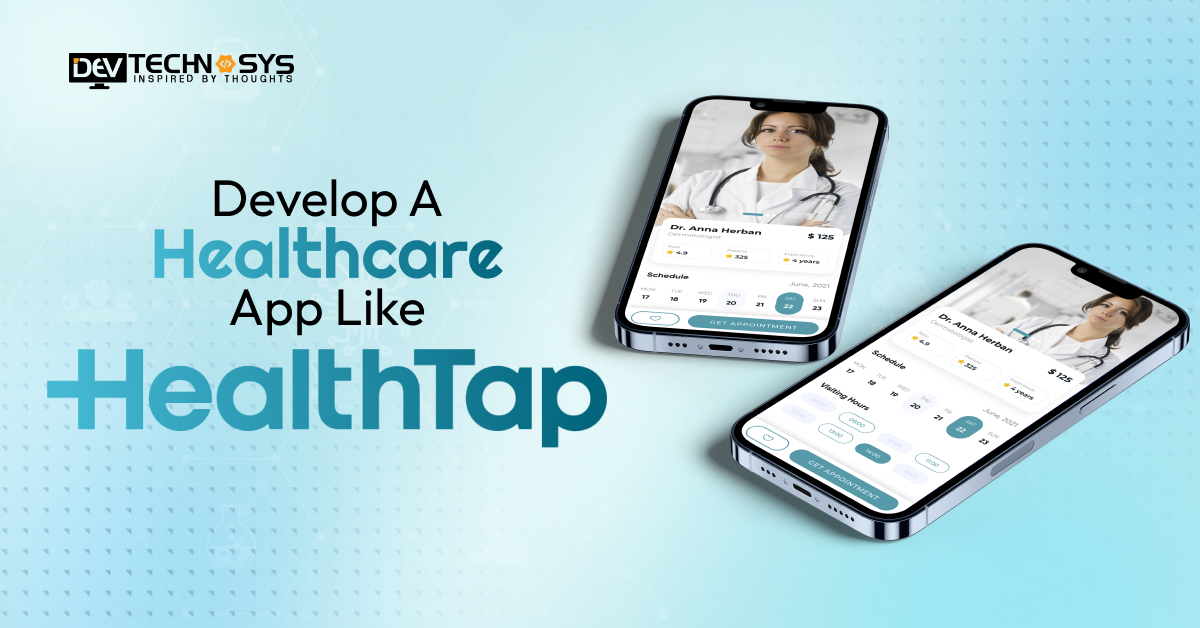
If you are seeking to develop a healthcare app like HealthTap in USA that can transform the way healthcare services are delivered. This blog will guide you through the must-have features, technologies, development process, and cost implications of transforming your idea into a life-saving digital solution.
What is HealthTap? (With Screenshots)
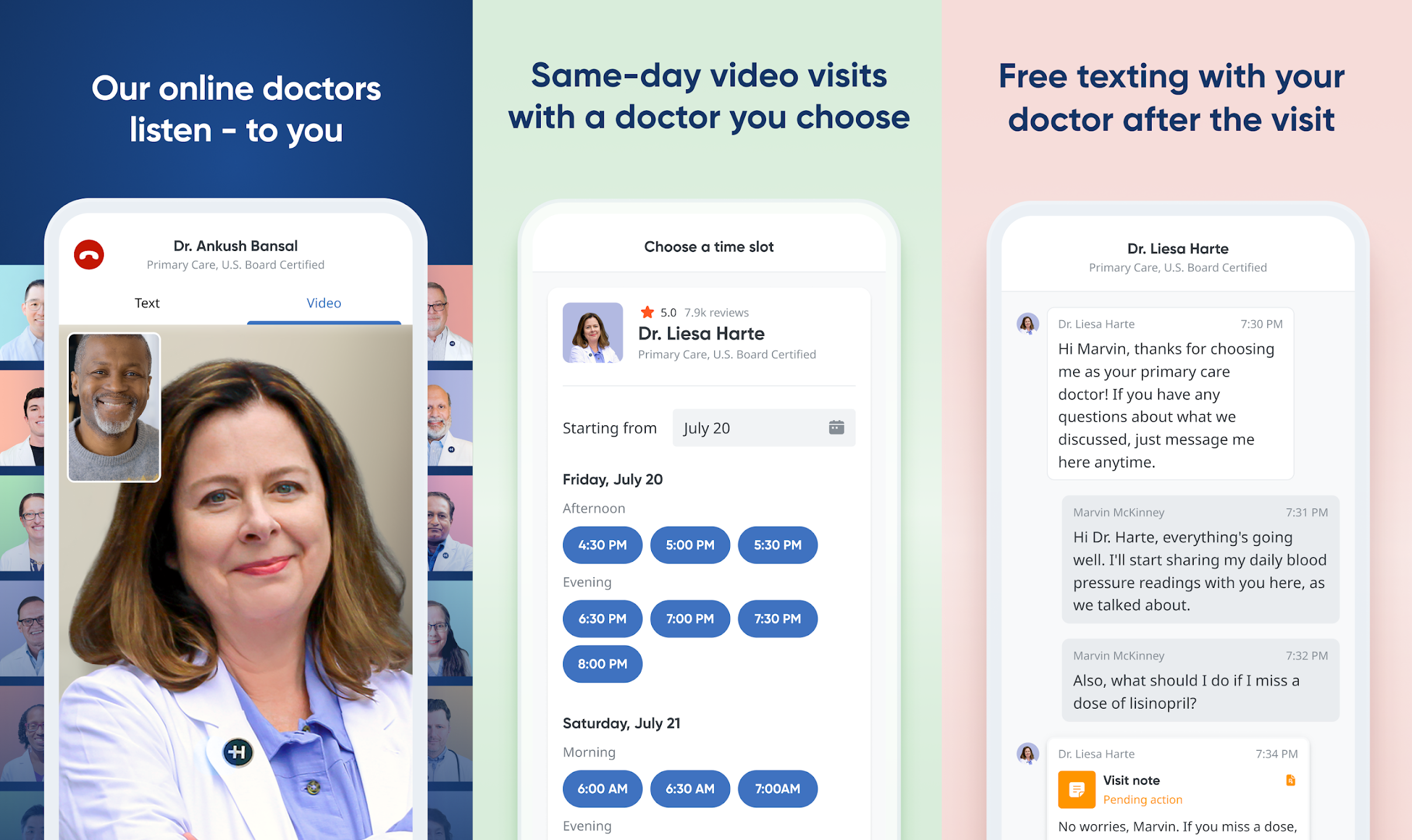
HealthTap is an entirely virtual healthcare platform that connects users directly with a licensed doctor within the HealthTap network to receive real-time medical advice, video consultations, and personalized care from a healthcare professional.
Healthcare IT solutions also offer cost-effective telemedicine services, enabling primary care, mental health services, and, in some cases, prescription medication to be provided. There are alternative methods to use the app, including mobile apps and web-based services. This will always give the user a quality healthcare experience at their discretion, anywhere and anytime.
Know What Market Says About Healthcare App
- According to Statista, the global digital health market earned roughly $198 billion in revenue in 2025, with expected CAGR of ~6.9% through 2029.
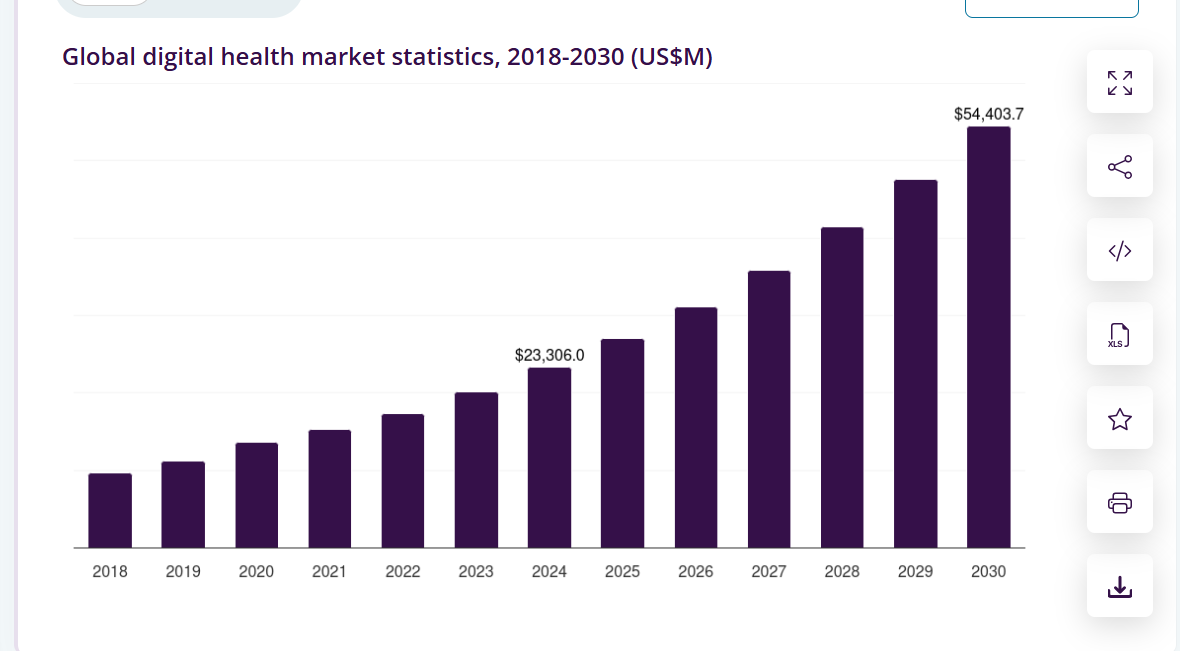
- The global medical (mHealth) apps market made about $23.3 billion in 2024, and is expected to reach $54.4 billion by 2030, growing at a CAGR of ~15.1%.
- According to Grand View Research, the global telemedicine market was valued at $160 billion in 2025 and is expected to reach $710 billion by 2034, at a CAGR of ~18%.
- Telemedicine market at $3.6 billion in 2025 is expected to go to $10.6 billion by 2030 at a CAGR of ~23.8%, with other estimates with $5.05 billion in 2024 growing to $15.1 billion by 2030 at ~19.6% CAGR.
- Asia-Pacific region telemedicine market valued at $37.6 billion in 2024, expected to grow to $105.8 billion by 2030 (CAGR value of ~18.4%).
- The telehealth mobile app (mobile health app) market globally was around $45 billion in 2023, and is anticipated to reach $174 billion in 2033 (~14.7% CAGR).
- Telehealth mobile apps accounted for 42% market share in North America (2023), and the growth of virtual consultations is expected to be the highest (~22% YOY growth rate).
Why Invest in Developing a Healthcare App Like HealthTap?
The healthcare industry is going through many trends and increasing demands from consumers today. These trends give rise to opportunities for an investment in United Healthcare app development, and in this post, we’ll detail the reasons to invest in the app development:
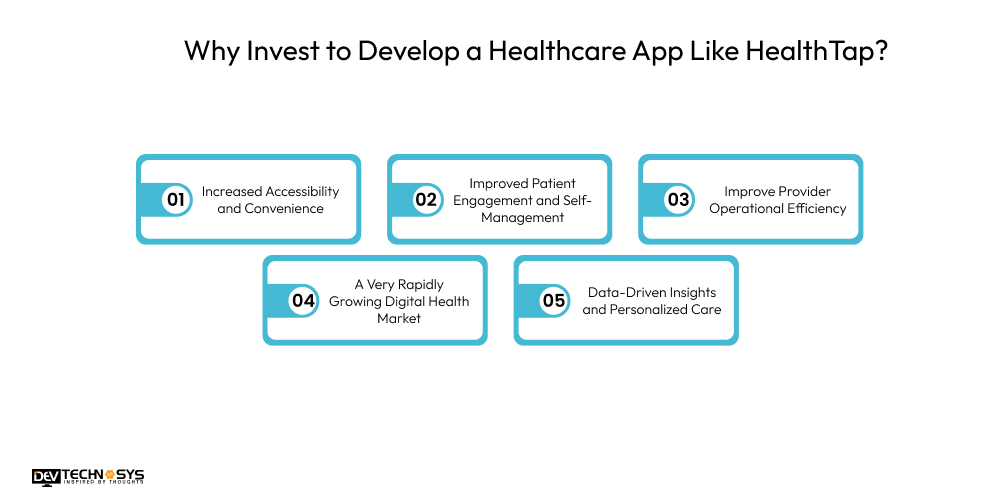
1. Increased Accessibility and Convenience:
Healthcare apps eliminate geographical limitations, facilitating remote consultations and access to medical advice on demand and from any location. This is critical for vulnerable populations, and for patients looking for on-demand care, i.e., no need to have a physical visit/week wait a week to get an appointment.
2. Improved Patient Engagement and Self-Management:
An app increases the ability for patients to engage in their health. Medication reminders, symptom checkers, remote monitoring (often including wearables), and access to personal health records increase adherence to the treatment plan and health self-management.
3. Improve Provider Operational Efficiency:
Healthcare apps like HealthFlex can streamline administrative tasks, such as appointment scheduling, billing, and patient record documentation. Automating tasks reduces paperwork for providers, minimizes errors related to human factors, and increases the amount of time a healthcare professional can spend on direct patient care, increasing efficiency potential and possibly lower overhead costs.
4. A Very Rapidly Growing Digital health Market:
The digital health market is growing rapidly. We project significant growth by 2025 HR and beyond. In 2022, telemedicine is now something/expected by consumers related to getting health care, an investment in an app is an apt shift in health consumer care in a very rapidly growing market for virtual care, AI diagnosis, and personalized health.”
5. Data-Driven Insights and Personalized Care:
Healthcare apps like Healthiago collect valuable data on patient health, which can be analyzed to provide personalized treatment plans, identify health trends, and even predict potential health issues. This data-driven approach leads to more effective interventions and improved patient outcomes.
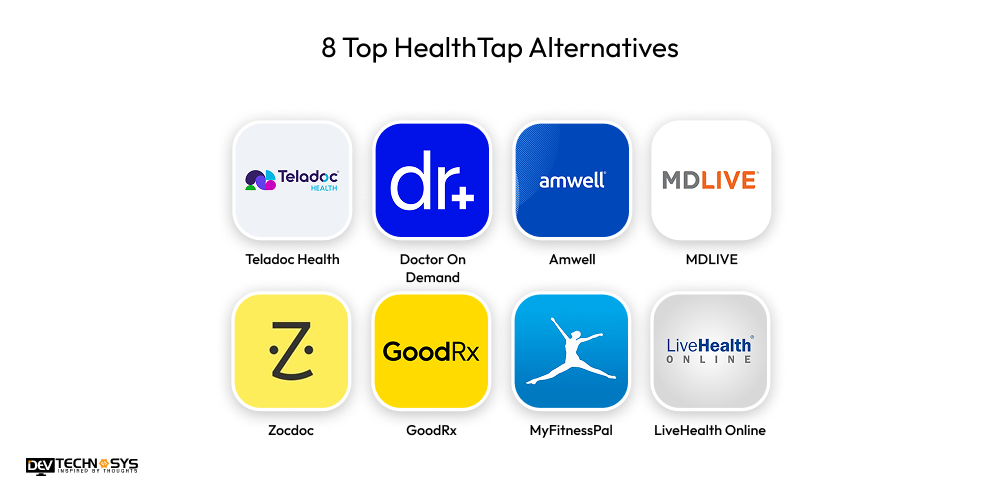
8 Top HealthTap Alternatives
There are several alternatives to the HealthTap app available in the healthcare industry that offer similar and advanced features. Let’s examine some of them with the help of a table:
| App Name | Launch Year | Android Downloads |
| Teladoc Health | 2005 | 50L+ |
| Doctor On Demand | 2013 | 10L+ |
| Amwell | 2006 | 1M+ |
| MDLIVE | 2009 | 1M+ |
| Zocdoc | 2014 | 1M+ |
| GoodRx | 2013 | 10M+ |
| MyFitnessPal | 2015 | 100M+ |
| LiveHealth Online | ~2013 | 5L+ |
Stages To Develop A Healthcare App like HealthTap
When thinking of creating a comprehensive healthcare app, such as HealthTap, there is a standardized approach that is commonly completed in six distinct phases when you work with a healthcare app development company that specializes in this area:
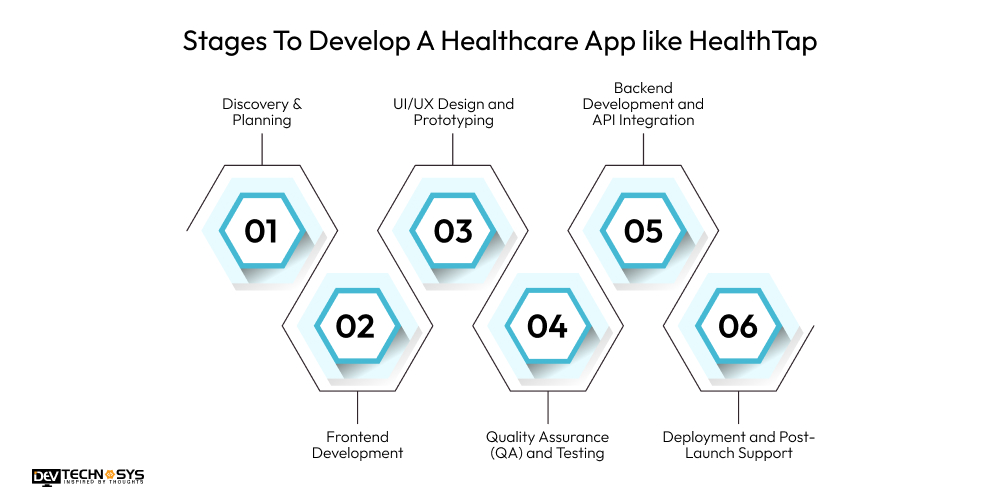
1. Discovery & Planning:
The first phase to develop an app like HealthTap involves the initial review of the market, including studying potential users, identifying their pain points, and analyzing current solutions available in the market. The doctor on-demand app development company will work with you to refine the purpose of your app, the specifically valuable services it might offer (e.g., telemedicine, symptom checker, EHR integration), and its payment methodology.
This phase is also important to lay out the regulatory compliance of what you plan to provide (i.e. HIPAA, GDPR, etc.), and work towards a detailed roadmap, schedule, and budget for your project.
2. UI/UX Design and Prototyping:
User experience (UX) and user interface (UI) are very important when developing a healthcare app. Designers will create wireframes and interactive prototypes of the various screens in your app and will place a high priority on clearly defined navigation, accessibility (considering all users, including those with disabilities), and a comforting and professional aesthetic.
This phase of the project is also to help establish that your app will be easy to use, visually appealing, and favorable for building trust, and generally will also include user testing to ensure all necessary adjustments can be made before development begins on your app.
3. Backend Development and API Integration:
The backend is where all the data will be stored, where users will have their credentials to log in, and the server-side logic for the app will be completed. Hire mobile app developers to deliver a secure, scalable backend app infrastructure that they have constructed, usually as an option to utilize cloud services.
At the same time, we will begin adding critical APIs (application programming interface) for the many required features in our apps, such as electronic health record (EHR) systems, payment gateways, video conferencing, and possibly AI/MA services for smooth integration of data and functionality.
4. Frontend Development:
This is where the app becomes a functioning product for end users. Frontend developers develop the client side of our application for one or more of the platforms (iOS, Android, or cross-platform), and it is now looking to complete development in terms of features and functions.
The developer works from the already designed UI/UX screens to take them from concept to writing the code. The frontend development phase includes the development of user-facing elements, all interactive components, as well as assuring that the performance of the application is efficient and responsive across multiple devices.
Read more: Top Healthcare Apps in Netherlands
5. Quality Assurance (QA) and Testing:
In the fifth stage to create an app like HealthTap, quality assurance and testing are another very important phase of the app development process. Healthcare applications are at a large risk for violating HIPAA regulations, and the nature of the data is particularly sensitive, and the overall criticality of those functions are very important.
QA engineers perform testing at critical intervals of the development process, including functional, performance, security, and usability testing. Hire healthcare app developers to conduct tests to find glitches, bugs, security vulnerabilities, and ensure that the application passes the functional tests, and meets regulatory guidelines before it is launched.
6. Deployment and Post-Launch Support:
Let’s move to the last stage to build an app like HealthTap. When an application is thoroughly tested and approved for release, development teams work with clients to deploy to relevant app stores (Apple App Store, Google Play Store, etc.) and set up production environments.
The service provider then implements an ongoing maintenance plan, including fixing any identified bugs, performing periodic reviews of application performance, security updates and patches, and also continued feature updates depending on user feedback, and evolving demands in the market. This maintenance phase ensures that ongoing users’ experience is stable, effective, and usable.
Features of a Healthcare App Like HealthTap
As a user or a business investor, it is necessary for you to know various features of medical apps like HealthTap. Here, we are looking at some important elements of such applications distributed in different panels:
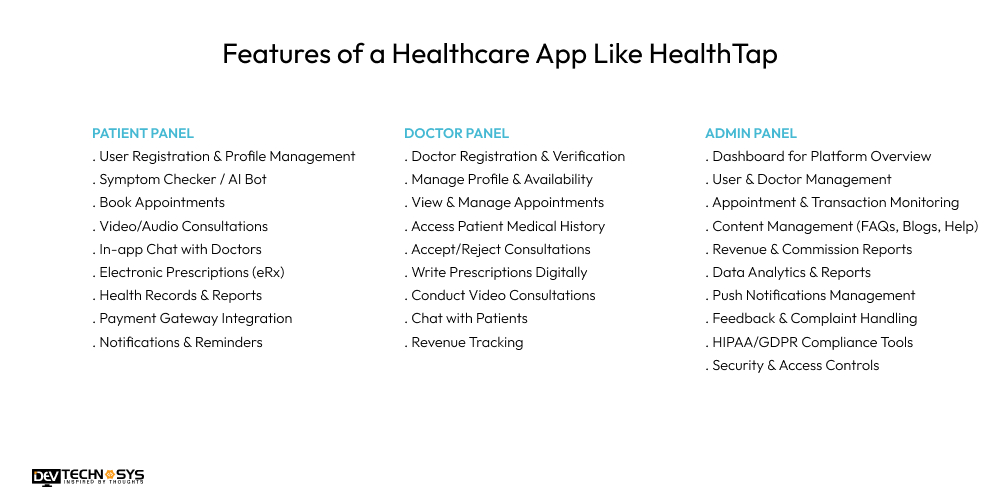
| Panel | Features |
| Patient Panel | – User Registration & Profile Management |
| – Symptom Checker / AI Bot | |
| – Book Appointments | |
| – Video/Audio Consultations | |
| – In-app Chat with Doctors | |
| – Electronic Prescriptions (eRx) | |
| – Health Records & Reports | |
| – Payment Gateway Integration | |
| – Notifications & Reminders | |
| Doctor Panel | – Doctor Registration & Verification |
| – Manage Profile & Availability | |
| – View & Manage Appointments | |
| – Access Patient Medical History | |
| – Accept/Reject Consultations | |
| – Write Prescriptions Digitally | |
| – Conduct Video Consultations | |
| – Chat with Patients | |
| – Revenue Tracking | |
| Admin Panel | – Dashboard for Platform Overview |
| – User & Doctor Management | |
| – Appointment & Transaction Monitoring | |
| – Content Management (FAQs, Blogs, Help) | |
| – Revenue & Commission Reports | |
| – Data Analytics & Reports | |
| – Push Notifications Management | |
| – Feedback & Complaint Handling | |
| – HIPAA/GDPR Compliance Tools | |
| – Security & Access Controls |

Advanced Features of Healthcare App like HealthTap
Having a list of advanced features of a healthcare app like HealthTap is amazing if you want to build its clone. In this section of our blog, we have compiled a list of some high-technology-based functions that you must integrate in your healthtap clone app.
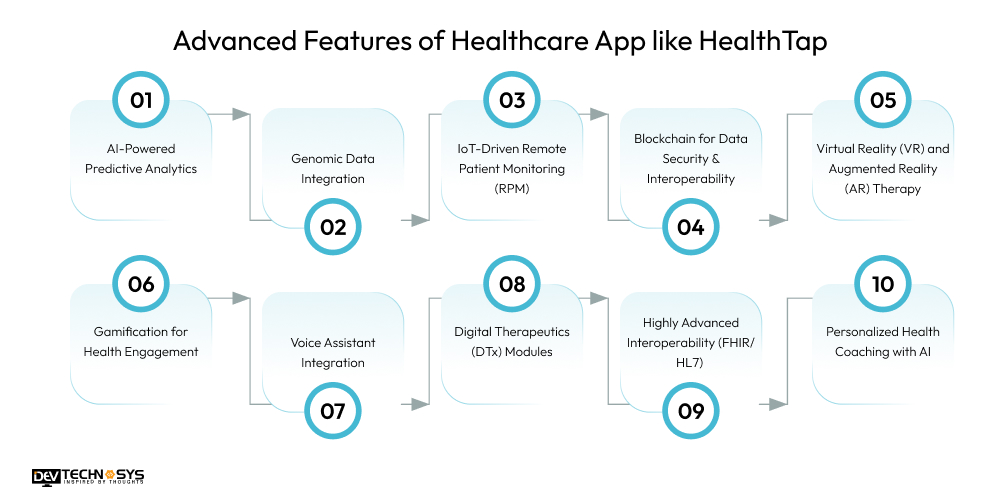
1. AI-Powered Predictive Analytics:
Incorporates Artificial Intelligence: Uses AI to analyze patient data, predict risk of diseases, identify potential health problems in their early stages, and recommend proactive interventions for personalized care.
2. Genomic Data Integration:
Best wellness and healthcare mobile apps provide a secure method for users to share their respective genomic data, which enables personalized treatment plans and medication suggestions.
3. IoT-Driven Remote Patient Monitoring (RPM):
Interfaces with wearable devices and appliances to continuously collect vital signs and health metrics such as biophysiological signals and physical location, and uses this stream of real-time data for the management of chronic illnesses and alerts.
4. Blockchain for Data Security & Interoperability:
HealthTap alternatives uses blockchain protocols to create immutable and highly secure patient records, and exchange data with other healthcare stakeholders in an unrestricted, trusted manner.
5. Virtual Reality (VR) and Augmented Reality (AR) Therapy:
Uses immersive VR/AR modules either for therapy or dealing with pain, mental health issues, or rehabilitation exercises, while also making the treatment fun and easier to adhere to.
6. Gamification for Health Engagement:
HealthTap alternatives uses points, badges, leaderboards, and challenges to create a game-like experience that encourages users to pursue health goals and stay adherent to treatment plans.
7. Voice Assistant Integration:
Uses resistance in using hand motions to interact with the app (including check symptoms, appointment booking medication reminders, or health information handling), through voice commands.
8. Digital Therapeutics (DTx) Modules:
Includes software-driven therapeutic interventions, for example diabetes treatment or mental health, typically with clinical evidence and regulatory approval.
9. Highly Advanced Interoperability (FHIR/HL7)
HealthTap clone apps enable the highly secure exchange of patient information with multiple EHR systems and other healthcare systems using modern standards.
10. Personalized Health Coaching with AI
A similar app like HealthTap incorporates AI-driven virtual coaches that provide personalized recommendations, lifestyle support, and motivation based on individual patient information and progress.
HealthTap Success Story
Founded in 2010 by Ron Gutman, Geoff Rutledge, and Greg Gilley, HealthTap began with the goal to democratize access to health care. Beginning as a Q&A and video consultation platform, HealthTap secured conference funding of $11.5 million in Series A funding in 2011, then $24 million in Series B funding in 2013, which allowed for a national rollout of telemedicine launches, and possibly millions of users daily.
HealthTap also implemented their “freemium” model that provided users with access to Q&A questions at no cost, and sources of revenue came from premium paid features. HealthTap also has partnerships with employers and insurers. The total revenue range differs each year, but estimates today for HealthTap’s revenue is between ₹10 and ₹50 crores (approximately $1.2M – $6M USD as of July 2025).
HealthTap has raised approximately $88-93 million in total funding, with a valuation reported at about $100 million. HealthTap is constantly innovating with artificial intelligence (AI) and expanding their offerings.
Why Do Users Choose HealthTap?
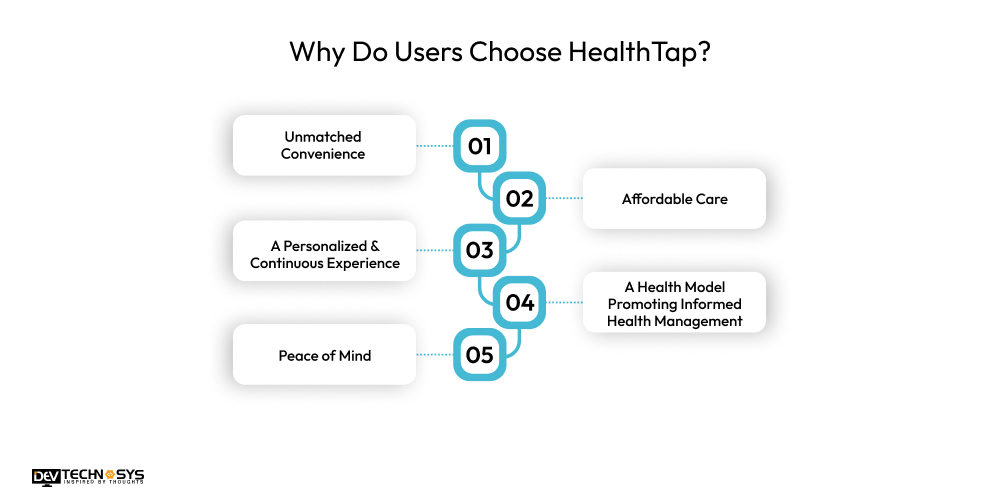
1. Unmatched Convenience:
Patients can receive quality medical advice, consultations and patient engagement as soon as they need it, from anywhere they want, at times convenient to them, without travel and wait time. For busy people and others with limited access to care (e.g. rural, elderly) this on-demand convenience is critically important.
2. Affordable Care:
HealthTap patients have options that are considerably less money than the cost of primary and urgent care in person, or care out-of-pocket even for people without comprehensive insurance.
3. A Personalized & Continuous Experience:
Users can develop a long-term patient-doctor relationship with their doctor that builds trust and continuity in the care of their health, including medications, lab orders and specialist referrals.
4. A Health Model Promoting Informed Health Management:
HealthTap clone apps provide tools that support engagement and involvement in the user’s health through AI-powered symptom checker assessments, and through access to an extensive library of doctor answered questions, enabling users to understand their health and be proactive.
5. Peace of Mind:
HealthTap alternatives provide access to a board-certified doctor at all times, giving users peace of mind to call for urgent situations, i.e. follow up on a doctor-defined matter, and to avoid unnecessary visits to an Emergency Room.
You can reach out anytime; we are available 24/7. Our team provides a quick response.

Cost To Develop A Healthcare App like HealthTap
The cost to develop a healthcare app like HealthTap ranges from $8,000 to $ 30,000 or more. This is an extremely high-level estimate, as there are countless variables that can influence the final healthcare app development cost.
The following are 8 primary variables that influence the cost to develop a healthcare app like HealthTap:
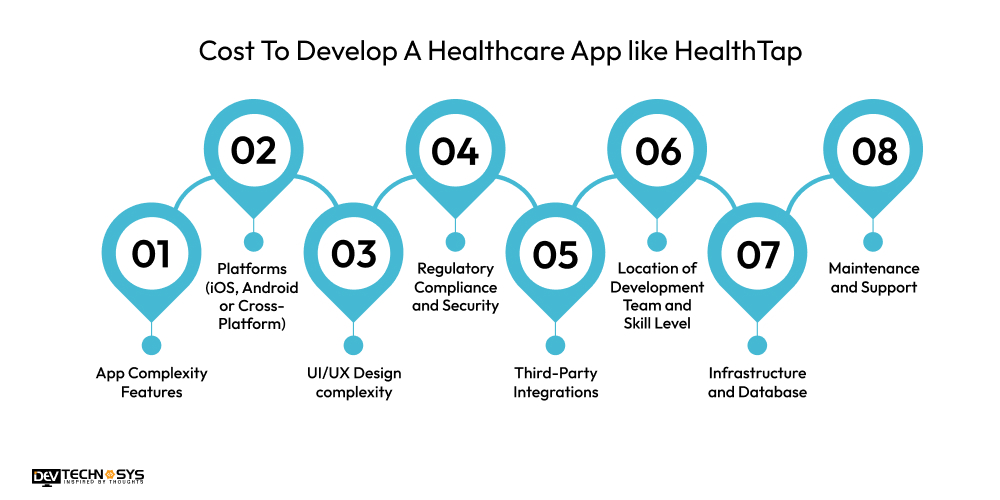
1. App Complexity Features:
This is the most significant factor that affects the cost to develop a healthcare app like HealthTap. A basic appointment scheduling app with basic profiles would be far less costly than a comprehensive telehealth app integrating video consultations, AI symptom checkers, and prescription management systems.
Each unique advanced feature considerably increases time and complexity in the mobile app development process.
| Feature Type | Estimated Cost |
| Basic Appointment Scheduling | $1,500 – $3,000 |
| Profiles & Medical History | $2,000 – $4,000 |
| Video Consultations | $3,000 – $7,000 |
| AI Symptom Checker | $5,000 – $10,000 |
| Prescription Management | $3,000 – $6,000 |
2. Platforms (iOS, Android or Cross-Platform):
Native iOS and Android provides the best experience for the user, but at a HealthTap app development cost, since it requires developing two unique code bases.
Developing a cross-platform solution (using frameworks like React Native or Flutter) can save money by allowing you to develop both the iOS and Android app with one code base, although you would potentially lose some functionality and flexibility.
| Platform Type | Estimated Cost |
| Native iOS App | $4,000 – $8,000 |
| Native Android App | $4,000 – $8,000 |
| Cross-Platform (Flutter) | $6,000 – $10,000 |
| Cross-Platform (React Native) | $6,000 – $10,000 |
3. UI/UX Design Complexity:
UI/UX is critical for any mobile app, it has to be intuitive, beautiful, and simple to use. Often, healthcare apps require a high degree of complexity in their UI/UX (custom animations, workflows, etc), the more complex your UI/UX the higher the overall ALLEVIA healthcare app development cost.
| Design Complexity | Estimated Cost |
| Basic & Template-based UI | $1,000 – $2,000 |
| Moderate Custom UI/UX | $2,500 – $5,000 |
| Advanced Custom UI | $5,000 – $8,000+ |
4. Regulatory Compliance and Security:
Healthcare applications contain sensitive patient information and are therefore governed by privacy regulations such as the Health Insurance Portability and Accountability Act (HIPAA) in the USA, the GDPR in Europe, and other local data privacy laws.
Putting in place comprehensive security protocols, encryption of data, and the ability to conduct audits for compliance also influence the overall HealthTap app development cost.
| Compliance & Security | Estimated Cost |
| HIPAA/GDPR Compliance | $4,000 – $8,000 |
| Data Encryption | $1,000 – $2,000 |
| Secure Authentication | $1,000 – $2,500 |
| Audit Trails & Logs | $1,500 – $3,000 |
5. Third-Party Integrations:
There is an added layer of complexity and cost that comes from integrating with third-party systems such as Electronic Health Records (EHR), payment processing systems, wearable devices, laboratory systems, or AI/ML APIs. Each integration takes United Healthcare app development time as well and may also collude pricing on licensing.
| Integration Type | Estimated Cost |
| EHR/EMR Integration | $3,000 – $6,000 |
| Payment Gateway | $1,000 – $3,000 |
| Wearables Integration | $2,000 – $5,000 |
| AI/ML APIs | $2,500 – $6,000 |
6. Location of Development Team and Skill Level:
The healthcare app development cost can vary dramatically according to where development is carried out. Healthcare app development companies in North America and Western Europe are typically on the high-end of the pricing schedule ranging from $100-$250/hour while teams in Eastern Europe are typically $40-$80/hour, emerging markets such as Asia can be $20-$50/hour. All this adds up to the overall cost to build a healthcare app like HealthTap.
| Location / Skill Level | Estimated Hourly Rate |
| North America | $100 – $250/hr |
| Western Europe | $80 – $150/hr |
| Eastern Europe | $40 – $80/hr |
| Asia | $20 – $50/hr |
7. Infrastructure and Database:
An appropriate backend is critical to the success of your app. Your app will collect patient data which is likely to grow over time, your backend must be able to keep pace with that data while also supporting real time communication.
Choosing the right cloud provider (AWS, Azure or Google Cloud) and creating secure databases with appropriate data retention settings can add to the overall healthcare mobile app development cost.
| Infrastructure Component | Estimated Cost (Setup) |
| AWS / Google Cloud / Azure | $1,000 – $3,000 |
| Real-Time Communication | $2,000 – $5,000 |
| Scalable Database Setup | $2,000 – $4,000 |
8. Post Launch Costs:
Maintenance and Support: The most prevalent misunderstanding is that once the app is built the costs cease. In fact, there will be ongoing costs to maintain and support the app after launch.
Ongoing costs may include bug-fixing, improving performance, security upgrades, new features, server hosting and maintenance or simply support for your customer. Ongoing maintenance and support costs are typically expected to be approximately 15-20% of the total HealthTap app development cost.
| Post-Launch Service | Estimated Annual Cost |
| Maintenance & Updates | 15–20% of total dev cost |
| Security & Compliance Checks | $2,000 – $4,000/year |
| Server Hosting | $1,000 – $3,000/year |
| Customer Support | $1,500 – $3,000/year |
Tech Stack For HealthTap App Development
| Component | Technology/Tool | Purpose |
| Frontend (Mobile) | React Native / Flutter | Cross-platform mobile app development |
| Frontend (Web) | React.js / Angular | Web-based dashboard and interfaces |
| Backend | Node.js / Django / Ruby on Rails | Server-side logic & APIs |
| Database | PostgreSQL / MongoDB | Storing user data, appointments, etc. |
| Cloud Services | AWS / Google Cloud / Microsoft Azure | Hosting, storage, scaling infrastructure |
| Video Conferencing | Twilio / WebRTC / Agora | Real-time video consultations |
| Authentication | Firebase Auth / OAuth 2.0 / Auth0 | Secure user sign-in and data access |
| Push Notifications | Firebase Cloud Messaging / OneSignal | Alerts, appointment reminders |
| Payment Gateway | Stripe / Razorpay / PayPal | In-app payments for consultations |
| AI & Chatbot (optional) | Dialogflow / OpenAI / IBM Watson | Symptom checking, virtual assistants |
| Analytics | Google Analytics / Mixpanel / Firebase Analytics | User behavior and app performance insights |
| HIPAA Compliance Tools | TrueVault / AWS Shield / Paubox | Ensuring health data security and privacy |
| DevOps & CI/CD | Jenkins / GitHub Actions / Docker / Kubernetes | Continuous integration & deployment |
| Monitoring & Logs | Sentry / LogRocket / New Relic | Bug tracking and performance monitoring |

How to Monetize Healthcare Apps Like HealthTap?
Monetizing a health app like HealthTap can be complicated and often requires multiple strategies and revenue sources. Here are five strategies.
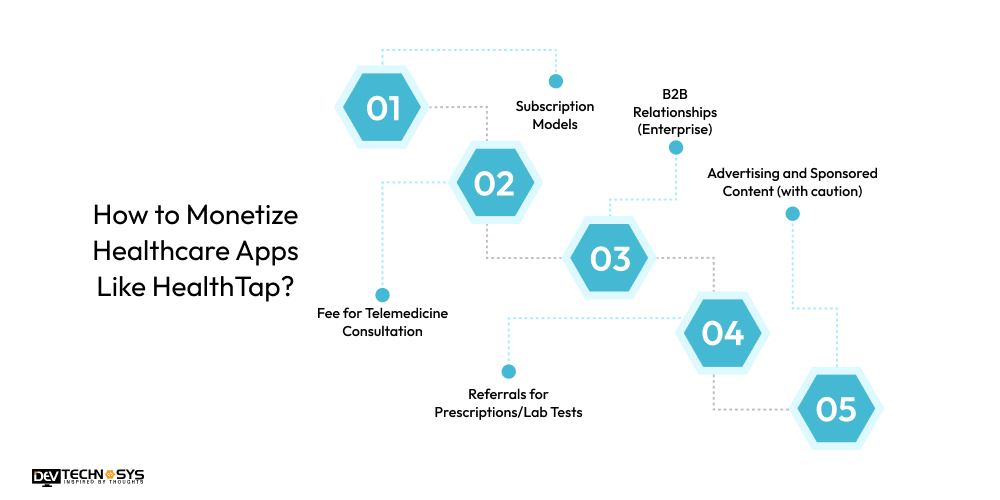
1. Subscription Models:
This is your primary strategy. Offer tiered subscription prices for users to enter the first tier, which covers your premium features – unlimited virtual consultations, personalized care plans, or priority access to specialists. HealthTap is a good example and is currently charging users for paid access to its comprehensive doctor network.
2. Fee for Telemedicine Consultation:
The home health care software development solutions can charge users for a virtual doctor visit. This can be either a consultation fee or bundled into subscription pricing in higher tiers. This generates money more directly than a subscription, as it requires the delivery of the service just as a brick-and-mortar clinic does.
3. B2B Relationships (Enterprise):
You can sell your services platform as “white labelled commodities, or build your services into the health system or as integrated services into hospitals, clinics, insurance companies, employers, etc.
These relationships are sourced from business and health systems that will ultimately pay you for supplemental tools to engage with patients, remote monitoring capabilities, or employee wellness programs. These types of sales deliver a stable source of revenue at scale.
4. Referrals for Prescriptions/Lab Tests:
You can take a referral fee from partner pharmacies or lab testing services. To use the app, a user may receive a commission each time a prescription is filled or lab tests are ordered through the app, allowing you to build a convenient wrap-around ecosystem for the user and generate passive income.
5. Advertising and Sponsored Content:
A similar app like HealthTap, which offers advertising for related health products, medical devices, or sponsors educational material produced by pharmaceutical companies, can be a source of revenue if the advertising requires thoughtful and ethical deliberation regarding the use of sensitive health data.
The use of research. According to the mobile app development company, establishing contractual obligations regarding data privacy and the placement of disruptive advertising far outweigh the positives gained from advertising.
How Does AI Change The Healthcare App?
AI is enhancing the intelligence of healthcare apps, enabling better diagnostics and personalized care options. AI-enabled applications are powering features like AI symptom checkers to help triage patients, examining both historical and real-time patient data to refer or alert healthcare providers regarding potential discomfort or the need for medical care.
AI systems are also powering the automated processing of healthcare requests, providing far more comprehensive histories and awareness of potential or recommended actions. Another area where AI excels is patient monitoring. AI will monitor patient data and flag potential anomalies for healthcare providers, resulting in improved patient outcomes and more informed care delivery.
How Can Dev Technosys Help Develop a Healthcare App Like HealthTap?
To develop a healthcare app like HealthTap, it requires a purposeful understanding of technological competencies, UX capabilities, compliance and a positional engagement with patients, but it requires a mode of development that not only provides and efficient and effective attraction of the health sector but authentic commitment to engagement, access and patient engagement leads to missed opportunities for deliverables and engagement, providers see inefficiencies in their patients caretaking possibilities.
At Dev Technosys, we understand the complexities of the reality involved in a healthcare app. Our healthcare app development company brings extensive experience in creating secure, scalable, and feature-rich digital health solutions. We prioritize adherence to global healthcare regulations and implement cutting-edge AI functionalities. This ensures your app is not just functional but future-proof, poised to make a real impact in the evolving digital health landscape.
HealthTap-Style Healthcare App Market Stats
| Category | Key Data (Unique Content) | Insight |
|---|---|---|
| Industry Type | Telehealth & Virtual Primary Care App | Focuses on digital doctor consultations & AI-assisted symptom analysis |
| Estimated Market Size | ~$20–25 Million annual revenue potential for similar mid-stage telehealth platforms | Revenue potential for AI-enabled doctor-patient platforms in US markets |
| User Base Reach | 3M+ estimated active users in telehealth category for similar apps | High traction among millennials & working professionals |
| Doctor Network Size | 5,000+ physicians estimated (combined telehealth network model) | On-demand GP care + specialist consultations |
| Valuation Range | ~$150–200 Million estimated private company valuation category | Strong investor interest in virtual care technology |
| Funding Trend | ~$30–40 Million typical funding for growth-stage virtual care startups | Telehealth apps attract seed to Series B investments |
| App Rating Benchmark | 4.7 ★ average on App Stores for leading digital health apps | High trust & experience-driven retention |
| Service Pricing | $15–$49 per consult / subscription plans $10–$40 per month | Hybrid subscription + pay-per-visit model |
| AI Adoption Rate | 65–70% user engagement with AI-based symptom tools | Digital triage and smart routing improving efficiency |
| Growth Drivers | Hybrid care model, AI clinical assistance, chronic care support | Market shifting to proactive & remote healthcare |
| Target Markets | US, UK, Canada, UAE, Singapore | Mature digital-health adoption zones |
| Key Audience | Working adults, seniors, chronic patients, families | Demand for affordable and instant care solutions |
| Regulatory Framework | HIPAA-compliant + Telemedicine practice guidelines | Mandatory secure data handling & medical compliance |
Comparison: HealthTap vs Teladoc vs Babylon vs Practo
| Feature / App | HealthTap | Teladoc | Babylon Health | Practo |
|---|---|---|---|---|
| Headquarters / Founded | USA (HealthTap). Founded as virtual primary-care platform. | USA. Long-established telehealth leader (since early 2000s). | UK-based digital health company (app-first). | India-based healthcare platform (strong presence across India). |
| Core offering | Ongoing virtual primary care with same-day visits + extended texting with a chosen doctor; subscription & pay-per-visit options. | 24/7 virtual care across urgent care, primary care, mental health and chronic-care programs; insurer integrations. | AI symptom checker + video/text consultations; emphasis on AI triage + GP-style services. | Doctor discovery & booking, online consults, medicine orders, lab tests and health records — strong local ecosystem. |
| Strength / Why users like it | Focus on one ongoing primary-care doctor relationship, 90 days texting, simple membership & EMR-style continuity of care — built for long-term patient/doctor relationship. | Massive scale, wide service breadth (therapy, chronic programs), deep insurer and employer partnerships. | Advanced AI symptom-checker and quick triage; strong product innovation in AI-driven advice. | Very strong local provider network in India, end-to-end services (appointments, tests, meds) and practo-for-providers business. |
| Notable weaknesses | Smaller global footprint compared with enterprise telehealth giants (but strong continuity features). | Post-pandemic financial & growth pressures; shifting focus and organizational changes reported. | Controversies and scrutiny over clinical accuracy of AI triage in some markets; regulatory and operational challenges reported. | Mostly India-focused (weaker presence outside South Asia); less emphasis on AI triage or global chronic-care programs. |
| Pricing model / Access | Membership + pay-per-visit; same-day visits; texting windows with your chosen doctor. | Often insurer/employer-covered or pay-per-visit; offers programs and subscriptions via partners. | Subscription / pay-per-use models and partnerships; varies by market (NHS contracts historically). | Free-to-download with paid consultations, tests, and subscription-like offerings for providers (Practo Prime). |
| Unique differentiator | Dedicated online primary-care doctor you keep + extended texting follow-up (designed for ongoing care rather than one-off urgent visits). | Scale, breadth of services, integrations with employers/insurers and established chronic-care programs. | AI-powered symptom checker and heavy emphasis on automated triage. | Integrated local healthcare services (appointments, labs, medicine delivery)
|
Dev Technosys Recognized by BBC for Advancing Healthcare Technology with Innovations Inspired by HealthTap

Dev Technosys has earned recognition from BBC for its outstanding leadership in digital healthcare innovation and for engineering advanced telehealth solutions inspired by modern platforms like HealthTap. This acknowledgment reflects our commitment to transforming the patient care landscape through secure, intelligent, and accessible digital medical ecosystems.
With a strong focus on real-time virtual consultations, AI-driven medical decision support, secure electronic health records, e-prescriptions, wearable device connectivity, and patient-care automation, Dev Technosys continues to drive meaningful progress in digital health delivery.
Every solution we build aligns with strict HIPAA-ready security standards, scalable infrastructure, and industry-grade medical data protocols, ensuring complete privacy, reliability, and compliance for healthcare organizations worldwide.
This BBC honor underscores our mission to empower doctors, clinics, and global healthcare enterprises with cutting-edge technology, helping them enhance patient experiences, streamline operations, and provide dependable virtual care services backed by innovation and trust.
Frequently Asked Questions
Find answers to the most common questions related to this article.
The cost to build a healthcare app like HealthTap can range from $8,000 to over $30,000, depending on features, complexity, platform choice (iOS/Android), and the development team's location and expertise.
To create a healthcare app like HealthTap, the timelines vary, but a full-featured healthcare app, from planning to launch, typically takes 6 to 12 months, and sometimes longer for highly complex solutions.
Key compliances include HIPAA (for US patient data), GDPR (for European data), and other local privacy laws. Ensuring robust security, data encryption, and regular audits is crucial for legal adherence.
Monetization strategies include subscription models for premium features, direct telemedicine consultation fees, B2B partnerships with healthcare providers, and commissions from integrated services like lab tests.
AI significantly impacts healthcare apps by enabling smart symptom checkers, personalizing treatment plans, automating administrative tasks, and facilitating remote patient monitoring for better diagnostics and care.