


















Have you ever wanted to create a cool app that helps people stay fit and healthy?
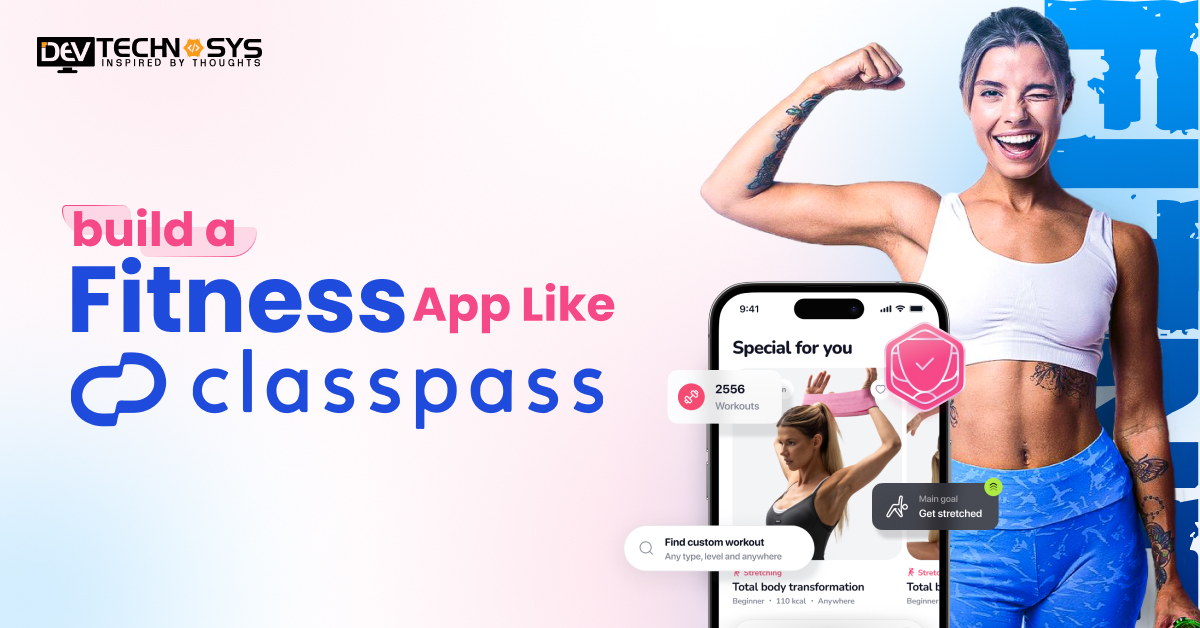
Building a fitness app like ClassPass is a great way to combine technology with health and wellness.
ClassPass is a popular fitness platform that allows users to book classes at different gyms and studios through one app.
To build something similar, we need to understand how the app works, what features people like, and how to make it fun and easy to use.
Key takeaways:
-
- In 2025, the global fitness app market is expected to exceed USD 8.30 billion, fueled by growing health awareness and digital transformation in wellness services.
- ClassPass’s success stems from its intuitive user experience, diverse class access across multiple fitness studios, and dynamic scheduling.
- The cost to build a fitness app like ClassPass ranges from $8,000 to $25,000, depending on the app’s complexity and the number of partner integrations.
- Essential features include class discovery and filters, live and on-demand workout integration, user profile and subscription management, and geolocation.
In this guide, we will explain the steps to build a fitness app like ClassPass, starting with planning, designing, and developing the features.
We’ll also look at how to make the app user-friendly and why it’s important to keep users motivated.
Whether you love fitness or enjoy creating apps, this topic will show you how you can make a real difference in people’s lives through technology!
Market Statistics of Global Fitness Applications
- According to Statista, the Fitness Apps market is anticipated to generate revenue of US$8.30 billion by 2025.
- Revenue is anticipated to exhibit a compound annual growth rate (CAGR) of 91% from 2025 to 2029, culminating in an estimated market volume of US$10.06 billion by 2029.
- User penetration is projected to reach 21% in 2025 and is anticipated to increase to 13.21% by 2029.
- Around US$20.79 will be made from each person on average (ARPU).
- Compared to the rest of the world, the United States will bring in the most money ($2.49bn in 2025).
What is ClassPass?
ClassPass is a fitness and wellness program that you pay for each month. It allows you to utilize thousands of gyms, studios, and wellness facilities worldwide. Users can book programs such as yoga, HIIT, boxing, and spa sessions using a flexible credit system. Smartwatch fitness tracker app like ClassPass provides a lot of options, making it easy and cheap to get exercise and self-care services. It makes it simpler to stay healthy without being bound to one place.
Success Story: ClassPass
- Founded in 2013, ClassPass began as a discovery tool helping users find and book fitness classes across various studios.
- Started in New York, quickly expanded to other major U.S. cities offering flexible fitness membership options with class-based bookings.
- Initially named “Classtivity”, rebranded to ClassPass after pivoting from a single-class discovery model to a subscription-based membership service.
- Raised over $500 million in funding from top investors including Google Ventures, Temasek, and General Catalyst to fuel global expansion.
- Partnered with over 30,000 studios worldwide, offering yoga, boxing, spinning, Pilates, and wellness classes in major global cities.
Major Types of Fitness Applications
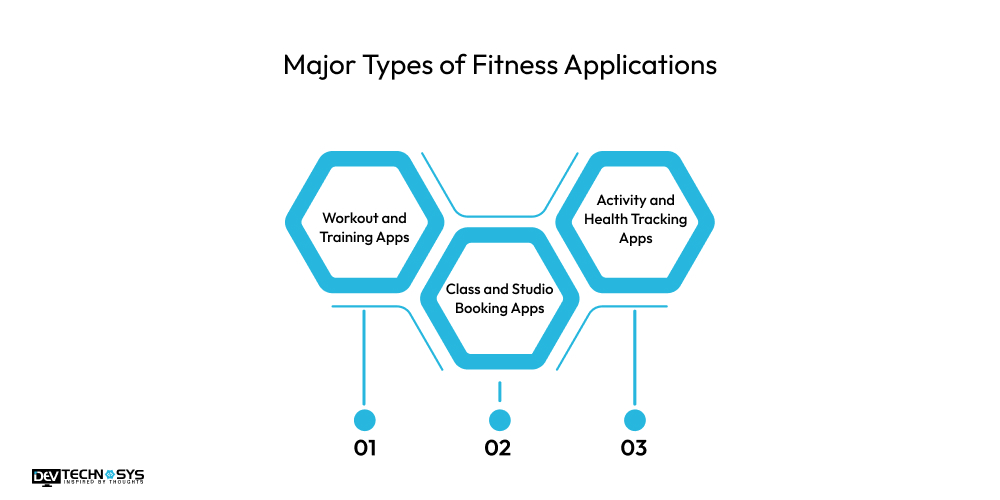
Fitness apps fall into key categories like workout training, activity tracking, and class booking, each designed to support different health goals through personalized routines, real-time monitoring, and community engagement.
1. Workout and Training Apps
These applications provide guided fitness regimens, video instruction, and bespoke training schedules. Users may monitor their progress, establish fitness objectives, and follow programs for strength, cardio, flexibility, or weight reduction. Nike Training Club, Fitbod, and Freeletics are just a few examples of fitness clubs that cater to everyone from novices to elite athletes.
2. Class and Studio Booking Apps
The best fitness or workout app links consumers to nearby fitness facilities and classes. Users may browse calendars, book sessions, and learn about various activities such as yoga, HIIT, and dance. Ideal for variation and communal training. ClassPass, Mindbody, and Glofox are some examples of apps that offer both in-person and virtual exercise activities.
3. Activity and Health Tracking Apps
Designed to track physical activity such as steps, calories burnt, sleep, and heart rate via smartphone sensors or wearables. These applications integrate with Fitbit and Apple Watch, allowing users to remain up to date on daily health data and long-term wellness trends. Popular options include Google Fit, Apple Health, and MyFitnessPal.
10 Successful Fitness Apps Like ClassPass
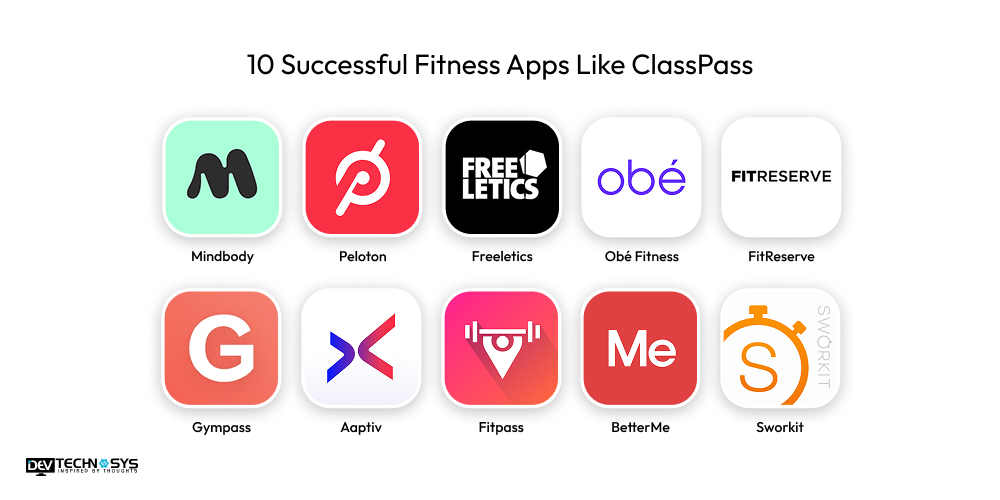
Leading workout apps for fitness like Mindbody, Peloton, and FitOn revolutionize wellness with on-demand workouts, class bookings, and holistic health tools for global users.
| App Name | Estimated Downloads | Average Rating | Launched Year | Platform Availability |
| Mindbody | 5M+ | 4.7★ | 2013 | Android, iOS |
| Peloton | 10M+ | 4.8★ | 2018 | Android, iOS, Smart TVs |
| Freeletics | 50M+ | 4.5★ | 2013 | Android, iOS |
| Obé Fitness | 1M+ | 4.3★ | 2017 | Android, iOS |
| FitReserve | 1M+ | 4.0★ | 2015 | Android, iOS |
| Gympass | 10M+ | 4.6★ | 2012 | Android, iOS |
| Aaptiv | 1M+ | 4.7★ | 2015 | Android, iOS |
| Fitpass | 1M+ | 4.2★ | 2015 | Android, iOS |
| BetterMe | 100M+ | 4.5★ | 2017 | Android, iOS |
| Sworkit | 5M+ | 4.6★ | 2014 | Android, iOS |
Why Today’s Businesses Want to Invest in Fitness App Development?
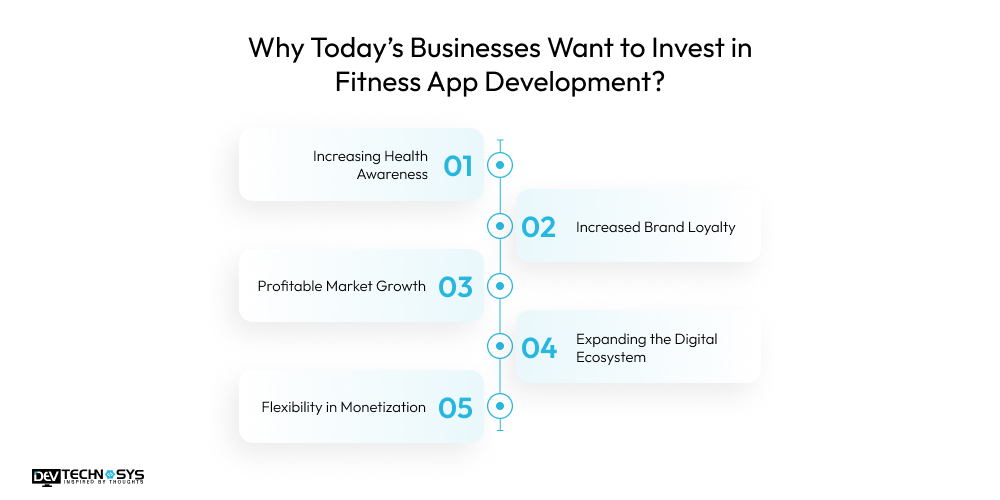
In recent years, the global shift toward health-conscious living has created a massive opportunity in the digital wellness space. Businesses across industries are increasingly investing in fitness app development, and for good reason. Here are five fitness trainer app benefits:
1. Increasing Health Awareness
People are more concerned than ever with keeping a healthy lifestyle. From fitness tracking to home exercises, people are actively looking for digital solutions to better their physical and mental health. Businesses view best fitness apps as a direct reaction to increased demand, providing scalable solutions to millions of health-conscious individuals.
2. Increased Brand Loyalty
A well-designed fitness app like Hevy encourages everyday involvement, resulting in sustained engagement and greater brand ties. Investing in fitness app development, whether for a gym chain, healthcare provider, or wellness brand, may transform passive users into committed customers by motivating them, measuring their progress, and offering community features.
3. Profitable Market Growth
The ClassPass alternatives business is expanding. The market, valued at more than $5 billion globally and growing rapidly, has significant income potential through in-app sales, subscriptions, and partnerships. Companies regard app development as a means to achieve long-term profitability and market relevance.
4. Expanding the Digital Ecosystem
As smartphones, wearables, and smartwatches become more commonplace, fitness applications are growing into primary centers for consumer health data. Businesses are exploiting this ecosystem to develop fully integrated apps that connect with devices such as Fitbit, Apple Watch, and Google Fit, increasing customization and stickiness.
5. Flexibility in Monetization
Fitness apps like Fitbit and ClassPass enable a variety of business strategies, including freemium access, premium subscriptions, virtual courses, branded products, affiliate connections, and B2B wellness initiatives. Businesses benefit from this flexibility since it allows for income diversification based on audience behavior and market groupings.
How AI Can Transform the Operations of Fitness Apps?
- AI personalizes workout plans by analyzing user data, improving engagement through tailored fitness routines and progress tracking.
- Intelligent chatbots provide 24/7 customer support, answering queries instantly and enhancing user satisfaction without human intervention.
- AI-driven recommendations suggest classes based on preferences, location, and past activity, increasing bookings and user retention.
- Automated scheduling optimizes class availability, balancing studio capacity with user demand to maximize resource utilization efficiently.
- Predictive analytics identify user churn risks, enabling targeted marketing and retention strategies before users disengage or cancel subscriptions.
- AI-powered fitness tracking interprets sensor data from wearables, offering real-time feedback and adjusting workouts dynamically for safety.
7 Major Steps to Build a Fitness App Like ClassPass
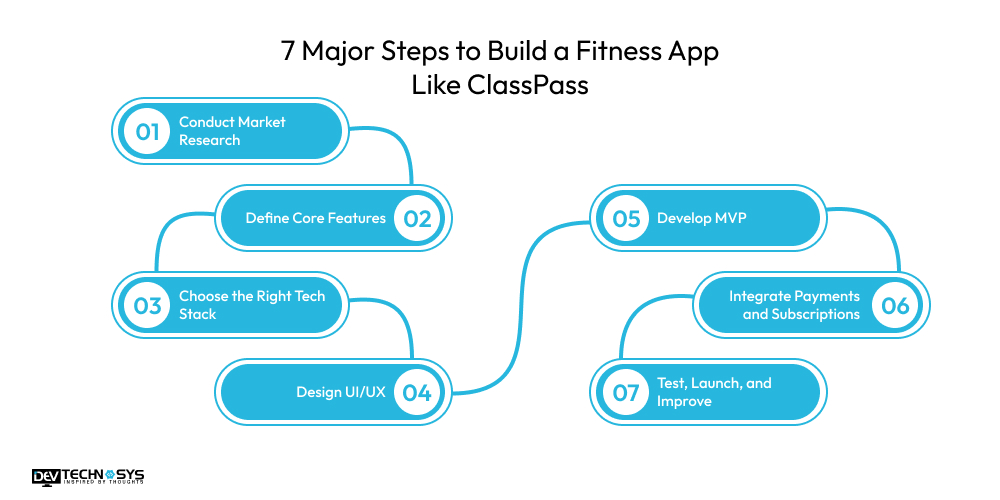
Create a versatile fitness platform enabling users to discover, book, and manage diverse workout classes seamlessly. Focus on intuitive design, flexible subscriptions, real-time scheduling, and integrated payments to deliver an engaging, scalable wellness experience. So, here we provide a men and women fitness app development process:
1. Conduct Market Research
In the first stage to build an app like ClassPass, analyze fitness industry trends, target audience behavior, competitors like ClassPass, and user pain points. Hire mobile app developers to understand what features users love, what’s missing in existing apps, and identify a unique value proposition. This step helps validate your idea and ensures your app aligns with market needs and user expectations from day one.
2. Define Core Features
Decide on must-have features like class booking, geo-location, user profiles, payment integration, ratings, and calendar syncing. Include features for both users and service providers. Prioritize intuitive UX, personalized class recommendations, and subscription plans to provide flexibility and seamless user engagement, mirroring the convenience that apps like ClassPass are known for.
3. Choose the Right Tech Stack
Moving to the third stage to develop an app like ClassPass, select technologies based on scalability, speed, and app performance. Popular stacks include React Native or Flutter for cross-platform apps, Node.js for backend, and Firebase or AWS for cloud services. Hire dedicated developers to ensure compatibility with wearables and APIs for studio management systems to build a modern, data-driven fitness application with real-time syncing.
4. Design UI/UX
Focus on creating a clean, engaging, and user-friendly interface. Users should easily discover classes, make bookings, and navigate through the app. Use consistent visual elements, minimalistic design, and motivational micro-interactions. A smooth onboarding flow and responsive design ensure users have a frictionless experience across mobile devices and tablets.
5. Develop MVP
Build a Minimum Viable Product with core features to test in the real market. This includes user registration, class booking, studio listings, and basic analytics. Hire iOS app developers to launch the MVP to collect feedback, validate your assumptions, and iterate quickly. Starting lean reduces costs and helps you scale with confidence as demand grows.
6. Integrate Payments and Subscriptions
Coming to the sixth stage to create an app like ClassPass, add secure payment gateways like Stripe or PayPal to handle in-app purchases and recurring subscriptions. Offer various plans and credit systems like ClassPass. Ensure PCI compliance and provide clear billing information, refund policies, and flexible options. Smooth and safe transactions build trust and encourage users to upgrade and retain.
7. Test, Launch, and Improve
Hire professional developers from a yoga app development company to test the app for bugs, usability, and performance across various devices. Use beta testers for early feedback. After launch, track KPIs like user retention, bookings, and churn rate. Use analytics to optimize features and push updates. Continuous improvement ensures your app evolves with user needs and remains competitive.

Why Do Users Pick ClassPass Over Other Apps for Fitness?
ClassPass stands out with diverse class options, flexible subscriptions, easy booking, virtual and in-person workouts, plus strong community features that keep users motivated and engaged.
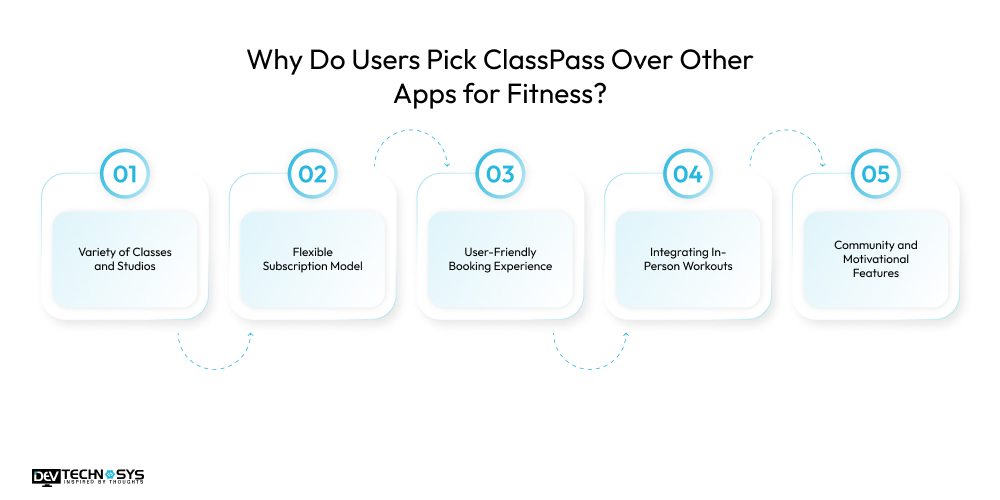
1. Variety of Classes and Studios
ClassPass alternatives provide access to hundreds of fitness studios and different classes worldwide, ranging from yoga to HIIT. In contrast to applications with limited possibilities, this large range allows users to experiment with various activities, avoiding boredom and fostering regular health habits.
2. Flexible Subscription Model
Users appreciate ClassPass’s credit-based membership mechanism, which allows for flexible class scheduling across numerous studios. This flexibility, unlike permanent memberships, accommodates changing schedules and tastes, making fitness more accessible and easy for busy lifestyles.
3. User-Friendly Booking Experience
ClassPass’s mobile app offers a straightforward, smooth booking procedure. Real-time availability, quick cancellations, and calendar synchronization improve user ease, making it simple to find and attend classes without the administrative hurdles seen on other platforms.
4. Integrating In-Person Workouts
ClassPass fitness mobile app allows both studio visits and digital lessons, adapting to a wide range of customer requirements. According to the mobile app development company, the hybrid model gained popularity after the pandemic because it provides for flexible training at any time and from any location.
5. Community and Motivational Features
ClassPass clone app creates a thriving community through user evaluations, class ratings, and social sharing. These elements increase accountability and incentive, allowing users to stay engaged and motivated, distinguishing it from applications that focus primarily on individual workouts.
10 Premium Features of Fitness Apps Like ClassPass
These premium features make fitness apps like ClassPass flexible, user-friendly, and engaging, attracting a wide range of fitness enthusiasts worldwide.
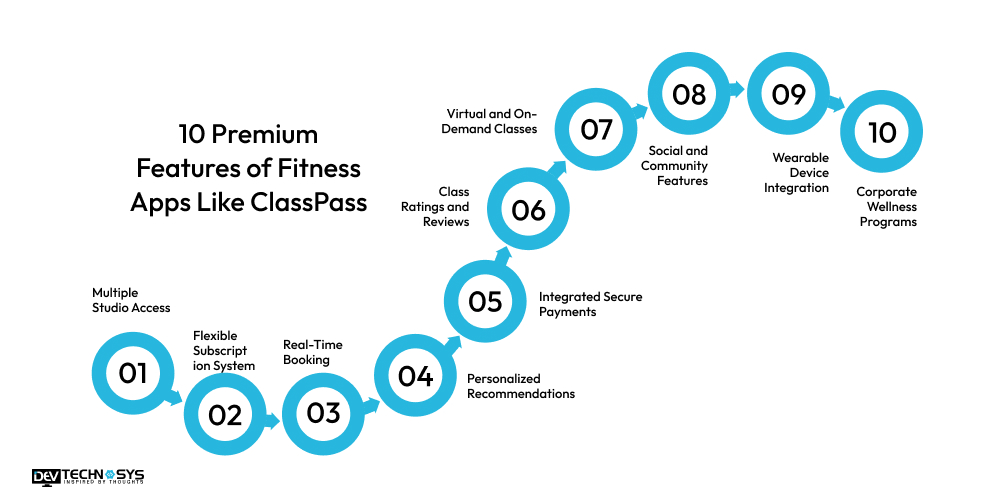
1. Multiple Studio Access
A similar app like ClassPass allows users to schedule lessons at hundreds of partner gyms and studios worldwide, giving a diverse choice of training alternatives without being restricted to a single location.
2. Flexible Subscription System
An app like FitCoach enables customers to purchase credits or flexible plans, allowing them to tailor their experience to their interests and schedule, and attend multiple sessions.
3. Real-Time Booking
Users may quickly schedule or cancel lessons with instant access to the most recent class availability, reducing overbooking and boosting convenience.
4. Personalized Recommendations
AI-powered algorithms assess previous behaviors, preferences, and objectives to provide personalized exercises that increase user engagement and fitness outcomes.
5. Integrated Secure Payments
The ClassPass clone apps offer multiple payment options, automatic membership renewals, and discount codes, all supported via seamless payment processing.
6. Class Ratings and Reviews
A similar app like ClassPass enables users to rate and review classes and teachers, allowing others to make more informed decisions and studios to enhance their offerings.
7. Virtual and On-Demand Classes
Users may keep active at any time and from any location, making it ideal for busy or distant lives.
8. Social and Community Features
The ClassPass clone app sharing progress, participating in challenges, and connecting with friends promotes motivation, accountability, and a sense of belonging among users.
9. Wearable Device Integration
An app like Google Fit, Syncing with Fitbit and Apple Watch, offers real-time health data, which improves workout monitoring and customization.
10. Corporate Wellness Programs
Specialized business plans enable employers to provide employee fitness perks, supporting healthier and more productive workforces.
The Cost to Build a Fitness App Like ClassPass
The cost to develop a fitness app like ClassPass typically ranges from $8,000 to $25,000, depending on features, complexity, design quality, and development location. A basic MVP with core functionality may cost around $10,000–$15,000, while a full-featured app with AI, virtual classes, and integrations can exceed $25,000.
Ongoing costs include server hosting, updates, and marketing. Choosing between cross-platform or native development also impacts the budget. Partnering with an experienced on-demand app development company ensures better performance, user experience, and long-term scalability.
| Component | Estimated Cost (USD) |
| UI/UX Design | $5,000 – $10,000 |
| Frontend Development | $10,000 – $15,000 |
| Backend Development | $10,000 – $20,000 |
| Booking & User Features | $5,000 – $8,000 |
| Payment Integration | $2,000 – $4,000 |
| Virtual Class Support | $4,000 – $9,000 |
| Admin Dashboard | $3,000 – $5,000 |
| QA & Testing | $3,000 – $6,000 |
| Total Estimate | $8,000 – $25,000 |
5 Key Factors That Can Affect the Overall Fitness App Development Cost
Fitness app development cost depends on app complexity, feature set, platform choice, design quality, tech stack, developer location, third-party integrations, testing needs, and whether it’s an MVP or full-scale product.
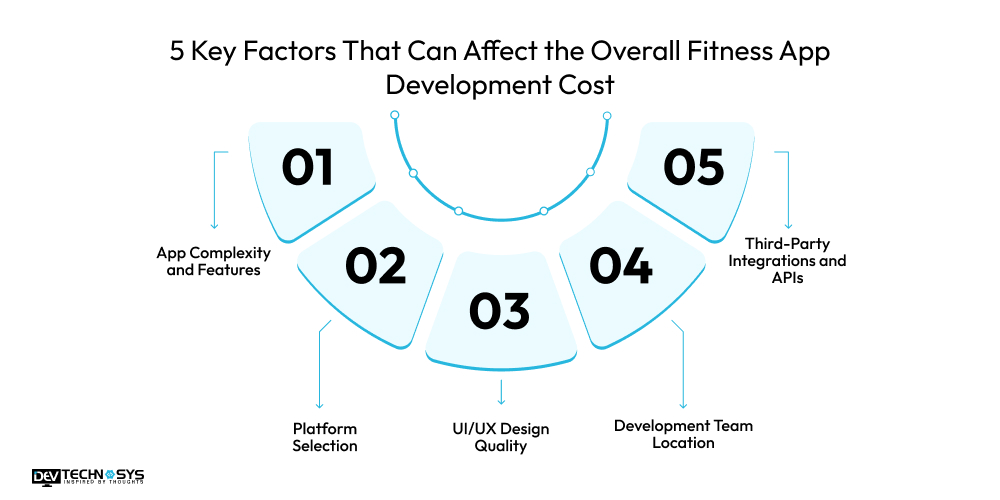
1. App Complexity and Features
The more features your app has, such as booking systems, video streaming, AI suggestions, or wearable integration, the greater the development cost. Basic MVPs are less expensive, but feature-rich apps need more time, money, and skill to develop, dramatically raising overall fitness website development cost.
| Feature Set | Estimated Cost |
| Basic MVP (core booking, profile) | $5,000 – $8,000 |
| Mid-level (credits, reviews, notifications) | $8,000 – $12,000 |
| Advanced (AI, wearables, live classes) | $12,000 – $16,000 |
2. Platform Selection
The ClassPass app development cost varies depending on whether you design your app for iOS, Android, or both. Cross-platform programming is sometimes less expensive than creating individual native apps. Depending on your target demographic and business goals, native development may provide superior performance, justifying a larger cost.
| Platform Option | Estimated Cost |
| iOS or Android (single) | $10,000 – $18,000 |
| Native iOS + Android | $12,000 – $20,000 |
| Cross-platform (Flutter/React Native) | $15,000 – $22,000 |
3. UI/UX Design Quality
High-quality, intuitive design improves the user experience but increases fitness mobile app development cost. Custom animations, responsive layouts, and professional graphics demand more design and testing time. Investing in quality UI/UX makes your app stand out and keeps users engaged, which influences retention and brand perception.
| Design Level | Estimated Cost |
| Basic Template-Based UI | $3,000 – $6,000 |
| Custom Modern UI/UX | $7,000 – $10,000 |
| High-End, Animation-Rich | $10,000 – $15,000 |
4. Development Team Location
Your development team’s geographic location has a significant impact on hourly pricing. Developers in North America and Western Europe charge higher rates than those in Eastern Europe and Asia. However, pricing disparities may represent differing degrees of experience, communication standards, and project management quality, which affects ClassPass app development cost.
| Location | Hourly Rate (Avg.) | Total Cost Range (Approx.) |
| North America | $50 – $70/hr | $40,000 – $60,000+ |
| Western Europe | $40 – $60/hr | $30,000 – $50,000 |
| Eastern Europe | $30 – $50/hr | $27,000 – $45,000 |
| South Asia (India, etc.) | $15 – $25/hr | $8,000 – $25,000 |
5. Third-Party Integrations and APIs
Integrating services such as payment gateways, live video streaming, maps, and wearable sync improves convenience while increasing development time and expense. Each API involves configuration, testing, and maintenance. The more connectors you require, the greater the complexity and final cost to build a weight loss app.
| Integration Type | Estimated Cost |
| Payment Gateway (Stripe, PayPal) | $2,000 – $5,000 |
| Live Streaming Integration | $5,000 – $10,000 |
| Wearables (Fitbit, Apple Health) | $4,000 – $8,000 |
| Mapping & Geolocation APIs | $2,000 – $4,000 |
| Email/SMS/Push Notifications | $1,000 – $3,000 |
Tech Stacks Needed to Build a Fitness App Like ClassPass
| Component | Technology/Tools | Purpose |
| Frontend (Mobile App) | React Native, Flutter, Swift (iOS), Kotlin (Android) | User interface for iOS/Android (cross or native) |
| Backend | Node.js, Django, Ruby on Rails, Laravel | Server-side logic, APIs, business operations |
| Database | PostgreSQL, MongoDB, MySQL | Store user data, bookings, classes, reviews |
| Cloud Hosting | AWS, Google Cloud, Microsoft Azure | App hosting, storage, scalability |
| Payment Integration | Stripe, PayPal, Razorpay | Secure in-app payments and subscriptions |
| Authentication | Firebase Auth, Auth0, OAuth | User login, registration, and secure sessions |
| Push Notifications | Firebase Cloud Messaging (FCM), OneSignal | Send class reminders, updates, and offers |
| Real-time Updates | WebSockets, Firebase Realtime Database | Live availability, instant booking confirmation |
| Geolocation | Google Maps API, Mapbox | Locate studios, map-based search |
| Video Streaming | Agora, Zoom SDK, Twilio, Vimeo API | Live and on-demand virtual fitness classes |

How to Create Profits From Fitness Apps Like ClassPass?
Popular fitness apps like ClassPass have revolutionized the wellness industry, not just for users, but also as powerful business models. Here are five proven strategies to generate consistent profits from such platforms:
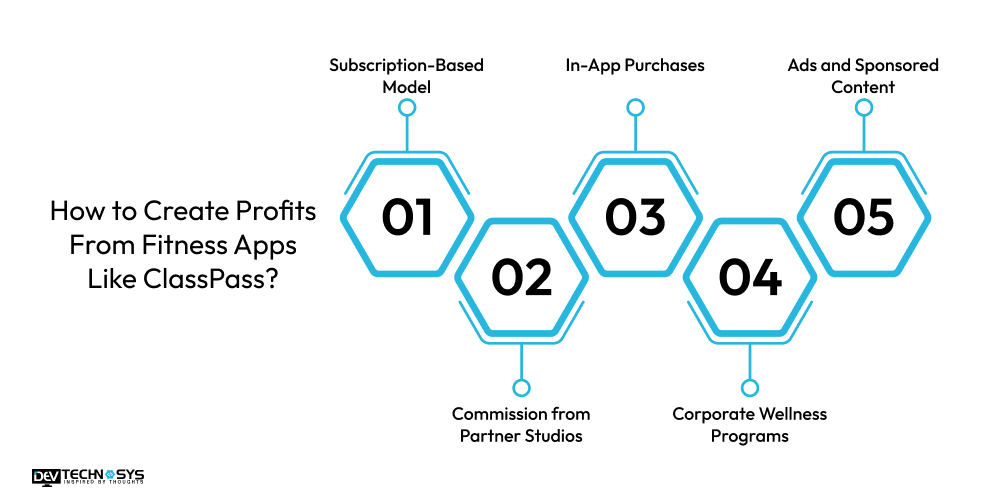
1. Subscription-Based Model
The most typical monetization technique is to provide tiered subscription options. Users can purchase monthly or annual packages that include varying quantities of credits or lessons. This recurring revenue model assures consistent income and is readily scaled as the user base expands.
2. Commission from Partner Studios
Fitness apps like Nike Training Club and ClassPass collaborate with local gyms, studios, and wellness facilities. The platform charges a commission for each lesson booked through the app. This results in a win-win situation: consumers enjoy variety, studios receive visibility, and the app makes money on every transaction.
3. In-App Purchases
Provide extra services like premium fitness programs, dietary guidance, personal coaching, and branded goods. These optional in-app purchases enable users to improve their fitness journey while also raising the app’s average revenue per user (ARPU).
4. Corporate Wellness Programs
FitOn app and ClassPass provide personalized wellness solutions for businesses. Employers pay a large membership price to give fitness access to their employees. This B2B strategy increases revenue while also strengthening brand positioning in the burgeoning corporate wellness industry.
5. Ads and Sponsored Content
Once the app has a significant user base, you may incorporate non-intrusive adverts or collaborate with health businesses on sponsored content. If properly managed, these monetization sources can increase revenue without disturbing the user experience.
How Dev Technosys Will Help You to Build a Fitness App Like ClassPass?
Dev Technosys, a top fitness app development company, provides end-to-end solutions for creating feature-rich, scalable applications like ClassPass. We provide high-performance on-demand fitness apps that are customized to your objectives, from wearable connectivity and secure payment integration to user-friendly UI/UX design and real-time booking systems. Our skilled developers design cross-platform apps with smooth functioning using state-of-the-art technology, which will help you draw in and keep consumers. Turn your fitness app concept into a profitable digital product by collaborating with Dev Technosys.
Frequently Asked Questions
Q1. How Much Does It Cost To Build a Fitness App Like ClassPass?
The cost to develop a fitness app like ClassPass ranges from $8,000 to $25,000, depending on features, complexity, design quality, platform choice, and development team location.
Q2. How Long Does it Take to Create a Fitness App Like ClassPass?
To create a fitness app like ClassPass, typically takes 3 to 6 months, depending on features, design complexity, platform choice, development team size, and testing requirements for a polished, user-friendly product.
Q3. Is It Feasible To Develop a Fitness App Like ClassPass On A Limited Budget?
Yes, developing a fitness app like ClassPass on a limited budget is feasible by focusing on an MVP, prioritizing core features, using cross-platform development, and iterating based on user feedback.
Q4. Which Technologies Are Used to Make a Fitness App Like ClassPass?
There are several types of technologies that are used to make a fitness app like ClassPass. Here we provide the list:
- Java
- Python
- C++
- C#
- PHP
- Swift
Q5. Which Monetization Techniques May Be Applied To A Platform Such As Classpass?
- Subscription plans
- Transaction commissions
- In-app purchases
- Corporate partnerships
- Sponsored content
- Advertising revenue