













Key takeaways:
-
- The process to build an app like OfferUp involves strategic planning, creating a user-friendly UI/UX design, integrating a tech stack, API integrations, and ensuring seamless functionality to deliver a scalable and efficient marketplace platform.
- Choosing the right tech stack and development approach is crucial for the scalability, performance, and long-term success of your marketplace platform.
- Digital classifieds app development involves focusing on essential features like listings, chat, payments, and reviews, which help create a strong foundation before adding advanced functionalities.
- Solving the buyer-seller balance (chicken-and-egg problem) is key to gaining early traction and ensuring platform growth.
Do you have an amazing peer-to-peer marketplace app idea that can turn your daily clutter into instant cash? In 2026, as the hyperlocal commerce market is experiencing a rising curve, AI recommendations and P2P transactions are being used more, presenting even bigger opportunities (and bigger competition).
Apps like OfferUp make buying and selling convenient, transforming the trading process. So, if you want to if you want to build a platform that is fast, social, powered by smart technology, and make people come back for more, start building your OfferUp alternative now!
But the question is, “How to build an app like OfferUp in 2026?”
Don’t worry, we have a solution for that as well! Read the blog till the end to know how you can create an app like OfferUp. We have broken down the 7 essential steps to create an app like OfferUp. So, let’s not waste time, dive straight into it!
What Do You Understand By OfferUp?
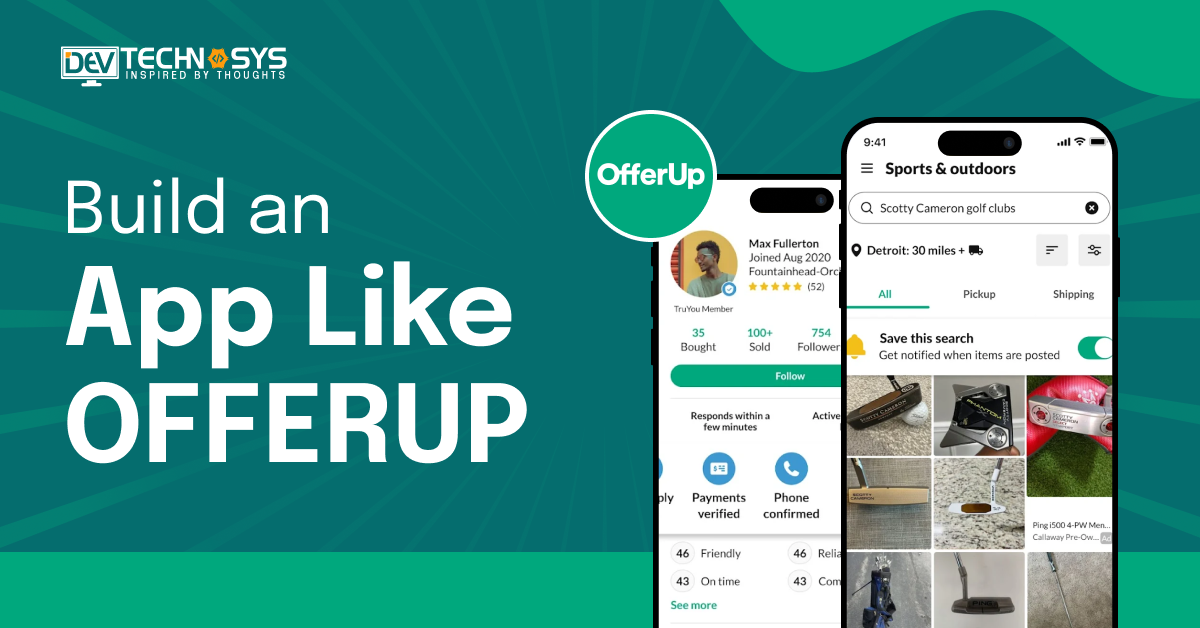
OfferUp has become the largest mobile marketplace in North America. It is a popular mobile-first, peer-to-peer (P2P) marketplace app that helps users buy or sell their new or used goods locally.
You can think of it as a modern “digital yard sale”. It is mostly used for local sales, but it also manages shipments and has tools for making labels and figuring out shipping costs. OfferUp works nicely on the iOS and Android operating systems.
Peer-To-Peer (P2P) Marketplace App Market Overview
- The e-commerce app market size is projected to be USD 3.19 trillion in 2025, USD 3.48 trillion in 2026,
- By type, subscription fees are forecast to expand at an 8.82% CAGR to 2031.
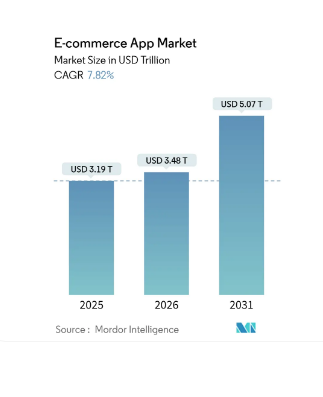
- By platform, super-app mini-programs are projected to post the highest CAGR at 8.24% through 2031.
- By business model, business-to-consumer marketplaces accounted for 55.71% of the e-commerce app market, and peer-to-peer resale is advancing at an 8.41% CAGR through 2031.
How Do Marketplace Apps Like OfferUp Work?
Do you want to know how marketplace apps work? Well, here’s how it functions:
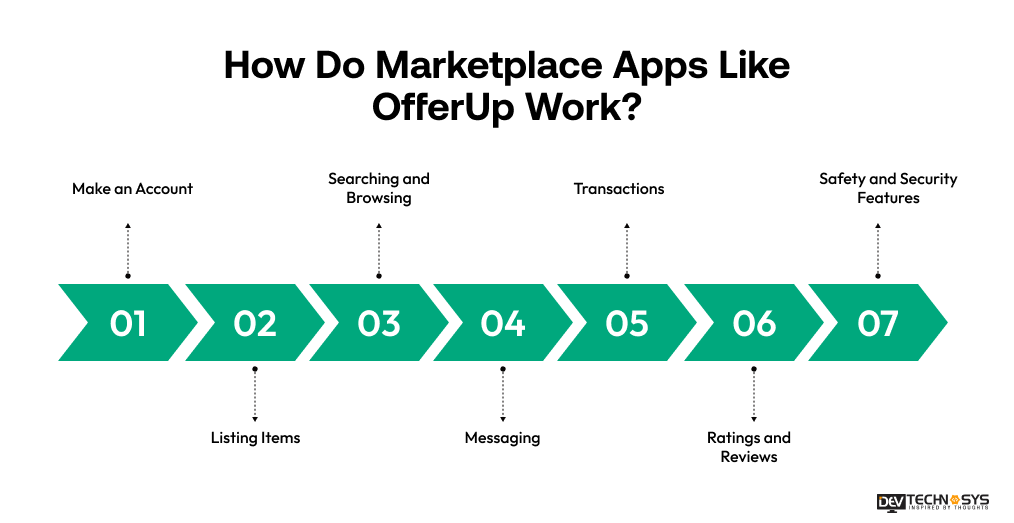
- Make an Account: Open the OfferUp marketplace app, create an account using your email ID or other social media platforms.
- Listing Items: Through this app, sellers can upload pictures of the items they want to sell. While posting the pictures, add descriptions and set prices. Some apps provide specific categories and tags for user convenience.
- Searching and Browsing: The marketplace app like OfferUp, lets buyers browse or search for items with the help of filters like category, price range, and location.
- Messaging: The buyers wanting to make a purchase of an item can message sellers to ask questions and negotiate costs.
- Transactions: Once both the buyers and sellers agree upon the price, the app allows them to make a transaction in person or through the app’s payment system, if available.
- Ratings and Reviews: After making the payment transaction, users can write the feedback for one another, enhancing trust within the community.
- Safety and Security Features: Many online buying and selling app solutions offer user verification, secure chat systems, designated safe meetup locations, and buyer protection policies
Due to such convenience and ease of use, people look forward to more apps. If you’re looking to create a marketplace app, now is the right time.
What are the Top 10 Popular OfferUp Alternatives to Explore in 2026?
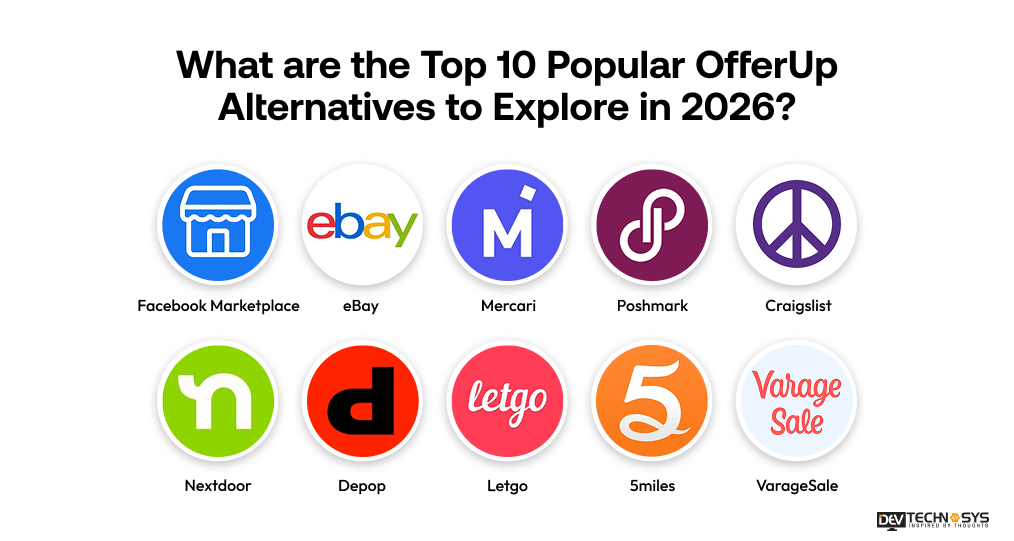
Here are the top 10 popular popular offerup alternatives to explore in 2026. All the classified apps mentioned in the list below provide easy buying and selling options as well as easy communication, ensuring smooth transactions.
Platform |
Launch Year |
Rating |
Availability |
| Facebook Marketplace | 2016 | 4.3 | iOS, Android, Web |
| eBay | 1995 | 4.6 | iOS, Android, Web |
| Mercari | 2013 | 4.5 | iOS, Android, Web |
| Poshmark | 2011 | 4.6 | iOS, Android, Web |
| Craigslist | 1996 | 3.8 | Web, iOS, Android |
| Nextdoor | 2011 | 4.3 | iOS, Android, Web |
| Depop | 2011 | 4.5 | iOS, Android, Web |
| Letgo | 2015 | 4.0 | iOS, Android |
| 5miles | 2014 | 4.3 | iOS, Android |
| VarageSale | 2012 | 4.6 | iOS, Android, Web |
1. Facebook Marketplace
Facebook Marketplace is part of the Facebook app, or you can say that it’s an integrated feature within the application. It enables users to buy, sell, or search for second-hand or latest goods. It can include local items and shipping options around the nation.
The app acts as a digital garage sale, perfect for selling electronics, furniture, and clothes. If you want to create a peer-to-peer marketplace website like this, approach a skilled OfferUp app development company.
2. eBay
eBay is one of the oldest and most popular online marketplaces where users can buy and sell both new and used items. It offers auction-style listings and fixed pricing, along with global shipping, secure payments, and strong buyer protection policies.
Additionally, eBay provides seller tools, analytics, and promotional options to help businesses scale and reach a wider audience. If you’re looking for a local buying selling app development, contact a top app development company.
3. Mercari
Mercari is a user-friendly marketplace app that allows individuals to quickly list and sell products. For mobile marketplace app development like Mercari, focus on simplicity, prepaid shipping labels, secure payments, and a wide range of categories, including electronics, fashion, and home goods. The platform also handles payments securely and releases funds only after buyers confirm receipt, ensuring safer transactions.
4. Poshmark
Poshmark is a niche marketplace focused on fashion, accessories, and lifestyle products. marketplace app development company USA created this platform by combining social networking with eCommerce, allowing users to follow sellers, join virtual shopping events, and share listings to increase visibility. It is especially popular among fashion enthusiasts and influencers, creating a community-driven shopping experience.
5. Craigslist
Craigslist is a long-standing classified ads platform that enables users to post listings for buying, selling, jobs, housing, and services. It is known for its simplicity and local focus, making it a go-to platform for quick, location-based transactions.
However, it offers minimal moderation and payment protection, so users must exercise caution while dealing with unknown buyers or sellers.
How to Build an App Like OfferUp in 7 Simple Steps?
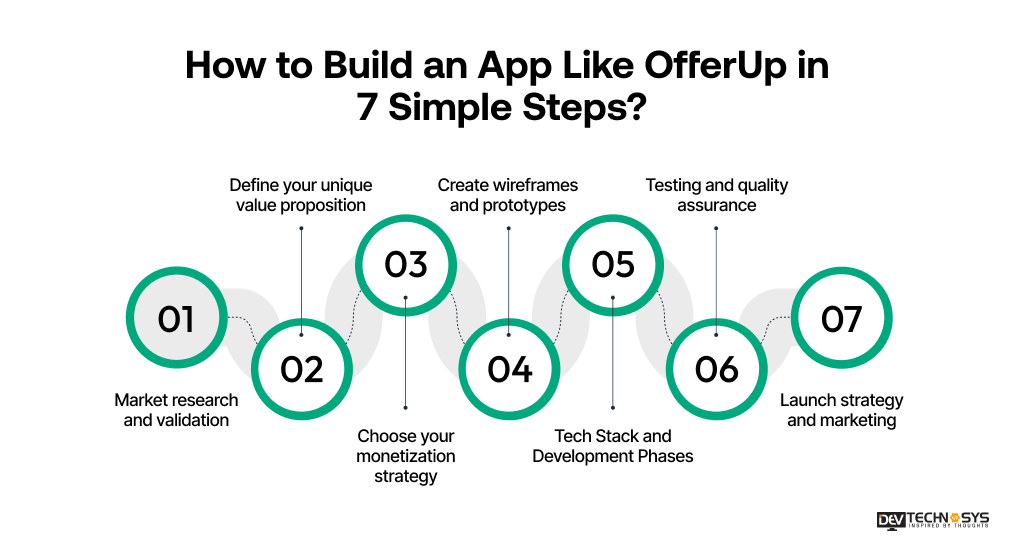
Wondering how to build an app like OfferUp step by step? We got you! This section involves the entire process of how to create an app like OfferUp in 7 simple steps. From concept to launch, we’ll discuss everything in detail:
1. Market research and validation
The first step to build an app like OfferUp requires conducting strong market research. Before you start writing the code, you need to analyze the loopholes that already exist in the marketplace apps. How? Study your competitors to know the strengths and issues with the current solutions.
Before starting the OfferUp clone app development process, know who you are making the app for, aka your target audience. You need to do surveys and interviews to validate your idea and do research on local rules and regulations regarding peer-to-peer sales.
Doing in-depth research is crucial to set a strong foundation, which can save resources and unnecessary spending on features and iOS app development services nobody wants. Many marketplace founders seeking on-demand marketplace app solutions skip thorough market research, which leads to the launch of a poor product with no differentiation or USP.
Industry Insights:
according to Blup.in Global online marketplace industry is expected to reach $7+ trillion by 2030 (approx.) driven by C2C growth.
2. Define your unique value proposition
With such high competition for attention, you need to answer questions like:
- What makes your marketplace app different from others?
- Which niche or region do you want to serve?
- What problems does your solution solve that others don’t?
- What issues your solution can solve that existing apps have failed to solve?
Your unique selling proposition might be category-specific, region-specific (serving underrepresented markets), or feature-specific (offering services that other marketplaces don’t).
3. Choose your monetization strategy
The third step to make an app like OfferUp involves devising a smart monetization strategy and business model. The successful marketplaces use various business models, including the
- Transaction fees (percentage of each sale)
- Featured listings and promotional options
- Subscription plans for power sellers
- Third-party advertising and sponsored content
- Freemium model with premium features
Monetization strategy imposes a direct impact on the OfferUp alternative app development, user experience, and marketing approach of your app. Thereby, it is essential to define it early for long-term success.
4. Create wireframes and prototypes
Let’s be honest, who likes an app with no appeal? To make your app stand out, you need to create a user-friendly and visually appealing UI/UX that reflects your vision. Experts who provide online marketplace development services create the app using a visual blueprint that includes:
- Basic user flows and interfaces
- Create interactive wireframes for testing
- Develop a clickable prototype
- Conduct user testing with your target audience
- Refine based on user feedback
This iterative design process ensures your user interface meets expectations before expensive peer-to-peer marketplace app development begins.
5. Tech Stack and Deveopment Phases
To develop a multi-vendor ecommerce marketplace, your development team will carefully select the right tech stack for your app. The best tech stack for the OfferUp clone app includes:
Layer |
Technologies |
Purpose |
| Frontend | React, Flutter | Build responsive and user-friendly interfaces |
| Backend | Node.js, Django | Handle server logic, APIs, and business processes |
| Database | MongoDB, MySQL | Store and manage application data efficiently |
| Cloud & Hosting | AWS, Google Cloud | Ensure scalability, performance, and uptime |
| Payments | Stripe, Razorpay | Enable secure online transactions |
| APIs & Tools | REST API, Firebase | Support integrations and real-time features |
These technical decisions taken by your Android app development company will significantly impact both development cost and timeline.
After selecting the technology stack, the most experienced development teams follow a structured approach to ensure efficiency and quality. In this step, expats will add core features such as listings, messaging, and payments. Next comes API integration, including Stripe for payments and the Google Maps API for location services.
6. Testing and quality assurance
Launching with bugs or security flaws can permanently damage your marketplace’s reputation, so ensure your app goes through
- Functional testing of all features
- Performance testing under various conditions
- Security testing (especially for payment processing)
- User acceptance testing with real users
- Cross-device and cross-platform testing
This testing process ensures your app stays bug-free, secure, and highly performant. The app is deployed and continuously maintained with updates and improvements to enhance user experience and keep up with market demands.
7. Launch strategy and marketing
A successful product launch requires app store optimization across both iOS and Android. Your mobile app development company will offer a pre-launch marketing strategy to build anticipation.
Marketplace apps often struggle with a “chicken-and-egg” dilemma: without sellers, buyers have no reason to join, and without buyers, sellers won’t participate.
To deal with it, adopt strategies that attract users to both sides of the marketplace. Also, add incentives for early adopters and analytics implementation to measure performance
Want a chatbot demo or pricing? Fill the form and talk to our experts today.
Pick what you need below — you can select more than one — then tap Get detail to continue.
-
Chatbot demo dashboard
-
Cost to develop an app
-
Industry report
-
Case study
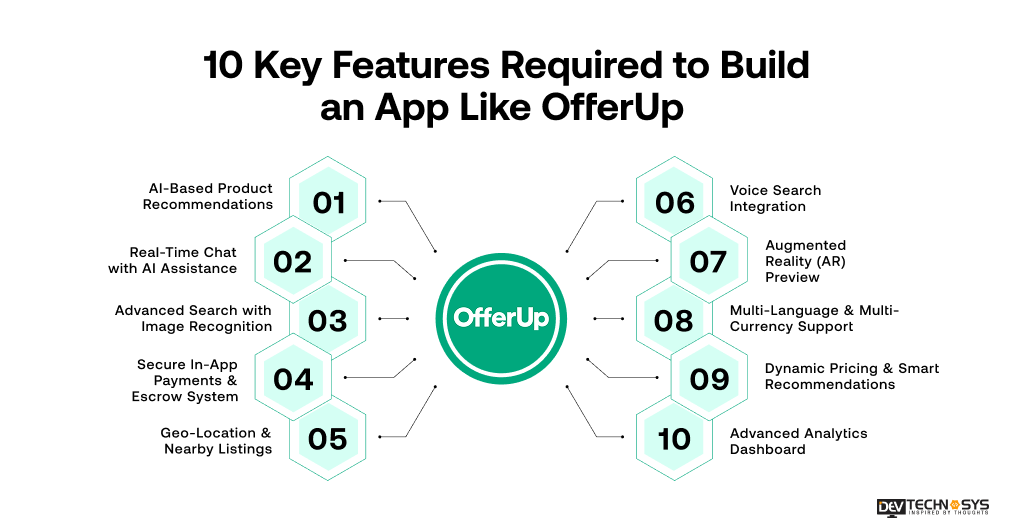
10 Key Features Required to Build an App Like OfferUp
Building a marketplace app like OfferUp requires a well-balanced set of features that ensure smooth interactions between buyers and sellers. From user-friendly interfaces to secure transactions, the right features play a crucial role in driving engagement and platform success. Here are some of the key features of OfferUp clone app that you need to know.
Buyer Panel |
Seller Panel |
Admin Panel |
| User registration & profiles | Product listing management | User management |
| Advanced search & filters | Inventory management | Listing moderation |
| Product listings with images | Order management | Commission & revenue control |
| In-app chat/messaging | Buyer communication | Payment monitoring |
| Wishlist & favorites | Pricing & discounts | Category management |
| Secure payments via Stripe / Razorpay | Sales analytics dashboard | Analytics & reporting |
| Order tracking | Earnings tracking | Dispute resolution |
| Ratings & reviews | Seller verification | Fraud detection & security |
1. AI-Based Product Recommendations
Make an app like OfferUp using AI algorithms to analyze user behavior, preferences, and browsing history. It helps shopping app development providers deliver platform with personalized product suggestions, improving engagement, increasing conversions, and enhancing the overall shopping experience for buyers.
2. Real-Time Chat with AI Assistance
Enable instant messaging between buyers and sellers with integrated AI chatbots that provide quick replies, automate FAQs, and assist in negotiations, ensuring faster and more efficient communication.
3. Advanced Search with Image Recognition
App like Target llow users to search products by uploading images. AI-powered image recognition identifies similar items, making discovery easier and improving user convenience, especially for visually driven shopping experiences.
4. Secure In-App Payments & Escrow System
Implement a secure escrow-based payment system where funds are held until transactions are successfully completed, ensuring trust between buyers and sellers, minimizing fraud risks, and providing a safe, transparent transaction environment for all users.
5. Geo-Location & Nearby Listings
Build an app like Olx by integrating location-based services using tools like Google Maps API to display nearby listings, helping users discover relevant products quickly, connect with local sellers, and arrange convenient in-person transactions or deliveries.
6. Voice Search Integration
Enable voice-based search functionality, allowing users to find products hands-free using natural language commands. This improves accessibility, speeds up product discovery, and enhances overall user experience, especially for mobile-first and on-the-go users. Keep in mind that adding features like voice-based search can increase the cost to develop an app like OfferUp.
Industry Insights:
Voice search adoption is growing rapidly, with smartphone voice usage increasing 20–30% YoY (Statista trends)
7. Augmented Reality (AR) Preview
Incorporate AR technology to let users visualize products like furniture or decor in real-world environments before purchasing, helping them make informed decisions, boosting confidence, and significantly reducing product returns and dissatisfaction.
8. Multi-Language & Multi-Currency Support
Provide support for multiple languages and currencies to cater to a global audience, ensuring a seamless and localized experience while expanding market reach and making the platform accessible to users from diverse regions.
9. Dynamic Pricing & Smart Recommendations
Develop an app like Wallapop by leveraging AI-driven analytics to suggest optimal pricing strategies based on market trends, demand, and competition, while also delivering personalized product recommendations that enhance user engagement, improve conversions, and maximize seller profitability.
10. Advanced Analytics Dashboard
Provide detailed insights into user activity, sales trends, and performance metrics via an analytics dashboard, enabling sellers and admins to make data-driven decisions and optimize business strategies.
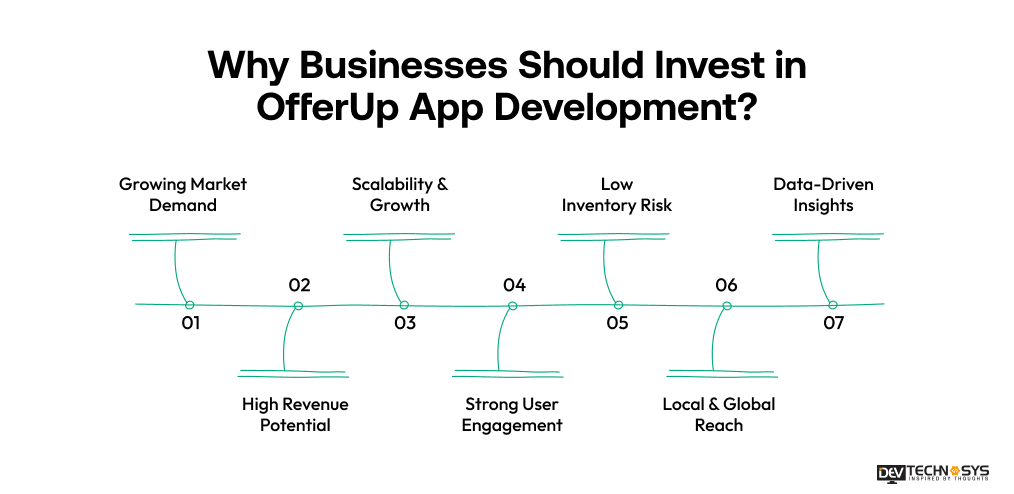
Why Businesses Should Invest in OfferUp App Development?
Investing in an app like OfferUp allows businesses to tap into the growing demand for peer-to-peer marketplaces and digital commerce. It offers scalable revenue opportunities while enabling seamless buying and selling experiences for modern users.
1. Growing Market Demand
The demand for online marketplaces is rapidly increasing as users prefer convenient, mobile-first buying and selling experiences. This trend is driven by digital adoption, smartphone usage, and changing consumer behavior toward fast, on-demand commerce solutions globally.
2. High Revenue Potential
Multiple monetization options, such as transaction fees, ads, subscriptions, and promotions, ensure steady, scalable income streams. These models allow businesses to diversify revenue sources, maximize profitability, and maintain consistent earnings even during fluctuating market conditions.
3. Scalability & Growth
A top eCommerce app development company creates marketplace apps that can easily scale by adding new categories, regions, and features as the user base grows. Cloud-based infrastructure and modular architecture further support seamless expansion without compromising performance, speed, or overall system stability.
4. Strong User Engagement
Features like chat, notifications, and personalized recommendations keep users active and engaged on the platform. Advanced algorithms and real-time updates further enhance retention, encourage repeat usage, and improve overall customer satisfaction and loyalty.
5. Low Inventory Risk
Since it’s a peer-to-peer model, businesses don’t need to manage inventory, reducing operational costs and risks. This eliminates storage, logistics, and procurement challenges, making the business model more flexible, scalable, and financially efficient over time.

What is the Cost to Build an App Like OfferUp in 2026?
The cost to develop an app like OfferUp in 2026 is around $8,000 to $30,000+, depending on features, UI/UX, tech stack, platform choice, and integrations.
- Basic MVP development: The cost to develop a mobile app with basic functionalities is around $8,000 to $12,000.
- Mid-level Marketplace App: The cost to develop an app like OfferUp can range between $12,000 to $18,000.
- Advanced Marketplace App: The cost to build an app like OfferUp can range from $18,000 to $24,000, including advanced features such as AI, machine learning (ML), natural language processing (NLP), and multi-platform functionality.
- Enterprise-Level Platform: The cost to develop an app like OfferUp with advanced integrations, high-end security, real-time analytics, and AI-driven recommendations can go up to $30,000+.
App Type |
Cost Estimate |
Timeline |
| Basic MVP (limited features) | $8,000 – $12,000 | 2–3 months |
| Mid-level Marketplace App | $12,000 – $18,000 | 3–6 months |
| Advanced Marketplace App | $18,000 – $24,000+ | 6–12 months |
| Enterprise-Level Platform | $24,000 – $30,000+ | 9–18+ months |
1. Feature Complexity
The complexity of features significantly impacts the overall cost to develop a marketplace app and timeline. Basic features like listings and messaging are easier to implement, while advanced functionalities such as AI recommendations, real-time chat, and payment integrations require more time, expertise, and resources, increasing development efforts and long-term maintenance requirements.
Complexity Level |
Estimated Cost Impact |
| Basic (MVP) | $2,000 – $3,000 |
| Mid-Level | $3,000 – $6,500 |
| Advanced | $6,500 – $8,000+ |
2. Platform Choice
Choosing between iOS, Android, or cross-platform development affects the cost to create an app like OfferUp as well as performance. Native apps offer better performance and user experience, while cross-platform frameworks reduce the cost to develop a peer-to-peer marketplace website. Your choice should depend on your target audience, budget, and long-term scalability goals for the marketplace app.
Platform Type |
Estimated Cost Impact |
| Single Platform | $3,000 – $6,000 |
| Cross-Platform | $4,500 – $7,000 |
| Native (Both) | $7,000 – $10,000+ |
3. UI/UX Design
An intuitive and visually appealing marketplace app UI/UX design plays a crucial role in creating on-demand app development solutions and increasing user engagement and retention.
A well-designed interface ensures smooth navigation, faster transactions, and better usability. Investing in high-quality design improves customer satisfaction, reduces bounce rates, and enhances the overall success of your marketplace platform.
Design Level |
Estimated Cost Impact |
| Basic Design | $3,000 – $5,000 |
| Custom UI/UX | $3,500 – $6,000 |
| Advanced Design | $6,000 – 8,000+ |
4. Security Measures
Strong security measures are essential to protect user data and transactions. Features like data encryption, secure payment gateways, authentication protocols, and fraud detection systems ensure user trust.
Implementing robust security practices helps prevent data breaches, safeguards sensitive information, and ensures compliance with industry standards and regulations.
Security Level |
Cost Range |
| Basic Security | $2,000 – $4,000 |
| Standard Security | $4,000 – $6,000 |
| Advanced Security + Audit | $6,000 – $7,800 |
5. Location of Development Team
The geographical location of your development team greatly influences the OfferUp like app development cost in India and around the world. If you hire mobile app developers from regions like India, businesses can have access to more cost-effective solutions, while teams in the US or Europe charge higher rates.
However, expertise, communication, and project management efficiency should also be considered alongside the pricing for location-based marketplace apps.
Region |
Hourly Rate |
| India / Asia | $15 – $25/hr |
| Middle East (UAE/GCC) | $40 – $60/hr |
| USA / Europe | $50 – $90/hr+ |
6. Maintenance Services
To build an app like ETSY, you need to include post-launch maintenance. Maintenance is crucial for ensuring the long-term success of your app. It includes regular updates, bug fixes, performance optimization, and security enhancements.
Continuous maintenance ensures smooth functionality, adapts to changing user needs, and keeps the app competitive in the evolving marketplace ecosystem.
Maintenance Level |
Estimated Cost |
| Basic | $1,000 – $2,500/year |
| Standard | $2,500 – $4,000/year |
| Advanced / Enterprise | $4,000 – $6,000+/year |
How Long Does it Take to Develop an App Like OfferUp?
The development timeline for marketplace apps like OfferUp depends on its features, complexity, team size, and technology stack. A simple MVP can be built quickly, while a full-featured, scalable platform with advanced integrations like payments, chat, and AI-based recommendations takes significantly longer. On average, the complete development process ranges from 3 to 12 months, depending on business requirements and scope.
Development Phase |
Duration |
| Requirement Analysis & Planning | 2–4 weeks |
| UI/UX Design | 3–6 weeks |
| Frontend & Backend Development | 8–20 weeks |
| API Integration | 3–6 weeks |
| Testing & QA | 3–5 weeks |
| Deployment & Launch | 1–2 weeks |
What are the Best Monetization Strategies For an App Like OfferUp?
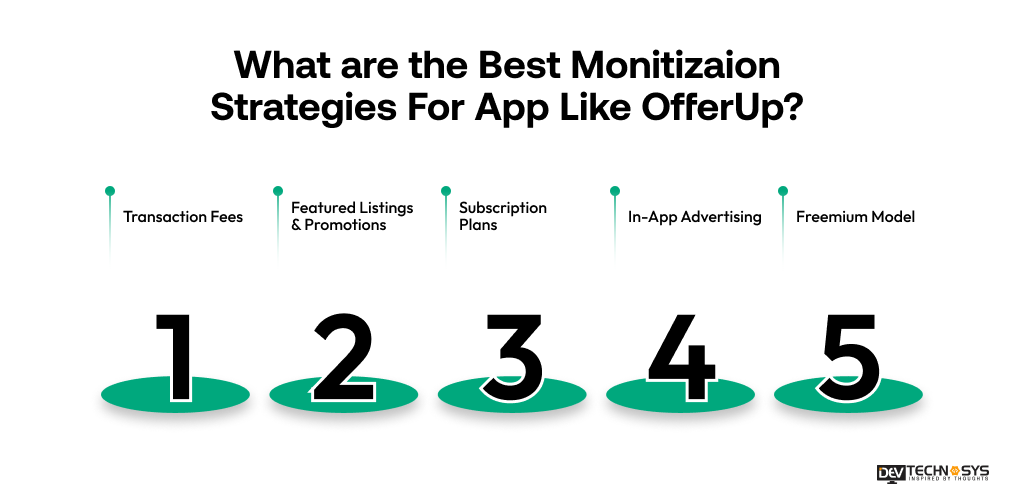
Choosing the right monetization strategy is essential to ensure long-term profitability and sustainability of your marketplace app. By combining multiple revenue streams, you can maximize earnings while delivering value to both buyers and sellers.
1. Transaction Fees
Charging a percentage on each successful transaction is one of the most reliable revenue models. As user activity grows, your revenue scales naturally. This model aligns platform success with user engagement, making it sustainable and widely adopted by marketplace apps globally.
2. Featured Listings & Promotions
Offer sellers the option to promote their listings for better visibility. Paid promotions help sellers attract more buyers quickly while generating consistent revenue for the platform. This strategy works especially well in competitive marketplaces with high product volumes.
3. Subscription Plans
Hire dedicated developers who would provide subscription-based plans for frequent sellers, offering benefits like unlimited listings, analytics insights, and priority support. This creates a steady, recurring revenue stream while delivering added value to power users who rely on the platform for regular sales.
4. In-App Advertising
Monetize your app by displaying third-party ads or sponsored listings. Businesses pay to promote their products, while you earn through impressions or clicks. This strategy is effective once your platform gains significant user traffic and engagement.
5. Freemium Model
Offer basic features for free while charging for premium functionalities such as advanced filters, insights, or promotional tools. This approach helps attract a large user base initially and gradually converts free users into paying customers.
Conclusion
Building an app like OfferUp in 2026 requires a strategic mix of the right features, scalable technology, and a strong monetization model. By starting with an MVP and continuously improving based on user feedback, businesses can reduce risks and ensure long-term success.
If you want to build a similar platform like OfferUp, partner with a Mobile app development firm in USA. With our technical expertise and industry knowledge, with 10+ years of experience, Dev Technosys helps businesses build a feature-rich marketplace app while reducing risks and development time.
Frequently Asked Questions
Find answers to the most common questions related to this article.
A professional app development company brings technical expertise, structured workflows, and industry experience to your project. They ensure high-quality development, scalability, and security while reducing risks, accelerating time-to-market, and delivering a reliable marketplace app tailored to your business goals.
Yes, marketplace apps can be fully customized based on your business requirements. You can integrate features like chat systems, secure payments, AI recommendations, and analytics tools, ensuring the platform aligns with your target audience and provides a unique, competitive user experience.
A well-designed marketplace app is built for scalability, enabling it to handle a growing user base, transactions, and features. With the right architecture and cloud integration, your app can grow seamlessly without compromising performance or user experience over time.
Most professional development companies offer ongoing maintenance and support services after launch. This includes bug fixes, performance optimization, feature updates, and security enhancements, ensuring your app remains functional, competitive, and aligned with evolving market trends and user expectations.
Security is a critical aspect of marketplace app development. Professional companies implement advanced measures like data encryption, secure payment gateways, authentication protocols, and fraud detection systems to protect user data, ensure safe transactions, and build long-term trust among users.