









Key Takeaways:
-
- Twitch-like apps need more than live streaming: Build around interaction, creators, communities, discovery, and engagement.
- Start with a focused MVP: Validate your niche, audience, streaming quality, creator adoption, and monetization before scaling.
- Choose the right technology stack: WebRTC, video APIs, CDN, cloud infrastructure, WebSockets, and AI support scalable streaming experiences.
- Security and compliance are essential: Protect user data, payments, video content, and live communities with appropriate security standards.
- Twitch-like app development cost: Expect around $30,000 to $120,000+, depending on features, streaming infrastructure, platforms, scalability, and integrations.
- Plan for scalability and monetization: Support concurrent viewers while generating revenue through subscriptions, ads, tipping, premium content, and sponsorships.
The entertainment industry has become one of the most rapidly changing ecosystems today. People have shifted to more interactive, creator-driven, and community-focused experiences rather than just watching videos.
Due to this shift, it has created an opportunity for businesses to build an entertainment app like Twitch. What makes Twitch different from other streaming platforms is its ecosystem around gaming, music, esports, podcasts, live events, or niche creator communities. Creating such an ecosystem requires more than a streaming interface.
Twitch-like app should have reliable real-time video streaming, low-latency delivery, live chat, creator tools, personalized discovery, secure payments, and content moderation. In this development guide for creating a Twitch alternative, we will go through the development process, essential features, technology stack, architecture, security requirements, and Twitch app development cost.
What is an Entertainment App Like Twitch?
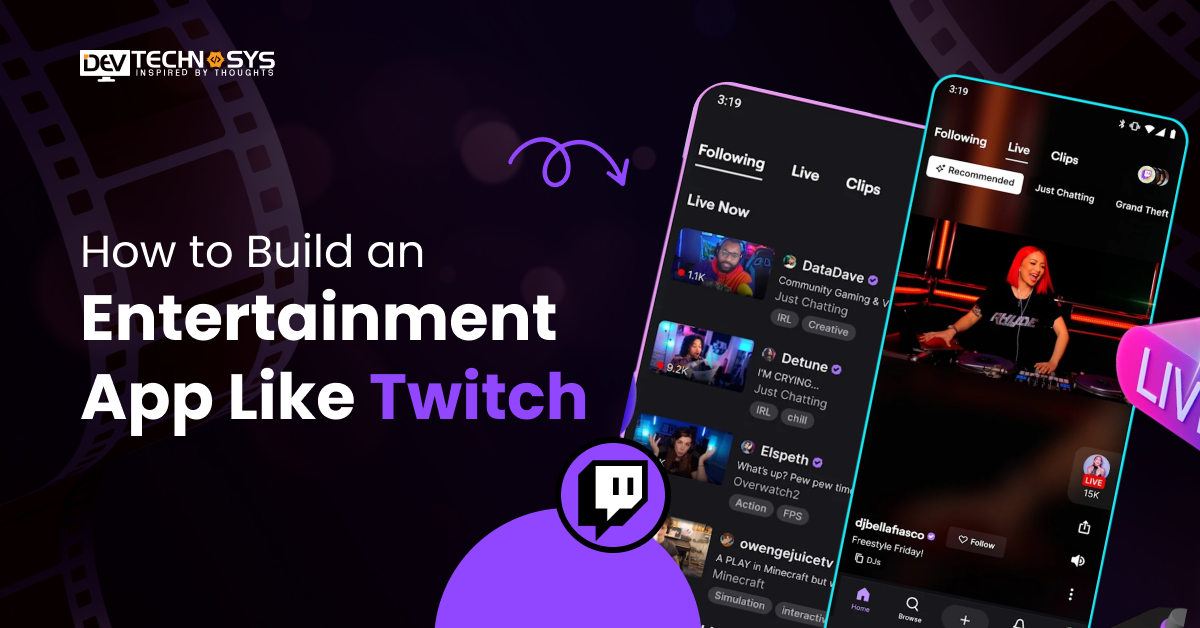
An entertainment app like Twitch blends live streaming with instant feedback, creator tools and capabilities, community, and personalized content discovery. Unlike traditional streaming sites, users aren’t simply watching content; they are actively participating in it. They can interact with creators, respond to broadcasts, engage with communities, and impact the live experience.
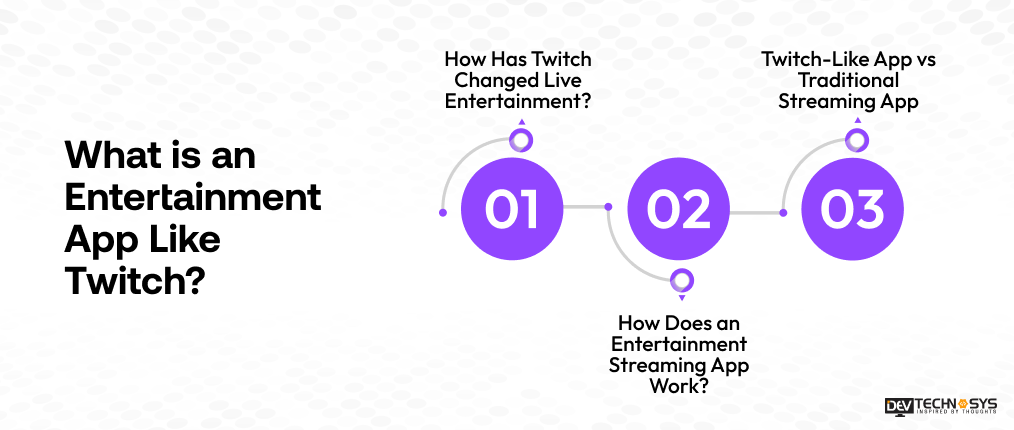
How Has Twitch Changed Live Entertainment?
Twitch helped pioneer the concept of creators and viewers sharing the same entertainment experience. Gaming is a primary use case, but the same model can be applied to music, esports, podcasts, live events, fitness, education, and influencer content.
How Does an Entertainment Streaming App Work?
A typical live video streaming platform moves content through several stages:
Streamer → Stream Ingestion → Video Transcoding → CDN → Viewer
Streaming infrastructure receives a creator’s stream, handles various video levels, and pushes the stream via CDN integration. Adaptive bitrate streaming helps keep playback quality consistent on varying network conditions.
Real-time communication technology is used to enable live chats, reactions, notifications, moderation, and creator interactions, in addition to video delivery. Backend systems deal with accounts, payments, analytics, recommendations, and access to content.
Twitch-Like App vs Traditional Streaming App
Traditional Streaming App |
Twitch-Like Entertainment App |
| Primarily on-demand content | Live and interactive content |
| Viewer mainly consumes content | Viewer actively participates |
| Limited real-time interaction | Chat, reactions, polls, and events |
| Content focused | Creator and community focused |
| Standard video delivery | Low-latency streaming |
Therefore, successful Twitch app development is not simply about adding live video. It requires an ecosystem where streaming, interaction, discovery, and creator participation work together.
Quote
According to Emmett Shear, Co-founder of Twitch: “I am excited for a world where our entertainment could connect us instead of isolating us.”
Why Build an Entertainment App Like Twitch in 2026?
Interactive entertainment is growing, with more opportunities as viewers demand more than a passive form of entertainment. According to Grand View Research, the global interactive streaming market is expected to expand significantly from $28.2 billion in 2024 to $107.0 billion by 2030, projecting a 26.4% CAGR from 2025 to 2030.
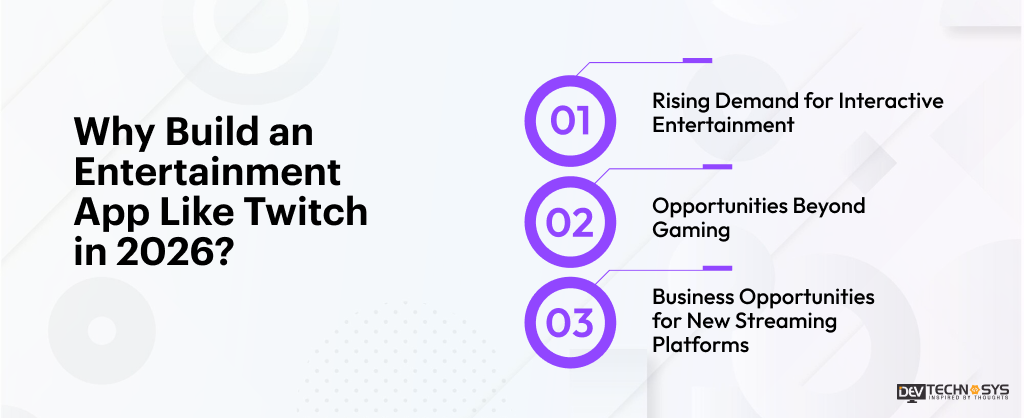
Rising Demand for Interactive Entertainment
Live streaming is an expanding entertainment experience that allows viewers to converse, respond, engage, and even create communities with creators. The global live streaming market is expected to grow from $147.0 billion in 2024 to $345.1 billion by 2030 with a CAGR of 23% during the forecast period.
For companies, this opens the door to develop an entertainment app like Twitch for a more targeted user base, content niche, or interaction style.
Opportunities Beyond Gaming
You don’t have to face off against gaming-focused platforms with a Twitch-inspired platform. Businesses can create engaging moments in music, esports, podcasts, fitness, education, live events, influencer communities, and other niche entertainment.
This versatility makes an interactive streaming platform valuable in reaching audiences that larger streaming platforms might not reach deeply.
Business Opportunities for New Streaming Platforms
A well-positioned platform can generate revenue through creator subscriptions, advertising, virtual gifts, tipping, premium memberships, sponsorships, and pay-per-view events.
The strongest opportunity is not to reproduce Twitch feature for feature. It is to build a strategy around popular entertainment app development trends with a specific audience, creator ecosystem, and monetization model.
What Should You Decide Before Developing the App?
Before you start with Twitch app development, you should shape your strategy beforehand. How will your app look, which niche market you are gonna attack, and who your target audience is, along with the range of features and technical requirements.
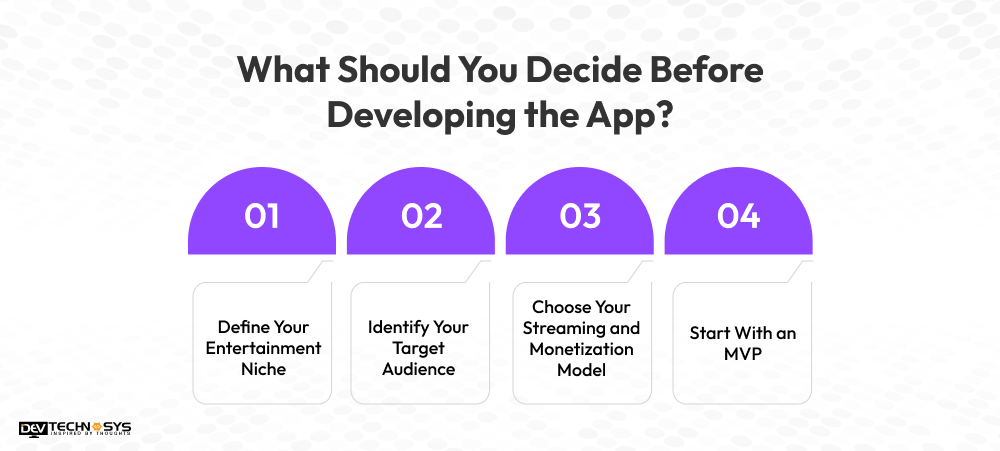
Define Your Entertainment Niche
You can choose from focused categories such as gaming, music, esports, podcasts, fitness, education, or live events. A clear and promising niche can help your entertainment app like Twitch, really differentiate itself from competitors.
Identify Your Target Audience
The next thing to identify is who will create the content and who will watch it, and how you can keep both parties engaged. Let their viewing habits and expectations guide the user experience.
Choose Your Streaming and Monetization Model
Before you start live video streaming app development like Twitch, decide whether you want to build for live streaming, on-demand videos, or both. This will also help you decide monetization models like subscriptions, advertising, virtual gifts, tipping, or pay-per-view access.
Start With an MVP
It is sensible to start with building a Twitch-like MVP to validate the streaming quality, viewer engagement, creator adoption, and monetization before heavily investing in the app. This will help you plan future capabilities such as recommendations through AI in entertainment app development.
Planning a Entertainment App Project?
Get a tailored development cost estimate in a few simple steps.
- 3 quick steps
- 100% free
- Reply in 1 business day
2 Minutes Read
The 6-Step Process to Build an Entertainment App Like Twitch
The process to build an entertainment app from scratch should connect product strategy, streaming infrastructure, viewer engagement, security, and long-term scalability. Below are the steps through which custom streaming app development is possible without hiccups.
1. Research and Define the Product
Start by doing research on your competitors, user behavior, content topic, and unmet user needs first. Identify your niche, creator value proposition, target audience, streaming model, and monetization strategy. This is a basis that will enable you to develop an entertainment app like Twitch, rather than some generic streaming product.
2. Plan the MVP and User Experience
Outline the minimum set of features needed to validate the platform. Map different trips for viewers, creators, and admins, then make sure that features like account creation, live streaming, chat, discovery, notifications, and creator tools are prioritized. Just having a focused MVP will make it easier to test adoption prior to expanding the product.
3. Design the Streaming Architecture
Define the technical groundwork prior to development. Ingestion of live video streams, video transcoding, CDN integration, adaptive bitrate streaming, and real-time video streaming are all possible requirements for a live video streaming platform. WebRTC live streaming or specific video streaming APIs can enable various live streaming experiences, depending on the latency needs.
4. Develop Core Streaming and Engagement Features
Design the viewer and creator experiences on a reliable streaming and interactive basis. Streamer profiles, creator dashboards, live chat, reactions, content discovery, notifications, subscriptions, and payment workflows are all potential features for a core entertainment app. Specialized entertainment app development services can also be useful when it comes to integrating third-party streaming and engagement technologies in an effective manner.
5. Secure, Test, and Optimize the Platform
Before launch, test the quality of playback, the delay, and the number of viewers that can use the system simultaneously, as well as the network and the performance of the server. Apply authentication, API security, content moderation, DDoS prevention, and access control. It’s also crucial to see how the platform performs with low-latency streaming and to ensure that it remains stable during sudden surges in traffic.
6. Launch, Monitor, and Scale
Roll out the platform slowly and closely watch the streaming quality, viewer retention, creator activity, infrastructure performance, and revenue. Take this information and use it to tweak the experience and make a list of new features to add. With a growing number of viewers, there is a growing need for scalable cloud infrastructure, CDN capacity, and backend services to support the increased number of concurrent viewers, as well as regional expansion.
Key Features to Include in an Entertainment App Like Twitch
A Twitch-like platform will require a different kind of software for users, content creators, and administrators. The features required would be those that provide seamless streaming, vibrant communities, growth for the creators, and platform administration. A comprehensive entertainment app development solution can bring these operational capabilities together within a centralized administration ecosystem.
Viewer Features
- Personalized Stream Discovery: Recommend broadcasts based on viewing behavior, followed creators, categories, and interests.
- Live Video Player: Provide adaptive quality, fullscreen viewing, playback controls, and low latency for a smoother viewing experience.
- Live Chat and Reactions: Let viewers communicate with creators and participate through messages, reactions, and other interactive elements.
- Follow and Subscribe: Allow users to follow creators and subscribe to premium content or exclusive communities.
- Search and Categories: Organize streams using categories, keywords, languages, and trending content to improve discovery.
- Notifications: Alert viewers about upcoming broadcasts, followed creators, subscriptions, and relevant platform activity.
- Watch History and Sharing: Let users revisit previous content and share streams, clips, or creator profiles.
Streamer Features
- Creator Dashboard: Give creators centralized control over broadcasts, audience insights, content, earnings, and account settings.
- Live Broadcasting: Enable creators to start, schedule, manage, and end live broadcasts from supported devices.
- Stream Scheduling: Let creators announce upcoming broadcasts so followers can receive reminders and plan their viewing.
- Audience Analytics: Provide insights into viewers, watch time, engagement, retention, and revenue to help creators improve content.
- Chat and Moderation Controls: Allow creators and moderators to manage conversations, block users, filter messages, and maintain healthy communities.
- Monetization Tools: Support subscriptions, tipping, virtual gifts, paid content, and sponsorship opportunities.
- Clips and Highlights: Help creators and viewers capture engaging moments that can attract new audiences.
Admin Features
- User and Creator Management: Manage accounts, permissions, creator verification, suspensions, and access levels across the platform.
- Content Moderation: Review reported broadcasts, chat activity, uploaded content, and policy violations to maintain a safer environment.
- Stream Monitoring: Monitor active broadcasts, technical performance, suspicious activity, and potential violations in real time.
- Payment and Revenue Management: Track subscriptions, transactions, refunds, commissions, and creator payouts.
- Analytics and Reporting: Monitor watch time, engagement, retention, revenue, popular categories, and overall platform performance.
- Content Access Control: Manage age restrictions, geographic availability, premium content, and creator permissions according to platform policies.
Advanced Features That Can Increase Viewer Engagement
Basic streaming features could allow users to use the service. It does not necessarily mean that they will have a reason to stay there. In this case, engagement features will make their experience more personal, interactive, and sticky.
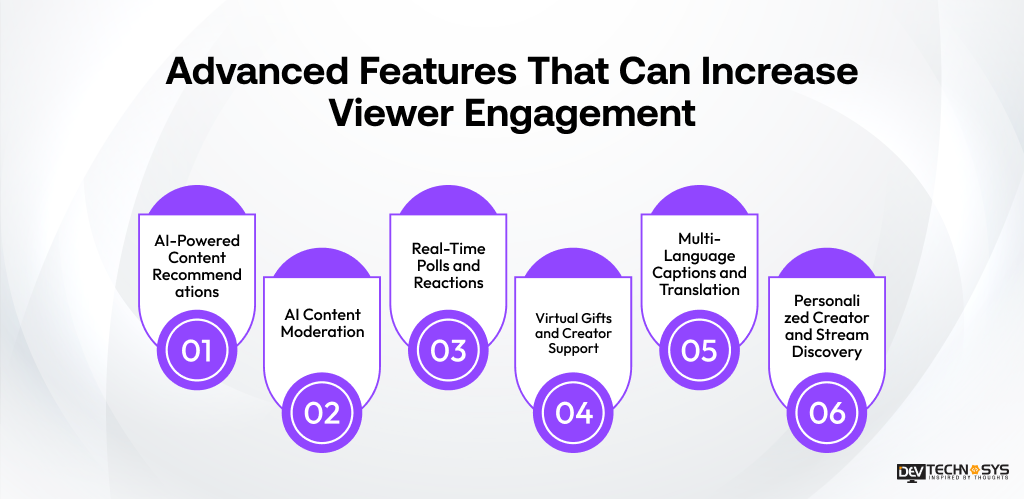
1. AI-Powered Content Recommendations
Machine learning recommendation engines are capable of analyzing users’ viewing history, subscribed creators, time spent, and content preferences. Such an approach helps users find more content they would like and provides additional visibility for small channels.
2. AI Content Moderation
Moderation of a large community that streams content is a difficult task. Using AI would help to spot abuse, unusual behavior, content policy violations, or inappropriate messages
3. Real-Time Polls and Reactions
Small things could change users’ behavior and level of engagement with the stream. For example, live polls, reactions, predictions, and questions from the audience will help users engage with the stream and influence it.
4. Virtual Gifts and Creator Support
Virtual tips and paid reactions are another way of connecting the creator with his/her audience. At the same time, such features could become one of the revenue sources for the platform.
5. Multi-Language Captions and Translation
Automatic subtitles and translation could be helpful in making streams available to a broader audience. In particular, such features will be especially important once creators start attracting viewers from other regions and countries.
6. Personalized Creator and Stream Discovery
The process of discovery must change as users engage with the platform. Personalized categories, trending live streams, suggested creators, and personalized feeds will add more value and make the discovery process less generic. Such features will also help in SaaS-based entertainment app development.
Quote
According to Dan Clancy, CEO of Twitch: “We all want and need to find belonging and connection with other people.”
Development Timeline for a Twitch-Like Entertainment App
The development timeline is divided across planning, design, development, streaming integrations, testing, and launch. Working with a skilled team or hire dedicated developer can help keep each stage organized and reduce unnecessary delays.
Development Stage |
Key Activities |
Estimated Timeline |
| Discovery & Planning | Market research, requirements, niche, feature planning | 2–3 weeks |
| UI/UX Design | Wireframes, user flows, interface design, prototypes | 3–4 weeks |
| Core App Development | User accounts, profiles, streaming, chat, discovery | 8–12 weeks |
| Streaming & API Integration | Video APIs, CDN, payments, notifications, analytics | 3–5 weeks |
| Testing & Security | Performance, streaming quality, security, compatibility testing | 3–4 weeks |
| Deployment & Launch | App store setup, deployment, monitoring, launch support | 1–2 weeks |
Dev Note
As per our Delivery Head, Narayan Das, the actual development timeline can vary based on streaming complexity, third-party integrations, platform requirements, and the level of customization involved.
Technology Stack for Twitch-Like Entertainment App Development
The technology stack for a Twitch-like platform needs to support both application functionality and demanding video workloads. The app layer manages users, creators, payments, and discovery, while the streaming layer handles real-time video streaming, transcoding, delivery, and playback across different network conditions.
Technology layer |
Recommended technologies |
Purpose |
| Mobile app | React Native, Flutter | Build cross-platform viewer and creator applications with a shared codebase. |
| Frontend | React.js | Create responsive interfaces for viewers, streamers, and administrators. |
| Backend | Node.js | Manage APIs, user accounts, payments, notifications, and core business logic. |
| Database | PostgreSQL, MongoDB | Store user profiles, content data, subscriptions, analytics, and platform records. |
| Live streaming | WebRTC, video streaming APIs | Support WebRTC live streaming, broadcasting, and low-latency viewing experiences. |
| Video delivery | HLS, CDN integration | Deliver video efficiently to large audiences across different locations and devices. |
| Cloud infrastructure | AWS, Google Cloud | Provide scalable computing, storage, networking, and streaming resources as usage grows. |
| Real-time communication | WebSockets | Power live chat, reactions, notifications, and other real-time communication technology. |
| Authentication | OAuth 2.0 | Support secure authentication and controlled access to user accounts and platform services. |
| AI capabilities | Machine learning models | Enable personalized recommendations, content discovery, automated moderation, and audience insights. |
| Security | Encryption, API security, DRM | Protect accounts, APIs, user data, and premium or copyrighted streaming content. |
Security and Compliance Requirements for Streaming Platforms
A Twitch-like entertainment platform handles user accounts, live video, conversations, payments, and creator data at scale. Security therefore needs to cover the application, streaming infrastructure, content, and personal information, while compliance requirements depend on the regions and services the platform supports.
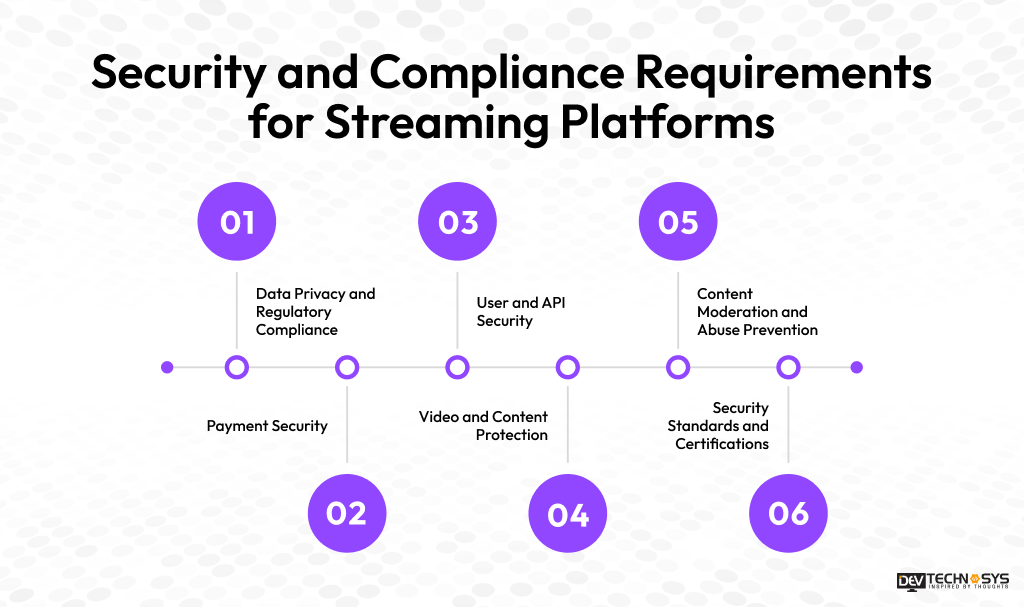
User and API Security
Strong authentication, access control and privilege systems, data encryption in transmission, secured APIs and sessions work together to provide protection against unauthorized access. OAuth 2.0 authentication helps with secure access to accounts while API security practices guard the backend services against common application attacks.
Video and Content Protection
The live content is valuable to creators and businesses, so unauthorized access and redistribution is a significant concern. Protection elements like encryption, content access controls, DRM video protection, and secure streaming can assist in protecting both premium broadcasts and copyrighted material.
Content Moderation and Abuse Prevention
User-generated live content requires continuous moderation – automated detection of abusive messages, spam, suspicious activity, or harmful broadcasts is only part of a strategy that includes human moderators to review more complex cases. The suite of reporting tools, creator controls, and user blocking according to clear content policies all support the wider content moderation and abuse prevention strategy.
Data Privacy and Regulatory Compliance
Our approach follows GDPR data protection laws as they relate to personal data subject to the regulation. While CCPA data privacy requirements may apply to businesses dealing with information from California residents. All aspects of data should be planned accordingly.
Payment Security
The features relating to subscriptions, tipping, and virtual gifts introduce additional payment risks. To prevent this, use trusted payment processors and flows, tokenization, and appropriate PCI DSS payment security to help limit exposure to such sensitive payment information.
Security Standards and Certifications
Independent standards offer further governance for security and operations maturity. ISO/IEC 27001 provides a structured approach to information security management, while SOC 1 compliance is focused on financial reporting controls. SOC 2 compliance evaluates controls related to areas such as security, availability, and confidentiality.
How Much Does It Cost to Build an Entertainment App Like Twitch?
The Twitch app development cost typically ranges from $30,000 to $120,000+, depending on streaming complexity, platform coverage, feature depth, viewer capacity, security requirements, and third-party integrations. A focused MVP can cost significantly less than a full-scale platform built for high concurrent traffic.
Development level |
Estimated cost |
Best suited for |
| Basic streaming MVP | $30,000–$50,000 | Startups validating a focused streaming concept |
| Mid-level entertainment platform | $50,000–$80,000 | Businesses requiring creator tools, engagement, discovery, and monetization |
| Advanced Twitch-like platform | $80,000–$120,000+ | Platforms requiring advanced streaming, AI, moderation, monetization, and scalability |
The cost to build an app like Twitch can exceed $120,000 when the platform needs high concurrent viewer capacity, sophisticated video infrastructure, multi-platform support, advanced AI, extensive moderation, or deployment across multiple regions. Ongoing cloud, CDN, transcoding, storage, and maintenance expenses should also be considered separately from the initial entertainment app development cost.
Expert Note
This cost to build an entertainment like Twitch is derived from our past experience of building entertainment apps. We have build 7+ video streaming apps giving us a clear knowledge of development and cost.
Mohit Nag – CTO, Dev Technosys
Factors That Affect Entertainment App Development Cost
The final Twitch-like entertainment app development cost depends on how much infrastructure, functionality, and engineering effort your platform requires. Two apps can offer live streaming but have very different budgets because of viewer capacity, streaming architecture, integrations, security requirements, and the platforms they support.
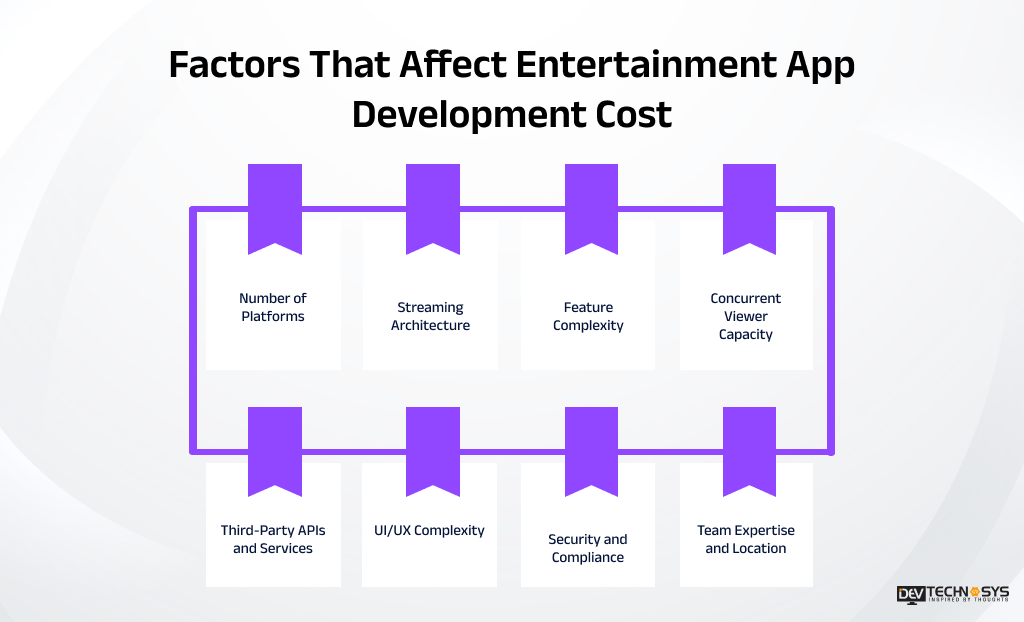
Number of Platforms
Building for iOS, Android, web, or multiple platforms increases development, testing, and ongoing maintenance requirements. Supporting several platforms can also increase the mobile app maintenance cost after launch.
Streaming Architecture
WebRTC, video streaming APIs, video transcoding, CDN infrastructure, adaptive bitrate streaming, and low-latency requirements can significantly influence development and infrastructure costs.
Feature Complexity
Advanced chat, creator dashboards, subscriptions, recommendations, virtual gifts, analytics, automated moderation, and interactive engagement features require additional development effort.
Concurrent Viewer Capacity
Supporting thousands or millions of simultaneous viewers requires scalable cloud infrastructure, stronger CDN capacity, optimized video delivery, and reliable backend services.
Third-Party APIs and Services
Streaming, payment, authentication, analytics, communication, and other external services can introduce integration expenses as well as recurring usage costs.
UI/UX Complexity
Custom viewer experiences, creator dashboards, discovery systems, personalized feeds, and interactive interfaces require additional design and development work.
Security and Compliance
Encryption, DRM, API protection, privacy controls, payment security, and regulatory requirements add engineering, testing, and compliance costs.
Team Expertise and Location
Specialized streaming developers and experienced engineering teams generally command higher rates, particularly when the platform involves complex video infrastructure and scalability requirements.
These factors should be evaluated together when estimating the budget. A focused MVP can control initial spending, while infrastructure, maintenance, and feature investments can increase as the platform gains viewers and creators. Ongoing app maintenance services for the entertainment industry can also help keep streaming performance, security, and platform reliability consistent after launch.
How to Monetize an Entertainment App Like Twitch?
A creator-driven streaming platform can generate revenue from both viewers and creators without making the experience feel overly commercial. The right model depends on your audience, content type, creator ecosystem, and how much exclusive or interactive content the platform offers. An experienced mobile app development company can help integrate these revenue systems without compromising the core viewing experience.
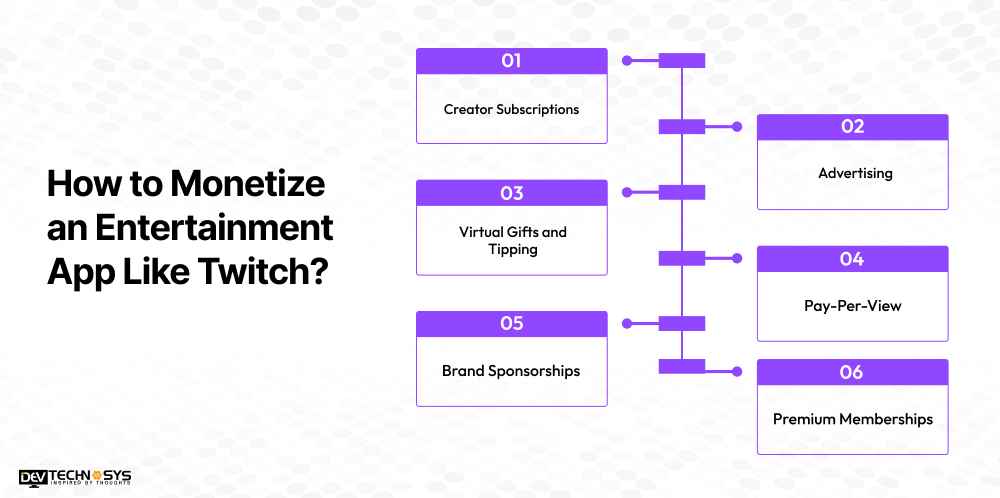
Creator Subscriptions
Offer paid subscriptions that give viewers access to exclusive streams, subscriber-only chats, badges, custom reactions, or other creator benefits. The platform can retain a percentage of subscription revenue.
Advertising
Display ads before or during selected streams, or use sponsored placements across discovery screens. Ad formats should be managed carefully so they do not disrupt high-engagement live experiences.
Virtual Gifts and Tipping
Allow viewers to send virtual gifts or tips during live broadcasts. This model works particularly well when creators have strong communities and audiences want to support them directly.
Pay-Per-View
Charge users for access to premium broadcasts such as concerts, esports tournaments, workshops, celebrity events, or exclusive live experiences.
Premium Memberships
Create a platform-level membership with benefits such as an ad-free experience, exclusive content, advanced discovery, loyalty rewards, or additional community features.
Brand Sponsorships
Partner with brands for sponsored streams, creator campaigns, branded events, and product integrations. Sponsorships can become particularly valuable once the platform develops strong niche communities.
How to Scale a Live Video Streaming Platform?
Scaling a live streaming platform requires more than adding servers. As viewer numbers grow, the infrastructure must handle traffic spikes, video delivery, real-time interactions, and regional demand while maintaining reliable playback and low latency.
- Scalable cloud infrastructure: Expand computing, storage, and networking resources according to traffic and usage patterns.
- CDN and adaptive bitrate streaming: Deliver video closer to viewers while automatically adjusting quality to match network conditions.
- Microservices architecture: Separate streaming, chat, payments, notifications, recommendations, and other services so they can scale independently.
- Concurrent viewer management: Design the platform to handle sudden traffic increases during popular broadcasts without affecting performance.
- Monitoring and regional expansion: Track latency, buffering, errors, and infrastructure health, then add regional capacity as the audience expands.
Conclusion
The opportunity to build an entertainment app like Twitch extends well beyond replicating live video features. A successful platform needs reliable streaming, meaningful viewer interaction, creator-focused tools, secure monetization, strong content moderation, and infrastructure that can scale with audience growth.
Starting with a focused MVP can help validate your niche, understand viewer behavior, attract creators, and refine the revenue model before expanding into more advanced capabilities. As the platform grows, investments in cloud infrastructure, AI-powered discovery, security, and content protection become increasingly important.
Working with an experienced entertainment app development company can help turn the product concept into a scalable streaming platform built around your audience and business goals.
Frequently Asked Questions
Find answers to the most common questions related to this article.
The cost to create an entertainment app like Twitch typically ranges from $30,000 to $120,000+, depending on platform coverage, streaming infrastructure, features, concurrent viewer capacity, security, integrations, and scalability requirements. A focused MVP generally costs less than an advanced platform with complex monetization, AI, and large-scale streaming capabilities.
A basic MVP may take around 3 to 6 months, while a more advanced Twitch-like platform can take 7 to 12 months or longer. The timeline depends on feature complexity, streaming architecture, platforms, integrations, testing requirements, and the size and expertise of the development team.
A Twitch-like platform can use React Native or Flutter for mobile development, React.js for web interfaces, Node.js for backend services, PostgreSQL or MongoDB for data management, and WebRTC or video streaming APIs for live broadcasting. HLS, CDN integration, WebSockets, cloud infrastructure, and AI models can support delivery and engagement.
Common monetization models include creator subscriptions, advertising, virtual gifts, tipping, premium memberships, pay-per-view content, and brand sponsorships. A platform can combine several models depending on its audience, content category, creator ecosystem, and the type of experiences it offers.
Yes, Starting with an MVP is often a practical approach for validating the concept before investing in a larger platform. The initial version can focus on core streaming, creator profiles, live chat, discovery, notifications, and basic monetization, with advanced capabilities added based on user feedback and platform growth.