






In today’s fast-moving world, people love the ease of getting their favorite meals delivered right to their doors.
Apps like HungryPanda have tapped into this need, especially serving niche markets with unique tastes.
Want to build a food delivery app like Hungry Panda?
Whether you’re a startup, entrepreneur, or just curious, building a successful food delivery app isn’t as hard as it may seem, with the right plan.
Key takeaways:
-
- The global food delivery market is projected to reach over USD 02 trillion by the end of 2030 with a rapid CAGR.
- Successful apps like HungryPanda thrive by targeting niche communities, offering native-language support, seamless ordering, and culturally tailored user experiences.
- The cost to build a food delivery app like HungryPanda typically ranges from $8,000 to $25,000, contingent upon features, platform selection, and backend intricacy.
- Core features include restaurant listings, multi-language menus, order tracking, real-time delivery updates, in-app payments, and user reviews.
In this blog, we’ll walk you through the key steps to develop a food delivery app, from understanding your audience to choosing the right features and technology.
You’ll learn how to make an app that works well, is easy for people to use, and is ready to compete in the food delivery market, which is growing quickly.
Let’s start making your app idea a real business that satisfies cravings and delivers success!
Current and Future Projections of Global Food Delivery Applications
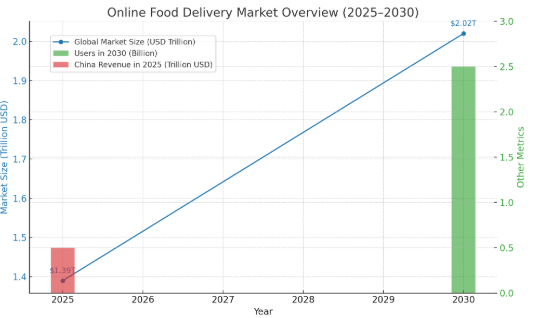
- According to Statista, the market for online food delivery is expected to reach US$1.39 trillion by 2025.
- From 2025 to 2030, the market is projected to increase at a CAGR of 64%, reaching a value of $2.02 trillion by 2030.
- A total of 5 billion people are likely to use meal delivery services by 2030.
- In 2025,2% of those who use meal delivery services will be users.
- China, on the other hand, will bring in $499.14 billion in 2025, which is more than the rest of the globe combined.
What is HungryPanda?
A food delivery service called HungryPanda was created especially for Asian and Chinese expatriates. It was founded in 2017 and provides a platform that is easy to use, works with native languages, and connects people to actual Asian restaurants and grocery stores. Food delivery apps prioritize cultural familiarity by offering audience-specific menus, payment methods, and customer support. Serving a highly focused and underserved market, HungryPanda sets itself apart from other delivery apps and operates in several countries.
HungryPanda’s Success Story
- Founded in 2017 by Eric Liu in Nottingham, HungryPanda launched to address the authentic Asian food access needs of overseas Chinese communities.
- Initially expanded rapidly, launching in up to 47 cities across six countries by 2020, backed by $20M funding from 83North and Felix.
- Raised $70M in late 2020 from Kinnevik, 83North, Felix, VNV Global, and others to fuel global expansion and scale team.
- In 2021, closed $130M Series D round to enter new markets, pursue M&A, and build Asian grocery delivery vertical.
- By September 2024, secured $55 million in refinancing led by Mars Growth Capital to boost service enhancements and North American growth.
- As of late 2024, operating in over 80 cities across ten countries, serving more than 5 million users and 100,000 merchants.
- Achieved profitability in 2024 while maintaining over 30% annual growth, a major milestone in the competitive food delivery industry.
Various Types of Food Delivery Applications
From restaurant-to-customer models to platform-based aggregators and meal kit services, the cheapest food delivery apps now serve a wide range of customer needs, transforming how people order, prepare, and enjoy meals in the digital age.
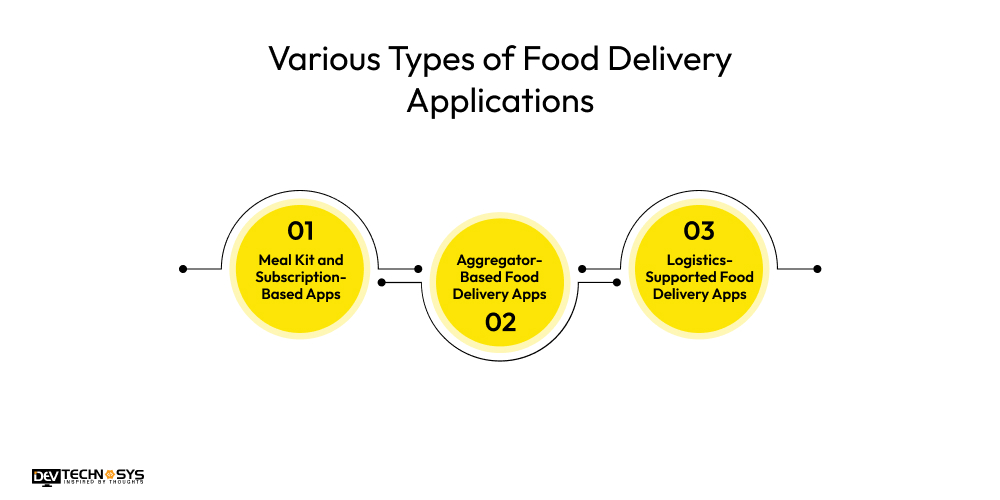
1. Meal Kit and Subscription-Based Apps
These food ordering apps provide pre-portioned ingredients and recipes for users to prepare at home. HelloFresh and Blue Apron use this model. They are ideal for health-conscious or busy people who want to enjoy home cooking without giving up on convenience. Most work on a subscription basis, with customizable food plans and timetables.
2. Aggregator-Based Food Delivery Apps
These applications serve as mediators between customers and eateries. Users may explore numerous restaurant menus, place orders, and pay using the app. The eatery handles deliveries. Examples include Zomato and Just Eat. Aggregator models offer variety and convenience, but they rely significantly on restaurant partners for prompt order fulfillment.
3. Logistics-Supported Food Delivery Apps
In this arrangement, the platform not only accepts orders but also handles delivery logistics via its own network of vehicles. Apps like DoorDash and Uber Eats work in this manner. They provide restaurants more control over the customer experience and delivery time, charging a fee for the extra service.
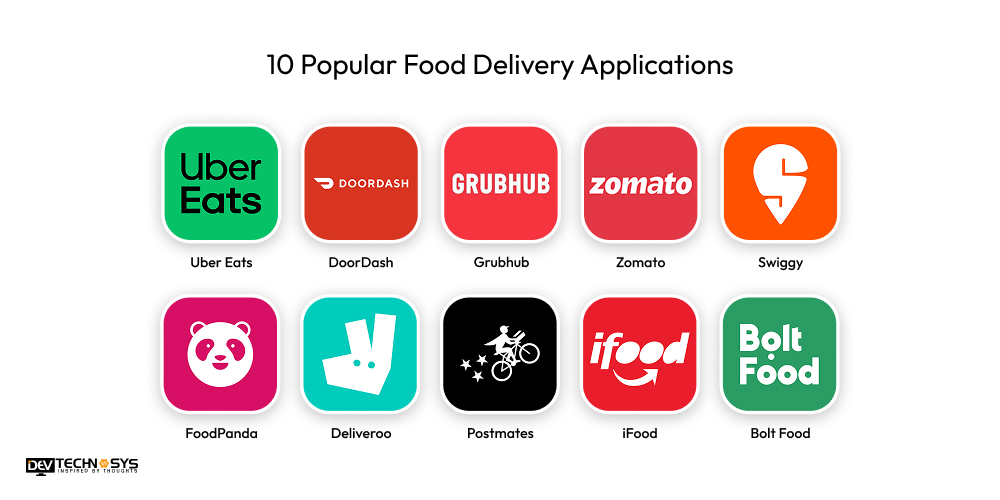
10 Popular Food Delivery Applications
Apps like Swiggy, DoorDash, and Deliveroo make it easy to order food anytime, offering fast delivery, many choices, and simple payment options. So, here is the list of top food delivery apps:
| App | Estimated Downloads | Rating (Approx.) | Launched Year | Platform Availability |
| Uber Eats | 200M+ | 4.5 | 2014 | Android, iOS |
| DoorDash | 100M+ | 4.6 | 2013 | Android, iOS |
| Grubhub | 50M+ | 4.4 | 2004 | Android, iOS |
| Zomato | 70M+ | 4.3 | 2008 | Android, iOS |
| Swiggy | 100M+ | 4.5 | 2014 | Android, iOS |
| FoodPanda | 20M+ | 4.2 | 2012 | Android, iOS |
| Deliveroo | 30M+ | 4.4 | 2013 | Android, iOS |
| Postmates | 20M+ | 4.3 | 2011 | Android, iOS |
| iFood | 15M+ | 4.1 | 2011 | Android, iOS |
| Bolt Food | 10M+ | 4.0 | 2018 | Android, iOS |
What is the Reason for Businesses to Invest in Food Delivery App Development?
Rising customer demand for convenience, expanding online food markets, and the potential for increased revenue drive businesses to develop food delivery apps, enabling seamless ordering, faster service, and stronger customer engagement in today’s digital economy.
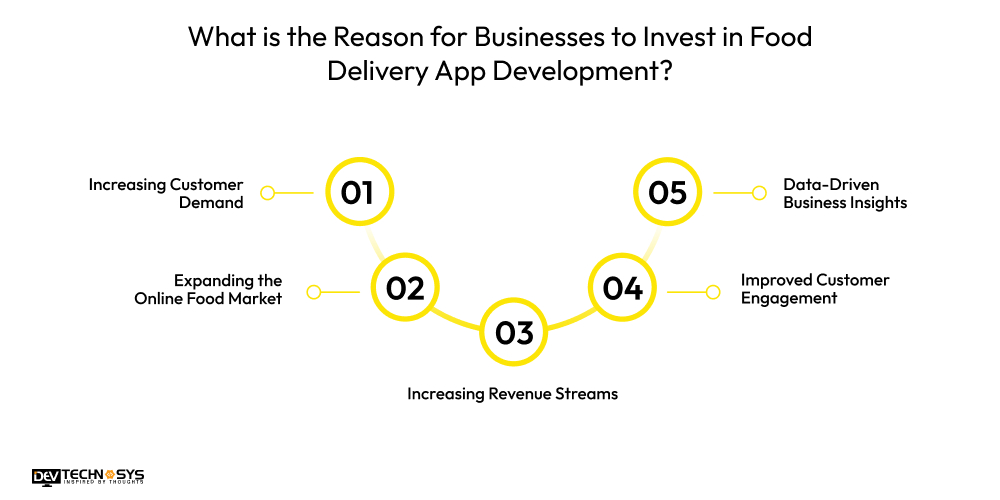
1. Increasing Customer Demand
Customers increasingly choose to purchase food online for quick and convenient access. A specialized app addresses this need by providing 24-hour ordering, real-time tracking, and contactless delivery, improving the user experience and increasing customer loyalty in a competitive market.
2. Expanding the Online Food Market
The global food delivery industry is quickly expanding, with more individuals ordering meals via cellphones. Investing in an app like Glovo enables businesses to tap into this growing market, expand their reach, and remain relevant in a digital-first economy.
3. Increasing Revenue Streams
Food delivery applications generate fresh money through delivery fees, surge pricing, promotions, and restaurant partnerships. Apps also drive repeat orders and higher basket sizes, allowing companies to boost their overall revenue beyond traditional dine-in or takeout services.
4. Improved Customer Engagement
Food delivery apps like Just Eat allow businesses to engage customers directly through targeted offers, push alerts, and loyalty programs. This direct connection strengthens relationships, increases retention rates, and promotes good evaluations, all of which may have a substantial influence on company reputation.
5. Data-Driven Business Insights
Food delivery applications capture useful user information including order history, preferences, and peak periods. This data enables firms to adjust menus, marketing campaigns, and delivery logistics, resulting in more effective operations and better decision-making.
How Does Artificial Intelligence Function in Apps That Deliver Food?
- AI optimizes delivery routes to reduce time and fuel costs, ensuring faster food delivery to customers.
- By providing instantaneous solutions to consumer inquiries, chatbots powered by AI enhance the user experience and are available around the clock.
- AI takes consumer tastes into account when making dietary and restaurant recommendations.
- AI forecasts demand patterns to help restaurants manage inventory and avoid food waste effectively.
- By keeping an eye out for questionable transactions and bolstering the security of user data, AI improves fraud detection.
- AI automates order processing, reducing human error and speeding up the entire food delivery workflow.

7 Robust Steps to Build A Food Delivery App Like HungryPanda
Discover the essential steps to build a food delivery app like HungryPanda. From market research and app design to backend development, integration of GPS tracking, and secure payment systems, ensuring a seamless, user-friendly experience tailored for niche audiences. Let’s explore the food delivery app development process:
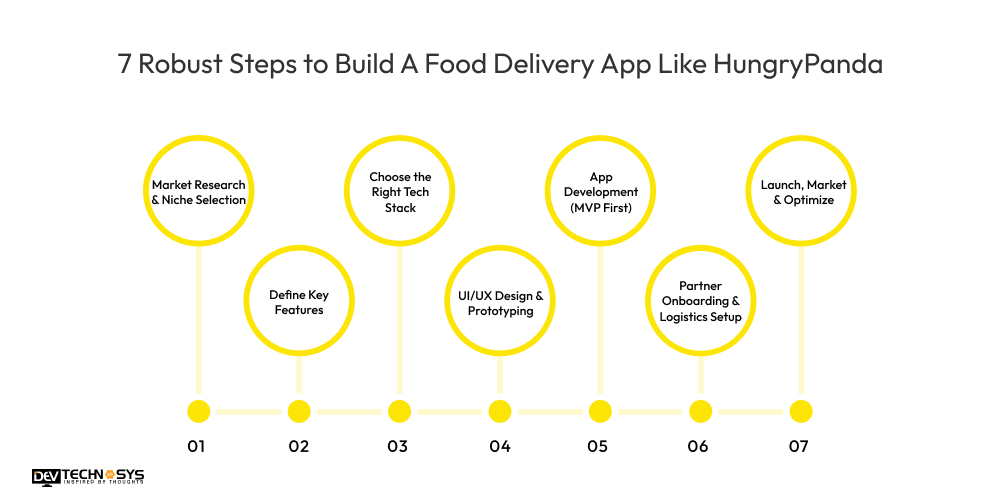
1. Market Research & Niche Selection
Begin by analyzing competitors, user behavior, and cultural preferences. Identify your target audience, like HungryPanda’s focus on Chinese communities abroad. Hire dedicated developers to select a niche that differentiates your app, ensuring you meet an unmet demand.
Strong research builds the foundation for features, pricing, partnerships, and long-term growth in a competitive food delivery market.
2. Define Key Features
Let’s move to the second stage to build an app like HungryPanda, outline core app features: user profiles, multilingual menus, real-time tracking, secure payments, reviews, and in-app support. Prioritize a user-friendly interface and integration with local payment systems (like Alipay or WeChat Pay).
Decide on features for three user roles, customers, delivery personnel, and restaurants, to ensure seamless interaction throughout the food ordering and delivery process.
3. Choose the Right Tech Stack
Choosing the right frontend, backend, and database technologies is the third step in making an app similar to HungryPanda. Hire mobile app developers to use scalable tools like React Native, Node.js, MongoDB, and Firebase for real-time updates. Ensure platform compatibility (iOS/Android), fast performance, and cybersecurity.
The tech stack must support geo-location, push notifications, payment APIs, and third-party integrations. Future-proof choices ease app scaling and feature expansion later.
4. UI/UX Design & Prototyping
Design an intuitive interface prioritizing ease of navigation, visual appeal, and cultural familiarity. Develop wireframes and clickable prototypes for testing user flow and design elements. Focus on mobile-first design, especially since most food delivery orders happen via smartphones.
Gather feedback early to refine usability and ensure smooth onboarding and ordering experiences.
5. App Development (MVP First)
Start with a Minimum Viable Product (MVP) that has the most important functions, like the ability to browse, buy, pay, and keep track of things. Hire a mobile app development company with a lot of experience to use agile development and make changes quickly based on what users say.
Maintain separate modules for customers, restaurants, and couriers. Testing continuously throughout development minimizes bugs and ensures a more reliable final product that’s ready for scaling later.
6. Partner Onboarding & Logistics Setup
In the sixth stage, to develop an app like HungryPanda, recruit local restaurants and delivery drivers. Create dashboards for order management, scheduling, and real-time updates. Offer onboarding support, clear fee structures, and promotional tools to attract partners.
Establish logistics protocols for delivery timeframes, packaging, and customer service. Efficient operations and reliable partnerships improve order fulfillment and customer satisfaction across the platform.
7. Launch, Market & Optimize
In the last stage of the mobile app development process, soft-launch the app in a target region, monitor KPIs, and collect user feedback. Launch marketing campaigns via social media, influencers, and referral programs.
Leverage local communities and cultural hooks, like HungryPanda does. Continuously refine features, fix bugs, and optimize performance based on real-world use. Scaling should follow proven engagement and retention metrics.
What Benefits Can Users Get From Food Delivery Apps?
HungryPanda clone apps offer users convenience, time savings, wide restaurant choices, real-time tracking, multiple payment options, and personalized deals, making it easier and faster to enjoy meals anytime, anywhere.
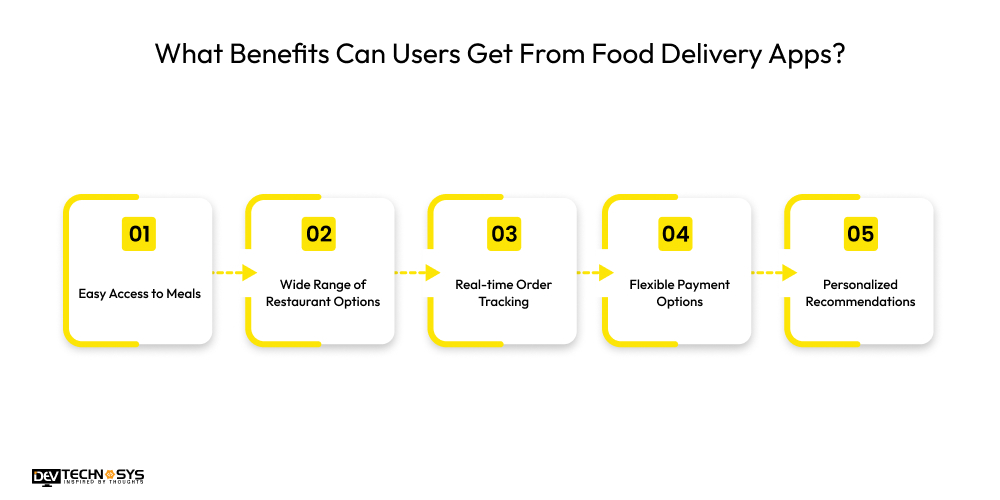
1. Easy Access to Meals
Users may use their cellphones to order food at any time and from any place. This eliminates the need to cook or dine out, making it ideal for busy lifestyles, late-night appetites, or unexpected guests, since meals are simply delivered to their doorsteps.
2. Wide Range of Restaurant Options
Food delivery apps like SkipTheDishes provide access to a wide range of cuisines, including local eateries and major brands. Users may experience diversity without leaving the house by discovering new foods, bargains, and restaurants, all sorted by price, rating, distance, or dietary preference.
3. Real-time Order Tracking
HungryPanda alternatives let users see their orders being made and delivered in real time. This openness fosters confidence and eliminates uncertainty by giving anticipated arrival times, driver position updates, and notifications to improve the entire client experience.
4. Flexible Payment Options
A variety of payment methods, including digital wallets, cash on delivery, and credit cards, are accepted by applications. HungryPanda food delivery app enables consumers to select safe and simple payment methods while simultaneously taking advantage of promotional coupons, loyalty incentives, and referral savings.
5. Personalized Recommendations
HungryPanda clone apps recommend dishes and provide personalized discounts based on previous orders and user preferences. This customization increases happiness, encourages regular usage, and allows consumers to easily discover what they want without having to scroll endlessly through menus.
10 Basic and Advanced Features of Food Delivery Apps Like HungryPanda
These features ensure a seamless, user-focused experience, helping food delivery apps like HungryPanda compete effectively in a crowded marketplace.
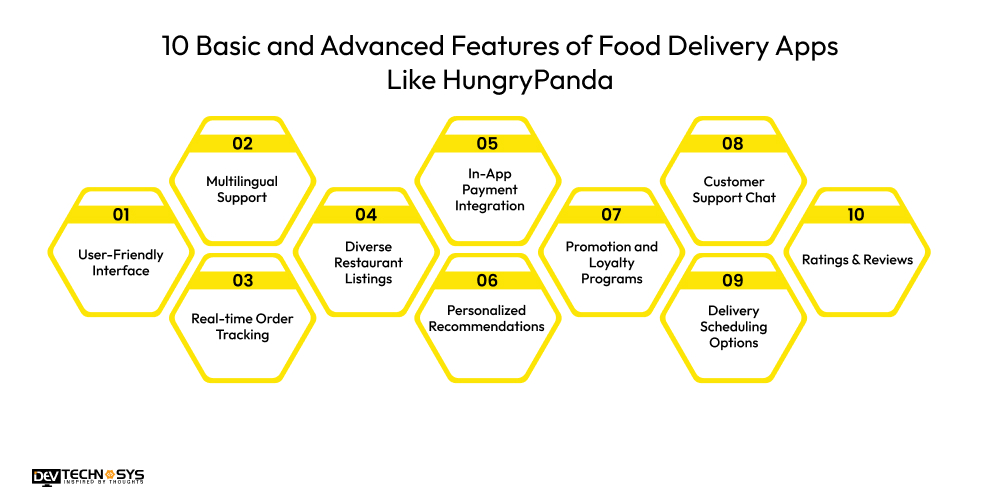
1. User-Friendly Interface
Menus, customization options, and payment processing should all be easily accessible through the app’s clean and uncluttered user interface.
2. Multilingual Support
HungryPanda alternatives support various languages (e.g., Chinese and English) and improve accessibility, particularly for apps aimed at foreign or expat populations, such as Hungry Panda.
3. Real-time Order Tracking
An app like Menulog enables users to track the status of their orders, from restaurant confirmation to driver location and expected delivery time.
4. Diverse Restaurant Listings
HungryPanda clone app offers a diverse assortment of restaurants and cuisines cater to a variety of preferences, enhancing user engagement and retention.
5. In-App Payment Integration
HungryPanda alternatives provide secure payment gateways that accept credit cards, PayPal, Apple Pay, WeChat Pay, and Alipay, enabling quick and easy checkouts.
6. Personalized Recommendations
AI-powered suggestions based on user behavior, previous orders, and preferences can boost revenue and enhance customer happiness.
7. Promotion and Loyalty Programs
A similar app like HungryPanda provides special offers, referral bonuses, and reward points to drive repeat purchases and attract new consumers.
8. Customer Support Chat
An app like Deliveroo provides customer service available 24 hours a day, seven days a week via live chat or help centers.
9. Delivery Scheduling Options
A similar app like HungryPanda, allows users to select between instant and planned delivery, allowing them to plan meals ahead of time.
10. Ratings & Reviews
Customers may assess meal quality and delivery service, allowing others to make more informed judgments while encouraging establishments to maintain standards.
The Cost to Build a Food Delivery App Like HungryPanda
The cost to develop a food delivery app like HungryPanda typically anything from $8,000 to $25,000, with the exact amount depending on factors including development site, intricacy, and number of features.
A basic version with essential features like user registration, restaurant listings, order management, and payment integration may cost around $10,000–$15,000. A more sophisticated program that offers real-time tracking, support for many languages, AI-powered suggestions, and dashboards for admins may cost more than $25,000.
Additional expenses may include ongoing maintenance, third-party APIs, cloud hosting, and marketing. Hiring experienced developers or agencies will also influence the final restaurant mobile app development cost.
| Feature/Component | Estimated Cost (USD) |
| UI/UX Design | $3,000 – $8,000 |
| Customer App (iOS & Android) | $15,000 – $40,000 |
| Restaurant Panel | $8,000 – $15,000 |
| Delivery Driver App | $10,000 – $20,000 |
| Admin Dashboard | $5,000 – $10,000 |
| Backend Development | $10,000 – $30,000 |
| Third-Party Integrations | $3,000 – $7,000 |
| Testing & QA | $3,000 – $6,000 |
| Ongoing Maintenance | $1,000 – $5,000/month |
Total Estimated Cost: $8,000 – $25,000+
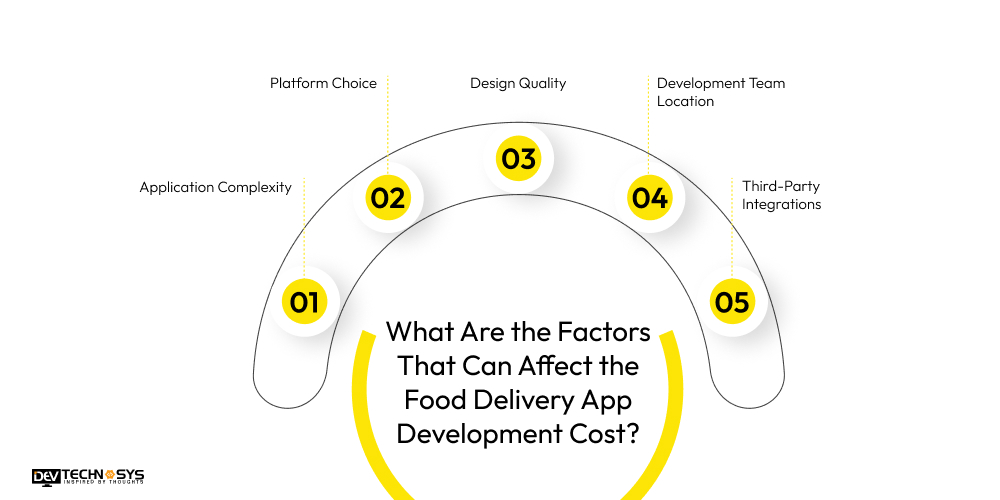
What Are the Factors That Can Affect the Food Delivery App Development Cost?
The complexity of the app, the features it offers, and the platform it is built on are some of the elements that affect how much it costs to design a meal delivery app. The final expenditures are heavily influenced by factors such as the location of the development team, the quality of the design, the integrations with third parties, and the continuous maintenance.
1. Application Complexity
The more advanced the app’s features, such as real-time tracking and AI suggestions, the greater the development cost. Complex features need specialized code, testing, and integration, increasing both time and cost dramatically.
| Feature Complexity | Estimated Cost (USD) | Notes |
| Basic Features | $8,000 – $12,000 | User registration, menu, order placement |
| Medium Complexity | $13,000 – $18,000 | Real-time tracking, ratings, reviews |
| Advanced Features | $20,000 – $25,000+ | AI recommendations, multi-language support |
2. Platform Choice
Apps for iOS, Android, or both can be expensive to develop. Building for various platforms necessitates separate coding and testing efforts, doubling the complexity and raising the total food delivery mobile app development cost. While cross-platform frameworks are cost-effective, they could not offer the features and performance you need.
| Platform | Estimated Cost (USD) | Notes |
| iOS Only | $12,000 – $22,000 | Development for Apple devices only |
| Android Only | $10,000 – $18,000 | Development for Android devices only |
| Both iOS & Android | $15,000 – $25,000 | Separate native apps or cross-platform |
3. Design Quality
High-quality UI/UX design provides a better user experience, but it requires more effort and resources. Custom animations, sophisticated interfaces, and smooth interactions necessitate professional designers, resulting in greater development costs and lengthier schedules than simple, template-based designs.
| Design Type | Estimated Cost (USD) | Notes |
| Basic Design | $3,000 – $5,000 | Simple UI, limited animations |
| Standard Design | $5,000 – $8,000 | Custom UI/UX, moderate animations |
| Premium Design | $10,000 – $15,000+ | Highly detailed, interactive, and animated |
4. Development Team Location
Hiring developers from multiple areas or an experienced Android app development company increases expenses owing to differences in hourly rates. Developers in Western Europe and the Americas typically ask for more money than their Eastern and Asian counterparts. Choosing the ideal team balances cost, quality, and communication efficiency, which influences ultimate project costs.
| Region | Hourly Rate (USD) | Notes |
| North America | $20 – $50/hour | High-quality, higher cost |
| Europe | $18 – $45/hour | Good quality, moderate cost |
| Asia / Eastern Europe | $15 – $25/hour | Lower cost, variable quality |
5. Third-Party Integrations
Integrating services like as payment gateways, GPS monitoring, and push alerts increases development expenses. Each integration necessitates specific development, testing, and, occasionally, licensing expenses. The quantity and complexity of these connectors have a direct influence on the budget and timeframe for the app project.
| Integration Type | Estimated Cost (USD) | Notes |
| Payment Gateways | $2,000 – $5,000 | Stripe, PayPal, local payment methods |
| GPS & Mapping | $1,500 – $4,000 | Real-time delivery tracking |
| Push Notifications | $1,000 – $3,000 | Firebase, OneSignal |
| SMS & Email Services | $1,000 – $3,000 | Twilio, SendGrid |
Modern Tech Stacks Are Used to Build A Food Delivery App Like HungryPanda
| App Component | Technology/Framework | Purpose/Role |
| Frontend (Mobile Apps) | Flutter, React Native, Swift, Kotlin | Cross-platform or native mobile app development |
| Backend | Node.js, Django, Flask, Ruby on Rails | Server-side logic, APIs, and business rules |
| Database | PostgreSQL, MongoDB, MySQL | Data storage for users, orders, restaurants |
| Cloud Hosting | AWS, Google Cloud, Microsoft Azure | Scalable and reliable cloud infrastructure |
| Real-time Data | Firebase, Socket.IO, Pusher | Live order tracking and notifications |
| Payment Integration | Stripe, PayPal, Razorpay | Secure payment processing |
| Maps & GPS | Google Maps API, Mapbox | Location tracking and route optimization |
| Push Notifications | Firebase Cloud Messaging (FCM), OneSignal | User engagement via notifications |
| Analytics & Monitoring | Google Analytics, Mixpanel, Sentry | App performance tracking and user behavior insights |
| Containerization | Docker, Kubernetes | Simplified deployment and scalability |

How to Generate New Revenue Streams From Food Delivery Apps Like HungryPanda?
Best food delivery apps like HungryPanda have transformed how people access food, but to maximize profitability, exploring new revenue streams beyond basic delivery fees is essential. Here are five effective strategies to diversify income:
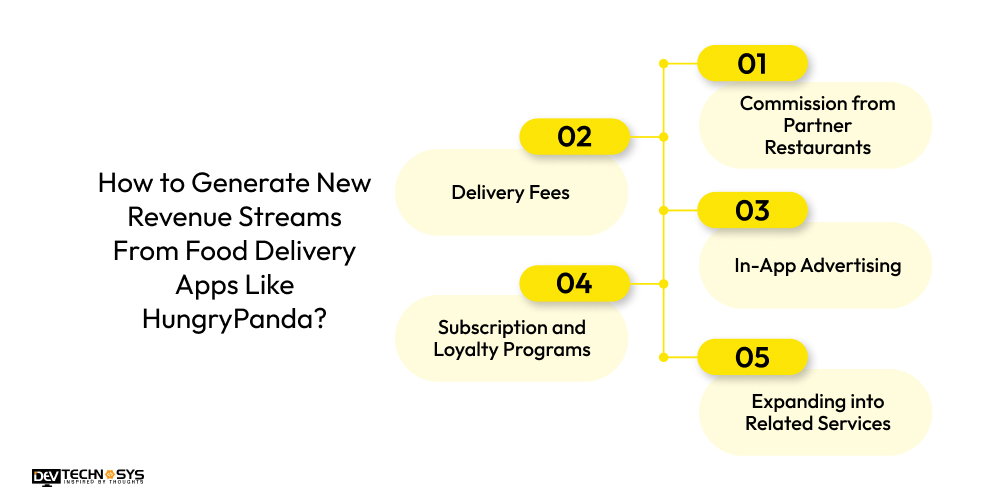
1. Commission from Partner Restaurants
The app’s principal revenue source is the commission fee charged on each order placed through it. By enrolling a diverse set of eateries, applications may negotiate compensation depending on order volume or exclusivity agreements. Premium partnerships or prominent listings may attract greater prices.
2. Delivery Fees
In addition to commissions, clients might be charged a delivery fee or service charge to assist pay operational costs. Apps can provide tiered pricing depending on distance, delivery time frames (express vs. normal), or subscription models that waive delivery expenses for returning customers.
3. In-App Advertising
Offering advertising space to restaurants or companies on the app generates additional cash. Sponsored listings, banner adverts, and push alerts for promotions enable businesses to target consumers while increasing app income efficiently.
4. Subscription and Loyalty Programs
Introducing subscription models, such as monthly or yearly plans, with incentives like free delivery, special discounts, or early access to promotions, encourages repeat business and generates consistent income. According to the iPhone app development company, loyalty schemes that reward users with points can increase order frequency and client retention.
5. Expanding into Related Services
An app for food delivery can expand by offering grocery deliveries, meal kits, and alcohol delivery where permitted. Catering services for events or corporate clients might open up new market areas. Partnering with local companies to offer cross-promotions or packaged services boosts income possibilities.
How Dev Technosys Will Help You to Build A Food Delivery App Like HungryPanda?
Dev Technosys, a prominent food delivery app development company, provides exhaustive solutions for the development of a robust app similar to HungryPanda. With a customer-centric approach, cutting-edge technologies, and expert developers, they guarantee secure payment integration, intuitive design, and seamless app performance.
Dev Technosys delivers scalable and feature-rich food delivery apps by providing support for every stage of development, from the initial concept to deployment and maintenance. In the food delivery market, partnering with them ensures cost-effectiveness, timely delivery, and a competitive advantage.
Frequently Asked Questions
Find answers to the most common questions related to this article.
The cost to develop a food delivery app like HungryPanda is anywhere from $8,000 to $25,000, with the exact figure depending on factors like the number of features, the complexity of the design, the number of third-party connectors, the location and skill of the development team, and the platform used.
It takes about 3 to 6 months to create a food delivery app like HungryPanda. The length of time depends on the features and complexity of the app, the platform chosen, the design needs, and the experience and process of the development team.
Real-time Order Tracking: Ensuring accurate, low-latency tracking of deliveries.
Scalability: Handling high user volumes and peak order times smoothly.
Payment Security: Securing sensitive financial data and preventing fraud.
User Experience: Designing intuitive and fast interfaces for all users.
Restaurant & Delivery Partner Onboarding: Streamlining registration and integration.
Yes, you can monetize your food delivery app beyond delivery fees through commissions, in-app advertising, subscription plans, premium features, sponsored listings, and partnerships with restaurants or local businesses for promotions.
These are the tools that are used to make a food delivery app like HungryPanda that brings food to you:
Java
Python
C++
C#
PHP
Kotlin