










Key takeaways:
-
- The cost to develop an app like PicPay will be around $8,000 to $25,000, depending on the features, design complexity, platform choice, the expertise, and location of the development team.
- Digital payments in Brazil have become synonymous with the success of the real-time A2A payment scheme Pix.
- On average, each Brazilian spends US$89 per e-commerce purchase.
- Introduce incentives, such as cash back, discounts, or loyalty programs, within a digital wallet app to encourage regular use.
The banking and finance sector is making rapid progress in 2025, with the digital payment market taking up the largest segment. Mobile POS payments are one of the most essential submarkets of the digital banking and finance sector.
Brazil, among all, plays a central role in the digital banking and e-commerce market in Latin America, commanding an astonishing 55% share in the e-commerce sales. Banks in Brazil are shifting from traditional credit cards to digital wallet apps like PicPay to make customers’ lives easier.
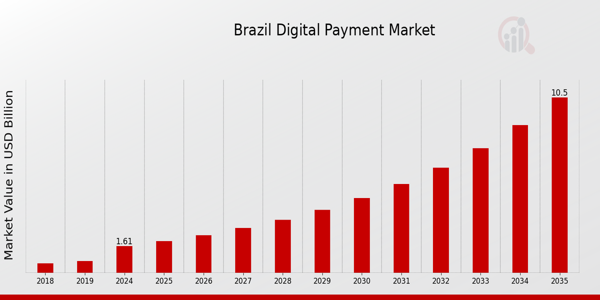
The Brazilian Digital Payment Market is expected to grow from 1.61(USD Billion) in 2024 to 10.5 (USD Billion) by 2035. Businesses looking to capitalize on growing market demand are investing in PicPay clone app development.
Today’s informative guide will cover everything you need to know to develop an app like PicPay. We will also discuss other crucial factors, such as features, benefits, cost, and monetization strategies, to help businesses and entrepreneurs considering digital wallet development.
Digital Wallet App Market Stats
- As per MRFR Analysis, the E-Wallet Market is poised for significant growth, expanding from USD 124.6 billion in 2024 to USD 590.2 billion by 2032, with a CAGR of 22.10% during the forecast period.
- Latin America is expected to register a significant CAGR of 28.6% over the forecast period.
- Combining Pix, credit, debit, and prepaid cards, digital payments in Brazil reached R$6.8 trillion last year, equivalent to 90% of household consumption (as measured by the PCE indicator)
- The Brazilian Digital Payment Market CAGR (growth rate) is expected to be around 18.586% during the forecast period (2025 – 2035).
What is the PicPay Digital Payment App?
PicPay is a leading Brazilian digital payment platform that combines convenience, flexibility, and financial benefits in one app. With Pix on PicPay, users can make instant payments anytime, including the option to split them into up to 36 installments.
As one of the best eWallet apps, it ensures the recipient gets the money immediately, while the payer only settles the invoice on its due date. In addition to transfers, Pix and loans, PicPay also offers:
- High-Yield Account: Earn returns automatically, exceeding traditional savings rates (e.g., 2% above the CDI).
- In-App Investments: Diversify with secure, accessible investment options without leaving the app.
- Installment Payments: Pay bills in up to 36 installments via credit card for greater flexibility.
- Cashback Rewards: Receive instant cashback on eligible purchases directly into your account.
- Accounts for Minors: Offer safe, independent accounts for children to build financial literacy early.
Exploring the Main Types of E-Wallet Apps
Whether you are an established enterprise or an entrepreneur looking to build an online payment app like PayPal, understanding the types of e-wallet apps is crucial. Knowing the types helps you decide which kind of app is suitable for your business.
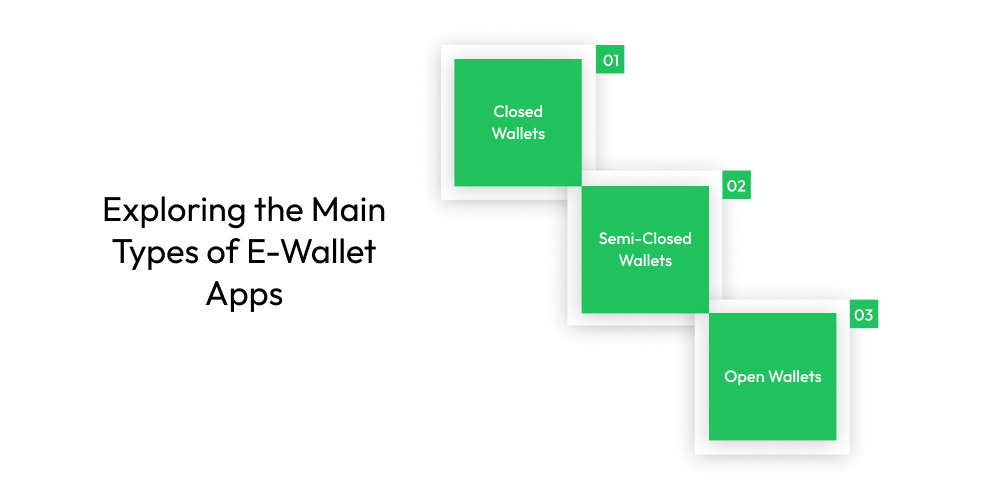
1. Closed Wallets
Issued by a specific company for transactions exclusively within its ecosystem. Users can store funds, receive refunds, and make purchases only from the issuing merchant.
Example: Amazon Pay, Ola Money.
2. Semi-Closed Wallets
Operated by entities that partner with multiple merchants to enable transactions. Users can pay at partner stores, both online and offline, but cannot withdraw cash directly from these locations.
Example: Paytm Wallet, PhonePe Wallet.
3. Open Wallets
Issued by banks or entities in partnership with banks, this allows for maximum versatility. Users can make purchases, transfer money, and withdraw cash from ATMs.
Example: Google Pay, PayPal.
Why Businesses Should Invest in Digital Wallet Apps Like PicPay?
Why should businesses invest in the PicPay app development? Well, there are many advantages of developing PicPay alternatives for businesses, some of which we are going to discuss below:
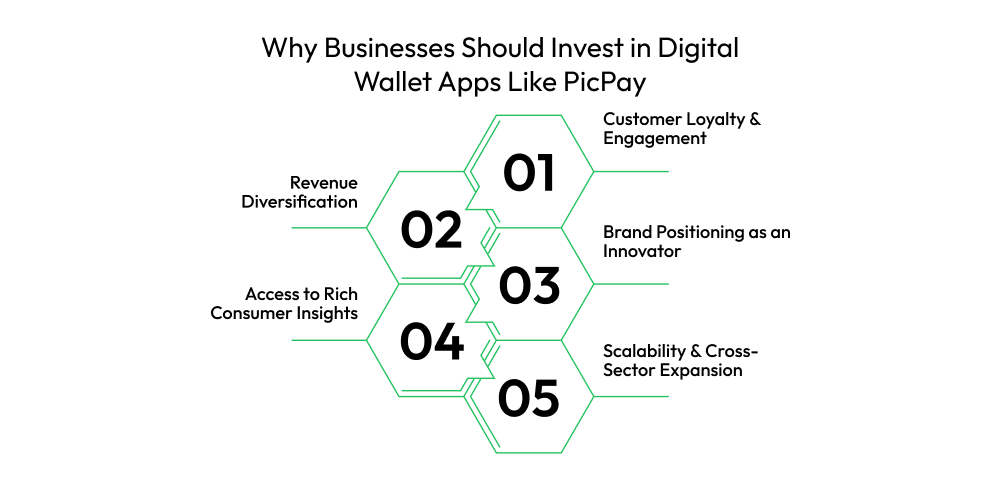
1. Customer Loyalty & Engagement
It is beneficial for businesses to build app like Google Pay. The app includes cashback, discounts, and exclusive deals. It also includes advanced features to enhance user engagement and retention, strengthen relationships, and encourage repeat transactions.
2. Revenue Diversification
Businesses can develop an app like PicPay by incorporating multiple revenue streams, such as transaction fees, premium subscriptions, and more. It also includes value-added services like installment plans or micro-insurance.
3. Brand Positioning as an Innovator
If you are a business that wants to stand out in the market, then offer a secure, intuitive, and feature-rich payment solution. Create an app like PicPay that reinforces your image as a forward-thinking, tech-savvy leader.
4. Access to Rich Consumer Insights
Businesses should build an app like PicPay because it provides access to rich consumer insights. A bill payment app like PicPay utilizes AI analytics to deliver personalized marketing campaigns, recommend tailored products, and make informed decisions.
5. Scalability & Cross-Sector Expansion
Deciding to develop an app like PicPay can help businesses expand their reach into sectors such as e-commerce, transportation, entertainment, and utilities. This cross-sector expansion builds an intertwined ecosystem that increases user dependency on your platform.
Top 10 PicPay Alternatives to Explore in 2026
If you are a business looking for a PicPay similar app development, then check out the list of PicPay competitors. All these PicPay-style payment apps can provide great ideas to build the next big digital wallet app for Brazilian users.
App |
Launch Year |
Ratings (Avg.) |
Platforms |
| PayPal | 1998 | 4.3★ / 4.8★ | Android, iOS, Web |
| Venmo | 2009 | 4.2★ / 4.9★ | Android, iOS |
| Mercado Pago | 2004 | 4.6★ / 4.8★ | Android, iOS |
| RecargaPay | 2010 | 4.7★ / 4.8★ | Android, iOS |
| Nubank | 2013 | 4.7★ / 4.9★ | Android, iOS |
| Ame Digital | 2018 | 4.5★ / 4.7★ | Android, iOS |
| Ití (Itaú) | 2019 | 4.6★ / 4.8★ | Android, iOS |
| Banco Inter | 2015 (relaunch) | 4.6★ / 4.8★ | Android, iOS |
| Neon | 2016 | 4.6★ / 4.7★ | Android, iOS |
| PagBank | 2006 | 4.5★ / 4.8★ | Android, iOS, Web |
Want a chatbot demo or pricing? Fill the form and talk to our experts today.
Pick what you need below — you can select more than one — then tap Get detail to continue.
-
Chatbot demo dashboard
-
Cost to develop an app
-
Industry report
-
Case study
Smart Steps to Develop an App Like PicPay
Here are some easy steps to develop an app like PicPay for Brazilian users. Follow these steps to build a successful and market-leading bill payment app. Take a look:
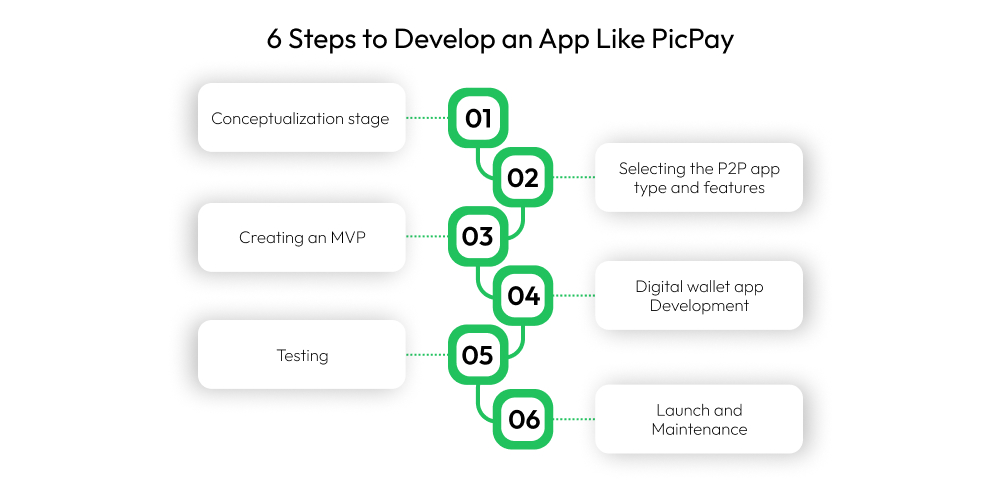
Step 1: Conceptualization stage
Without thorough requirements and market analysis, a startup is likely to go in the wrong direction. Therefore, it is advisable to engage business analysts before developing a P2P payment app in Brazil. Market research and analysis are the first and most important stages of developing an app like PicPay.
At this stage, your business analysts will analyze and match your business requirements with market trends to suggest the most suitable solution. In the initial planning stage, you will also estimate the budget and plan to develop an app like PicPay. After you have finished preparing, you need to hire an app development company that provides on-demand app development solutions.
Step 2: Selecting the P2P app type and features
This stage is all about acquiring information about the target audience’s expectations to select the features and functionalities your app needs. Decide on the type of platform you want your app to run on: choose between a native or cross-platform app.
Native ewallet apps can only work on a single platform, either Android or IOS. Cross-platform apps, on the other hand, work seamlessly on both platforms.
Next, you need to decide which features of an app like PicPay you want to add, and also decide on the robust security measures and plan strategies to safeguard users’ data against attacks and data breaches. According to a top mobile app development firm, it is crucial to incorporate security into the P2P payment app from the outset.
Step 3: Creating an MVP
Now, it is time for UX/UI designers to show their mastery. To create an app like PicPay in Brazil, the development team creates a prototype of the future bill payment app like PicPay. The MVP materializes your concepts into a POC of an app showcasing the navigation flow, design, and layout.
You will also use the prototype to deliver a presentation to investors and launch a marketing campaign. At this stage, consider mapping, identifying pain points, and completing many UI/UX designs.
Step 4: Digital wallet app development
Coding is a crucial step in developing an app like PicPay. Your dedicated team of software engineers, designers, business analysts, and other team members plays a significant role in developing the app. It typically takes the most time compared to different steps in mobile payment app development.
According to companies that provide iPhone app development services, this stage of PicPay app development involves developing back-end infrastructure, APIs, server-side components, the app’s front-end, and all additional features, as well as integration with third-party services.
Step 5: Testing
Testing and Quality analysis are one of the most important steps in developing a P2P payment app in Brazil. QA engineers verify the functionality of apps like PicPay to identify bugs, vulnerabilities, and areas for improvement by executing test cases and scenarios.
Code testing after PicPay app development allows you to refine the solution before launch, making it more secure. Moreover, it significantly reduces the cost of bug fixing, as issues are identified before they are introduced into production.
Step 6: Launch and maintenance
The last but not least stage of building apps like PicPay is when everything is ready for launch. Your development team will provide progressive web app development services, launching on Google Play or the App Store.
It also continues to work on the app behind the scenes to ensure no issues or bugs remain (which often appear after the initial launch) and implement updates. At this stage, you set up support & maintenance and identify your future process with app upgrades.
Advanced Features to Include in a Digital Wallet App
There are various user panels, vendor panels, and admin Panel features that developers need to include in a digital wallet app like PicPay. Besides these essential features, there are also some advanced features that we will discuss in this section.
Panel |
Key Features |
| User Panel | Registration/Login, Product Browsing, Cart/Orders, Payment Gateway, Wishlist, Order Tracking, Reviews, Messaging/Support, Settings/Notifications |
| Vendor Panel | Product/Service Management, Order Processing, Inventory Management, Analytics/Reports, Payments/Invoicing, Profile Customization, Customer Interaction, Discounts/Promotions, Shipping, Settings/Permissions |
| Admin Panel | User Management, Dashboard, Content Management, Permissions, Analytics/Reporting, Transactions/Orders, Customer Support Tools, System Configuration, Security/Compliance, Communication Tools |
-
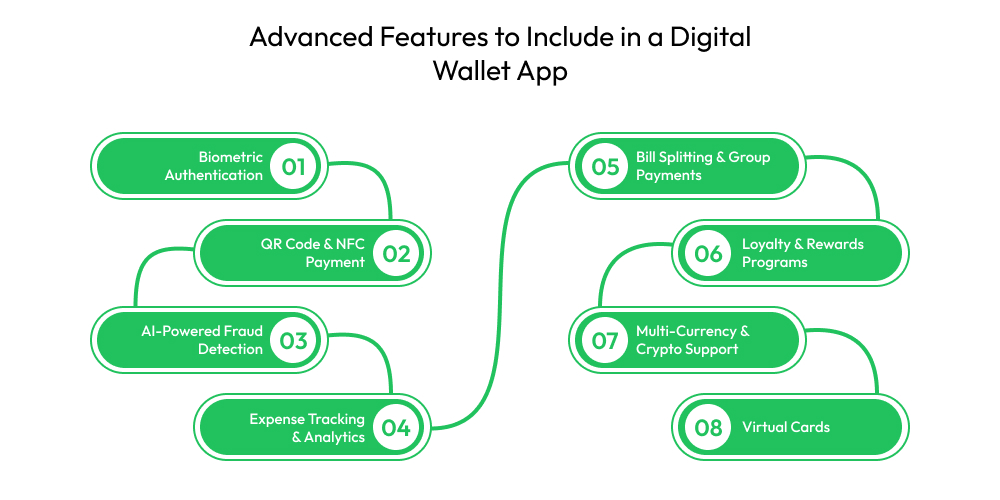
Biometric Authentication
Biometric features include fingerprint, Face ID, or voice recognition, ensuring maximum security while making the login and payment process seamless. It is one of the must-have features for Digital wallet app development.
-
QR Code & NFC Payments
QR codes allow users to make instant, contactless payments. With QR scanning and NFC (tap-to-pay) technology, transactions become faster, safer, and more convenient in physical stores, restaurants, and public transport.
-
AI-Powered Fraud Detection
Artificial intelligence continuously monitors money transaction patterns in real-time to detect suspicious or unusual activity. If you want to develop a digital wallet app like Wero, then adding immediate alerts is crucial to protect users against fraud.
-
Expense Tracking & Analytics
A built-in dashboard that displays monthly expenses, spending categories, and budgeting suggestions helps users manage their finances more effectively. Financial reports and analytics empower them to stay in control of their money.
-
Bill Splitting & Group Payments
The bill splitting feature allows users to divide the costs with friends, family, or colleagues when dining out, traveling, or sharing utilities. The bill-splitting feature in digital wallets eliminates the need for manual calculations, ensuring hassle-free group payments.
-
Loyalty & Rewards Programs
Loan lending app development includes loyalty and rewards programs. Loyalty programs offer cashback, reward points, discount coupons, and referral bonuses, which enhance user engagement.
-
Multi-Currency & Crypto Support
The multi-currency feature makes global transactions easier. Adding multiple payment options and cryptocurrency allows users to make cross-border payments, manage crypto assets, and perform instant currency conversions.
-
Virtual Cards
Digital wallets can issue virtual debit or credit cards for safer online transactions. Create a mobile app like PicPay with features such as one-time CVV or limited usage, allowing users to enjoy extra protection while shopping online.

User Case Study: PicPay App
PicPay is the best digital wallet in Brazil, created by entrepreneurs from the state of Espírito Santo. It is available for download on both Android and iOS mobile operating systems and functions as a digital wallet. By 2017, PicPay had already gained significant traction with millions of users.
According to a report by Reuters, in May 2020, during the COVID-19 pandemic and the rise in digital payments, this P2P payment app in Brazil gained 20 million users.
As of 2025, PicPay has already surpassed 70 million downloads and continues to expand its customer base throughout Brazil. It boasts a user base exceeding 70 million and remains the dominant player in the Brazilian fintech ecosystem. The company has diversified into banking, investments, and digital commerce, transforming from a wallet app into a super app.
User Benefits of Choosing An App Like PicPay
The eWallet app development solutions can benefit users just as much as they help businesses. This section discusses the benefits for users in choosing apps like PicPay.
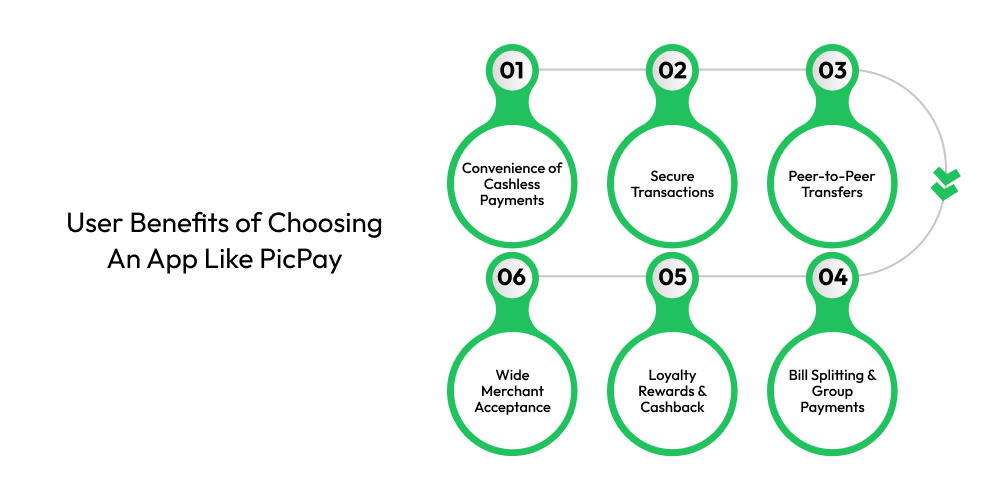
1. Convenience of Cashless Payments
Cashless payment methods in a PicPay-style payment app allow users to pay bills, recharge phones, send money, or make purchases instantly without needing to carry cash or visit banks.
2. Secure Transactions
A digital wallet app like PicPay includes features such as tokenization, biometric authentication, and fraud activity detection, helping users avoid cyber fraud. Secure transactions allow them to enjoy safe and encrypted transactions.
3. Peer-to-Peer Transfers
According to top providers of eWallet app development services, peer-to-peer money transfer functionality ensures seamless money transfers to friends and family directly through the app within seconds.
4. Wide Merchant Acceptance
According to a PicPay app development company, this app partners with millions of merchants, retailers, and service providers, allowing users to pay at shops, restaurants, and online platforms.
5. Loyalty Rewards & Cashback
Create an app like PicPay that offers loyalty rewards and cashback incentives. This allows users to earn cash back, discounts, and reward points on their payments, making everyday transactions more valuable.
6. Bill Splitting & Group Payments
PicPay similar app development with a bill splitting feature, allows users to easily split bills among friends for restaurants, trips, or shared expenses, reducing hassles in group payments.
Cost to Develop An App Like PicPay
Cost is an important factor to consider when hiring a development team for PicPay clone app development. The cost to build an eWallet app can range between $8,000 and $25,000, depending on the features and complexities you add. The cost to develop an app like PicPay with basic features and a user interface can range from $5,000 to $15,000.
However, if you want a cross-platform digital wallet app with medium complexity, project costs can be between $15,000 and $20,000. Finally, the PicPay app development cost for a complex project would range between $18,000 and $25,000 or more.
App Type |
Timeline |
Estimated Cost (USD) |
| Basic e-wallet app | 2–3 months | $8,000 – $12,000 |
| Mid-Level e-wallet app | 3–5 months | $13,000 – $18,000 |
| Advanced e-wallet app | 5–7 months | $19,000 – $25,000 |
Factors Affecting the Cost to Build an App Like PicPay
Determining the exact cost to build an app like PicPay is difficult, as it can differ depending on various factors. This section introduces you to key factors that influence the cost of developing an app like PicPay.
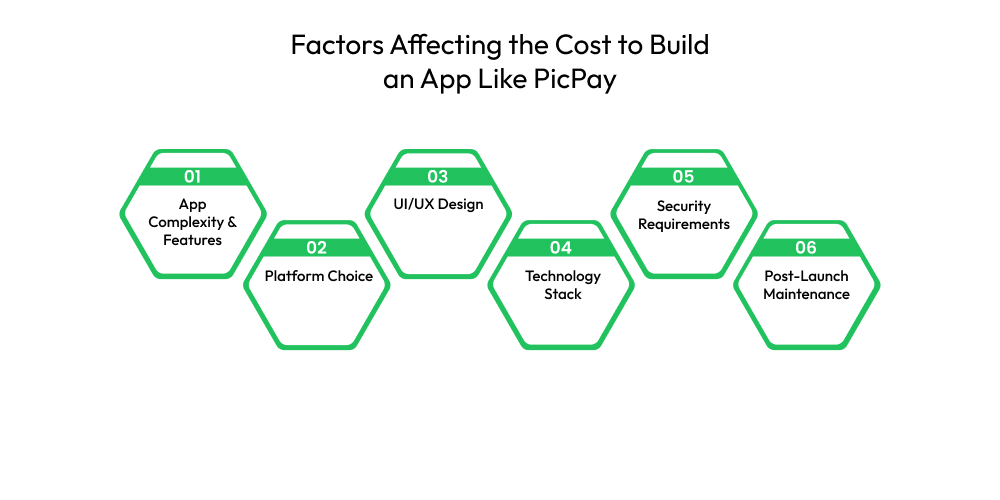
1. App Complexity & Features
The development cost of the PicPay app for basic apps with simple features, such as login, payments, and transfers, is less than that of advanced apps. The cost to develop an app like PicPay with advanced features like AI fraud detection, crypto support, virtual cards, and loyalty programs can increase the price.
Level |
Features Included |
Estimated Cost |
| Basic | Simple wallet, P2P transfers, QR payments | $8,000 – $12,000 |
| Moderate | Bill payments, bank integrations, cashback/rewards | $12,000 – $18,000 |
| Advanced | AI fraud detection, crypto integration, multi-currency | $18,000 – $25,000 |
2. Platform Choice
The cost to develop an app like PicPay for a single platform (iOS or Android) is less expensive. On the other hand, cross-platform solutions like Flutter or React Native offer additional cost savings. The cost to build an app like PicPay for Native apps (iOS and Android separately) is higher.
Platform |
Details |
Estimated Cost |
| Single Platform (Android or iOS) | Faster launch, limited user base | $8,000 – $14,000 |
| Cross-Platform (Flutter/React Native) | Wider reach, cost-efficient | $12,000 – $20,000 |
| Native (Android + iOS separately) | Best performance, higher cost | $18,000 – $25,000 |
3. UI/UX Design
UI/UX design is one of the crucial factors that influence the cost to build an app like PicPay. The PicPay app costs less than developing an app with modern, interactive, and customized designs with animations. The table below displays the estimated cost to develop an app like PicPay, based on UI/UX designs. Take a look
Design Level |
Features |
Estimated Cost |
| Basic | Simple UI, minimal screens | $2,000 – $4,000 |
| Custom | Attractive UI/UX, user-friendly navigation | $4,000 – $7,000 |
| Premium | Advanced animations, micro-interactions, branding | $7,000 – $10,000 |
4. Technology Stack
The choice of technology has a direct impact on development costs and performance. A basic stack (standard APIs, payment gateways) leads to lower costs. Advanced Stack (AI, blockchain, crypto wallet integration, cloud infrastructure) incurs higher costs. The table below outlines the cost of developing an app like PicPay, based on the technology stack employed.
Stack Type |
Details |
Estimated Cost |
| Standard | Payment APIs, basic backend | $3,000 – $6,000 |
| Advanced | Cloud hosting, AI tools, analytics | $6,000 – $10,000 |
| Cutting-edge | Blockchain, crypto wallet, advanced APIs | $10,000 – $15,000 |
5. Security Requirements
Since digital wallets handle sensitive financial data, strong security is non-negotiable. Encryption standards like AES-256 and SSL/TLS. In PicPay alternatives, biometric authentication (such as fingerprint, Face ID, or voice recognition) is necessary.
AI-powered fraud detection with real-time alerts can also increase the cost of developing an app like PicPay, but it also ensures user trust and regulatory approval.
Security Level |
Features |
Estimated Cost |
| Basic | SSL, password protection | $1,000 – $3,000 |
| Enhanced | 2FA, biometric login, data encryption | $3,000 – $6,000 |
| Enterprise | AI fraud detection, compliance (PCI DSS, AML/KYC) | $6,000 – $8,000 |
6. Post-Launch Maintenance
Development doesn’t end at launch. Apps like PicPay require continuous support. After lunch, your development team needs to provide regular bug fixes, Security patches, UI/UX improvements, and feature updates. Security patches to counter new cyber threats. Typically, Ewallet app maintenance costs are 15–20% of the initial development cost per year.
Maintenance Level |
Inclusions |
Yearly Cost |
| Basic | Bug fixes, minor updates | ~15% of the development cost |
| Standard | Security patches, performance monitoring | ~18% of the development cost |
| Premium | New features, scaling, 24/7 support | ~20% of the development cost |
Monetization Strategies for Digital Wallet Apps like PicPay
Monetization strategies are crucial for digital wallet apps because they ensure the platform’s sustainability, profitability, and growth while delivering value to both users and businesses. Here are some of the most used strategies to generate income through PicPay clone apps:
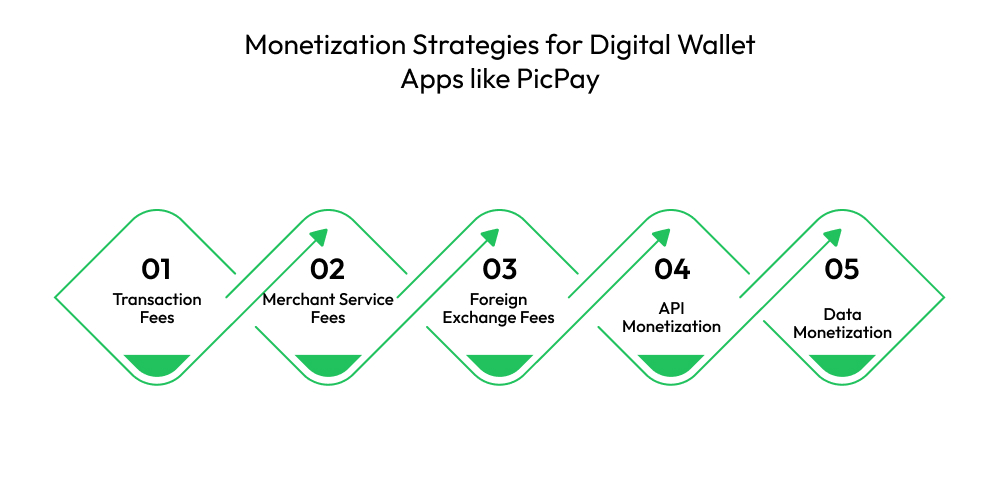
1. Transaction Fees
Through this monetization technique, you can charge a small percentage as transaction fees on every successful financial transaction involving bill payments, money transfers, and merchant transactions.
2. Merchant Service Fees
Another method to earn money through PicPay alternatives is to receive commissions from businesses and merchants that accept payments through your wallet, charging a processing fee per transaction.
3. Foreign Exchange Fees
This money-generating strategy lets you opt to charge users a nominal fee for conducting international transactions or currency conversions within the app. This strategy works well for digital wallet apps like PicPay.
4. API Monetization
You can also provide API integration for third-party businesses and developers, charging a fee to obtain access to your e-wallet’s payment gateway. Ensure that you implement this strategy to monetize your PicPay app.
5. Data Monetization
For monetization, you can also use anonymized user transaction data to generate insights for businesses and financial organizations, ensuring adherence with data privacy laws. It is one of the most used monetization methods.
How AI Enhances Mobile Banking App Development?
Artificial Intelligence (AI) has revolutionized mobile banking, transforming the way financial institutions interact with their customers. With the rising demand for secure, fast, and personalized banking experiences, AI brings intelligence and automation that traditional systems don’t match.
It helps banks and fintech companies simplify their operations, reduce fraud risks, and deliver tailored financial services at scale. By analyzing customer spending patterns and predicting future needs, AI enables apps to function not only as transactional platforms but also as intelligent financial assistants.
Here’s how AI contributes:
- Personalization: AI provides tailored insights and recommendations.
- Fraud Detection: It instantly identifies suspicious activity.
- Chatbots & Support: Offers 24/7 automated assistance.
- Predictive Analytics – Provides risk assessment and forecasting.
- Auto Transactions: Includes smart reminders and payments.
- User Engagement: Sends Alerts, rewards, and gamification.
- Voice Banking: Simple commands for transactions.
Conclusion
Building a digital wallet app like PicPay for the Brazilian market presents immense opportunities, driven by government-backed systems like Pix. Success depends on combining secure technologies, intuitive design, and localized features that resonate with Brazilian users.
If you’re a business looking for a Fintech app development company to build your PicPay-like app, contact Dev Technosys, and stay tuned for more valuable updates.
Frequently Asked Questions
Find answers to the most common questions related to this article.
The cost of developing an app like PicPay can range from $8,000 to $25,000, depending on the app's complexity, features, security standards, and platform choice.
Development usually takes 3 to 9 months, depending on project scope, integrations, and testing. This duration increases or decreases depending on how efficient your development team is.
Essential features of mobile payment apps like PicPay include:
Secure payments
QR/NFC transactions
Peer-to-peer transfers
Bill payments
Biometric authentication
AI-powered fraud detection
Rewards/loyalty programs
The steps to develop a mobile banking app like PicPay include:
Define project scope & features
Select the right SDLC model.
Choose a cloud service provider.
Integrate payment APIs/SDKs
Ensure compliance with financial regulations.
Design & develop the platform (UI/UX + backend)
Test for security, performance & usability
Launch the app on Android & iOS
Provide ongoing updates & maintenance.
You need to leverage various monetization strategies to generate revenue from mobile wallet apps, such as PicPay. Some of the popular monetization techniques are:
Transaction fees
Merchant commissions
Premium features
In-app ads
Partnerships
Lending services